
Review · FLORENCE HISTORY TOURS
Art and History in Florence: Small Group Walking Tour
Florence packs centuries of art and power into a remarkably small center, and this tour gives you a fast, useful orientation to it all. In about one hour and 35 minutes, you walk from Medici territory to the Duomo, across the Arno, and on to Palazzo Pitti.
I like the clear historical thread, which connects family power, church building, sculpture, and palace design. I also like the personal touch: guides such as Francesco, Julia, Giovanni, and Raffaello have been praised for lively storytelling, good English, local food advice, and adjusting the pace or route when possible.
The main drawback is simple: this is an outside walking tour, not a museum visit. Admission fees are extra, and a maximum group size of 50 means the word small group may not always mean an intimate gathering.
Key points to know before you book
- Nine famous Florence sights in 95 minutes: You cover the Medici palaces, San Lorenzo, the Duomo, Dante’s neighborhood, the Uffizi, Ponte Vecchio, and Pitti Palace.
- The guides make the difference: Francesco, Julia, Giovanni, Lorenzo, Luigi, Monica, Raffaello, and others have been praised for humor, clear English, art knowledge, and practical city advice.
- No museum or church entry is included: You see the exteriors and hear the story, then return later if you want to go inside.
- The walk ends back at the starting point: The meeting point is on Via Camillo Cavour, near Florence’s public transportation.
- The price is modest for a city orientation: At $30.01 per person, it can save you time at the start of a Florence visit.
- Free cancellation is available until 24 hours before departure: Changes or cancellations inside that window are not refunded.
Why this walk works as a Florence introduction
Florence can feel confusing on your first morning. The Duomo is obvious, but the connections between the Medici, the churches, the government buildings, and the art are not always clear when you see them one at a time.
This walk helps arrange the pieces. You move through the historic center with a guide explaining how wealthy families used palaces, chapels, statues, and public squares to show power. That makes the buildings easier to read later, even if you return on your own.
The route is attraction-packed rather than slow and contemplative. You get roughly ten minutes at most stops, with about fifteen minutes at Palazzo Pitti. That is enough for orientation and exterior commentary, but not enough for a proper museum visit or a long look at every statue.
The tour is offered in English and includes audioguide systems. That matters in a busy city, since you are more likely to hear the guide’s explanation when the group is near traffic, crowds, or a lively square.
More History Walking Tours in Italy
- Basilica Santa Croce: Walking Among the Masters of Florence
★ 5.0 · 107 reviews - Florence: Fashion History Guided Walking Tour & Museum Visit
★ 4.2 · 72 reviews - Florence Highlights: Guided Walking Tour of the Historic Center
★ 5.0 · 27 reviews
Palazzo Medici Riccardi begins the Medici story
The tour starts at Florence Tours on Via Camillo Cavour, 21R, and heads toward Palazzo Medici Riccardi. This is a fitting opening because the Medici story is at the center of Florence’s political and artistic identity.
Expect about ten minutes here. The point is not to tour the palace rooms, since admission is not included, but to understand why a merchant family needed a grand home and how architecture could broadcast status.
This first stop also gives your guide a chance to set the tone. The strongest guides do more than recite dates. Francesco has been praised for energetic storytelling, while Raffaello has been described as an art history professor who explains architecture, artistic periods, and religious influence in a connected way.
San Lorenzo shows how church and family power meet
At San Lorenzo, the focus shifts from private palace to public worship and family legacy. Admission to this stop is free, but the tour does not include a church entry ticket or an extended interior visit.
You get about ten minutes of explanation. Listen for the links between the church, the Medici family, and the wider development of Florence. Giovanni has been especially praised for explaining how powerful families shaped cities and placed family symbols on buildings.
This is one of the places where a guide adds real value. On your own, you may notice a grand facade or a coat of arms. With context, you begin to see the building as part of a contest for influence.
The Duomo delivers Florence’s big visual moment
The Cathedral of Santa Maria del Fiore is the route’s most instantly recognizable stop. You have about ten minutes to take in the facade, the scale of the cathedral complex, and the role of religion in Florence’s public life.
Entry is not included, so treat this as an introduction rather than a cathedral tour. If you plan to go inside later, ask your guide about the best way to fit it into your day. One guide, Julia, was able to take a small party inside when the line was short, but you should not count on that happening. The published experience does not include church admission.
The Duomo is also a good test of the guide’s communication skills. A strong explanation can keep this stop from becoming a quick photo pause. The better approach is to connect the structure to the city’s artistic goals, religious life, and competition among powerful Florentine families.
More Small-Group History Tours in Italy
- VIP Colosseum Underground and Ancient Rome Small Group Tour
★ 4.5 · 332 reviews - Lecce History and Street Food Tasting Small Group Tour
★ 5.0 · 288 reviews - Small-Group Rome to Pompeii & Amalfi: Day of History & Sea
★ 5.0 · 239 reviews - Colosseum Forum Ancient Rome Small Group Tour for Kids Families
★ 5.0 · 198 reviews
Dante’s house puts a human face on the old city
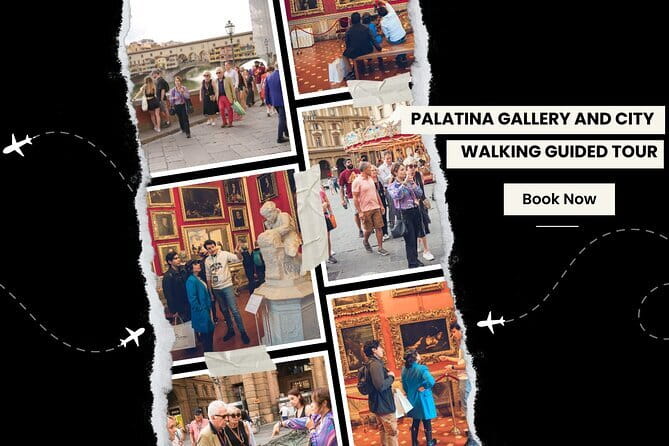
Museo Casa di Dante brings a literary note to a tour otherwise centered on palaces, churches, and public art. You stop for about ten minutes, with admission not included.
The appeal here is the setting. Florence is not only a city of famous buildings. It was also a place of rival families, political conflict, writers, merchants, and ordinary street life. A guide can use Dante’s connection to help you imagine the medieval city at a more personal scale.
Do not expect a full museum visit. You are getting an exterior orientation and a story about the place. If Dante is a major interest, plan separate time for the museum rather than trying to fit its contents into this short stop.
Palazzo Vecchio and Piazza della Signoria explain public power

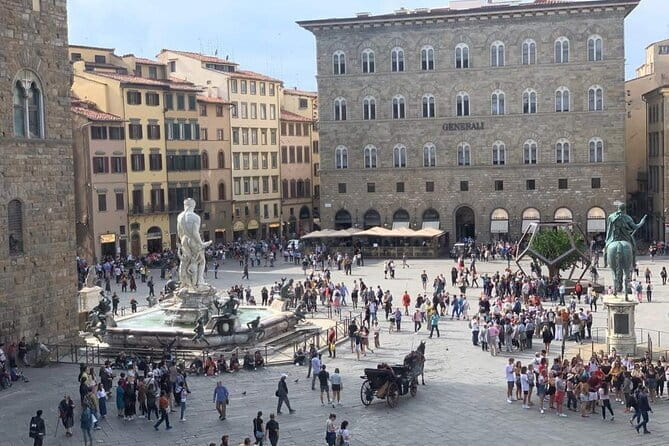
The walk then reaches Palazzo Vecchio and Piazza della Signoria, two of the best places in Florence for understanding civic power. Palazzo Vecchio served as the city’s government center, while the square became an open display of authority, art, and political messaging.
You spend about ten minutes at the palace and another ten in the square. Piazza della Signoria is free to visit, but entry to Palazzo Vecchio is not included. The square itself rewards careful listening because the statues are not placed at random. Their subjects, positions, and audience all matter.
One particularly useful skill mentioned by the guides is learning how to look at a statue, not just photograph it. Giovanni has been praised for explaining the story behind statues, their locations, and the way families used art to express ambition.
This section is likely to be one of the tour’s strongest moments for first-time visitors. You see a major square, hear how it functioned, and gain a framework for understanding public art across Florence.
The Uffizi appears as part of the city’s art machine

The walk continues to Le Gallerie degli Uffizi. The stop lasts about ten minutes, and museum entry is not included.
That limitation is important. The Uffizi is one of Florence’s major museums, but this experience does not put you in front of its paintings. Instead, you learn where it fits in the city’s political and artistic story, then decide if you want to return for a separate visit.
This is useful if you are trying to plan your first day. You can see the building, hear why it matters, and judge how much time you want to reserve for the galleries. If you already have an Uffizi ticket, this walk can also help you arrive with a better sense of the building’s place in Florence.
Ponte Vecchio brings the walk to the Arno
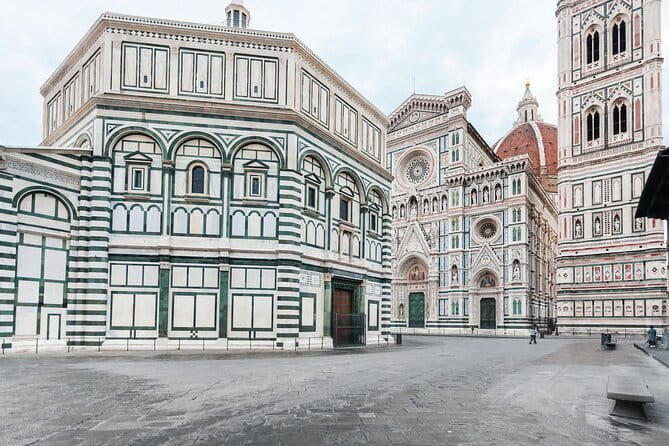
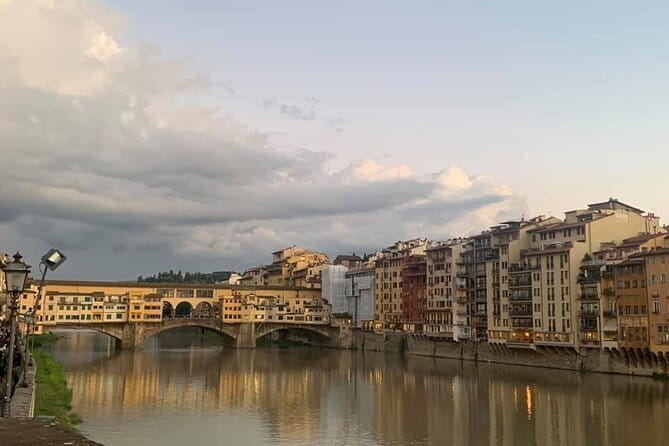
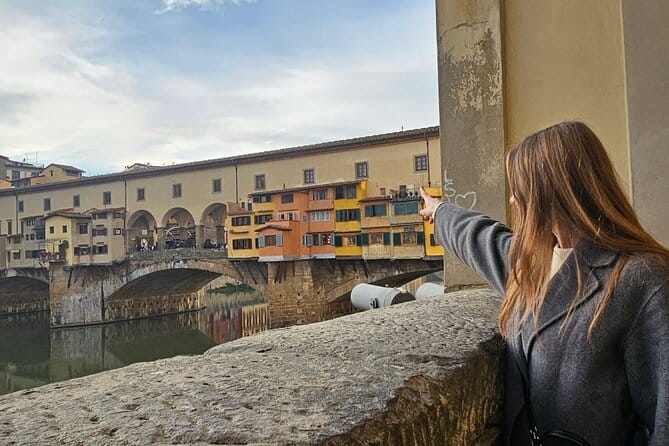
Ponte Vecchio is a free stop and a natural change of mood. After palaces, churches, government buildings, and museums, the route reaches the famous bridge and the river.
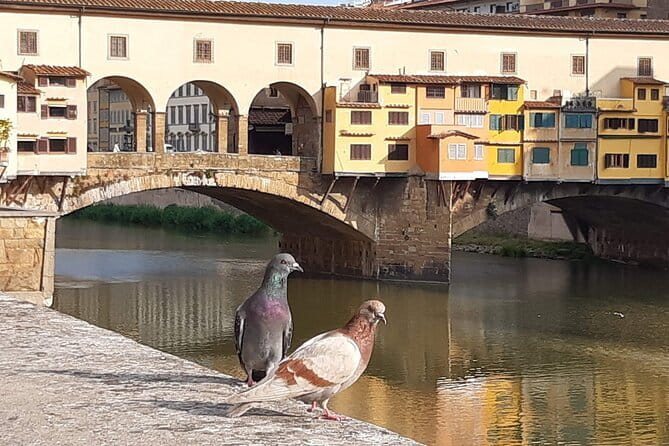
You get about ten minutes here. The stop is brief, so do not expect time for an extended bridge visit or shopping. Still, the bridge helps you understand Florence geographically. It also marks the route’s movement from the historic center toward the Oltrarno and Palazzo Pitti.
This is a good place to ask for practical advice. Luigi has been praised for recommending food and drink after the tour, while several guides have offered suggestions about places to eat. Take those tips as a starting point, then use your own judgment and budget.
Palazzo Pitti closes the Medici chapter
The final stop is Palazzo Pitti, with about fifteen minutes devoted to the palace and its role as the last Medici residence. The building began as a display of wealth by merchant Luca Pitti, then passed to Eleanor of Toledo, wife of Cosimo I, in 1549. Under Medici ownership, it became even grander, with the Boboli Gardens laid out behind it.
The palace complex includes the Galleria Palatina, Appartamenti Reali, Galleria d’Arte Moderna, Galleria del Costume, Museo degli Argenti, and Boboli Gardens. None of those admissions is included, so the tour gives you a useful preview rather than access to the collections.
The fifteen-minute stop is slightly longer than the others, which makes sense. Palazzo Pitti is not just one facade. It represents the move from the medieval and civic center toward a ducal residence designed to project lasting authority.
After this stop, the activity ends back at the original meeting point. That return is practical if you need to collect luggage, meet a taxi, or continue with a separate booking.
What the guide can add to a short route
The tour’s strongest asset is not the number of buildings. Florence has plenty of those. It is the quality of the explanation between the buildings.
Francesco has been praised for superb English, humor, energy, and a teacher’s gift for making complex subjects easy to follow. Julia has been noted for adapting the experience to a mother and daughter, sharing food and wine advice, and helping them reach a later tour. Giovanni has been praised for clear delivery, shade-conscious route choices, and explanations of aristocracy and architecture.
Other guides bring different strengths. Lorenzo is described as passionate about Florence, Luigi as personable and generous with local suggestions, and Monica as especially good at giving the right amount of information without overwhelming the group. Raffaello adds an art history background, which may appeal to you if sculpture, architecture, and religious art are your main interests.
Guide assignments can affect the experience. One booking had a delayed start because the expected guide was not available at 10 a.m., with the tour moved to 1 p.m. The issue was handled well, but it is a reminder not to schedule a tight connection immediately afterward.
Is $30.01 a fair price?
At $30.01 per person, this is a reasonable price for a guided orientation lasting about 95 minutes. You are paying for a live English-speaking guide, an organized route, audio equipment, and a way to connect several major sights without spending your first hours working out the geography yourself.
The value is best if you are new to Florence, have limited time, or want background before visiting museums independently. It is less compelling if you already know the city well or plan to spend the same morning inside one major museum.
Remember the extra costs. Museum and church entry tickets are not included, so the tour should not replace a Uffizi, Duomo, Palazzo Vecchio, or Pitti Palace booking when those interiors matter to you.
Pace, group size, and practical comfort
The listed maximum is 50 people. That is larger than most people imagine when they read small group, so check your expectations. A group of that size may feel less personal in a crowded square, though the audioguide systems should make it easier to follow the explanation.
The route is on foot through central Florence. Wear shoes you can walk in and bring water, especially in warm weather. The tour runs in English, confirmation arrives at booking, and the meeting point is near public transportation.
Most people can participate, according to the activity information. Still, you should be comfortable walking for nearly 100 minutes and standing at several outdoor stops. If you have a strict schedule, remember that one reported start-time change created a three-hour delay.
Free cancellation applies until 24 hours before the start time for a full refund. Inside that period, changes are not accepted and the payment is not refunded.
Who should book this Florence walk?
I would choose this for a first or second day in Florence. It gives you a strong map of the center, introduces the Medici story, and helps you decide which interiors deserve your limited museum time.
It also suits families and mixed-interest groups. A good guide can move between art, politics, food, architecture, and local life without turning the walk into a lecture. Julia’s adjustment for a daughter and parent suggests that the experience can work well when the group needs a flexible pace, though that depends on the guide and group size.
Art lovers should pay attention to the guide choice when possible. Raffaello and Giovanni sound especially suited to visitors who want to understand sculpture, architecture, and symbolism. Food-minded visitors may appreciate the local recommendations offered by Francesco, Julia, Luigi, and others.
I would skip it if your priority is entering the Uffizi or the Duomo immediately. This tour shows you the city from the street. It does not replace time inside Florence’s museums and churches.
Should you book it?
Book this tour if you want a lively introduction to Florence’s major sights, especially with a guide who can connect Medici politics, religious art, public statues, and local eating advice. At $30.01, it is a fair orientation for a short visit.
Choose something else if you prefer a quiet, highly focused museum experience or if a maximum of 50 people feels too large. For most first-time visitors, the best plan is to use this walk early, then return to the Uffizi, Duomo, Palazzo Vecchio, or Pitti Palace with a clearer idea of what you are seeing.
FAQ
How long does the Florence walking tour last?
The tour lasts approximately 1 hour and 35 minutes.
What language is the tour offered in?
The tour is offered in English.
Where does the tour start?
It starts at Florence Tours, Via Camillo Cavour, 21R, 50129 Firenze, Italy.
Where does the tour end?
The activity ends back at the meeting point.
Are museum and church admission fees included?
No. Entrance to museums and churches is not included.
Is entry to the Duomo included?
No. The Cathedral of Santa Maria del Fiore is visited as part of the walk, but admission is not included.
Does the tour include an audioguide?
The experience includes the use of audioguide systems.
What is the maximum group size?
The activity can have a maximum of 50 participants.
Can I cancel for a full refund?
Yes, if you cancel at least 24 hours before the experience start time. Cancellations or changes made less than 24 hours before the start time are not refunded.
More Small-Group History Tours in Florence
- London Small Group Tour of Historical Pubs
★ 5.0 · 10,422 reviews - Madrid Tapas & Taverns Small Group Food & History Tour
★ 5.0 · 2,664 reviews - Hidden Alleyways and Historic Sites Small-Group Walking Tour
★ 5.0 · 2,335 reviews - New Orleans Small-Group Haunted History Carriage Tour
★ 4.5 · 2,289 reviews
More History Walking Tours in Florence
- Essential Florence Walking Tour to discover its history
★ 5.0 · 21 reviews - History and Hauntings of Salem Guided Walking Tour
★ 5.0 · 14,564 reviews - Lisbon: History, Stories and Lifestyle Walking Tour
★ 4.8 · 10,902 reviews - Boston: Freedom Trail History Small Group Walking Tour
★ 5.0 · 6,450 reviews
Newest history tours we have reviewed in Florence
- Florence tour of the historic center. Stories, legends and gossip★ 5.0 · 27 reviews
- The History of Florence: The Renaissance Era Private Tour★ 5.0 · 49 reviews
- Private Tour of the Historic Center of Florence by Golf Car★ 4.5 · 40 reviews
- Florence Highlights: Guided Walking Tour of the Historic Center★ 5.0 · 27 reviews
- Private Chianti Classico Tour with wine and food tasting in a Historic Estate★ 4.5 · 23 reviews
- Private Guided Visit Florence’s Santa Croce Basilica and Ancient Leather School★ 5.0 · 19 reviews
- EXCLUSIVE – Wine Tasting near Florence with Castle and Ancient Cellars Tour★ 5.0 · 34 reviews
- The History of Florence: Famous Medici Family Private Tour★ 5.0 · 40 reviews
Small-Group History Tours, compared.

Freedom Trail History Small Group Walking Tour
Read our review →
Madrid Tapas & Taverns Small Group Food & History Tour
Read our review →
Hidden Alleyways and Historic Sites Small-Group Walking Tour
Read our review →
New Orleans Small-Group Haunted History Carriage Tour
Read our review →
Half Day Dominican Republic Cultural Tour : Small Group
Read our review →
Ultimate Seville Tapas, Wine & History Small Group Tour
Read our review →
Vienna Historic Center Small Group Walking Tour
Read our review →Browse the lists this tour appears in