
Review · EDINBURGH HISTORY TOURS
St Andrews, Fife Coast Walk & Historic Abbey Tour from Edinburgh
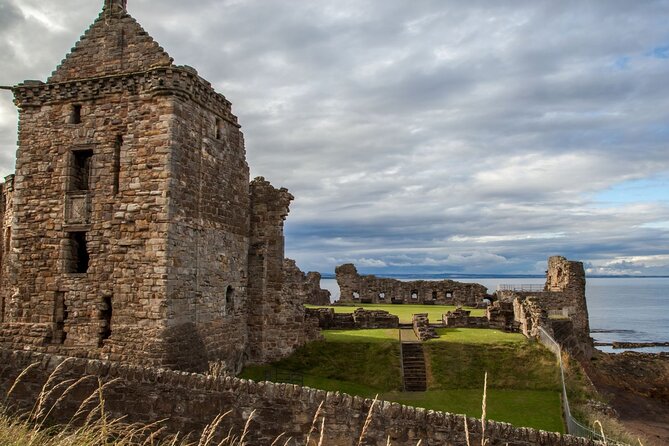
The best part of this day trip is the variety. In about eight hours, you move from the great Forth bridges to a quiet Fife shoreline, then on to the ruins of St Andrews and Dunfermline Abbey. It gives you a useful taste of eastern Scotland without renting a car.
I like the small minibus format, which makes it easier to chat with the guide and adjust the day when weather or group interests change. I also like the mix of open-air stops and major historic sites, especially Lady’s Tower and St Andrews Cathedral. The main drawback is time: St Andrews offers plenty to see, and an hour may feel short once you fit in lunch and any paid visits.
Key points to know before booking
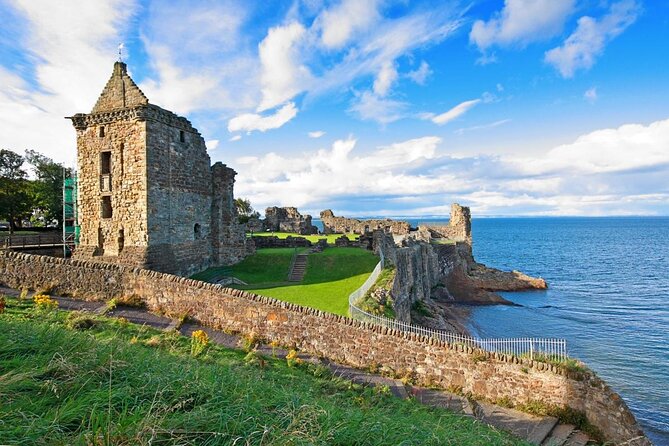
- Three strong contrasts in one day: bridges, coast, university town, cathedral ruins, castle, and royal abbey.
- Guide quality matters: Perry, Pete, Magnus, Jeff, Geoff, Owen, Chris, and others have been praised for stories, local knowledge, flexibility, and good driving.
- A minibus keeps the day personal: some departures are very small, though the stated maximum is 16 people.
- Lady’s Tower is a highlight: allow for a short walk and changeable weather, with excellent coastal views.
- Budget extra for St Andrews Castle and lunch: the castle fee is not included, and no meal is provided.
- Expect a fairly active day: one person reported roughly 13,000 steps, although walking varies by pace and choices.
Why this Fife day trip works well from Edinburgh
Fife is close enough to Edinburgh for a day trip, but it feels like a proper change of scene. You cross the Firth of Forth, pass through small towns, walk beside the sea, and finish among royal ruins. That is a lot of Scotland in one outing.
The tour begins at 9:00 am at 256 to 260 Morrison Street, on the west side of central Edinburgh. It returns to the same meeting point. An air-conditioned vehicle handles the driving, so you can watch the countryside rather than concentrate on narrow roads and unfamiliar junctions.
The advertised group size needs a little clarification. The tour highlights a group of no more than eight, while the additional information gives a maximum of 16. Some departures have been small enough for easy conversation, but you should plan for anything up to 16 people. That is still far more manageable than a large coach.
Your guide shapes much of the day. Perry has been praised for going out of his way to make the trip memorable. Pete is known for personal stories, Scottish history, and adapting the route when weather changes. Magnus has been singled out for friendly commentary and a calm driving style, while Jeff, Geoff, Owen, Chris, Karen, Charly, Warren, and others have also received strong praise for their guiding.
That praise is useful, but it also points to a practical truth: this is a guide-led day, not an audio tour with a fixed script. The experience can feel lively and personal with the right guide. One less positive experience involved limited commentary and uncertainty about some details. If you want a very formal, deeply structured lecture at every stop, this may not be the best fit.
More History Walking Tours in the UK
- Edinburgh: Old Town History and Tales Walking Tour
★ 4.8 · 2,361 reviews - Old Town Walking Tour History and Tales in Edinburgh
★ 5.0 · 2,168 reviews - Edinburgh: Witches & Haunted History Walking Tour
★ 4.8 · 1,290 reviews
The Forth bridges: a fast but worthwhile opening stop
The first stop takes about 15 minutes at the Queensferry Crossing. From here, you can see the three major bridges across the Forth: the modern Queensferry Crossing, the Forth Road Bridge, and the older Forth Bridge.
This is a short stop, but it gives the day a clear sense of place. The bridges are not simply transport links. Together, they show changing engineering styles and Scotland’s connection between Edinburgh and Fife. Your guide provides stories about all three, so keep your camera ready and listen for context rather than treating this as only a photo break.
Fifteen minutes is not long enough for a full walk or detailed visit. Think of it as a viewpoint and orientation stop. The advantage is that it adds something memorable without taking time away from St Andrews and the coast.
Lady’s Tower and the Fife coast
Lady’s Tower is one of the most appealing parts of the day. The stop lasts about 45 minutes and includes a short coastal walk near the tower and lighthouse. You get open views, sea air, and a quieter setting than the busier historic centers later in the day.
The tower has a story tied to a local aristocratic woman who reportedly used it as a changing place before swimming in the sea. The supplied tour details do not promise a guided interior visit, so expect to see the area from outside and walk around the coast.
This is a place where weather makes a real difference. On a bright day, the views can be the visual high point of the tour. In wind or rain, the walk can feel exposed, so bring a waterproof jacket and shoes with a reasonable grip. Scotland can change its mind about the weather quickly, even during a short outing.
The walk is not presented as a long hike, but this is not a sit-in-the-vehicle excursion. One person counted about 13,000 steps across the whole day. You should be comfortable walking between viewpoints, ruins, streets, and parking areas.
Some routes may include nearby coastal sights such as Elie Ruby Bay Beach or a small scenic spot sometimes described as Fairy Glen. These are not guaranteed named stops in the supplied schedule, so treat them as possible route variations rather than promised visits. Guides may adjust the day for weather, traffic, or group interests.
St Andrews Cathedral: Scotland’s great ruined church
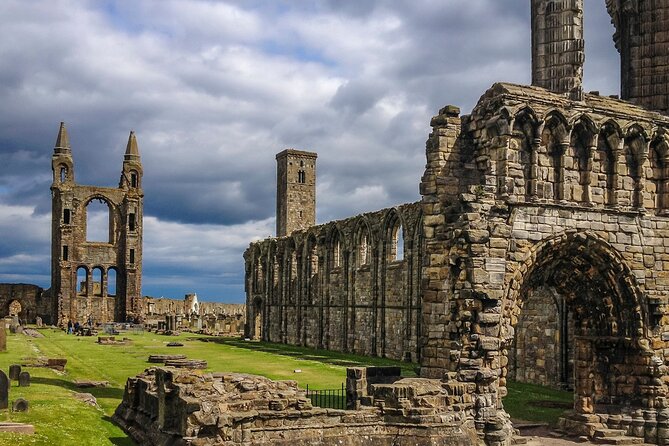
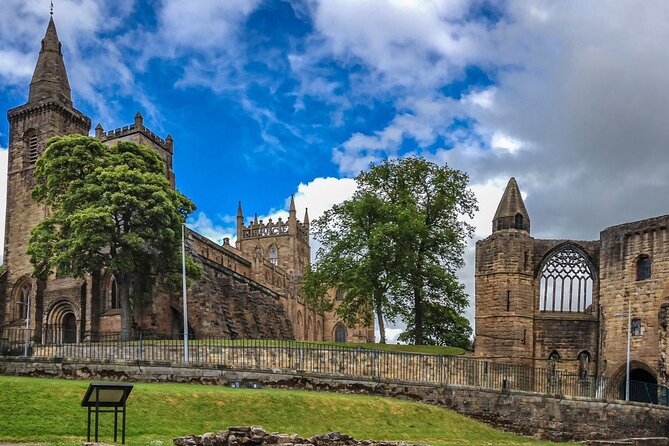
St Andrews Cathedral is the historical center of the day. You get around 30 minutes to walk among the ancient ruins of what was once one of Scotland’s grandest cathedrals.
The scale is what makes this stop memorable. Even in ruin, the remaining walls and foundations show how important St Andrews once was as a religious center. It is also a good stop for independent exploration because the site rewards slow looking: arches, stonework, fragments, and changing views reveal more when you are not rushing from room to room.
Thirty minutes is enough for an introduction, but not a full archaeological study. If you like reading every panel and examining every corner, you may wish for more time. The guide can provide the broad story, then you can focus on the details that interest you.
The cathedral stop also helps balance the town visit. St Andrews is strongly associated with its university, golf, shops, and restaurants, but the cathedral ruins give you a sense of the town’s much older importance.
More History Walking Tours in Edinburgh:
- Edinburgh Old Town: Historical Guided Walking Tour
★ 5.0 · 1,016 reviews - Edinburgh: 3-Hour Historical Walking Tour in Italian
★ 4.7 · 734 reviews - Edinburgh: Witches & Haunted History Walking Tour
★ 5.0 · 632 reviews - Edinburgh: Old Town History Walking Tour
★ 4.9 · 528 reviews
St Andrews Castle and the one-hour town break
The schedule gives you a choice at St Andrews Castle, with about 30 minutes available and admission charged separately. The castle is not included in the tour price, so check the current entry cost when planning your budget.
The castle is useful for visitors who want another major historic site, but choosing it affects your free time. St Andrews is compact enough to explore on foot, yet there is a lot competing for your attention. You may want the castle, cathedral, town streets, lunch, and a look at the university setting. You probably cannot do all of that at a relaxed pace during the allocated time.
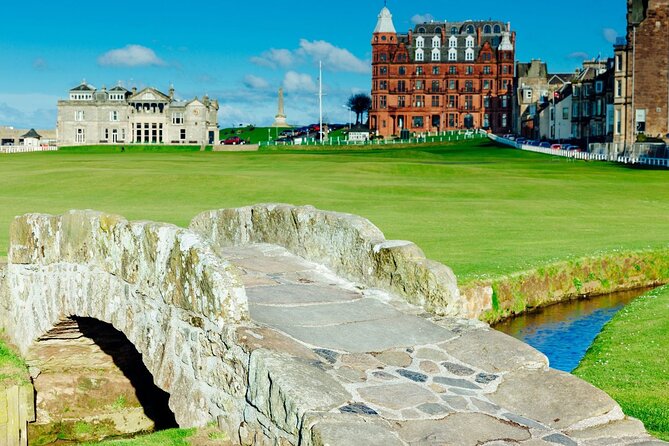
The wider St Andrews visit lasts about an hour and includes time to buy lunch. Food is not included, so use this break for a quick meal or snack rather than expecting a scheduled restaurant experience. One practical suggestion from the tour information is Buck’s Bar for fried chicken, but you should choose the place that best matches your timing and appetite.
I would decide before the day begins what matters most. Choose the castle if you care about medieval ruins and want to see the unusual underground mine and countermine features associated with the site. Choose town time if you prefer streets, shops, lunch, and a feel for modern St Andrews. If the group has different priorities, the guide may help organize the timing, but you will still have to make trade-offs.
The town stop can feel short. One person found that getting food left little time for the castle and town itself. That is the main weakness of the itinerary, not a lack of places to see.
Dunfermline Abbey and the royal connection
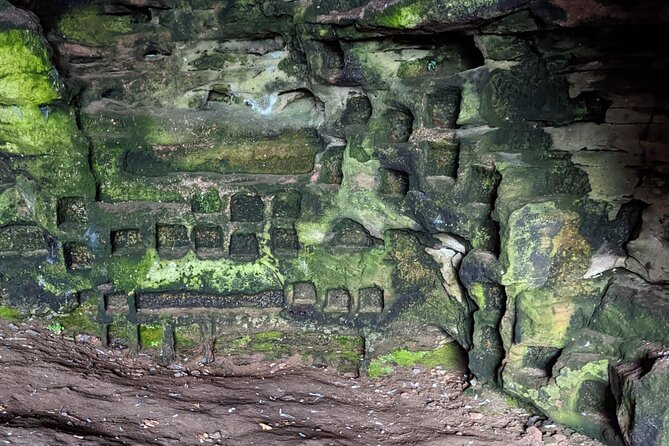
Dunfermline Abbey brings the day back toward Edinburgh and adds a different kind of historic setting. The visit lasts about an hour, and admission is not included.
The abbey is associated with Scottish kings and queens, including Robert the Bruce. That royal connection gives the final major stop real weight. You are not simply seeing another old church. You are visiting a place connected with the medieval Scottish monarchy and the burial of important figures.
An hour should give you time to walk around the abbey area and take in the main features. Paid entry may provide access to parts of the site that are not available on a basic exterior visit, so factor that fee into your plans. The tour details do not state the exact admission price.
Dunfermline itself appears as part of the route before the abbey. That makes the final section feel less like a single isolated attraction and more like a short look at an old Scottish town. The day can be tiring by this point, but the abbey is a strong final stop because it offers a clear historical focus.
Cupar, Loch Leven, and route flexibility
The route also passes through Cupar, a small Fife town, before the stated plan for a scenic walk at Loch Leven Nature Reserve. The timing for that section is not clearly set out in the schedule, so you should not assume a long nature-reserve visit.
This is one area where the actual route may depend on conditions and the guide’s judgment. The supplied schedule gives named stops and broad travel sections, while the experiences described by visitors include different nearby sights. Some guides have adjusted plans for poor weather or group interests, which is a benefit on a day that includes outdoor walking.
The flexibility is valuable, but it means the trip is not a precise checklist. You book it for a well-planned overview of Fife, then allow the guide some room to make practical changes.
Guide style and the small-group feel
The strongest part of this experience is often the person behind the wheel. A good guide can turn travel time into useful Scottish context, local stories, questions, and humor. Pete has been praised for singing and personal stories, while other guides have been appreciated for balancing commentary with quiet time.
That balance matters. Some people want constant explanation. Others prefer to look out the window and explore independently. Magnus, for example, has been noted for telling the group that he could offer as much or as little information as people wanted. That is the right approach for a mixed group.
The minibus also helps. You are close enough to talk with the guide and fellow passengers, and several accounts describe the ride as comfortable. It is easier to form a friendly group in a small vehicle than on a large coach.
There was one report of a late driver causing a rough start. That appears to be an exception rather than the central pattern, but it is a reminder that road-based day trips can face delays. The tour returns to Edinburgh, so do not book an important evening activity with no time buffer.
Is $110.49 good value?
At $110.49 per person, this is not the cheapest way to see Fife. You are paying for transport, a full day of driving, itinerary planning, and a guide who handles the roads and timing.
The value improves if you are avoiding a car rental. Driving yourself would require navigation, parking, fuel, and decisions about which sights to cut. This tour also lets you see several areas in one day: the Forth crossings, coast, St Andrews, Dunfermline, and possibly additional scenic stops.
The price feels less attractive if you plan to spend most of your time independently in St Andrews. You could spend a whole day there alone, and this outing gives you only a limited town visit. It also does not include lunch, St Andrews Castle admission, or Dunfermline Abbey admission.
For me, the cost makes sense if you want breadth and a guide. It is less compelling if your priority is deep time at one site or a low-cost day using public transport.
The cancellation terms are fair: you can cancel for a full refund up to 24 hours before the 9:00 am start. Changes made inside that window are not accepted, and the operator can offer another date or a full refund if minimum numbers are not reached.
Who should book this tour?
I would choose this outing if you have several days in Edinburgh and want to see a different side of Scotland without planning transport yourself. It suits first-time visitors who want a clear introduction to Fife, couples and families who prefer a guided day, and anyone who enjoys combining short walks with historic sites.
It also works well after time in Edinburgh or the Highlands. The coast, university town, royal abbey, and bridges give you a different view of the country.
I would be more cautious if you dislike fixed schedules, need long visits at major attractions, or want a serious hiking day. The coastal walk is short, and St Andrews is a sampler rather than a full day. You should also bring food only if it contains no nuts. The vehicles are strictly nut-free because of severe allergies, so do not pack products containing nuts.
Should you book the St Andrews and Fife Coast tour?
Book it if you want an efficient, varied day with a strong chance of good guiding. The best parts are the coastal walk at Lady’s Tower, the ruins at St Andrews Cathedral, the royal connection at Dunfermline Abbey, and the chance to learn about Scotland while someone else drives.
Skip it if you want to linger in St Andrews, keep costs very low, or avoid walking. Before booking, decide how much you value convenience and local commentary. At this price, the guide and transport need to matter to you. If they do, this is a well-rounded way to spend a day beyond Edinburgh.
FAQ
Where does the tour begin and end?
It begins at 256 to 260 Morrison Street, Edinburgh EH3 8DT, at 9:00 am. The activity ends back at the same meeting point.
How long does the tour last?
The tour lasts approximately eight hours.
Is lunch included?
No. You have time to buy lunch or a snack in St Andrews, but the cost is not included.
Is St Andrews Castle admission included?
No. Entry to St Andrews Castle costs extra.
Is Dunfermline Abbey admission included?
No. The tour price does not include entry to Dunfermline Abbey and Palace.
How many people can join the tour?
The tour information highlights groups of no more than eight, while the stated maximum is 16 people. Group size can therefore vary by departure.
Newest history tours we have reviewed in Edinburgh
- The History Behind Outlander Tour★ 5.0 · 18 reviews
- Private Royal Mile walking tour – Discover the history of our most famous street★ 5.0 · 48 reviews
- Thirsty for Edinburgh: Scotlands Best Historical Pub Tour★ 5.0 · 24 reviews
- Old Town Walking Tour★ 5.0 · 17 reviews
- Edinburgh: History Lovers Old Town Walking Tour★ 5.0 · 216 reviews
- Medical and Surgical History of Edinburgh – Private Walking Tour★ 5.0 · 19 reviews
- The Anatomist – Award Winning Historical Escape Room Experience★ 5.0 · 151 reviews
- Small-Group Historic Coffee Tour in Edinburgh★ 5.0 · 64 reviews
History Walking Tours, compared.

History and Hauntings of Salem Guided Walking Tour
Read our review →

Freedom Trail History Small Group Walking Tour
Read our review →
Historic Charleston Guided Sightseeing Walking Tour
Read our review →
Tapas Walking Tour with Food, Wine, and History
Read our review →
Savannah History and Haunts Candlelit Ghost Walking Tour
Read our review →
A History of Terror – Belfast City Centre Walking Tour
Read our review →Browse the lists this tour appears in