
Review · ITALY HISTORY TOURS
Bologna: Small-Group Tour with the Historic Archiginnasio
Bologna’s Teatro Anatomico is the star here. Inside the old Archiginnasio, you’ll see the elegant room where medical students once studied the human body, surrounded by carved wood and centuries of academic tradition. It is an unusual sight, and far more memorable than a standard city stroll.
I like the efficient route through Piazza Maggiore, the Quadrilatero Market, and the Due Torri. I also like that the Archiginnasio entrance is included, since that ticket turns a general walk into a focused look at Bologna’s university past. The main concern is guide quality: some visitors have found English hard to follow, and group size may not always feel especially small.
Key points to know before booking
- The Teatro Anatomico is the main attraction: This carved wooden lecture room gives the tour a clear historical focus.
- The route covers Bologna’s essential center: You’ll see Piazza Maggiore, the Neptune Fountain, the market streets, the Due Torri, Santo Stefano, and several galleries.
- The Quadrilatero adds a food stop: Use free time here to browse cheese, cured meat, and other local products.
- The tour lasts two hours: It gives you a useful first look, but the pace can feel brisk.
- The experience runs in English: Guide clarity matters, and the standard varies.
- Porticos make the walk weather-friendly: Bologna’s covered arcades offer shade and shelter, though rain or sun does not cancel the tour.
Starting at Piazza Maggiore and the Neptune Fountain
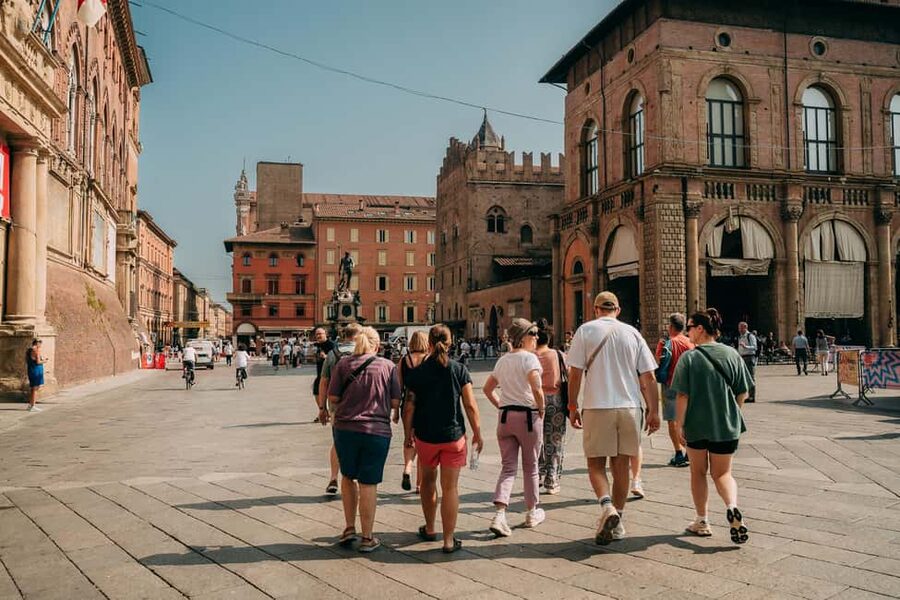
The tour begins at Piazza Maggiore, Bologna’s grand civic square. Meet your guide in front of the red kiosk, where the guide will hold a yellow sign marked TOUR. This is a useful detail in a busy city center, so arrive with enough time to locate the kiosk rather than searching at the last minute.
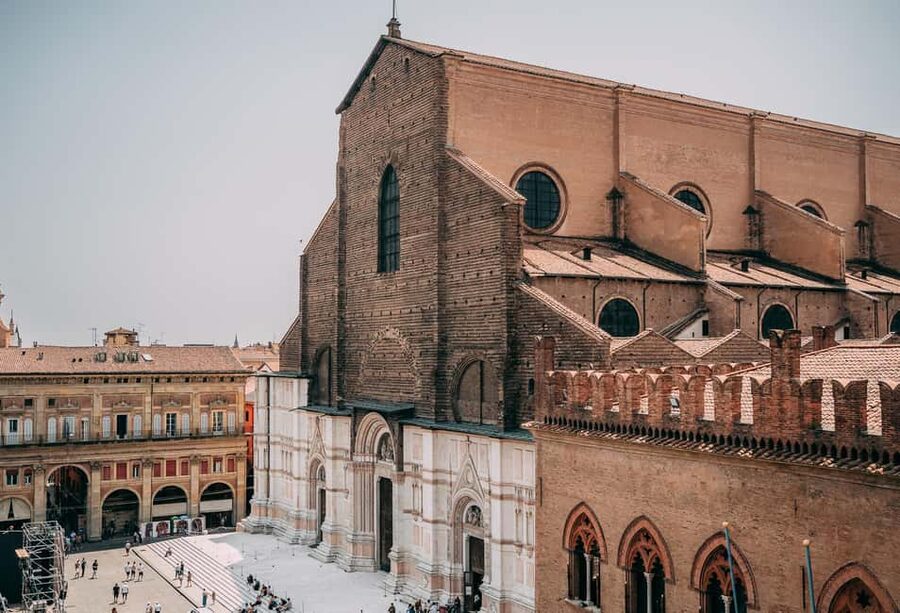
Piazza Maggiore gives you the right opening frame for Bologna. The broad square is dominated by the Basilica di San Petronio, a huge church with a striking unfinished facade. Nearby, the Fountain of Neptune brings a different mood, with mythological figures and a strong sense of civic display.
You should expect an explanation of the square and its landmarks before the walk continues. The quality of that opening matters. One poor experience involved spending more than 30 minutes at the Neptune Fountain with little useful information, while other guides, including Sofia, received praise for clear storytelling and strong command of Bologna’s past.
That difference tells you something important. A city tour depends heavily on the person holding the sign. If the guide introduces the city well, Piazza Maggiore becomes a helpful map of Bologna’s power, religion, and public life. If the explanation is thin or difficult to hear, the opening can feel like wasted time.
More Small-Group History Tours in Italy
- VIP Colosseum Underground and Ancient Rome Small Group Tour
★ 4.5 · 332 reviews - Lecce History and Street Food Tasting Small Group Tour
★ 5.0 · 288 reviews - Small-Group Rome to Pompeii & Amalfi: Day of History & Sea
★ 5.0 · 239 reviews
Inside the Archiginnasio’s Teatro Anatomico
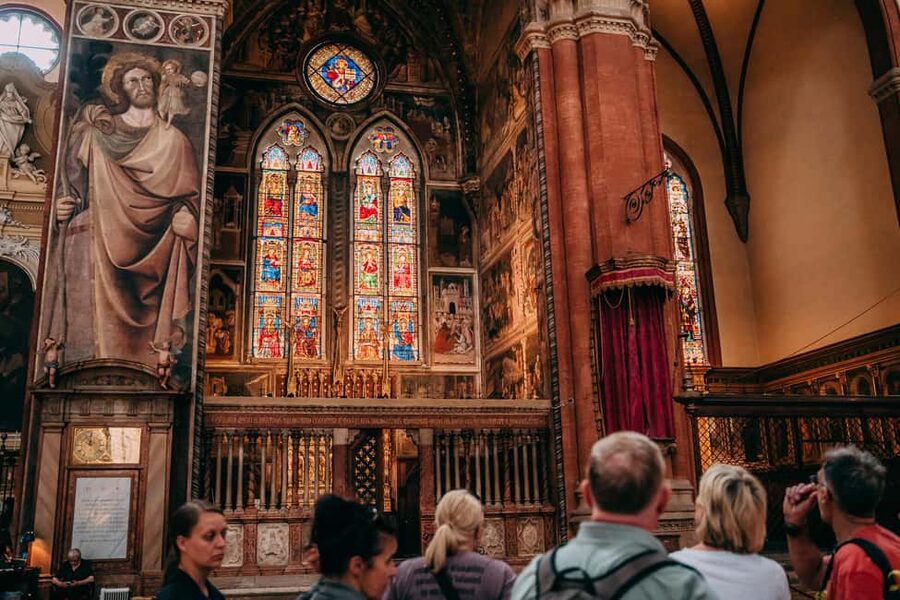
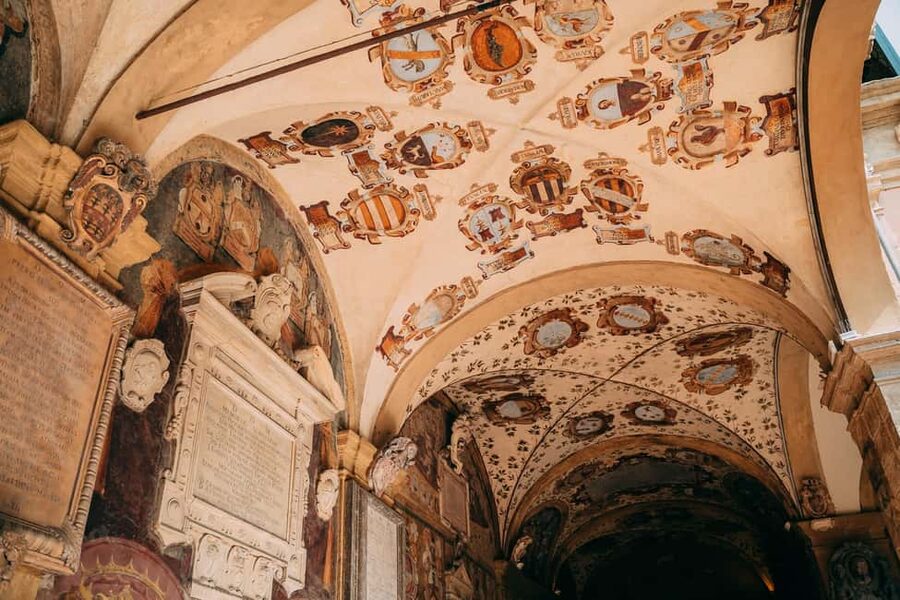
The Archiginnasio is the tour’s strongest reason to book. Once one of Bologna’s main university buildings, it carries the atmosphere of an old place of study, with decorated corridors, coats of arms, and an academic setting that feels very different from the open squares outside.
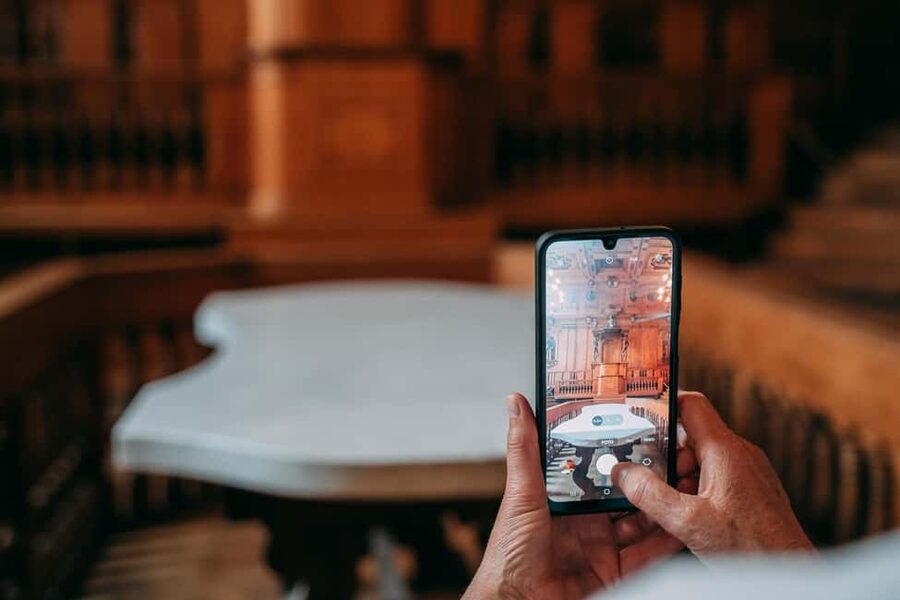
The Teatro Anatomico is the key room. Medical students once gathered here to learn anatomy, and the room was designed for teaching rather than comfort. Its carved wooden interior gives the space a formal, almost theatrical quality. You are not simply looking at another church or palace. You are seeing where medical instruction took place in an era when anatomy was taught through direct observation.
The included entrance ticket adds real value. You do not need to arrange a separate visit, and the guide can connect the room to the wider story of Bologna as a university city. That context helps the building make sense. Without it, you might admire the woodwork and leave without understanding why the room matters.
The visit is also a good fit for travelers who like unusual historical stops. The Teatro Anatomico is not a broad museum with dozens of rooms to explore. It is a concentrated visit built around one memorable interior. The guide’s explanation is therefore important, especially since the tour gives you only two hours overall.
Walking the Quadrilatero Market
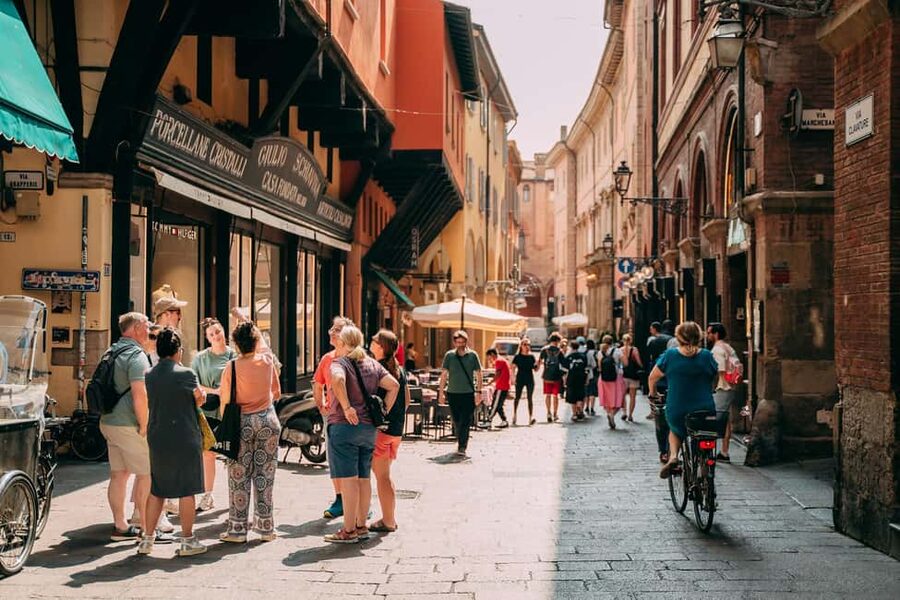
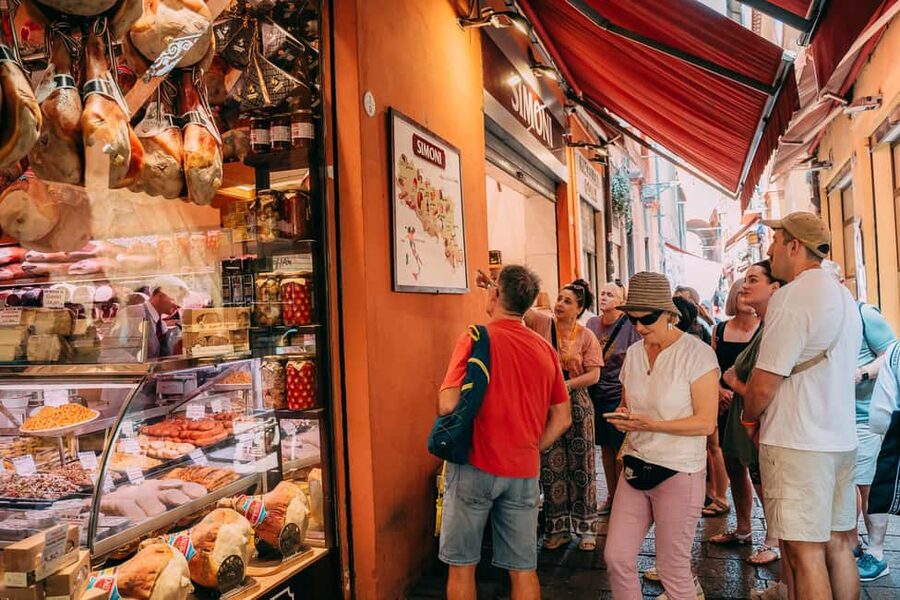
From the Archiginnasio, the route reaches the Quadrilatero, Bologna’s old market district. This is where the tour shifts from formal history to everyday food culture.
The narrow streets are lined with shops selling cheeses, meats, and other local products. You’ll see food being displayed for purchase rather than arranged as a staged tasting experience. That distinction matters. The tour introduces you to the district, but the cost does not include food, tastings, or a meal.
I recommend treating this stop as a chance to make your own purchase during free time. A small piece of cheese or cured meat can be an easy picnic item, and browsing the stalls gives you a more personal connection to Bologna than simply hearing a list of regional dishes.
The market also helps break up the historical material. After the formal Archiginnasio, you get color, smells, shop windows, and the ordinary business of feeding a city. The stop may be brief, so do not expect a long food lesson or a guided tasting. If food is your main reason for visiting Bologna, you’ll need extra time after the tour.
The Due Torri and Bologna’s medieval skyline
The walk continues toward the Due Torri, Bologna’s famous pair of medieval towers. They are among the city’s most recognizable landmarks, and their slight lean gives them an immediate visual hook.
The towers offer a glimpse of Bologna’s medieval past and its old habit of building upward for status and defense. On a short city tour, they work well as a landmark because you can understand their importance quickly, even without a long visit inside.
The route is mainly about seeing and understanding the towers, not climbing them. The supplied details do not promise tower entry, so you should not book this experience expecting a timed climb or rooftop view.
Pay attention to the guide’s position here. The route is outdoors, and one account described difficulty hearing the guide because no headphones were provided. If your group is large or the street is noisy, stay close and ask the guide to repeat key points. That simple step can make a major difference.
There has also been confusion about where the walk ends. One account described an additional walk from the Due Torri to the Clock Tower, which was considered outside the expected package. Before setting a strict schedule after the tour, confirm the final stop with your guide.
Same streets, a different century:
- Colosseum: Underground and Ancient Rome Tour
★ 4.7 · 12,691 reviews - Rome: Colosseum with Arena, Roman Forum and Palatine Guided Tour
★ 4.0 · 5,598 reviews - Venice: St. Mark’s Basilica Guided Tour & VR History Intro
★ 3.9 · 4,880 reviews - Colosseum with Arena, Roman Forum and Palatine Hill Guided Tour
★ 4.5 · 3,526 reviews
Santo Stefano, galleries, and the covered arcades
After the Due Torri, the walk continues toward Santo Stefano and its group of seven churches. This part adds another layer to Bologna’s center. Rather than focusing on one famous building, the route gives you a sense of how religious spaces, shopping streets, and old civic areas fit together.
The phrase seven churches refers to a connected religious complex with several historic structures. The route may take you inside many well-known galleries, including Galleria del Leone and Galleria Cavour. These passages and arcades bring you through parts of the city that can be easy to miss if you follow only the main squares.
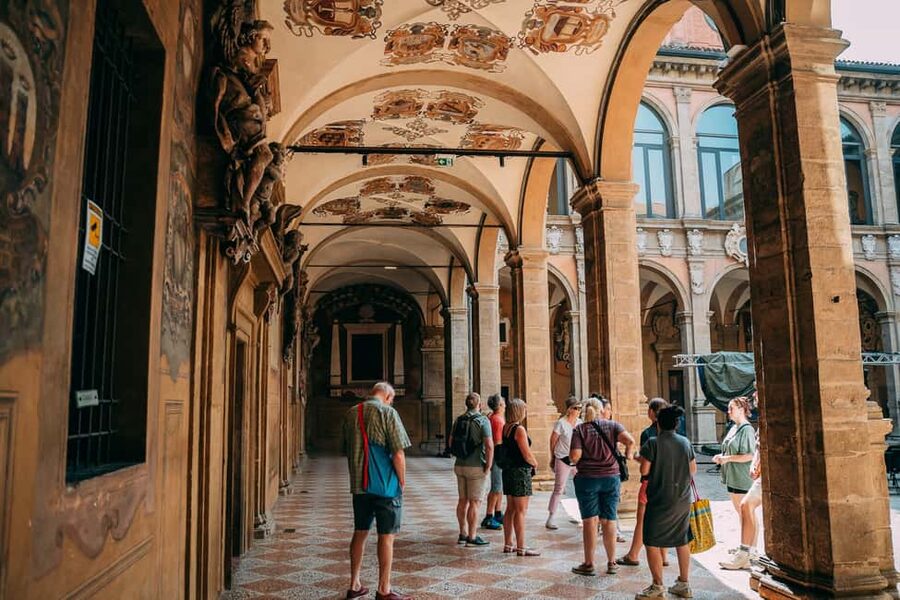
Bologna’s porticos are one of the walk’s most practical pleasures. They stretch along many streets, giving you shade on sunny days and cover in wet weather. They also shape the feel of the city. Walking beneath them, you are protected from traffic and weather while still moving through active streets and public spaces.
The tour runs rain or shine, so dress for the forecast. The porticos help, but they do not make every part of an outdoor walk dry. Comfortable shoes are sensible because the experience involves steady walking between several central sights.
What two hours can realistically cover
Two hours is enough to get your bearings and see a strong selection of central Bologna. It is not enough for a slow visit to every site, extended shopping, a full food stop, and detailed explanations at every landmark.
The route works best as an introduction. You can use it to decide where to return later, perhaps to spend more time around the market, revisit Santo Stefano, or explore the Archiginnasio at a slower pace if available.
The short format is also useful if Bologna is one stop on a wider Emilia-Romagna trip. You get the main center without giving up half a day. Families and first-time visitors may appreciate that structure, though minors must be accompanied by an adult.
A two-hour tour can feel efficient or rushed depending on the guide. Strong organization keeps the route moving while still allowing time for questions. Poor pacing can leave you standing too long in one place and hurrying through the next. The mixed guide feedback makes this the main variable to consider.
Guide quality and group size
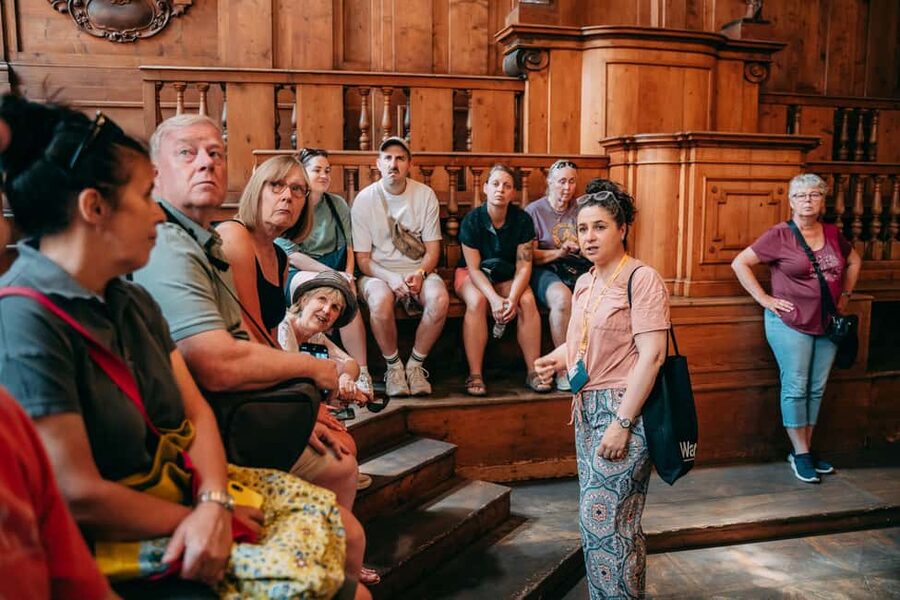
The tour includes a local licensed guide and operates in English. One guide named in the feedback is Sofia, whose storytelling and clear English were especially well received. Other accounts describe English that was difficult to understand, weak introductions, and guides who walked ahead without much contact with the group.
I would not ignore this issue. A tour of Bologna’s old center relies on spoken explanation. The Teatro Anatomico is visually special, but the point of joining a guide is to understand what you’re seeing. If you cannot hear the explanation, the included ticket loses some of its value.
The experience is described as small-group, but an exact maximum is not provided. One account reported a group of 10 or more, so you should not assume an intimate group of four or six people. A larger group can make it harder to hear, especially at the Neptune Fountain or around the Due Torri.
The overall score is 4.3 from 30 ratings, which suggests a generally positive experience with a noticeable spread in satisfaction. I would book it for the route and included access, but I would keep expectations sensible about group size and sound equipment. Headphones are not listed as included.
Price, value, and who should take it
At $45 per person, the tour is reasonably priced if you want a guide and the Archiginnasio entrance in one compact visit. The value comes from combining several central sights with a licensed guide, rather than from any included food or special transportation.
You are paying for organization and explanation. That can be worthwhile on a first morning in Bologna, especially if you want the city’s main center explained before exploring alone. The tour also saves you from arranging the Archiginnasio ticket separately.
The value is weaker if you mainly want a food experience. The Quadrilatero is included as a market walk, but purchases are your responsibility. It is also less suitable if you dislike fixed pacing or need a very quiet, highly personal tour.
I see this as a good choice for:
- First-time visitors with only a short window in Bologna
- People interested in architecture, old universities, and medical history
- Visitors who want a central walking route rather than hotel transport
- Families with older children, provided an adult accompanies minors
- Travelers who plan to return to the market or Santo Stefano later
You may want another format if you require guaranteed headsets, a strictly tiny group, or detailed accessibility confirmation. The activity is described as wheelchair accessible, but some sections may not work for people with reduced mobility or other disabilities. Contact the provider before booking if that affects your plans.
Practical details before you go
The meeting point is in front of the red kiosk. Look for the guide with the yellow TOUR sign. The tour is conducted in English, and the listed duration is two hours.
There is no hotel pickup or drop-off. You will meet in the city center and remain on foot. Wear shoes suited to steady walking, and consider a water bottle in warm weather even though the porticos provide shade.
The tour is guaranteed with a minimum of two people. You can cancel up to 24 hours before the start for a full refund, and the reserve-now, pay-later option gives you some flexibility while arranging your schedule.
Since the tour runs in all weather, check the forecast and carry rain protection when needed. Stay near the guide at crowded stops, especially if the group is larger than expected or if no audio system is being used.
Should you book this Bologna tour?
Book it if you want a well-chosen first look at central Bologna and the Teatro Anatomico appeals to you. The route combines an unusual interior, a food market, medieval towers, Santo Stefano, galleries, and the city’s famous porticos in only two hours.
The main caution is guide consistency. Sofia is specifically associated with an excellent experience, but other accounts point to unclear English, weak organization, and groups larger than expected. If you can accept that uncertainty, $45 is fair for the included entrance and central route. If clear audio and a guaranteed intimate group are essential, choose a tour that promises those details in writing.
FAQ
Where does the tour meet?
Meet in front of the red kiosk. The guide will be holding a yellow sign with TOUR written on it.
How long does the tour last?
The tour lasts two hours.
What language is the tour conducted in?
The live guided tour is conducted in English.
Is the Archiginnasio entrance included?
Yes. The entrance ticket for the Archiginnasio and its Anatomical Theatre is included.
Does the tour include hotel pickup and drop-off?
No. Hotel pickup and drop-off are not included.
Is the tour wheelchair accessible?
The activity is listed as wheelchair accessible, but some parts may not be accessible for people with reduced mobility or other disabilities. Contact the provider if you need specific details.
What happens if it rains?
The tour runs rain or shine. Bologna’s porticos provide shade and shelter along much of the route, but you should still dress for the weather.
Newest history tours we have reviewed in Italy
- Guided Cultural Tour of the Godfather Film in Messina★ 5.0 · 31 reviews
- SU NURAXI BARUMINI Unesco World Heritage Site★ 5.0 · 129 reviews
- Picnic aperitif in the vineyard of an ancient trullo in Martina Franca★ 5.0 · 21 reviews
- Brescia the Unexpected: History, Local Stories & a drink★ 5.0 · 31 reviews
- Bologna historical art walking tour with hidden gems and tastings★ 5.0 · 108 reviews
- Bolognese Cooking Class with Margherita in the Historic Center★ 5.0 · 26 reviews
- Best of Bologna in one day : Food, architecture, art and history★ 5.0 · 27 reviews
- Private or semi-private tour of the historic center of Bologna★ 5.0 · 34 reviews
Small-Group History Tours, compared.
Freedom Trail History Small Group Walking Tour
Read our review →
Madrid Tapas & Taverns Small Group Food & History Tour
Read our review →
Hidden Alleyways and Historic Sites Small-Group Walking Tour
Read our review →
New Orleans Small-Group Haunted History Carriage Tour
Read our review →
Half Day Dominican Republic Cultural Tour : Small Group
Read our review →
Ultimate Seville Tapas, Wine & History Small Group Tour
Read our review →
Vienna Historic Center Small Group Walking Tour
Read our review →Browse the lists this tour appears in