Review · DUBROVNIK HISTORY TOURS
Dubrovnik Old Town: Small-Group Walking Tour With A Local
Dubrovnik’s best introduction may be a walk led by someone who grew up inside the Old Town. This tour traces the city from Ploče Gate to Pile Gate, linking grand palaces and churches with small details, old graffiti, golden statues, and stories you could easily miss on your own.
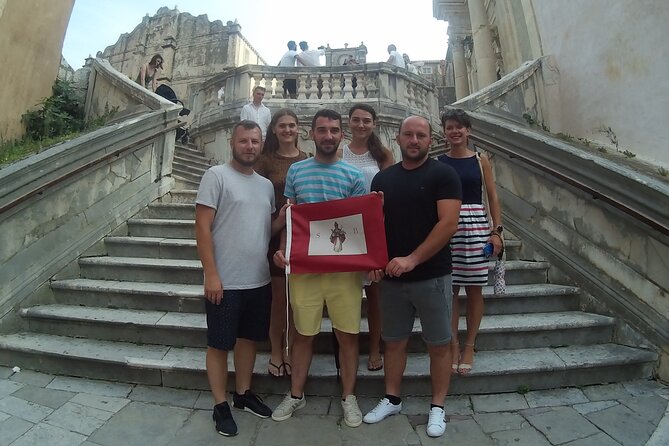
I like the eight-person limit, which keeps the guide close enough to answer questions and adjust the pace. I also like the playful approach used by guides such as Marko, Markus, and Lucy, including trivia games and local tales that make dates and names easier to remember.
The main consideration is that this is a fast survey rather than a museum tour. Entrance fees are not included, and the group does not go inside churches or museums requiring tickets. You’ll see many doors and facades from the street, then return later if a particular site catches your eye.
Key points to know before booking
- Small group of eight: You get a more personal walk than on a large city tour, with room for questions and conversation.
- Ploče to Pile route: The tour crosses most of the essential Old Town, ending near Onofrio’s Large Fountain.
- Local perspective: Guides raised in Dubrovnik, including Marko and Markus, add stories about daily life as well as formal history.
- Interactive storytelling: Trivia questions, small competitions, legends, and architectural details keep the walk active.
- No interior admissions: Churches, the Rector’s Palace, the synagogue, and other paid sites are viewed from outside.
- Good first-day choice: The 90-minute to two-hour route gives you a useful map of Dubrovnik before you explore alone.
Why this small-group walk works in Dubrovnik
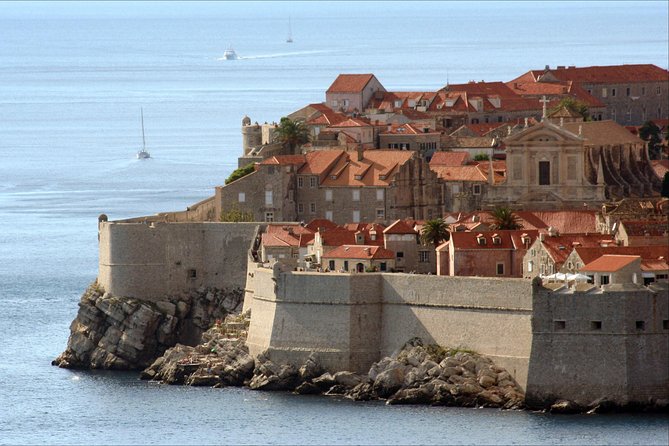
Dubrovnik can feel like a beautiful stone puzzle when you first arrive. The main street, Stradun, is easy to find, but important sights branch off into squares, lanes, stairways, churches, and courtyards. A guide helps you understand how the pieces fit together.
This is not a tour built around one famous monument. It is a connected walk through the old Republic of Dubrovnik, from its trade and defenses to its religion, politics, art, and daily customs. You move steadily, but the stated duration of about 90 minutes to two hours leaves enough time for explanations and questions.
The group size matters here. Eight people is small enough that you can hear the guide in a narrow street and ask about something that catches your eye. If only three people book a departure, the walk becomes even more personal. The guides also appear willing to slow down when needed. Marko was specifically praised for keeping an easy pace for someone with minor mobility issues.
Your guide may be Marko, Markus, Marco, or Lucy. The exact guide depends on the departure, but the experience is designed around local knowledge rather than a script read from a distance. Markus, for example, was raised in the Old Town, while Marko combines historical context with stories about modern life. That local connection is one of the strongest reasons to choose this tour.
More History Walking Tours in Croatia
- Dubrovnik Old Town History Walking Tour
★ 5.0 · 1,684 reviews - Dubrovnik: Ancient City Walls & Wars Walking Tour
★ 5.0 · 1,270 reviews - Zagreb: City & History Walking Tour & WW2 Tunnels
★ 4.9 · 1,202 reviews
Starting at Ploče Gate and the Dominican Monastery
The meeting point is at the Harbour Viewpoint near Ploče Gate, the eastern entrance to the Old Town. This is a sensible place to begin because the gate immediately introduces Dubrovnik as a fortified city shaped by trade, diplomacy, and defense.
Expect a short introduction before entering the historic center. Your guide explains the beginnings of Dubrovnik and why the old Republic mattered. That opening gives you a framework for the rest of the walk, so later stops are more than a parade of pretty buildings.
The first major stop is the Dominican Monastery, described as the oldest still active monastery in Dubrovnik. You view it as part of the walking route, but admission is not included and the tour does not enter paid sites. If religious art or monastery collections are important to you, note this location and return independently.
The brief stop is useful even without an interior visit. The monastery helps show how religious institutions were woven into civic life, education, and defense. Your guide can provide the background, while you decide later if you want to pay for a closer look.
Harbor stories and Dubrovnik’s seafaring past
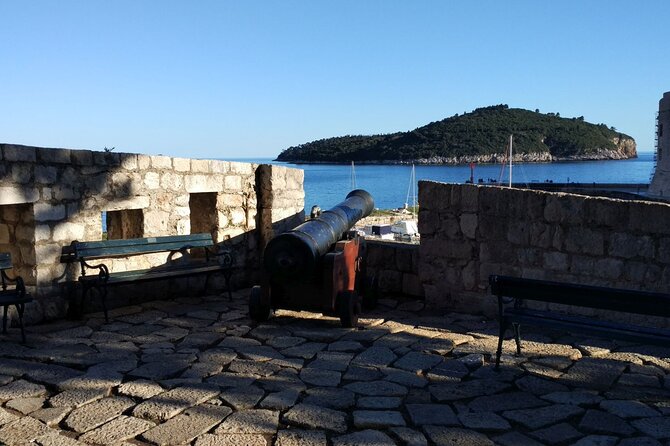
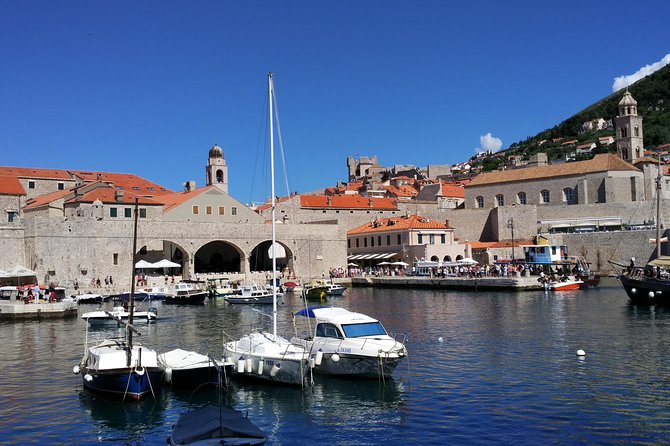
The route continues toward the City Harbor, once a center of trade for the Dubrovnik Republic. Wooden galleons were built here, and the waterfront linked the city to a wider network of commerce.
This is one of the places where a local guide adds real value. On your own, you might admire the water and stone walls, then continue toward the next landmark. With context, the harbor becomes evidence of Dubrovnik’s practical power. This small republic survived through trade, diplomacy, and careful political choices, not just through its walls.
The stop is short, so do not expect a long maritime lecture. Instead, it gives you an important piece of the city’s identity before the walk turns toward major religious and civic buildings.
The cathedral, Jesuit church, and Gundulić Square
At the Cathedral of the Assumption of the Virgin Mary, your guide explains why people sometimes speak of one cathedral or three. The present baroque building carries layers of rebuilding and change, and the stories include both documented events and local legends.
Admission is not included, and the tour does not enter. Still, the exterior stop helps you place the cathedral within the city’s religious center. If you want to see the interior, plan a separate visit after the walk.
The Church of St. Ignatius of Loyola brings a different subject: the arrival and influence of the Jesuits in Dubrovnik. Your guide also tells the story of a famous Jesuit from Dubrovnik whose name has reached the Moon through a lunar crater. It is the sort of unusual fact that makes a short stop stick in your memory.
Nearby, you meet the monument to poet Ivan Gundulić and the market square. This is a good point to connect public space with culture. Dubrovnik’s old streets were not only for government and trade. Poetry, performance, worship, and everyday selling all took place within the same compact center.
The guide may add practical observations about how the square works today. That mix of past and present is useful because it keeps Dubrovnik from becoming a museum set.
More Old Town and Historic Centre Walks in Croatia
- Dubrovnik Combo: Old Town & Ancient City Walls
★ 5.0 · 1,019 reviews - Dubrovnik: Old Town History Walking Tour
★ 4.9 · 474 reviews - SPLIT-PRIVATE Walking Tour of Diocletian’s Palace & Old Town
★ 5.0 · 467 reviews
Rector’s Palace and the political heart of the Republic

The Rector’s Palace is one of the most important stops on the route. It was once the supreme political institution of the Dubrovnik Republic, and your guide explains the old aristocracy, political customs, and some of the stranger details connected with the building.
The stop lasts around ten minutes, longer than many of the smaller landmarks. That is appropriate. The palace helps explain how Dubrovnik governed itself and why the city developed such a careful style of diplomacy.
Admission is not included, so you see the palace from outside during the walk. I consider this a fair trade for a first orientation, especially if your main goal is to cover the city rather than spend the morning inside one museum. If you want more detail about the Republic’s institutions, return to the palace afterward with your new background.
The route then reaches the statue of Marin Držić, the city’s famous Renaissance playwright. His golden nose has become a popular touch point, and your guide explains why people rub it. Small customs like this make the walk playful without turning it into a shallow sightseeing contest.
Sponza Palace, the bell tower, and Saint Blaise
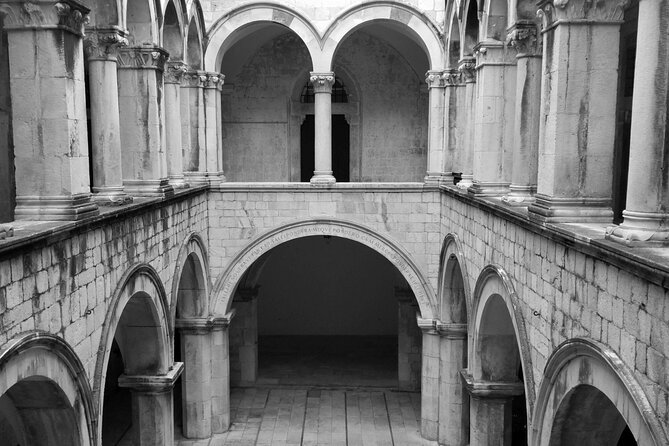
Sponza Palace once served as the customs house of the Dubrovnik Republic. Today it houses historical archives, making it another place where the city’s commercial and political past remains tied to an active cultural institution.
Your guide shares Latin proverbs connected with the building and its former role. The stop lasts only a few minutes, but it adds another layer to Dubrovnik’s civic character. The old Republic relied on paperwork, law, trade, and language as much as it relied on stone walls.
The Bell Tower follows, with an explanation of what makes it unusual. The stop is brief, but it helps you read the city skyline and understand how public buildings were arranged around the central square.
At the Church of St. Blaise, you learn about Dubrovnik’s patron saint. You will see images of Saint Blaise throughout the city, and the guide separates legend from the historical story connected with him. This is a useful orientation point for the many religious symbols you will notice during the rest of your stay.
Nearby, the Orlando Column recalls the brave knight Orlando and his role as a symbol of the old Republic. The column also shows how Dubrovnik used public monuments to express independence, law, and civic identity.
The synagogue and the quieter lanes
The Dubrovnik Synagogue offers one of the longer stops, about ten minutes. Your guide discusses the Jewish community from its early days through difficult periods to the present.
This is an important part of the walk because it broadens the story beyond rulers, churches, and famous men. Dubrovnik’s past included different communities with their own traditions and challenges. The synagogue stop gives you a more complete view of life in the old city.
Admission is not included, and the tour does not enter paid interiors. If this part of Dubrovnik’s story interests you, ask your guide for practical advice about visiting later. The small group makes that kind of question easier than it would be on a crowded bus tour.
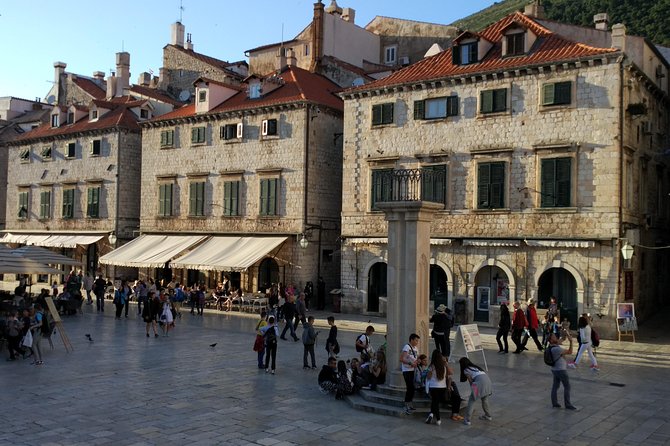
The route then turns along Stradun, the polished main street of the Old Town. Stradun is the place most people picture when they imagine Dubrovnik, but a guide can help you notice its scale, paving, buildings, and role as the city’s main public corridor.
From there, the walk visits the Church of St. Roch, tucked away from the main street. Your guide points out old graffiti and explains that children played football in front of the church in the sixteenth century. This is exactly the sort of detail I value in a city walk. It puts ordinary life beside grand architecture.
Stradun, Onofrio’s Fountain, and the Franciscan Monastery
The Onophrian Fountain marks the end of the old aqueduct built in the fifteenth century. It was not just decoration. Reliable water was essential in a fortified city, and the fountain shows how engineering supported urban life.
The stop takes only a few minutes, but it gives you a practical way to understand Dubrovnik. The city’s survival depended on systems that are easy to overlook when you focus only on palaces and churches.
At the Franciscan Church and Monastery, your guide explains the Franciscans’ role in Dubrovnik society and points out the pharmacy known for its long continuity of work in Europe. Admission is not included, so you see the site from the outside during the tour.
This is another place where I would make a note for a later visit. The guided walk gives you the story and location, but it does not replace time inside a museum, monastery, or church. That limitation is clear, and it helps you plan your remaining hours.
Finishing at Pile Gate
The tour ends near Pile Gate, the western entrance to the Old Town, beside Onofrio’s Large Fountain. Your guide closes with the end of the Dubrovnik Republic, giving you a better sense of how the city moved from its old political system into its later history.
Ending at Pile Gate is practical. You are near a major Old Town entrance and can continue exploring, find the fountain easily, or make your own way onward. The route also gives you a clean east-to-west crossing of the historic center rather than leaving you in the same square where you began.
The finish is not a grand finale in the theatrical sense. It is more useful than that. You leave with a basic map of the Old Town, a list of places worth revisiting, and enough background to make independent sightseeing more rewarding.
What the $34.59 price delivers
At $34.59 per person, the value depends on how you use the tour. You are paying for a licensed professional guide, a small group, and a two-hour orientation across many of Dubrovnik’s main sights. No entrance tickets are included.
That price makes sense if you want context rather than simply a route through the streets. A guide can point out the old graffiti at St. Roch, explain the statue of Marin Držić, connect the harbor to the Republic’s trade, and help you understand why Saint Blaise appears across the city.
It is less useful if you prefer long interior visits. You will need to pay separately for sites such as the Rector’s Palace, the cathedral, the Franciscan complex, or the synagogue when admission applies. Think of this as a foundation for independent sightseeing, not a substitute for every museum.
The tour is offered in English and uses a mobile ticket. Confirmation comes at booking. Free cancellation is available up to 24 hours before the start time, while poor weather or failure to meet a minimum group size can lead to a different date or a full refund.
Who should book this Dubrovnik walk?
I would choose it for a first visit, especially if you want the main Old Town sights explained without joining a large group. Couples, families, and small groups of friends should find the format easy to manage, and the interactive questions can keep older children or teenagers involved.
It also suits you if you care about the human side of history. The strongest moments are not only the palaces. They are the stories about local residents, old games, symbols, faith, language, and daily routines.
You should think twice if you need a fully accessible route without any uncertainty. The information says most people can participate and service animals are allowed, and one guide adjusted the pace for a person with minor mobility issues. Still, Dubrovnik’s historic streets can be demanding, so ask the provider about your specific needs before booking.
Should you book it?
Book this tour if you want a compact, local introduction to Dubrovnik with a real chance to ask questions. The eight-person cap, local guides, easy pace, and lively trivia make it more personal than a standard large-group walk.
Skip it if your priority is entering several museums or spending a long time inside the cathedral, palace, or monasteries. For most first-time visitors, though, the route is a smart opening move: learn the city’s shape and stories first, then return to the places that deserve more time.
FAQ
How long does the Dubrovnik Old Town walking tour last?
The tour lasts approximately 90 minutes to two hours.
How many people can join the tour?
The tour has a maximum of eight participants.
Where does the tour begin?
It begins at the Harbour Viewpoint near Ploče Gate, at Ul. Svetog Dominika bb in Dubrovnik.
Where does the tour finish?
It ends near Pile Gate, beside Onofrio’s Large Fountain.
Is the tour offered in English?
Yes. The tour is offered in English.
Are admission fees included?
No. Entrance fees are not included, and the tour does not visit churches or museums that require paid admission.
Does the tour enter the Rector’s Palace?
No. The Rector’s Palace is visited as part of the street walk, but admission is not included.
Is the tour suitable for most people?
The activity information says most people can participate. Service animals are allowed, and the tour is near public transportation.
Can I cancel for a full refund?
Yes, if you cancel at least 24 hours before the experience start time. Cancellations made less than 24 hours in advance are not refunded.
What happens if the weather is poor or the minimum group size is not met?
If poor weather or an insufficient number of participants causes cancellation, you can receive a different date or a full refund.
More Small-Group History Tours in Croatia
- Split History and Gastro Small-Group Tour with Food and Drinks
★ 5.0 · 375 reviews - Dubrovnik: Game of Thrones and History Small Group Tour
★ 5.0 · 76 reviews - History Split Walking Tour in French -Small group
★ 5.0 · 41 reviews
Newest history tours we have reviewed in Croatia
- Split History and Gastro Small-Group Tour with Food and Drinks★ 5.0 · 375 reviews
- Dubrovnik: Game of Thrones and History Small Group Tour★ 5.0 · 76 reviews
- History Split Walking Tour in French -Small group★ 5.0 · 41 reviews
- Private History Split Walking Tour in English★ 5.0 · 159 reviews
- Dubrovnik Jewish Heritage Private Walking Tour★ 5.0 · 121 reviews
- Jewish Heritage & Diocletian’s Palace Private Split Tour★ 5.0 · 80 reviews
- Split: Historical Tour of Salona, Klis Fortress and Trogir★ 4.1 · 108 reviews
- History & Cultural Walking Tour of Split and Diocletian’s Palace★ 5.0 · 104 reviews
Old Town & Historic Centre Walks, compared.

Madrid Essential: Historic Center, Plaza Mayor & Royal Palace
Read our review →
Live Fado Show with Port Wine in Historic Center
Read our review →
Valencia Old Town Tour with Wine & Tapas in 11th Century Historic Monument
Read our review →
Prague Old Town, Medieval Underground and Dungeon Historical Tour
Read our review →
Cartagena: Historic Center and Getsemaní Shared Walking Tour
Read our review →
Old Town Walking Tour History and Tales in Edinburgh
Read our review →