
Review · COLOMBIA HISTORY TOURS
Historical Shared Tour Salsa, Graffiti & Resistance in Cali
Cali’s salsa story is not confined to nightclubs. It runs through plazas, murals, public buildings, food streets, and the art of getting people together. This three-hour walk connects those pieces, finishing at Cimarrón Salsa Bar, where the city’s music culture takes a more active turn.
I like the way the tour links street art with resistance, rather than treating murals as pretty backdrops. I also like the practical touch of learning a few dance steps and playing instruments along the way. The main drawback is pace: ten stops in about three hours means brief visits, and you’ll need to pay separately for food, drinks, and any nightlife after the walk.
Key points to know before you book
- Salsa is the main thread: You’ll learn how music and dance shape Cali’s public life.
- Ten central stops: The route covers plazas, cultural buildings, murals, a tunnel, and salsa venues.
- Street art has a social purpose: The guide explains how music, dance, and painting can support peaceful resistance and community identity.
- The walk ends at Cimarrón: You finish at a cult salsa bar, with advice on other places to hear music.
- Spanish is the tour language: The guide is certified and speaks Spanish.
- The group can reach 30 people: That keeps the price low but may limit personal attention.
Why this walk is more than a salsa introduction
You can come to Cali for dance lessons, nightclub music, or the famous local style of salsa. This experience gives you the setting around the music. It shows you where public art, local pride, popular culture, and city history meet.
That broader frame matters. Salsa here is not presented as a simple show for outsiders. The route explains the role of musicians, dancers, neighborhoods, and artists in shaping Cali’s identity. You may also hear about the popular cultural revolution, a phrase used for the way ordinary people use music and art to claim space and express their views.
The best guides make the subject lively. Cristian, also listed as Christian in one account, has led tours that included dance steps, instruments, city history, and what he calls salsa survival skills. Juliana has also guided the walk. The exact guide depends on the day, but the experience is designed to be active rather than a long lecture.
You should expect plenty of walking, short stops, and frequent explanations outdoors. Most people can participate, and the route is near public transportation. Service animals are allowed. Since the walk depends on good weather, a bad-weather cancellation may lead to a new date or a full refund.
More WWII and D-Day Tours in the world:
- Vienna: World War II Historical Walking Tour
★ 4.8 · 1,772 reviews - Zagreb: City & History Walking Tour & WW2 Tunnels
★ 4.9 · 1,202 reviews - Pearl Harbor History Remembered Tour from Ko Olina
★ 5.0 · 1,009 reviews
Plazoleta Jairo Varela: starting with the composer
The walk begins at Plazoleta Jairo Varela, also called Plazoleta de La Caleñidad. The address is on Avenida 2 Norte in the Granada area.
This is a sensible starting point because Jairo Varela is one of Cali’s major salsa composers. Murals around the plaza celebrate his life and work, so the guide can introduce the music through a person rather than a list of dates and names.
The plaza gives you an early sense of how Cali presents salsa in public. You are not waiting until nighttime to encounter the city’s main cultural language. Music, images, and public space begin working together here.
The stop lasts about 18 minutes. That is enough for an introduction and a few photographs, but not enough for a long artistic study. Treat it as the opening chapter, not a complete look at Varela’s career.
Parque de las Piedras and the social side of salsa
Next comes Parque de las Piedras, a meeting place for salsa lovers. Fountains, sculptures, open areas, and murals give the guide several ways to explain how people gather around music.
I find this kind of stop useful because it moves the subject away from clubs. Salsa is also about public life, casual meetings, local celebrations, and the way a city gives people room to spend time together.
The murals here reflect Cali’s cultural mix. Your guide may connect those images to the music scene and to the many influences that make the city’s salsa culture distinct.
Again, the scheduled visit is about 18 minutes. You will get the key ideas, but you should not expect a slow, detailed tour of every sculpture or mural.
Fine Arts and Cali’s creative community
The Departmental Institute of Fine Arts adds a more formal artistic setting. The building is a cultural center with exhibitions of painting, sculpture, and photography.
This stop helps explain that Cali’s creative life is not divided neatly into high art on one side and street culture on the other. Music, photography, sculpture, painting, and dance can all speak to the same questions of identity and public life.
The link between art and music is the important part. You may learn how the local art scene reflects, supports, or questions the city’s musical culture.
The practical limitation is simple: the itinerary gives you about 18 minutes here. If an exhibition is open, you may get a quick look, but this is not a full museum visit. Think of it as a connection between the city’s formal arts institutions and the street art you see later.
More History Tours in the world:
- New York City: American Museum of Natural History Ticket
★ 4.5 · 15,447 reviews - History and Hauntings of Salem Guided Walking Tour
★ 5.0 · 14,564 reviews - Colosseum: Underground and Ancient Rome Tour
★ 4.7 · 12,691 reviews - Lisbon: History, Stories and Lifestyle Walking Tour
★ 4.8 · 10,902 reviews
La Curva del Boulevard: murals, food, and nightlife
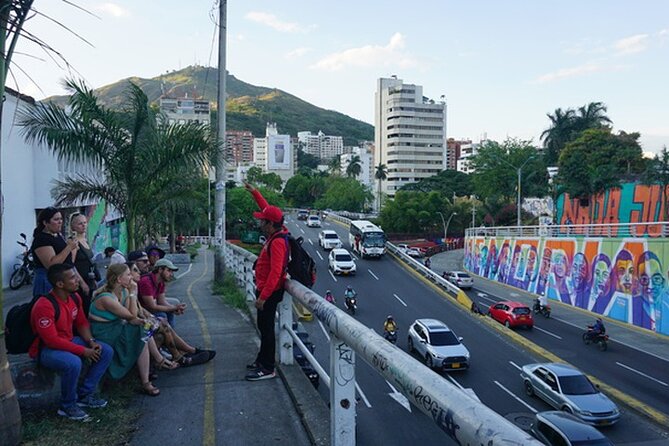
La Curva del Boulevard changes the mood. This area is known for nightlife and dining, with murals covering building fronts.
It is a useful place to pause and think about how food, music, and public art fit together. You might find a typical dish that catches your eye, but food is not included in the tour. Bring extra money if you want to eat, and ask the guide for suggestions.
The murals are part of the attraction. They help turn ordinary facades into public storytelling spaces, while the restaurants and nightlife show how the cultural scene continues after the daytime walk ends.
With only 18 minutes here, you are unlikely to have a full meal during the scheduled stop. I would treat this as a good place to note a restaurant for later rather than ordering a complicated dish and rushing through the rest of the route.
Edificio Boulevard del Río Emcali and the city view
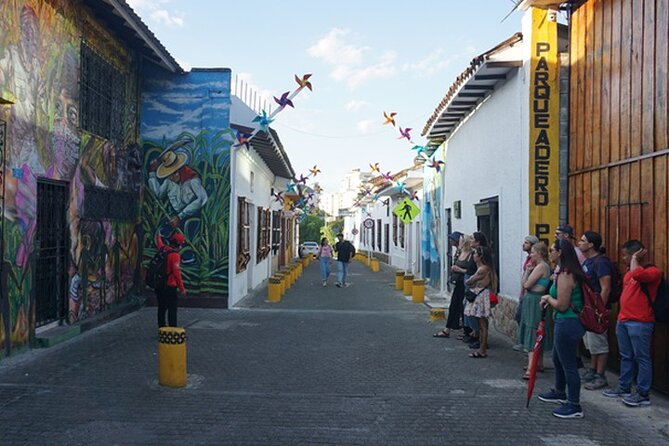
The Edificio Boulevard del Río Emcali brings a more modern architectural note. It represents Cali’s urban development and offers a viewpoint over the city and the Cali River.
This stop gives the walk some visual balance. After murals, plazas, and cultural buildings, you get a wider view of the city itself. A city’s music culture makes more sense when you can see the streets, river, and built-up areas where daily life takes place.
The view is also a natural pause in the storytelling. You can take photographs and get your bearings before moving toward the more concentrated salsa section.
The description presents the viewpoint as part of the stop, but access conditions can vary. The tour information does not promise a long rooftop visit or a private viewing area, so expect the guide to work with whatever public access is available that day.
Calle del Sabor: the route’s salsa center
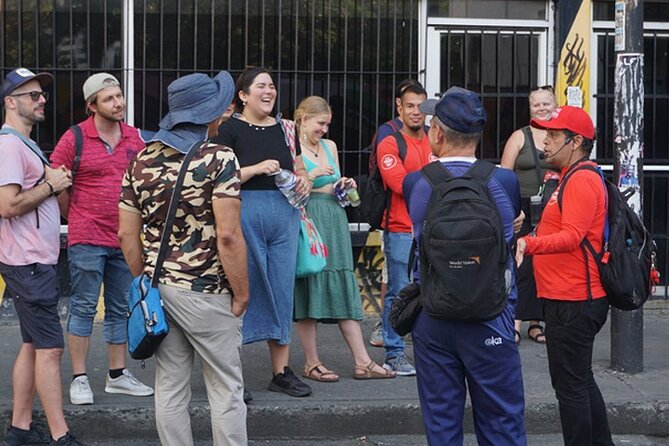
Calle del Sabor is the heart of the walk. Bars, restaurants, themed shops, murals, and music come together along this stretch.
The walls tell stories of musicians, dancers, and popular culture. This is where the tour’s three subjects, salsa, graffiti, and resistance, feel most closely connected. The music gives the murals their subject matter, while the murals show how the city remembers and celebrates its performers.
You may also get recommendations for salsa bars and local food. Those suggestions can be more useful than a generic list because they come after the guide has explained the city’s music districts and public culture.
The stop is still scheduled for about 18 minutes. You will get an introduction, not a full evening out. If you want to eat, drink, or listen to a complete set, plan to return later.
Beneficencia del Valle del Cauca and heritage in use
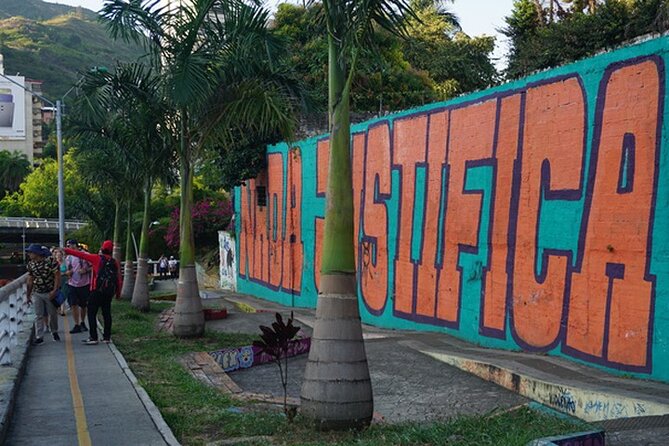
The Beneficencia del Valle del Cauca occupies a historic building with colonial architecture. It now contains cultural spaces, including art exhibitions, music presentations, and events related to Cali’s heritage.
This stop shows how older buildings can carry new cultural work. The building is not presented only as an architectural relic. It continues to host activities connected with art and music.
For you, the value is in seeing another layer of Cali’s cultural life. The route has already shown public plazas and modern architecture. Here, the guide can connect older city structures with present-day artistic activity.
As with the other stops, the visit is brief. It is best for context and exterior viewing unless an event or exhibition is open and time allows a closer look.
Calle de la Escopeta and the city as a canvas
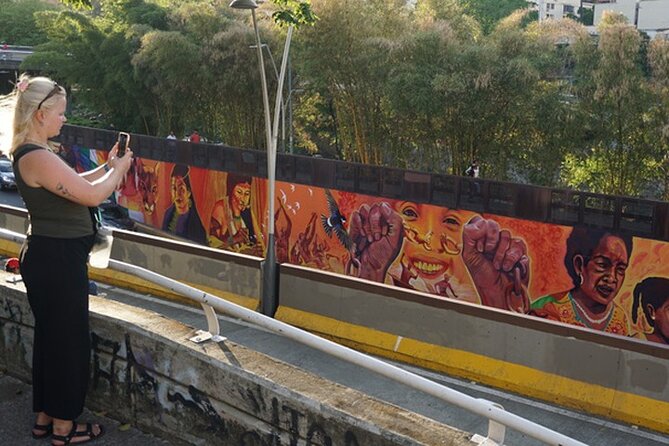
Calle de la Escopeta is one of the clearest street-art stops. Its colorful facades are covered with murals that give local artists a public canvas.
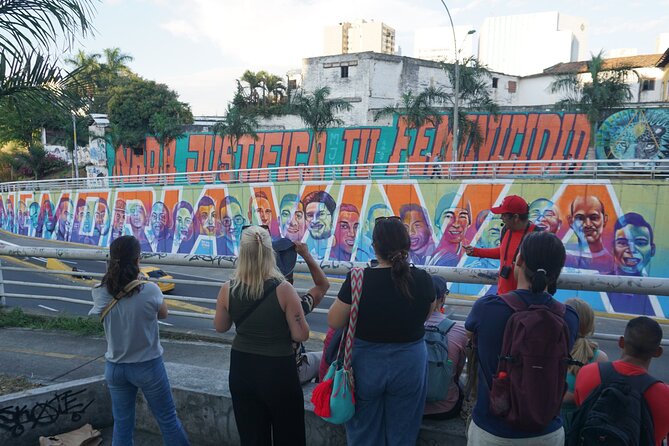
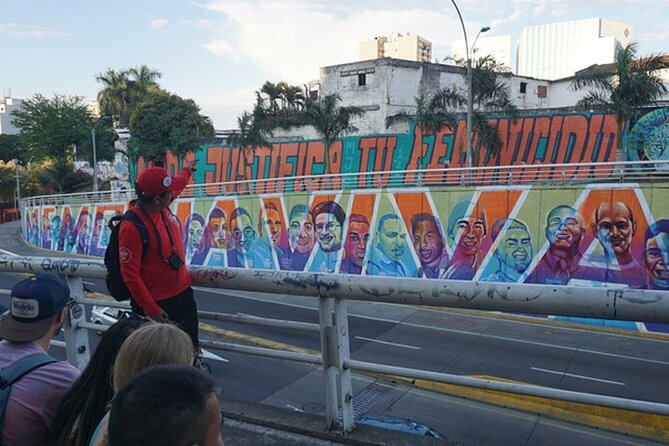
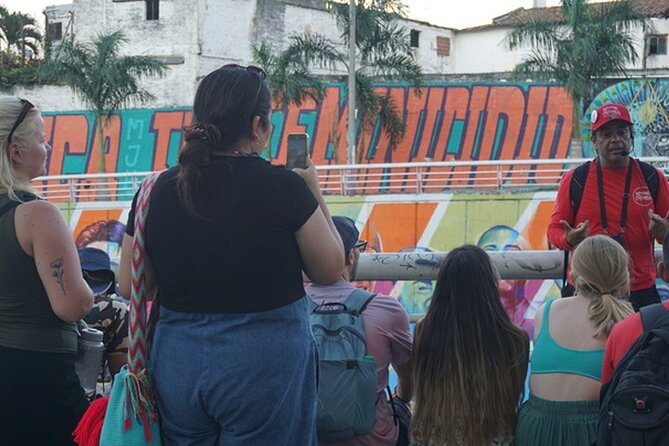
The route’s focus on resistance becomes easier to understand here. A mural can honor a musician, record a community story, make a political point, or simply claim a neglected wall for local creativity. The guide explains how urban art can work as a peaceful form of expression and empowerment.
You should look closely at the walls instead of treating this as a quick photo stop. Ask about the people, events, or ideas shown in the paintings. The exact meaning of a mural may not be obvious from a photograph alone.
The stop lasts roughly 18 minutes, so there may not be time to discuss every piece. Still, this is one of the strongest parts of the route for anyone interested in public art.
Túnel Mundialista: football, murals, and public memory
The Túnel Mundialista shifts the subject from salsa to football and local identity. Murals celebrate the sport and Cali’s culture, turning a passageway into a public gallery.
This stop is a reminder that Cali’s identity is not built around one interest. Salsa may lead the tour, but football, neighborhood pride, and shared public spaces also shape the city’s visual culture.
A tunnel is an effective setting for murals because you encounter the art while moving through it. The guide can point out stories behind the paintings and explain how the space functions as a meeting point for sports fans.
It is another short stop, so you should expect a guided walk and explanation rather than a detailed art workshop. The setting also makes weather less of a problem for this portion, but the full tour still depends on suitable conditions.
Finishing at Cimarrón Salsa Bar
The final stop is Cimarrón Salsa Bar on Calle 4 in the Normandia Sebastian de Belalcazar area. The tour ends here rather than simply dropping you at a central plaza.
That is a smart finish. By this point, you have heard about salsa composers, seen music-themed murals, discussed public art, and passed places connected with nightlife. Cimarrón gives you the chance to continue the subject in a real salsa setting, with live music and dance shows.
Admission, drinks, and food are not included. The tour data also does not promise that a full live performance will be taking place at the exact time you arrive, so check the evening program if you plan to stay.
The guide can also recommend other cult salsa bars. If you want more than a quick look, use the final stop as a launch point for your evening. The walk is at its most useful when it changes what you do afterward.
What the $14 price really covers
At $14 per person, this is inexpensive for a three-hour guided city walk. You are paying for a Spanish-speaking certified guide, a carefully connected route, local context, and recommendations for places to continue with food and music.
The value is strongest if you want an introduction to Cali. You get ten stops without paying separate admission fees, since the listed locations are free to enter. You also receive benefits and discounts with recommended partners, though the exact savings are not specified.
There is one price point to examine carefully. One booking option charges $14, while direct booking with Beyond Colombia Free, Group & Private Tours may be offered at no charge with tips encouraged. Compare the direct and third-party options before paying. If you choose the paid booking, the price buys convenience and a scheduled place, but you should know that a free direct option may exist.
Food, drinks, and souvenirs are extra. Budget for those only if you want them, since the tour itself does not require purchases.
Group size, language, and walking pace
The maximum group size is 30 people. That is large enough to keep the cost down, but it can make street crossings, questions, and mural discussions less personal.
If you prefer a quiet walk with lots of one-to-one conversation, a private option may suit you better. If you like meeting people and want a low-cost introduction, the shared format makes sense.
The guide is certified and the tour is conducted in Spanish. You should book it only if you can follow a Spanish explanation. Dance demonstrations and instruments add physical variety, but the tour remains a walking history and culture experience, not a full dance class.
The route lasts about three hours. Each of the ten stops is planned for around 18 minutes, with walking time between them. Wear comfortable shoes and keep your schedule open enough that you do not need to rush away at the end.
Most people can participate, and the route is near public transportation. Service animals are allowed. Exact access inside cultural buildings or viewpoints is not detailed, so do not assume every interior space will be open during the visit.
Who should book this Cali walking tour?
I would recommend it if you are new to Cali and want several subjects tied together: salsa, public art, popular culture, city history, and nightlife advice.
It suits you especially well if you want more than a standard sightseeing route. The guide may teach dance steps, let you play instruments, and explain how art and music can serve as peaceful resistance. Those details make the walk more active than a simple procession from one monument to another.
It also works well early in your stay. The route gives you names, neighborhoods, venues, and ideas for the next few evenings. The practical advice about salsa bars may save you from choosing a place at random.
I would hesitate if you want a slow museum tour, a full meal, or a complete night of dancing included in the price. The stops are short, and the tour ends at a bar rather than providing a full evening package.
Book at least a day ahead if possible. The experience is often reserved about 15 days in advance, which suggests that popular dates can fill. Free cancellation is available until 24 hours before the start time. Changes or cancellations inside that window are not accepted for a refund, and the tour may be moved or refunded if poor weather or low enrollment prevents it from running.
Should you book Salsa, Graffiti & Resistance in Cali?
Yes, if you want a lively first look at Cali’s cultural identity and you can follow Spanish. The strongest parts are the connection between salsa and public life, the discussion of murals as community expression, and the practical finish at Cimarrón Salsa Bar.
The tour is not a replacement for a dance class, a museum visit, or a full food tour. It is a compact introduction that helps you understand what you are seeing and gives you better ideas for the rest of your stay.
Before booking, compare the $14 paid option with direct booking through Beyond Colombia, check the guide language, and decide if a 30-person shared group fits your style. If it does, this walk offers a lot for three hours and may give your time in Cali a much clearer rhythm.
FAQ
How long does the tour last?
The tour lasts approximately three hours. It includes ten stops, with about 18 minutes planned at each location, plus walking time between stops.
How much does the tour cost?
The listed price is $14 per person. A direct booking option through Beyond Colombia Free, Group & Private Tours may be available without a booking charge, with tips encouraged, so compare the options before reserving.
Is the tour conducted in English?
No. The included guide is certified and the tour is conducted in Spanish.
Where does the tour begin?
The tour begins at Plazoleta Jairo Varela, also called Plazoleta de La Caleñidad, on Avenida 2 Norte in the Granada area of Cali.
Where does the tour end?
The tour ends at Cimarrón Salsa Bar, located at Calle 4 #1-113 in the Normandia Sebastian de Belalcazar area of Cali.
Are food and drinks included?
No. Food, drinks, and souvenirs are not included in the tour price.
Can I cancel for a full refund?
Yes, if you cancel at least 24 hours before the experience starts. Cancellations or changes made less than 24 hours before the start time are not refunded. Poor weather or failure to meet the minimum group size may result in another date or a full refund.
Newest history tours we have reviewed in the world
- Bilbao Historical Tour in small group★ 4.7 · 52 reviews
- Bologna: Street Food Tour in the Historic Center★ 4.8 · 125 reviews
- CEBU: Cebu City Heritage and Uphill Guided Tour★ 4.2 · 31 reviews
- Bishkek : City Tour (History, Architects, Statues & Culture)★ 4.9 · 54 reviews
- Blenheim: Omaka Aviation Heritage Centre Admission Ticket★ 4.9 · 31 reviews
- Berlin: Nazi History Walking Tour★ 4.8 · 33 reviews
- Best of Baku: 4-Hour City Tour Historic and Modern Landmarks★ 4.7 · 63 reviews
- Belfast: Best of Belfast History, Culture & Art Walking Tour★ 4.9 · 158 reviews
WWII & D-Day Tours, compared.

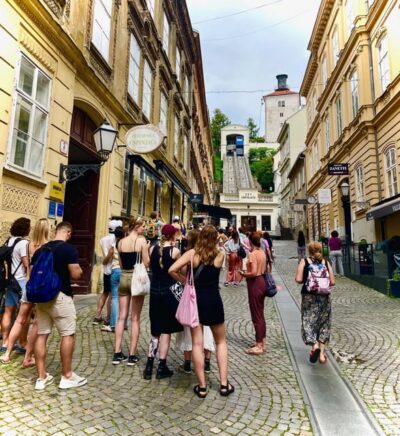
Zagreb: City & History Walking Tour & WW2 Tunnels
Read our review →
Pearl Harbor History Remembered Tour from Ko Olina
Read our review →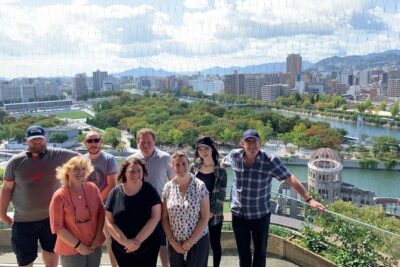
Hiroshima Peace (Heiwa) Walking Tour at World Heritage Sites
Read our review →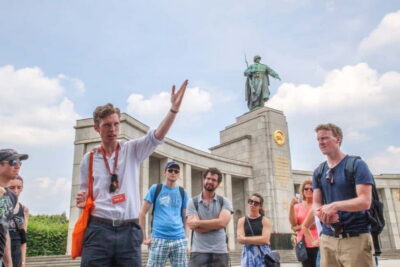
![Pearl Harbor & USS Arizona Small-Group Tour [Early Access]](https://media.myhistoryguide.com/wp-content/uploads/pearl-harbor-uss-arizona-small-group-tour-early-access-400x267.jpg)
Pearl Harbor & USS Arizona Small-Group Tour [Early Access]
Read our review →
Anne Frank and the Jewish History of Amsterdam Private Tour
Read our review →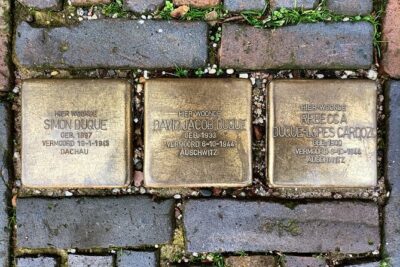
Anne Frank and Amsterdam Jewish History Walking Tour
Read our review →Browse the lists this tour appears in