
Review · AUSTRALIA HISTORY TOURS
Cairns History Walking Tour
Cairns is more than a launch point for reef cruises. This small-group walk shows how an Aboriginal meeting place became a colonial port, wartime base, Chinese trading center, and modern tropical city. Along the way, you’ll hear about Aboriginal culture, pirates, gold, and the opium trade, with buildings and public art serving as the visual clues.
I like the 12-person limit, which gives the guide room to answer questions without turning the walk into a moving crowd. I also like the useful local advice from guides such as Peter and Georgia, who have pointed out coffee shops, restaurants, and shopping areas along with the history. The main drawback is time: 90 minutes gives you a brisk introduction, not a full study of Cairns.
Key points to know before you book
- A compact history lesson: In about 1.5 hours, you cover Aboriginal culture, colonial settlement, Chinese immigration, wartime Cairns, architecture, and the reef and rainforest.
- Small group size: The tour accepts no more than 12 people, making it easier to hear the guide and ask questions.
- A useful city-center route: It starts and finishes at Cairns Museum, with stops at the art gallery, Esplanade Lagoon, casino, historic buildings, Chinatown, and Hides Hotel.
- Good for your first day: The walk helps you understand why Cairns developed where it did and can point you toward places to eat, shop, and explore.
- No admission fees during the walk: The listed stops are visited from outside or in public areas, and admission is free.
- Weather matters: The tour needs good weather, and cancellations for poor weather or too few bookings allow a new date or a full refund.
Why this short Cairns walk is worth your time
Cairns is easy to misread. At first glance, it can seem like a modern base for trips to the Great Barrier Reef and the Wet Tropics. This walk gives the city a longer story, beginning with at least 40,000 years of Aboriginal history and moving through colonial settlement, trade, war, and tourism.
That wider view matters. You’ll understand why the city grew around its waterfront, why Chinese communities became important here, and why modest-looking buildings in the center deserve a second look. The guide connects architecture, public art, local government, hotels, and war memorials instead of treating them as unrelated sights.
The advertised fare is $37.98 per person. I consider that fair for a small-group walk led by a local guide, especially if you’re new to Cairns and want an efficient introduction before spending money on longer excursions. You are paying for interpretation and local context rather than entry to a major attraction.
The tour is also a practical choice for a short stay. You do not need half a day, special transport, or several separate tickets. Plan on about 90 minutes, meet at Cairns Museum, and finish at the same point in the city center.
More History Walking Tours in Australia
- Ultimate Melbourne Walking Tour: History, Laneways & Culture
★ 5.0 · 1,451 reviews - Sydney: The Rocks 90-Minute History Walking Tour
★ 4.7 · 1,092 reviews - Discover Perth Walking Tour: History, Art, Local Insights + More!
★ 5.0 · 458 reviews
Start at Cairns Museum, where two histories meet
The walk begins at Cairns Museum on Lake Street. The first discussion focuses on this area as a meeting place for traditional owners and colonial settlers.
That is a useful starting point because it puts the city’s founding story in the right order. Cairns did not begin with a hotel, railway, or reef cruise. People had long-standing connections to the area before colonial settlement changed its use and direction.
You’ll spend roughly 10 minutes here before moving on. The stop is less about entering a museum and more about setting up the themes that guide the rest of the walk: Aboriginal culture, colonialism, trade, and the growth of a port city.
If you have not yet visited Cairns Museum, you may want to return later on your own. This tour uses the museum as a meeting point and historical reference, so it is helpful to know that the walk itself does not depend on a long museum visit.
Cairns Art Gallery and the story told by public art
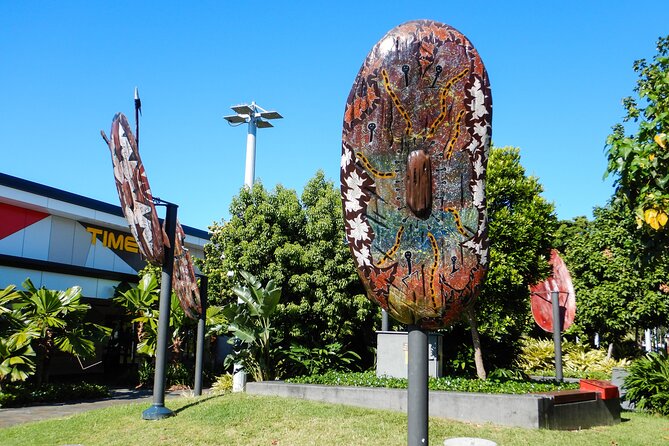
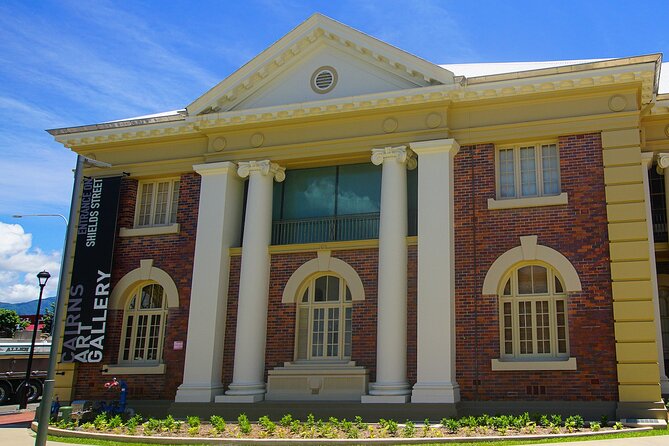
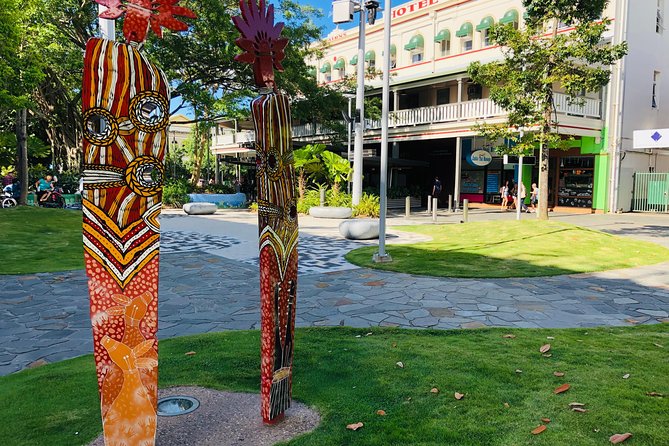
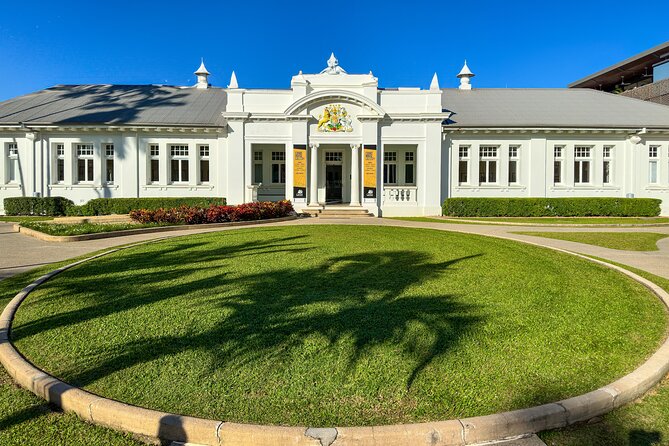
The next stop is Cairns Art Gallery, where the guide discusses the Aboriginal shields street art on Shields Street by Paul Bong. This gives you a direct link between traditional Aboriginal imagery and the modern city streets around you.
The discussion also turns to the gold rush and the establishment of the colony. The former Public Curators building, now associated with Cairns Regional Gallery, adds an architectural layer to the story. You get a sense of how public institutions helped organize a young settlement.
I like this stop because it asks you to look up and around rather than simply follow a guide from one landmark to another. The art is part of the city itself, and the old government-related building helps explain how Cairns developed beyond a rough frontier outpost.
The stop lasts about 10 minutes. It is short, so you should expect a focused explanation rather than a detailed art tour or building interior visit.
The Esplanade Lagoon connects reef, rainforest, and settlement
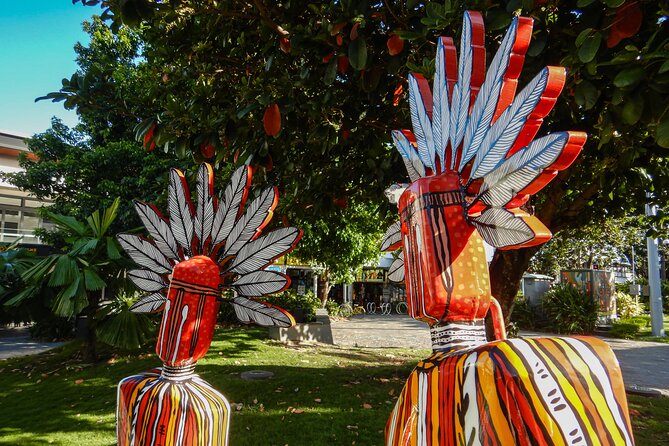
At Cairns Esplanade Lagoon, the conversation shifts toward the natural setting that now attracts so many visitors. The guide explains the importance of the reef and rainforest as World Heritage Sites, then links that environment to the story of early settlers and pirates.
This is one of the tour’s most useful contrasts. Cairns is famous for natural wonders, but the city’s history also includes hard-edged port life, movement of goods, and people operating outside the law. The pirate stories add a bit of color without losing the larger explanation of how the waterfront shaped Cairns.
The lagoon is a modern public space, so this stop helps you compare present-day Cairns with the early settlement. You can understand why the coast mattered even before tourism became central to the local economy.
Allow about 10 minutes here. The tour does not replace a reef or rainforest trip. Instead, it explains the connection between those places and the city you use as your base.
Same streets, a different century:
- Puffing Billy Railway: Heritage Steam Train Journey
★ 4.6 · 1,195 reviews - Morning World Heritage Cruise on the Gordon River from Strahan
★ 5.0 · 1,193 reviews - Strahan: World Heritage Cruise on Gordon River with Lunch
★ 4.8 · 1,143 reviews - Experience History onboard The Mary Valley Rattler
★ 5.0 · 963 reviews
Government begins at the Mulgrave Shire building
The Cairns Tourist Information Centre provides the setting for a discussion of early government. The guide speaks about the Mulgrave Shire building, the original local government headquarters for the colony.
This stop is a reminder that history is not only about dramatic events. Councils, public offices, and administrative buildings shaped how roads, services, and settlement developed. A building that might otherwise look like part of the city background becomes evidence of Cairns finding an organized civic identity.
You’ll spend around 10 minutes here. The value comes from the explanation, since the stop is not built around an admission visit. If you enjoy architecture and the practical side of local history, this section should appeal to you.
The Reef Hotel Casino and Cairns at war
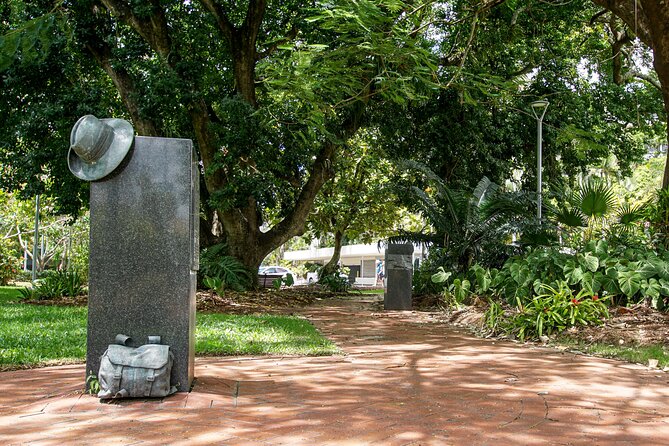
The route continues to the Reef Hotel Casino and the nearby war memorial. Here, the guide explores the role of war in Cairns life, with particular attention to World War II.
This is an important pause in the city’s story. Cairns was not isolated from global events. War changed the city’s daily life and its importance, and the memorial provides a place to discuss those effects in a direct, public setting.
The casino itself is a modern landmark, which creates another useful contrast between present-day entertainment and the serious history represented by the memorial. The stop lasts about 10 minutes and keeps the focus on Cairns rather than on the casino as an attraction.
I appreciate this part of the route because it broadens the story beyond settlement and tourism. You see that Cairns has also been shaped by national and international events.
The Chambers reveals Cairns as a trading center
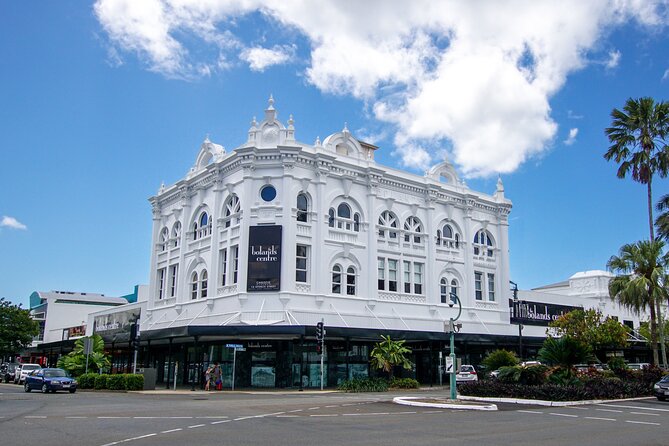
At The Chambers, the guide points out the historic Bolands Centre, described as the first department store in Cairns. From this position, you also hear about the Adelaide Steamship Company and the Central Hotel.
These names help explain how goods, businesses, and people moved through the early city. A department store was more than a place to shop. A steamship company connected Cairns with wider trade routes, while hotels provided places for business, news, and social life.
This stop is especially helpful if you want to understand how Cairns became a functioning commercial town. The story moves from government offices and memorials into the daily business of buying, selling, shipping, and staying overnight.
You’ll have about 10 minutes here. The tour makes good use of the viewpoint, but you should not expect a long interior exploration of every historic building.
Chinatown and the Chinese story on Grafton Street
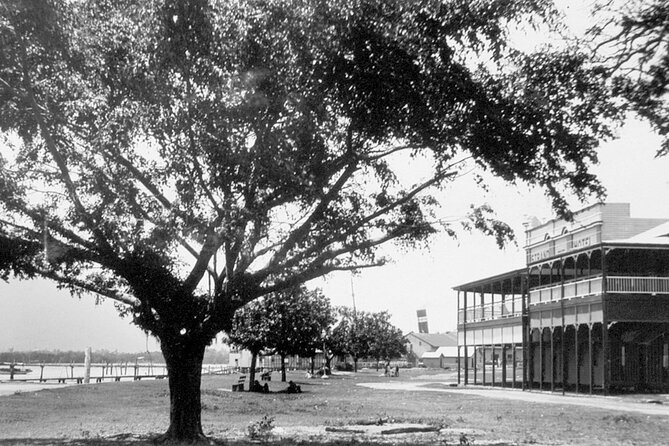
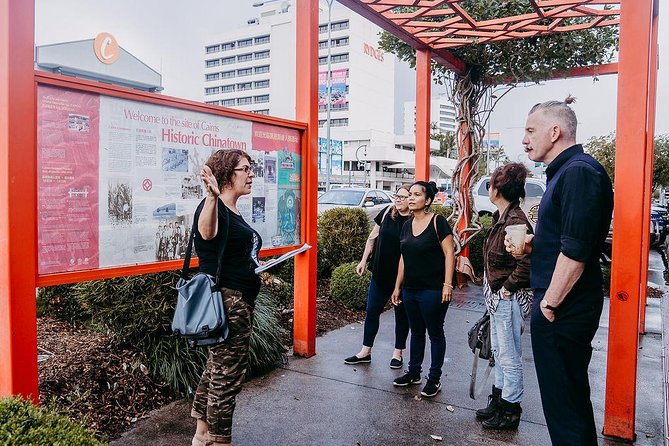
At Crystal Ball Bookstore, the walk pauses at the Chinatown exhibit in front of the shop. The guide discusses the important role of Chinese people in Cairns history and explains why Grafton Street became the heart of Chinatown.
This is one of the most valuable parts of the tour because it adds a human story to the city’s economic growth. Chinese communities played an important role in trade and local life, yet that part of Cairns can be easy to miss if you only visit the waterfront and book reef trips.
The stop lasts about five minutes, so the treatment is necessarily brief. Still, it gives you a reason to look more closely at Grafton Street and to think about the different communities that helped build Cairns.
If you have an interest in migration, commerce, or the way cities change, listen closely here. A short explanation can change how you read the streets afterward.
Hides Hotel brings the walk back to its starting point
The final stop is Hides Hotel, near Cairns Museum. The guide discusses the School of Arts and its role in the founding colony, then explains the history of Hides Hotel and the importance of historic hotels in early settlement life.
Hotels were key meeting points in young colonial towns. They offered more than beds. They were places to exchange news, conduct business, meet other residents, and connect visitors with the growing town.
This final section ties together several themes from the walk: education, public life, accommodation, and the need for social institutions in a developing colony. It also brings you back to the starting point, which makes the tour easy to fit into a day of sightseeing.
The stop takes about five minutes. Since the route ends where it begins, you can continue to Cairns Museum, find lunch, or head toward another central attraction without arranging transport back.
What the guide adds to the experience
The guide is the main reason to choose this walk instead of simply wandering Cairns with a map. The tour depends on spoken explanation, and the best moments come from the links between places.
Peter has been praised for explaining Cairns clearly, including its connection with the Great Barrier Reef. Georgia has also combined local history with practical suggestions for coffee, dining, and shopping. Those tips can be useful because the walk places you in the center of town, where you can act on them immediately.
The guide-led format also lets you ask questions. With a maximum of 12 people, the group should be small enough for a more personal exchange than you would get on a large coach tour.
The experience is not designed as a specialist lecture. It covers many subjects quickly, including Aboriginal history, architecture, art, colonialism, pirates, the opium trade, Chinese settlement, government, war, and tourism. That breadth is its strength, but it also means some topics receive only a short explanation.
Timing, walking effort, and weather
The listed stops add up to about 75 minutes, while the full experience is expected to take roughly 90 minutes. The extra time allows for walking between locations and the natural pauses that come with a guided city walk.
This is described as an easy walk, but you should still wear comfortable shoes and be prepared to spend the full time outdoors. The tour is affected by weather. If poor conditions force a cancellation, you can choose another date or receive a full refund.
The meeting point is Cairns Museum at 93/105 Lake Street, Cairns City. The tour ends there as well, which keeps the logistics simple. Confirmation arrives when you book, service animals are allowed, and the experience is near public transportation.
Most people can take part, but the supplied information does not give a precise accessibility assessment for surfaces, seating, or step-free access. If those details matter to you, ask the operator before booking.
Who should book this Cairns history walk
I would choose this tour for a first visit to Cairns, especially if you have a reef cruise or rainforest trip planned and want to understand the city behind those famous attractions. It also suits anyone with only a morning or afternoon available.
The walk is a good match for you if you enjoy:
- Local stories tied to real buildings and public art
- Aboriginal and colonial history presented together
- Short walking tours with a small group
- Architecture, old hotels, government buildings, and wartime history
- Practical suggestions for food, coffee, and shopping
You may want something longer if you already know Cairns well or want extended time inside museums and historic buildings. The tour gives you a broad introduction, not a detailed academic treatment of every subject.
The current rating is 4.9 from 52 reviews, with 98 percent recommending it. That fits the tour’s clear strengths: the guide’s subject knowledge, the easy route, and the range of stories packed into a short outing. Weather and the limited time at each stop remain the main considerations.
Should you book the Cairns History Walking Tour?
Book it if you want to understand why Cairns is there, not just how to get from the airport to the reef marina. For $37.98, you get a small group, a central route, and a guide who can connect Aboriginal history, colonial settlement, Chinese commerce, wartime life, architecture, and the natural setting.
I would place it early in your stay. The walk can help you decide where to eat, what streets deserve another look, and which parts of Cairns you want to explore at greater length. Skip it only if your schedule is extremely tight or you prefer spending your time inside museums rather than hearing local history outdoors.
FAQ
Where does the Cairns History Walking Tour begin?
It begins at Cairns Museum, located at 93/105 Lake Street, Cairns City, Queensland 4870.
Where does the tour finish?
The activity ends back at the meeting point in front of Cairns Museum.
How long does the walking tour last?
Plan for approximately 1 hour and 30 minutes.
What is the maximum group size?
The tour accepts a maximum of 12 participants.
How much does the tour cost?
The listed price is $37.98 per person.
What subjects are covered?
The tour covers at least 40,000 years of local history, Aboriginal culture, colonialism, architecture, public art, pirates, the opium trade, Chinese settlement, early government, World War II, historic hotels, the reef, and the rainforest.
Are admission tickets included?
The listed stops have free admission. The tour visits public areas and discusses landmarks along the route.
Is the tour suitable for most people?
Most people can participate, and service animals are allowed. The tour is near public transportation. Specific details about surfaces and step-free access are not provided.
Can I cancel for a full refund?
Yes. You can cancel at least 24 hours before the experience start time for a full refund. Cancellations or changes made less than 24 hours before the start time are not accepted for a refund.
Newest history tours we have reviewed in Australia
- Darwin History and Wartime Experience Tour★ 5.0 · 144 reviews
- Bombing of Darwin WWII Heritage Tours★ 5.0 · 261 reviews
- Darwin Heritage Walk★ 4.5 · 101 reviews
- Private Half Day Tour: World Heritage Rainforest & Waterfall★ 5.0 · 19 reviews
- Entry Ticket at Historic Village Herberton★ 5.0 · 114 reviews
- Historic Village Herberton Family Pass (2A+2C)★ 4.5 · 18 reviews
- Authentic Indigenous Cultural Tour Including Scenic River Cruise★ 5.0 · 88 reviews
- Self-Guided Ngilgi Cave Ancient Lands Experience★ 4.5 · 154 reviews
History Walking Tours, compared.

History and Hauntings of Salem Guided Walking Tour
Read our review →

Freedom Trail History Small Group Walking Tour
Read our review →
Historic Charleston Guided Sightseeing Walking Tour
Read our review →
Tapas Walking Tour with Food, Wine, and History
Read our review →
Savannah History and Haunts Candlelit Ghost Walking Tour
Read our review →
A History of Terror – Belfast City Centre Walking Tour
Read our review →Browse the lists this tour appears in