
Review · UK HISTORY TOURS
Jane Austen’s Bath And History Trail
Bath makes Jane Austen’s novels feel close to the pavement. On this 2.5-hour walking tour, you trace the streets where she lived, visited, and observed the social world that shaped Northanger Abbey and Persuasion, while also learning how Georgian planners gave Bath its grand appearance.
I like the way Ulrich Wenske links Austen’s life with the buildings around her, rather than treating her as an isolated literary figure. I also like the small-group format, capped at 10 people, which leaves room for questions and conversation.
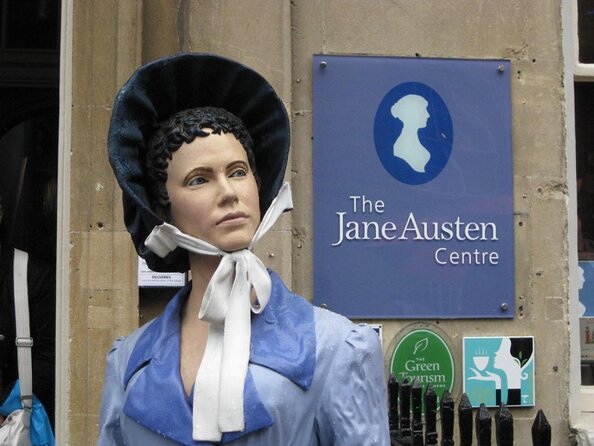
The main drawback is the amount of walking. You’ll cover a good part of central Bath, with some uphill sections and steps, and several major interiors cost extra. Wear comfortable shoes, carry water, and check the meeting point carefully: the tour starts at Pulteney Bridge, not at the Jane Austen Centre.
Key things to know before you book
- Austen residences: See the plaque at No. 4 Sydney Place and learn about her short stay at No. 13 in 1799.
- Bath in one walk: The route takes in Pulteney Bridge, Great Pulteney Street, the Circus, Bath Abbey, the Assembly Rooms, and the Roman Baths area.
- Jane Austen Centre entry: Your tour includes entry to the centre and its bookshop, but not the centre’s internal guided tour.
- Small groups: A maximum of 10 people keeps the walk personal and makes it easier to hear and ask questions.
- Extra admission costs: No. 1 Royal Crescent, Bath Abbey, the Roman Baths, and other museum interiors are not included.
- Weather matters: The experience requires good weather, although the guide may offer shelter or a virtual alternative during poor conditions.
Why this walk works for Austen fans and first-time visitors
Jane Austen lived in Bath for several years, and the city appears in her work as more than a backdrop. It is a place of social rules, fashionable gatherings, money, marriage, gossip, and display. This walk uses that setting to explain both Austen and Bath.
You also get a useful introduction to the city itself. The route moves through Georgian streets, medieval religious buildings, Roman remains, grand public rooms, and thermal springs. If Bath is new to you, this helps you get your bearings before deciding which interiors deserve your time and money.
Ulrich Wenske leads the experience in English or German. His approach is conversational, with room for questions and extra stories. The material goes beyond Austen, including architecture, local history, and occasional personal anecdotes, such as his memories of seeing the Beatles perform in Hamburg before they became famous.
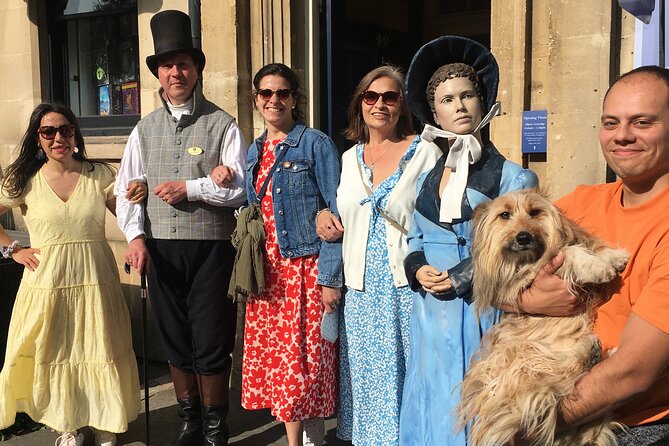
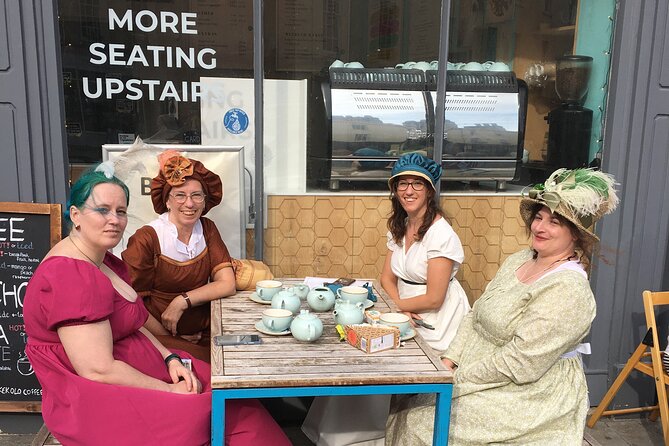
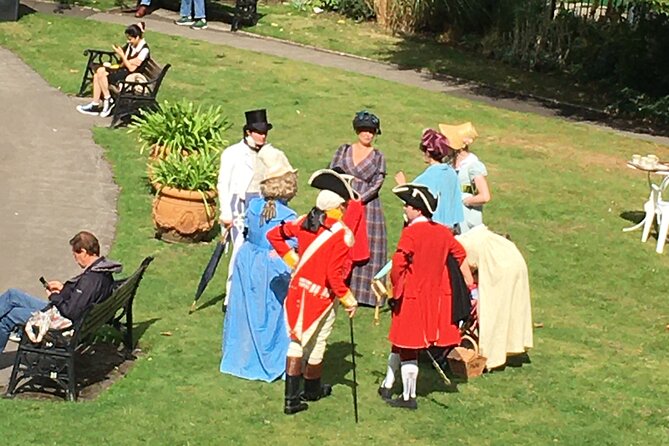
The tone is not a costumed period show. One person expecting a dressed-up guide found the presentation less theatrical than anticipated. If you want actors in Regency clothing, this is not that kind of experience. If you prefer a real person explaining what you are seeing, the format should suit you better.
More History Tours in the UK:
- London Small Group Tour of Historical Pubs
★ 5.0 · 10,422 reviews - Edinburgh: Edinburgh Castle Guided History Tour with Tickets
★ 4.8 · 9,933 reviews - A History of Terror – Belfast City Centre Walking Tour
★ 5.0 · 2,883 reviews
Starting at Pulteney Bridge and Great Pulteney Street
The meeting point is the Pulteney Bridge Coffee Shop at 17 Pulteney Bridge, Bath BA2 4AY. This detail matters. The Jane Austen Centre appears prominently in the experience’s subject matter, but it is not the starting point, and it is about a 20-minute walk from the bridge.
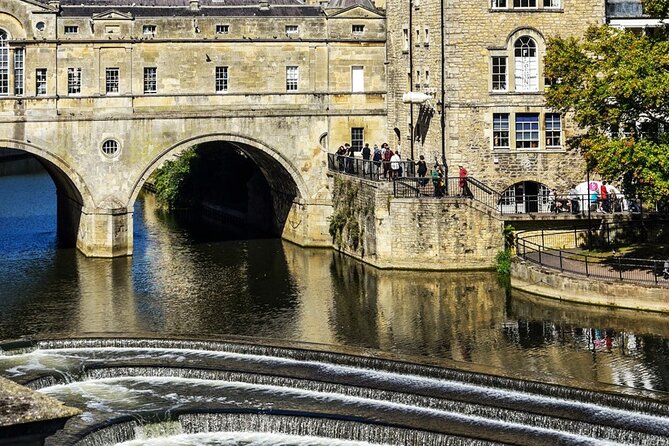
Pulteney Bridge is a fine opening scene. Designed in 1769, it has shops lining both sides and was modeled after Florence’s Ponte Vecchio. From here, the route continues along Argyle Street toward Laura Place and Great Pulteney Street.
Great Pulteney Street gives you an early lesson in Bath’s Georgian planning. Its broad scale and grand town houses show how the city’s wealthy residents wanted to present themselves. The guide points out notable residents from the 18th and 19th centuries and explains the architecture rather than asking you simply to admire the façades.
You can also see the Holburne Museum of Art from this part of the walk. The route passes the front of No. 4 Sydney Place, where a plaque marks Jane Austen’s first dwelling in Bath. There is no admission to the residence or plaque, so this is a quick but meaningful stop for Austen fans.
The first section takes around 20 minutes, including the opening look at Pulteney Bridge. It is an easy way to connect Austen’s physical surroundings with the city’s grand public image.
The Jane Austen Centre and what is included
The walk includes entry to the Jane Austen Centre and a visit to its bookshop. This is useful because you can see the place devoted to Bath’s most famous literary resident without paying a separate entry charge for the basic visit included in the walk.
The centre offers a snapshot of Regency life and looks at how Bath affected Austen’s writing and personal life. You should note the distinction between entering the centre and taking its internal guided tour. The internal tour guides are not included, so anyone wanting that fuller presentation may need to book it separately.
This stop is relatively short, around 20 minutes. That means you will get an introduction rather than hours to examine every display. I would treat it as a companion to the outdoor walk, not as the main event.
The route’s strength is the connection between the centre and the actual streets. After hearing about Austen indoors, you continue through the city where her family lived and where fashionable Bath society gathered. That shift from display cases to real buildings gives the literary material more weight.
No. 1 Royal Crescent and Bath’s grandest façades
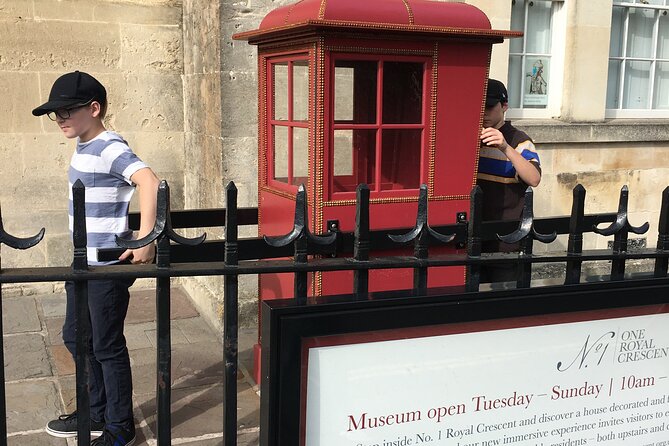
No. 1 Royal Crescent is one of Bath’s most photographed buildings and the first house in the city’s largest crescent. The crescent contains 30 terraced houses joined by giant Ionic columns, creating one of the clearest examples of Bath’s grand Georgian style.
The exterior visit is part of the walk, but entrance to the museum inside No. 1 is not included. That museum shows how one of these houses looked inside, with rooms arranged to reflect the period. If you want to see domestic interiors rather than only façades, plan for a separate admission and additional time.
The guide explains why the crescent matters, not just where to take a photograph. Bath’s architecture was designed to impress from a distance, but the private rooms inside reveal how much work and money went into that public image. This is useful context for Austen’s world, where status often appeared through houses, clothing, parties, and manners.
The stop lasts about 15 minutes. You will have enough time to understand the building and take in the view, but not enough for a leisurely museum visit unless you return later.
Same streets, a different century:
- Edinburgh: Whisky Tasting with History and Storytelling
★ 4.9 · 2,451 reviews - Edinburgh: Old Town History and Tales Walking Tour
★ 4.8 · 2,361 reviews - Old Town Walking Tour History and Tales in Edinburgh
★ 5.0 · 2,168 reviews - Soho Music & Historic Pubs Tour
★ 5.0 · 1,993 reviews
Bath Abbey, medieval stories, and thermal water
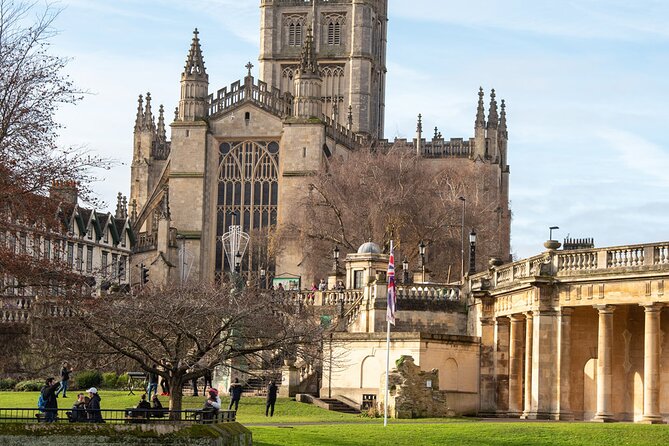
Bath Abbey brings a very different mood. The building began in the early 12th century, was restored under Bishop Oliver King in 1499, and was completed under Elizabeth I in 1611. The guide explains the Abbey’s memorials, wall plaques, and place in Bath’s religious story.
The Abbey is also linked to the crowning of Edgar I in 977, described as the first king of England to be crowned. You can visit the interior, but admission is not included in the tour price. Check the current arrangements when booking your day, since a short exterior explanation and a full interior visit are not the same experience.
Nearby, the route explains Bath’s thermal springs. The Hetling Spring, Cross Spring, and King’s Spring are discussed, along with the origins of the natural hot water, which date back 10,000 years.
The Roman Baths area is another major landmark. The site dates from the first century AD and includes the Roman temple of Sulis Minerva and the ancient pools. The tour explains its place in Bath’s story, but a Roman Baths audio tour is recommended separately, before or after this walk.
Next to the baths is the Pump Room, a Georgian meeting place where fashionable society gathered for balls, tea, and the practice of taking the waters. Austen used this social world in Northanger Abbey, where Catherine and Isabella meet there. This is one of the best moments for readers who want to see how a real Bath setting connects to the novels.
Do not confuse a discussion of the baths with a spa visit. The experience also refers to the modern rooftop thermal pool, where the water is about 35 degrees Celsius and swimming is available in summer and winter. No pool visit is included in this walking tour.
Austen’s Bath addresses and the unnamed square
The route continues to another Bath square, where you learn about Austen’s short residence at No. 13 in 1799. The supplied details do not name the square, so you should not book this walk expecting a full house interior or a preserved Austen apartment there.
What you do get is a sense of how briefly Austen’s Bath addresses could change, and how her connection to the city involved several places rather than one single shrine. The plaques and street locations help you picture her movements through the city.
This is also where the walk’s wider purpose becomes clear. It is not only a checklist of Austen buildings. It explains the city she saw, the people who came to Bath, and the social habits that appear in her fiction.
The Circus and the logic behind its design
The Circus is one of Bath’s great architectural set pieces. Work began in 1754, and the John Wood architects designed the circular space with inspiration from prehistoric stone circles and the Colosseum in Rome.
The guide explains what makes the site unusual, including its layout and the way the surrounding façades work as one composition. This is a place where a few minutes of explanation can change how you see the buildings. Without context, it is a photogenic circle. With context, it becomes a planned statement about order, classical taste, and power.
The stop lasts about 20 minutes. You may also hear about the echoing trees in the centre, a small playful detail that gives the stop a lighter touch. The route does not rush straight from one fact to the next, and time is allowed for questions and conversation.
For me, this is one of the strongest architectural sections of the walk. It gives you a clearer idea of why Bath looks so different from an ordinary English town.
Assembly Rooms and Regency social life
The Assembly Rooms were public ballrooms and meeting rooms where fashionable people socialized during the Regency period. The complex includes the ballroom, octagon, card room, and tea room, and these spaces still host events.
The outside explanation helps you understand the role of public rooms in Austen’s Bath. A ball was not simply entertainment. It was a place to see and be seen, meet possible matches, follow social rules, and judge who belonged.
Admission to the Assembly Rooms is not included. The tour gives you the setting and social context, while a separate visit lets you spend more time inside. If you have only one day in Bath, this explanation can help you decide how to divide your budget between the Assembly Rooms, Roman Baths, Bath Abbey, and No. 1 Royal Crescent.
The stop takes around 15 minutes. It is short, but it fits neatly with the Austen theme because the social machinery of Bath is central to her novels.
Walking time, pace, and group size
This is an active city walk, not a sit-down lecture. The full experience lasts about two and a half hours, although some people have found it closer to two hours depending on the pace and route.
You should expect a fair amount of walking, some uphill sections, and steps. Comfortable shoes are essential, and water is sensible. Most people can take part, but anyone concerned about steep areas should consider the route before booking.
The group limit is 10 people. That is small enough for the guide to respond to questions and adjust the amount of conversation. Solo participants may find the experience especially personal if the group is small on the day.
Ulrich has also shown flexibility in poor conditions. During one wet outing, he offered choices such as sheltering or taking a virtual approach, while continuing outdoors when the group wanted to proceed. Still, the experience requires good weather and may be canceled if conditions are unsuitable. If that happens, you are offered another date or a full refund.
A German accent may require a little extra attention for some listeners, and one person found parts of the commentary hard to hear or slightly quick. Stay close to the guide and ask him to repeat anything you miss. The small group makes that easier.
Is the $40.24 price good value?
At $40.24 per person, the value rests mainly in the guide’s explanations and the amount of ground covered. You are not paying for several major museum admissions. No. 1 Royal Crescent, Bath Abbey, the Roman Baths, and the Assembly Rooms may all require separate spending if you choose to enter them.
The included Jane Austen Centre entry and bookshop visit add some value, but the central purchase is a guided orientation to Bath. You get the city’s major landmarks, Austen addresses, architectural context, and practical ideas for what to visit next.
For a first day in Bath, I think the price is reasonable if you want one person to connect the pieces for you. It is less attractive if you plan to walk independently and read extensively before arriving. Austen enthusiasts should also budget for at least one interior museum if they want more than outdoor explanations.
The walk is often booked around 40 days ahead, so popular dates may disappear early. Confirmation is provided at booking, and cancellation is free up to 24 hours before the start time. Changes or cancellations inside that window are not accepted for a refund.
Who should book this Bath walk?
I would choose this experience if you:
- Want Jane Austen’s Bath connected to the city’s architecture and social life
- Have about half a day for a strong introduction to central Bath
- Prefer questions and conversation to a scripted performance
- Want to see the main landmarks before choosing which museums to enter
- Are comfortable walking uphill and spending most of the time outdoors
- Like adding local stories to standard historical facts
I would choose something else if you want a slow museum visit, a costume-led Austen performance, or a tour built around only literary sites. This route gives equal weight to Bath’s Roman, medieval, Georgian, and modern identities.
Should you book Jane Austen’s Bath and History Trail?
Book it if you want to understand why Bath mattered to Jane Austen, not just photograph the building named after her. The route makes a strong first introduction to Bath, with Ulrich Wenske providing context at the bridge, crescents, Abbey, thermal springs, Circus, Assembly Rooms, and Roman Baths area.
Prepare for walking, bring water, and mark the Pulteney Bridge Coffee Shop as your starting point. Add separate admission money for the interiors that interest you most. With those expectations, this is a useful, personal way to see Bath through Austen’s streets and the city’s larger story.
FAQ
Where does the tour start?
It starts at the Pulteney Bridge Coffee Shop, 17 Pulteney Bridge, Bath BA2 4AY, United Kingdom.
Where does the tour end?
The activity ends back at the meeting point on Pulteney Bridge.
How long does the tour last?
The stated duration is approximately 2 hours and 30 minutes.
What languages are offered?
The tour is offered in English or German.
Is the Jane Austen Centre entry included?
Yes. The tour includes entry to the Jane Austen Centre and a visit to its bookshop. Its internal guided tour is not included.
Are museum entrance fees included?
No. Admission to museums, including No. 1 Royal Crescent, is not included. Bath Abbey, the Roman Baths, and the Assembly Rooms also have separate admission arrangements.
Does the tour include the Roman Baths audio tour?
No. A Roman Baths audio tour is recommended separately before or after the walking tour.
How many people can join the tour?
The maximum group size is 10 people.
Can I cancel for a full refund?
Yes, if you cancel at least 24 hours before the experience start time. Cancellations or changes made less than 24 hours before the start time are not accepted for a refund. If poor weather causes the tour provider to cancel, you are offered another date or a full refund.
Newest history tours we have reviewed in the UK
- Ilfracombe Seafront History Walking Guided Tour★ 5.0 · 18 reviews
- Walking Bogside History Tour in Guildhall★ 5.0 · 280 reviews
- Private tour of the stunning Cotswolds with an expert local guide★ 5.0 · 45 reviews
- Curious Cambridge – The History Tour that’s FUN!!!★ 5.0 · 80 reviews
- Birmingham Gangs Nighttime Historical Walking Tour with Pub Stops★ 5.0 · 53 reviews
- 2.5-Hours Walking Tour of Birmingham into Black Heritage Madiba★ 5.0 · 49 reviews
- Private Political History & Murals Tour Belfast★ 5.0 · 182 reviews
- Belfast Walking Tour: City Centre History, Troubles & Stories★ 5.0 · 39 reviews
UK History Tours, compared.

Edinburgh Castle Guided History Tour with Tickets
Read our review →
A History of Terror – Belfast City Centre Walking Tour
Read our review →
Old Town Walking Tour History and Tales in Edinburgh
Read our review →
Browse the lists this tour appears in