
Review · MOROCCO HISTORY TOURS
Discovery of Moroccan Culinary Heritage, History and Secrets
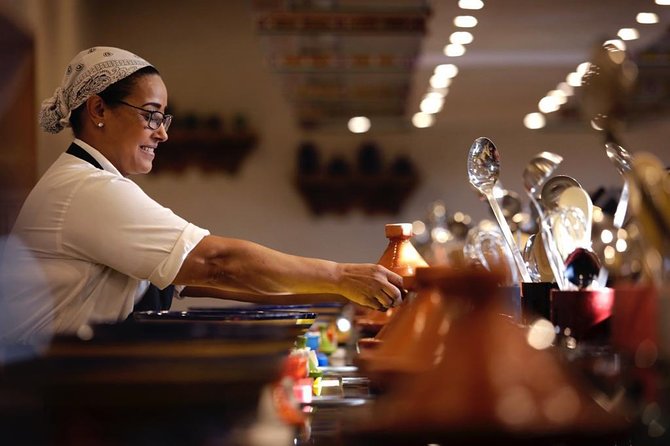
Moroccan cooking is best understood with your hands, and this experience puts you right at the worktable. In a restored riad near the Bahia Palace, a traditional cook called a Dada shows you how Moroccan bread, spices, tagine, couscous, salads, and sweets come together.
I like the purpose-built teaching kitchen, with 34 stations and staff support, and I like the visit to the bread oven and neighborhood herbalist. The main caution is timing: the booking is listed at about two hours, while the fuller cooking program is also described as a half-day experience, so confirm the schedule before you pay.
Key points at a glance
- Cook in a 34-station kitchen: You get a proper work area rather than a cramped demonstration counter.
- Meet a Dada: This traditional cook teaches practical Moroccan methods for spices, bread, tagine, and other dishes.
- Visit the local food network: The bread oven and herbalist explain where everyday ingredients come from.
- Explore a restored riad museum: Displays cover Moroccan food, utensils, serving customs, and cooking methods.
- Eat what you prepare: Lunch, tea or coffee, and bottled water are listed as included, while wine is optional.
- Book ahead for the class: The museum can be visited separately, but cooking places may fill quickly.
A cooking class inside Marrakech’s Moroccan food museum
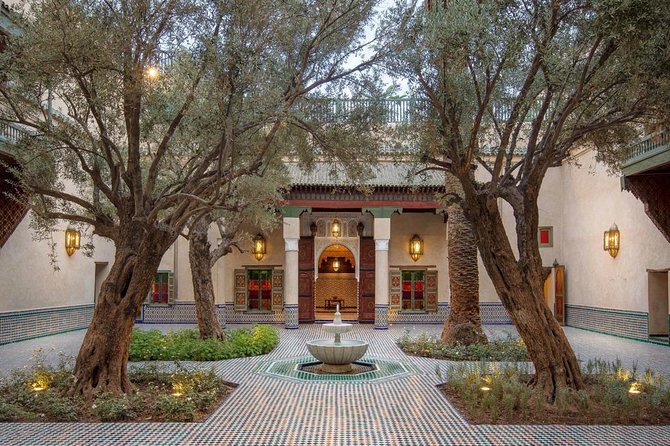
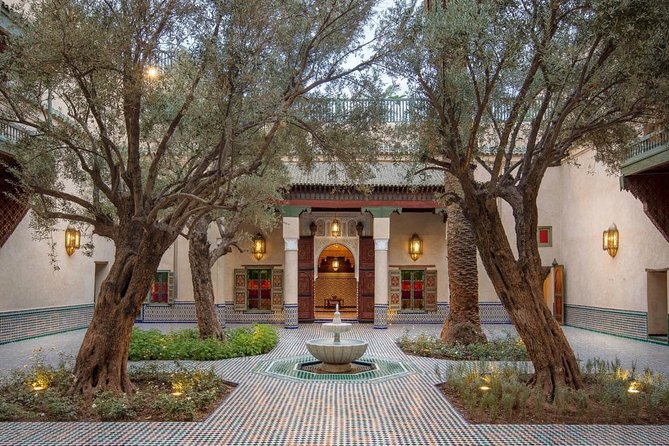
The first surprise is the setting. You meet at the Moroccan Culinary Arts Museum on Rue Riad Zitoun el Jdid, close to the Bahia Palace. The museum occupies a beautifully restored riad, with courtyards, rooms, displays, and a terrace. It gives the class a sense of place that a hotel kitchen cannot match.
I like that the experience connects food with daily Moroccan life. You are not only shown a recipe. You also see the tools, bread traditions, herbs, serving dishes, and customs that explain how a Moroccan meal reaches the table.
The museum itself is worth some attention. Its displays cover traditional recipes, food preparation, regional ingredients, dining furniture, and dinnerware. Videos and information panels add context, though the museum section may feel more useful to someone interested in food than to someone looking for a major art collection.
The building carries much of the visit. Its traditional architecture, courtyard, and quiet rooms provide a welcome pause from the busy streets around the Bahia Palace. Some of the exhibits are fairly simple, so I would treat the museum as an introduction to Moroccan cooking rather than a full-scale cultural museum.
More Food and History Tours in Morocco:
- Sevilla Food Tour: Tapas, Wine, History & Traditions
★ 5.0 · 3,468 reviews - Victoria Guided Food and History Tour
★ 5.0 · 2,015 reviews - Gastown Historic Walking Food Tour
★ 5.0 · 1,863 reviews
Meeting the Dada and getting your bearings
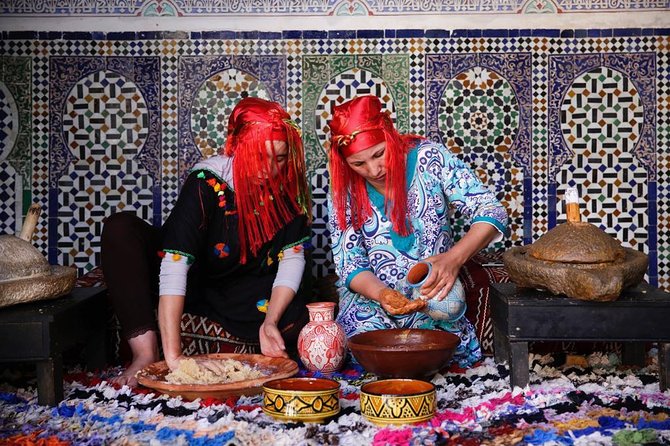
The experience begins with a reception and introduction in French or English. A translator or interpreter helps explain the class, then the Dada takes over the practical work. In Moroccan homes, a Dada is a traditional cook, and that matters here: the teaching is built around familiar methods rather than restaurant tricks.
You learn how to measure and balance spices, a crucial part of Moroccan cooking. The lesson is not simply about adding cumin, turmeric, ginger, cinnamon, or other seasonings by guesswork. It shows how small amounts affect the final dish and how Moroccan cooks build flavor without making every plate taste the same.
The class is designed for participation. You prepare food rather than only watching someone cook. Past class formats have included chicken tagine, Moroccan salads, dessert, couscous, and other staples, though the exact dishes can vary. The supplied description specifically highlights tagines, couscous, bread, and other Moroccan specialties.
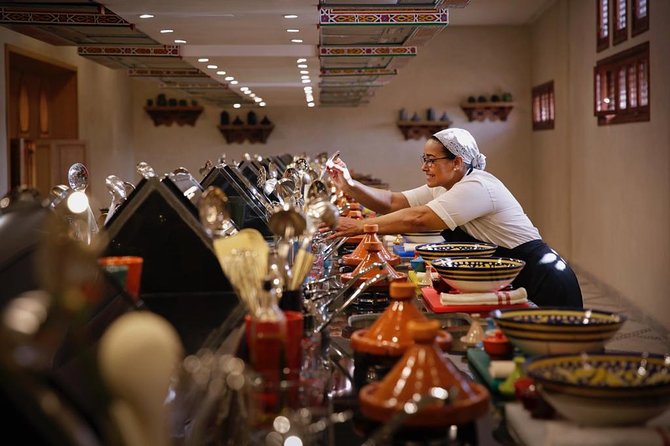
Staff support is part of the appeal. Instructions are given clearly, and help is available both verbally and by demonstration. That makes the class workable for beginners, including people who are not confident cooks. One practical benefit of a station-based kitchen is that you are less likely to spend the whole class craning over someone else’s shoulder.
The group can include up to 34 people. That is a fairly large maximum, so the experience may feel social rather than intimate on a busy day. The 34 individual stations help, but if you want a small private lesson, this is not the format to assume.
Bread, the neighborhood oven, and the herbalist
Bread gets special treatment, and rightly so. Moroccan bread is part of the daily meal, not just a side item. A demonstration shows how it is made, followed by a visit to the bread oven in the district.
This short outing adds useful context. You see the connection between home cooking and neighborhood food services. It also explains why bread is such a constant presence in Morocco, where local ovens have long played a practical role in community life.
The visit to the herbalist is another strong detail. Spices and herbs are not presented as anonymous jars in a tourist shop. You get a chance to see where the ingredients used in Moroccan food come from and how they are handled in the local area.
I would pay close attention here, especially if you plan to cook Moroccan dishes at home. The class can show you what ingredients look like before they are packaged, and it may help you understand the difference between a dish that is warmly spiced and one that is simply hot.
The walking portion is also a reminder to wear sensible shoes. The meeting point is in the medina area, near public transportation, and the experience returns to the museum at the end. The supplied details do not specify the walking distance or route, so you should allow a little flexibility around the start time.
What you actually cook in the teaching kitchen
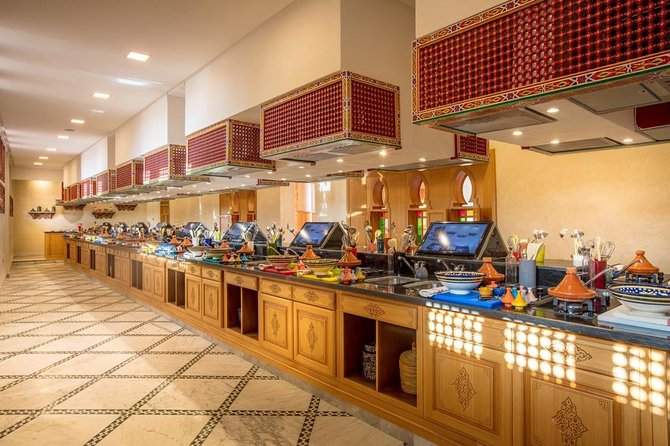
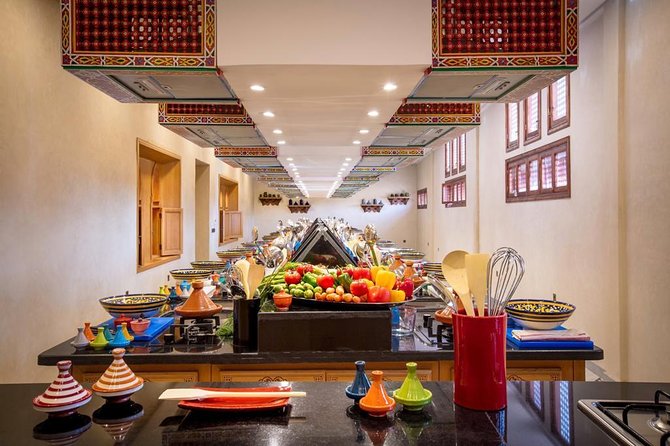
The kitchen is the working heart of the experience. With 34 stations, it is laid out for instruction rather than for show. You have a place to prepare ingredients, follow the Dada’s methods, and work through the meal with assistance nearby.
The dishes can include several courses. One described class prepared two Moroccan salads, a tagine, and a dessert. Other class descriptions mention chicken tagine and typical Moroccan preparations. You should not assume that exact menu unless it is confirmed for your date, but you can expect a selection of traditional dishes rather than one isolated recipe.
Tagine is often the dish people most want to learn. The word refers both to the conical cooking pot and to the slow-cooked dish prepared inside it. The class can help you understand how the pot works, how ingredients are layered, and why patience matters.
Couscous is another important part of Moroccan food culture. If it appears on your menu, pay attention to the preparation process rather than treating it as a quick grain side. Moroccan couscous has its own texture and serving traditions, and the lesson gives you a better sense of how it belongs in a complete meal.
The salads may be especially useful for home cooks. Moroccan salads often combine cooked vegetables, herbs, spices, oil, and careful seasoning. They are simple enough to repeat at home but distinctive enough to make the class feel worthwhile.
One of the best features is the balance between instruction and action. The Dada demonstrates, you try the method, and staff help when needed. That is more useful than taking pictures of a chef doing all the work.
More History Tours in Morocco:
- Marrakech: Saadian Tombs & Bahia Palace, Medina Guided Tour
★ 4.6 · 1,989 reviews - Marrakech Historical and Cultural Tour – Half Day City Tour
★ 4.5 · 1,180 reviews - Atlas Mountains – Ancient Ait Ben Haddou Day Tour from Marrakech
★ 5.0 · 411 reviews - Fez: Guided Walking Tour of the Historic Medina
★ 5.0 · 359 reviews
Tea, lunch, and the optional Moroccan wine
Once the dishes are ready, you eat what you prepared. Lunch is listed as included, along with bottled water and coffee or tea. A Moroccan tea ceremony is also part of the program.
The tea service is not a filler at the end. It explains an important part of Moroccan hospitality, where pouring and serving tea are social acts as much as practical ones. Take your time here. The ceremony helps connect the cooking lesson with the way food and drink are shared in Moroccan homes.
The meal is served on the terrace, according to the experience description. That gives you a pleasant change of pace after the kitchen and lets you see the riad from another angle. The setting is one of the strongest reasons to choose this class instead of a standard cooking lesson in a modern restaurant.
Moroccan wines may be offered as an optional discovery during the meal, but alcoholic drinks are not included in the price. This is worth sorting out before the class begins. One account of the experience found that some listed inclusions were not offered as expected, including water and tea, so you should check what is covered on your booking and ask staff at the start.
If you do not drink alcohol, this will not reduce the value of the class. The food, tea ceremony, and kitchen work are the main parts of the experience. If wine matters to you, treat it as an extra rather than part of the basic package.
Is $69.79 a fair price?
At $69.79 per person, the price is reasonable if you take part in the cooking class and eat the meal. You are paying for instruction, ingredients, the kitchen setup, the museum setting, the bread and herbalist visits, and lunch. The class also gives you recipes and methods you can reuse after Marrakech.
The value is weaker if you only want to walk through the museum. Historical admission prices mentioned in older information were much lower than the full cooking experience, with a basic museum ticket listed at 40 Moroccan dirhams and a tasting option at 120 dirhams in January 2020. Those older prices may no longer apply, but they show the difference between a museum visit and the full class.
I would book this for the food lesson, not simply for the museum. The building is attractive and the displays are useful, but the hands-on instruction is what makes the higher price make sense.
The class can also replace a meal in your schedule. Since lunch is included, you are not paying for a cooking lesson and then buying a separate meal immediately afterward. That improves the value, especially for families and couples who want one organized cultural activity during a Marrakech stay.
Who will enjoy this Marrakech experience?
This is a good match for you if you like food, local customs, and practical activities. It works particularly well for first-time visitors who want an introduction to Moroccan cooking without committing to a full day outside the city.
Families can consider it too. A 12-year-old has taken part successfully, and the station format gives younger cooks something concrete to do. Children who enjoy mixing, shaping, and assembling food may get more from this than from a museum visit alone.
It also suits couples and friends who want a shared activity. You prepare several dishes, then sit down together to eat them. The class is social, but the maximum group size means it may not feel private.
You may want another option if your main interest is advanced culinary training. The class focuses on traditional methods and a friendly introduction, not professional certification or highly technical restaurant cooking.
Likewise, if your schedule is tight, confirm the duration. The booking information says about two hours, while the fuller description calls it a half-day cooking experience. The exact timetable affects whether you can fit in the Bahia Palace, souks, or another appointment afterward.
Practical details before you book
The meeting and return point is the Moroccan Culinary Arts Museum, Rue Riad Zitoun el Jdid, Marrakech 40000. The activity ends back at that same location.
A French or English interpreter is available. If language is important to you, confirm your preferred language when booking, since one experience was conducted in French despite an English booking.
The maximum group size is 34 people. Service animals are allowed, and the museum is near public transportation. The supplied information does not give full details about step-free access or kitchen adaptations, so contact the provider if you have mobility or food-related needs.
Confirmation normally arrives when you book. For bookings made within one day of the start time, confirmation is sent as soon as possible and depends on availability.
Cancellation is free up to 24 hours before the start time for a full refund. Canceling or changing the booking inside that 24-hour window means no refund. The cut-off uses local Marrakech time.
Should you book it?
Book this experience if you want to do more than look at Moroccan food. The combination of a restored riad, museum displays, bread making, a neighborhood oven, an herbalist visit, hands-on cooking, tea, and lunch gives you a useful picture of how Moroccan meals are made and shared.
I would especially recommend it to first-time visitors, families with older children, and anyone who plans to cook tagine, couscous, or Moroccan salads at home. The main things to confirm are the actual duration, teaching language, menu, and included drinks.
Skip it if you only want a quick museum stop or if you need a very small, private class. For everyone else, the cooking work and meal are worth far more than a passive visit, and the riad setting makes this one of the more memorable food activities in Marrakech.
FAQ
Where does the cooking experience begin?
It begins at the Moroccan Culinary Arts Museum on Rue Riad Zitoun el Jdid, Marrakech 40000, Morocco.
Where does the activity end?
The activity ends back at the Moroccan Culinary Arts Museum, the same place where it begins.
How long does the experience last?
The tour summary lists approximately two hours. The fuller description also refers to a half-day cooking experience, so confirm the exact timing before booking.
What language is the class offered in?
Reception and instruction are available with a French or English interpreter. Confirm your preferred language when making the booking.
What dishes might I prepare?
The class focuses on Moroccan dishes such as tagine, couscous, bread, salads, and dessert. The exact menu can vary.
Is lunch included?
Yes. Lunch is listed as included, along with bottled water and coffee or tea.
Are alcoholic drinks included?
No. Alcoholic drinks are not included. Moroccan wine may be available as an optional part of the meal.
How many people can join?
The activity can have a maximum of 34 participants.
Are service animals allowed?
Yes. Service animals are allowed.
Can I cancel for a full refund?
Yes, if you cancel at least 24 hours before the experience start time. Cancellations made less than 24 hours before the start time are not refunded.
Newest history tours we have reviewed in Morocco
- 6-Day Private Morocco Cultural Tour From Casablanca To Marrakech★ 5.0 · 24 reviews
- Marrakech The History and Culture Day Trip★ 4.5 · 45 reviews
- Marrakech: Historical Discovery Tour★ 4.1 · 87 reviews
- Marrakech: Guided Medina History & Culture Tour★ 5.0 · 23 reviews
- Marrakech: Day Trip to the Beautiful and Historic Essaouira★ 4.3 · 39 reviews
- Marrakech: Half-Day Guided Journey through History & Culture★ 4.3 · 20 reviews
- From Marrakech: Essaouira Full day trip, beach and History★ 4.9 · 26 reviews
- Fes: A Guided Walking Tour Through the Historic Medina★ 4.4 · 97 reviews
Food & History Tours, compared.
Sevilla Food Tour: Tapas, Wine, History & Traditions
Read our review →

Dublin Historical Centre Food Tour with 8 Food Tastings & Drinks
Read our review →


Boston Pizza Lovers Food and History Walking Food Tour
Read our review →
Rome Food Tour in the Historic Centre with 8+ Food Tastings
Read our review →Browse the lists this tour appears in