
Review · PERU HISTORY TOURS
Arequipa, Historic and Colonial City and Santa Catalina Monastery
Arequipa’s greatest surprise is how much of the city fits into one afternoon. You move from volcano viewpoints and farming terraces to the quiet lanes of Santa Catalina Monastery, then finish among the white arcades of the Plaza de Armas and the ornate Church of the Society of Jesus. It is a smart way to get your bearings fast.
I like the easy transport, which saves you a long walk or taxi ride to Yanahuara and Carmen Alto. I also like that the Santa Catalina entrance is included, since it is the tour’s most memorable stop. The main catch is timing: the cathedral comes late, and its tower may close before the tour reaches it.
Key points to know before booking
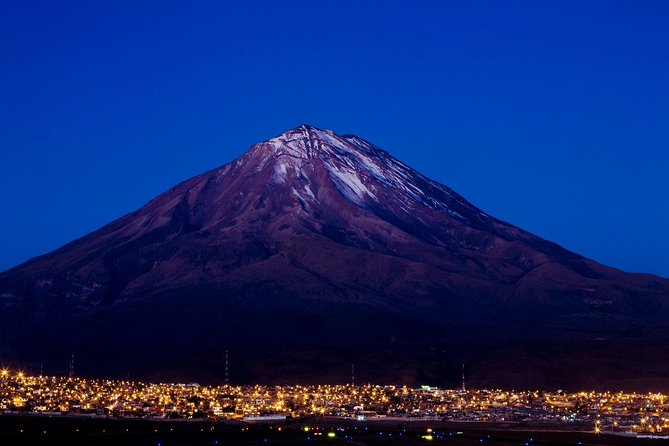
- Three volcanoes frame the opening views: Look for Misti, Chachani, and Pichu-Pichu from Carmen Alto and Yanahuara.
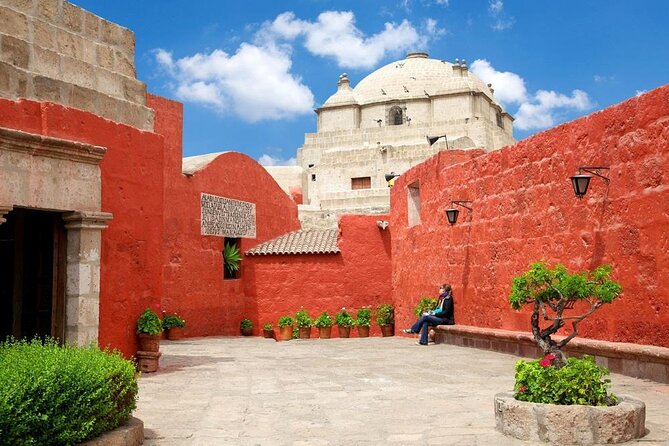
- Santa Catalina is the centerpiece: Its painted walls, plazas, gardens, and narrow lanes feel like a small town inside Arequipa.
- You see more than the historic center: The route adds St. Lazarus, Carmen Alto, and Yanahuara before heading downtown.
- The tour begins at 2:00 pm: Expect about three and a half hours, including vehicle transfers and walks.
- English quality can vary by departure: Past guides have included Charo, Jeymi, Sline, Kaitlin, and Victor, with some departures offering multilingual guiding.
- Dress for religious sites: Shorts are not allowed inside the religious buildings, so wear long pants or a long skirt.
Why this half-day tour works in Arequipa
Arequipa is easy to admire but not always easy to read. The pale volcanic stone gives the city a clear visual identity, yet the story behind the buildings reaches from pre-Columbian farming to Spanish colonial rule, Catholic orders, earthquakes, and modern city life.
This tour gives you that story in a tidy afternoon. At $61 per person, it is not the cheapest way to walk around central Arequipa. But the price includes hotel pickup and drop-off, an air-conditioned vehicle, a professional guide, and admission to Santa Catalina Monastery. If you would otherwise pay for taxis and the monastery separately, the value improves quickly.
The group is capped at 15 people. That is small enough to keep the walking portions manageable, though it is not a private tour. The vehicle matters most at the start, when you travel beyond the central plaza to the viewpoints and older neighborhoods.
Your guide is the key variable. Past departures have included Charo, Jeymi, Sline, Kaitlin, and Victor. Several guides have been praised for clear English, humor, patience, and strong local knowledge. One English-language departure had a guide whose English was hard for one person to follow, while another mixed-language group found the guide very good at switching among English, Spanish, and Portuguese. If your understanding of spoken English is important, it is worth confirming the language arrangement before departure.
More Medieval History Tours in Peru:
- Prague: Oldtown, Medieval Underground & Dungeon History Tour
★ 4.3 · 10,277 reviews - Prague Old Town, Medieval Underground and Dungeon Historical Tour
★ 4.5 · 3,227 reviews - Templar Tour Convent of Christ & Almourol Castle from Lisbon
★ 5.0 · 704 reviews
Carmen Alto and the volcano views
The outing begins with pickup at your Arequipa hotel around 2:00 pm. You then ride toward Carmen Alto, where the city gives way to farmland and terraces.
The viewpoint is useful because it shows how Arequipa developed around agriculture and water, not just colonial churches. Look across the fields for the three volcanoes that form the city’s natural backdrop: Misti, Chachani, and Pichu-Pichu. Misti is the familiar cone, but the broader view helps you understand that Arequipa sits in a dramatic volcanic setting.
This is a photo stop, but it is also one of the best places to let the guide explain the city’s geography. You may hear more about farming terraces, the surrounding peaks, and the way volcanic stone shaped local building traditions.
Weather makes a real difference here. February falls in the rainy season, and cloud can hide the volcanoes. If the sky is clear, this first hour can be excellent. If not, the view is still worthwhile, but you should not book the tour solely for a perfect Misti photograph.
Yanahuara, sillar arches, and the White City
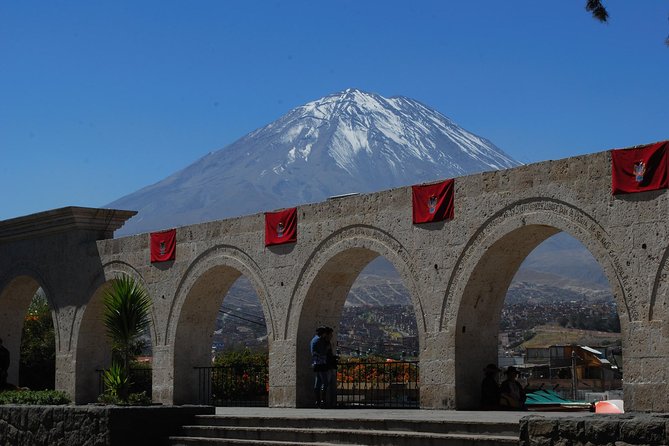
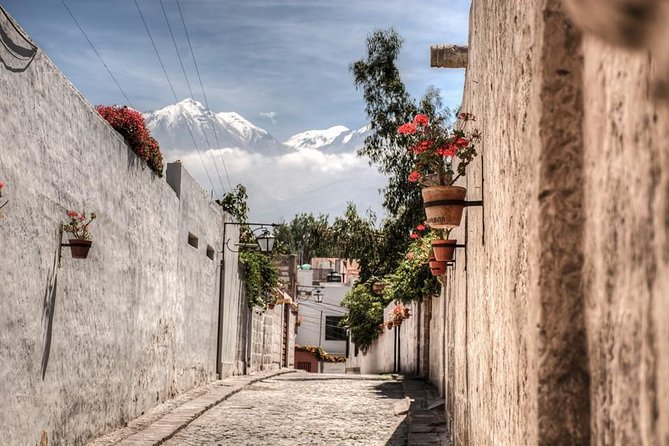
The route continues to Yanahuara, a colonial district known for its Andalusian-style church and white volcanic-stone buildings. The stone is sillar, a pale rock formed from volcanic material. It is the reason Arequipa is called the White City.
At El Mirador de Yanahuara, you get another angle on the city and the volcanoes. The viewpoint is framed by sillar arches, and the architecture makes this stop feel different from Carmen Alto. Carmen Alto explains the city’s agricultural setting. Yanahuara gives you the classic architectural image.
I like having both viewpoints in the same outing. You are not simply taken to one famous photo stop and sent back downtown. The two places show different sides of Arequipa, and the vehicle saves you from arranging separate taxi rides.
Yanahuara is also a good place to notice the contrast between the grand colonial image and ordinary neighborhood life. The tour passes through an area beyond the main tourist center, so you see more than the usual Plaza de Armas circuit.
Santa Catalina Monastery, a city inside the city
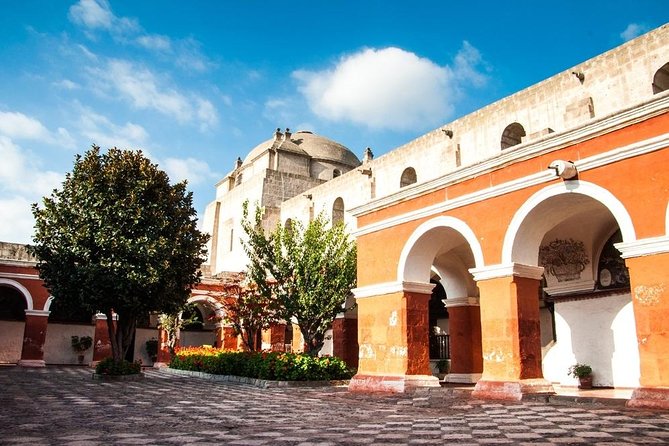
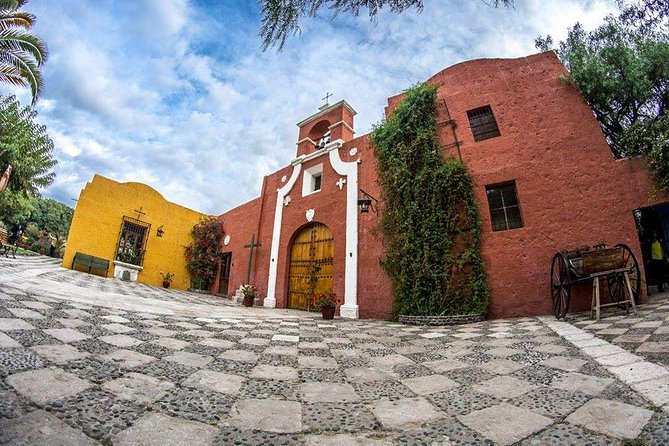
Santa Catalina Monastery takes up the middle of the tour and deserves the most time. The Dominican religious complex was closed to the public for nearly four centuries. Today, you enter through a quiet series of plazas, narrow lanes, cloisters, and gardens.
The scale is the surprise. This is not just a single church or a small convent room. The monastery feels like a contained neighborhood, with passages and colored walls that make the complex easy to explore on foot. The layout helps you picture how enclosed religious communities once functioned, while the preserved rooms and courtyards add a human dimension to the architecture.
This is where a guide earns the admission fee. Without context, you can admire the walls and take photographs. With a good explanation, the lanes and rooms become part of a larger story about religious life, social rank, domestic work, and colonial Arequipa.
Some departures have included a separate guide inside the monastery, including guiding in English, French, German, or other languages depending on the group. That can be helpful because the monastery is large and the tour commentary may differ from the city portion.
Allow yourself to pay attention to the small details. The narrow streets, open courtyards, gardens, and painted surfaces make the place feel less like a conventional museum and more like a preserved settlement. If you enjoy architecture, religious art, or social history, this will likely be the strongest part of the afternoon.
There is one possible drawback. A person who is not interested in religious sites may find that Santa Catalina and the churches take up too much of the experience. The monastery is fascinating even if you are not religious, but the tour does devote a large share of its walking time to Catholic buildings and their history.
More Colonial History Tours in Peru:
- Lima: Historical, Colonial, and Modern City Tour
★ 4.3 · 21 reviews - Vung Tau Essential: Beach, Christ Statue & Colonial Heritage
★ 5.0 · 284 reviews - Full-Day Ho Chi Minh City Tour with Colonial Heritage & Chinatown
★ 5.0 · 246 reviews - Colonial Zone: Historical Tour with a visit to the Columbus Lighthouse and Tres Ojos Park
★ 4.9 · 157 reviews
The Plaza de Armas and Arequipa Cathedral
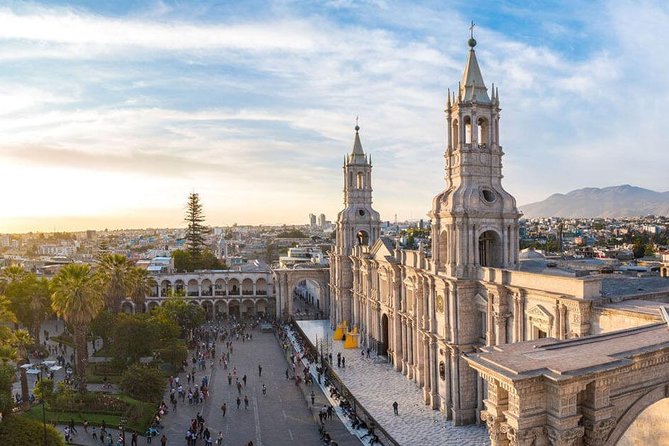
After Santa Catalina, you head to the Plaza de Armas, Arequipa’s grand central square. The arcades and cathedral create the city’s most recognizable urban scene, with pale stone tying the buildings together.
The Basilica Cathedral dates from the 16th century, though earthquakes and later changes have affected the building over time. Your guide explains the structure and its place in the city before you continue to the Church of the Society of Jesus.
The timing deserves attention. The tour begins at 2:00 pm, and the cathedral is scheduled late in the route. One past departure reached the cathedral at about 5:00 pm, after the tower and its city views had closed at 4:00 pm. So you may see the cathedral but miss the tower. If that view is a priority, ask at the start if the order can be adjusted, or plan a separate cathedral visit.
The Plaza de Armas is also a place where the group may pause while the guide points out the arches, facades, and changing details of the square. It is a good final setting because you finish in the center, close to restaurants, shops, and other sights, even though the scheduled service includes a return to your hotel.
The Church of the Society of Jesus and San Ignacio Chapel
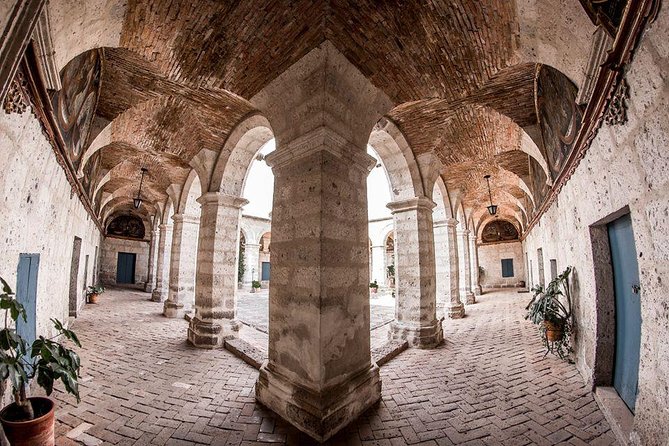
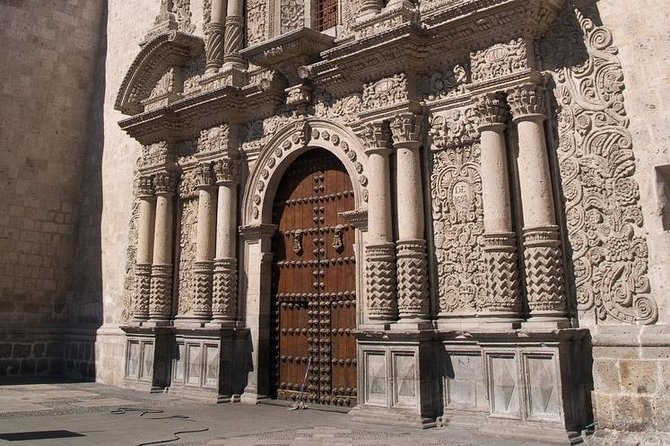
The final church stop is the Church of the Society of Jesus, founded in the 17th century by the Jesuits. Its cloisters provide another look at Arequipa’s sillar construction, but the real visual reward is the San Ignacio Chapel.
The chapel is known for its vivid decoration, including jungle birds and plant motifs. After the restrained pale stone of the exterior and the quiet spaces of Santa Catalina, this interior can feel like a sudden burst of color.
This stop is short but worthwhile. It adds a different artistic mood to the tour and helps explain why Arequipa’s churches are more than simple white colonial shells. If your guide is good, you will also get useful background on the Jesuits and the church’s role in the city.
The religious focus is strong overall. You visit Santa Catalina, the cathedral, and the Jesuit church in one afternoon. That is a plus if you want architecture and Catholic history, but less so if you prefer markets, food, museums, or modern neighborhoods.
What the pace feels like
The tour is listed at about three hours and 30 minutes. The first section uses the vehicle, with stops at Carmen Alto and Yanahuara. The later section is more focused on walking through the monastery, the main square, and the churches.
You should be comfortable walking for much of the central-city portion. The monastery has narrow lanes and several courtyards, and the historic center involves standing while the guide explains buildings and artwork. Wear shoes that can handle uneven surfaces and bring water, since food and drinks are not included.
The pace can vary with the guide and the language mix. A strong guide may break explanations into shorter sections and keep the group moving. On a multilingual departure, longer explanations may be repeated in several languages, which can create waiting time. One person found the commentary too long and preferred shorter blocks of information.
The vehicle is air-conditioned, a useful feature when the afternoon is warm. It also removes the stress of finding taxis between scattered viewpoints and the center. Pickup and drop-off are included at your Arequipa hotel, but you should make sure the operator has the correct hotel details. One serious past problem involved a missed pickup caused by a mix-up over dates and location. The booking was eventually refunded, but the afternoon was lost, so confirm the pickup details before the day begins.
Who will get the most from this tour
I would choose this tour if you have limited time in Arequipa and want the major sights explained rather than simply photographed. It is especially useful on a first afternoon, when the viewpoints help you understand the city before you explore it on your own.
It also suits couples, families, and solo visitors who prefer organized transport and a guide. The group limit of 15 is more comfortable than a large coach tour, while the included monastery admission removes a major planning step.
You may want a different plan if your main interests are food, shopping, archaeology outside the city, or long independent walks. You should also think twice if you dislike religious interiors. This tour gives churches and the monastery a central role.
The afternoon start can be convenient if you arrive in Arequipa that morning or want a slow start to the day. It is less ideal if you want the best chance of clear volcano views, since weather can change and the rainy season may obscure the peaks.
Is $61 a fair price?
The price is reasonable if you value time and explanation. You get transport to the two outlying viewpoint areas, hotel pickup and drop-off, a guide, and Santa Catalina admission. Doing the route independently may cost less, but you would need to organize taxis, learn the sites as you go, and arrange the monastery entry yourself.
The tour is not a bargain for someone who plans to walk everywhere and prefers reading plaques or using a guidebook. Its value lies in the combination of distance, timing, admission, and interpretation.
Free cancellation is available until 24 hours before the 2:00 pm start time. Cancellations inside that window are not refunded, so keep your plans firm before the cutoff.
Should you book the Arequipa city tour?
Book it if you want a well-organized introduction to Arequipa with two viewpoints, the city center, and Santa Catalina in one afternoon. The monastery alone makes the outing worthwhile for many people, and the included transport is useful because the first stops sit beyond the main square.
Before booking, confirm the tour language and pickup details. If you care about the cathedral tower, ask about the order of stops, since the late arrival may miss its 4:00 pm closing time. Go on a clear day if possible, but keep expectations realistic during the rainy season.
For a first visit, this is a solid time-saving choice. For a second visit, or for anyone who prefers a slower and less religious route, independent exploration may suit you better.
FAQ
What time does the tour start?
The tour starts at 2:00 pm.
How long does the experience last?
The tour lasts approximately three hours and 30 minutes.
Is hotel pickup included?
Yes. Hotel pickup and drop-off in Arequipa are included.
What transportation is provided?
You travel between the sites in an air-conditioned vehicle.
How large is the group?
The maximum group size is 15 people.
Is admission to Santa Catalina Monastery included?
Yes. Admission to the Monastery of Saint Catherine is included.
Are food and drinks included?
No. Food and drinks are not included.
Can I wear shorts inside the religious sites?
No. Shorts are not allowed in the religious places visited on the tour. Wear long pants or a long skirt.
Can I cancel for a full refund?
Yes, if you cancel at least 24 hours before the local start time. Cancellations made less than 24 hours in advance are not refunded.
Newest history tours we have reviewed in Peru
- 6-Day Cultural Tour to Machu Picchu★ 5.0 · 76 reviews
- Piramids of Tucume Tour, Sican Museum and Lambayeque city tour★ 5.0 · 30 reviews
- Aymara Route Mystical Cultural Tour★ 4.7 · 27 reviews
- Machu Picchu: historical and photographic guided tour★ 4.9 · 27 reviews
- Lima: Historic Downtown, Miraflores & Catacombs Private Tour★ 4.5 · 28 reviews
- Lima: Historical, Colonial, and Modern City Tour★ 4.3 · 21 reviews
- Cusco: Historical Guided City Tour with 4 Inca Ruins★ 4.5 · 99 reviews
- Cusco: Historic Walking Tour with Pisco Sour and Music Show★ 4.6 · 65 reviews
Medieval History Tours, compared.
Oldtown, Medieval Underground & Dungeon History Tour
Read our review →
Prague Old Town, Medieval Underground and Dungeon Historical Tour
Read our review →
Templar Tour Convent of Christ & Almourol Castle from Lisbon
Read our review →
Barcelona 1.5h Private Old Town, Gothic & Ramblas Walking Tour
Read our review →
Day Trip From Addis Ababa See Historical Monastery,Stunning Nature,Animals,Birds
Read our review →
Stockholm Viking History Full Day Tour to Sigtuna + Uppsala
Read our review →
Tipsy Tapas & History Tour in the Gothic Quarter
Read our review →Browse the lists this tour appears in