Review · AMSTERDAM HISTORY TOURS
Historical Walking Tour, private with local Dutch guide
Amsterdam’s story begins at the water, and this private walk follows that story from a medieval watchtower through the old center, canal belt, and Jordaan. With local guide Anna, who has lived in Amsterdam for 25 years, you get more than a list of dates and buildings. You get a readable explanation of how dikes, trade, religion, wealth, and daily life shaped the city.
I like the private format, since your group can ask questions, adjust the pace, and focus on subjects that matter to you. I also like the clear route from the Weeping Tower to Westerkerk, which gives first-time visitors a useful map of central Amsterdam. The main drawback is physical: you will be walking and standing for about two hours, with no mobility aids available.
Key points to know
- Start at a medieval watchtower: Meet at Café the Schreiertower near Amsterdam Centraal for an introduction to the city’s earliest origins.
- See major sights from the outside: The route includes The Waag, Dam Square, the canal ring, the Jordaan, and Westerkerk, but entrance fees to attractions are not part of the tour.
- A genuinely private experience: Only your own group takes part, so Anna can respond to your questions and interests.
- Expect more than standard sightseeing: The conversation can include Amsterdam’s Jewish history, architecture, trade, art, food, and modern city life.
- The finish is well placed: You end near Westerkerk and the Anne Frank House, useful for continuing your day on foot.
- Plan for a steady walk: The tour suits most people who can walk and stand for two hours, but not those who use a walker or have serious mobility limits.
Starting at Amsterdam’s medieval edge
The meeting point is Café the Schreiertower at Prins Hendrikkade 95, close to the historic center and public transportation. This is a practical place to begin because it puts you near the old waterfront and Amsterdam Centraal, yet directly beside one of the city’s few remaining medieval structures.
The Weeping Tower, also called the Schreierstoren, once formed part of the city’s defenses. Here Anna gives the opening explanation of Amsterdam’s origins, helping you understand why a low-lying settlement became a major European port.
This first stop is brief, about five minutes, but it sets the tone. Instead of beginning with a grand palace or museum, you begin with defense, water, and the problem that shaped Amsterdam from the start: how to build and live in a city that sits below sea level.
That approach is useful if this is your first morning in Amsterdam. You get a basic mental map before the streets, canals, bicycles, and narrow houses begin to blur together. Several people who took the walk on arrival found it helped them get oriented, even when jet lagged.
More History Walking Tours in Amsterdam
- Amsterdam: Haunted History and Ghost Walking Tour
★ 4.5 · 488 reviews - Amsterdam History Walking Tour
★ 5.0 · 281 reviews - Amsterdam: Highlights & History Walking Tour
★ 4.8 · 266 reviews
Zeedijk and The Waag: water, walls, and old Amsterdam
From the tower, the route moves to Zeedijk, one of Amsterdam’s oldest streets. Its name means sea dike, and the street once helped protect the settlement from flooding. Locks and water control were not side issues here. They were central to the city’s survival and growth.
You spend about five minutes at Zeedijk, enough for Anna to explain its original purpose and place it in the wider story of the old center. This is one of those stops that can look ordinary at first, but the name gives you a clue to the city beneath the modern street.
The next stop is The Waag, a medieval city gate that was part of a defensive wall and moat system. The building later took on other uses, and its heavy form helps you picture Amsterdam when the city was smaller and tightly guarded.
The stop is also short, around five minutes. That means you should not expect an extended architectural lecture at every building. The value comes from the way the guide links each place to the next, showing how defenses, waterways, trade, and urban growth fit together.
Oostindisch Huis and the machinery of trade
At Oostindisch Huis, the story shifts from medieval defense to global commerce. This former office and warehouse belonged to the Dutch East India Company, founded in 1602.
Anna explains the spice trade and the company’s role in the development of the modern corporation and stock market. That makes this more than a stop for admiring an old façade. You are looking at a place tied to investment, shipping, overseas trade, and the financial systems that helped Amsterdam become wealthy.
The stop lasts about five minutes, so the explanation is an introduction rather than a full history seminar. Still, it gives you an important connection between Amsterdam’s elegant center and the wider world that financed it.
I especially like this part of the walk because it puts the canal houses and merchant wealth in context. You are not simply told that Amsterdam had a Golden Age. You get a sense of the business systems and trade networks behind the city’s prosperity.
The smallest house and Amsterdam’s narrow building tradition
The route then reaches Het Kleinste Huis van Amsterdam, known as the smallest house in Amsterdam. It stood next to a gate decorated with the city crest and other symbols.
This is a quick stop, roughly five minutes, but it adds a lighter detail to a route filled with fortifications, commerce, and politics. Amsterdam’s narrow houses are one of its defining visual features, and this tiny building gives you a memorable example.
Do not expect to enter it as part of this experience. The listed stops are viewed during the walk, and all admission fees and taxes are included because the tour itself does not require paid entry to these locations.
More History Walking Tours in the Netherlands
- Anne Frank and Amsterdam Jewish History Walking Tour
★ 5.0 · 259 reviews - Amsterdam: Ghost Walking Tour and Dark History
★ 4.8 · 118 reviews - Amsterdam: Iconic Canals & Historic Sights Walking Tour
★ 4.5 · 90 reviews - Amsterdam: Anna Frank and World War II History Walking Tour
★ 4.8 · 86 reviews
Dam Square, the city’s public stage
Dam Square is the route’s central pause. You spend about ten minutes here, looking at the old market square and the heart of Amsterdam.
The square is now associated with the Royal Palace and the national Second World War monument. Anna can use the space to explain how Amsterdam’s civic, royal, commercial, and memorial functions meet in one place.
Dam Square is also a good point for connecting the past with present-day city life. It can feel crowded and highly commercial, so a local guide helps you look beyond the surface. You learn why this particular square became the city center rather than simply taking a quick photograph and moving on.
For first-time visitors, this stop has practical value. Once you know where Dam Square sits, it is easier to place the surrounding streets, shopping areas, canals, and nearby museums.
The canal ring and the houses of the Golden Age
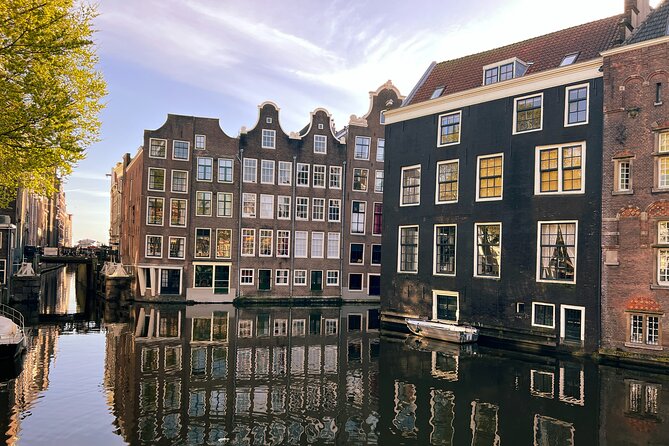
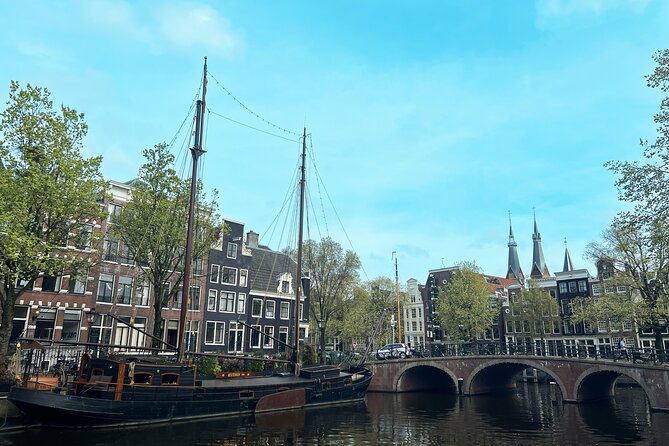
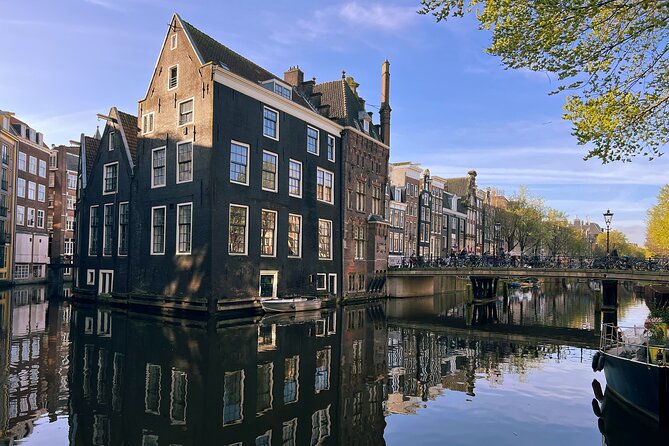
The longest part of the route is the Canal Ring, or Grachtengordel, with about 30 minutes devoted to the district. This is where you see the grand canal houses built for wealthy merchants during Amsterdam’s Golden Age.
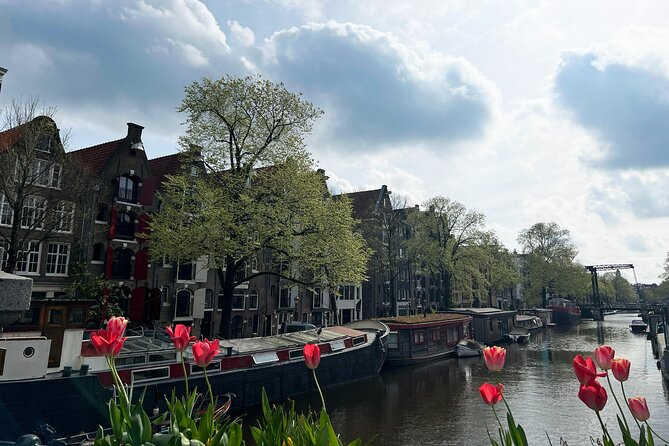
The focus is not only on pretty façades. Anna explains what the houses say about wealth, status, business, and urban planning. You see northern Baroque design and a wide variety of houseboats, giving you two views of Amsterdam’s built character: the formal merchant homes and the practical homes that float on the water.
This is likely to be one of the most rewarding sections for anyone interested in architecture. Narrow façades, tall windows, ornate details, and unusual rooflines make more sense when you understand the city’s old taxes, limited plots, and merchant culture.
You also get time to absorb the setting. Thirty minutes is long enough for questions and a slower look at the canals, though it is not a dedicated architecture tour. If you want to study every façade or take many photographs, you may need to continue exploring after the walk ends.
The private setup matters here. Your group can ask why certain houses look different, how houseboats fit into city life, or which details are worth noticing. Anna is also able to adjust the conversation to your interests rather than delivering the same fixed speech to a large crowd.
The Jordaan, brown cafés, and local character
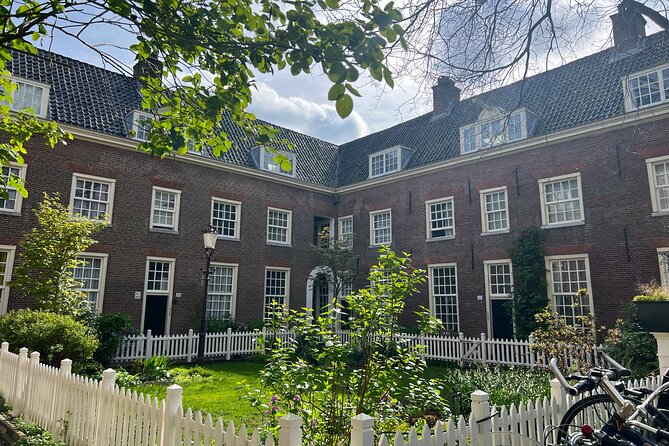
The tour then spends about 30 minutes in the Jordaan, one of Amsterdam’s best-known neighborhoods. Its narrow streets, traditional brown cafés, and independent boutiques give the walk a more lived-in feel than the grander sections of the canal belt.
This is where the experience moves from formal history into daily culture. Anna can help you understand how the neighborhood fits into present-day Amsterdam, while still pointing out the older buildings and streets that give it character.
The Jordaan is also a useful place to receive practical suggestions. Previous groups used Anna’s ideas for food and further sightseeing, and she has made time for snack stops when the group wanted one. Snacks are not listed as an included feature, so you should treat any purchase as your own expense.
The private format works well in a neighborhood like this. You can pause at a café, ask for recommendations, or spend less time on shops if you care more about architecture. The guide keeps the route moving, but the pace can be adjusted within reason.
Westerkerk and the Anne Frank House area
The final stop is Westerkerk, a Dutch Protestant church known for its design and distinctive spire. It is one of Amsterdam’s best-known landmarks and a church many local people feel strongly about.
The formal stop is about five minutes, but the location gives the tour a useful ending. You finish at Prinsengracht 279, near Westerkerk and the Anne Frank House, with the option to continue exploring the neighborhood on foot.
The tour does not include entry to the Anne Frank House or other attractions. If you plan to visit the Anne Frank House, handle that as a separate booking and check its own entry arrangements. The walking tour gives you context for the area, but it is not a substitute for a timed museum visit.
Ending here also makes sense geographically. You have crossed much of central Amsterdam, from the old eastern edge to the western canal district, and you can continue toward cafés, canals, museums, or other nearby sights.
What Anna adds to the walk
The strongest part of this experience is the guide’s ability to connect facts to people and places. Anna has lived in Amsterdam for 25 years and is described as comfortable with history, architecture, culture, and present-day city life.
Her style includes dry humor and clear English. That matters on a walking tour because a long stream of dates can wear you down quickly. The goal is not to memorize a textbook. It is to understand why Amsterdam looks and functions as it does.
The tour can also be shaped around your interests. One group received extra attention to Amsterdam’s Jewish history beyond the Anne Frank House. Another combined the city walk with an afternoon Rijksmuseum visit, where Anna discussed Rembrandt, Vermeer, and Dutch sea battles.
That museum visit is a separate activity, not part of the two-hour walking tour. Still, it shows the range of subjects Anna can handle if you want more than a basic city orientation.
Communication before the tour is another practical strength. Changes to dates, times, and group size were handled cheerfully in the past, though you should still confirm any changes as early as possible. The experience is private, so only your own group participates.
Price, time, and practical value
The listed price is $96.02 per person. For a private two-hour tour, that is not the cheapest way to see central Amsterdam, especially for a solo visitor. For a couple, family, or small group, the cost can make better sense because you are paying for private guiding rather than joining a large public walk.
Group discounts are available, so check the final price for your party before booking. The value comes from the guide’s flexibility, local perspective, and ability to answer questions, not from included attractions or food.
All fees and taxes are included, and the tour is offered in English with a mobile ticket. Bottled water is not included. Bring your own water, particularly if you are walking in warm weather.
The experience lasts about two hours, though one past booking with Anna ran longer. Do not plan a tightly timed museum entry immediately afterward. The route ends near the Anne Frank House, but you should allow extra time for the final stop, questions, and the pace of your group.
The tour is often booked around 70 days ahead. That is a useful sign to plan early if your dates are fixed, especially because a private activity has limited guide availability.
You can cancel for a full refund up to 24 hours before the start time. Changes or cancellations made less than 24 hours before the start are not accepted for a refund.
Who should book this Amsterdam walk
I would choose this tour for a first visit, particularly if you want historical context before tackling museums on your own. It is also a good fit for families or small groups who prefer questions and conversation over a fixed audio guide.
You will get the most from it if you enjoy architecture, urban history, trade, Jewish history, or local food suggestions. Anna’s dry humor and personal style should suit you if you like a guide who can explain serious subjects without making every stop feel formal.
This is not the best choice if you want extensive interior visits. The walk focuses on streets, exteriors, public squares, canals, and neighborhoods. It also is not suited to anyone who has trouble walking or standing for two hours, uses a walker, or needs mobility equipment.
Service animals are welcome, and the route is near public transportation. Most people who can manage a steady city walk should be able to participate, but comfortable shoes remain essential.
Should you book it?
Book this walk if you want to understand Amsterdam before exploring it independently. The route covers a lot: medieval defenses, flood control, trade, merchant wealth, canal houses, the Jordaan, and Westerkerk. The private setting and Anna’s ability to personalize the discussion are the main reasons to choose it over a basic group walk.
Skip it if you mainly want museum entry, a boat ride, or a short photo tour. But if your priority is a clear introduction from a long-time local, with room for questions and useful ideas for the rest of your stay, this is a strong first-day choice.
FAQ
Where does the historical walking tour start?
The tour starts at Café the Schreiertower, Prins Hendrikkade 95, 1012 AE Amsterdam. This is near the Weeping Tower and close to public transportation.
Where does the tour end?
The walk ends at Westerkerk, Prinsengracht 279, 1016 DL Amsterdam. The ending is near the Anne Frank House and Westerkerk church.
How long does the tour last?
The tour lasts approximately two hours. You should allow some flexibility if your group asks questions or pauses along the way.
Is this a private tour?
Yes. Only your own group participates, allowing the guide to respond to your interests and adjust the pace.
Is the tour suitable for people with limited mobility?
The tour is not recommended for people who have trouble walking or standing for two hours, use a walker, or need mobility aids. Mobility equipment is not available.
What is the cancellation policy?
You can cancel up to 24 hours before the experience start time for a full refund. Cancellations or changes made less than 24 hours before the start are not accepted for a refund.
More Private History Tours in the Netherlands
- Amsterdam: Private Pedicab Historical Sightseeing Tour
★ 5.0 · 41 reviews - Amsterdam: Private Anne Frank and Jewish History Tour
★ 5.0 · 26 reviews - Private Guided Historic Amsterdam Canal Cruise in a Salon Boat
★ 5.0 · 21 reviews - Private Guided Walking Tour Historical Dordrecht
★ 5.0 · 19 reviews
More Private History Tours in Amsterdam
- Anne Frank and the Jewish History of Amsterdam Private Tour
★ 5.0 · 307 reviews - Private Boat Tour Amsterdam – 90 Min incl. welcome drink on historic saloon boat
★ 5.0 · 82 reviews - Amsterdam Private Historical Walking Tour
★ 5.0 · 75 reviews - Historic Amsterdam 2-Hour Private Tour with Local Guide
★ 4.9 · 53 reviews
Newest history tours we have reviewed in Amsterdam
- Amsterdam: Luxury Canal Cruise with Historic VR Experience★ 5.0 · 305 reviews
- Amsterdam Walking Tour: Urban Legends & History with local guide★ 5.0 · 39 reviews
- Guided Walking Tour Amsterdam – Legends, History & Ghost Stories★ 5.0 · 28 reviews
- LGBTQI+ History Tour of Amsterdam★ 5.0 · 123 reviews
- Anne Frank’s Amsterdam Jewish History WWII Exclusive Guided Tour★ 5.0 · 18 reviews
- Amsterdam Haunted History and Ghost Walking Tour★ 5.0 · 47 reviews
- Private Guided Historic Amsterdam Canal Cruise in a Salon Boat★ 5.0 · 21 reviews
- Amsterdam Highlights and History Walking Tour (MUST DO)★ 5.0 · 29 reviews
Private History Tours, compared.
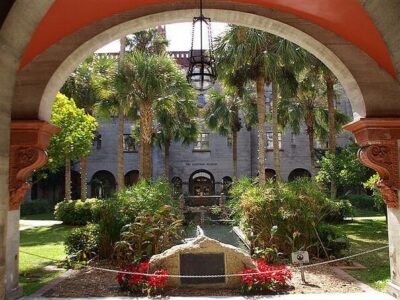
Private Guided Historic Electric Cart Tour of St. Augustine
Read our review →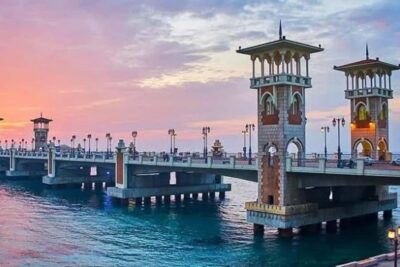
Private Full-Day Tour of Historical Alexandria
Read our review →
Private Tour of the Historic City in a Ford T Car
Read our review →
Madrid Historical Tour with Local Guide in Eco Tuk Tuk Private
Read our review →
Private Biblical Tour Ancient Corinth & Isthmus Canal from Athens
Read our review →
Private Kathmandu Sightseeing Tour | UNESCO World Heritage sites
Read our review →