
Review · UK HISTORY TOURS
Glasgow: The Magnificent and Mysterious History of Glasgow
Glasgow’s story is written into its streets. On this 2.5-hour walk, you move from the grand City Chambers and merchant houses to old markets, music halls, murals, theatres, and the Cathedral. The route shows how a small medieval settlement grew into a powerful industrial city, then reshaped itself as a creative cultural center.
I like the way the tour joins big civic buildings with overlooked corners, so you get more than a parade of famous sights. I also like the guides’ storytelling. Bruce is often praised for his humor and local pride, while Henry brings clear explanations of the city’s social and political past. The main consideration is the weather: Glasgow rain does not cancel the walk, so come prepared.
Key points to know
- A 4-kilometre city walk: The route takes about 2.5 hours, with frequent stops to listen and look.
- History from Saint Mungo onward: You hear about Glasgow’s sixth-century origins, merchant wealth, industrial growth, workers, and modern culture.
- Big sights and small discoveries: The City Chambers, George Square, Tobacco Merchant’s House, Britannia Panopticon, murals, Mercat Cross, and Glasgow Cathedral all feature.
- Strong storytelling: Guides including Bruce, Henry, and James are known for clear facts, Scottish humor, and lively local stories.
- Outdoor in every season: Wear good shoes and rain gear. The tour runs rain or shine.
- Good value at $18: For a full introduction to central Glasgow, the price is modest, especially if this is your first visit.
Starting at George Square with Glasgow’s public face
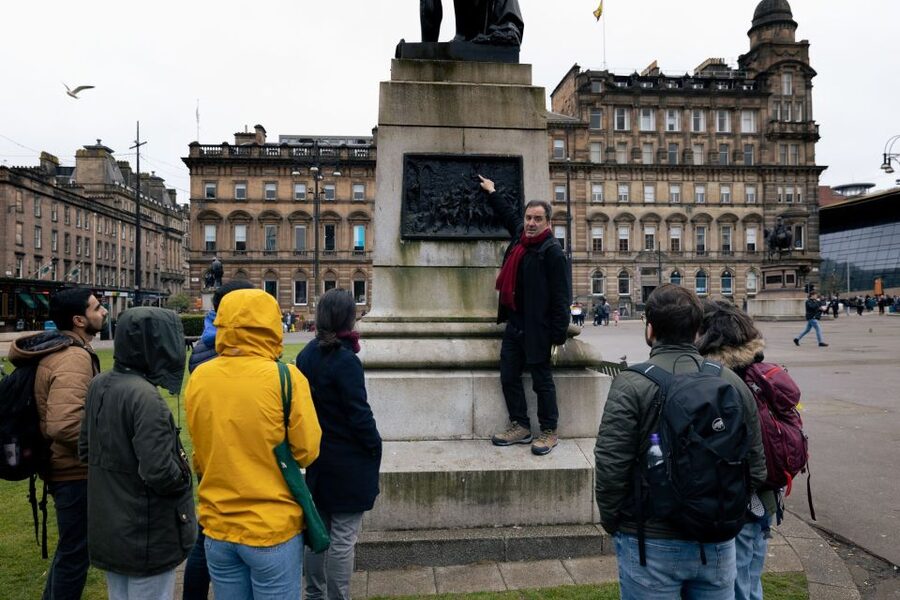
Meet outside the main entrance to Costa Coffee on the north side of George Square. This is a practical starting point because George Square puts Glasgow’s civic history right in front of you. From here, the group begins with the Glasgow City Chambers, one of the city’s grandest buildings.
You get about 12 minutes at the City Chambers, including a guided explanation, sightseeing, and a photo stop. The building helps set the tone for the whole tour. Glasgow’s rise brought wealth, confidence, and a taste for imposing architecture. The grand stonework tells you that this was no longer a minor Scottish town.
The Cenotaph follows, with a short stop of around three minutes. Then you see the Walter Scott Monument and the Monument to Robert Burns. These stops are brief, but they add useful context about the people Scotland chose to honor in its public spaces.
You will not spend long at each monument, so keep your ears open and your camera ready. This is a walking tour rather than a series of long interior visits. Its value comes from the connections the guide makes between places.
More History Tours in the UK:
- London Small Group Tour of Historical Pubs
★ 5.0 · 10,422 reviews - Edinburgh: Edinburgh Castle Guided History Tour with Tickets
★ 4.8 · 9,933 reviews - A History of Terror – Belfast City Centre Walking Tour
★ 5.0 · 2,883 reviews
From grand streets to Glasgow’s merchant wealth
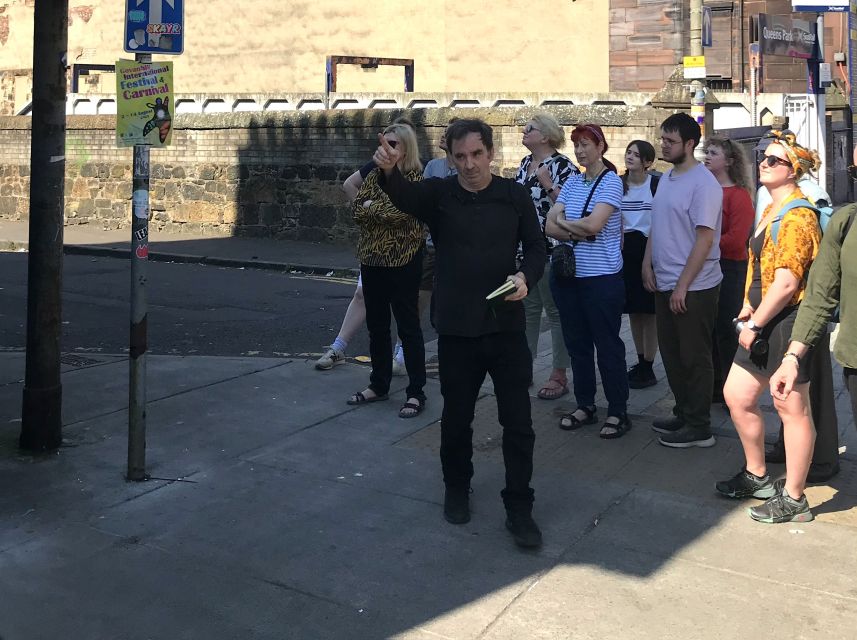
The route continues past 155 Queen Street and Paesano Pizza before reaching the Tobacco Merchant’s House. These stops introduce the merchants and traders who helped transform Glasgow’s fortunes.
The Tobacco Merchant’s House is especially useful for understanding the city’s commercial past. Glasgow’s prosperity did not arrive by accident. Merchants built businesses, moved goods, and gained influence, while workers made the wider economic change possible. A good guide puts both sides of that story on the same street, rather than presenting wealth without explaining who created it and who labored beneath it.
Virginia Court adds another layer. Its narrower setting feels different from the formal city buildings, and it helps you notice how Glasgow’s old commercial district was shaped by courtyards, lanes, and back routes. The stop at Merchant City Inn continues this look at the area now known as Merchant City.
You also pass the wonderfully unexpected Jacobean corsetry stop. The itinerary includes many such small points, where the guide may draw your attention to a building, a business, or a surviving detail you could easily miss alone. This is where the tour earns its keep. You are not simply being led from one postcard view to another.
Police stories, old halls, and Glasgow’s darker side
The Old Police Post and Rab Ha’s Hotel bring the tour toward stories of law, daily life, and memorable local characters. The route is not only about fine facades and civic pride. You also hear about scandals, difficult chapters, and the less polished parts of Glasgow’s past.
At 1802 at Hutchesons Hall, the focus turns again to architecture and civic life. The city’s Georgian, Victorian, and Edwardian buildings remain a central feature of the walk. The guide explains how architects helped give Glasgow a more powerful identity as the city expanded.
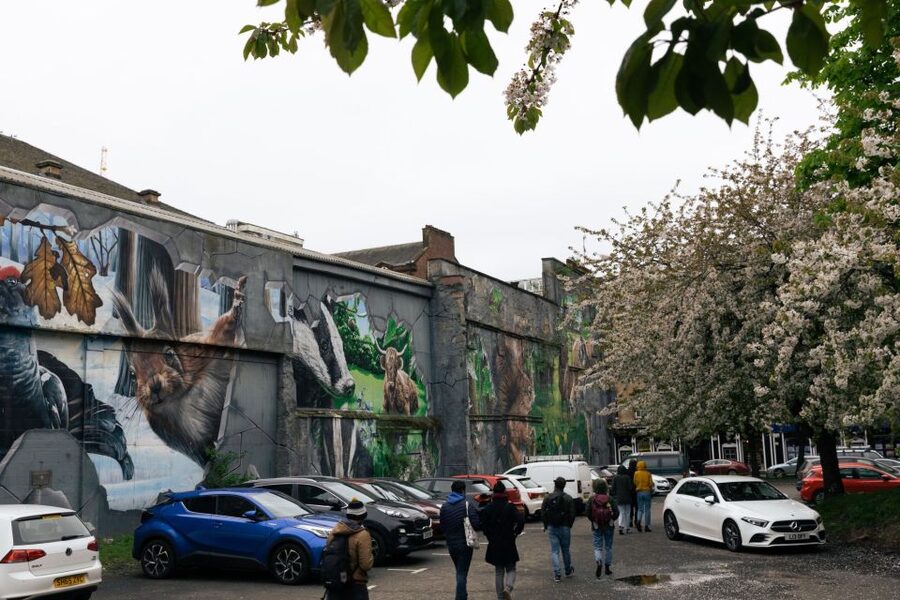
Street art then enters the picture at the Bow Down, Honour the Roots mural. This is one of the reasons I like the tour’s range. You move from older stonework to current art without treating the city as a museum frozen in one century.
Glasgow’s mural trail is spread through the center, and this tour brings several pieces into the historical story. The art is not just decoration. It shows how the city continues to express local pride and modern identity in public spaces.
City Halls, Candleriggs, and the music of old Glasgow
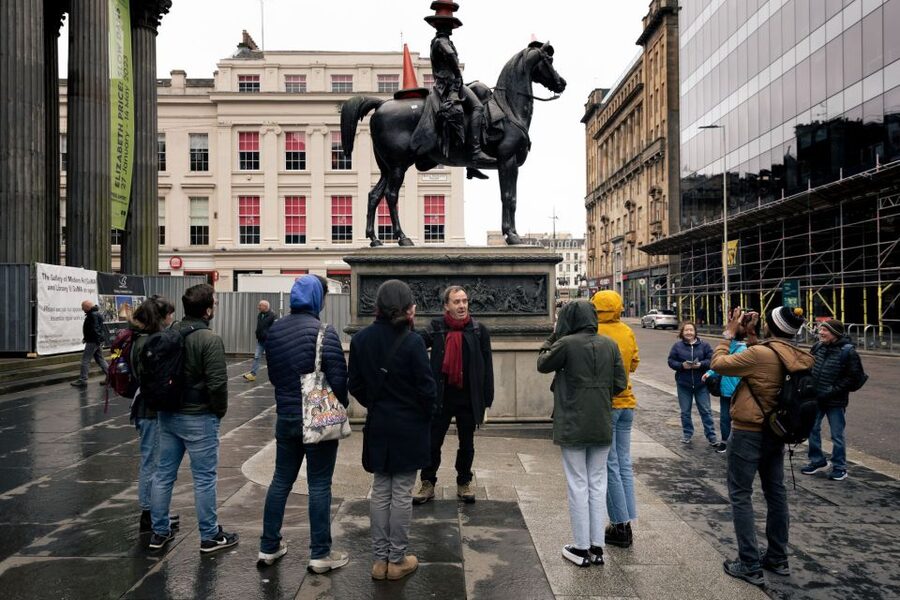
City Halls and the Old Fruitmarket appear next, followed by Candleriggs and the Tron Theatre. These places connect trade, entertainment, and public life.
The Old Fruitmarket and Candleriggs recall the commercial activity that once filled this part of the city. The Tron Theatre points toward Glasgow’s long relationship with performance and the arts. The tour’s present-day cultural angle becomes clearer here, especially as the route moves toward the Sharmanka Kinetic Theatre.
At Sharmanka, the guide makes another short stop. The itinerary does not promise an interior visit, so think of it as an outside point of interest rather than a ticketed theatre experience. The same applies to several other places along the route. You see them, hear their stories, and decide later if you want to return for a longer visit.
Same streets, a different century:
- Edinburgh: Whisky Tasting with History and Storytelling
★ 4.9 · 2,451 reviews - Edinburgh: Old Town History and Tales Walking Tour
★ 4.8 · 2,361 reviews - Old Town Walking Tour History and Tales in Edinburgh
★ 5.0 · 2,168 reviews - Soho Music & Historic Pubs Tour
★ 5.0 · 1,993 reviews
Britannia Panopticon, Billy Connolly, and working Glasgow
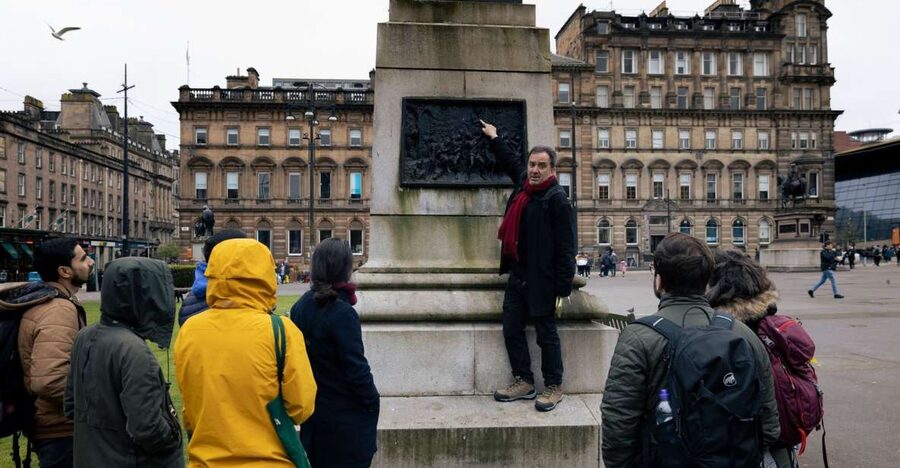
One of the most unusual places on the walk is the Britannia Panopticon. The tour introduces it as the world’s oldest surviving music hall. This is a welcome change from the better-known civic buildings because it brings popular entertainment and ordinary city life into the story.
The stop lasts about eight minutes, giving the guide time to explain why the building matters. The Britannia Panopticon connects Glasgow with live performance, comedy, and the city’s appetite for entertainment. It also helps explain why Glasgow’s cultural life cannot be reduced to grand architecture.
The nearby Billy Connolly mural adds a modern local reference. You then pass The Briggait, Bare Bones Chocolate, Saltmarket, and Mercat Cross. These stops shift the emphasis back toward trade, food, streets, and public meeting places.
Mercat Cross is a particularly useful place to pause because it represents the old market center. The route gives you a feel for how commerce and public life once worked in this part of Glasgow. The short stop at Bare Bones Chocolate is less about a major historical monument and more about seeing how the old center continues to function as a living district.
High Street and the road toward the Cathedral
High Street provides one of the longer stops, around six minutes. It is an important link between the medieval city and the later commercial center. Here, the guide can explain how Glasgow grew outward from its early religious and trading roots.
Babbity Bowster follows, along with the Fellow Glasgow Residents mural. Again, the walk mixes older places with newer public art. You are encouraged to look above shopfront level and into side streets, where Glasgow’s story is often easier to miss.
The final major stop is the Ramshorn. This former church site adds another religious and architectural note before the walk finishes at Glasgow Cathedral. The itinerary describes the Ramshorn as one of the lesser-known sites on the route, which makes it a useful contrast to the City Chambers at the beginning.
Finishing at Glasgow Cathedral gives the tour a satisfying historical shape. You begin with Glasgow’s public power in George Square and end near the city’s oldest spiritual center. The starting point is close to the finish, so you are not left far from the central streets after the walk.
What the guides add to the experience
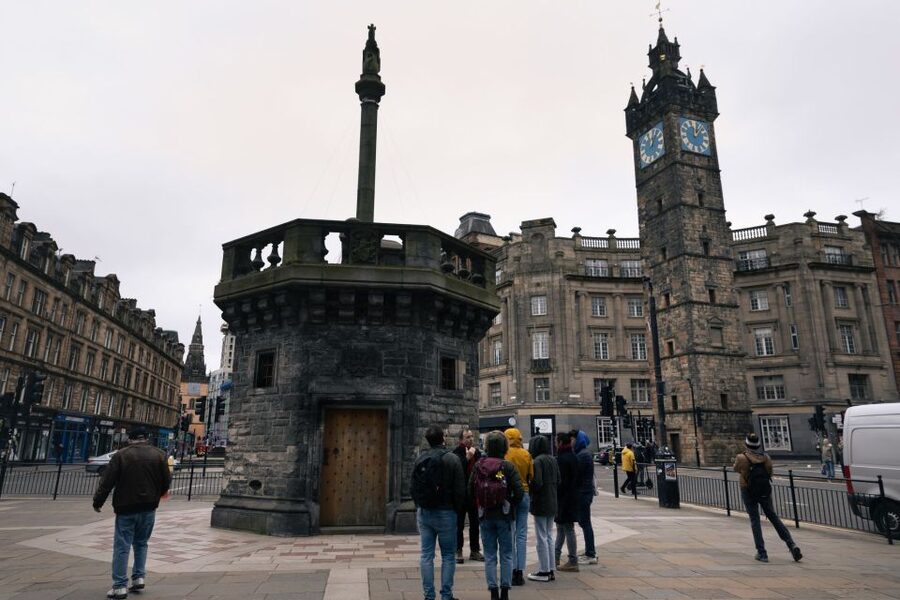
The route is good, but the guide makes the difference. Bruce appears repeatedly in the feedback for his humor, enthusiasm, local pride, and strong storytelling. He also adapts to questions, points out small details, and has been praised for helping people through city traffic.
Henry is another guide named by participants. His strength is clear explanation, particularly when discussing social, political, and cultural context. One person also noted that his speech was easy to follow, which can matter if you are concerned about understanding a Scottish accent.
James has also led the walk. The guiding team is not presented as interchangeable, and the exact personality you get may vary. Still, the consistent pattern is a tour built around stories rather than a memorized list of dates.
You should expect humor alongside serious subjects. Glasgow’s past includes ambition, inequality, trade, labor, public pride, scandals, and hardship. The better moments of the walk come when those threads are tied together instead of being presented as isolated facts.
The walking pace, weather, and practical demands
The route covers roughly 4 kilometres according to one detailed account, with regular stops. You walk for a few minutes, pause to hear the story, then continue. This makes the 2.5-hour duration feel manageable for people with a reasonable level of fitness.
You need comfortable shoes. The city-center streets are not a hiking trail, but two and a half hours on foot can still wear you down if your footwear is poor. Bring a rain jacket or other rain gear, and dress for changing conditions.
The tour operates rain or shine. That is not a minor detail in Glasgow. A wet day can make photo stops less pleasant, and one particularly damp outing was remembered mainly for the guide keeping the group engaged. You should not book this expecting an indoor experience.
Large bags and luggage are not allowed. Plan to leave suitcases elsewhere before meeting the group. The formal guidance says the tour is not suitable for children under 10, people with mobility impairments, or people with a low level of fitness. One participant managed the route with a pram, but that does not replace the stated suitability guidance, so ask before booking if you have mobility concerns.
Is $18 a fair price for 2.5 hours?
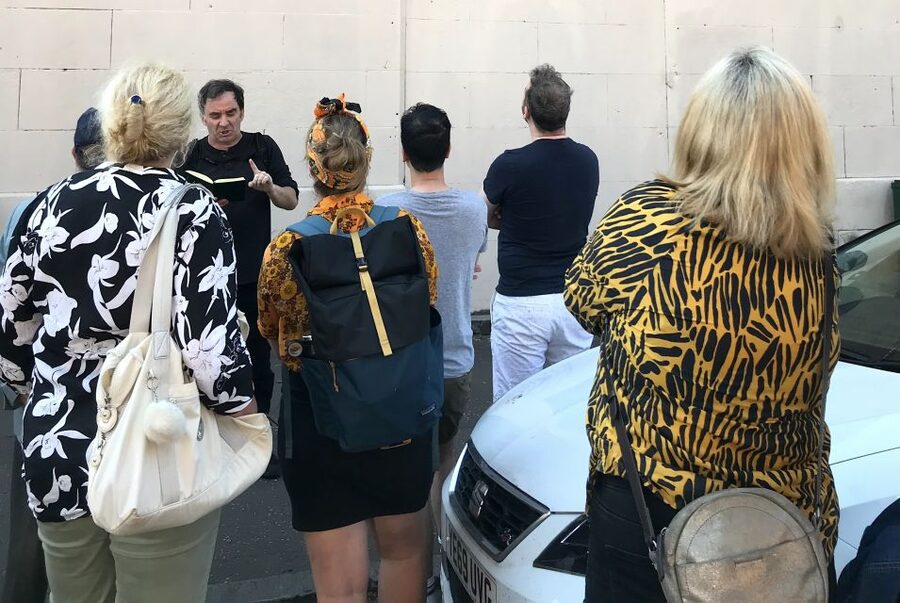
At $18 per person, this is a good-value introduction to central Glasgow. You get an experienced English-speaking guide, a long route, and a useful first look at major buildings, side streets, murals, markets, theatres, and the Cathedral area.
The value is strongest if you are new to Glasgow or have only a short stay. You can use the route to decide which places deserve a later visit. The City Chambers, Britannia Panopticon, Sharmanka Kinetic Theatre, Tron Theatre, and Glasgow Cathedral may all warrant more time than the walk can provide.
The tour also suits returning visitors. A local resident who had lived in Glasgow for years still found new details along the route. That makes sense because the experience is built around interpretation. You may know the main streets already, but not the stories attached to a courtyard, mural, old police post, or merchant house.
The price does not include entry to attractions, meals, or transport. Treat it as a guided orientation walk, not an all-inclusive sightseeing pass. For that purpose, $18 is modest.
Who should book this Glasgow walk?
I would choose this tour if you want a clear introduction to the city before exploring alone. It is especially useful for first-time visitors, short-break visitors, cruise passengers with limited time, and people who prefer stories to audio guides.
It also works for history fans who want a broad sweep from medieval Glasgow to the present day. The route is not narrowly focused on one period. You get Saint Mungo, merchants, workers, civic architecture, market streets, entertainment venues, public monuments, murals, and current arts culture.
You should think twice if you dislike walking in poor weather, need a fully accessible route, or want long visits inside each attraction. This is an outdoor city walk with many short stops. You may also find the amount of information demanding if you prefer a very relaxed stroll.
The tour is conducted in English. If Scottish accents worry you, guides such as Henry and Bruce have been praised for speaking clearly, but your experience will still depend on the guide assigned that day.
Should you book it?
Book this walk if you want to understand how Glasgow changed, not just photograph its buildings. The combination of City Chambers, merchant streets, Britannia Panopticon, murals, Mercat Cross, and the Cathedral gives you a useful framework for the rest of your stay.
I would book it early in a Glasgow visit, then return to the places that catch your interest. Bring rain gear, wear comfortable shoes, and allow the full 2.5 hours. At $18, the tour offers a lot of city and plenty of local character for the cost.
FAQ
Where does the Glasgow walking tour begin?
It begins outside the main entrance to Costa Coffee on the north side of George Square.
Where does the tour finish?
The walk finishes at Glasgow Cathedral, close to the central area and near the original starting point.
How long is the tour?
The tour lasts 2.5 hours.
What language is the tour conducted in?
The tour is conducted in English with a live guide.
How much does the tour cost?
The listed price is $18 per person.
Which major sights are included?
The route includes Glasgow City Chambers, the Cenotaph, the Walter Scott Monument, the Robert Burns Monument, the Tobacco Merchant’s House, Britannia Panopticon, Mercat Cross, High Street, the Ramshorn, and Glasgow Cathedral.
Does the tour run in the rain?
Yes. The tour takes place rain or shine, so bring rain gear and clothing suited to changing weather.
What should I bring?
Wear comfortable shoes and weather-appropriate clothing. Rain gear is strongly advised. Luggage and large bags are not allowed.
Is the tour suitable for everyone?
The stated guidance says it is not suitable for children under 10, people with mobility impairments, or people with a low level of fitness. You should be able to walk for 2.5 hours.
Newest history tours we have reviewed in the UK
- Ilfracombe Seafront History Walking Guided Tour★ 5.0 · 18 reviews
- Walking Bogside History Tour in Guildhall★ 5.0 · 280 reviews
- Private tour of the stunning Cotswolds with an expert local guide★ 5.0 · 45 reviews
- Curious Cambridge – The History Tour that’s FUN!!!★ 5.0 · 80 reviews
- Birmingham Gangs Nighttime Historical Walking Tour with Pub Stops★ 5.0 · 53 reviews
- 2.5-Hours Walking Tour of Birmingham into Black Heritage Madiba★ 5.0 · 49 reviews
- Belfast Walking Tour: City Centre History, Troubles & Stories★ 5.0 · 39 reviews
- Private Political History & Murals Tour Belfast★ 5.0 · 182 reviews
UK History Tours, compared.
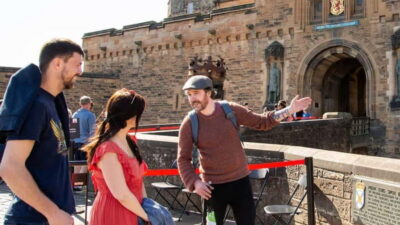
Edinburgh Castle Guided History Tour with Tickets
Read our review →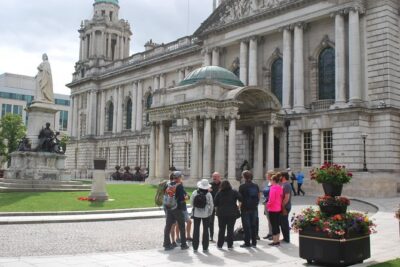
A History of Terror – Belfast City Centre Walking Tour
Read our review →
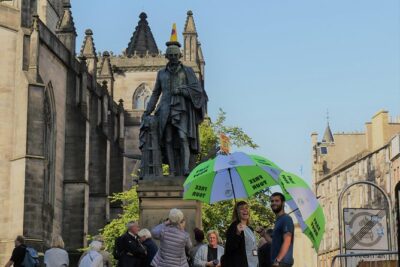
Old Town Walking Tour History and Tales in Edinburgh
Read our review →
Browse the lists this tour appears in