
Review · MUMBAI HISTORY TOURS
South Mumbai: Cultural Heritage Walking Tour
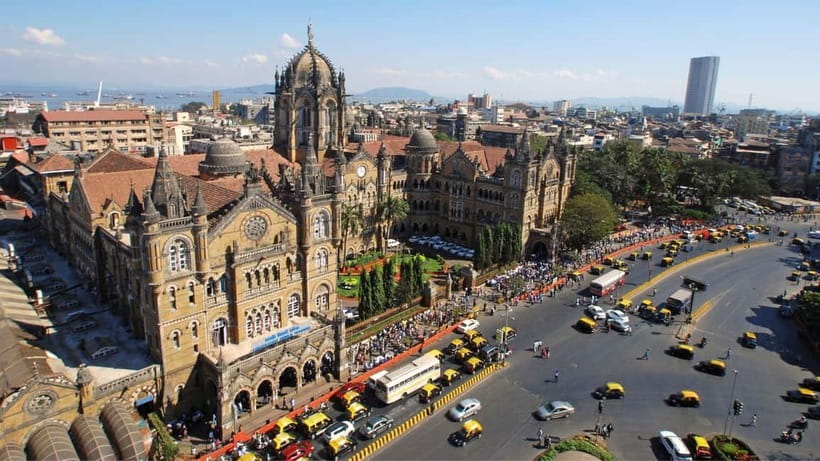
South Mumbai’s grandest sights fit into one compact morning, but the real appeal is the way this tour links them. You begin at the Gateway of India, pass palaces, clubs, libraries, and colleges, then finish at the remarkable Chhatrapati Shivaji Maharaj Terminus, or CSMT.
I like two things in particular: the small group, limited to six people, and the mix of walking with a short public bus ride. You also get a cup of chai, a simple touch that brings local life into an otherwise architecture-heavy tour. The main drawback is that this is a brisk urban walk, with uneven city streets and no wheelchair access.
Key points to know before booking
- Gateway to CSMT in 2.5 hours: The route connects several of South Mumbai’s best-known buildings without taking up a full day.
- A local bus ride is part of the plan: You do not simply walk from one landmark to the next, which gives the tour a more everyday Mumbai feel.
- Chai is included: A short refreshment stop adds a local taste without turning the tour into a food outing.
- Groups are capped at six: You should have a better chance to hear the guide and ask questions than on a large coach tour.
- Guide quality is the main strength: Guides including Dawood, Dinesh, Lokesh, Maze, Ganesh, and others are praised for clear historical explanations and friendly help.
- The finish is flexible: You can be dropped at Mumbai Cruise Piers, the CSMT Viewing Stage, or Mumbai port.
Why this South Mumbai walk works so well
South Mumbai is best understood on foot. Its major sights are close enough to connect, yet each one tells a different part of the city’s story. You move from the waterfront and colonial-era buildings to university architecture, public squares, financial-district landmarks, and a major railway station.
At $16 per person, this is a modestly priced way to get an introduction to the area. You are paying for a guide, a cup of chai, and the convenience of a planned route, not for entry to a museum or a private vehicle. That makes the tour particularly useful if you have only a few hours in Mumbai or want an informed orientation before exploring on your own.
The six-person limit matters. South Mumbai has traffic noise, busy roads, and plenty of visual distraction. A smaller group makes it easier to stop beside a building, hear an explanation, and ask why a particular facade or institution matters.
The guide is central to the experience. Past guides have included Dawood, Dinesh, Lokesh, Maze, Ganesh, and others. The strongest comments focus on clear detail, good humor, patience, and practical help. One guide even helped arrange a taxi at the end, which is useful if you are finishing near the port and need to move on quickly.
More History Walking Tours in India
- Fontainhas Heritage Walk by Make It Happen
★ 5.0 · 2,834 reviews - The Great Indian Food Tour: Old Delhi Food and Heritage Walk
★ 5.0 · 1,698 reviews - Old Goa Heritage Walk by Make It Happen
★ 5.0 · 797 reviews
Starting beside the Gateway of India
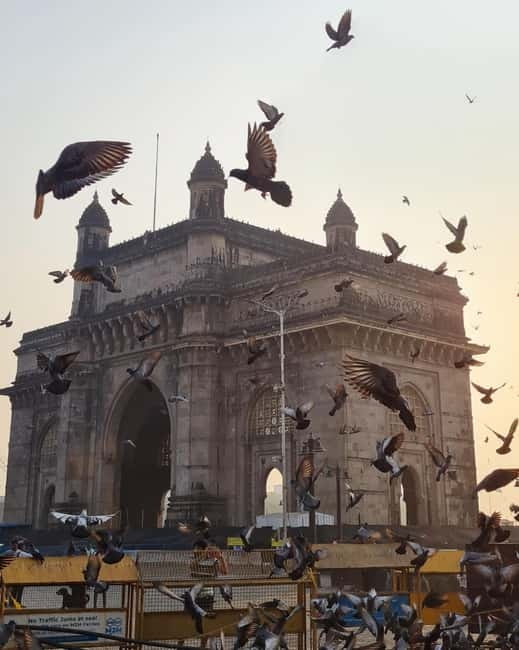
The meeting point is at the entrance of Pizza Express next to the Gateway of India. This is a practical place to begin because the monument is one of the easiest landmarks to identify in South Mumbai.
You spend about 20 minutes here with the guide. The Gateway of India gives you a clear opening lesson in Mumbai’s public face: a monumental waterfront arch, a major arrival point, and one of the city’s most recognizable backdrops. The tour does not treat it as a quick photograph only. You have time to look, listen, and place the monument within the wider setting.
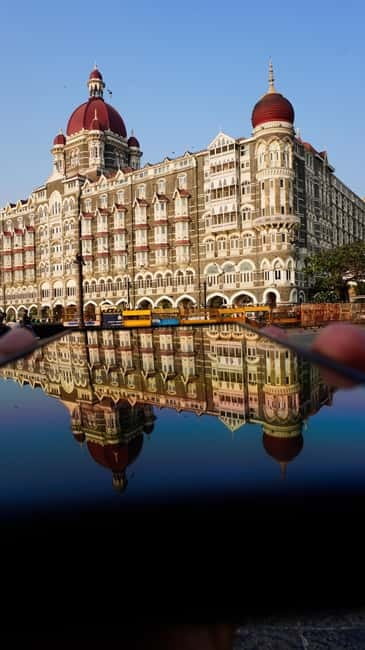
The nearby Taj Mahal Palace Hotel is seen from outside as you pass by. Allow about five minutes for this part. The hotel is visually striking, but because the tour does not include an interior visit, you should think of this stop as an exterior landmark rather than a hotel tour.
That distinction matters. If you want long photo stops or time inside each building, this experience may feel fast. If you prefer a guided introduction that keeps moving, the pace is sensible.
Clubs, government buildings, and the city’s grand facades
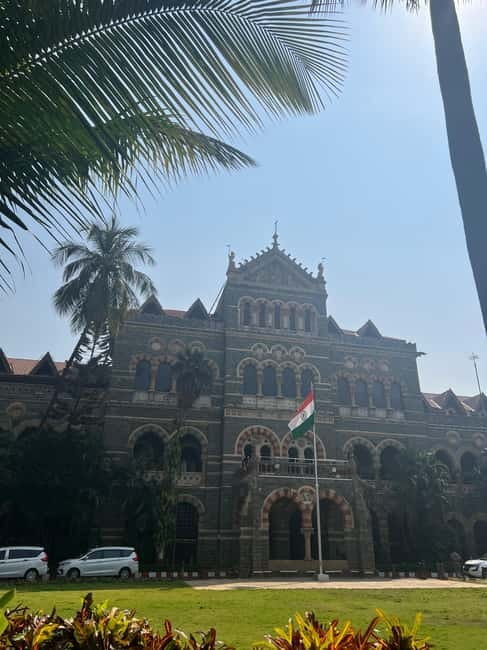
The next stretch brings you past the Royal Bombay Yacht Club and the Maharashtra Police Headquarters. You walk for roughly five minutes at each point, with the guide explaining what you are seeing.
These short stops are valuable because they show how South Mumbai’s identity is built from more than famous monuments. Clubs, government offices, educational institutions, and libraries all occupy impressive buildings here. You get a sense of how public and private power shaped the district’s appearance.
The route also passes a former Maharajah’s palace and Mumbai’s biggest museum. The information provided for the tour does not promise an interior visit, so expect to see these places from the street and hear their background rather than go inside.
This is one of the tour’s better features for architecture fans. You do not spend the whole morning at one attraction. Instead, you learn to notice details across a complete city quarter. Look up as you walk, but also watch the pavement and traffic. This is a city walk, not a quiet pedestrian path.
Elphinstone College and David Sassoon Library
Elphinstone College is one of India’s best-known colleges, and the tour pauses here for about five minutes. It is another chance to see how education became part of South Mumbai’s built identity.
You then reach David Sassoon Library, also with about five minutes to look around from the outside. The library adds a more intimate stop to the route. After the size of the Gateway and the formality of government buildings, a historic library helps show the district’s intellectual and civic side.
The guide’s explanation is important at both stops. Without context, you may simply see attractive old facades. With a good guide, you can connect the buildings to the people and institutions that helped shape Mumbai.
Dawood, Dinesh, and Maze have been especially praised for giving detailed explanations without losing a sense of humor. That balance is worth looking for in a walking tour. Too much detail can turn a short outing into a lecture, while too little leaves you with a string of photographs and no clear understanding.
More Local Culture and Traditions Tours in India
- Old Delhi Food, Heritage&Cultural Walk with Rickshaw ride to Masterji Kee Haveli
★ 5.0 · 742 reviews - The Cultural And Historical Walking Tour in Margao
★ 5.0 · 280 reviews - Experience Bangalore – City Tour, Authentic Food & market (Food/Culture/History)
★ 5.0 · 156 reviews - Old Delhi Walking Tour: Food, Culture & Spice Bazaars
★ 5.0 · 94 reviews
Kala Ghoda: South Mumbai’s cultural center
The tour gives Kala Ghoda about 15 minutes with the guide. This is one of the key sections of the walk and a good place to slow down mentally, even if the overall route keeps moving.
Kala Ghoda is known here as a cultural area, and the surrounding architecture helps explain why it is such an important part of South Mumbai. You see how art, education, public institutions, and historic buildings sit close together.
The route also touches the Gothic and Art Deco Ensembles of Mumbai. These styles belong to different periods and have very different visual character. A guide can help you spot the contrast instead of treating every old building as simply colonial or historic.
I like this part of the tour because it teaches you how to read the city. You are not only collecting famous sights. You are learning to compare building styles, public spaces, and the changing role of the district.
Oval Maidan and the city’s open space
At Oval Maidan, the guide spends about 10 minutes with you. This broad open space gives your eyes a break from the close-packed streets and tall facades.
The stop is also useful for understanding how South Mumbai’s buildings relate to one another. From an open ground, you can take in a wider view of the surrounding architecture rather than seeing each structure only from sidewalk level.
The tour information does not promise a long rest here, so do not count on a full break. Comfortable footwear remains important, and you should be ready to keep walking after the explanation.
Horniman Circle and the Asiatic Society
The itinerary then takes you around Horniman Circle and to the Asiatic Society of Mumbai. You spend about 10 minutes walking in this section.
Horniman Circle brings another kind of urban setting into the tour. The route shifts from landmark-by-landmark viewing to a broader look at the shape of the city center. The Asiatic Society adds a strong literary and civic note, with its library serving as one of the district’s important institutions.
This portion also prepares you for the transport change. Rather than walk the entire route to CSMT, you take a short bus ride of about 10 minutes. That is a small but meaningful part of the experience. You get to use local transport instead of moving through Mumbai only as a sightseeing group.
The bus is not a luxury transfer, and the tour does not present it as one. You should see it as a practical link between two parts of the route. It also breaks up the walking and gives you a brief look at ordinary city movement.
The final stop at Chhatrapati Shivaji Maharaj Terminus
The tour finishes with a guided visit around Chhatrapati Shivaji Maharaj Terminus, usually called CSMT. You have about 10 minutes here.
CSMT is a UNESCO World Heritage Site and one of India’s most famous railway stations. It is an impressive finale because it brings together transport, public life, and monumental design in one place.
Ten minutes is enough for an introduction, but not for a long station visit. You should expect the guide to point out the building’s main features and explain why it matters, then bring the tour to an end. If you are passionate about architecture or railway history, you may want to return later with more time.
The three listed drop-off points are Mumbai Cruise Piers, the CSMT Viewing Stage, and Mumbai port. This is useful for cruise passengers, though you should confirm which ending point applies to your selected option. The tour does not include hotel pickup or hotel drop-off.
What the guides add to the experience
The route is strong, but the guide makes the difference. Several guides have led this experience, including Lokesh, Dawood, Dinesh, Maze, Ganesh, and others.
The best qualities to expect are clear historical explanation, friendly conversation, patience with questions, and practical help. You are not simply being walked from one photo stop to another. The guide is there to explain why a building matters and how the stops connect.
One useful detail comes through repeatedly in the guide feedback: the explanations can be quite detailed. If you enjoy architecture and history, that is a major plus. If you prefer a light stroll with only a few facts, the amount of information may feel high at times.
The tour is conducted in English. Since the group is limited to six, you should be able to ask questions directly rather than waiting for a large crowd to settle.
Chai, comfort, and the practical pace
A cup of chai is included during the tour. This is not a full food stop, but it gives the morning a local touch and a short pause.
The experience lasts 2.5 hours, so the pace is active without being an all-day commitment. You should wear comfortable shoes and bring an ID card, with a copy accepted. Baby strollers are not allowed.
Wheelchair users cannot take part, and the tour is not suitable if you need a fully step-free route. The walk includes city streets and a bus ride, so anyone with limited mobility should choose with care.
The best starting times depend on availability. Since you meet near the Gateway of India, allow enough time to reach the area before the start. Hotel pickup is not included, so you need to make your own way to Pizza Express.
You can cancel up to 24 hours before the activity for a full refund, and you can reserve while paying later. Those terms are helpful if your Mumbai plans may shift, especially around cruise schedules.
Who should book this tour?
I would choose this tour if you have a short stay in Mumbai and want a useful first look at South Mumbai. It also suits cruise passengers who want a guided introduction near the port without committing to a full-day outing.
Architecture fans will get the most from it, particularly if you enjoy comparing Gothic, Art Deco, civic, educational, and religious or cultural buildings. The route also works for first-time visitors who want historical context before returning to explore Kala Ghoda, Horniman Circle, or CSMT independently.
It is less suitable if you want long indoor visits, extensive shopping time, or a relaxed cafe morning. This is a walking tour with several short stops, not a museum-focused program.
At $16, the value is good if you use the guide well. Ask questions, compare the buildings, and treat the bus ride and chai as part of the city experience. You are getting a compact route, a very small group, and a local guide for less than the cost of many private sightseeing options.
Should you book the South Mumbai Cultural Heritage Walking Tour?
Book it if you want a focused introduction to Mumbai’s landmarks and architecture, especially with only half a day available. The combination of the Gateway of India, Kala Ghoda, Oval Maidan, Horniman Circle, and CSMT gives you a strong overview of central South Mumbai.
I would also book it if you value an engaging guide more than a long list of attractions. Guides such as Dawood, Dinesh, Lokesh, Maze, and Ganesh have built a strong reputation for detailed explanations and friendly help.
Skip it if you need wheelchair access, dislike walking in busy city streets, or want to enter every building. For most able-bodied visitors who want history, local transport, chai, and a well-planned route at a fair price, this is an easy choice.
FAQ
How long does the South Mumbai Cultural Heritage Walking Tour last?
The tour lasts 2.5 hours.
Where does the tour meet?
The meeting point is at the entrance of Pizza Express next to the Gateway of India.
Is hotel pickup included?
No. Hotel pickup and drop-off are not included.
What language is the tour conducted in?
The live tour guide speaks English.
Is chai included?
Yes. A cup of chai is included in the tour.
Is the tour suitable for wheelchair users?
No. The tour is not suitable for wheelchair users. Comfortable footwear is recommended, and baby strollers are not allowed.
Newest history tours we have reviewed in India
- Historical Tour including Unesco Kangra fort & Rock cut temple from Dharamshala★ 5.0 · 27 reviews
- Colonial Heritage Walking Tour in Darjeeling★ 5.0 · 55 reviews
- Georgetown heritage walking tour in Chennai about the founding of Chennai★ 5.0 · 144 reviews
- Private Chennai Day Tour – Art History and Contemporary Chennai★ 5.0 · 21 reviews
- Chennai Heritage & Cultural Walk (2 Hours Guided Walking Tour)★ 3.5 · 32 reviews
- Exploring Mylapore: A Cultural & Historical Walking Tour★ 5.0 · 42 reviews
- See Bangalore through my eyes (Cultural / Historical / Walking Tour)★ 5.0 · 60 reviews
- Bangalore: Walk In the Footsteps of Maharajas & Sultans★ 5.0 · 18 reviews
Local Culture & Traditions Tours, compared.

Amsterdam Food and Cultural Tour with Tastings
Read our review →
Sevilla Food Tour: Tapas, Wine, History & Traditions
Read our review →
Tromsø: Reindeer Camp and Sami Cultural Tour with Lunch
Read our review →
Half Day Dominican Republic Cultural Tour : Small Group
Read our review →
Ultimate Melbourne Walking Tour: History, Laneways & Culture
Read our review →
Tromsø: Sámi Reindeer Sledding and Sami Cultural Tour
Read our review →
Kyoto Gion: 2-Hour Geisha Culture & History Walking Tour
Read our review →
Marrakech Historical and Cultural Tour – Half Day City Tour
Read our review →Browse the lists this tour appears in