
Review · NEW DELHI HISTORY TOURS
Old Delhi Walking Tour: Food, Culture & Spice Bazaars
Old Delhi makes its strongest impression through its contrasts. In a single 1.5-kilometer stretch of Chandni Chowk, you pass Hindu temples, Jain derasars, mosques, churches, and gurudwaras. Then the streets tighten around Khari Baoli, where spice sacks, aromas, and wholesale trade take over.
I like the way this walk connects religion, trade, and daily life instead of treating Old Delhi as a set of isolated monuments. I also like the mix of walking, spice tasting, a tuk-tuk ride, and a rooftop view from Jama Masjid. The main consideration is that Jama Masjid admission is not included, and the crowded lanes may feel intense if you prefer quiet sightseeing.
Key points
- A guide with local roots: The experience was created by Anas Khan, an anthropologist, history writer, and TEDx speaker who grew up in Old Delhi.
- Five sharply different stops: You move from Chandni Chowk’s religious mix to Khari Baoli’s spice trade, Naughara’s Jain architecture, and Jama Masjid.
- Spice tasting included: Khari Baoli is more than a photo stop. You get a closer look at the goods that still drive Delhi’s wholesale market.
- Tuk-tuk transport breaks up the walk: A 30-minute ride carries you through the old lanes and gives your feet a rest.
- A private experience: Only your own group participates, even though group discounts are available.
- Easy finish: The tour ends at Jama Masjid Gate 3, with public transport nearby and a straightforward exit from Old Delhi.
Why this Old Delhi walk works
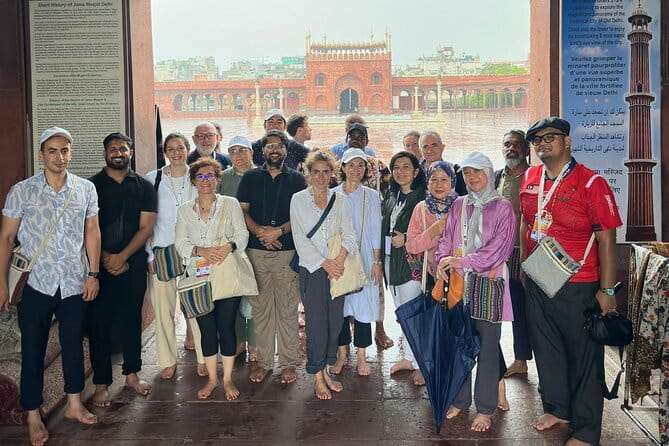
Old Delhi is best understood at street level. A monument alone cannot explain why a temple, mosque, church, and gurudwara can sit within the same busy commercial district, or why a spice market has such a strong hold on the city’s economy.
This tour gives you that wider picture in about two to three hours. It is not built around a long museum visit or a single grand building. Instead, it moves through working streets, religious sites, market lanes, historic homes, and one of India’s most famous mosques.
Anas Khan created the experience, drawing on his background as an anthropologist and history writer, as well as his childhood in these lanes. The advertised guides include local experts such as Lareb. One useful detail from the booking experience is that Lareb arranged a last-minute tour, adjusted the timing, and organized transport to make arrival easier. That suggests some flexibility, though you should still confirm your preferred time before booking.
The walk is a private activity, so only your group takes part. That matters in Old Delhi. You can ask questions without trying to catch a guide’s voice over a large crowd, and the pace can be more personal. The listed price of $19.01 per person is especially appealing for a private experience that also includes a tuk-tuk ride, bottled water, tea or coffee, and spice tasting.
More History Walking Tours in India
- Fontainhas Heritage Walk by Make It Happen
★ 5.0 · 2,834 reviews - The Great Indian Food Tour: Old Delhi Food and Heritage Walk
★ 5.0 · 1,698 reviews - Old Goa Heritage Walk by Make It Happen
★ 5.0 · 797 reviews
Starting by the Red Fort at Chandni Chowk
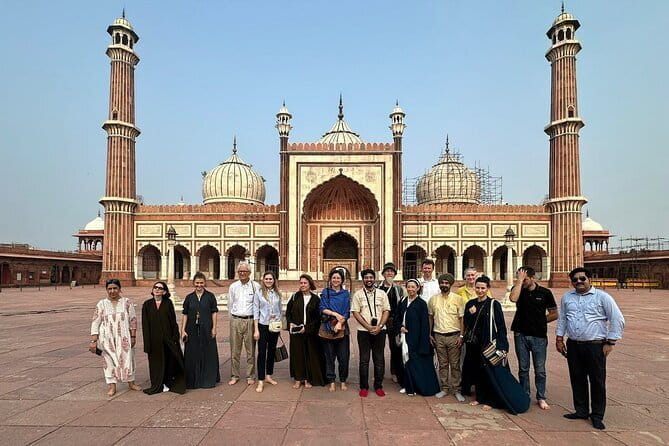
The meeting point is Chandni Chowk View Point, Shop 24, Metro Gate 1, opposite the Red Fort at Lajpat Rai Market. This is a practical place to begin because you are right at the edge of Old Delhi’s main commercial core, near public transport.
Your first stop is Chandni Chowk, a 1.5-kilometer stretch known for its striking mix of faiths. The route takes in Hindu temples, Jain derasars, mosques, churches, and gurudwaras. The value here is not simply counting religious buildings. It is seeing how worship, shopping, food, traffic, and neighborhood life share the same narrow urban space.
The stop lasts about 30 minutes and has no admission charge. That makes it a brisk orientation rather than a detailed visit to every religious site. You should expect the guide to provide the connections between them, while the street itself supplies the noise, movement, and visual detail.
Bring patience for this section. Chandni Chowk is not a polished pedestrian promenade from end to end. The point is the working city, with its tight lanes and constant activity. Wear shoes that can handle uneven pavement, and keep your belongings close in crowded areas.
Khari Baoli and the smell of the spice trade
Khari Baoli is one of the tour’s strongest stops. It is described as Asia’s largest spice market, and the visit includes spice tasting. That gives you something more useful than a quick photograph of colorful sacks. You get to connect the smells and flavors with the old trade routes that helped shape medieval India.
The market still plays a major role in Delhi’s wholesale economy. That detail changes how you see the place. Khari Baoli is not only a colorful backdrop for photographs. It remains a place of commerce, with spices moving through the market as products rather than museum pieces.
The stop lasts around 30 minutes, with admission included. The tour description does not promise a full meal, so you should not book this as a food tour in the usual sense. Food is part of the setting, and the spice tasting is a featured activity, but there is no stated restaurant meal or list of dishes included.
This is also where the tour’s sensory side becomes most pronounced. You might notice strong aromas, bright colors, dust, noise, and crowded movement all at once. If you have allergies or are sensitive to heavy smells, keep that in mind. For photographers, the market should provide plenty of material, but ask before photographing workers or goods at close range.
A tuk-tuk ride through the old lanes
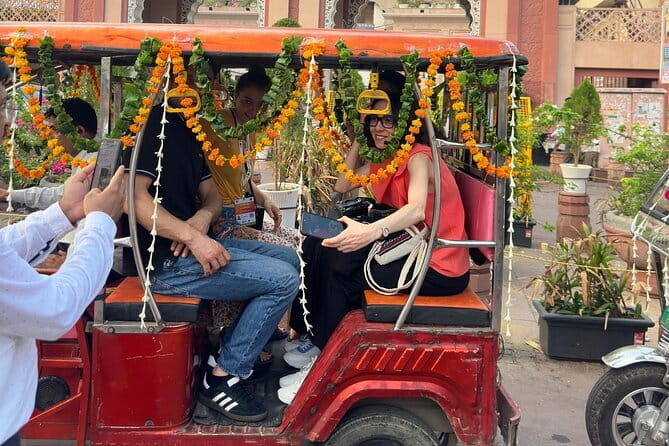
After the market, you take a tuk-tuk ride through Old Delhi. The ride lasts about 30 minutes and is included in the price. It is more than a convenience. A tuk-tuk lets you cover narrow streets that would take longer on foot, while giving you a moving view of the neighborhood.
The route is described as passing centuries-old lanes, with the smell of frying samosas, temple bells, and the call to prayer in the air. Those details show what makes this part of Delhi so memorable: the streets are not arranged for a visitor’s neat viewing sequence. Religious life, food, traffic, and trade happen together.
The tuk-tuk also gives you a break from walking. That matters because the tour packs several stops into two to three hours. You are not on foot for the entire experience, but you should still expect a busy outing rather than a gentle stroll.
A tuk-tuk is not the same as a private car. It gives you a closer feel for the lanes, but traffic and street movement are part of the experience. If you want a calm, controlled ride, this may feel hectic. If you want to see Old Delhi at street level, it is one of the tour’s more useful inclusions.
More Local Culture and Traditions Tours in India
- Old Delhi Food, Heritage&Cultural Walk with Rickshaw ride to Masterji Kee Haveli
★ 5.0 · 742 reviews - The Cultural And Historical Walking Tour in Margao
★ 5.0 · 280 reviews - Experience Bangalore – City Tour, Authentic Food & market (Food/Culture/History)
★ 5.0 · 156 reviews
Naughara’s nine houses and a quiet Jain stop
Naughara means a row of nine houses, and this stop offers a change of pace. Here you visit a photogenic Jain temple and see ornate architectural details in a more peaceful setting than the market streets.
The visit lasts about 30 minutes and admission is included. The contrast is the point. After the noise and pressure of Chandni Chowk and Khari Baoli, Naughara gives you time to look carefully at carved details and the layout of the old houses.
Jain religious spaces often place strong emphasis on cleanliness, order, and careful conduct. The supplied details do not specify particular rules for this temple, so follow the guide’s instructions and dress respectfully. Avoid assuming that every area is open for unrestricted photography.
This stop should appeal to anyone who enjoys architecture and smaller-scale urban history. It is also useful for photographers who want something different from market scenes. The drawback is simply time. Thirty minutes is enough to appreciate the setting, but not enough for a long architectural study.
Ending at Jama Masjid Gate 3

The walk finishes at Jama Masjid, one of India’s largest mosques and a major Mughal building in red sandstone and white marble. The visit is scheduled for about an hour, making it the longest stop on the route.
Jama Masjid is not treated only as an old monument. It remains a working place of worship and a central part of Old Delhi’s religious life. That makes the final stop a strong match for this tour’s larger theme: the past is still present in the city’s daily routines.
The panoramic rooftop view is one of the advertised highlights. From above, you can see the density of Old Delhi and better understand how closely its markets, religious buildings, and lanes fit together. The view adds a useful final perspective after spending the earlier part of the tour at street level.
Admission to Jama Masjid is not included, so budget for that separately. The tour ends at Gate 3, which is helpful because you can leave the old city from there without retracing the route. The stated operating hours for the experience are Monday through Sunday, 6:00 AM to 10:00 PM, covering the period from July 25, 2024, through November 27, 2026. Your exact visit time should still be confirmed at booking.
What the $19.01 price covers

At $19.01 per person, the price is low for a private two to three-hour tour with several moving parts. You receive a local guide, a tuk-tuk ride, bottled water, tea or coffee, and spice tasting.
The value comes from the structure. You are not paying only for commentary at one landmark. The price covers the guide’s time across five different settings, plus transport through the old lanes. A self-guided visit could cost less, but you would need to work out the route, understand the market’s context, and arrange your own tuk-tuk.
There are limits. Private transportation to or from your hotel is not included, and shopping is entirely your own expense. The price also does not include Jama Masjid admission. Group discounts are available, so the per-person cost may work particularly well if you are booking with friends or family.
The experience has a five-star rating from 94 reviews and is marked as recommended by 100 percent of those ratings. The most useful practical praise concerns the guides, especially Lareb’s ability to handle a last-minute booking, adjust timing, and arrange transportation. That does not guarantee the same arrangement for every booking, but it is worth asking about transport help if reaching the meeting point is difficult.
Who will enjoy this walk most
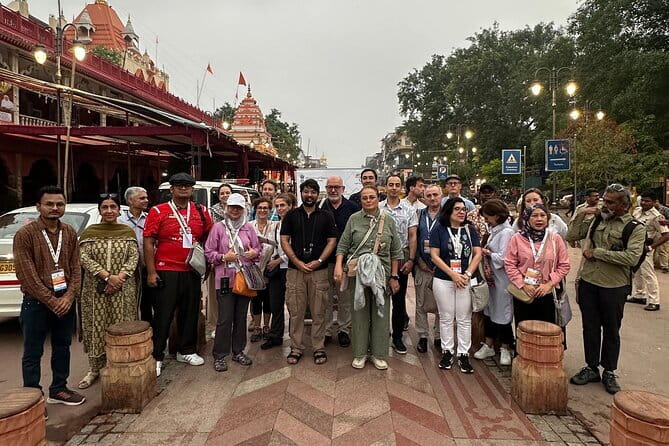
I would choose this tour if you want to see Old Delhi as a living district rather than a list of famous buildings. It suits history lovers, photographers, solo visitors, and anyone who wants a guide to explain the connections between trade, religion, architecture, and street life.
It is also a good choice for a short stay in Delhi. In two to three hours, you get several distinct experiences without committing to a full-day outing. The private format is helpful if your group has a specific pace or wants to ask frequent questions.
You should think twice if you want a quiet, food-focused tour. The streets can be crowded and intense, and the included food element is limited to spice tasting plus tea or coffee. There is no stated full lunch or restaurant meal.
Most people can participate, and the tour is near public transportation. Service animals are allowed. Still, the route includes busy lanes, a tuk-tuk ride, and substantial time outdoors, so anyone who needs a highly controlled or fully accessible route should confirm details before booking.
Practical tips for a smoother visit

Meet at Shop 24 by Metro Gate 1, opposite the Red Fort, rather than simply searching for Chandni Chowk and hoping to find the group. The precise meeting point matters in a district with many entrances, markets, and crowded streets.
Allow extra time to reach the start. The tour provider may be able to help with transportation, as Lareb did for one last-minute booking, but hotel pickup and drop-off are not part of the standard package.
Keep cash available for Jama Masjid admission and personal purchases. Shopping is not included, and the tour price does not cover market goods. If you are interested in spices, decide in advance whether you want to buy anything so you can keep the market visit focused.
Use the included water, tea, or coffee as a small comfort rather than expecting a full refreshment break. The walking and tuk-tuk sections move at a steady pace, and the tour is designed around seeing places rather than sitting down for a long meal.
Free cancellation is available when you cancel at least 24 hours before the start time. Changes or cancellations made less than 24 hours before the start are not accepted for a refund.
Should you book this Old Delhi experience?
Book it if you want a compact, private introduction to Old Delhi that combines street life with useful historical context. The strongest features are the religious mix of Chandni Chowk, the spice tasting at Khari Baoli, the included tuk-tuk ride, and the final view from Jama Masjid.
The $19.01 price is good value, especially for a small group that can use the group discount. Just arrive ready for crowds, remember that Jama Masjid admission is extra, and do not expect a full meal. If those limits suit you, this walk gives you a lively and well-connected way to meet the old city.
FAQ
How long does the Old Delhi walking tour last?
The experience lasts approximately two to three hours.
Where does the tour begin?
It begins at Chandni Chowk View Point, Shop No. 24, Metro Gate 1, opposite the Red Fort at Lajpat Rai Market, Chandni Chowk, Delhi.
Where does the tour end?
It ends at Jama Masjid Gate 3 in Old Delhi, from where you can leave the old city more easily.
Is the tuk-tuk ride included?
Yes. A tuk-tuk ride through Old Delhi is included in the tour price.
Is admission to Jama Masjid included?
No. Admission to Jama Masjid is not included.
Can I cancel the booking for a full refund?
Yes, if you cancel at least 24 hours before the experience start time. Cancellations or changes made less than 24 hours in advance are not eligible for a refund.
Newest history tours we have reviewed in India
- Agra Fort: Guided UNESCO Heritage Walking Tour★ 4.9 · 21 reviews
- World heritage Ahmedabad city tour in private car with guide and lunch★ 5.0 · 44 reviews
- Private Elephanta Caves UNESCO World Heritage Site Tour★ 5.0 · 34 reviews
- Mumbai: South Mumbai Heritage Walking Guided Tour★ 4.5 · 69 reviews
- Hill-station & Heritage: Lonavala & Karla Caves Tour from Mumbai★ 5.0 · 60 reviews
- Best South Mumbai Heritage Walk★ 5.0 · 122 reviews
- Heritage Walk: Recommended by Gigi Hadid as a must-do in Mumbai★ 5.0 · 122 reviews
- The Cultural And Historical Walking Tour in Margao★ 5.0 · 280 reviews
Local Culture & Traditions Tours, compared.

Amsterdam Food and Cultural Tour with Tastings
Read our review →
Sevilla Food Tour: Tapas, Wine, History & Traditions
Read our review →
Tromsø: Reindeer Camp and Sami Cultural Tour with Lunch
Read our review →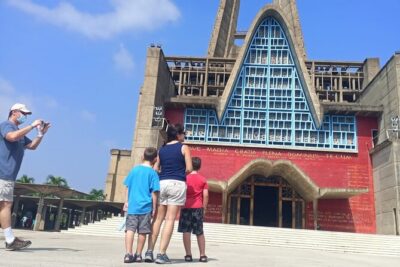
Half Day Dominican Republic Cultural Tour : Small Group
Read our review →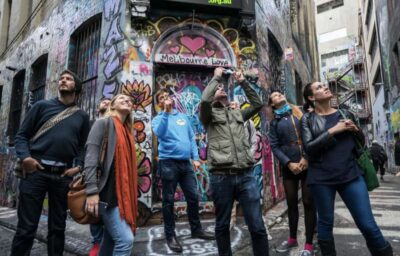
Ultimate Melbourne Walking Tour: History, Laneways & Culture
Read our review →
Tromsø: Sámi Reindeer Sledding and Sami Cultural Tour
Read our review →
Kyoto Gion: 2-Hour Geisha Culture & History Walking Tour
Read our review →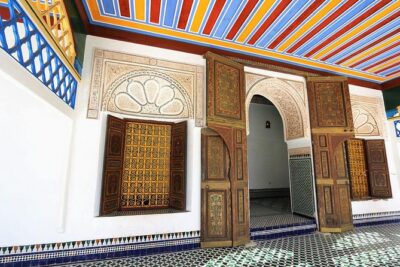
Marrakech Historical and Cultural Tour – Half Day City Tour
Read our review →Browse the lists this tour appears in