
Review · INDIA HISTORY TOURS
Colonial Heritage Walking Tour in Darjeeling
Darjeeling’s colonial past is easiest to understand on foot, where grand clubs, churches, shops, markets, and railway landmarks sit close together on steep hill streets. This guided walk connects those pieces, from the 1850s Clock Tower to St. Andrews Church and the old British market.
I like the mix of polished colonial institutions and ordinary town life. I also like the stops at Das Studio, with photographs from different eras, and the Himalayan Tibet Museum, which broadens the story beyond British tea and hill-station architecture. The main caution is timing: the advertised route includes many stops, so some visits are brief, and the full list may feel ambitious within two to three hours.
Key points at a glance
- Colonial landmarks in one walk: See the Clock Tower, Planters Club, Gymkhana Club, St. Andrews Church, Darjeeling Mall, and old government buildings.
- More than British history: The route includes Dhirdham Temple, the Himalayan Tibet Museum, Hayden Hall, and Chittaranjan Das Memorial.
- Old photographs at Das Studio: Spend time with panoramic images showing how Darjeeling changed across different periods.
- Classic food stops: Keventer’s offers a hilltop viewpoint with breakfast and snacks, while Glenary’s adds a bakery, tea room, café, and bar setting.
- Useful shopping time: Habeeb Mullick & Sons and Oxford Book and Stationery Co. offer curios, books, and souvenirs.
- Good value for a short city introduction: At $27.97 per person, the tour includes guiding and listed fees, with group discounts available.
Why this Darjeeling walk is worth your time
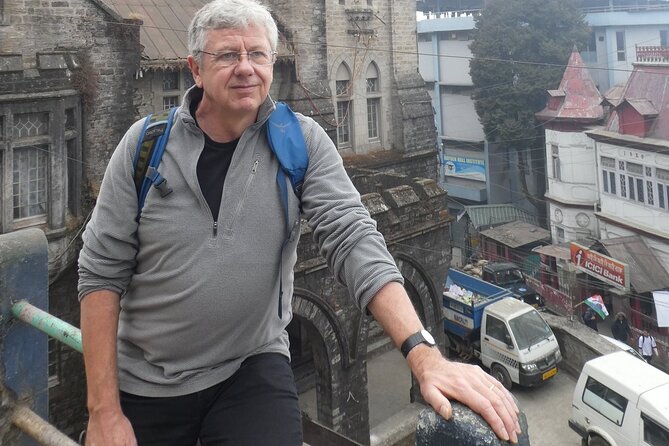
Darjeeling can feel scattered at first. The railway station sits below the Mall, churches and old clubs occupy different corners of the hill, and the town’s Tibetan, Nepali, British, and Indian influences overlap. A guided walk gives those places a sequence.
The focus is not just on pretty façades. You’ll hear how British tea development shaped the town, how clubs served planters and their families, and how Darjeeling changed after the colonial period. The historical discussion also reaches toward Tibet and India, including the arrival of Tibetans seeking refuge and the town’s changing political role.
The tour has a strong local-history angle, but it is not limited to formal monuments. You’ll pass through shops, markets, restaurants, religious buildings, and streets where daily life continues around the old structures. That balance is one of its best features.
At $27.97, the price is reasonable if you want an organized introduction without arranging separate visits to museums, churches, shops, and landmarks. You are paying mainly for the guide’s route and explanations. Food, drinks, and anything you purchase are extra, so the final cost rises if you stop for breakfast or shopping.
The group may include as many as 50 people. That is a fairly large maximum for a walking tour, and it may make questions or street crossings less personal. On the other hand, the group format helps keep the price down, and the route is designed around public sights rather than private access.
More History Walking Tours in India
- Fontainhas Heritage Walk by Make It Happen
★ 5.0 · 2,834 reviews - The Great Indian Food Tour: Old Delhi Food and Heritage Walk
★ 5.0 · 1,698 reviews - Old Goa Heritage Walk by Make It Happen
★ 5.0 · 797 reviews
Starting at the Clock Tower and Planters Club
The walk begins in Limbu Gaon and moves toward the Darjeeling Clock Tower. Built in the 1850s, the tower is linked with Darjeeling Town Hall and remains one of the town’s clearest landmarks. You get about 30 minutes here, enough to orient yourself and hear how the civic center developed.
The clock’s hourly chime is part of its appeal. This is not an isolated monument in a quiet square. It is a working town landmark, surrounded by the movement of Darjeeling.
Next comes the Darjeeling Planters Club, founded in 1868 for British tea planters and their families. This stop helps explain why Darjeeling became more than a mountain settlement. Tea production brought money, social institutions, and a British club culture that shaped the town’s public identity.
You should keep expectations sensible. The tour information does not promise full access to every room or private area inside the clubs. Think of this as a guided look at the buildings and their place in Darjeeling’s past, not a formal interior tour.
The route also passes the Darjeeling Head Post Office, built in May 1921. It is described as one of the oldest post offices in the region and is associated with UNESCO World Heritage status. The stop is short, around 15 minutes, but it adds a useful civic detail to the larger story.
Keventer’s, Glenary’s, and the social side of the hill town
Keventer’s is one of the route’s more appealing pauses. The restaurant recalls Edward Keventer’s dairy farm at Ghoom and is known for breakfast, snacks, and a viewpoint in the middle of town. You have around 30 minutes here, with admission included.
This is a practical stop as well as a historical one. If you have not eaten, Keventer’s gives you a chance to buy something while taking in the view. Food is not included in the tour price, so plan to pay separately for anything you order.
Glenary’s follows, with about 15 minutes scheduled. The bakery, restaurant, tea room, open café, and bar occupy an important place in Darjeeling’s old social scene. The business was founded by an Austrian, adding another layer to the town’s mixed European past.
The short timing means you may not get a full meal at either restaurant. These stops work better as quick looks, photo opportunities, or optional purchases than as relaxed dining experiences. If food is a priority, ask the guide how the group will handle the timing before ordering.
Churches, clubs, and the old colonial center
St. Andrews Church was originally built in 1843 as an Anglican church along Mall Road. It is connected with Lt. Gen. A. Lyod, regarded as the discoverer of Darjeeling. The building gives you a clear sense of how the hill station served British officials, military figures, and families.
The church stop lasts about 15 minutes. That is enough for a short explanation and a look at the exterior, though it may feel quick if you want to study the architecture or sit quietly inside.
The Darjeeling Gymkhana Club dates from 1909. Its facilities include badminton courts, card rooms, and a library. Like the Planters Club, it shows how colonial social life was organized around clubs, recreation, and restricted membership.
The Mall comes next, linked with the former winter capital period and Government House, now Raj Bhavan. The building was originally constructed by the British in 1840 and later passed to the Maharaja of Cooch Behar in 1877. This stop helps you see the Mall as more than a shopping and strolling area. It was also a center of government and status.
The route ends at St. Andrews Church, according to the stated end point, although the schedule also places the church earlier in the sequence. Because the route includes many locations, confirm the day’s order with your guide at the start. That small check can prevent confusion, especially if you plan to continue sightseeing afterward.
More Colonial History Tours in India:
- Shimla: Guided Walk Tour-Heritage, Culture & Colonial Trail
★ 4.7 · 28 reviews - Vung Tau Essential: Beach, Christ Statue & Colonial Heritage
★ 5.0 · 284 reviews - Full-Day Ho Chi Minh City Tour with Colonial Heritage & Chinatown
★ 5.0 · 246 reviews - Colonial Zone: Historical Tour with a visit to the Columbus Lighthouse and Tres Ojos Park
★ 4.9 · 157 reviews
Das Studio and Darjeeling’s changing face
Das Studio is one of the most distinctive stops. Founded in 1927, the photography studio displays panoramic photographs of Darjeeling from different periods. The walls offer a visual record of changes that can be hard to grasp from written dates alone.
You may spend only 10 minutes here, but the stop can be memorable. Old images let you compare the town’s streets, buildings, and hillside views across time. This is the sort of place you might miss if you only followed a standard monument route.
The tour also includes Habeeb Mullick & Sons, established in 1890. It is presented as a place for handcrafted curios before reaching the Mall. Oxford Book and Stationery Co. adds another shopping option, with hill-style cottage architecture, books, and souvenirs.
These shops are not simply filler. They connect the colonial town to the present-day visitor economy. You can browse for a small gift or local keepsake, but purchases are not included, and the scheduled stops are short. If you enjoy shopping, you may want to return later rather than trying to make a careful choice while the group is moving.
Railway memories, school buildings, and the Old Market
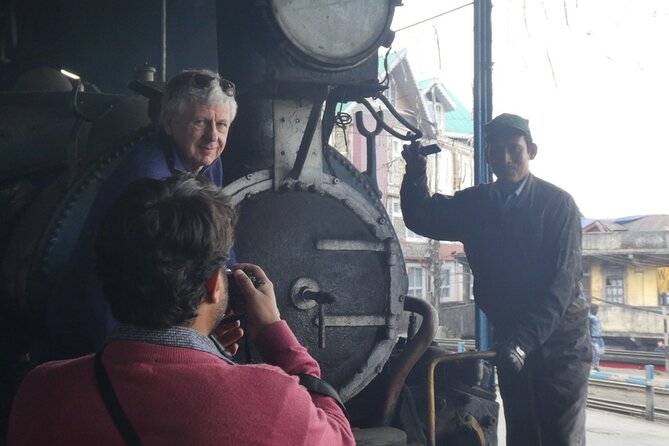
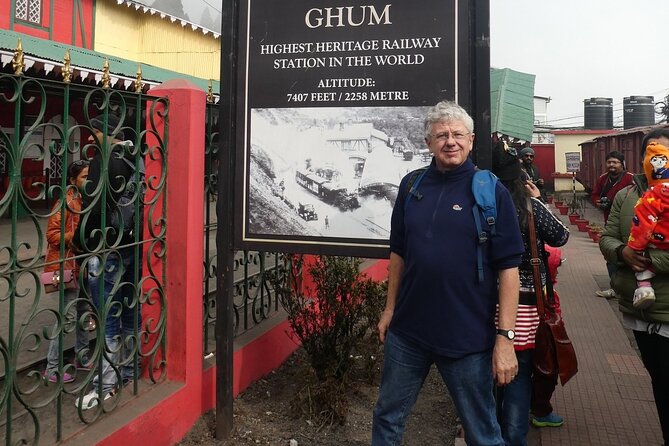
Darjeeling is inseparable from the Darjeeling Himalayan Railway, which began operating in the 1870s. The route includes a 15-minute stop connected with the railway and then continues toward Turnbull High School.
The railway section is useful context even if you are not riding the famous toy train during your trip. It explains how people and goods reached this steep hill town and why Darjeeling became such an important British-era resort and tea center.
Turnbull High School is one of the less familiar colonial schools in town. The walk passes St. Columba’s Church, Nepali High School, and Bishop’s House before reaching the school. This part of the route shows how education became part of Darjeeling’s institutional network.
Old Market brings you back to street-level life. It is associated with the old British market, Darjeeling Old Railway Station, and the former British ropeway. The area is described as a place to catch the everyday movement of town life.
You should expect a working market rather than a polished heritage quarter. That means more noise, people, and uneven walking conditions. It also means a more direct look at how the old colonial town functions now.
Chittaranjan Das, Tibet, and the town beyond British history
The Chittaranjan Das Memorial, also known as Step Aside, adds an Indian independence perspective. It was home to Chittaranjan Das, a major figure in the independence movement, and connects Darjeeling with the political struggles that followed the colonial period.
The Himalayan Tibet Museum is another important change of focus. It holds accounts of Tibet’s indigenous history and the long relationship between Tibet and India. This gives the tour a wider frame, especially if you have already heard plenty about British tea estates and clubs.
I appreciate this balance. Darjeeling is not only a preserved British hill station. Its identity also includes Nepali culture, Tibetan connections, Indian political history, religious buildings, markets, schools, and railway workers. The museum helps keep the walking tour from becoming a simple parade of colonial nostalgia.
The museum stop is scheduled for about 30 minutes, one of the longer pauses on the route. That gives you a better chance to understand the subject rather than merely taking a photograph outside.
Hayden Hall and Dhirdham Temple
Hayden Hall provides another less obvious stop. The visit focuses on the Hayden Hall Institute and the work of its enterprising women. This adds a social and community dimension to the tour, moving beyond government buildings and elite clubs.
Dhirdham Temple, near the railway station, brings in Darjeeling’s Hindu architecture. It was built in the style of Kathmandu’s Pashupatinath Temple and gives the route a clear religious counterpoint to St. Andrews Church.
The tour’s spiritual side is one of its stated strengths. You see how Christian, Hindu, Tibetan, and local traditions share the same hill town. The temple visit is short, around 10 minutes, so it is best treated as an introduction rather than a full religious tour.
Dress and behavior should always be respectful at places of worship. The supplied information confirms the temple stop, but it does not specify rules about photography, interior access, or footwear. Ask the guide before entering or taking pictures.
Timing, walking conditions, and practical fit
The experience is advertised as lasting about two to three hours, while the listed stops add up to a much longer schedule if every minute is used. That tells you something important: the guide will need to keep the group moving, and several locations may be viewed quickly or from outside.
Darjeeling is a hill town, so you should be prepared for walking on sloped streets and spending much of the tour on foot. The information says most people can participate, and the tour is near public transportation. It does not provide a detailed accessibility assessment, so anyone with mobility concerns should ask about the route before booking.
The tour runs daily from 7:00 AM to 7:00 PM during the stated operating period. The starting point is in Limbu Gaon, while the listed end point is St. Andrews Church in Chauk Bazaar. A mobile ticket is accepted, and confirmation is provided at booking.
Service animals are allowed. The maximum group size is 50, and group discounts may be available. The experience requires good weather. If poor weather cancels the walk, you can receive a full refund or move to another date.
Free cancellation is available up to 24 hours before the start time. Cancellations or changes inside that window are not refunded or accepted, so check the local cut-off time before making plans.
Who should book this walk?
I would choose this tour if you want a first look at Darjeeling’s history and prefer a guide to connect the dots. It suits you especially well if you are interested in tea, colonial architecture, churches, railway history, museums, old photographs, and local shopping in one outing.
It also works for a short stay. You can use the walk to identify places worth revisiting, such as Das Studio, the Himalayan Tibet Museum, Keventer’s, the Mall, or the Old Market.
I would be more cautious if you want long museum visits, quiet time inside churches, or detailed access to private clubs. The broad route covers a lot, but the short duration means the experience favors range over depth.
At $27.97, the value is strongest for first-time visitors who would otherwise spend time finding these places independently. You get a professional guide, listed fees, and a route that reaches well beyond the usual Mall stroll. Just allow extra time and money if you want to eat, shop, or return to any stop afterward.
If you want a practical introduction to Darjeeling’s many layers, I would book it. If your main goal is a relaxed food tour or a specialist look at tea estates, choose something narrower.
FAQ
How long does the Colonial Heritage Walking Tour in Darjeeling last?
The tour lasts approximately two to three hours.
How much does the tour cost?
The listed price is $27.97 per person. Group discounts may be available.
What is included in the price?
All fees and taxes are included. Food, drinks, souvenirs, and anything else you buy personally are not included.
Where does the tour start?
The tour starts at Limbugaon, Darjeeling, West Bengal 734101, India.
Where does the tour end?
The stated end point is St. Andrews Church at Chauk Bazaar, Darjeeling, West Bengal 734101, India.
What landmarks are included?
Stops include the Darjeeling Clock Tower, Darjeeling Planters Club, Darjeeling Head Post Office, St. Andrews Church, Darjeeling Gymkhana Club, Darjeeling Mall, Das Studio, the Old Market, and Dhirdham Temple.
Does the tour include museums?
Yes. The route includes the Himalayan Tibet Museum and Hayden Hall.
Are food and drinks included?
No. Keventer’s and Glenary’s are included as stops, but anything you order there must be paid for separately.
Is the tour available every day?
The stated operating hours are Monday through Sunday, from 7:00 AM to 7:00 PM, during the listed operating period.
What happens if the weather is poor?
The experience requires good weather. If it is canceled because of poor weather, you will be offered a different date or a full refund.
Newest history tours we have reviewed in India
- Historical Tour including Unesco Kangra fort & Rock cut temple from Dharamshala★ 5.0 · 27 reviews
- Georgetown heritage walking tour in Chennai about the founding of Chennai★ 5.0 · 144 reviews
- Private Chennai Day Tour – Art History and Contemporary Chennai★ 5.0 · 21 reviews
- Chennai Heritage & Cultural Walk (2 Hours Guided Walking Tour)★ 3.5 · 32 reviews
- Exploring Mylapore: A Cultural & Historical Walking Tour★ 5.0 · 42 reviews
- See Bangalore through my eyes (Cultural / Historical / Walking Tour)★ 5.0 · 60 reviews
- Bangalore: Walk In the Footsteps of Maharajas & Sultans★ 5.0 · 18 reviews
- Malleswaram heritage walk, an immersive walking tour in Bangalore★ 5.0 · 20 reviews
Colonial History Tours, compared.

Vung Tau Essential: Beach, Christ Statue & Colonial Heritage
Read our review →
Full-Day Ho Chi Minh City Tour with Colonial Heritage & Chinatown
Read our review →
Colonial Zone: Historical Tour with a visit to the Columbus Lighthouse and Tres Ojos Park
Read our review →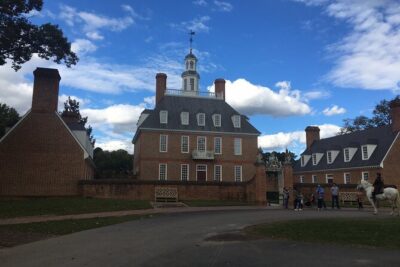
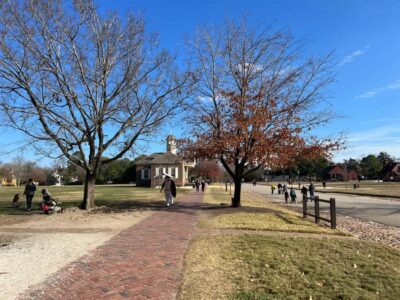
Colonial Williamsburg: Colonial History Guided Walking Tour
Read our review →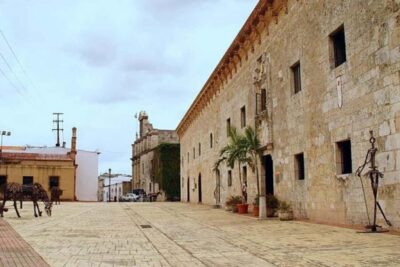
Discover Santo Domingo: Colonial History, Monuments & Lunch
Read our review →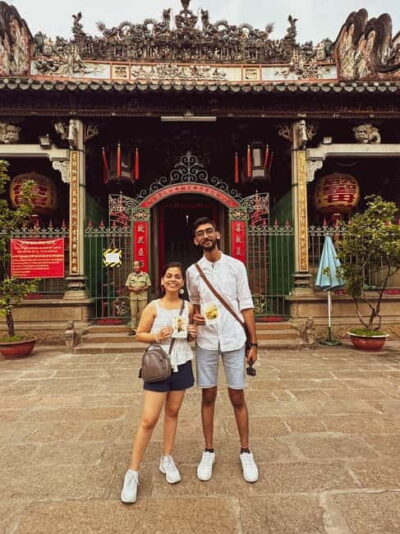
Ho Chi Minh City Tour with Colonial Heritage and Chinatown
Read our review →
Arequipa, Historic and Colonial City and Santa Catalina Monastery
Read our review →Browse the lists this tour appears in