
Review · FOOD & HISTORY TOURS
San Telmo: Historical Guided Tour with Street Food & Drinks
San Telmo’s best stories are easier to understand with a plate in front of you. This 3.5-hour walk links the neighborhood’s old bars, market stalls, bodegón cooking, regional specialties, and traditional dessert with the people and events that shaped Buenos Aires.
I like the small group of no more than 10, which gives the guide room to explain dishes and answer questions. I also like the way the food is spread across several stops, rather than served as one large meal, so you get a broader taste of Argentine cooking.
The main thing to consider is the walking. You’ll spend about three hours on foot over cobblestone streets, and the tour is not suitable for children under 15 or people with mobility impairments. Wear sensible shoes, and arrive hungry.
Key points
- Starts at El Federal Bar: Begin with an aperitif in one of San Telmo’s old and well-known bars.
- Food follows the neighborhood: Taste traditional and modern Argentine dishes at the market and local restaurants.
- History is part of every stop: Learn how San Telmo, Buenos Aires, immigration, and local food connect.
- Small groups help: With a maximum of 10 people, it is easier to hear the guide and ask questions.
- Come with an appetite: The food is plentiful enough that several people finished feeling very full.
- Good guide team: Dennis, Kate, Lucia, Kiki, Lu, Maya, and Stanko are among the guides praised for energy, humor, and food knowledge.
Starting with an aperitif at El Federal Bar
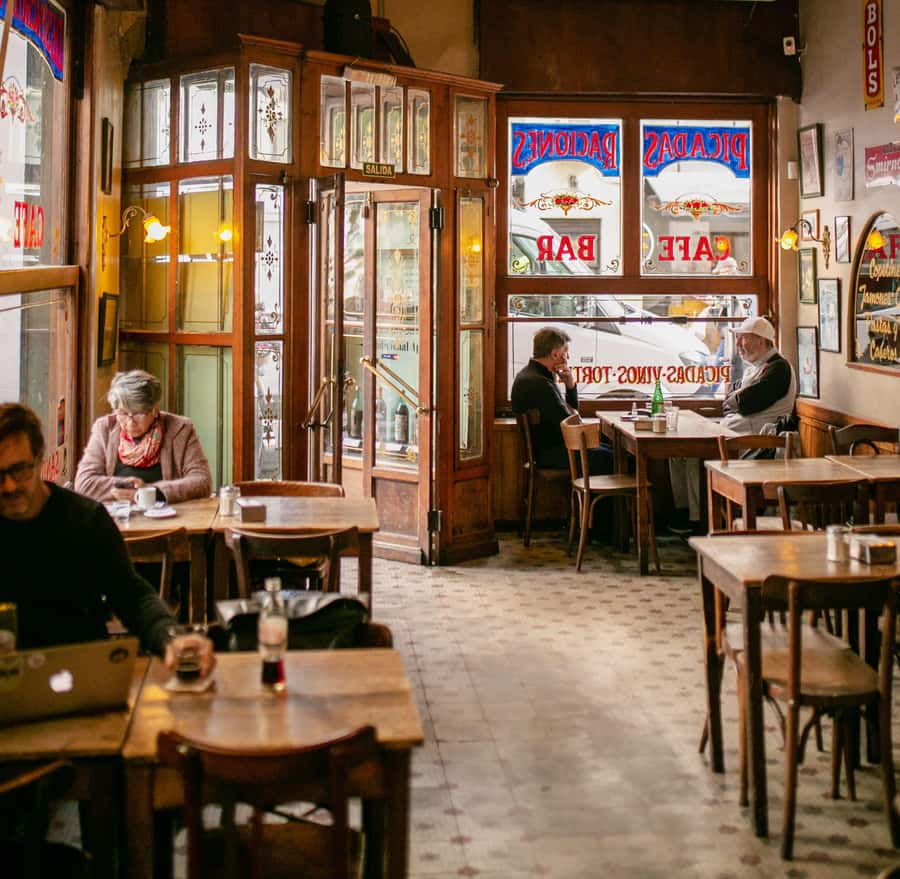
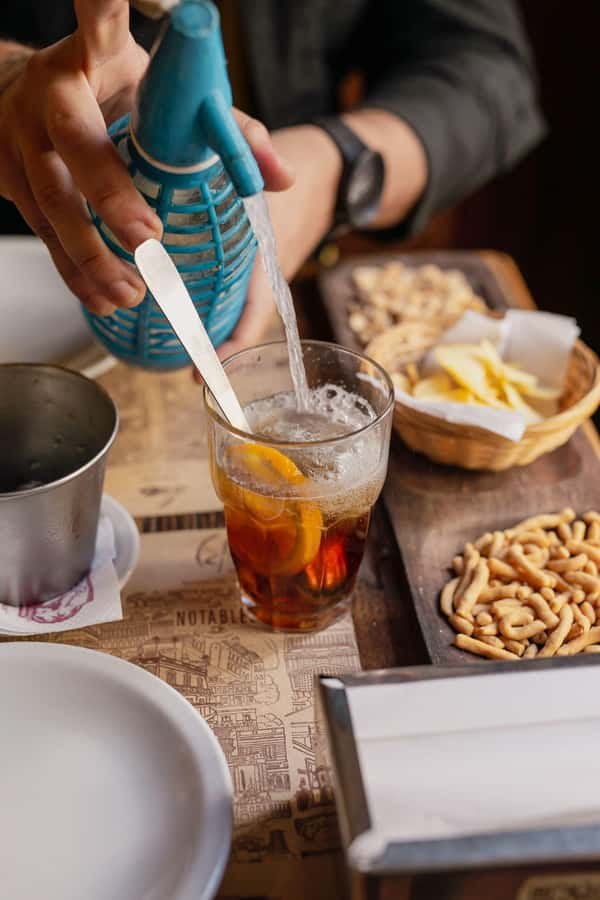
Your meeting point is El Federal Bar at Carlos Calvo 599, a fitting place to begin. The experience opens with a refreshing aperitif inside one of San Telmo’s oldest and most recognizable bars.
That first drink does more than get the tour moving. It places you in the neighborhood’s old café and bar culture before you start walking. Your guide can set the scene for San Telmo while the group gets acquainted, which matters on a small-group outing where you will spend several hours together.
The named guides include Dennis, Kate, Lucia, Kiki, Lu, Maya, and Stanko. The strongest praise for the guide team centers on energy, humor, clear explanations, and a real interest in food. Dennis and Lu, in particular, are described as highly enthusiastic about Argentine cooking, while Kiki is noted for bringing groups together and offering useful suggestions for what to do after the tour.
Guide quality matters here because the food stops are only half the experience. The other half is learning why a dish belongs in Buenos Aires and how the city’s many communities helped shape its cooking.
More Food and History Tours in the world:
- Sevilla Food Tour: Tapas, Wine, History & Traditions
★ 5.0 · 3,468 reviews - Victoria Guided Food and History Tour
★ 5.0 · 2,015 reviews - Gastown Historic Walking Food Tour
★ 5.0 · 1,863 reviews
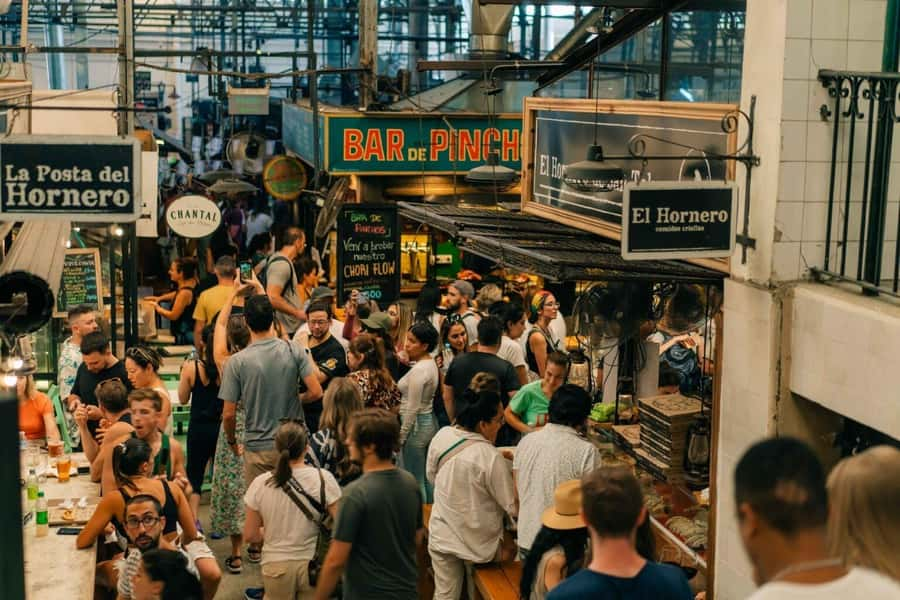
San Telmo Market, where old and new meet
From the bar, the route moves through the heart of San Telmo Market. This is where the tour’s mix of history, shopping, and food makes the most sense.
The market includes antiques and food stalls, giving you a quick look at two sides of San Telmo. It is not only a place to eat. It is also a working part of the neighborhood’s identity, where old objects, local commerce, and modern food culture share the same space.
You’ll stop for Argentine appetizers, including traditional flavors presented in newer ways. The exact menu can vary, and the available details do not promise specific dishes, so think of this as a guided introduction rather than a fixed tasting menu.
That flexibility can be useful. A good guide can explain what you are eating in the context of the day’s market and the group’s needs. The food is meant to show how familiar homemade cooking can be adapted without losing its Argentine character.
I like this section because it keeps the tour from becoming a standard restaurant crawl. You are moving through a real neighborhood market, seeing antiques and stalls, and then pausing to taste food that connects to the place around you.
A local bodegón and homemade cooking
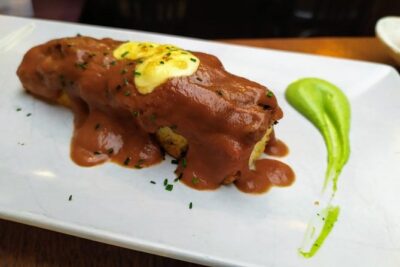
One of the most appealing stops is a local bodegón known for its modern treatment of homemade Argentine food. The word bodegón suggests a traditional, informal restaurant, and that matters because this is not presented as a formal fine-dining meal.
Instead, you can expect familiar local cooking with a more polished approach. The stop gives your guide a chance to explain the role of home-style food in Buenos Aires and how older recipes continue to appear in new forms.
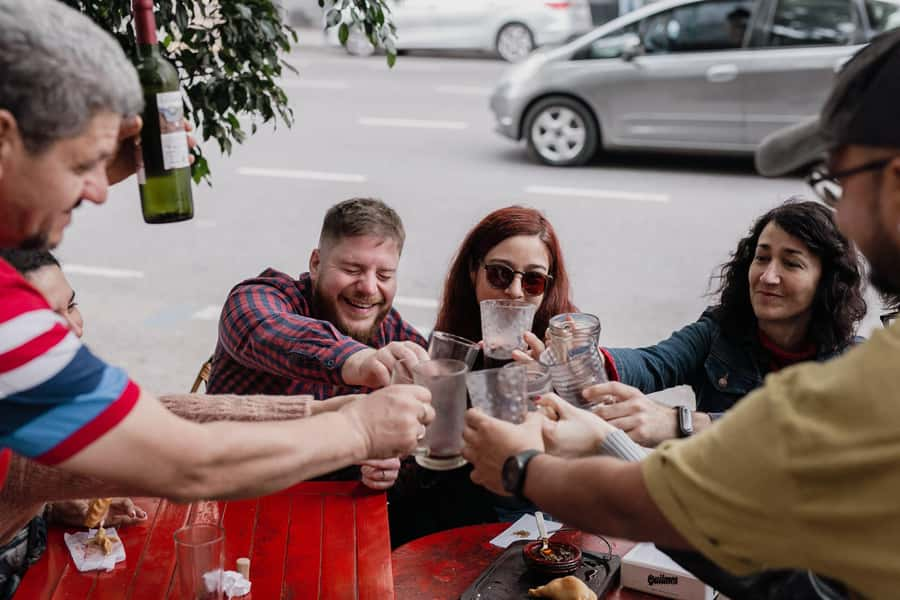
The tasting format is helpful if you are still learning what you like in Argentine cuisine. You can sample several items without committing to a full meal at one restaurant. It also gives you ideas for ordering later in your trip.
The portions appear generous across the food stops. Several people finished the tour feeling full, and one practical warning comes up again and again: do not eat a large meal before you arrive. This is not a quick snack walk. The food is part of the main event.
Drinks are included, but the balance between drinks and food may not be equal at every stop. One piece of practical feedback suggests that some participants would have liked more beverages with each tasting. If you prefer to drink with every course, keep that expectation in check.
Walking San Telmo’s cobblestone streets
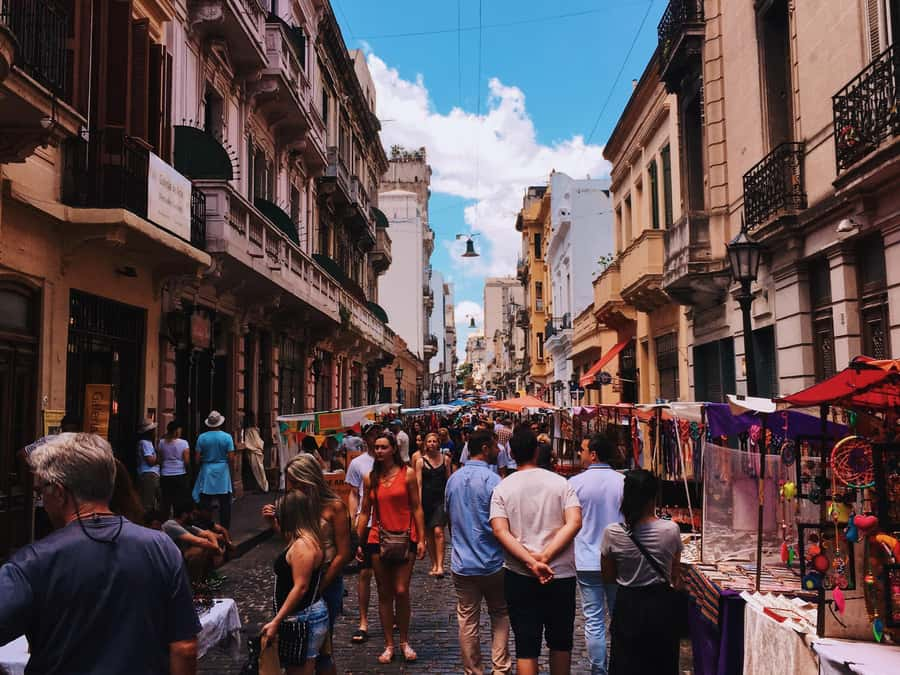
Food alone would not justify the full 210 minutes. The walking tour gives the meal its setting and helps you read San Telmo beyond its market.
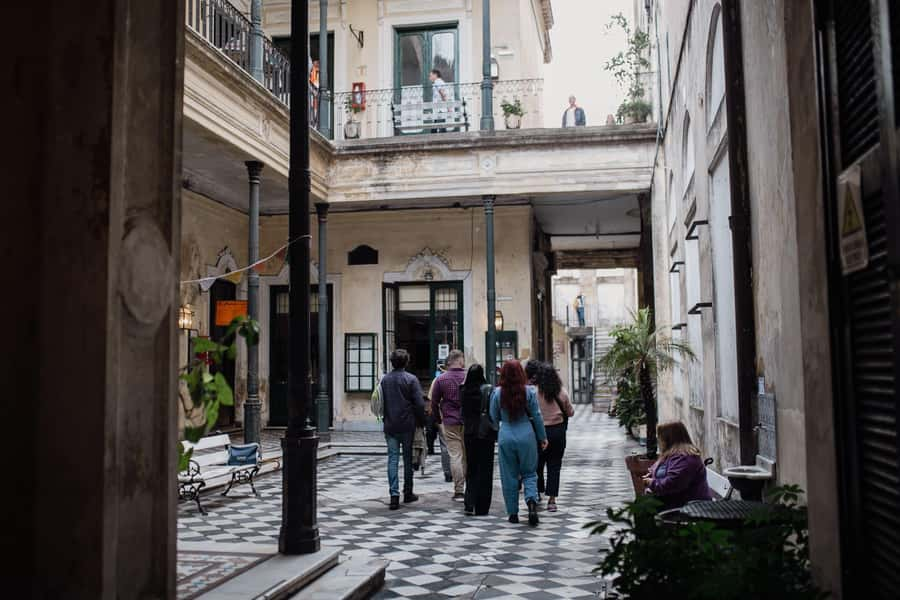
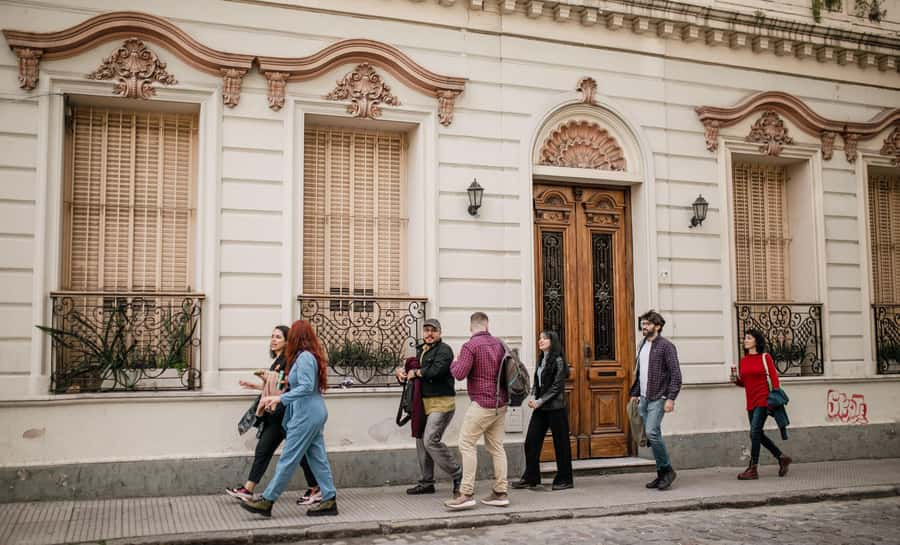
You’ll move through cobblestone streets and pass local landmarks while the guide explains their importance. The available details do not list every landmark, so the route may vary, but the focus is clear: San Telmo’s place in Buenos Aires and the stories connected to its buildings, streets, and public spaces.
The neighborhood is one of the oldest areas of Buenos Aires, and its streets provide a strong contrast with the city’s newer districts. That contrast is one of the tour’s main strengths. You are not simply hearing dates and names. You are seeing the physical setting where the neighborhood developed.
The food talk also reaches beyond recipes. Lu has been praised for explaining how different foods reached Buenos Aires and how immigrants contributed to the city’s cuisine. That is the kind of context that can change how you understand a meal later in your trip.
Plan for a steady pace and uneven walking surfaces. One participant specifically suggested giving people clearer advice to wear walking shoes. Take that advice. Comfortable shoes will make a real difference on cobblestones, especially if you have already spent the morning sightseeing.
More Guided Tours in the world:
- History and Hauntings of Salem Guided Walking Tour
★ 5.0 · 14,564 reviews - Edinburgh: Edinburgh Castle Guided History Tour with Tickets
★ 4.8 · 9,933 reviews - Historic Charleston Guided Sightseeing Walking Tour
★ 5.0 · 6,216 reviews - Rome: Colosseum with Arena, Roman Forum and Palatine Guided Tour
★ 4.0 · 5,598 reviews
Regional specialties and an Argentine dessert
The next food stop focuses on regional specialties, described as essential tasting for anyone visiting Argentina. This is valuable because Buenos Aires food culture is not limited to the dishes created within the city itself.
A regional tasting lets you compare local eating habits with food connected to other parts of the country. The specific specialties are not listed in advance, so you should see this as a chance to try representative flavors selected by the guide and food partners, not as a guaranteed list of named dishes.
The final stop is sweet. You’ll finish at a well-loved local spot for a traditional Argentine dessert, which gives the tour a natural ending and provides a clear contrast with the earlier savory stops.
Ending with dessert also helps pace the experience. After the market, the bar, the restaurant stop, and the neighborhood walk, a final sweet dish gives you a last taste to remember. If you are someone who prefers food tours to finish with a treat, this structure works well.
Dietary needs deserve attention before you book. You are asked to provide restrictions, and one guide, Kate, went out of her way to find vegan choices even after receiving late notice. That is encouraging, but I would still disclose your needs as early as possible. The tour includes several venues, so advance information gives the team more time to plan.
What the 210-minute schedule means
Three and a half hours is long enough to build a real food-and-history experience, but short enough to fit into a day of sightseeing. The time is divided among stops, explanations, tastings, and walking rather than spent in one place.
That format suits you if you like variety. You will not get a long lecture followed by one meal, and you will not spend the whole time rushing from one bite to the next. The route has room for conversation and neighborhood context.
It also means you should protect the whole block of time. This is not an activity to squeeze between two fixed appointments. Delays at the start, a slower walking pace, or extra questions can affect the schedule, and the tour finishes at Av. San Juan 350 rather than returning you to the starting bar.
There is no hotel pickup or drop-off. You need to reach Carlos Calvo 599 on your own and arrange your onward plans from Av. San Juan 350. Knowing the separate start and finish points is important if you are coordinating public transport, a restaurant booking, or another activity.
Is the $69 price fair?

At $69 per person, the price is reasonable if you value both food and guiding. Your fee covers the guide, drinks, street food, the market and restaurant tastings, and about three hours of walking and interpretation.
The value comes from the combination. If you only want a cheap snack, this will feel expensive. If you want to pay for each bite separately, you may also find a self-guided market visit costs less.
But arranging several food stops, finding local places, and understanding the neighborhood’s food history on your own takes time. The small group and live guide add something you cannot get from simply walking through San Telmo with a map.
I would especially consider the price worthwhile early in a Buenos Aires visit. The tour can introduce you to dishes, restaurants, and parts of San Telmo that you might otherwise pass without understanding. It may also help you decide where to return for a longer meal.
The price feels less attractive if you dislike walking, want a large full meal at one restaurant, or need a fully fixed menu. This is a guided tasting walk, not a sit-down dining experience.
The guides are a major part of the experience

The food and setting are strong, but the guide can determine how much you take away. The available guide team includes Dennis, Kate, Lucia, Kiki, Lu, Maya, and Stanko, and each is described as bringing a slightly different strength.
Dennis is associated with humor, energy, and a serious interest in food. Lu brings strong food knowledge and explains the links between immigration, Argentine dishes, and Buenos Aires. Kiki is praised for her friendly manner, group care, and helpful suggestions for the rest of your stay.
Maya is described as patient, enthusiastic, and friendly. Lucia is noted for making the food and city history easy to follow. Stanko’s approach includes cultural and social context, which may appeal to you if you enjoy learning how food reflects a city’s people.
The group limit of 10 supports this style. You can hear the guide more easily than in a large coach group, and it is more natural to ask about ingredients, local customs, or places to eat later.
Guide assignments can change, so you should not book based on a promise of one particular person. Still, the range of strong guide names suggests that the company has built a team capable of making the walk personal rather than mechanical.
Who should book this San Telmo walk?
I would recommend it to first-time visitors who want a quick but meaningful introduction to Buenos Aires food culture. It also suits people who enjoy walking tours but want more than architecture and dates.
Food-focused visitors will get the most from it, especially if you want to try several styles of Argentine cooking without planning every stop yourself. The tour also works well for couples and small groups who like to share dishes and compare impressions as they go.
It may suit vegetarians or vegans, provided you give the company your dietary restrictions ahead of time. The experience is not automatically designed around those diets, so early notice remains important.
I would not choose it for children under 15, anyone with mobility limitations, or anyone who prefers a slow, seated meal. The cobblestones, three-hour walking period, and multiple stops require a reasonable level of comfort on foot.
Weather is another consideration. Heavy rain can lead to cancellation, so keep a little flexibility in your schedule. The cancellation policy allows a full refund when you cancel at least 24 hours ahead, and you can reserve now and pay later, both useful if your plans are still shifting.
My verdict on the San Telmo food tour
Book this tour if you want local food tied to place and history, not just a list of tastings. The strongest reasons to go are the small group, the variety of stops, the generous amount of food, and the guide team’s clear passion for Argentine cooking.
Bring walking shoes, avoid eating beforehand, share any dietary restrictions early, and remember that the tour ends somewhere different from where it starts. If those conditions suit you, $69 buys a well-rounded introduction to San Telmo and a useful first look at Buenos Aires through its food.
Skip it if you need a fully accessible route, a fixed menu, or a relaxed restaurant meal with little walking. For everyone else, this is a smart way to spend half a day in one of the city’s most characterful neighborhoods.
FAQ
Where does the tour start?
The meeting point is El Federal Bar at Carlos Calvo 599 in San Telmo.
Where does the tour finish?
The tour finishes at Av. San Juan 350.
How long does the tour last?
The experience lasts 210 minutes, or three and a half hours.
What is included?
The price includes a tour guide, street food, drinks, and a three-hour walking tour.
Is hotel pickup included?
No. Hotel pickup and drop-off are not included.
Which languages are available?
The tour is offered in English and Spanish.
How large is the group?
The activity is a small-group tour limited to 10 participants.
Are children allowed to join?
The tour is not suitable for children under 15 years old.
Can I join if I have dietary restrictions?
Yes, but you should provide your dietary restrictions in advance. Vegan options may be possible when the guide has notice.
What happens in heavy rain?
The tour may be canceled in case of heavy rain. You can cancel up to 24 hours in advance for a full refund.
Newest history tours we have reviewed in the world
- Private Dublin Historical and Heritage Tour by Bike★ 5.0 · 30 reviews
- Dubrovnik by Night, History, Wine & Bites★ 5.0 · 41 reviews
- Enjoy Ancient Mostar★ 4.0 · 45 reviews
- Historical Walking Tour of Dublin★ 5.0 · 50 reviews
- DayTripper Dublin: A Guided City Walking Tour★ 5.0 · 90 reviews
- Ancient Old City– Finest tour of Dubrovnik★ 5.0 · 64 reviews
- Dublin LGBTQ Pride Historical and Cultural Walking Tour★ 5.0 · 91 reviews
- Interactive Living History in Dalkey Castle near Dublin City★ 5.0 · 133 reviews
Food & History Tours, compared.
Sevilla Food Tour: Tapas, Wine, History & Traditions
Read our review →

Dublin Historical Centre Food Tour with 8 Food Tastings & Drinks
Read our review →


Boston Pizza Lovers Food and History Walking Food Tour
Read our review →
Rome Food Tour in the Historic Centre with 8+ Food Tastings
Read our review →Browse the lists this tour appears in