
Review · BUCHAREST HISTORY TOURS
Roma Culture, Realities and Slavery History, Walking tour
Bucharest’s Roma story is not tucked away in a museum. It appears in the city’s streets, monuments, gardens, and public memory. This three-hour walk takes you from Romana Square to the Holocaust Memorial and Revolution Square while explaining slavery, emancipation, persecution, communism, and the place of Roma people in Romanian society today. It is a serious subject, but the tour also makes room for humor, music, art, and stories of resilience.
I like the clear historical route: you see the site of a former slave market, pass the Romanian Athenaeum, pause in Cișmigiu Gardens, and finish at Mesteshukar ButiQ, a Roma craft workshop. I also like the guides’ effort to separate fact from stereotype. Andreea, Daniela, Mihail, and Mihai are praised for their calm, thoughtful delivery and for making time for questions. The main consideration is that the walk is about Roma history and society, not a general Bucharest sightseeing tour, and one part of the experience may feel limited because direct interaction with Roma people is not guaranteed.
Key points to know before you book
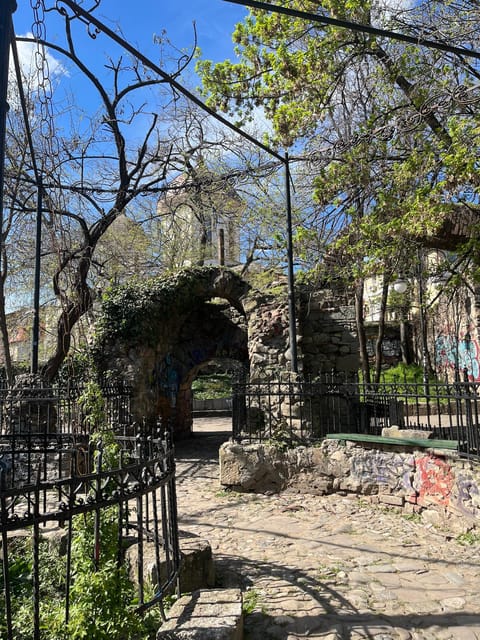
- The former slave-market site gives the tour its difficult starting point: You confront the long period when Roma people were held in slavery in Romanian lands.
- The Holocaust Memorial adds essential context: The tour addresses the persecution and murder of Roma people during Romania’s Holocaust.
- Central Bucharest becomes your classroom: The Athenaeum, Cișmigiu Gardens, Revolution Square, and communist-era streets all help frame the story.
- Guides focus on myths and facts: Andreea, Daniela, Mihail, and Mihai have been praised for clarity, empathy, humor, and careful answers.
- The optional jewelry workshop adds a practical finish: At Mesteshukar ButiQ, you can make a piece with a Roma craftsperson if you select that option.
- This is a focused social-history walk: Book it for Roma culture and Romanian history, not for a broad introduction to every major Bucharest sight.
Why this three-hour walk matters
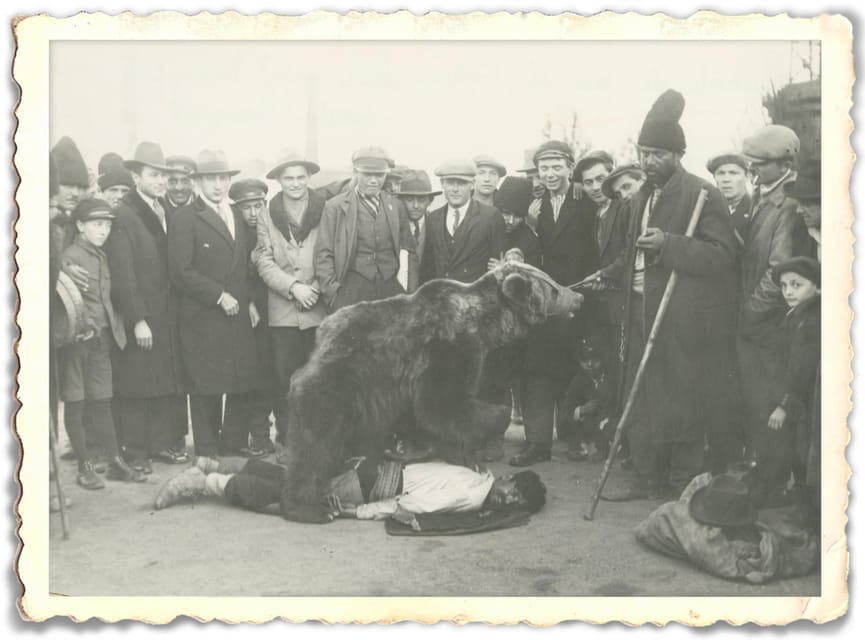
Many visitors arrive in Romania knowing little about the Roma beyond a handful of tired stereotypes. This tour gives you a more useful starting point. It explains Roma identity as part of Romanian history, not as a separate curiosity placed outside it.
The subject reaches back to slavery, continues through emancipation, persecution, the Holocaust, communism, and present-day discrimination. You also hear about language, music, jewelry, art, traditions, and the ways Roma people have shaped and participated in Romanian life.
The strongest feature is the attempt to hold several truths at once. Roma history includes severe oppression, but the tour does not reduce Roma people to victims. It also discusses creativity, endurance, family traditions, and contributions to the arts. That balance matters. A walk about injustice can become gloomy or one-sided if it forgets the people behind the history.
The pace helps. The route includes sitting opportunities, a café break, and stops where the guide can show images or connect a building, sculpture, or square to an event. In hot weather, guides have adjusted explanations to shaded places and paused for water. That practical care is important during three hours on foot.
More Local Culture and Traditions Tours in Romania:
- Private Bucharest: History & Food with Traditional Meal
★ 5.0 · 34 reviews - Private Tour – Food, Culture, History & Traditions
★ 5.0 · 18 reviews - Amsterdam Food and Cultural Tour with Tastings
★ 5.0 · 4,315 reviews
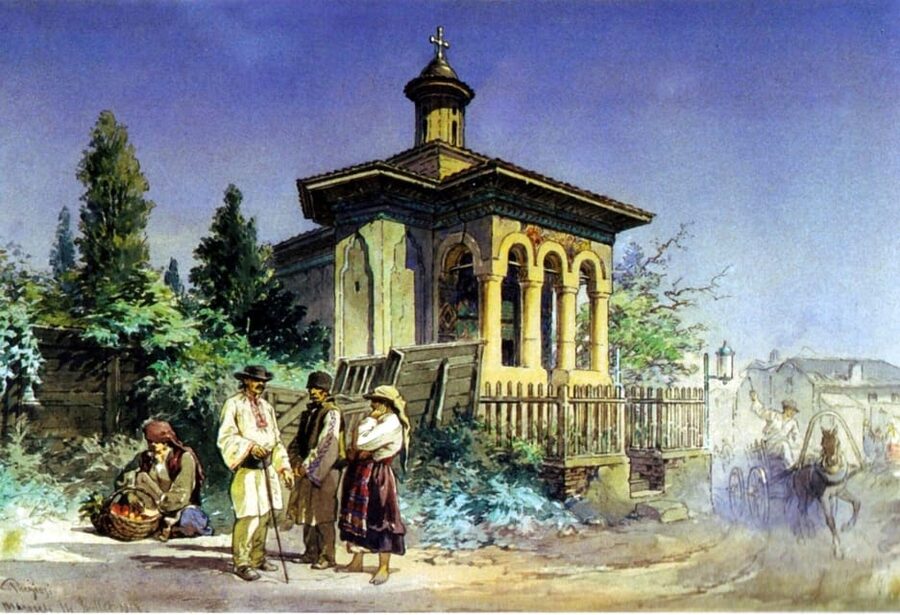
Starting at Romana Square and the old slave-market site
Meet in the small square in front of the Ion Creangă Theatre, about three minutes from Piața Romană metro station. This is an easy central meeting point, though you should allow a few extra minutes to find the small square rather than relying only on the theatre entrance.
The first stop is a secret location described as the site of a former slave market. The exact presentation is part of the guide’s storytelling, but the historical point is plain and unsettling: Roma people were enslaved in the Romanian principalities for centuries. They could be owned by monasteries, nobles, and the state, and families could be separated through sale or transfer.
This is not a pleasant opening, but it is the right one. Without this background, later discussions about poverty, prejudice, property, and public attitudes can seem disconnected. You begin to understand that discrimination did not appear from nowhere. It grew from institutions and customs that treated Roma lives as property.
The guide also explains the continuing effect of slavery on Roma identity and on the way Romanian society has viewed Roma communities. Expect questions about emancipation, stereotypes, and the difference between historical fact and popular myth. This is a place to listen carefully rather than rush through with a camera.
The Romanian Athenaeum and the role of art
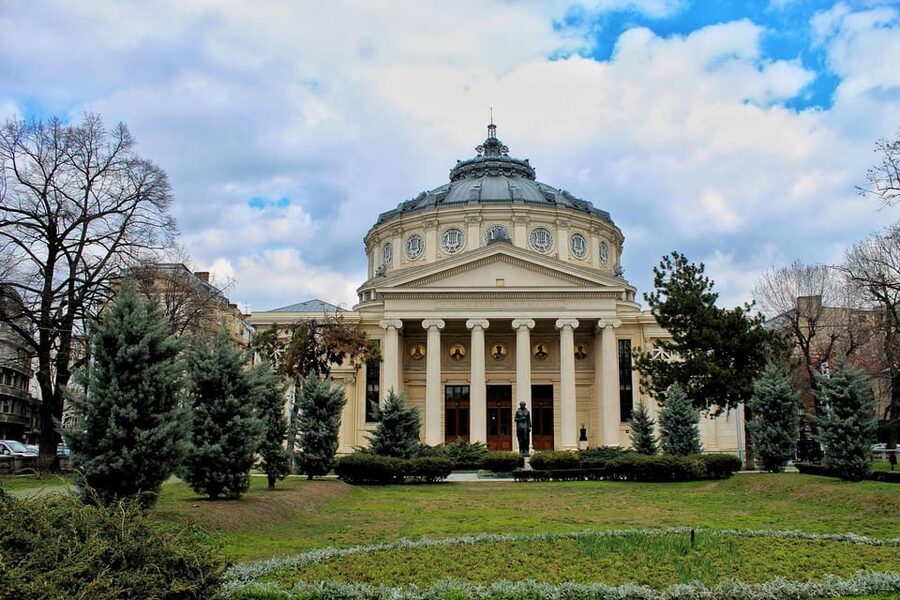
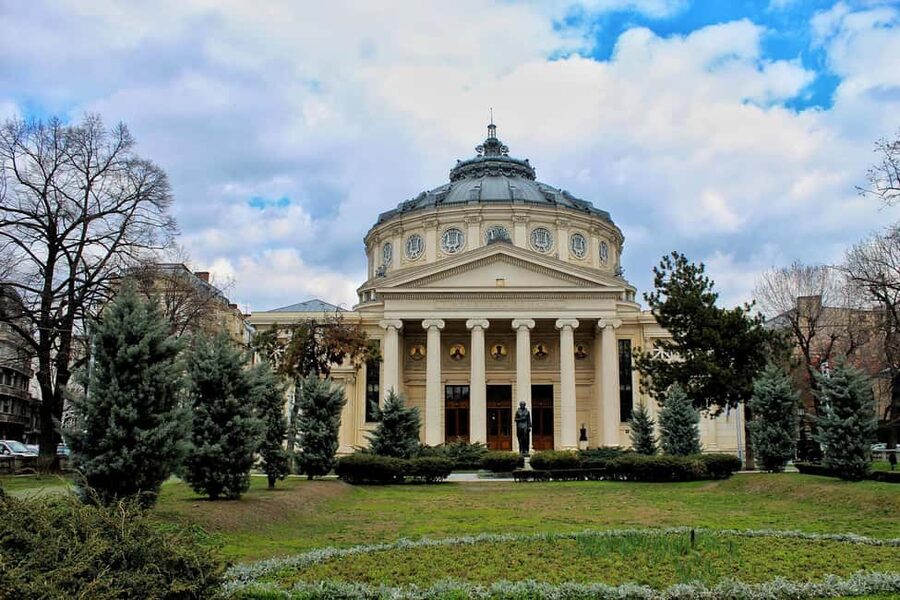
The walk continues past the Romanian Athenaeum, one of Bucharest’s best-known cultural buildings. The tour does not treat it simply as a grand photo stop. Instead, the building becomes a way to discuss national pride, cultural heritage, and how the arts have influenced public ideas about Roma people.
That connection is useful because Roma culture is often presented through music, performance, craft, or colorful folklore while the harder parts of history are ignored. You look at the relationship between art and identity: who gets celebrated, who gets stereotyped, and how a culture can be admired in one setting while its people face prejudice in another.
You may also pass public sculptures and other visual reminders of Romanian history. The guides have used photographs and links to music, including folkloric music and manele, to extend the discussion beyond the walking route. If that interests you, ask the guide for recommendations before the tour ends.
The Athenaeum stop is brief, around 15 minutes, so do not expect an interior visit or a full architectural tour. Its value is in the conversation, not in a long look at the building’s decorative details.
A café pause before Cișmigiu Gardens
A short break at a local café gives the group time to rest, ask questions, and absorb the more difficult material. Food and drinks are not included, so budget separately if you want something during the pause.
This is a small but useful part of the schedule. A three-hour walking tour can become tiring when the subject demands steady attention. The café stop breaks up the route and gives you a chance to ask about terms, customs, or points that were not clear.
You should not expect a meal or a long sit-down session. It is a practical pause, not a separate café experience. Still, I would rather have this break than a nonstop lecture while walking.
More History Walking Tours in Romania:
- Bucharest: Communism and History Guided City Walking Tour
★ 4.9 · 918 reviews - Guided Walking Tour of Historical Bucharest
★ 5.0 · 84 reviews - Half-Day Jewish Heritage Walking Tour in Bucharest
★ 5.0 · 20 reviews - Bucharest: Sweet Delights History and Desserts Walking Tour
★ 5.0 · 18 reviews
Cișmigiu Gardens and myths about Roma culture
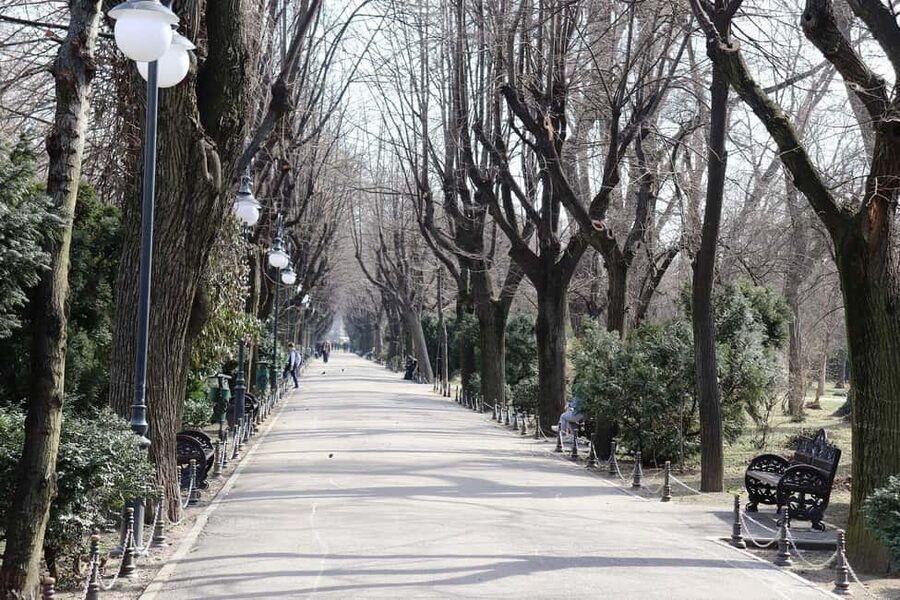
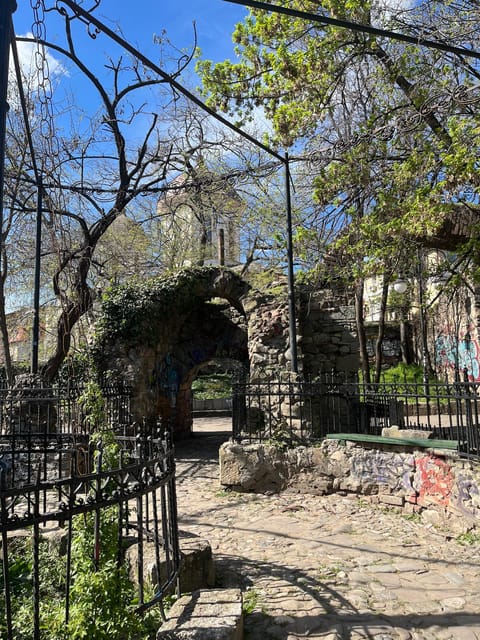
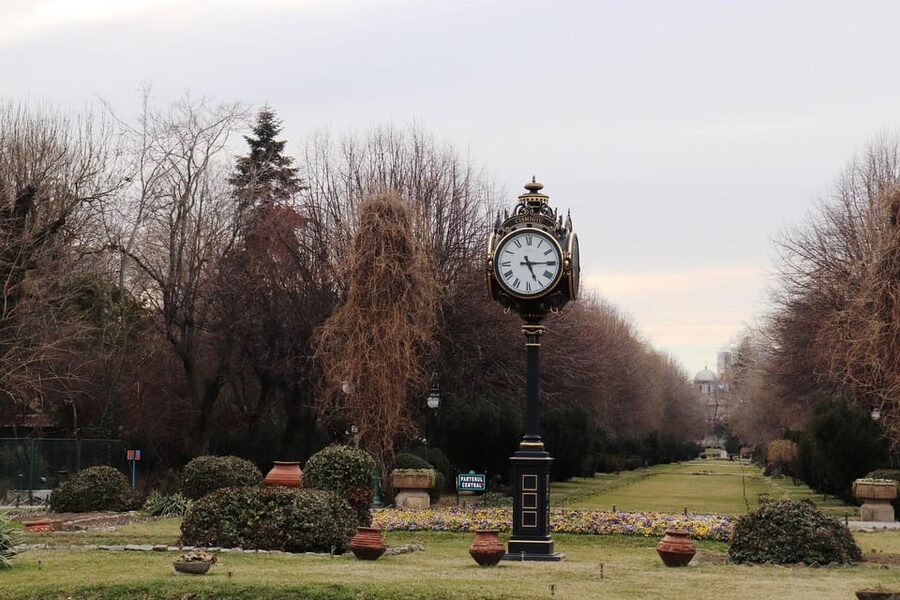
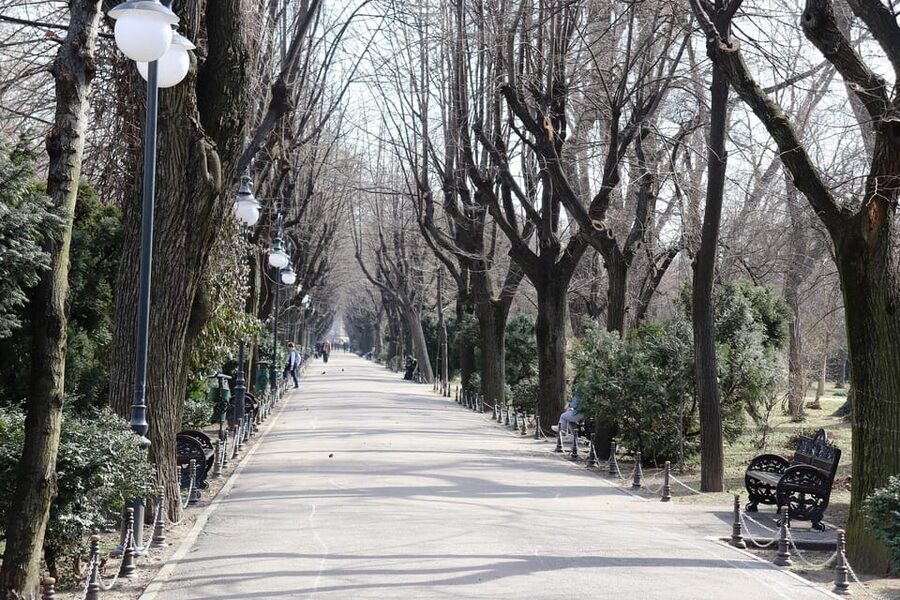
Cișmigiu Gardens, Bucharest’s oldest and largest garden, provides the most relaxed setting on the route. After the discussion of slavery and art, the greenery gives the group a quieter place to talk about Roma traditions, family life, cultural identity, and the myths that surround Roma people.
The guide’s job here is especially important. Roma culture is not one single set of customs shared identically by every person or community. The tour explains that traditions can vary, and that outsiders often mistake a stereotype for a cultural fact.
You can expect a mixture of explanation and conversation. The pace through the gardens is slower, and the stop lasts about 30 minutes. It is one of the better places to ask respectful questions, especially if you want to understand how Roma identity relates to wider Romanian society.
Cișmigiu also helps keep the tour from becoming a sequence of grim monuments. The subject remains serious, but the setting allows room for stories of humor and resilience. That human scale is one of the tour’s strengths.
The Holocaust Memorial and the Roma victims of genocide
The Holocaust Memorial is the emotional center of the walk. Here, the guide discusses Romania’s Holocaust and the thousands of Roma people who were persecuted and killed.
The stop is listed as a photo stop and guided visit of about 15 minutes. Take your time with the memorial, even if the formal explanation is short. The monument is important because Roma victims are often missing from general Holocaust education, despite the scale of their persecution.
The guide places this event within the larger story rather than treating it as an isolated tragedy. You learn how state persecution, prejudice, and dehumanizing myths can lead to violence. That link is central to the tour’s purpose: history is not only about what happened, but also about how societies remember it and what they continue to ignore.
This part may be difficult for children or anyone looking for a light sightseeing outing. The guide’s respectful tone helps, but the subject itself remains painful. I would plan a quieter part of your day afterward rather than rushing straight into another crowded attraction.
Communist Bucharest, Kogălniceanu, and Revolution Square
The route then moves through streets connected with Romania’s communist period. At Piața Kogălniceanu and around Revolution Square, you get a short introduction to the communist regime and its effect on Roma communities.
This section is not a full communist Bucharest tour. Instead, it shows how political systems, housing, work, property, and public policy affected Roma people. One useful issue raised along the way is the dispute over property ownership and why some buildings remain in poor condition after the war. The point is not to offer one simple explanation, but to show how past decisions can produce visible problems in the present.
Revolution Square is mainly a pass-by stop, lasting about 15 minutes. It gives the tour a wider Romanian frame, connecting Roma history to the country’s national political story. You will not spend the entire stop studying every monument, so this section works best if you already have some interest in Romania’s communist past.
The walk also gives you a look at less-touristed parts of central Bucharest. That does not mean the streets are remote or obscure, but the focus is different from the usual route built around grand palaces and cafés. You are seeing the city as a setting for social history.
Finishing at Mesteshukar ButiQ
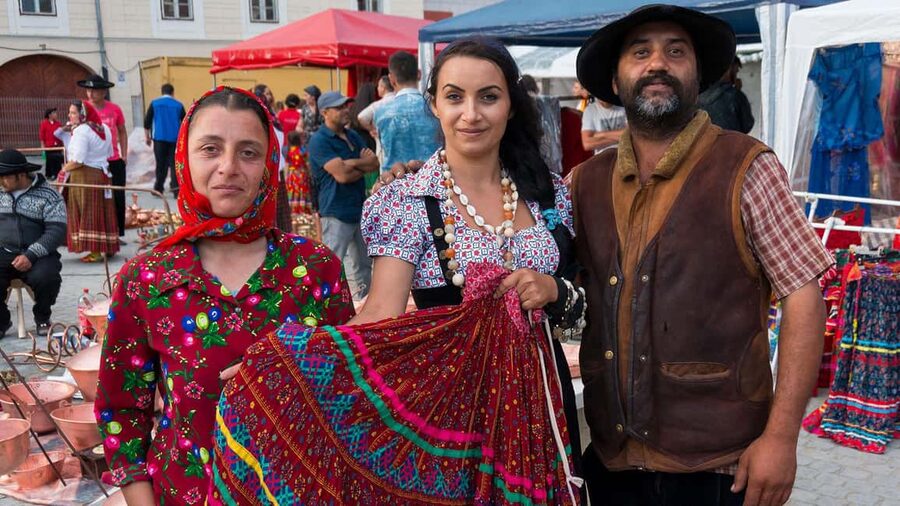
The tour ends at Mesteshukar ButiQ, known as MBQ, a Roma craft and social enterprise. If you choose the optional jewelry workshop, you can make your own piece with an authentic Roma craftsperson in a traditional workshop.
This is a welcome change of pace after the memorials and political history. Instead of ending with a final lecture, the experience can finish with your hands busy and a practical connection to craft traditions. The workshop is especially appealing if you like making things or want a souvenir tied to the subject of the tour.
The jewelry option includes transportation, according to the activity details. Confirm the exact option when booking, since the workshop is not part of the basic walking tour. If you do not select it, you still finish at MBQ, but the hands-on activity is not included.
The workshop cannot represent every Roma tradition, and it should not be treated as a complete picture of Roma culture. Its value is narrower and more concrete: you meet a craft practice and see how cultural work can support identity, income, and public understanding.
The guides and the tone of the experience
The guide makes a major difference here because the subject includes slavery, racism, genocide, and living communities. Andreea has been especially praised for clear explanations, visual examples, careful pacing, and a respectful approach. Daniela is noted for her broad knowledge, direct answers, empathy, humor, and follow-up links to music and other material.
Mihail and Mihai have also led the walk, with an approach that combines honesty and sensitivity. The strongest guiding style is neither defensive nor sensational. It gives you room to ask difficult questions without turning Roma people into an object of pity.
The tour is in English. It has been delivered to larger groups as well as smaller ones, so the atmosphere may vary by date. With a large group, you may have less chance for extended personal discussion, though guides have worked to keep the walk on schedule and offer places to sit.
One fair limitation deserves attention. The walk does not promise that you will meet a range of Roma community members or hear directly from Roma residents at every stop. The jewelry workshop is the clearest opportunity for direct contact with a Roma craftsperson, if you select it. If first-person community voices are your main reason for booking, ask the provider what the current workshop format includes.
Is $30 good value?
At $30 per person, the basic tour is reasonably priced for three hours with an English-speaking guide and a focused route through central Bucharest. You are paying for interpretation and context, not entry tickets to major attractions. The listed stops are mainly viewed from outside or experienced as public spaces.
The value is strongest if you want a serious subject explained well. The walk gives you a framework that would be difficult to assemble from casual sightseeing alone. It also covers several periods, from slavery to the communist era, without requiring a museum visit or a full-day commitment.
The price is less compelling if you want a classic city tour with interiors, grand architecture, and many major attractions. You will pass the Athenaeum and Revolution Square, but the tour is not built around them. Food and drinks are extra, and the workshop costs more if added.
I would choose the workshop if you have time and want the experience to end with something active. If your schedule is tight, the basic walk still contains the main historical material.
Practical advice for your three hours
Wear comfortable shoes. The route includes several walking sections, with stops at the café, gardens, and other places where you may be able to sit. In hot weather, carry water and use the shaded pauses provided by the guide.
Start at the Ion Creangă Theatre near Piața Romană metro station. Arriving a little early is sensible because the meeting point is the small square in front of the theatre, not simply the nearest metro exit.
This is best placed early in your Bucharest stay if you want its social and political context to shape the rest of your visit. It can also work later, once you have seen the city’s grand buildings and want to understand the people and conflicts behind them.
You can cancel up to 24 hours before the start for a full refund, and the reserve-now, pay-later option keeps your plans flexible. Check the available start times because the activity lasts three hours and the schedule can affect whether you have time for the optional workshop.
Should you book this Roma history walking tour?
Book it if you want to understand Bucharest through Roma history, Romanian slavery, Holocaust memory, communism, and modern prejudice. It is particularly suitable for adults, students, history-minded visitors, and anyone who wants more than a quick list of landmarks.
I would also recommend it if you value a guide who can correct myths without making the discussion feel like a scolding. The best parts are the historical sequence, the memorial stop, the thoughtful guides, and the possibility of ending with Roma jewelry-making.
Skip it if you want a light, general sightseeing walk or if you need a tour built around direct conversations with many Roma residents. For most culturally curious visitors, though, $30 buys a useful three hours and a more honest understanding of Romania than a standard postcard route can provide.
FAQ
How long does the walking tour last?
The tour lasts three hours.
How much does the basic tour cost?
The listed price is $30 per person.
Where does the tour begin?
It begins in the small square in front of Teatrul Ion Creangă, Sala Mare, about three minutes on foot from Piața Romană metro station.
Where does the tour finish?
The walking tour finishes at Mesteshukar ButiQ, also called MBQ.
What language is the tour offered in?
The live guided tour is offered in English.
Does the tour visit a former Roma slave-market site?
Yes. An early stop covers the site of a former slave market and explains the historical context of Roma slavery in Romania.
Does the tour include the Holocaust Memorial?
Yes. The route includes a guided stop and photo opportunity at the Holocaust Memorial, including discussion of Roma victims of persecution and genocide.
Is food or drink included?
No. Food and drinks are not included, although the route includes a short café break.
Can I add a jewelry workshop?
Yes. An optional jewelry workshop is available at the end, where you can make a piece with a Roma craftsperson. The workshop option includes transportation.
Newest history tours we have reviewed in Romania
- Half-Day Jewish Heritage Walking Tour in Bucharest★ 5.0 · 20 reviews
- Bucharest Historical Food Tour in Old Center★ 5.0 · 21 reviews
- Private Tour – Food, Culture, History & Traditions★ 5.0 · 18 reviews
- Bucharest Heritage City Tour – The Last Days of Communism★ 5.0 · 20 reviews
- Bucharest Jewish Heritage | Holocaust Memorial | Private Car Tour★ 5.0 · 38 reviews
- Experience the History of Bran Castle and Saxon Fortifications in Burzenland★ 5.0 · 19 reviews
- Private Bucharest: History & Food with Traditional Meal★ 5.0 · 34 reviews
- Discover Romania’s Wine Heritage in Brasov’s Historic Center★ 4.6 · 19 reviews
Local Culture & Traditions Tours, compared.

Amsterdam Food and Cultural Tour with Tastings
Read our review →
Sevilla Food Tour: Tapas, Wine, History & Traditions
Read our review →
Tromsø: Reindeer Camp and Sami Cultural Tour with Lunch
Read our review →
Half Day Dominican Republic Cultural Tour : Small Group
Read our review →
Ultimate Melbourne Walking Tour: History, Laneways & Culture
Read our review →
Tromsø: Sámi Reindeer Sledding and Sami Cultural Tour
Read our review →
Kyoto Gion: 2-Hour Geisha Culture & History Walking Tour
Read our review →
Marrakech Historical and Cultural Tour – Half Day City Tour
Read our review →Browse the lists this tour appears in