
Review · GERMANY HISTORY TOURS
Quedlinburg UNESCO World Heritage Group Tour (private)
Quedlinburg’s real show is above street level: the Schlossberg, crowned by St. Servatii Collegiate Church and reached through a town filled with crooked half-timbered houses. This private walk gives you the main story in two hours, from the market square to medieval lanes and the hilltop castle precinct.
I like the small private format, which lets you ask questions and set the pace, and I like the way the route links famous names such as Klopstock and Lyonel Feininger with everyday streets. The main caution is that the tour is in German, and one guide, Klaus, has been described as speaking quickly. Cobblestones and a steeper Schlossberg section also require steady footing.
Key points at a glance
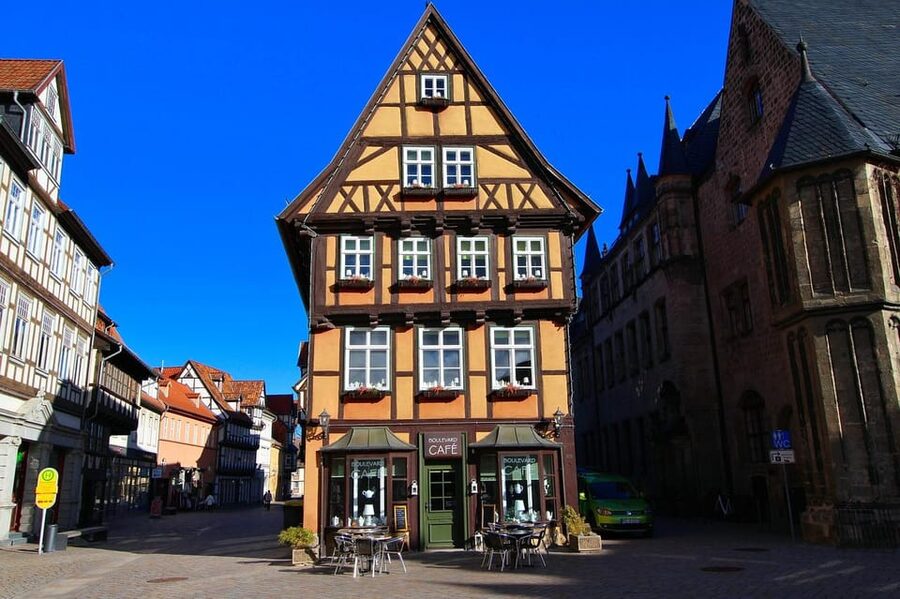
- A 1,100-year story in two hours: The route connects Quedlinburg’s market square, old town, churches, and Schlossberg.
- Private for up to 12 people: The $117 group price can be good value for a family or small party, especially since children up to 16 are free.
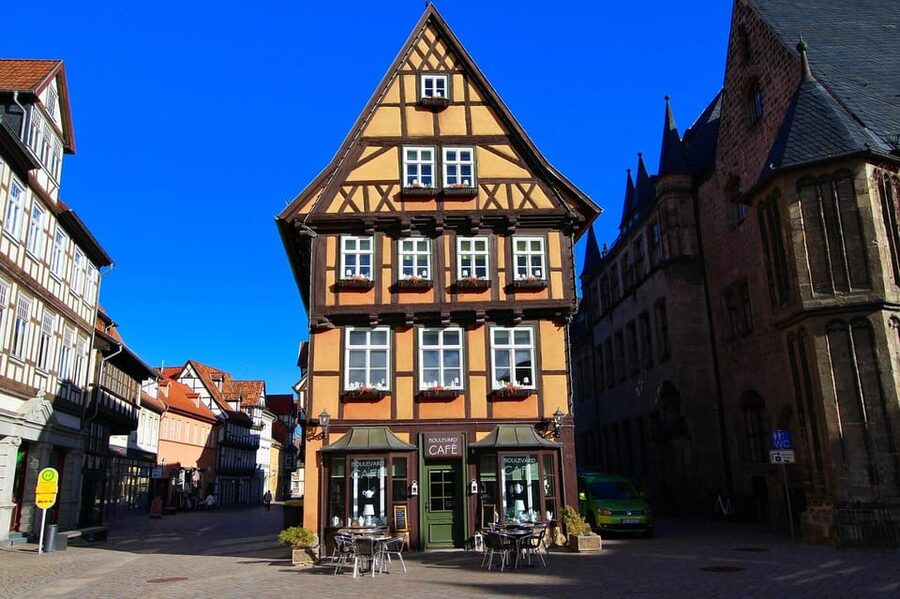
- Half-timbered architecture at close range: You see several old quarters, including the Schuhhof and the lane known as Die Hölle.
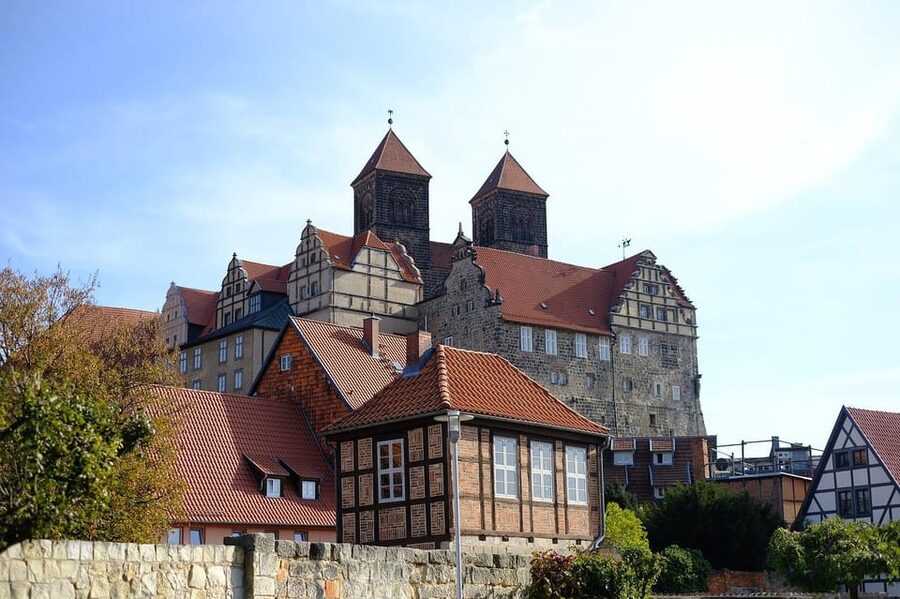
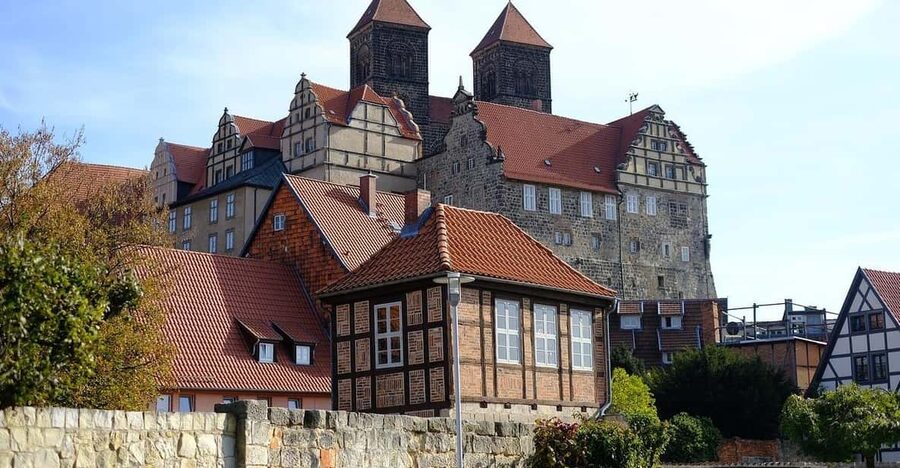
- A hilltop finish: Klopstock House, the Lyonel Feininger Museum, castle gardens, and St. Servatii Collegiate Church form the tour’s high point.
- German-language guiding: The guide brings local stories and historical detail, but fast speech may be difficult for some listeners.
- Outdoor walking in all weather: Expect cobblestones, rain or shine, and a short but steeper climb to the Schlossberg.
Starting at Quedlinburg’s market square
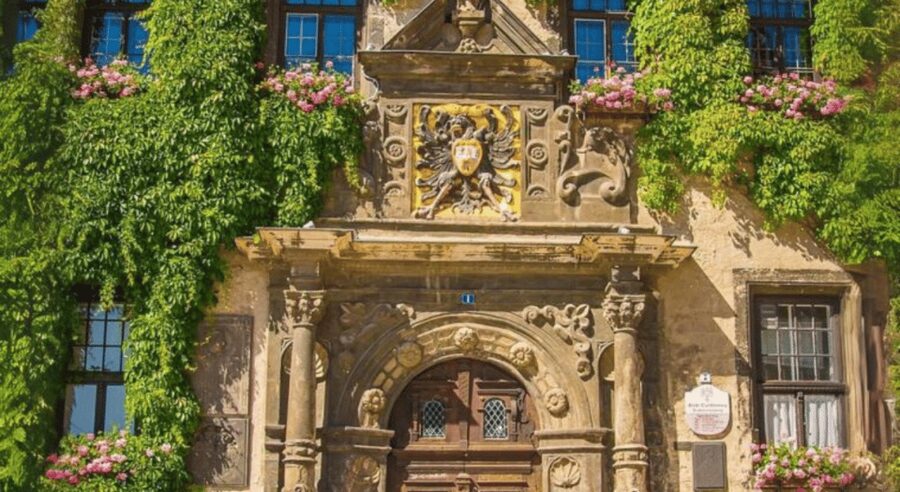
Meet shortly before the start in front of the green Quedlinburg tourist information office on the market square. This is a sensible meeting point: central, easy to identify, and already surrounded by the old town’s historic buildings.
From here, your guide begins with the city’s broad story before leading you into the smaller lanes. I like this order. You first get your bearings, then see how Quedlinburg’s past survives in details that are easy to miss on your own.
The tour is private, but the advertised group limit is 12 people. That is large enough for a family gathering or a few friends, yet still much more personal than a standard city walk. You can ask about a building as you pass it, request clarification, or spend a little more time on a subject that interests your group.
The guide’s language is German. If your German is strong, this setup should give you plenty of room for questions. If you are still learning, ask the guide to slow down at the beginning. That matters here because the tour packs a lot into two hours, and one recent assessment specifically found that Klaus sometimes spoke too quickly to follow every detail.
More Private History Tours in Germany
- Berlin Private Complete History All Day Walking Tour
★ 5.0 · 474 reviews - Nuremberg: 1.5-Hour Private Tour through Historical Old Town
★ 4.8 · 283 reviews - Berlin Private Half-Day Walking Tour: Discover the German Capital’s History
★ 5.0 · 244 reviews
Town hall, St. Benedikti, and the first layer of history
The first section covers Quedlinburg’s central old town, beginning with the town hall and the market church of St. Benedikti. These stops help explain how the city functioned as a place of civic power, worship, trade, and daily work.
You will hear about more than dates and rulers. The guide points out how streets, church buildings, and houses fit together, giving you a clearer sense of how the town grew over more than 1,100 years. That local framing is one reason I would choose a guided walk instead of simply photographing the facades.
Quedlinburg can look almost too pretty at first glance. Rows of timber-framed houses, narrow lanes, and irregular building lines invite you to admire the view and move on. A guide gives those sights a human scale. You learn why a lane matters, which personalities are tied to the town, and how the old center developed over time.
The town hall is also a useful early stop because it provides a civic counterpoint to the churches and castle above. You are not seeing one isolated monument. You are following the relationship between the town below and the religious and aristocratic center on the Schlossberg.
The Schuhhof and Die Hölle
The walk continues through the Schuhhof and the lane called Die Hölle. These names add character, but the real value is visual: this is where Quedlinburg’s smaller streets and timber construction become especially easy to appreciate.
The half-timbered houses are not all alike. Their beams, upper floors, proportions, and decorative details vary from one building to the next. The tour’s focus on half-timbered art helps you look past the general charm and notice how much variety is packed into a compact area.
I find this kind of explanation particularly useful in Quedlinburg. Without context, you may see a pleasant old street. With a guide, you start comparing facades and spotting the differences in craft and design. The route does not require you to study architecture beforehand, but it rewards curiosity.
Die Hölle is an appealing stop for anyone who enjoys unusual place names and medieval street patterns. The name itself is memorable, and the lane forms part of the city’s distinctive atmosphere. Still, keep expectations sensible. This is a walking stop in the old town, not a theatrical attraction or an underground show.
Blasii Church and the half-cave museum
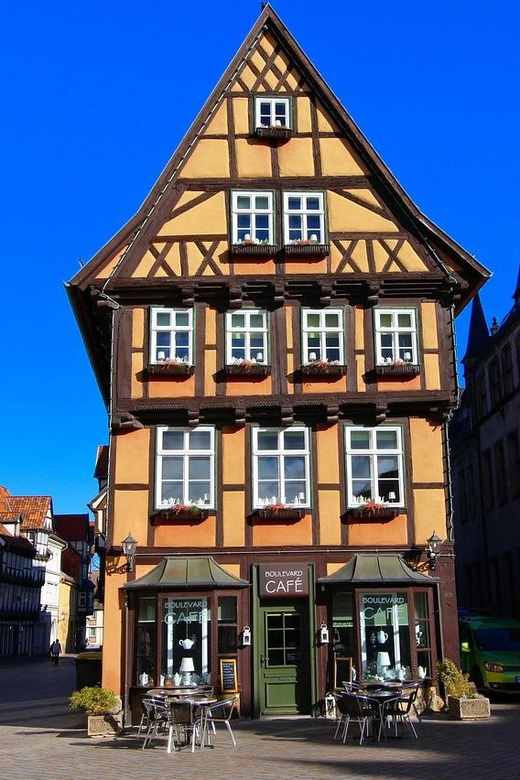
The route also includes Blasii Church and the half-cave museum. These stops broaden the tour beyond the postcard view of timbered houses and market squares.
The half-cave museum is especially useful for showing how older spaces could be adapted and used. The supplied details do not specify every exhibit or how much time you spend inside, so I would treat it as one part of the walking story rather than a full museum visit.
The church stop adds another layer to Quedlinburg’s religious history. Along with St. Benedikti, it helps you see that the old town contains several important sacred buildings, each contributing to the city’s identity.
Because the entire first section is part of a two-hour route, the pace is purposeful. You will not have unlimited time at every site. If one church or museum interests you most, tell the guide early so your private group can make the best use of the available time.
More UNESCO World Heritage Tours in Germany:
- Berlin: 3-Hour World Heritage Cruise to Potsdam
★ 4.5 · 1,569 reviews - Hamburg: UNESCO-World Heritage Sites Tour
★ 4.7 · 137 reviews - Classic city tour in the World Heritage City of Augsburg
★ 4.0 · 41 reviews - World Heritage Shirakawa-go and Experience Tours from Kanazawa
★ 5.0 · 4,049 reviews
Climbing the Schlossberg
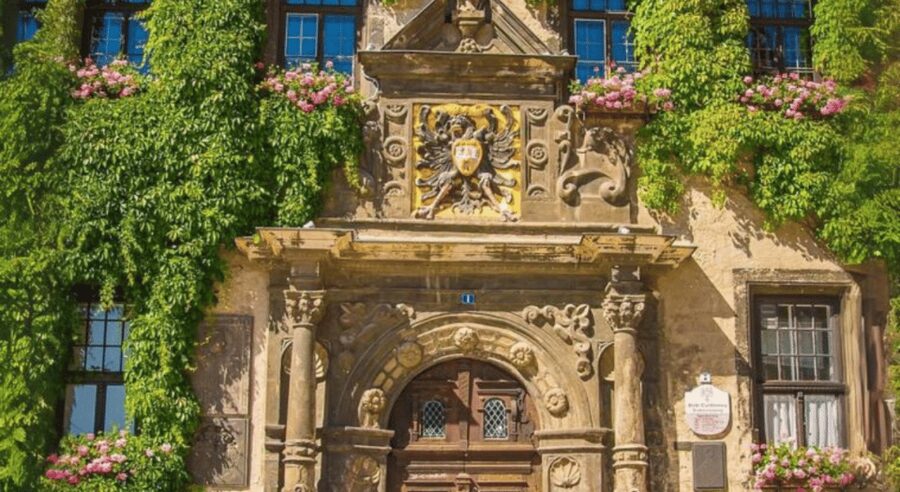
The Schlossberg is the tour’s main physical and historical change of scene. After the flatter old-town streets, you head uphill toward the castle area and St. Servatii Collegiate Church.
The climb is not a technical hike, but it does include a steeper section and cobblestone paths. Wear shoes with reliable grip, and be realistic about your comfort with uneven ground. Rain can make old paving stones less forgiving, and the tour runs in all weather.
At the top, the city’s story takes on a different scale. The Schlossberg is not simply another pretty viewpoint. It is the place where Quedlinburg’s religious and political importance becomes most apparent, with the collegiate church anchoring the hilltop.
The outdoor portion includes the castle gardens and the area around St. Servatii. These spaces give you a break from the narrow lanes below and help connect Quedlinburg’s buildings with its position above the town.
The collegiate church is not included inside the tour. That is an important distinction when you plan your day. You see the exterior and learn about its place in Quedlinburg’s past, but an interior visit would require a separate arrangement if available.
Klopstock House and the Feininger Museum
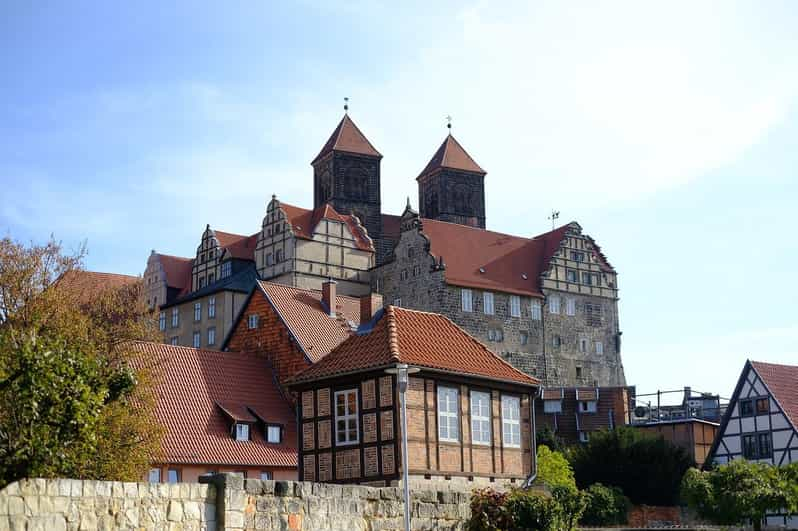
The Schlossberg section includes Klopstock House and the Lyonel Feininger Museum, bringing two very different figures into the story.
Klopstock gives the tour a direct link to Quedlinburg’s literary past. The stop is valuable even if you do not know his work well, since it shows how the city’s story includes notable people as well as buildings.
The Feininger Museum adds an artistic angle. Its presence reminds you that Quedlinburg is not only a medieval or early modern town preserved in place. It also has a connection to modern art and to the way artists have responded to historic settings.
The information provided does not promise a full museum admission or a long gallery visit. I would expect the guide to present the museum as part of the route and local story, not to provide an extended indoor art tour. If the collection is a major reason for your visit, plan separate time for it.
These two stops are a strong feature of the itinerary because they keep the walk from becoming a parade of facades. You are introduced to people connected with literature and art, then shown where they fit into the town’s larger story.
What the guide adds
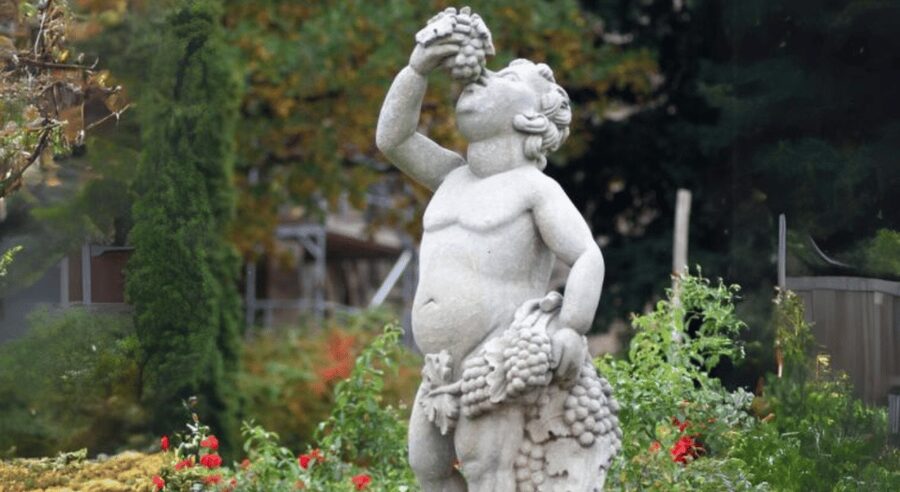
The strongest part of this experience is the guide-led interpretation. A private tour can turn a pleasant stroll into a connected story, especially in a town where many details are architectural and easy to overlook.
Klaus is named in the feedback as a guide with an enormous store of information and a clear enthusiasm for Quedlinburg. His small stories and personal connection to the city were singled out as memorable strengths. That kind of local affection can make a difference. You are not just being moved from stop to stop. You are hearing why particular streets and people matter to someone who knows the town well.
At the same time, the guide experience may vary. One low rating raised concerns about pronunciation, general knowledge, and suitability for children. The larger pattern is positive, but you should not book this expecting an English-language tour or a polished performance designed specifically for young children.
For families, I would prepare children with a simple challenge: ask the guide about the strange name Die Hölle, count different timber patterns, or choose a favorite building. The tour is free for children and young people up to age 16, but free admission does not guarantee that every child will enjoy two hours of historical explanation.
Is $117 a good value?
The price is $117 for a private group of up to 12 people. At the full group size, that works out to less than $10 per person before any additional booking charges, which is a solid price for a private two-hour walk.
The value depends heavily on your group size. For two people, the same total is a more serious expense than for eight or ten. Families and small groups get the clearest financial advantage, especially with children up to 16 included free.
You are paying for a guide, a private format, and a route that covers both the lower old town and the Schlossberg. You are not paying for entry into St. Servatii Collegiate Church, and the description does not include a separate museum admission. Keep that in mind when comparing the cost with a self-guided walk.
I would choose this tour when I want historical context without spending half a day. Two hours is long enough to cover the main sights but short enough to leave time for lunch, a museum visit, or independent wandering afterward.
Who should book this Quedlinburg walk?
I would recommend it most strongly to:
- First-time visitors who want a clear introduction to Quedlinburg.
- Families and private groups that can share the $117 price.
- Architecture fans interested in half-timbered construction and old street patterns.
- History-minded visitors who want the town, churches, Schlossberg, and notable residents tied together.
- German speakers who can comfortably follow a live guide and ask questions.
- Independent-minded visitors who want a guided start, then time to explore alone.
I would think twice if you need an English guide, have difficulty on cobblestones or uphill paths, or want extensive time inside the collegiate church and museums. The tour is outdoors, runs in every kind of weather, and keeps moving to cover its full route.
Cancellation is flexible if you cancel at least 24 hours ahead, and you can reserve now and pay later. Those terms are useful if your Northern Germany plans are still shifting, but the main decision remains language, walking ability, and group size.
My take on this private Quedlinburg experience
This is a well-priced way to get the shape of Quedlinburg in a short time. I like the route because it moves from the market square through the old town and then up to the Schlossberg, rather than treating the UNESCO center as a collection of disconnected photo stops.
The best reasons to book are the private format, the variety of half-timbered streets, the local personalities, and the chance to ask questions along the way. The main limits are just as clear: German only, no interior visit to St. Servatii, uneven paving, and a guide style that may be fast for some listeners.
Book it if you want a focused introduction and can share the cost with a group. If you are already well versed in Quedlinburg, prefer to explore at your own pace, or require English, spend your time and money elsewhere. For most German-speaking first-time visitors, this is a practical first look at one of Northern Germany’s most rewarding old towns.
FAQ
Where does the Quedlinburg tour begin?
The group meets in front of the green Quedlinburg tourist information office on the market square. The guide receives the group there shortly before the tour begins.
How long does the tour last?
The walking tour lasts two hours.
Is the tour private?
Yes. It is offered as a private group experience for up to 12 people.
What language is the tour in?
The live tour guide speaks German.
Is entry to St. Servatii Collegiate Church included?
No. The tour visits the Schlossberg and the collegiate church area, but the inside of St. Servatii Collegiate Church is not included.
Is the route suitable in bad weather?
Yes. The tour operates in all weather conditions. You should be prepared for cobblestone paths and a steeper section on the Schlossberg.
Newest history tours we have reviewed in Germany
- Historic Dresden Private Walking Tour★ 5.0 · 32 reviews
- Walking Through Dresden’s Past with Dr. Fraser Macdonald★ 5.0 · 72 reviews
- Berlin Food & Cultural Tour: Must-Try German & Berliner Classics★ 5.0 · 51 reviews
- Private Tour: Jewish Heritage Walking Tour of Berlin★ 5.0 · 29 reviews
- Small-Group Historical Bike Tour in Berlin★ 4.5 · 103 reviews
- Historic center of Berlin – Tour in Italian★ 5.0 · 143 reviews
- East Berlin Food & History Tour with Eating Europe★ 5.0 · 204 reviews
- Private Berlin WWII and Cold War History Tour with Local Expert Guide★ 5.0 · 28 reviews
UNESCO World Heritage Tours, compared.
World Heritage Shirakawa-go and Experience Tours from Kanazawa
Read our review →

Bali: Tanah Lot UNESCO World Heritage Sites Full-Day Tour
Read our review →
World Heritage Kyoto & Nara Uji Authentic Matcha Experience
Read our review →

UNESCO’s Ayutthaya Historical Park: Full-Day Tour from Bangkok
Read our review →
Rotterdam: Kinderdijk UNESCO World Heritage Entry Ticket
Read our review →
From Busan: Gyeongju UNESCO World Heritage Guided Day Tour
Read our review →Browse the lists this tour appears in