
Review · JAPAN HISTORY TOURS
Osaka: Dark Side of Osaka Night Walking Tour
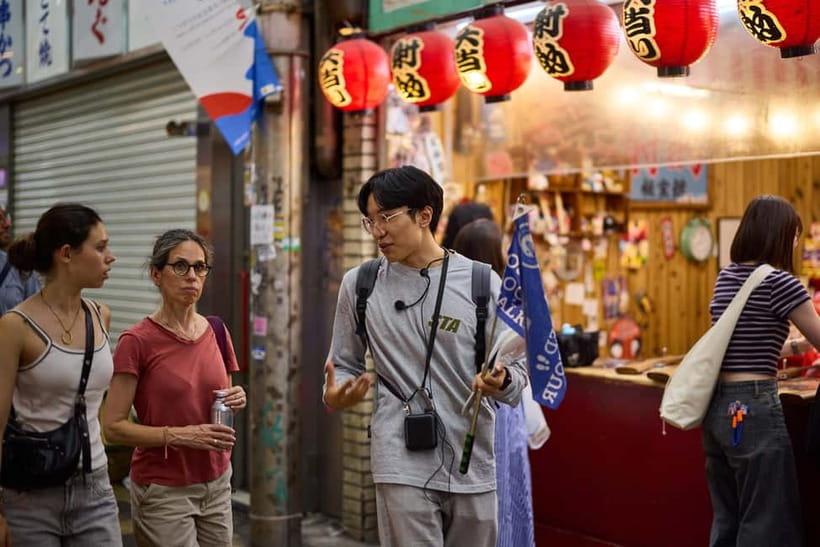
Osaka’s lesser-seen social history comes into focus on this two-hour night walk. You move through Shinsekai, Nishinari, and Tobita Shinchi, places shaped by poverty, day labor, entertainment, and strict local customs. It is not a polished sightseeing stroll. That is exactly the point.
I like the way the tour connects old Osaka with present-day life, rather than treating these districts as museum pieces. I also like the guides’ personal touch. Jay, Rico, and Matt are praised for clear explanations, thoughtful answers, and practical restaurant tips. The main drawback is the subject matter: some sights and discussions can feel confronting, and the tour is not suitable for children under 18.
Key points
- A rare look at Osaka’s working-class districts: Learn how Nishinari developed and how its image is changing.
- Shinsekai after dark: See Tsutenkaku Tower, old eateries, and the retro streets of Jyanjyan Yokocho.
- Tobita Shinchi with context: Visit Osaka’s largest red-light district while discussing its history and tightly controlled customs.
- Strong English-speaking guides: Jay, Rico, and Matt are noted for historical detail, personal stories, and respectful handling of sensitive topics.
- Good value at $25: Two hours of guided walking costs little compared with a private guide or food tour.
- Adults only: Expect direct discussion of poverty, sex work, social class, and other uncomfortable parts of city life.
Why this Osaka walk is different
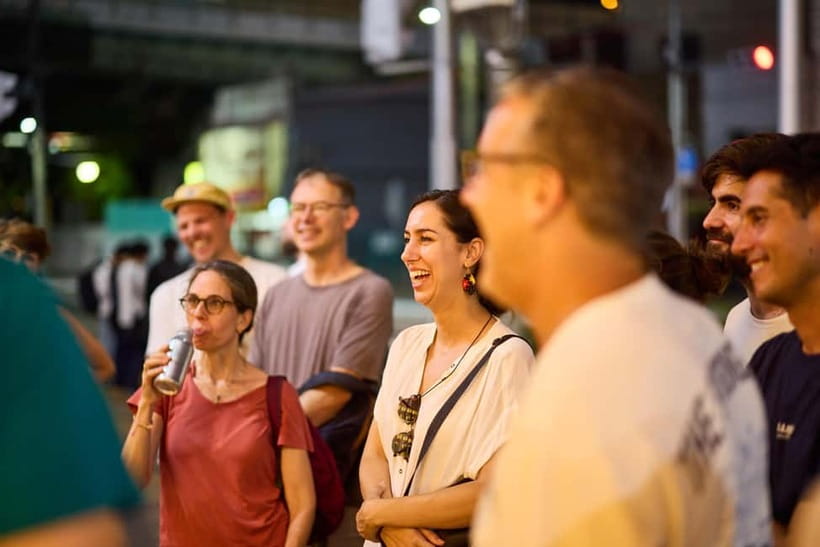
Most first-time visits to Osaka focus on bright signs, shopping arcades, castles, and famous food streets. This tour takes another route. It asks you to look at the city through the lives of people who worked outside the comfortable tourist picture.
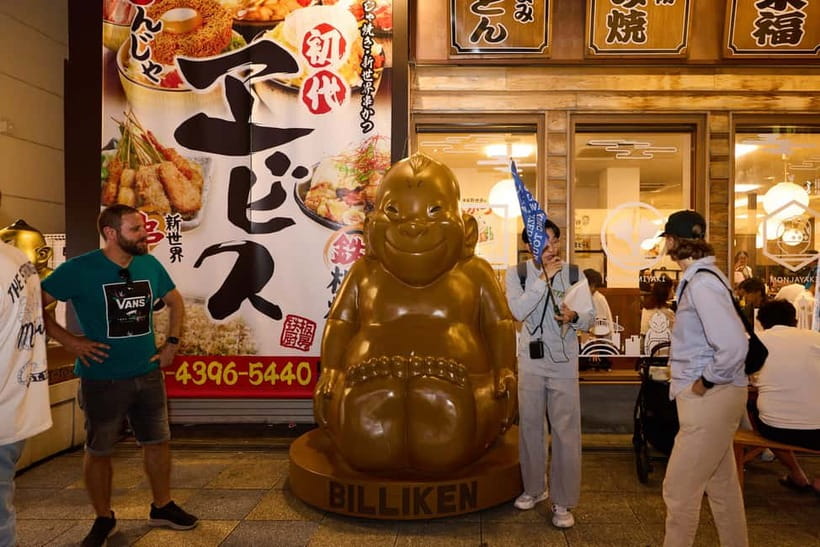
You begin near MEGA Don Quijote Shinsekai, under the giant penguin. The guide carries a GetYourGuide sign, so the meeting point should be easy to identify. From there, the walk moves through districts that are close together but carry very different moods and stories.
The tour does not present Japan as uniformly neat, wealthy, or orderly. You hear about day laborers, working-class neighborhoods, prostitution, changing housing patterns, and the social rules that shape public space. Some of this material is uncomfortable. A good guide matters here, and the strongest part of the experience is the care used to explain difficult subjects without turning local residents into scenery.
The $25 price is modest for a live, two-hour walk. You are paying less for monuments than for interpretation. Without a guide, you could walk through Shinsekai and Tobita Shinchi and miss the meaning behind the streets, signs, buildings, and small local details.
More History Walking Tours in Japan
- Tokyo: Imperial Palace and Shogun Historical Walking Tour
★ 5.0 · 2,251 reviews - Kyoto Gion: 2-Hour Geisha Culture & History Walking Tour
★ 5.0 · 1,186 reviews - Tokyo Castle & Imperial PalaceーShogun Walking Tour
★ 4.7 · 1,068 reviews
Shinsekai and the old dream of a New World
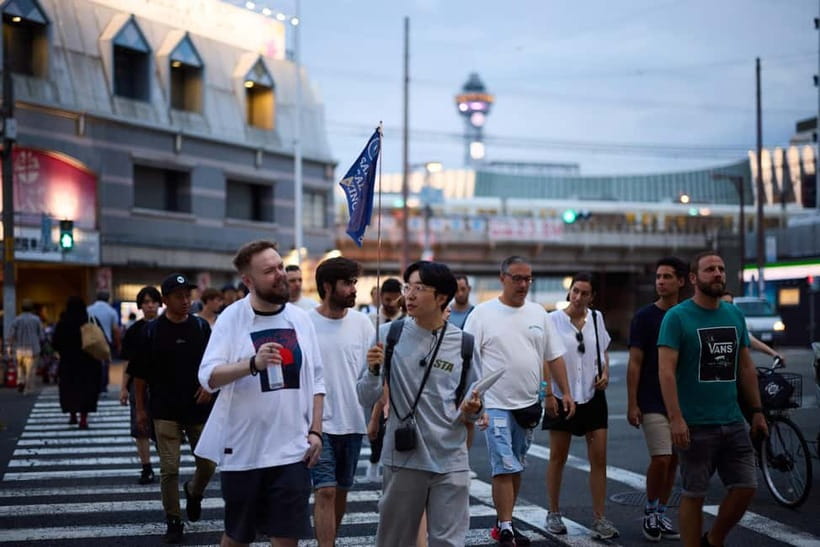
Your first substantial stop is Shinsekai, whose name means New World. The district was created in 1912 as a modern entertainment area influenced by Europe and the United States.
Its southern section was modeled after Paris, while the northern section drew ideas from New York’s Coney Island. That mixture helps explain Shinsekai’s unusual appearance and its long connection with leisure, food, and spectacle. The grand ambitions faded, but the neighborhood kept its distinctive character.
At night, Shinsekai feels theatrical in a way that newer parts of Osaka do not. Tsutenkaku Tower rises above the streets, and old restaurants and signs add to the sense of a place that has changed without completely losing its earlier identity.
I like this opening because it gives you a useful frame for the rest of the walk. Shinsekai is not simply an old entertainment quarter. It shows how Japan borrowed ideas from abroad, adapted them for local life, and then watched those ideas age.
The guide may also point out small signs of local custom that you would probably miss alone. One unusual example concerns a painted torii on a wall, which can signal that people should not urinate there. Details like this make the walk feel grounded in everyday life rather than just formal history.
Nishinari and the working-class side of Osaka
The route continues into Nishinari, a southern Osaka district once strongly associated with day laborers and low-cost accommodation. The area has a rawer feel than the central shopping districts, and its reputation has long been shaped by poverty and social problems.
That reputation is only part of the story. Nishinari also reflects the way cities change. Budget visitors and urban explorers now come here, while older industries and traditional forms of work continue to shape the neighborhood. The tour helps you compare past and present instead of treating Nishinari as a frozen pocket of hardship.
This is one of the places where the guide’s approach matters most. Matt, for example, has been praised for explaining modern Osaka history with respect for the people and circumstances being discussed. That tone is important. A tour of a poorer district can easily become voyeuristic. Here, the better goal is to understand why the area developed as it did and how its image affects the people who live and work there.
Expect direct discussion of class, work, housing, and social attitudes. You may also hear how Osaka differs from other parts of Japan. The tour is not a lecture in a classroom, but it gives you more social context than a standard city walk.
If you have a thin skin about subjects such as prostitution, poverty, or the less pleasant side of urban life, think carefully before booking. The tour is designed to be candid, not sanitized.
Jyanjyan Yokocho and a taste of older Osaka
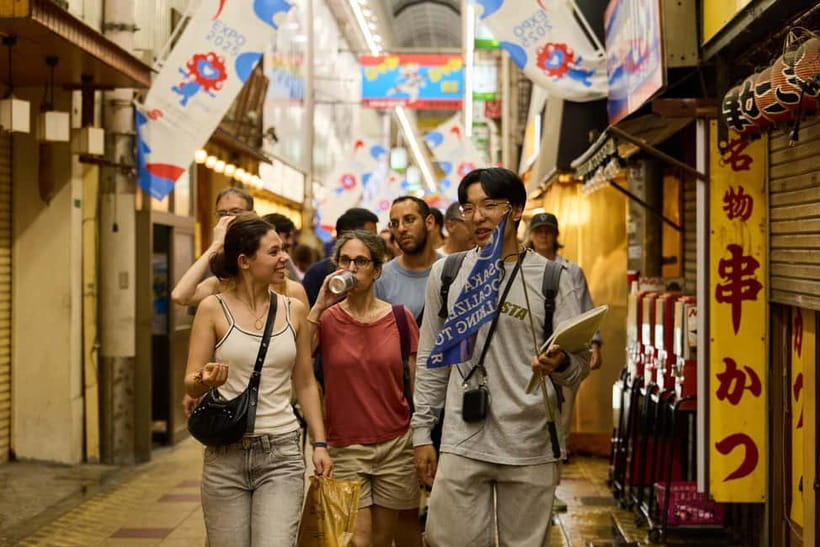
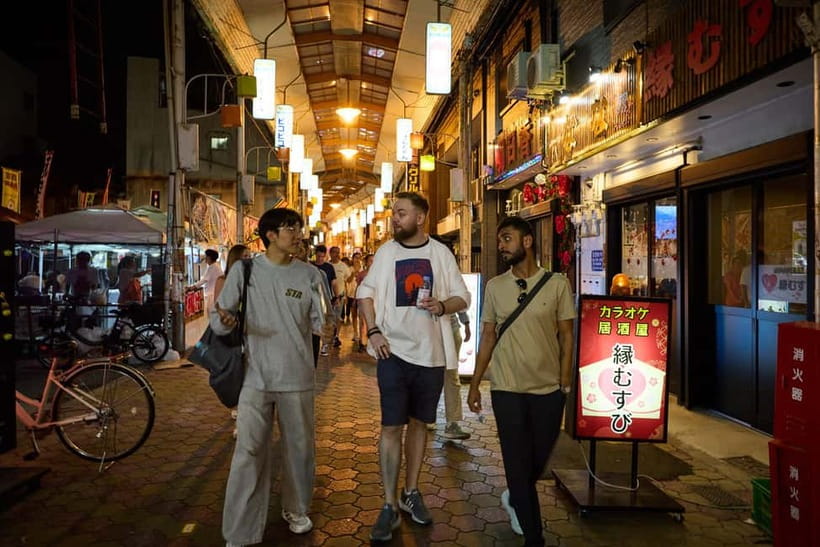
One of the shorter stops is Jyanjyan Yokocho, a narrow shopping and dining street near Tsutenkaku Tower. Its small restaurants, bars, and shops preserve a mid-20th-century feel that contrasts with Osaka’s newer commercial centers.
The name and atmosphere suggest a lane made for wandering slowly, though the tour allows only about 10 minutes here. That is enough for an explanation and a quick look, but not enough for a full meal. If you want to eat, save your appetite for after the walk.
This is also where the tour’s focus on everyday culture becomes clear. Osaka’s story is not only told through temples, castles, and major buildings. It is also found in inexpensive food, narrow lanes, old storefronts, and the habits that keep a neighborhood recognizable over time.
The walk ends at Tsutenkaku, but the guide may share food suggestions near Shinsekai as the evening wraps up. Zara’s experience, for example, included ending in the area and trying local food. Several guides also offer restaurant recommendations, which adds value if you want to continue exploring after the formal tour ends.
More Dark History and Haunted Tours in Japan:
- Savannah History and Haunts Candlelit Ghost Walking Tour
★ 5.0 · 3,235 reviews - Stockholm: Ghost Walk and Historical Tour
★ 4.7 · 2,685 reviews - New Orleans Small-Group Haunted History Carriage Tour
★ 4.5 · 2,289 reviews - New Orleans Haunted History Ghost Tour
★ 4.5 · 2,084 reviews
Tobita Shinchi and a sensitive subject

The most unusual stop is Tobita Shinchi, Osaka’s largest and best-known red-light district. Its history goes back more than a century, and the area is known for a distinctive architectural style and strict regulation.
This is not a place for casual photography or loud behavior. You are entering a working neighborhood, not a theme park. Follow the guide’s instructions, respect privacy, and avoid treating the people and buildings as curiosities.
The value of visiting with a guide is clear here. Tobita Shinchi can be difficult to understand from appearances alone. The guide explains how the district operates within Japanese urban culture and why discretion is so important. The discussion may include sex work, gender, law, social stigma, and the difference between what is visible and what remains private.
Do not expect a salacious experience. The more useful approach is to listen and observe quietly. The district is part of Osaka’s story, but it is also a place where people live and work. That calls for restraint.
The tour’s adults-only rule is sensible. This subject matter is not suitable for young children, and parents should not assume that the material will be softened for a mixed-age group.
Tsutenkaku Tower and the evening finish
The walk finishes at Tsutenkaku Tower, Shinsekai’s most recognizable landmark. The tower gives the district its visual anchor and brings the route back to the area where it began.
Finishing here works well because you end near restaurants, old streets, and the wider Shinsekai area. You can continue on foot, find dinner, or make your way onward through southern Osaka. The tour does not include food or drinks, so plan to eat separately.
The two-hour length is also well judged. It gives the guide enough time to explain the districts and answer questions without turning the night into an exhausting march. Reviews of Jay, Rico, and Matt repeatedly point to their ability to adjust explanations, answer questions, and keep the pace comfortable.
The walk does require comfortable shoes. You should also prepare for changing weather, since the experience takes place outdoors and there is no promise of shelter. Smoking is not allowed, and the activity information notes that alcohol is not permitted in the vehicle, though this is primarily a walking tour.
The guides make or break the experience
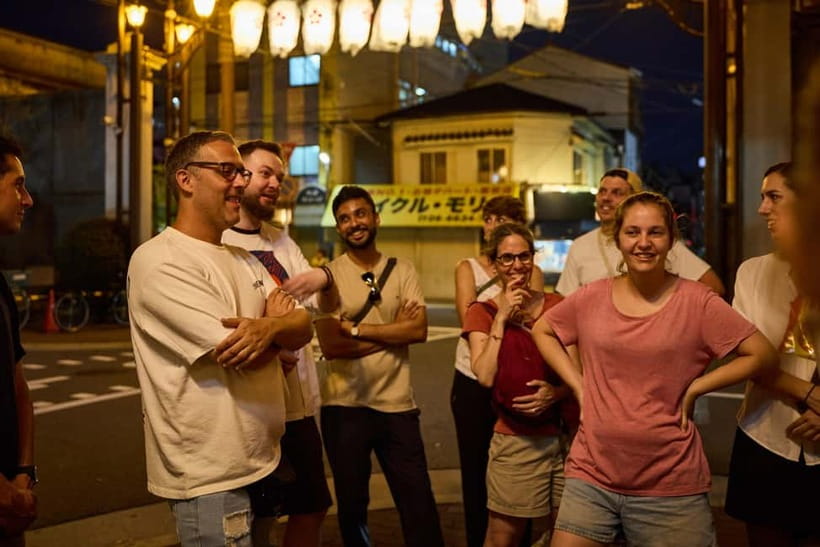
The strongest praise goes to the guides. Jay is described as warm, engaging, friendly, and able to explain social history in a way that holds attention. Rico is praised for detailed explanations, useful Osaka tips, and an ability to adapt when rain affects the evening. Matt is noted for modern historical context and a respectful treatment of difficult subjects.
Those names matter because this is not a route where the buildings alone provide the meaning. A guide who simply points at a red-light district would offer very little. A guide who explains the history, answers questions, and avoids cheap jokes can turn the same streets into a serious and worthwhile lesson.
English is the only listed tour language. One practical caution comes from the pace of spoken English. Matt, in particular, has been described as speaking quickly. If you are not comfortable following fast English, ask for clarification when needed. The tour is conversational, so questions are part of the experience.
Small groups can make a big difference. One account describes a group of six, which allowed plenty of questions and a more personal exchange. The exact group size is not guaranteed, so do not book on the assumption that every departure will be this small.
Who should book this walk
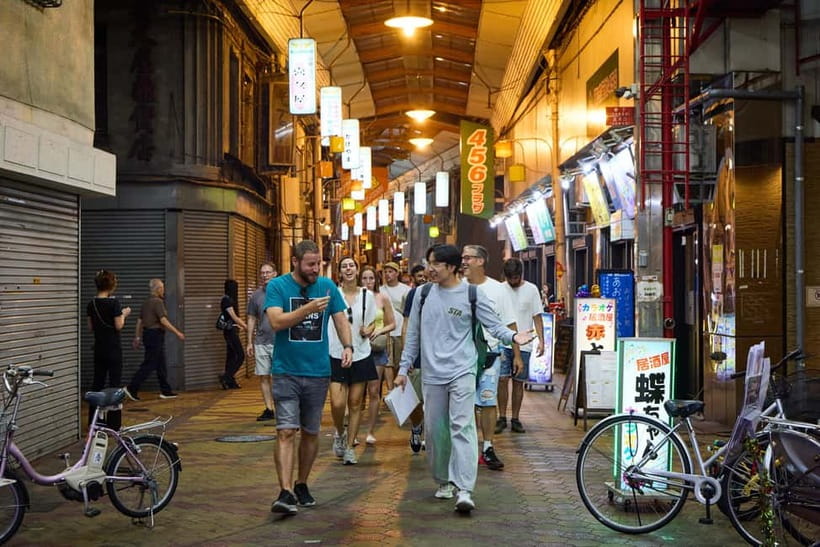
I would recommend this tour to adults who have already seen Osaka’s main attractions and want social context. It also suits repeat visitors, photographers who prefer street scenes to postcard views, and anyone interested in how cities handle poverty, entertainment, class, and public reputation.
You do not need specialist knowledge. The guides explain the background as you walk, and the material is presented in a practical way. Still, you should arrive with an open mind and a willingness to listen rather than judge.
This is less suitable for children, wheelchair users, or anyone looking for a light evening stroll. The route includes districts with uneven urban conditions, sensitive subjects, and active nightlife. The supplied information specifically says it is not suitable for wheelchair users or children under 18.
At $25 per person, the price is especially fair if you use the guide’s advice after the tour. A self-guided walk through Shinsekai costs nothing, but you would lose the historical links and local explanations. A private guide would offer more flexibility, but at a far higher cost.
Practical details before you go
Meet under the giant penguin outside MEGA Don Quijote Shinsekai. Look for the guide holding a GetYourGuide sign.
The activity lasts two hours and has English-speaking guides. Hotel pickup and drop-off are not included, and neither are food or drinks. Wear shoes you can walk in for the full route, and bring protection from rain or other weather.
You can cancel up to 24 hours before the start for a full refund. The reserve-now, pay-later option lets you hold a place without paying immediately, which is useful when your Osaka schedule is still shifting.
The walk finishes at Tsutenkaku Tower. Since the ending is in Shinsekai, you can easily continue with dinner or further sightseeing, but those costs are separate.
Should you book the Dark Side of Osaka walk?
Book it if you want context rather than a checklist of sights. The route shows you Shinsekai’s old entertainment culture, Nishinari’s working-class past, Jyanjyan Yokocho’s everyday atmosphere, and Tobita Shinchi’s guarded world.
Skip it if you want a cheerful food walk or a gentle introduction to Osaka for young children. This experience deals plainly with difficult subjects, and some parts may feel uncomfortable.
For adults who want to understand the city beyond Dotonbori’s lights, the tour offers strong value. At $25, with a two-hour route and guides such as Jay, Rico, and Matt, it gives you a thoughtful look at an Osaka that most visitors pass by.
FAQ
Where does the Osaka Dark Side night walk begin?
It begins under the giant penguin at MEGA Don Quijote Shinsekai. The guide will be holding a GetYourGuide sign.
Where does the tour finish?
The walk finishes at Tsutenkaku Tower in the Shinsekai area.
How long does the tour last?
The tour lasts two hours.
What language is the tour conducted in?
The tour is conducted in English with a live English-speaking guide.
How much does the tour cost?
The listed price is $25 per person.
Are food and drinks included?
No. Food and drinks are not included, so plan to purchase them separately.
Is the tour suitable for children?
No. The activity is not suitable for children under 18.
Is the tour suitable for wheelchair users?
No. The activity is listed as unsuitable for wheelchair users.
Newest history tours we have reviewed in Japan
- [30 minutes] Rickshaw tour around Asakusa [History, sightseeing, Tokyo Skytree]★ 5.0 · 38 reviews
- Tokyo: Asakusa & Sensoji ー Oldest Temple Walking Tour (2hrs)★ 5.0 · 213 reviews
- Private sake pairing@ancient underground★ 5.0 · 27 reviews
- Private Tour Through the Tokyo National Museum & Ukiyo-e★ 4.7 · 17 reviews
- Tokyo: Customized Private Historical Guided Photoshoot Tour★ 5.0 · 25 reviews
- Tokyo: Imperial Palace, the history of Japan (ENGLISH GUIDE)★ 5.0 · 77 reviews
- Tokyo: Edo Castle & East Garden of the Imperial Palace Tour★ 4.7 · 112 reviews
- (Ticket Included) Explore Osaka Castle & Museum of History★ 4.8 · 21 reviews
Dark History & Haunted Tours, compared.
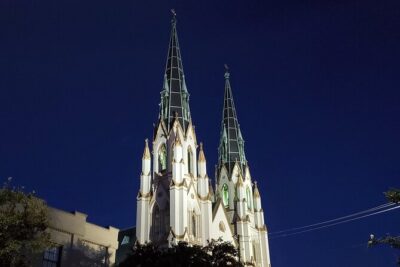
Savannah History and Haunts Candlelit Ghost Walking Tour
Read our review →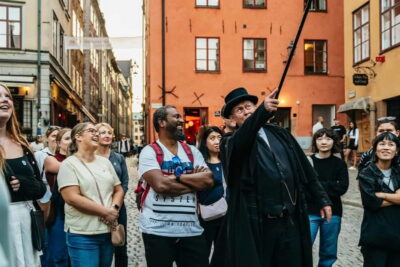
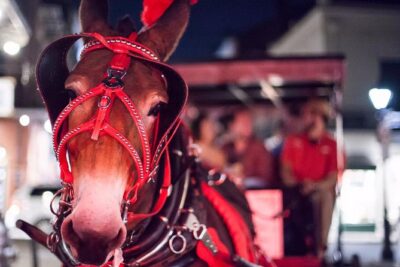
New Orleans Small-Group Haunted History Carriage Tour
Read our review →
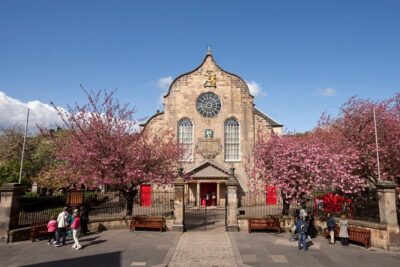
Genteel and Bard’s Savannah Dark History and Ghost Encounter Walking Tour
Read our review →
Shadows of York: Ghost Walk and Horrible History.
Read our review →Browse the lists this tour appears in