
Review · MEXICO CITY HISTORY TOURS
Ciudad de Mexico: Historia y vida moderna en la capital
Mexico City’s historic center is a lesson in layers: Aztec temples sit beneath Spanish churches, grand palaces share streets with juice stands, and modern city life carries on around it all. I like that this tour puts those layers together instead of treating each building as an isolated photo stop. I also like the small group size and the mid-tour taste of local food, which gives you a useful break after several hours on foot.
Martin leads many departures, with Regina covering when needed. Both bring background in art, history, and anthropology. The main consideration is pace: you cover a lot in 3.5 hours, and some museum admissions or extra food purchases cost more. Wear proper walking shoes and expect the center’s streets to be part of the experience.
Key points to know before you book
- The tour begins near the Museo de la Ciudad de México, in the square in front of the museum.
- You visit both Aztec remains and colonial landmarks, including Templo Mayor and the Metropolitan Cathedral.
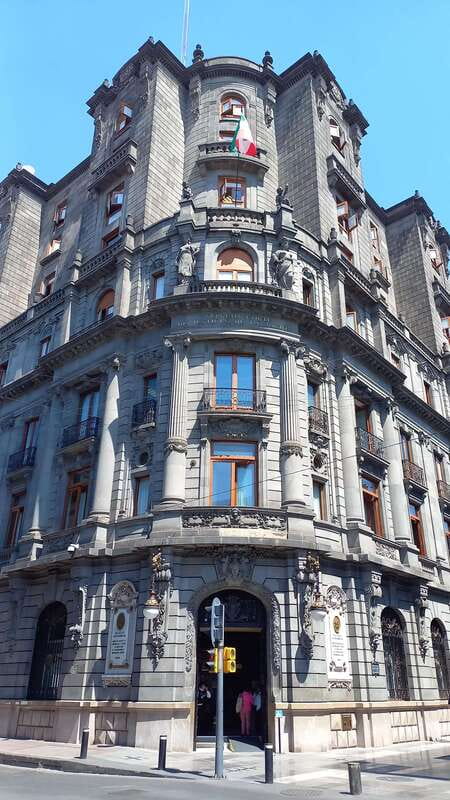
- The route includes major architectural stops, from the Postal Palace and Casa de los Azulejos to the Palace of Fine Arts.
- A traditional fresh juice or Mexican snack is included, while additional food is your responsibility.
- The group is limited to 10 people, making it easier to ask questions and stay connected to the guide.
- You walk for most of the 3.5 hours, with short guided visits, photo stops, and one 30-minute refreshment break.
Why this is a smart first-day introduction to Mexico City
I would put this tour near the start of a Mexico City stay because it gives you a working map of the Centro Histórico. You will see the key sights, learn how the neighborhood developed, and get suggestions for places to eat and shop during the rest of your visit.
The route is not only about famous buildings. It connects the pre-Hispanic city of Tenochtitlan with the colonial capital built afterward, then links both to present-day Mexico City. That connection matters. Without it, Templo Mayor can seem like an archaeological site beside a cathedral, rather than part of the same long story.
Martin is the guide most often associated with the experience. He explains Mexican art, history, culture, and the forces that continue to shape the capital. Regina may lead the tour when Martin is unavailable. The guiding style appears flexible, with room for questions and adjustments when the group has a special interest.
You should expect an active walk rather than a bus tour. The longest pauses are generally 20 to 30 minutes, while several stops last only 10 to 15 minutes. That gives you a broad introduction, but not enough time for detailed museum visits.
More History Tours in Mexico:
- Historic Downtown Walking Tour
★ 5.0 · 1,289 reviews - Historic Center Food Tour in Mexico City
★ 5.0 · 1,263 reviews - Mexico City: Historic Downtown Walking Tour
★ 4.8 · 1,039 reviews
Starting at Pino Suárez and the Hospital de Jesús
The meeting point is the square in front of the Museo de la Ciudad de México, at Rcda. de Jesús 548. Confirm the exact starting time when you book, since several departure times may be available.
The first major stop is the Hospital de Jesús Nazareno, where the guided visit lasts about 20 minutes. It is an important early choice because it takes you away from the most obvious postcard sights and into one of the oldest parts of the city.
The tour uses the streets around Pino Suárez to explain how the neighborhood changed from the pre-Hispanic period through the colonial era and into modern life. This early context helps you read the streets as more than a collection of old facades.
You also visit the Museo de la Ciudad de México for about 10 minutes. This is a short introduction rather than a full museum session, so you should not book the tour expecting time to inspect every gallery. Its value is in setting up the city’s story before you reach the main plazas.
Zócalo and the Metropolitan Cathedral
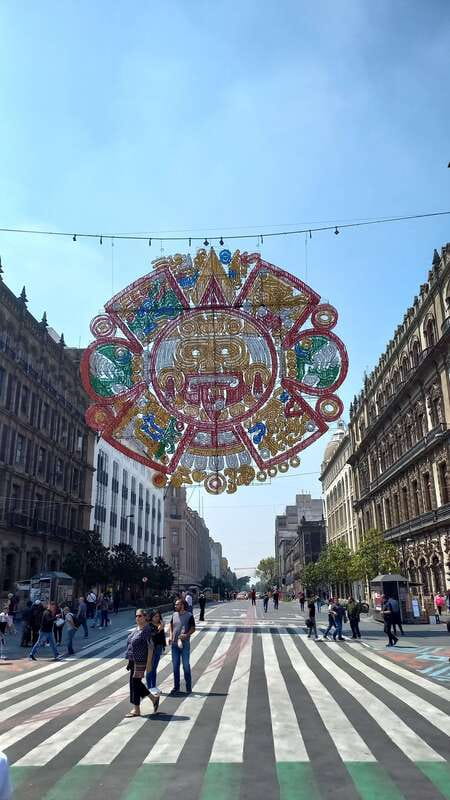
After about 10 minutes on foot, you reach the Zócalo, Mexico City’s main central square. The guided visit lasts around 30 minutes and includes time for photographs.
This is where the scale of the capital becomes clear. The square brings together government, religion, history, and everyday public life. Your guide explains the role of the area from earlier times to the present, helping you understand why so many major buildings face this space.
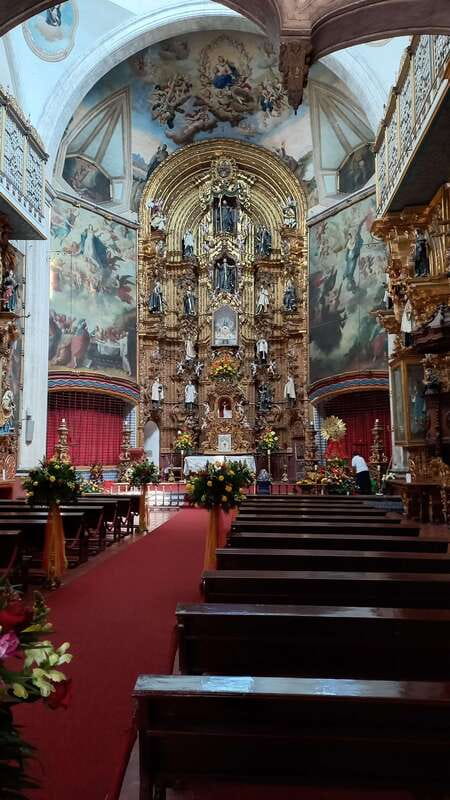
The Metropolitan Cathedral receives another 30 minutes. You get a guided visit and time for photographs, so you can look at the building rather than merely pass it on the sidewalk. The cathedral is one of the clearest examples of how Spanish colonial power was expressed through architecture in the former Aztec capital.
I like the pairing of the Zócalo and cathedral because it gives you a direct visual lesson. The square explains the city’s public center, while the cathedral shows the religious and political changes imposed after the Spanish conquest. Your guide can also point out how architecture, art, and history overlap.
The tradeoff is that 30 minutes is enough for orientation, not a detailed study of every chapel or artwork. If the cathedral becomes a personal priority, plan to return on your own.
Santo Domingo and Templo Mayor
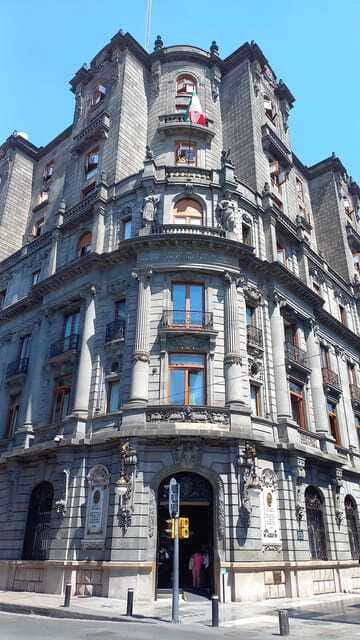
A 15-minute walk takes you toward Plaza de Santo Domingo, where the group spends about 20 minutes. This plaza is less overwhelming than the Zócalo, and its buildings give you another view of central Mexico City’s colonial character.
The stop also helps break up the large monuments. You are not simply moving from one famous attraction to the next. Instead, you get a sense of how plazas, streets, churches, and public buildings fit together as a working neighborhood.
The most important historical stop is Templo Mayor de México-Tenochtitlan. The visit lasts about 20 minutes and includes a photo stop and guided explanation. Here, you learn about the Aztec center that once occupied this area and how its remains relate to the modern city above and around it.
Templo Mayor is especially valuable with a guide. Archaeological remains can be hard to interpret when you see them without context. The explanation connects the ruins to the streets, cathedral, and colonial buildings you have already seen.
Keep your expectations practical. This is not a full museum visit, and the schedule does not offer a long archaeological-site session. You get the historical framework and a look at the remains, then continue walking. If you want more time with the museum collections or the site itself, you will need another visit.
Same streets, a different century:
- Walking Tour of the Historic Center of Mexico City
★ 5.0 · 870 reviews - Mexico City Historical Centre Food Tour with 7 Authentic Tastings
★ 5.0 · 723 reviews - Historical and Cultural Walking Tour of San Miguel de Allende
★ 5.0 · 641 reviews - Historical and Cultural Walking Tour of San José del Cabo
★ 5.0 · 576 reviews
A 30-minute food break at Plaza Manuel Tolsá
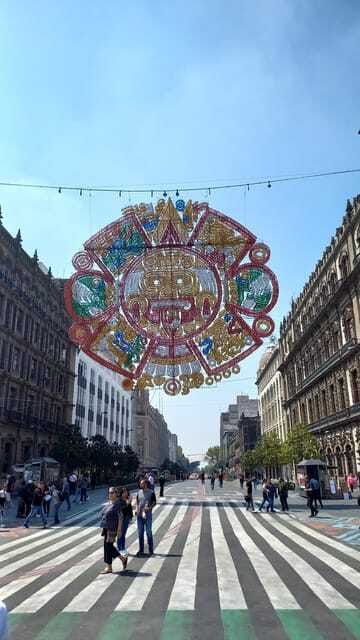
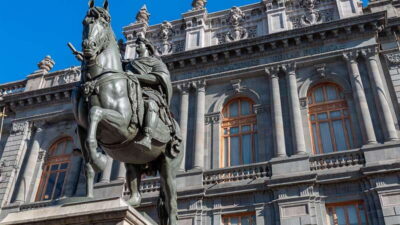
After another 15-minute walk, you stop at Plaza Manuel Tolsá for about half an hour. This is the planned rest point and includes a food tasting.
The included offering is either a traditional fresh juice or a taste of a typical Mexican snack. That may sound like a small detail, but it matters on a walking tour. You have time to sit or pause, take in the plaza, and ask questions without trying to keep up with the group.
The food stop also widens the tour beyond architecture. Mexico City is not only churches and palaces, and a local flavor gives you a quick connection to daily life. If you want more food or a full meal, bring extra money. Additional purchases are not included.
The timing is useful, but do not treat it as a guaranteed lunch. A 30-minute tasting break is enough for refreshment, not a long restaurant meal. I recommend carrying water as well, since the tour itself advises it and the walking route can feel demanding.
Casa de los Azulejos and the final palaces
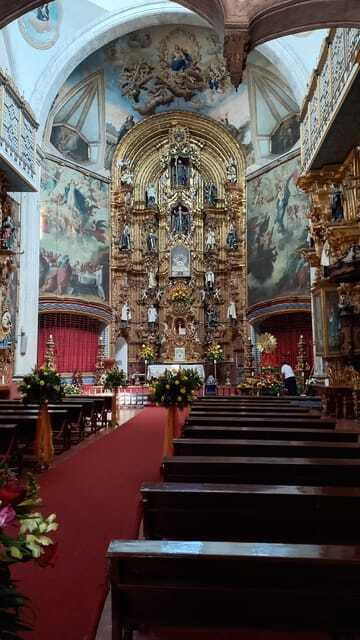
The route continues with a 10-minute walk to Casa de los Azulejos, or the House of Tiles. You spend about 10 minutes here with a guided visit and photographs.
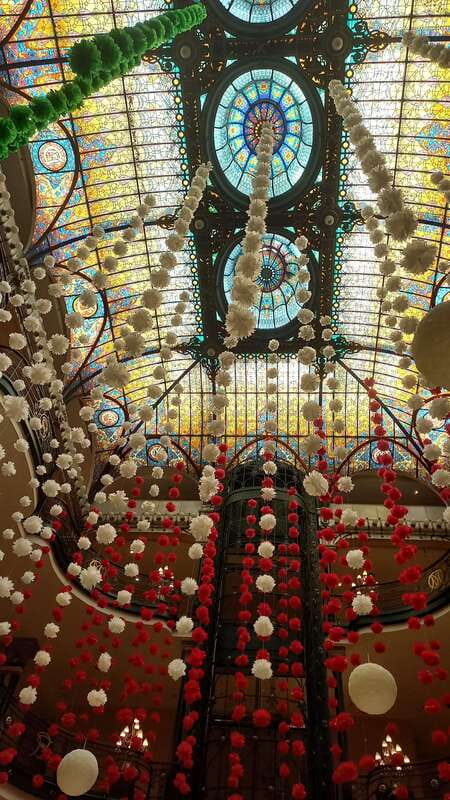
The building is a memorable change of mood after the archaeological and religious sites. Its tiled exterior gives you a chance to focus on decorative design and the way historic buildings remain part of the city’s everyday streets. This is a short stop, so think of it as an architectural introduction rather than a full interior tour.
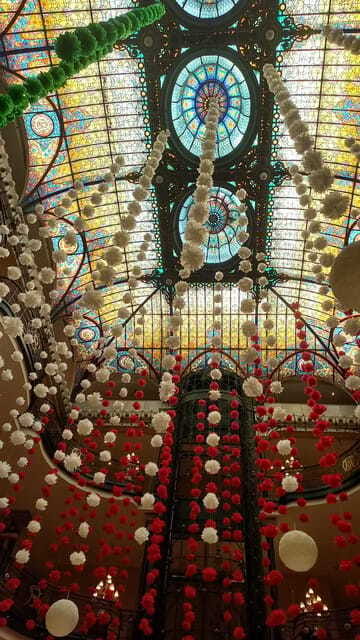
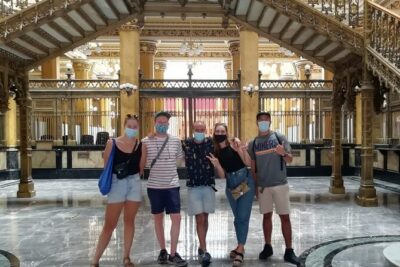
You then walk for about 10 minutes toward the Palacio de Correos de México, the Postal Palace. The guided visit and photo stop take around 15 minutes. This building is known for its elaborate interior and exterior detail, making it one of the route’s best stops for architecture.
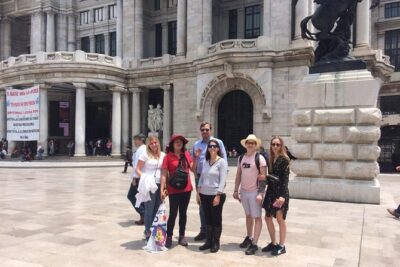
The final major stop is the Palace of Fine Arts, with another 15-minute guided visit and photo stop. Its role in Mexico City’s cultural life makes it a fitting end to the architectural portion of the tour. You have already seen Aztec remains, colonial religious buildings, civic spaces, and grand public architecture. Bellas Artes completes that progression with art and performance at the center.
Again, the schedule favors coverage over long visits. You will see and understand several important buildings, but you will not have time to explore each one in depth. That is a fair exchange for a first-day orientation tour, especially if you plan to return to Bellas Artes or another museum later.
What the walking route feels like
The route includes walks of 5, 10, and 15 minutes between stops. None of those individual stretches is especially long, but they add up across 3.5 hours. You should wear comfortable shoes, bring water, and check the weather before leaving.
The tour is listed as wheelchair accessible, which is useful information for planning. Still, a route through a historic city center can involve busy streets, plazas, and older buildings, so you may want to confirm any specific mobility needs before booking.
There is no transport between the stops. That is part of the appeal. You see how close the major sights are, notice ordinary street activity, and get a better sense of the neighborhood than you would from a vehicle.
A small group capped at 10 people is another practical advantage. You can hear the guide more easily, ask about a building that catches your eye, and avoid the detached feeling of a large procession. It also means the experience may feel more personal, but it does not guarantee a private tour.
How the guides shape the experience
Martin receives especially strong praise for explaining Mexican art, history, and culture in a friendly way. His approach covers both earlier periods and present-day influences, which is important in a city that is still changing.
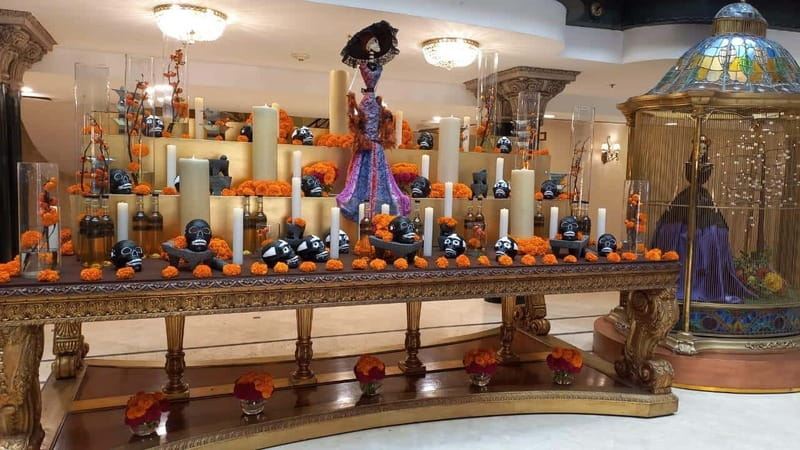
You may instead have Regina. Her tour can include Aztec history and Día de los Muertos, and she has shown flexibility about following the group’s interests. One small-group departure even included extra stops connected with a film location and time for coffee and enchiladas. That kind of adjustment should be treated as a possible bonus, not a promised part of every departure.
The guides’ backgrounds in art, history, and anthropology support the tour’s wide scope. You can ask about buildings, food, historical events, or modern city life without the experience being limited to one subject.
The main strength is breadth with a human guide. The main limitation is that the same breadth leaves little time for slow looking. If you want one museum explained room by room, book a specialist visit instead.
Is $37 a fair price?
At $37 per person, the value is strong if you want a guided introduction to the historic center. The fee covers 3.5 hours, a small group, a guide, visits to churches and historical buildings, and a traditional juice or Mexican snack.
You are also paying for connections between the sights. A map can show you that the cathedral, Templo Mayor, Casa de los Azulejos, and Bellas Artes are all in the same central area. A good guide explains why those places belong in one story.
The price does not cover every museum admission or extra food. That is important if you plan to spend more time inside museums. Treat the tour as an orientation with selected visits, not as an all-inclusive museum pass.
I consider it particularly good value for a first day, solo visitors, couples, and anyone who wants a clear introduction before exploring alone. It is less useful for someone who has already spent several days studying the historic center and wants a specialist-level tour of one site.
Booking details worth keeping in mind
The tour lasts 3.5 hours and is offered in English and Spanish. You can reserve without paying immediately, which helps if your Mexico City schedule is still changing.
Free cancellation is available up to 24 hours before the activity for a full refund. Check the weather before you go, wear comfortable shoes, and bring a water bottle.
Alcohol and drugs are not allowed, and bare feet are not appropriate for the experience. Those rules are simple, but the more important practical point is to arrive ready for steady walking and short outdoor stops.
Should you book this Mexico City history tour?
Book it if you want to understand the historic center quickly, especially at the beginning of your stay. The mix of Templo Mayor, the cathedral, colonial plazas, grand palaces, and a local refreshment gives you a useful first look at Mexico City from several angles.
I would choose it for a curious first-time visitor who values context more than long museum visits. Martin’s clear explanations and Regina’s flexible style add personal value, while the 10-person limit keeps the outing manageable.
Skip it if you prefer a slow, single-site tour or dislike walking between many short stops. For everyone else, $37 is a reasonable price for a well-planned introduction to the city’s oldest center, with enough food, architecture, and history to help you make better choices for the rest of your stay.
FAQ
Where does the tour meet?
The meeting point is in the square in front of the Museo de la Ciudad de México, at Rcda. de Jesús 548.
How long does the experience last?
The tour lasts 3.5 hours.
Which languages are available?
The live guide speaks English or Spanish.
What major sights are included?
The route includes the Hospital de Jesús Nazareno, Museo de la Ciudad de México, Zócalo, Metropolitan Cathedral, Plaza de Santo Domingo, Templo Mayor, Plaza Manuel Tolsá, Casa de los Azulejos, Palacio de Correos de México, and the Palace of Fine Arts.
Is food included?
The experience includes a traditional fresh juice or a taste of a typical Mexican snack. Extra food and drinks are not included.
What should I bring?
Bring comfortable shoes and water. It is also useful to check the weather before the tour.
Newest history tours we have reviewed in Mexico
- Private Half Day Cultural Tour to Mayan Ruins and Cenote★ 4.5 · 31 reviews
- Otoch Mayan Experience Tour: Cultural & Historical Adventure★ 3.5 · 18 reviews
- Experience Cozumel Historical Center Mayan and Beach Experience★ 5.0 · 20 reviews
- Colima Volcano Cultural Tour: Coffee Plantation, Hacienda and Comala Magic Town★ 5.0 · 30 reviews
- Private Tour in Chichen Itza Official History Guide★ 5.0 · 36 reviews
- 5 Days Mayan Heritage History Tour★ 4.5 · 31 reviews
- Calakmul Ancient Maya City Tour – From Campeche★ 4.5 · 24 reviews
- Calakmul Ancient Maya City Tour From Xpujil★ 4.5 · 38 reviews
Mexico City History Tours, compared.


Mexico City Historical Centre Food Tour with 7 Authentic Tastings
Read our review →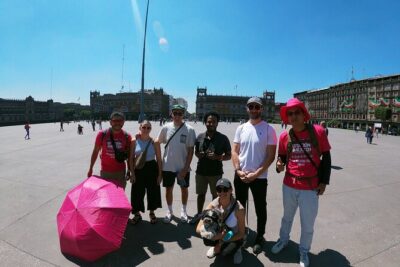
Walking Tour in Mexico City for Exploring their Cultural Heritage
Read our review →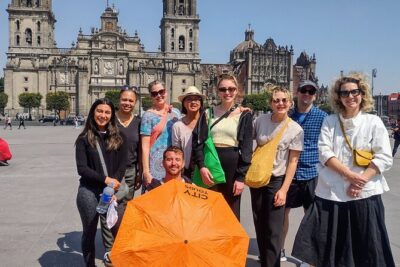
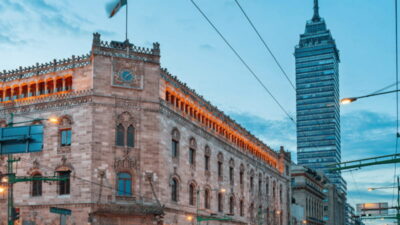
Guided walking tour through the most historic parts of the city.
Read our review →Browse the lists this tour appears in