Review · MOROCCO HISTORY TOURS
Marrakech: Guided Medina History & Culture Tour
Marrakech’s medina makes far more sense when someone explains what you are seeing. This four-hour walk links the Koutoubia Mosque, Jewish quarter, Bahia Palace, Ben Youssef Medersa, working souks, and Jemaa el-Fnaa, with the best moments often found between the famous sights. I especially like the mix of grand architecture and ordinary neighborhood life.
I also like that skip-the-line entry is included at Bahia Palace and Ben Youssef Medersa, two places where waiting can eat into a short visit. Guides such as Youssef have earned praise for clear English, strong local knowledge, useful shopping advice, and a willingness to spend extra time when the group needs it. The drawback is simple: four hours on foot through crowded lanes can be tiring, and the $65 price may feel high if you mainly want a quick look at the monuments.
Key points at a glance
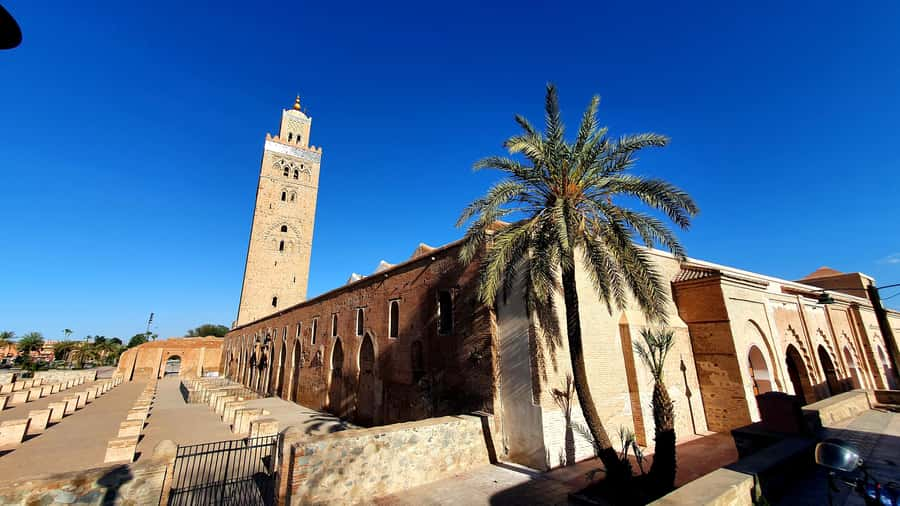
- Start beneath the Koutoubia Mosque: Meet beside the little white Kubba Fatima Zohra mausoleum on Mohamed V Boulevard.
- Two major sights with priority entry: Bahia Palace and Ben Youssef Medersa each receive about 45 minutes of guided attention.
- See the medina beyond the postcard route: The walk passes through residential lanes, a produce market, the Mellah, and craft areas where work continues at street level.
- A guide-led introduction to shopping: You’ll pass leather, wood, silver, bronze, copper, spice, and textile stalls, with time to look and buy.
- Finish at Jemaa el-Fnaa: The tour ends at Marrakech’s famous square, with street performers, games, and a traditional dance show noted in the schedule.
- Best for first-day orientation: The route helps you learn the old city’s layout before exploring it on your own.
Why this walking tour works in Marrakech
Marrakech is not hard to see, but it can be hard to understand. The medina is a tight web of lanes, alleys, market streets, courtyards, workshops, and residential corners. A self-guided walk may take you past beautiful doors and busy stalls without explaining who built them, why the streets developed as they did, or how the different trades fit together.
This tour gives you a four-hour framework. You begin with early Marrakech near the Koutoubia Mosque, move through the Mellah and Bahia Palace, then cross into the northern medina for Ben Youssef Medersa and the souks. That route gives you both royal architecture and daily life.
I like the balance. Many city tours focus only on monuments, while this one spends time in places where people shop, work, and live. The stop at the fresh produce market is brief, but it helps connect the old city to ordinary routines. The residential sections are also important. They show that the medina is not simply an open-air shopping district built for visitors.
The guide matters a great deal here. Several bookings identify Youssef, or Yousef, as the guide, and he is praised for explaining Moroccan history in clear English, answering questions, taking photographs, and sharing practical advice about where to shop. If Youssef is available, requesting him may be worthwhile, though guide assignment should be confirmed when you book.
More Local Culture and Traditions Tours in Morocco
- Marrakech Historical and Cultural Tour – Half Day City Tour
★ 4.5 · 1,180 reviews - Casablanca Cultural Tour: Medina, Views & Local Delights
★ 4.6 · 126 reviews - Private Cultural Tour in Marrakech City
★ 5.0 · 77 reviews
Meeting beneath the Koutoubia Mosque
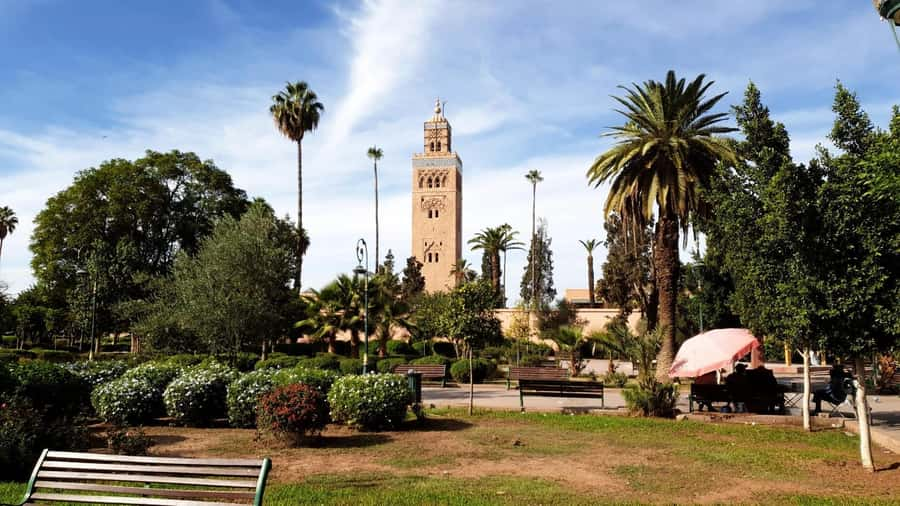
The meeting point is the small white mausoleum called Kubba Fatima Zohra, at the foot of the Koutoubia Mosque tower on Mohamed V Boulevard. Your guide should be wearing an official badge with a blue ribbon.
This is a useful meeting place because the Koutoubia is one of the easiest landmarks to identify in central Marrakech. Still, give yourself time to find the mausoleum rather than simply aiming for the mosque. Look for the little white dome at ground level, not the tall minaret.
The tour begins with a safety briefing and a walk around the Koutoubia gardens. You will see the mosque from outside, learn about the early development of Marrakech, and view the city’s first road and entrance gate. The mosque itself is not an interior stop, so dress and expectations should match an exterior visit.
The opening section is short, about 15 minutes, but it gives you a useful map in your head. The Koutoubia marks the edge of several major parts of the city, and understanding its position makes the rest of the walk easier to follow.
The Mellah and Marrakech’s Jewish heritage
After about ten minutes on foot, the route reaches the Mellah, Marrakech’s historic Jewish quarter. Here the guide explains Morocco’s Jewish heritage and points out how this part of the old city fits into Marrakech’s past.
The stop also includes a busy fresh produce market. This is not a polished attraction, which is exactly why it is useful. You’ll see the practical side of food shopping, with local goods moving through a market used for daily needs rather than sightseeing alone.
The Mellah visit lasts about 15 minutes, so it is an introduction rather than a long historical study. If this subject matters deeply to you, ask questions while you are there. The schedule moves on quickly, and the guide is your best source of context.
Bahia Palace: courtyards, tile, and royal display
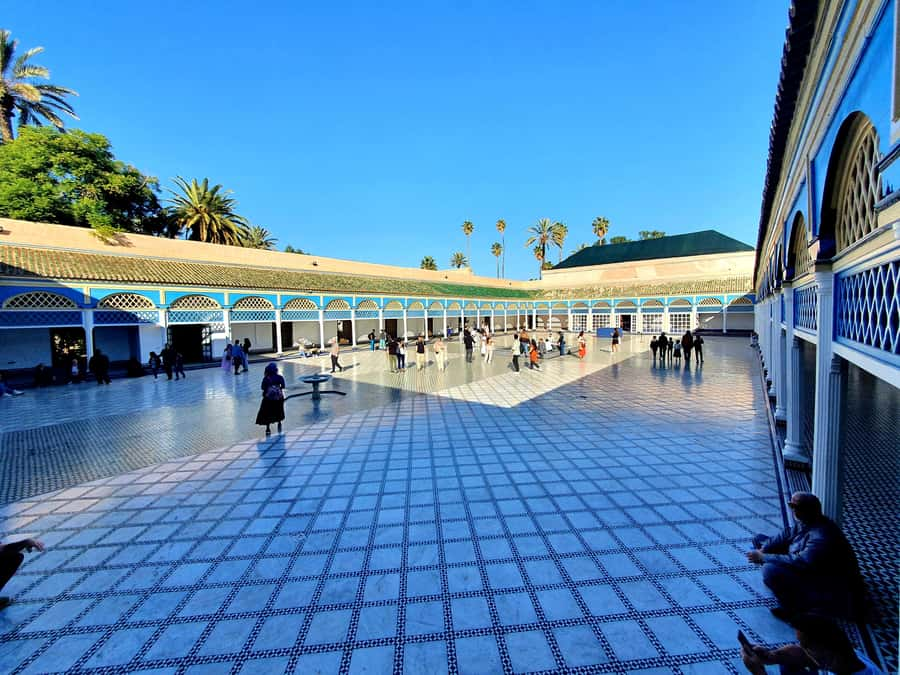
Bahia Palace receives about 45 minutes, including guided sightseeing, photographs, and some break time. Skip-the-line entry is included, which is a real benefit when the entrance is busy. You can spend your time looking at the building instead of sorting out tickets at the gate.
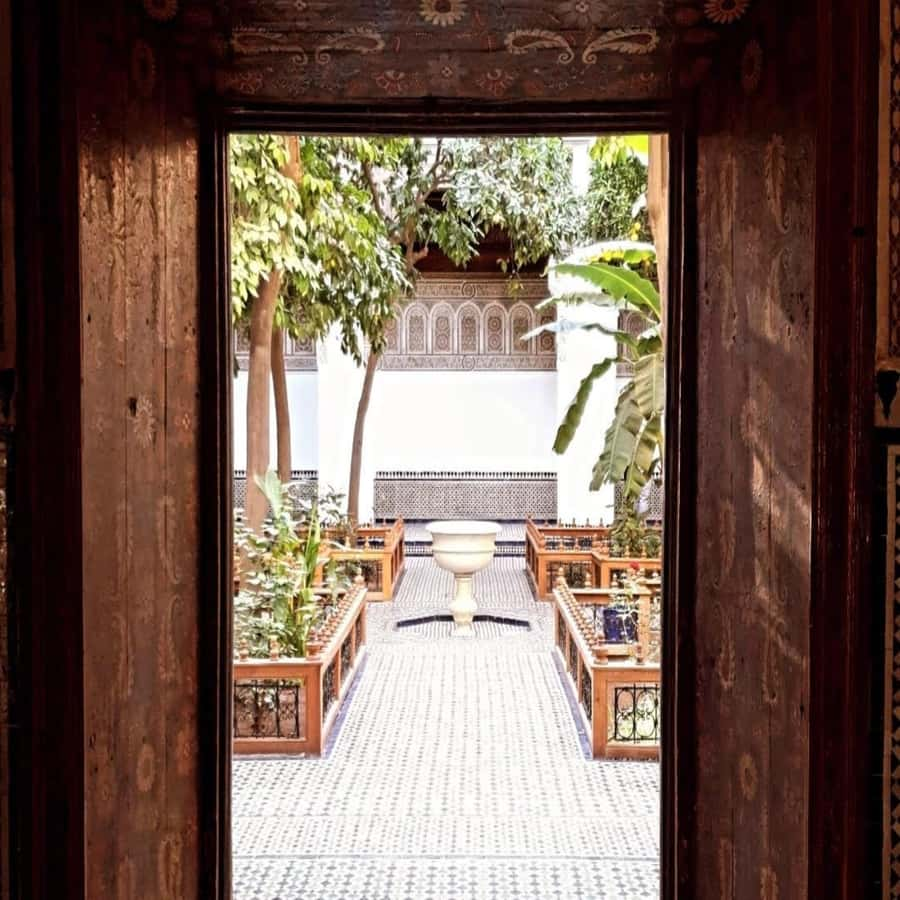
The palace is arranged around a series of Andalusian-style riads, gardens, patios, fountains, reception rooms, and passageways. The layout feels less like one grand block and more like a sequence of carefully framed spaces. The route through it is part of the appeal.
Look closely at the decoration. You’ll see geometric zellij mosaics, carved stucco with Arabic inscriptions, cedar ceilings, and gates covered with arabesque designs. These details reward a slower pace, and a guide can point out features that are easy to miss when you are busy taking photographs.
I would not expect a quiet, private palace experience. Bahia Palace is one of Marrakech’s main sights, and the rooms and courtyards can feel crowded. The guided visit helps because you have a clear route and someone to explain the patterns, materials, and purpose of the spaces.
The 45-minute allocation is sensible for a first visit. It gives you enough time to understand the palace without turning the tour into an architectural lecture. If you want long periods for photography, you may need to move efficiently.
More Old Town and Historic Centre Walks in Morocco
- Marrakech: Saadian Tombs & Bahia Palace, Medina Guided Tour
★ 4.6 · 1,989 reviews - Fez: Guided Walking Tour of the Historic Medina
★ 5.0 · 359 reviews - Fes: A Guided Walking Tour Through the Historic Medina
★ 4.4 · 97 reviews - Discover the secrets of the Medina of Fez: guided cultural tour (private)
★ 5.0 · 68 reviews
Residential lanes beyond the main attractions
After Bahia Palace, the route heads on foot toward Ben Youssef Medersa, with about 20 minutes spent crossing the old city. This is where the tour becomes more than a monument checklist.
You pass through typical residential neighborhoods and see areas far from the most visited streets. The guide explains local routines and points out where people live and do their everyday shopping. I value this part because it puts the palace in context. Marrakech is not just courtyards, carpets, and dramatic market scenes. It is also apartment doors, narrow passages, neighborhood commerce, and people moving through their normal day.
The lanes can be uneven and crowded. Wear comfortable shoes, as requested by the operator, and expect to walk at a steady pace. This experience is not suitable for wheelchair users, and anyone with limited mobility should consider the route carefully.
Ben Youssef Medersa and traditional education
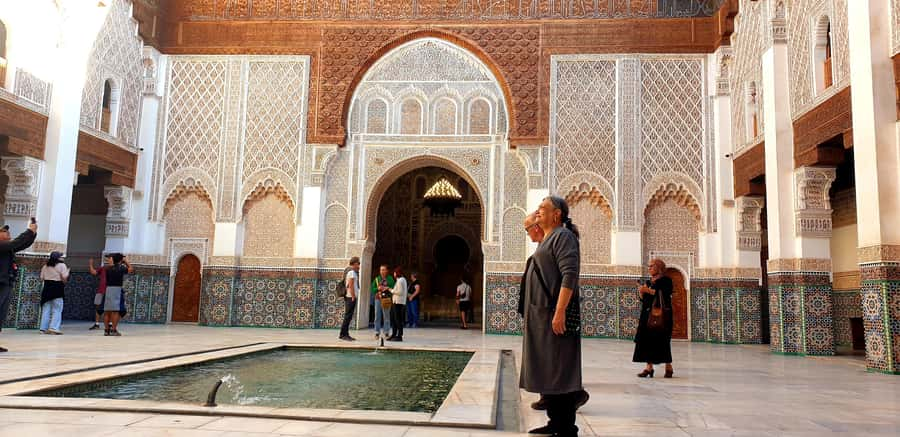
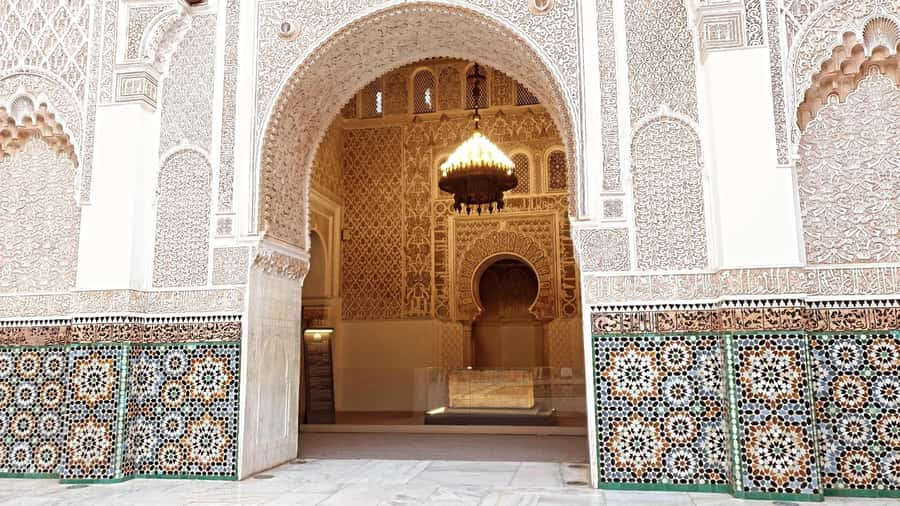
Ben Youssef Medersa is the tour’s other major architectural stop. The visit lasts about 45 minutes and includes the prayer hall, ablutions room, and former students’ quarters.
The medersa was a place of religious study, so the guide’s explanation of Muslim practice and the traditional education system adds meaning to the building. You are not simply looking at a decorated courtyard. You are seeing how study, prayer, and student life were organized within a religious school.
The design is a major part of the visit. Expect carved surfaces, tilework, wood details, and carefully ordered rooms. The visual effect is strong, but the building becomes more memorable when you understand how the spaces were used.
Skip-the-line entry is included here as well. That matters because the medersa is one of the most sought-after stops in the old city. The 45-minute visit should let you study the courtyard and smaller rooms, though the pace may feel brisk if you want to photograph every detail.
For me, this is the point where a guide provides the most value. Decorative buildings can blur together after several days in Morocco. The explanation of worship, washing, study, and student housing gives this place its own identity.
Working souks and the trades of the medina
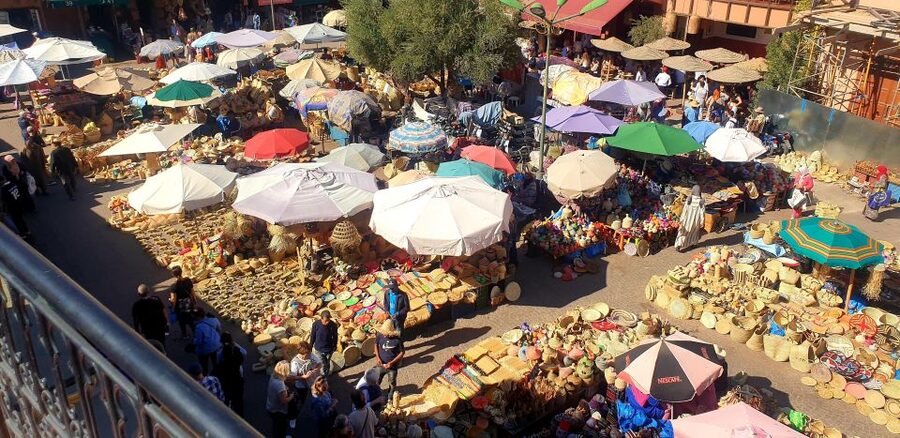
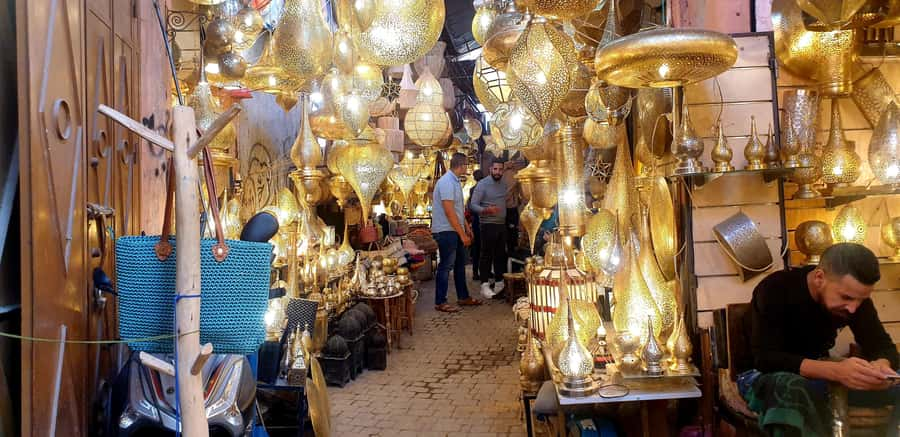
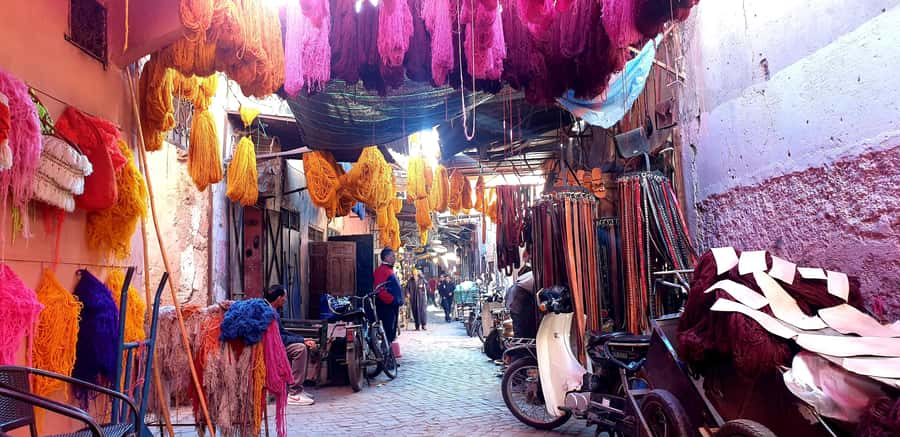
The walk then turns toward the more active craft areas. At the leather souk, you’ll see market activity connected to handmade goods and learn how the souks are organized by trade.
The route also passes workshops where local craftspeople work with leather, wood, silver, bronze, and copper. Some goods are sold through the normal market system, and the schedule refers to valuable materials being auctioned to the highest bidders. The exact activity you see can vary, but the point is to show you production rather than only finished souvenirs.
This is a good setting for questions. Ask how a piece is made, what material you are looking at, and where the work is produced. A guide can also help you tell the difference between a useful shopping stop and a place that simply wants a sale.
You should still expect commercial pressure in some parts of the souks. The tour is not a no-shopping walk, and there is time for purchases. The benefit is that you are introduced to the structure of the markets before returning on your own, when it is easier to lose your bearings.
Spice Square and Souk Semmarine
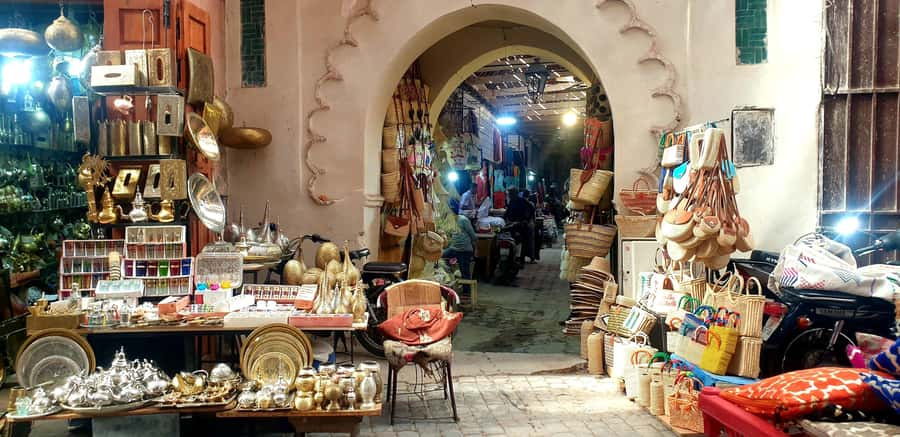
The next stop is the colorful spice square, with about 15 minutes for a break, free time, regional food, and views along the way. Spices are one of the easiest ways to connect Marrakech’s markets with Moroccan cooking, and the square gives you a short sensory pause after the tighter craft lanes.
The route continues to Souk Semmarine, one of the city’s best-known shopping streets and a showcase for Moroccan artisans. You’ll have another 15 minutes to look at crafts and shop.
This part of the walk is useful for orientation, but do not expect an extended buying session. Fifteen minutes passes quickly, especially if you want to compare objects or ask about prices. I would save serious shopping for after the tour, once you know which areas and products interest you.
The guide can help you get started by explaining the kinds of goods sold in each section. One strong feature of Youssef’s guiding style, based on the information available about this experience, is practical advice on where to buy. That can be more useful than a long list of historical dates.
Ending at Jemaa el-Fnaa
The final five-minute walk leads to Jemaa el-Fnaa, where the tour ends. The scheduled stop is about ten minutes and includes sightseeing, photographs, and a traditional dance show.
Jemaa el-Fnaa is the natural finish for this route. It is the public heart of Marrakech, known for street artists, games, performances, food activity, and a constant flow of people. Ending here gives you a chance to stay in the center of the action after the guide departs.
Do not treat the ten-minute stop as a full evening visit. The square deserves more time if you want to watch its changing atmosphere or explore nearby streets. The tour simply gives you a first look and leaves you in a useful place for the rest of your day.
One practical advantage is that the ending is clear: Jemaa el-Fnaa. You are not returned to the starting point, so plan your next move before the tour begins.
Is $65 a fair price?
At $65 per person, this is not the cheapest way to walk through Marrakech. You are paying for a four-hour guided route, entry to Bahia Palace and Ben Youssef Medersa, bottled water, and help making sense of a complicated old city.
The value depends on how you travel. If you are comfortable navigating the medina, reading background material, and handling ticket lines, you may prefer to visit the sights independently. If you are in Marrakech for a short stay, the tour combines several key places in one morning or afternoon and may save considerable planning time.
I think the price is easier to justify for a first visit, particularly if you want history and local context rather than a simple list of photo stops. It is also more appealing for a private group, since that option is available and allows the experience to feel more tailored.
One comment attached to this activity calls the price excessive despite praising the guide. That is a fair warning. Book it for the route and explanation, not because it is a bargain.
Who should book this experience?
I would recommend it to first-time visitors who want to get their bearings early in a Marrakech stay. The route introduces the major landmarks, explains the medina’s layout, and leaves you at Jemaa el-Fnaa with a better sense of where to return.
It also suits people who enjoy architecture but want to see more than palaces. The combination of Koutoubia, Mellah, Bahia Palace, Ben Youssef Medersa, residential lanes, and workshops gives you several different views of the city.
You should think twice if you dislike walking, crowded lanes, shopping districts, or a firm four-hour schedule. The itinerary has short stops at several markets, so it is not designed for lingering at every stall.
English and French tours are offered. Bottled water is included, two small bottles or one large bottle per person, but bring your own extra water if you prefer to drink often. Comfortable shoes are essential.
You can cancel up to 24 hours before the scheduled time for a full refund, and the reserve-now, pay-later option gives you some flexibility when arranging a trip.
My verdict
Book this tour if you want Marrakech explained as a living city, not just a set of famous buildings. The best parts are the guided transitions: the move from Koutoubia to the Mellah, from Bahia Palace into residential lanes, and from Ben Youssef Medersa into workshops and souks.
I particularly like the use of skip-the-line entry and the emphasis on ordinary neighborhoods. If Youssef is your guide, you can expect clear English, detailed stories, help with photographs, and useful advice about shopping based on the strong praise attached to his tours.
At $65, it is a considered purchase rather than an automatic bargain. For a first day in Marrakech, though, it can be a practical way to understand the medina before you return on your own.
FAQ
How long does the tour last?
The tour lasts four hours.
Where does the tour begin?
It begins at Kubba Fatima Zohra, the small white mausoleum beside the Koutoubia Mosque tower on Mohamed V Boulevard.
How do I identify the guide?
The guide should be wearing an official badge with a blue ribbon.
Which languages are available?
The tour is available in English and French.
Is this a private tour?
A private group option is available.
Are entrance tickets included?
Yes. Skip-the-line entry to Bahia Palace and Ben Youssef Medersa is included.
Is bottled water provided?
Yes. You receive two small bottles or one large bottle per person.
Does the tour enter the Koutoubia Mosque?
No. The Koutoubia Mosque is visited from the outside.
Is the tour suitable for wheelchair users?
No. The activity is not suitable for wheelchair users.
Where does the tour finish?
It finishes at Jemaa el-Fnaa Square in Marrakech.
Newest history tours we have reviewed in Morocco
- 6-Day Private Morocco Cultural Tour From Casablanca To Marrakech★ 5.0 · 24 reviews
- Discovery of Moroccan Culinary Heritage, History and Secrets★ 4.5 · 48 reviews
- Marrakech The History and Culture Day Trip★ 4.5 · 45 reviews
- Marrakech: Historical Discovery Tour★ 4.1 · 87 reviews
- Marrakech: Day Trip to the Beautiful and Historic Essaouira★ 4.3 · 39 reviews
- Marrakech: Half-Day Guided Journey through History & Culture★ 4.3 · 20 reviews
- From Marrakech: Essaouira Full day trip, beach and History★ 4.9 · 26 reviews
- Fes: A Guided Walking Tour Through the Historic Medina★ 4.4 · 97 reviews
Old Town & Historic Centre Walks, compared.
Madrid Essential: Historic Center, Plaza Mayor & Royal Palace
Read our review →
Live Fado Show with Port Wine in Historic Center
Read our review →
Valencia Old Town Tour with Wine & Tapas in 11th Century Historic Monument
Read our review →
Prague Old Town, Medieval Underground and Dungeon Historical Tour
Read our review →
Cartagena: Historic Center and Getsemaní Shared Walking Tour
Read our review →
Old Town Walking Tour History and Tales in Edinburgh
Read our review →