Review · ATHENS HISTORY TOURS
Herakleidon Museum of Ancient Greek Technology: Entry Ticket
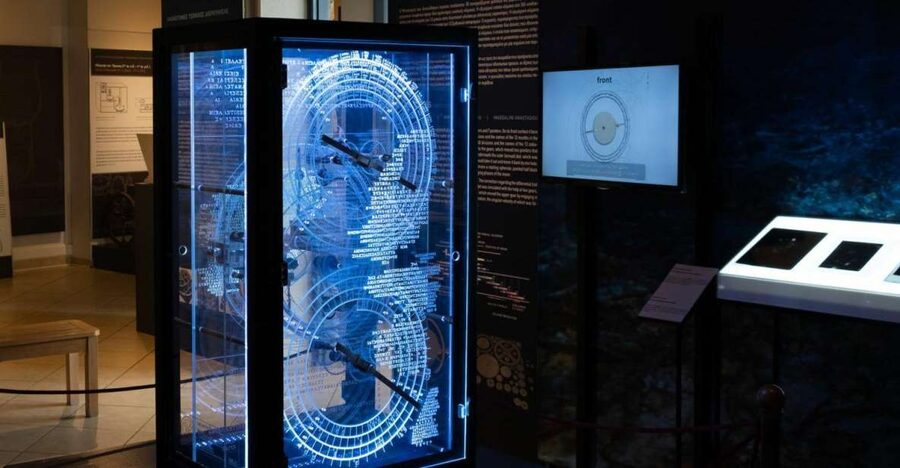
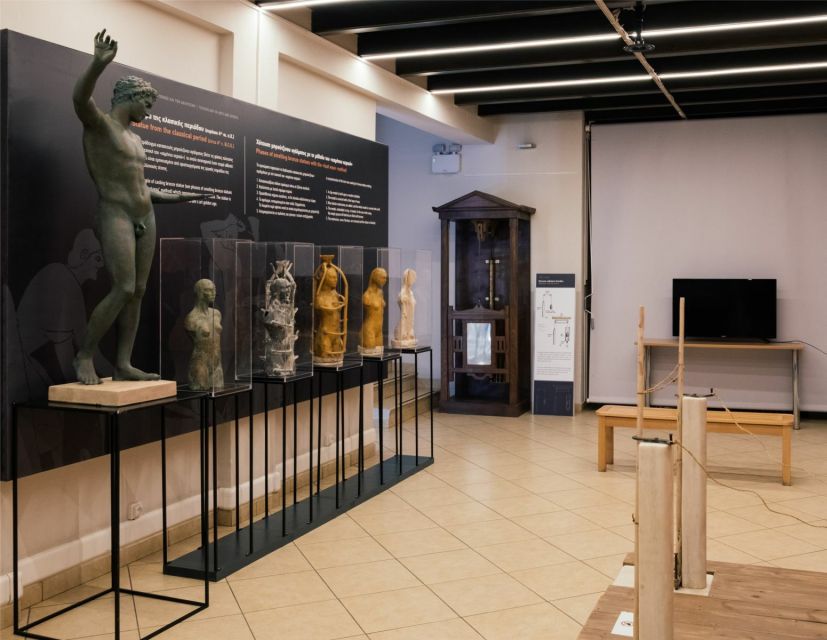
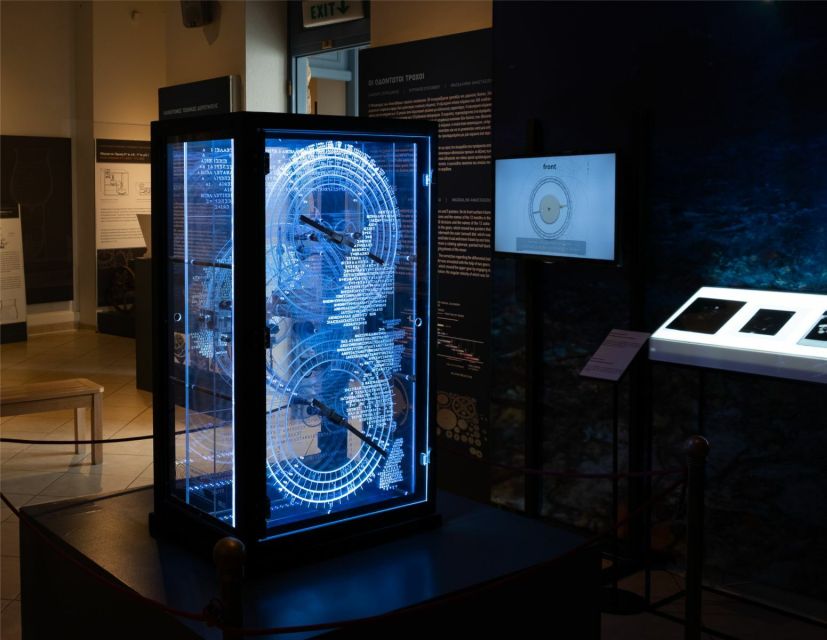
The most intriguing part of the Herakleidon Museum is its focus on ancient Greek technology rather than only statues and temples. You come to see how Greek thinkers used mathematics, mechanics, art, and observation to build devices that feel surprisingly modern, including the Antikythera Mechanism, often called the world’s first computer.
I like the hands-on science focus, which gives the ancient world a practical edge. I also like the location: the museum sits in Thisseio, within easy walking distance of the Acropolis, so you can pair a quiet museum visit with Athens’ major ancient sights.
The main caution is value. At $8, the ticket is affordable, but the overall rating is 3.5 from 19 verified bookings, and two short comments judged the experience disappointing or weak for the price. Go for the subject, not for a large national museum or a long guided tour.
Key points to know before you go
- The Antikythera Mechanism takes center stage: Learn about the ancient device often described as the world’s first computer.
- Two nearby buildings form one visit: Redeem your ticket at 16 Herakleidon Street, then walk about 150 meters to 37 Ap. Pavlou Street.
- Science, art, and mathematics guide the displays: The museum connects calculation and design with ancient Greek inventions.
- Ancient warfare is part of the story: Exhibits show technology linked to Greek military methods and equipment.
- This is an entry ticket, not a guided tour: No guide or hotel transfer is included.
- It fits well beside an Acropolis day: The museum is near the main Acropolis entrance and can be reached from Thisseio Metro on foot.
What the Herakleidon Museum is really about
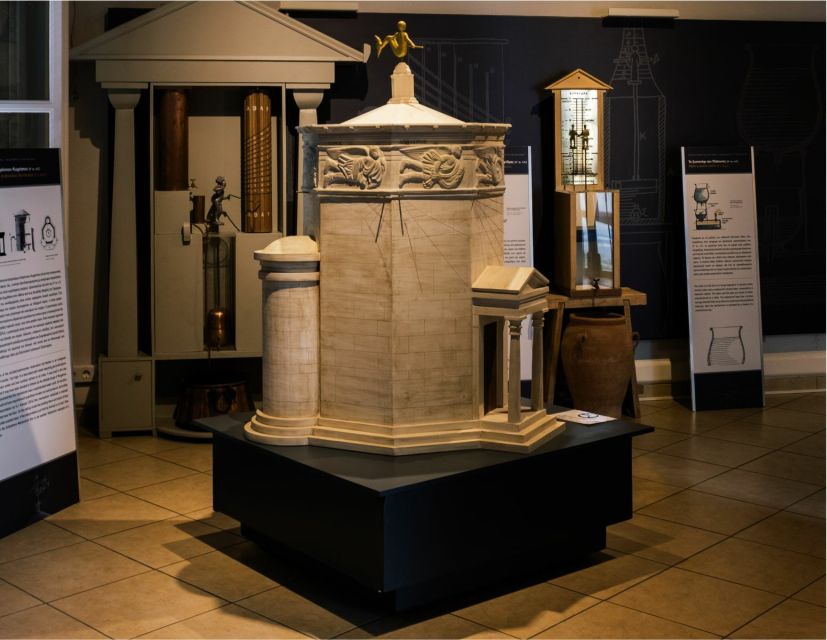
The Herakleidon Museum is not mainly a gallery of famous marble sculpture. Its subject is the practical intelligence of ancient Greece: how people measured, calculated, designed, engineered, and applied ideas to the world around them.
That makes the visit a useful change of pace after temples and archaeological ruins. At the Acropolis, you see the finished monuments. Here, you look at the thinking and technical skill that helped make such achievements possible.
The museum presents antiquity through the connection between science, art, and mathematics. That combination matters. Ancient technology was not separated into neat modern departments. Geometry could guide architecture. Mathematics could support astronomy. Artistic design could make a complex machine understandable and useful.
You should expect accessible displays and objects rather than a formal academic lecture. The stated purpose of the museum is educational, with programs for students, teachers, and adults. The material is designed to awaken curiosity and encourage research, so families and anyone who enjoys seeing how things work may get more from it than someone seeking only monumental art.
More Ancient History Tours in Athens
- Athens: Ancient Greek Theater Performance
★ 4.7 · 2,481 reviews - Historical Delphi One Day Tour with Arachova Stop & Expert Guide
★ 4.5 · 1,247 reviews - From Athens: Ancient Corinth Day Trip with Canal & VR Guide
★ 4.6 · 1,073 reviews
Starting at 16 Herakleidon Street
Your visit begins at the museum building at 16 Herakleidon Street. This is where you redeem the entry ticket, so make this your first stop even though the experience uses two buildings.
The address is in Thisseio, a pleasant and central part of Athens. It is within walking distance of Thisseio Metro station, making the museum easy to add to a day in the historic center. You do not need a hotel transfer, and none is provided, so plan to arrive independently.
The museum’s location is one of its strongest practical features. You can visit before or after exploring the Acropolis area, and the main entrance to the Acropolis is nearby. That lets you build a day around ancient Athens without spending time crossing the city.
Allow enough time to move between the two addresses. The second building is about 150 meters away, at 37 Ap. Pavlou Street. This is a short walk, but it is still worth knowing in advance so you do not assume every exhibit is inside one doorway.
The ancient Greek science displays
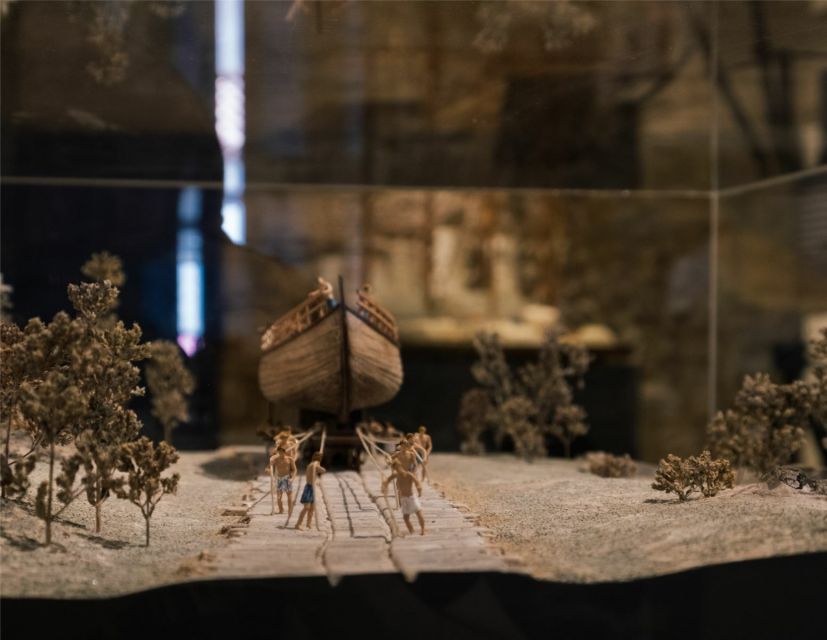
Inside, the focus turns to the methods behind ancient achievements. You learn how Greek thinkers worked with sophisticated data and how they used calculation to understand objects, structures, and natural patterns.
The museum’s approach is valuable because it makes technology visible. Instead of simply being told that the ancient Greeks were advanced, you are encouraged to consider the actual problems they solved. How do you measure accurately? How do you represent complex information? How do you turn an idea into a working device?
The displays connect mathematical thought with physical design. That connection can make the visit especially useful for older children, students, teachers, and adults who enjoy science presented through history.
Do not expect the scope of a huge institution covering every period of Greek civilization. This is a focused museum. Its appeal depends on your interest in ancient engineering, scientific thinking, and mechanical devices. If that subject catches your attention, the narrow focus is an advantage. If you want famous sculptures, extensive archaeological collections, or a major sequence of historical galleries, the $8 ticket may feel less rewarding.
The Antikythera Mechanism and ancient calculation
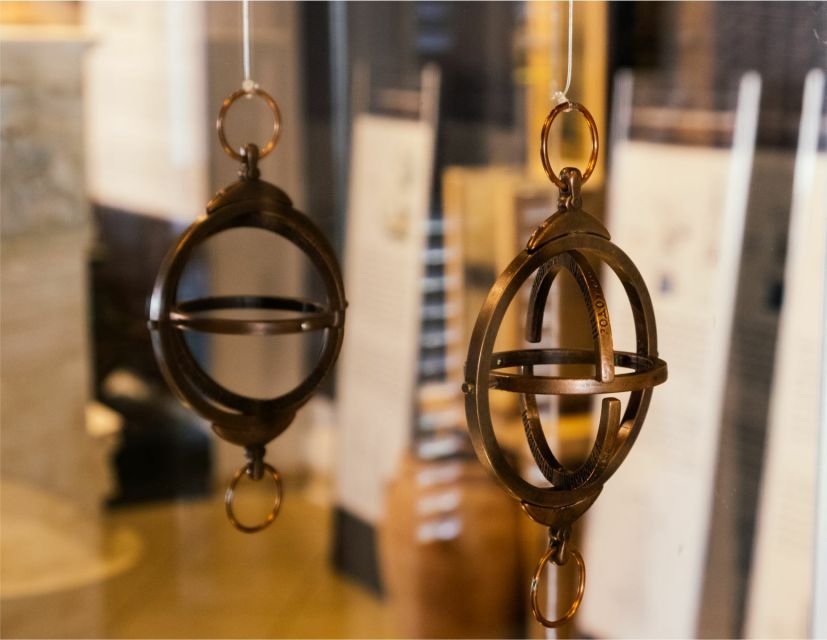
The Antikythera Mechanism is the museum’s most obvious draw. It is often described as the world’s first computer, a phrase that helps explain why this ancient object attracts so much attention.
The important point is not that it resembles a modern computer. It does not. The comparison refers to its ability to process complex information through a mechanical system. The exhibit gives you a way to think about how ancient Greek makers handled astronomical and mathematical data with remarkable precision.
For many people, this will be the most memorable part of the visit. The device turns an abstract lesson about ancient mathematics into something concrete. You are not just reading that Greek thinkers calculated sophisticated patterns. You are seeing how mechanical technology could represent and organize those calculations.
Give yourself time here rather than treating it as a quick photo stop. The subject rewards patience, especially if you want to understand why the mechanism is important. Since the ticket is valid for one day, you have flexibility to plan the two museum buildings around the rest of your Athens sightseeing.
More Ancient History Tours in Greece
- Acropolis, Parthenon & Athens Old City Heritage Walking Tour
★ 4.5 · 876 reviews - Private Biblical Tour Ancient Corinth & Isthmus Canal from Athens
★ 5.0 · 762 reviews - Athens: Ancient Corinth & Nafplio Full Day Trip with Swim
★ 4.8 · 531 reviews - Athens Skip the Line: Open Air Ancient Greek Theatre Performance
★ 4.5 · 520 reviews
Ancient Greek war technology
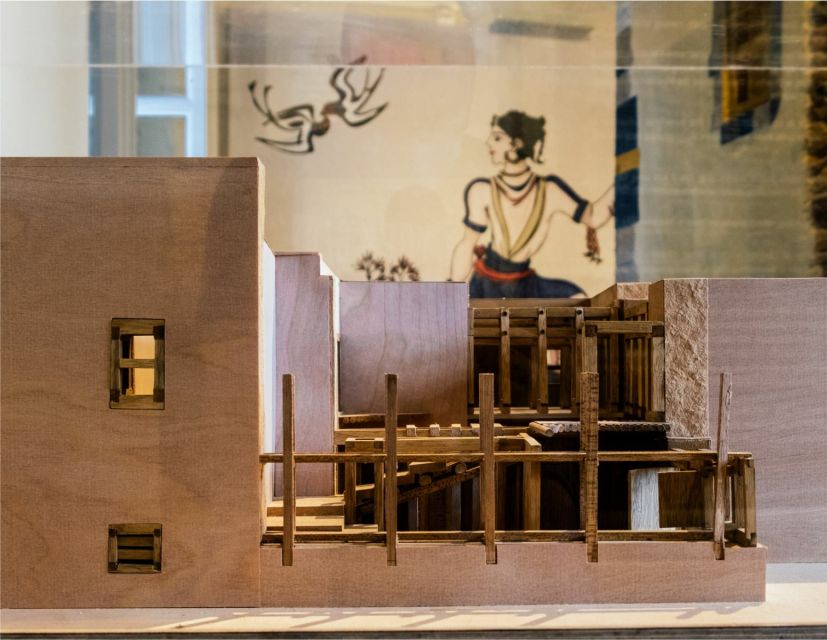
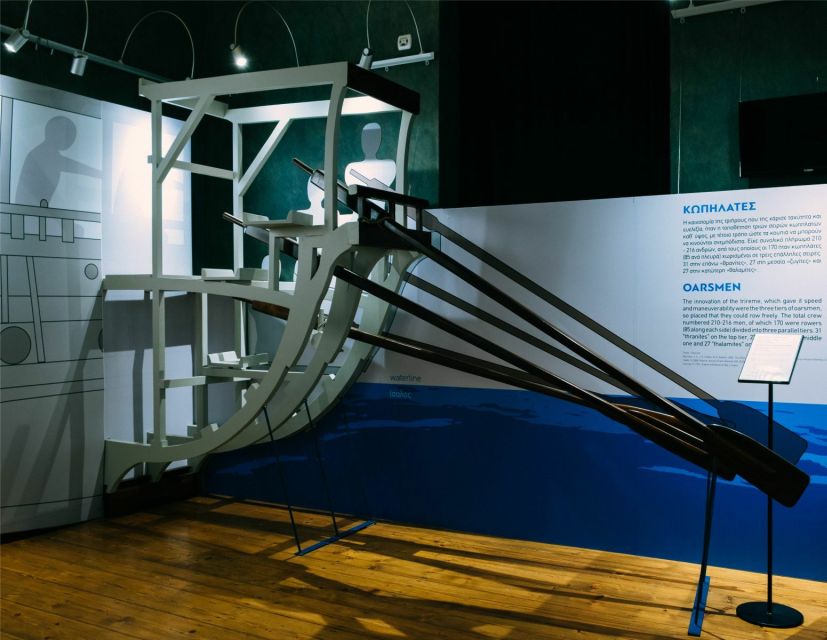
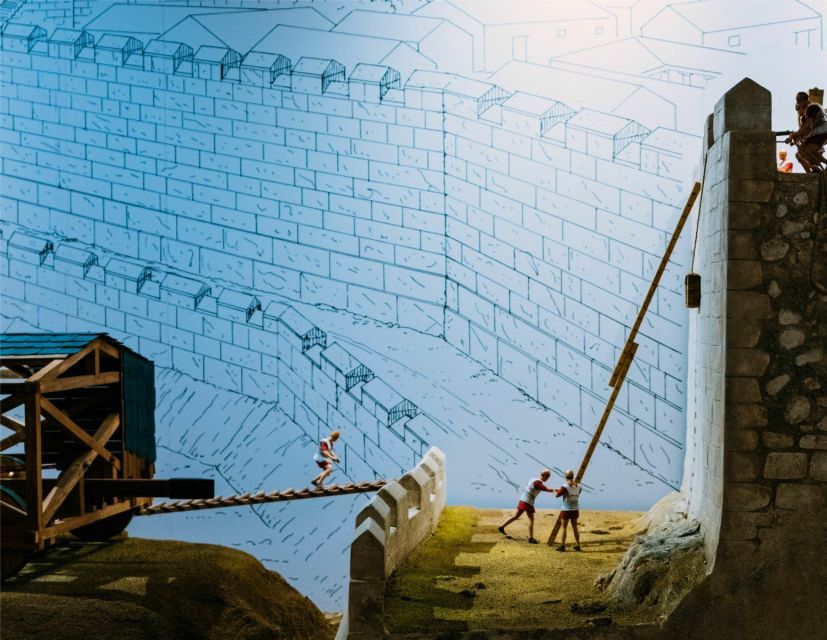
The museum also explores technology connected with Greek warfare. These displays show that scientific and mechanical thinking was not limited to astronomy or architecture.
The military material adds a useful human dimension. Ancient inventions were not made only for study or beauty. Technical ideas could be applied to defense, attack, construction, and battlefield problems. Seeing war technology beside mathematics and engineering helps you understand how broad ancient Greek technological skill could be.
This section may appeal to anyone interested in military history, but it is also useful for general visitors. It shows how innovation develops in response to practical needs. The museum’s subject is not simply a list of clever devices. It is an examination of what people built and why those designs mattered.
The information provided does not specify every artifact or reconstruction on display, so you should arrive expecting a focused presentation of Greek technological achievements rather than a guaranteed catalogue of particular weapons. The clear emphasis is on war techniques and the engineering behind them.
Why the two-building format matters
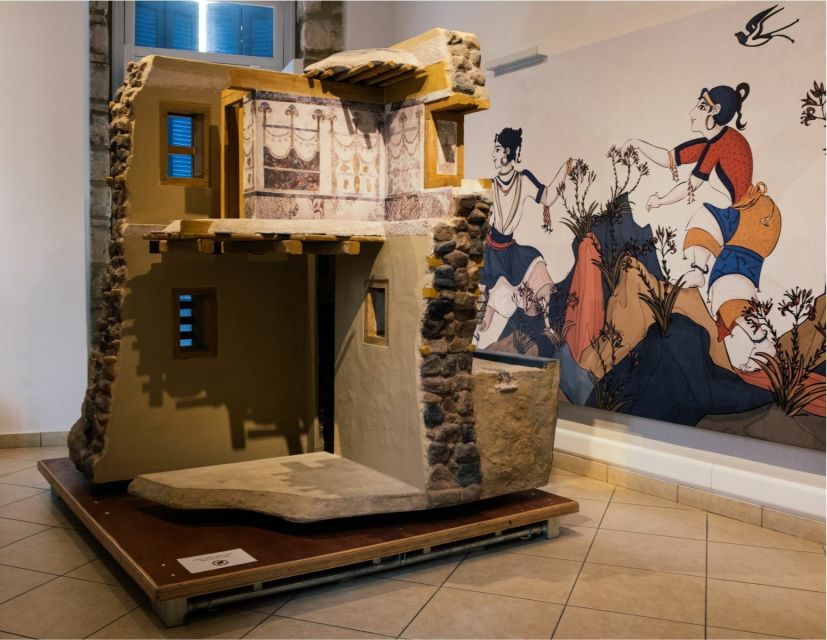
The second building at 37 Ap. Pavlou Street is only about 150 meters from the first. That close distance makes the split layout manageable, but it does mean the visit is not one continuous gallery route.
You should begin at 16 Herakleidon Street to redeem your ticket. From there, follow the museum’s directions to the second building. The short walk also gives you a natural break between sections, which may help if you are visiting with children or combining the museum with a longer day outdoors.
The two-building setup can be either a minor inconvenience or part of the charm. It is less polished than a single large museum complex, but it fits the local character of Thisseio and keeps the visit tied to the neighborhood.
Because the ticket lasts for one day, you can organize the timing around your plans. You might visit one building, walk toward the Acropolis, and return to the second later if opening arrangements allow. The available information does not provide specific starting times or a fixed itinerary, so check availability when booking and confirm the day’s practical schedule before setting out.
A self-guided visit, not a guided tour
The ticket covers entry only. A guided tour is not included, and no hotel transfer is provided.
That makes the experience flexible and inexpensive, but it also places more responsibility on you. You will need to read the displays and move through the museum at your own pace. If you prefer a guide who explains each machine, answers questions, and provides historical context, this ticket alone may feel limited.
The self-guided format works best if you enjoy stopping where your interest leads. You can spend longer with the Antikythera Mechanism, move quickly through material that feels less relevant, or take a break between the two buildings.
The museum’s educational mission suggests that the displays are intended to be accessible, but no specific audio guide, printed guide, or language options are listed. Do not book this expecting a named expert or a scheduled lecture. The experience is an independent museum visit.
The $8 price and what it buys you
At $8 per person, the ticket is modest by Athens sightseeing standards. It gives you access to a specialized museum in a central location and can be paired with the Acropolis area without extra transport.
The value depends on your interests. For someone fascinated by ancient science, machines, mathematics, or military engineering, $8 is a reasonable way to spend part of a day. You are paying for a focused subject that is not usually the main story in Athens’ larger archaeological sites.
For a casual visitor, the calculation is less certain. The public score is 3.5 from 19 verified bookings, with one January 2025 rating calling the visit good and two other short comments criticizing the experience or its price. Those comments do not explain exactly what fell short, but they are a fair warning not to expect a blockbuster attraction.
I would choose this museum because of its topic, not because it is a bargain for everyone. The ticket offers good value when you want a quieter, more specialized stop. It is weaker value if you are already tired from museums and ruins or if you want a large collection with lots of famous objects.
Who should make time for this museum
I would recommend the Herakleidon Museum to:
- Families looking for a science-based activity in central Athens
- Adults interested in ancient engineering and mathematics
- Students and teachers seeking a historical link between science and design
- Visitors who want something beyond sculpture and temples
- Anyone already planning to walk through Thisseio and the Acropolis area
You may want to skip it if your Athens schedule is very short and this is your first visit. The Acropolis, Acropolis Museum, and major archaeological sites will usually take priority. The Herakleidon Museum works best as an added experience, not as a replacement for Athens’ essential ancient monuments.
Smoking and drinks are not allowed inside. That is a small point, but plan to finish refreshments before entering.
How I would fit it into an Athens day
I would place the museum on a day focused on Thisseio and the Acropolis. Start at 16 Herakleidon Street, redeem the ticket, and explore the displays on ancient Greek technology.
Next, walk the short distance to 37 Ap. Pavlou Street. Pay particular attention to the material on the Antikythera Mechanism and the connections between calculation, art, and engineering. Then continue on foot toward the Acropolis area, which is close to the museum.
This order keeps the day efficient. You begin with ideas and mechanisms, then see the monuments where ancient design and construction become visible on a much larger scale.
If you prefer a slower pace, give the museum its own portion of the day. The one-day ticket allows flexibility, but the exact amount of time you will need depends on how closely you read the displays. There is no fixed tour duration listed, so you control the pace.
Should you book the Herakleidon Museum?
Book it if the Antikythera Mechanism, ancient mathematics, and engineering genuinely interest you. The central location, $8 price, and two nearby buildings make it easy to add to a walking day around Thisseio and the Acropolis.
Skip it if you want a major archaeological collection, a guided explanation, or a guaranteed crowd-pleasing attraction. The mixed rating and limited positive detail suggest that the museum will reward curiosity more than casual sightseeing.
For the right visitor, it offers a thoughtful look at the ancient Greeks as inventors, calculators, and problem solvers. For everyone else, it may be better treated as an optional stop after Athens’ larger headline sights.
FAQ
Where is the Herakleidon Museum located?
The first building is at 16 Herakleidon Street in Thisseio, Central Greece. It is within walking distance of Thisseio Metro station. The second building is at 37 Ap. Pavlou Street, about 150 meters from the first.
What does the $8 ticket include?
The ticket includes entry to the Herakleidon Museum. A guided tour and hotel transfer are not included.
Is the Antikythera Mechanism on display?
The museum presents information about the Antikythera Mechanism, which is often considered the world’s first computer.
How long is the ticket valid?
The activity has a duration of one day. Check availability for the available starting times.
Can I cancel the booking?
You can cancel up to 24 hours in advance for a full refund.
Is the museum near the Acropolis?
Yes. The museum is in Thisseio, very near the main entrance of the Acropolis, so you can continue exploring the Acropolis area on foot.
More Museum and Gallery History Tours in Athens
- New York City: American Museum of Natural History Ticket
★ 4.5 · 15,447 reviews - Paris: Louvre Museum Entry with History of Mona Lisa
★ 3.9 · 2,823 reviews - Venice’s Best: Basilica, Doge’s Palace, Gondola & History Gallery
★ 4.5 · 2,478 reviews - American Museum of Natural History Admission Ticket
★ 4.0 · 1,931 reviews
More Museum and Gallery History Tours in Greece
- Ancient Athens tour: Acropolis, Parthenon and Acropolis Museum
★ 5.0 · 256 reviews - Acropolis of Athens, Ancient Agora and the Agora Museum Tour
★ 5.0 · 86 reviews - Athens: Kotsanas Ancient Greek Technology Museum Guided Tour
★ 5.0 · 29 reviews - Ancient Olympia: Archaeological Site and Museum Entry Ticket
★ 4.3 · 555 reviews
Newest history tours we have reviewed in Athens
- The original Christian tour on Paul’s footsteps in Athens and ancient Corinth★ 4.5 · 25 reviews
- Ancient Sparta & Mystras Private Day Tour from Athens★ 5.0 · 52 reviews
- Athens: Combo Ticket for Acropolis & 6 ancient sites★ 3.0 · 21 reviews
- Small-Group Women History in Ancient Greece Walking Tour★ 5.0 · 38 reviews
- Ancient Corinth, Sanctuary of Hera, Blue Lake & Canal from Athens★ 5.0 · 26 reviews
- Half Day Historical Athens City Private Taxi Service Tour★ 5.0 · 79 reviews
- Private Luxury Tour: Marathon – Battle & Run That Changed History★ 5.0 · 30 reviews
- Ancient Olympia & Ancient Corinth Private LuxuryTour from Athens★ 5.0 · 25 reviews
Ancient History Tours, compared.
Colosseum: Underground and Ancient Rome Tour
Read our review →
Colosseum & Ancient Rome with Arena Floor Option I Max 6 People
Read our review →
Colosseum, Ancient Rome Tour or AudioGuided Tour
Read our review →
Colosseum Underground & Ancient Rome Guided Tour
Read our review →
Taormina: Ancient Theater Skip-the-Line Ticket & Audio Guide
Read our review →
Discover the Ancient Ruins of Pompeii: Day Trip from Rome
Read our review →