
Review · BOSTON HISTORY TOURS
2 Hour Boston Historical and Heritage Walking Tour
Boston’s past is packed into a very walkable mile, and this tour connects the famous markers with the people and arguments behind them. You begin at Boston Common, pass the State House and Boston Massacre site, then finish beside Faneuil Hall and Boston City Hall.
I like the low $5 price and the route’s unusual range. You get revolutionary landmarks, the story of the 54th Massachusetts Regiment, Irish immigration, Boston’s Brahmin literary circle, and the Kennedy family in one outing. Guide Stephen is especially strong on anecdotes and historical connections. The tradeoff is pace: this is a talk-heavy tour, and Stephen can speak quickly or run beyond two hours.
Key points to know before you book
- A one-mile route with a lot of history: The walk links Boston Common, the State House, the Boston Massacre site, Old Corner Bookstore, and Faneuil Hall.
- Stephen is the main attraction: He brings unusual details, answers questions, and gives the tour a personal, story-led feel.
- Expect a history lesson, not just a photo walk: The tour moves from Puritan Boston and colonial protest to abolition, immigration, literature, and modern politics.
- Weather and noise matter: Cold, wind, rain, and loud duck-tour traffic can make it harder to hear and enjoy the commentary.
- Small by city-tour standards: The maximum group size is 24, which makes questions easier than on a large coach tour.
- Best value for history fans: At $5, it offers an inexpensive orientation, but it suits people willing to listen closely and keep walking.
Boston Common sets the tone in ten minutes
Meet at the Boston Common Tablet at 11:00 am. The opening stop is not just a patch of green space. Boston Common is the oldest public park in America, and its past moves from practical colonial use to public protest and civic gathering.
You hear how townspeople once pastured cattle on the forty-five acres. The ground also hosted military drills, hangings, duels, civil rights rallies, and later, more genteel walks beneath the elms. That mix tells you something useful about Boston: public space here has long been tied to power, conflict, and ordinary daily life.
Ten minutes is enough for an introduction and photographs, but not for a full visit to the Common. If you want time for the park’s paths and monuments, arrive early or return later.
More History Walking Tours in Boston
- Boston: Freedom Trail History Small Group Walking Tour
★ 5.0 · 6,450 reviews - Boston: Freedom Trail History Small Group Walking Tour
★ 4.9 · 1,590 reviews - Boston Pizza Lovers Food and History Walking Food Tour
★ 4.5 · 1,082 reviews
Park Street Church and the case for freedom
The next stop lasts about five minutes, so expect a compact explanation rather than an interior visit. Park Street Church is linked with abolitionist work and missionary activity, and the guide uses it to bring Boston’s religious and political disputes into the story.
One memorable detail is the first performance of Samuel Francis Smith’s My Country, ’Tis of Thee, also known as America, at the church on July 4, 1831. The stop works well because it adds music and reform movements to a route that might otherwise focus only on the Revolution.
The 54th Regiment Memorial adds a harder truth
At the Robert Gould Shaw and 54th Regiment Memorial, the tour turns to the Civil War. The monument honors the 54th Massachusetts Infantry Regiment, one of the first African American units in that conflict, and its commander.
This is one of the route’s most important pauses. The memorial broadens the story beyond white revolutionary leaders and shows how Boston’s ideas about liberty were tested again generations later. You have about ten minutes here, enough to study the figures and ask about the regiment’s role.
The golden dome and Boston’s old arguments
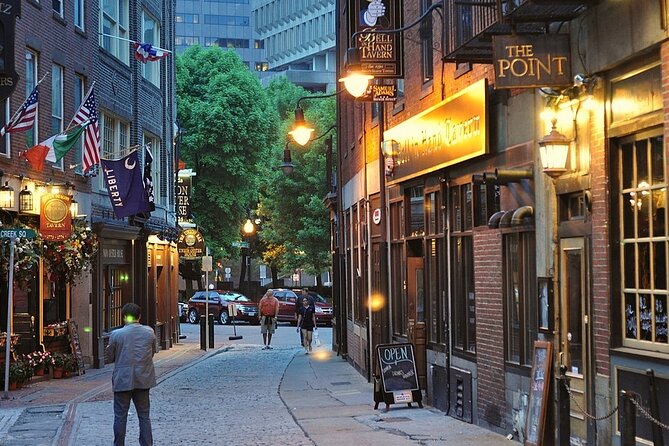
The Massachusetts State House receives only about five minutes, but the guide packs the stop with useful details. The golden dome is the obvious photo subject, while the building’s larger importance comes from its role as the seat of the state legislature since 1798.
Nearby statues add human stories to the grand civic setting. You hear about General Joseph Hooker, remembered here with an unfortunate reputation, and Mary Dyer, who was hanged because of her Quaker beliefs. Those names help turn a formal government building into a place of competing beliefs and personal consequences.
The route also touches Boston’s old Brahmin circle and its private library tradition. Rare books and the intellectual habits of the city’s elite offer a different view of Boston, one concerned less with street protest and more with reading, influence, and ideas.
More History Walking Tours in the USA
- Boston History Tour: Scenic Walk Through Time & Landmarks
★ 5.0 · 627 reviews - Boston’s North End Food and History Walking Tour
★ 5.0 · 459 reviews - Walk the Historic Freedom Trail with Costumed Guide
★ 4.5 · 329 reviews - Boston Seafood Lovers Food and History Walking Tour
★ 5.0 · 208 reviews
West End stories, Scollay Square, and the Kennedys
The West End section brings in Scollay Square, once known for theaters, vaudeville, and colorful characters. The neighborhood’s past was not quiet or polished, and that makes a useful contrast with the nearby State House and old churches.
You also hear about the Kennedy family’s Love Nest, a glimpse into the romantic side of a famous Boston political family. This is the kind of sidetrack that gives Stephen’s tour its personality. It is not essential to understanding the Revolution, but it helps connect major public figures with the city’s social life.
This is also where the tour’s storytelling style becomes clear. Stephen often connects people, buildings, politics, and literature rather than presenting one strict date-by-date sequence. If you prefer a clean timeline, take notes and expect a few jumps.
The Old State House and the Boston Massacre
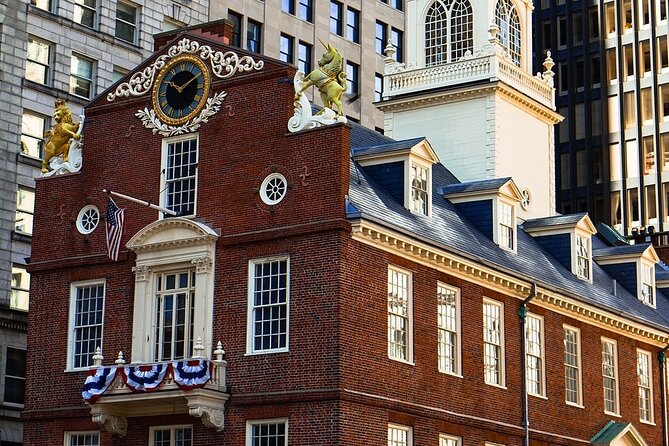
At the Old State House, the route reaches one of Boston’s most important revolutionary sites. The building is associated with the reading of a copy of the Declaration of Independence to Boston citizens in 1776.
You also hear how the city’s oldest public building fell into poor condition near the end of the nineteenth century. Chicago offered to buy it, but Bostonians rescued the site and restored it over time. That story gives the building a second life, shaped by civic pride as much as by colonial history.
The Boston Massacre site follows. Here, British soldiers and American colonists confronted one another in an event that helped stir outrage before the American Revolution. The stop is brief, but the location is easy to miss if you walk past on your own. The value lies in hearing the event explained where it happened, surrounded by the modern city.
Nearby, the guide also recalls the gathering before the Boston Tea Party. Five thousand people met on December 16, 1773, during the tea crisis, and a group disguised as Mohawk Indians then went toward Griffiths Wharf. The episode shows how public meetings, rumor, disguise, and direct action pushed Boston toward rebellion.
Irish immigration and the city’s changing identity
The Boston Irish Famine Memorial is a quieter stop. It honors people who fled the Great Famine of 1845 to 1852 and found refuge in Boston. By 1850, Irish immigrants had become the city’s largest ethnic group.
The memorial also recognizes other immigrant groups. That wider message matters because Boston’s identity did not end with its Puritan founders or revolutionary leaders. The city was repeatedly reshaped by newcomers, and this stop gives that change a human scale.
You have around five minutes here. It is a pause for reflection rather than a long lecture, so use the time to look closely and ask a question if the group is moving quickly.
Old Corner Bookstore and Boston’s literary circle
The Old Corner Bookstore is one of the route’s best stops for readers. The building began as a residence and apothecary in 1718, became a bookstore in 1828, and later housed Ticknor and Fields publishers for three decades.
Authors associated with the site include Henry Wadsworth Longfellow, Nathaniel Hawthorne, Oliver Wendell Holmes Sr., and Ralph Waldo Emerson. The building helps explain how Boston became a center of publishing and literary conversation, not simply a place of political rebellion.
The stop lasts about five minutes. You will not tour the building as part of this walk, but the exterior and the names connected with it give you plenty to pursue later.
School Street, Boston Latin, and a patient donkey
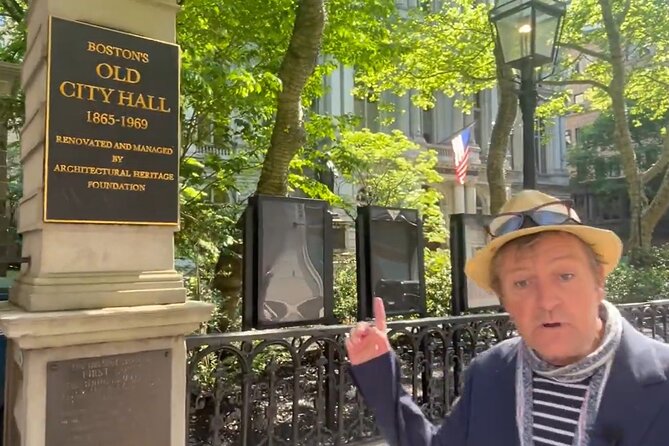
School Street marks the site of Boston Latin School, identified here as the first public school in the United States. The route also passes King’s Chapel, Old City Hall, and the Parker House.
This section works as a compact lesson in how many layers of Boston sit on one short street. Civic buildings, religious sites, hotels, education, and public memory all crowd together.
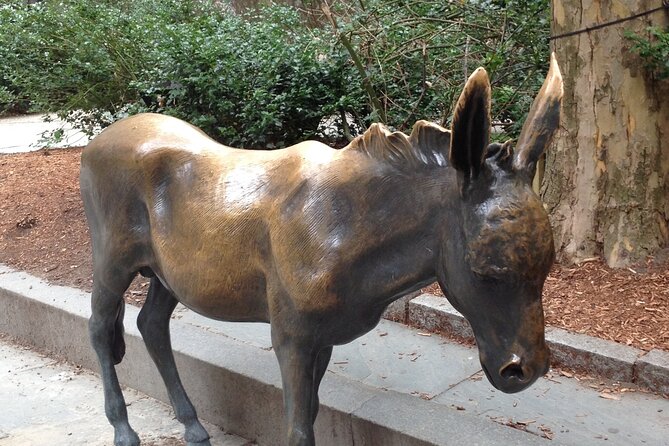
Then comes one of the tour’s lighter moments: Boston’s beloved donkey on School Street. It is an amusing break from executions, massacres, famine, and political conflict, and it gives you a cheerful photo opportunity. The stop lasts about ten minutes, though the exact amount of time spent at each point can vary with questions and group pace.
Faneuil Hall is more complicated than its nickname
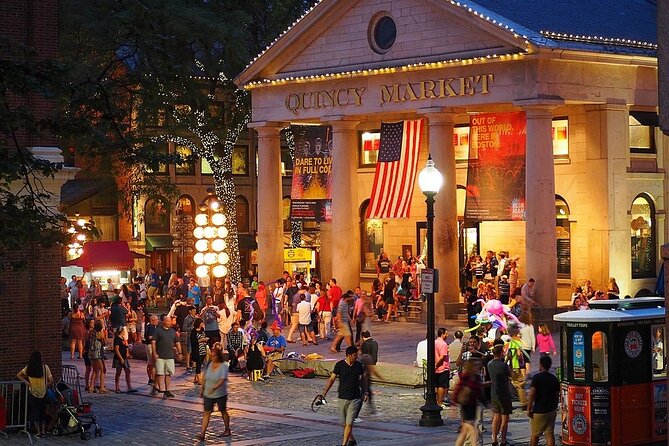
Faneuil Hall Marketplace is the route’s best-known finish point. Under its grasshopper weathervane, the hall is often called the Cradle of Liberty because revolutionary leaders used it as a meeting place.
The story is not simple. Peter Faneuil, who gave the hall to Boston, was a slave trader. That fact matters, and it keeps the building’s civic reputation from becoming a polished legend. You also hear about the Ancient and Honorable Artillery Company of Massachusetts, described as the oldest military body in the Western Hemisphere, with a charter dating to 1637.
The supplied details list 1837 in connection with its charter, but the date is commonly given as 1637. Either way, the hall’s connection with military tradition and public debate is part of the guide’s closing material.
The tour ends directly across from Faneuil Hall, beside statues of James Michael Curley. Curley served four times as Boston mayor, as governor of Massachusetts, and as a congressman. His long political career and flamboyant style make him a fitting final character for a tour that pays attention to personality as much as dates.
The practical value of a $5 walking tour
At $5 per person, this is an unusually inexpensive way to get your bearings in central Boston. You are paying for an English-language guide, a planned route, and two hours of interpretation. You are not paying for museum entry, transport, or access to private interiors.
That pricing makes the tour especially useful early in a Boston visit. It can help you decide which places deserve a return visit, such as Boston Common, the Old State House, or the literary sites around School Street. Since the stops are free to view from outside, you can continue exploring after the walk without having already spent much.
The low price should not lead you to expect a polished, tightly timed production. Stephen’s strength is the volume of material and his ability to connect people and events. His weakness is the same thing: he can give too much information, speak fast, or lose track of time.
Plan for weather, street noise, and the group pace
Wear shoes you can walk in and dress for the forecast. Cold and wind have made this route uncomfortable for some people, while rain can make it harder to hear and stay focused. The experience requires good weather and may be moved or refunded if poor conditions cancel it.
Boston’s streets are also noisy. Duck-tour vehicles and ordinary city traffic can compete with the guide’s voice. Stephen has begun using a voice amplifier, but you should still stay close enough to hear clearly, especially at crowded landmarks.
The maximum group size is 24. That is small enough for questions to be practical, though not so small that every person will hear equally well in a noisy street setting. Service animals are allowed, public transportation is nearby, and most people can take part.
Free cancellation is available up to 24 hours before the 11:00 am start. Changes or cancellations inside that window are not accepted for a refund.
Who will enjoy this Boston walk?
I would choose this tour if you want context rather than a checklist. It suits history fans, readers interested in Boston’s literary world, and first-time visitors who want a useful route through the historic center.
It also works for people who enjoy a guide with a strong personal style. Stephen is warm, energetic, and generous with side stories. He answers questions and often gives more background than a short scripted walk would offer.
I would be cautious if you need a strict two-hour finish, prefer short explanations, or are traveling with young children who may tire of long talks. One account describes the tour running close to three hours, while another says the opening talk once lasted nearly half an hour before the group reached its first main stop. The introduction has since been cut to about ten minutes, but the risk of extra time remains.
Non-native English speakers should also know that Stephen can speak quickly. If you need slower delivery, say so early and remain near the guide.
Should you book the Boston Historical and Heritage Walking Tour?
Book it if you want a serious, story-filled orientation at a bargain price. The route covers far more than the standard Freedom Trail highlights, including the 54th Regiment, Irish immigration, Boston’s publishing world, the Brahmin elite, Scollay Square, and James Michael Curley.
Skip it if you want a quiet photo walk, a tightly timed two-hour schedule, or a guide who sticks to only the most famous landmarks. For everyone else, the $5 cost makes the choice easy, provided you arrive prepared for weather, street noise, and a lot of spoken history.
FAQ
How much does the tour cost?
The tour costs $5 per person.
How long does the tour last?
The scheduled duration is approximately two hours. The guide may sometimes run longer because of questions, route changes, or extended storytelling.
Where does the tour begin?
It begins at the Boston Common Tablet at 1634 Freedom Trail, Boston, Massachusetts 02108.
What time does the tour start?
The scheduled start time is 11:00 am.
Where does the tour end?
It ends beside the James Michael Curley statues at Congress Street and North Street, directly across from Faneuil Hall.
Is the tour conducted in English?
Yes. The included in-person guide provides the tour in English.
How large can the group be?
The maximum group size is 24 people.
Are entrance tickets included?
All listed stops have free admission, and the experience includes an in-person guide. The information provided does not list admission to indoor attractions.
Is the tour suitable for most people?
Most people can participate. The tour is near public transportation, and service animals are allowed.
Can I cancel for a refund?
You can cancel at least 24 hours before the start time for a full refund. Cancellations or changes made less than 24 hours before the start are not accepted for a refund. If poor weather causes the tour to be canceled, you will be offered another date or a full refund.
More Two-Hour Tours in Boston
- Boston: 2-Hour Historic Walking Tour
★ 4.7 · 88 reviews - 2 Hour Historic Pub Crawl in Boston
★ 5.0 · 45 reviews - 2-Hour Gettysburg Battlefield Guided History Bus Tour with a National Park Guide
★ 4.5 · 2,201 reviews - Kyoto Gion: 2-Hour Geisha Culture & History Walking Tour
★ 5.0 · 1,186 reviews
Newest history tours we have reviewed in Boston
- Freedom Trail Guided Walking Tour (SMALL GROUP)★ 4.5 · 98 reviews
- Boston’s Architecture, History + Photo Walking Tour (SMALL Group)★ 5.0 · 91 reviews
- Boston’s North End History + Photo Walking Tour (SMALL Group)★ 5.0 · 27 reviews
- North End Food Tour: Taste Boston’s Italian Heritage★ 5.0 · 20 reviews
- Boston: Underground Railroad History Tour of Beacon Hill★ 5.0 · 141 reviews
- Boston Freedom Trail History and Food Tour★ 4.5 · 22 reviews
- Haunted Boston’s Historic Streets Walking Guided Tour★ 4.5 · 184 reviews
- Beacon Hill + Back Bay History + Photo Walking Tour(SMALL Group)★ 5.0 · 60 reviews
History Walking Tours, compared.
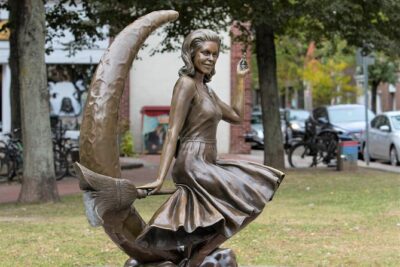
History and Hauntings of Salem Guided Walking Tour
Read our review →
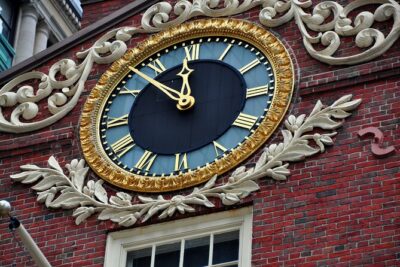
Freedom Trail History Small Group Walking Tour
Read our review →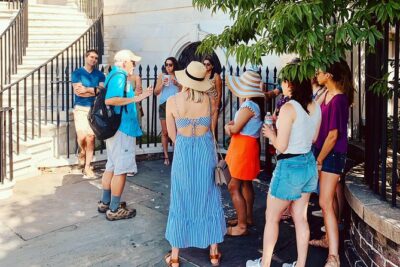
Historic Charleston Guided Sightseeing Walking Tour
Read our review →
Tapas Walking Tour with Food, Wine, and History
Read our review →
Savannah History and Haunts Candlelit Ghost Walking Tour
Read our review →
A History of Terror – Belfast City Centre Walking Tour
Read our review →Browse the lists this tour appears in