Review · USA HISTORY TOURS
The Sacred Ground of 1963: Birmingham’s Civil Rights Struggle
Birmingham’s Civil Rights story becomes far more immediate when you walk the actual streets where it unfolded. This tour links the old Black business district with Kelly Ingram Park, the 16th Street Baptist Church, the A.G. Gaston Motel, and other downtown landmarks. I like the way it connects famous events with everyday Black life, including hotels, theaters, shops, music, and segregation laws.
I also like the local perspective. Wilhelmina, also called Wilemma in some tour information, is a Birmingham native whose family and personal knowledge add weight to the history. The other strong point is the compact format: in about an hour to an hour and a half, you get a useful introduction before deciding which museums or sites deserve more of your time.
The main caution is communication and reliability. Several bookings have been canceled or mishandled, and one person reported waiting at the meeting point without finding the guide. Confirm the start details close to the tour date, arrive early, and allow extra time if you need a full museum visit.
Key points to know before you book
- Local guide Wilhelmina: Her Birmingham background gives the tour a personal voice, especially when discussing daily life during the Civil Rights era.
- A walk through Black Birmingham: The route covers the former business district, the Chitlin’ Circuit, Black hotels, theaters, churches, and community institutions.
- The 1963 focus: Kelly Ingram Park, 16th Street Baptist Church, and the A.G. Gaston Motel place the movement’s history on its actual ground.
- Short but meaningful: The walk lasts about 60 to 90 minutes, making it a practical first stop in Birmingham.
- Mostly free outdoor stops: Admission is generally free, but entry to 16th Street Baptist Church is not included.
- Plan for weather and walking: The tour needs good weather and calls for a moderate level of physical fitness.
Why Birmingham’s Civil Rights story works best on foot
Birmingham is not a city where Civil Rights history sits in one building. The story spreads across churches, parks, theaters, hotels, streets, and former commercial blocks. Walking between these places helps you understand how closely political action, business, religion, music, and ordinary life were tied together.
The route begins near 20th Street North and moves through downtown toward 4th Avenue North. This is not simply a parade of famous names. The early part of the walk looks at Black contributions to Birmingham’s founding and development, then places those contributions against the restrictions of segregation.
That setting matters. A book can explain a law or a protest, but standing outside a church or theater makes the subject less abstract. You can better picture how people worked, worshipped, traveled, organized, and entertained themselves while facing separate and unequal systems.
The walk is offered in English and uses a mobile ticket. The group can reach 30 people, so it may not always feel like a private conversation. Still, the guide’s local connection appears to be most valuable when the group asks questions and allows room for personal explanation.
More History Tours in the USA:
- New York City: American Museum of Natural History Ticket
★ 4.5 · 15,447 reviews - History and Hauntings of Salem Guided Walking Tour
★ 5.0 · 14,564 reviews - Charleston’s Old South Carriage Historic Horse & Carriage Tour
★ 5.0 · 10,023 reviews
From 20th Street to Birmingham’s Black business district
The opening section covers the corner of 3rd Avenue and 20th Street North, with the listed meeting address at 285 20th Street North. Because the route description and meeting address use slightly different wording, I would check the exact map pin and instructions before setting out.
From there, you follow 20th Street toward 4th Avenue North. The subject is the role Black residents played in creating Birmingham, not only the better-known protest years. That broader opening gives you a more accurate picture of the city. Black history here is not limited to oppression and resistance. It also includes business, lodging, entertainment, community leadership, and cultural life.
This section also addresses the 1926 Red Line zoning laws. The name points to the way city planning and property restrictions helped separate communities by race. You will also hear about the Palm Leaf Hotel and the Chitlin’ Circuit, the network of venues that supported Black performers when mainstream theaters and hotels often shut them out.
For me, this is one of the tour’s most useful choices. It shows that segregation shaped movement through the city. Where you could stay, perform, eat, shop, or gather was controlled by more than personal preference. These limits helped form a separate commercial world within Birmingham.
Eddie Kendrick Memorial Park and the city within a city
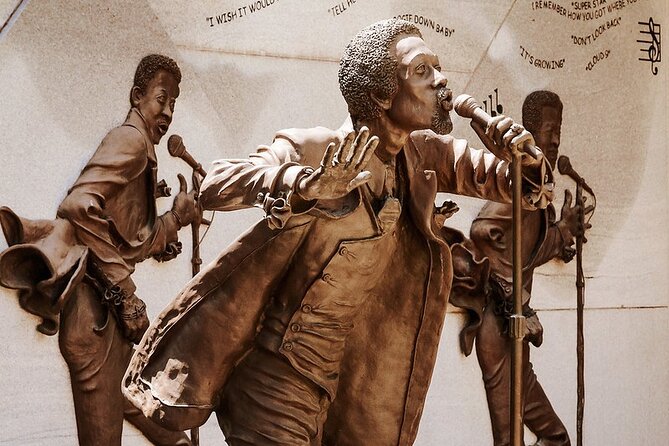
The next stop is Eddie Kendrick Memorial Park, with statues honoring the Birmingham-born founder of the Temptations. The stop takes about 10 minutes and adds music to the story.
That may seem like a change of subject, but it fits the route. Black neighborhoods were not only centers of political organizing. They produced artists, entrepreneurs, churches, schools, and local leaders. Music was part of the cultural strength that helped communities maintain identity under segregation.
The walk then considers the remains of what was once a dynamic city within a city. Possible stops include Nelson Brothers and Green Acres. The tour information does not promise entry to those businesses, so think of this part as an explanation of the district rather than a guaranteed shopping or indoor visit.
This is also where the tour’s range can be both a strength and a weakness. You receive economic, architectural, cultural, and Civil Rights context in a short period. If you prefer a strict timeline, the movement from Black business history to music and then to the national monument area may feel less sequential. If you like seeing how different parts of a community connect, the wider view is rewarding.
Carver Theater and the importance of Black entertainment
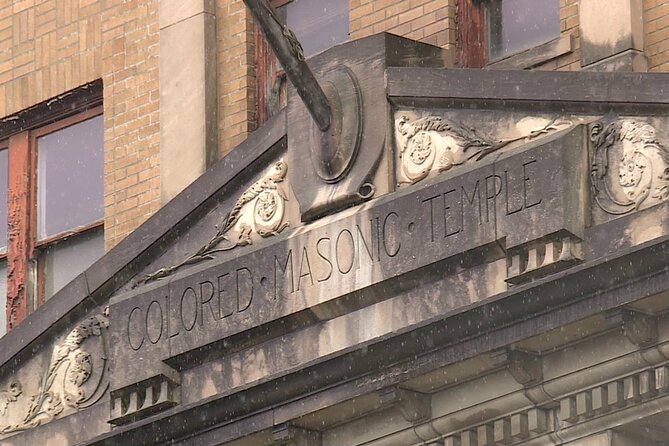
The Carver Theater is one of the route’s more distinctive stops. It was a major Black theater and is now associated with the Jazz Hall of Fame. You will also see the Prince Hall Colored Masonic Lodge.
The theater helps explain the role of entertainment during segregation. Black audiences needed their own venues, and Black performers needed places where they could work. The theater was part of a larger network that gave people access to films, live music, and public culture within the limits imposed by segregation.
The nearby Masonic lodge adds another layer. Fraternal organizations often served as important community institutions, though the tour’s supplied details do not spell out the lodge’s full role. Your guide can place it within the neighborhood’s larger story.
Expect about 10 minutes here. That is enough for an explanation and a look at the setting, but not a full theater program or extended museum visit. If you are especially interested in Birmingham music, ask questions and consider returning to spend more time at the Jazz Hall of Fame.
Same streets, a different century:
- Beneath The Streets Underground History Tour
★ 4.5 · 8,006 reviews - Big Island in a Day: Volcanoes Waterfalls Sightseeing and History
★ 5.0 · 6,569 reviews - Boston: Freedom Trail History Small Group Walking Tour
★ 5.0 · 6,450 reviews - Historic Charleston Guided Sightseeing Walking Tour
★ 5.0 · 6,216 reviews
Kelly Ingram Park, where protest history becomes physical
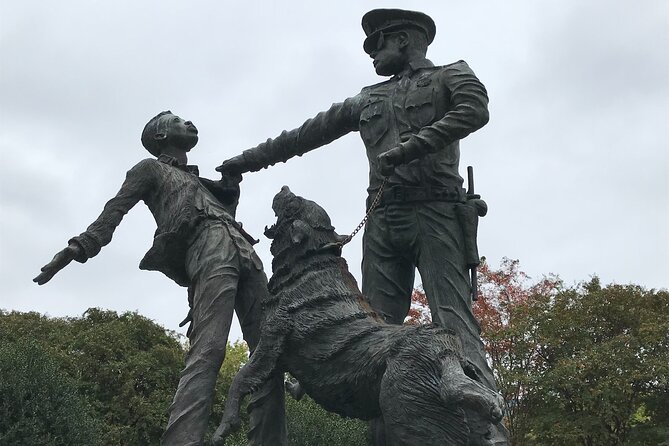
Kelly Ingram Park is the emotional center of the walk. The park served as an assembly place for the Southern Christian Leadership Conference and other Civil Rights groups. Today, sculptures depict scenes from the struggle and give the park a visual language that is easy to understand even before the guide begins speaking.
You will spend about 15 minutes here. The sculptures and open space help explain how demonstrations, arrests, police violence, and public attention came together in Birmingham. This is not a stop to rush through with a quick photograph.
I would give yourself time to listen carefully. The park can be especially affecting because the subject is not distant in a general sense. The place itself was part of the movement. The guide’s role is to connect the physical setting to the choices made by organizers, families, clergy, young people, and city officials.
For parents, this part may call for some preparation. The tour deals with racial violence and the dangers faced by children and teenagers. The information provided does not set an age minimum, but the subject matter is serious and direct.
16th Street Baptist Church and the four girls
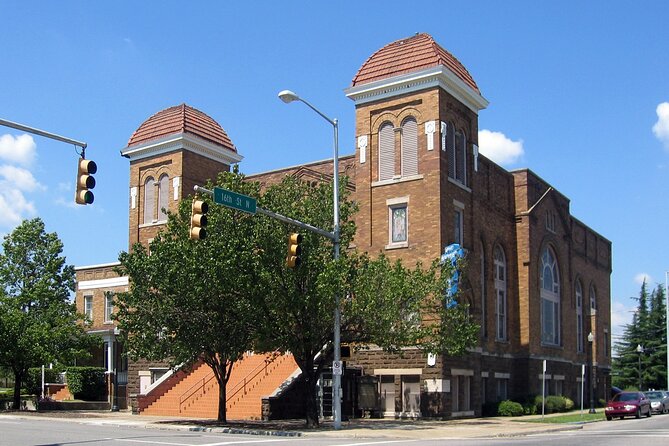
The 16th Street Baptist Church is the most important stop for many people. The church was bombed in 1963 in a racially motivated attack, killing four young girls. The names of those girls and the setting of the church give the history a human scale that dates and statistics alone cannot provide.
The tour allows about 15 minutes here. Admission to the church is not included, so do not assume the walking tour price covers an interior visit. The outdoor stop remains meaningful, but anyone hoping to see the church museum or interior should check its separate opening arrangements.
One person specifically wanted to visit the museum but found it closed. That is a useful warning: the walking experience and the church visit are not the same thing. If the museum is a priority, make a separate plan and allow more time than the tour itself provides.
The church also helps explain why Birmingham became such a major national focus in 1963. The bombing was not an isolated event in the city’s story. It followed a long period of organized resistance, discrimination, intimidation, and conflict. The guide’s job here is to place the tragedy within that wider chain of events without losing sight of the four children who died.
The A.G. Gaston Motel and Black travel in Birmingham
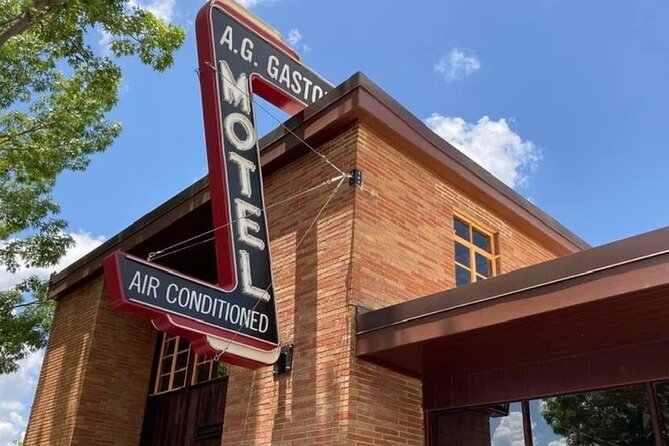
The A.G. Gaston Motel offers a different kind of Civil Rights history. Built by businessman Arthur George Gaston and opened in 1954, it provided lodging and dining for Black travelers in a city where many hotels would not serve them.
The motel was designed by Birmingham architect Stanley B. Echols. Its importance comes from both its practical role and its connection to movement leadership. Safe, respectable lodging was essential for Black businesspeople, clergy, musicians, organizers, and families traveling through the South.
This stop broadens the meaning of travel itself. Segregation affected where you could sleep, eat, use a restroom, or hold a meeting. A motel could become part of the infrastructure of political change simply because it offered a place where Black visitors could gather and plan.
The stop lasts about 10 minutes. You should expect an explanation of the site rather than a long interior tour. Even so, it is one of the route’s most useful places for understanding how business and activism overlapped.
Lyric Theatre and Birmingham’s complicated public spaces
The last listed stop is the Lyric Theatre, described as Birmingham’s only remaining theater that allowed mixed audiences, though those audiences were still segregated. That detail captures the contradictions of the era. People might share a public building, yet sit in separate areas and live under unequal rules.
The Lyric gives the tour a fitting final note because it returns to culture and public life. The route has moved from Black business and music to protest sites, then back to a theater that reveals how limited integration could be.
The visit lasts about 10 minutes. The tour then ends back at the meeting point. Since the full experience runs for approximately one hour to one hour and 30 minutes, timing can vary. Leave room in your day if you plan to visit other downtown sites afterward.
What the $65 price gets you
At $65 per person, this is not the cheapest way to see Birmingham from the sidewalk. The value depends on how much context you want.
You are paying for a guide-led route across several parts of downtown, not for admission to a series of museums. Most listed stops have no admission charge, while the 16th Street Baptist Church admission is not included. The price makes more sense if you value interpretation, local memory, and the chance to ask questions while standing at the sites.
The strongest reason to pay for this particular tour is Wilhelmina’s Birmingham background. Her personal connection appears to be especially useful when the subject shifts from national Civil Rights events to what daily life felt like in the city. A guide can also point out how the sites relate to one another, something you may miss if you visit them separately.
If you already have a strong grasp of Birmingham’s Civil Rights story and only want to see the landmarks, you might prefer a self-guided route. If you are new to the subject, the short walking format offers a sensible introduction before you choose where to spend more time.
Practical details for a smoother visit
Wear comfortable shoes and expect moderate walking. The tour is outdoors and requires a moderate level of physical fitness. Birmingham weather can change, and the experience requires good weather, so check messages before leaving your hotel.
The stated meeting point is 285 20th Street North, while the route begins at the corner of 3rd Avenue and 20th Street North. I would arrive early and confirm the exact starting location. One person reported difficulty finding the meeting place, while another noted that a parking garage was about a block away.
The tour is often booked about 22 days ahead. That is not a rule, but it suggests you should reserve early if your Birmingham schedule is tight. The maximum group size is 30, so the atmosphere may range from intimate to moderately busy depending on the date.
Free cancellation is available up to 24 hours before the start time. If the operator cancels because of poor weather or because too few people book, you should be offered another date or a full refund. Still, recent cancellation and communication problems make it wise to save confirmation emails and check for updates shortly before the tour.
Who will get the most from this walking tour
I would recommend it most strongly to first-time visitors who want a clear introduction to Birmingham’s Black history and the 1963 movement. It also suits people who prefer a human guide over reading plaques, and anyone who wants to combine Civil Rights sites with music, theater, architecture, and Black business history.
Families can find it worthwhile, especially with older children and teenagers who are ready for difficult material. The route is short enough to hold attention, but the bombing of 16th Street Baptist Church and other violence require a thoughtful approach.
It is also a good choice for visitors with only a few hours in Birmingham. You can use the tour to get your bearings, then return to the church, museum, or theater sites that interest you most.
I would hesitate to book it if you need a guaranteed departure with flawless customer service, or if you want extended indoor access at each site. The tour is primarily a guided outdoor walk, and the operator’s communication record calls for some caution.
Should you book The Sacred Ground of 1963?
Book this tour if you want Birmingham’s Civil Rights story explained by a local guide, with the streets and buildings providing the setting. Wilhelmina’s personal connection is the main reason to choose it over a simple self-guided walk, and the route gives you more than a single focus on protest. You will also see how hotels, theaters, music, zoning, and Black business shaped the city.
At $65, the tour offers fair value for a concise introduction, but not if you expect admission to every site or a long museum program. Confirm the meeting point, watch the weather, and leave time for a separate visit to the 16th Street Baptist Church museum if it is open.
For most visitors interested in Birmingham’s Civil Rights past, I would book it early and treat it as the foundation of a larger day in the city. Just keep your plans flexible enough to handle a cancellation or a change in conditions.
FAQ
How long does The Sacred Ground of 1963 tour last?
The tour lasts approximately one hour to one hour and 30 minutes.
Where does the tour begin?
The listed meeting point is 285 20th Street North, Birmingham, Alabama 35203. The route description begins near the corner of 3rd Avenue and 20th Street North, so confirm the exact meeting instructions before arrival.
Where does the tour end?
The activity ends back at the meeting point.
Is admission to the 16th Street Baptist Church included?
No. Admission to 16th Street Baptist Church is not included. The other listed stops have no admission charge.
Is the tour suitable for people with limited fitness?
The tour requires a moderate level of physical fitness because it is a walking experience.
What happens if bad weather cancels the tour?
If poor weather causes a cancellation, you should be offered a different date or a full refund.
Can I cancel for a full refund?
Yes. You can cancel at least 24 hours before the experience start time for a full refund. Changes or cancellations made less than 24 hours before the start time are not accepted for a refund.
Newest history tours we have reviewed in the USA
- 700 Year Tour – Half Day Mesa Verde Cultural Tour★ 4.5 · 109 reviews
- Self Guided Detroit’s Spirit and History Solo Walking Tour★ 4.5 · 41 reviews
- Best Downtown Detroit Historical Walking Tour★ 5.0 · 56 reviews
- Detroit’s Hidden History Guided Walking Tour★ 5.0 · 48 reviews
- Private Nightlife Tour in Denver: Culture, History, and Cocktails★ 5.0 · 48 reviews
- Historical Walking Tour Of Denver With A Haunting Twist★ 5.0 · 19 reviews
- Tip Based: Capitol Hill History & Ghost Tour★ 5.0 · 34 reviews
- Denver – Capitol Hill Guided Walking Ghost / History Tour★ 4.5 · 75 reviews
USA History Tours, compared.

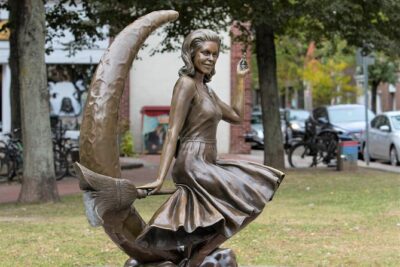
History and Hauntings of Salem Guided Walking Tour
Read our review →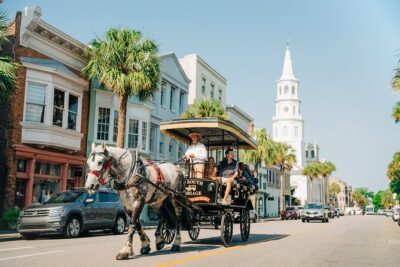
Charleston’s Old South Carriage Historic Horse & Carriage Tour
Read our review →
Big Island in a Day: Volcanoes Waterfalls Sightseeing and History
Read our review →
Freedom Trail History Small Group Walking Tour
Read our review →
Historic Charleston Guided Sightseeing Walking Tour
Read our review →