
Review · SAN ANTONIO HISTORY TOURS
Small-Group World Heritage San Antonio Missions Guided Tour
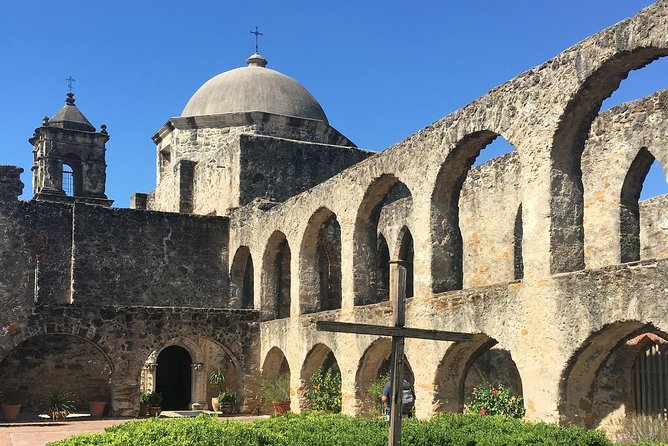
San Antonio’s mission story reaches well beyond the Alamo, and this tour gives you a practical way to see the four southern missions without sorting out routes, parking, or timing. The highlight is Mission San Jose, where the schedule lines up with the 10am Park Ranger tour.
I like the small group, capped at 10 people, and the comfortable air-conditioned vehicle. I also like having a guide connect the missions to Texas history, local culture, farming, and daily life instead of leaving you with only plaques to read.
The main caution is timing. This is advertised as about four hours, but it can run four and a half to five hours, especially when the guide has plenty to explain. Bring a solid breakfast or snack, since food is not included.
Key points to know before you book
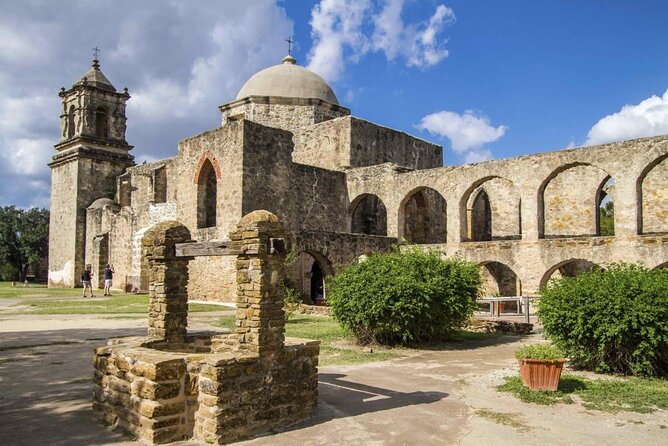
- Mission San Jose gets the most time: You arrive in time for the 10am Park Ranger program at the largest mission on the route.
- The tour covers four missions and an aqueduct: You visit Concepcion, San Jose, San Juan, and Espada, plus the Espada Aqueduct.
- The guide makes the difference: Joseph is frequently praised for his Texas history, clear voice, and enthusiasm. Matthew, Matt, and Stewart also lead tours.
- Small groups keep the ride personal: The maximum is 10 people, and the guide can answer questions and adjust drop-off help when possible.
- Expect more than four hours: The scheduled stops add up to nearly two hours before driving and explanations, so plan your afternoon with room to spare.
- Bring food and sun protection: Bottled water is provided, but snacks are not, and you will spend time walking outdoors.
Why these missions deserve your morning
The San Antonio missions are not simply old churches placed along a sightseeing route. Together, they show how religious communities, farming, water systems, and local cultures shaped this part of Texas.
That is why a guided visit can be more useful than driving from one site to the next alone. You will see the buildings, but you will also hear how the missions differed from one another and how their surrounding systems worked. A strong guide helps you notice details you might otherwise pass by.
This tour also gives you a look at the missions as UNESCO World Heritage sites. The setting is less polished and compact than the River Walk, which is part of its appeal. You are moving through working historic sites rather than a single entertainment district.
The route begins at 9am from 401 Villita Street in downtown San Antonio. You return to that same meeting point at the end, though the guide has sometimes helped with hotel drop-offs or other convenient stops. Do not count on that as a guaranteed part of the tour, but it may be worth asking politely.
More UNESCO World Heritage Tours in the USA:
- San Antonio Missions UNESCO World Heritage Sites Tour
★ 4.5 · 918 reviews - World Heritage Shirakawa-go and Experience Tours from Kanazawa
★ 5.0 · 4,049 reviews - From Tirana: Berat UNESCO Heritage & Belshi Lake Tour
★ 4.9 · 3,863 reviews
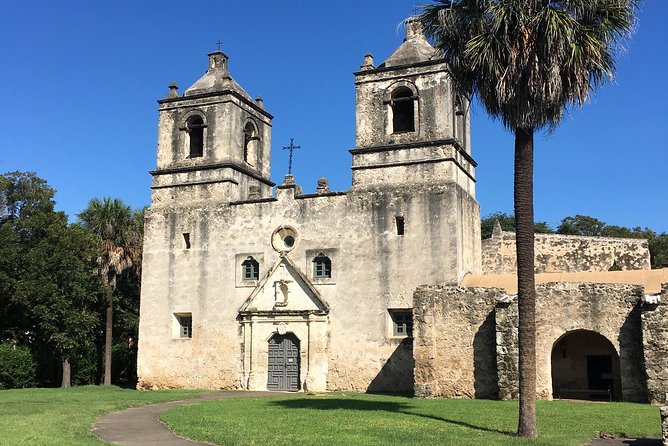
Mission Concepcion gives you the first close look
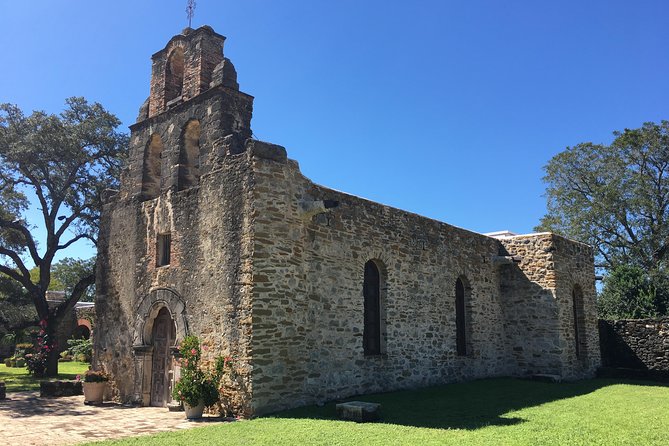
The first stop is Mission Concepcion, with about 25 minutes to visit the mission and grounds. This is a brief introduction, so you should expect to get your bearings, look around, and hear the main points rather than conduct a long independent visit.
That short stop works well early in the morning. You can begin to understand the mission layout before reaching the larger and more detailed visit at San Jose. Your guide may also point out how each mission has its own character and purpose.
The drawback is simple: 25 minutes passes quickly. If you like to linger over architecture or take many photographs, you may wish for more time here. Treat Concepcion as an orientation stop, not the place where you will learn everything about the mission system.
The tour’s air-conditioned vehicle matters at this point. You can walk the grounds, then return to a cool ride while the guide continues the story between stops. San Antonio weather can make a morning of outdoor sightseeing tiring, so that break is useful.
Mission San Jose is the centerpiece
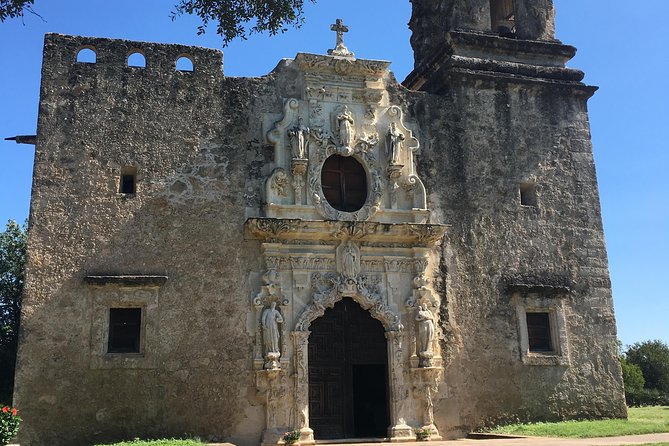
Mission San Jose receives about one hour and 15 minutes, making it the longest stop. That is the right choice. It is the largest of the current missions and the place where the schedule includes a 10am guided program led by a Park Ranger.
You should pay close attention to the departure time. Arriving for the ranger program is one of the tour’s most valuable features, since it adds another informed voice and gives the visit a clear structure. Afterward, the tour guide can add context and answer questions.
This is also the stop where the tour’s large amount of spoken information can feel like a lot. Joseph, one of the regular guides, is praised for explaining Texas and mission history in detail, with a strong voice that is easy to hear. That will suit you if you enjoy a history class on wheels. If you prefer quiet time and short explanations, you may need to politely ask for a little space to explore.
The mission itself rewards time. You have enough room to see the main areas, listen to the ranger, ask questions, and walk without feeling rushed. Still, the schedule is not an open-ended visit. Keep moving at a reasonable pace so the later stops do not get squeezed.
Mission San Juan shows the smaller scale
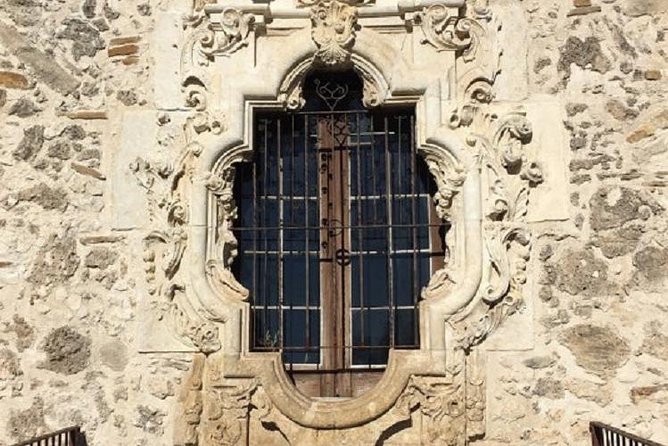
Mission San Juan Capistrano is scheduled for about 20 minutes. This is another brief visit, focused on the grounds and the basic story of the mission.
The shorter time makes sense within a half-day route that covers four missions. You get a sense of how the sites relate to one another without spending the entire day at just one location. The guide can explain what makes San Juan different from Concepcion, San Jose, and Espada.
You should not expect the same depth here as at San Jose. If your main goal is to photograph every detail or walk every corner, you may feel hurried. If your goal is to understand the full network of missions, the stop gives you a useful piece of the larger picture.
One practical note: access to some church interiors may be limited during worship. That can be disappointing if you expect to enter every building, but it is also a normal consideration at active religious sites. Ask the guide what is open on your tour date and be ready for the order of access to vary.
More Small-Group History Tours in the USA:
- Boston: Freedom Trail History Small Group Walking Tour
★ 5.0 · 6,450 reviews - Hidden Alleyways and Historic Sites Small-Group Walking Tour
★ 5.0 · 2,335 reviews - New Orleans Small-Group Haunted History Carriage Tour
★ 4.5 · 2,289 reviews - Boston: Freedom Trail History Small Group Walking Tour
★ 4.9 · 1,590 reviews
The Espada Aqueduct explains how farming worked
The Espada Aqueduct receives about 10 minutes, which is enough for a short look and an explanation of its purpose. The aqueduct helped bring water to the southernmost mission and made farming possible.
This is one of the most useful stops for understanding how the missions functioned beyond worship. Water was not a side issue. It supported crops and helped make a settled community possible.
Ten minutes is not enough for an extended walk or a long independent study. Think of this as a focused pause where the guide connects engineering with daily life. You will likely appreciate it more after seeing the mission sites, since the aqueduct helps explain how people lived and worked in the area.
The stop also breaks up the church visits. A tour made up of four similar-looking buildings could become repetitive, but the water system gives the route a different subject and a clearer sense of place.
Mission Espada closes the circuit
The final stop is Mission Espada, with roughly 20 minutes to explore the mission and grounds. As the southernmost mission on the route, it connects naturally with the aqueduct stop.
By this point, you will have enough context to compare the sites. Instead of seeing Espada as one more old church, you can consider its relationship to water, farming, community life, and the other missions along the route.
The timing is again concise. You will have time to look around and hear the main explanation, but not necessarily to explore every detail at leisure. If the tour has already run long, the guide may need to keep this final visit moving.
That is one reason to plan your day loosely. Some guides, especially Joseph, speak at length because they have a great deal to share. Most people who enjoy history will find that worthwhile, but an afternoon appointment can create pressure near the end.
What the guide adds to the experience
The guide is the heart of this tour. Joseph receives especially strong praise for his command of Texas history, his friendly manner, and his ability to answer questions. He is also described as speaking clearly and loudly enough for a guest with hearing difficulty to follow comfortably.
Matthew is also described as well informed, friendly, and professional. Matt has led tours with enthusiasm, and Stewart is noted for using researched anecdotes to bring city history to life. You may not know in advance which guide will lead your departure, so expect the style to vary.
The common strength is spoken interpretation. You are not just being delivered to the missions. The guide explains the differences between them and places the sites in a wider story about Texas, religion, farming, and local communities.
That can also be the tour’s weak point. One guest felt there was too much talking about politics and modern San Antonio rather than the missions themselves. Another found the amount of information hard to keep up with. I would book this tour if you like sustained commentary, but I would choose self-guided visits if you want long quiet stretches.
Small-group transport keeps the route simple
The vehicle is air-conditioned, and bottled water is included. That combination is practical in San Antonio, where outdoor walking can be tiring even during a short morning.
With a maximum of 10 people, the group is small enough for questions and personal attention. You are not being moved through the sites in a large coach with dozens of people. The guide can usually see whether the group needs more time, a slower pace, or clearer directions.
The meeting point is 401 Villita Street, and the tour begins at 9am. It ends back at the same meeting point. The route is near public transportation, but the tour itself handles the driving between missions, which is its main logistical advantage.
You will still walk at each stop. This is not a ride-by sightseeing loop. Wear comfortable shoes and bring protection from the sun. Water is supplied, but snacks are not, so eat breakfast and consider carrying something small if your plans and the rules for the vehicle allow it.
Is the four-hour schedule realistic?
The listed duration is about four hours, but the actual experience can run longer. Several departures have lasted four and a half to five hours, and the detailed explanations are the main reason.
The scheduled stop times total about one hour and 55 minutes. Add the vehicle time between five locations, the 10am ranger program, questions, and walking, and you can see why the clock may stretch.
I would not book a timed lunch, museum entry, or airport transfer immediately afterward. Give yourself a generous buffer. If you have only one free morning, the extra time may be a concern. If your schedule is open, the longer version can feel like better value because you receive more interpretation rather than being rushed from site to site.
The tour is most rewarding when you treat it as a half-day history program, not a quick four-hour shuttle.
Who gets the best value from this tour?
This experience makes sense for you if you want to see all four missions but do not want to drive between them. It is also a good fit if you want the background explained in person and appreciate having a guide identify what matters at each stop.
History fans will likely get the most from it. The guide may talk continuously, and the subject goes beyond church architecture into Texas history, local culture, politics, water, farming, and the people who lived and worked at the missions.
It can also suit solo visitors and couples who want an easy way to meet a few other people without joining a large bus group. The small vehicle keeps the atmosphere more personal.
Families need to note the age rule. Children under 8 are not allowed. Most other participants can take part, and service animals are allowed.
You may want a different approach if you dislike long explanations, need a firm end time, or prefer to spend an hour or more at every site. The brief stops at Concepcion, San Juan, and Espada are designed to cover the full route, not satisfy a specialist’s every question.
What the value comes from
No admission fees are listed for the mission stops, so the value of the tour comes from transportation, time saved, group size, and interpretation. You are paying for a guide to organize the route, get you to five historic points, and provide context that would take research to assemble on your own.
The 10am ranger program at Mission San Jose adds value without requiring you to arrange it separately. The air-conditioned vehicle is another practical benefit, especially if the day is hot.
The strongest value comes when you want all four missions in one morning and do not have a car. If you already know the mission system well and enjoy reading signs at your own pace, the guided format may feel less necessary.
A few guides also offer San Antonio suggestions during the ride. One guide recommended Pinkerton’s barbecue and its smoked bread pudding, but consider that a pleasant extra rather than part of the tour itself. The focus remains the missions.
Booking, cancellation, and small practical details
You receive confirmation at booking. Free cancellation is available up to 24 hours before the local start time for a full refund. Changes or cancellations made inside that 24-hour window are not accepted for a refund.
The tour needs good weather. If poor weather causes cancellation, you are offered another date or a full refund.
Service animals are allowed, and the experience is near public transportation. The tour is offered in English. Since the vehicle has a maximum of 10 people, the small-group format may fill quickly on popular dates.
Should you book the San Antonio missions tour?
Book it if you want a guided, efficient route through Mission Concepcion, Mission San Jose, Mission San Juan, the Espada Aqueduct, and Mission Espada. The small group, air-conditioning, bottled water, and 10am ranger program make the morning easy to manage.
I would especially recommend it for first-time mission visitors, history fans, and anyone without a car. Joseph, Matthew, Matt, and Stewart bring different styles, but the strongest common feature is serious preparation and plenty of explanation.
Skip it if you need a strict four-hour finish, dislike extended commentary, or want long independent visits at every mission. For everyone else, leave your afternoon open, eat breakfast, and let the route take the time it needs.
FAQ
How long does the tour last?
The tour is scheduled for about four hours, but it can run four and a half to five hours. Plan extra time after the stated end of the tour.
What time does the tour start?
The tour starts at 9am.
Where does the tour meet?
The meeting point is 401 Villita Street, San Antonio, Texas 78205.
Where does the tour end?
The activity ends back at the meeting point.
Which missions are included?
The route includes Mission Concepcion, Mission San Jose, Mission San Juan Capistrano, and Mission Espada.
Is the Espada Aqueduct included?
Yes. The tour includes a brief visit to the Espada Aqueduct, which helped bring water to the southernmost mission for farming.
Will I attend a Park Ranger program?
The tour is scheduled to arrive at Mission San Jose in time for the 10am guided program led by a Park Ranger.
Is transportation provided?
Yes. Transportation between the stops is provided in an air-conditioned vehicle.
Is bottled water included?
Yes. Bottled water is included, but snacks are not.
Can children under 8 join?
No. Children under 8 years old are not permitted on this tour.
How many people can join the group?
The group has a maximum of 10 people.
Is cancellation free?
You can cancel at least 24 hours before the start time for a full refund. If poor weather causes the tour to be canceled, you are offered another date or a full refund.
Newest history tours we have reviewed in the USA
- Nashville: Belle Meade Historic Mansion Tour★ 4.8 · 63 reviews
- Beaufort: Local History and Film Sites Tour by golf cart★ 4.9 · 102 reviews
- Boston: Guided Seafood Tasting and History Tour★ 4.9 · 90 reviews
- Beaufort: Gullah Heritage Tour★ 4.8 · 26 reviews
- Beaufort: Historic City Tour by Bus★ 4.9 · 228 reviews
- Austin: Downtown Austin Haunted History Tour★ 4.4 · 31 reviews
- Austin: Morning History Walking Tour of Downtown Austin★ 4.9 · 71 reviews
- Atlanta: Beltline Food, Street Art, and History Walking Tour★ 5.0 · 47 reviews
UNESCO World Heritage Tours, compared.
World Heritage Shirakawa-go and Experience Tours from Kanazawa
Read our review →

Bali: Tanah Lot UNESCO World Heritage Sites Full-Day Tour
Read our review →
World Heritage Kyoto & Nara Uji Authentic Matcha Experience
Read our review →
UNESCO’s Ayutthaya Historical Park: Full-Day Tour from Bangkok
Read our review →
Rotterdam: Kinderdijk UNESCO World Heritage Entry Ticket
Read our review →
From Busan: Gyeongju UNESCO World Heritage Guided Day Tour
Read our review →Browse the lists this tour appears in