
Review · USA HISTORY TOURS
San Francisco: Chinatown Food and History Walking Tour
San Francisco Chinatown is easiest to understand with one foot on the pavement and something tasty in your hand. This 150-minute walk links food and local history in a sensible route, from Dragon’s Gate and Stockton Street to Portsmouth Square and a fortune cookie factory. Along the way, you sample Chinese cookies or pork buns, tea, dim sum, and a fortune cookie.
I like the small group of up to 12, which gives you a better chance to hear the guide and ask questions on crowded streets. I also like the food choices: Eastern Bakery gives the tour a personal bakery stop, while Delicious Dim Sum provides a proper bite rather than a token sample. The main consideration is the price, $85 per person, and the fact that some food items depend on availability. This is a walking tour, not a full meal.
Key points to know
- Start at Dragon’s Gate: Meet 15 minutes early in front of the Starbucks near the main Chinatown entrance.
- Follow a food-focused route: Stop for Chinese cookies or pork buns, tea, dim sum, and a fortune cookie.
- See more than the postcard streets: The walk includes Stockton Street, Portsmouth Square, Old Saint Mary’s Cathedral, and less obvious corners.
- Expect plenty of history: The guide covers Chinatown, the Gold Rush, California’s early development, and Chinese religious culture.
- Plan for an English tour: A professional local guide leads the experience, and Gray Line San Francisco staff wear a uniform.
- Allow two and a half hours: The pace combines walking, explanations, photo stops, and several food tastings.
Starting at Dragon’s Gate
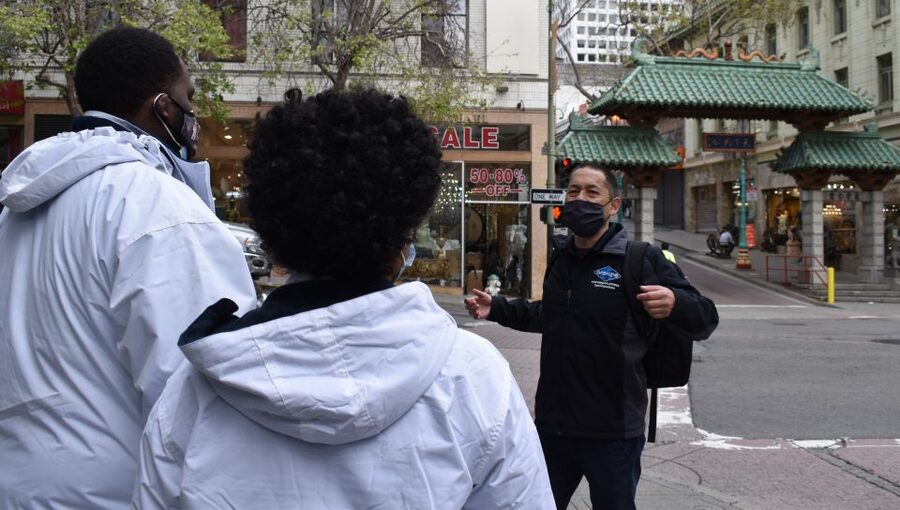
Your meeting point is easy to identify if you know what to look for. Arrive 15 minutes before the start time and find the guide in a Gray Line San Francisco uniform, in front of the Starbucks located by Dragon’s Gate.
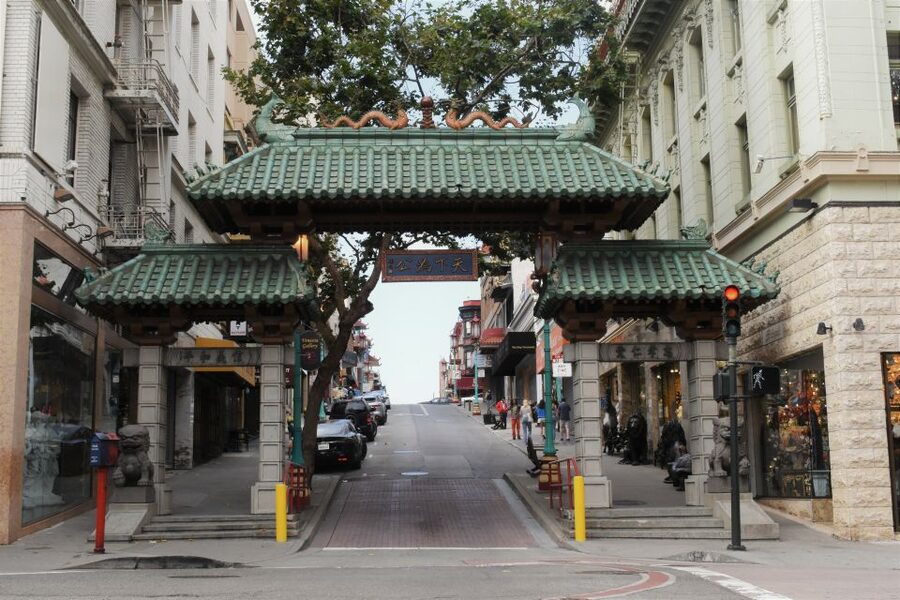
Dragon’s Gate is the natural opening point. It is the main entrance to Chinatown and gives you an immediate sense of the neighborhood’s public face, with Chinese design details and decorative street elements nearby. Starting here also helps you get your bearings before the tour moves into smaller streets and food stops.
This is an urban walking tour, so wear shoes you can use comfortably for 150 minutes. The information provided does not list a hotel pickup or drop-off, so you need to make your own way to the meeting point. The route is built around walking, stopping, tasting, and listening rather than riding between sights.
The group is limited to 12 people. That matters in Chinatown, where sidewalks and shop interiors can feel tight. A smaller party should make it easier to stay with the guide, hear the explanations, and ask about a food or building that catches your eye.
More History Walking Tours in the USA
- History and Hauntings of Salem Guided Walking Tour
★ 5.0 · 14,564 reviews - Boston: Freedom Trail History Small Group Walking Tour
★ 5.0 · 6,450 reviews - Historic Charleston Guided Sightseeing Walking Tour
★ 5.0 · 6,216 reviews
Stockton Street and Chinatown’s everyday food scene
One of the most useful parts of the walk is the time spent on Stockton Street. You pass markets selling fresh and less familiar foods, giving you a look at the shopping side of Chinatown rather than only its decorated entrance streets.
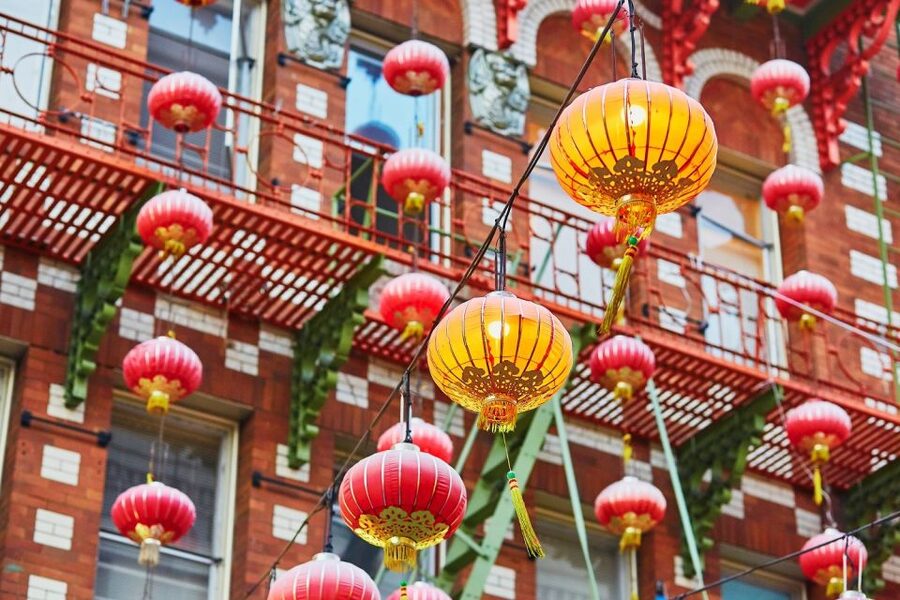
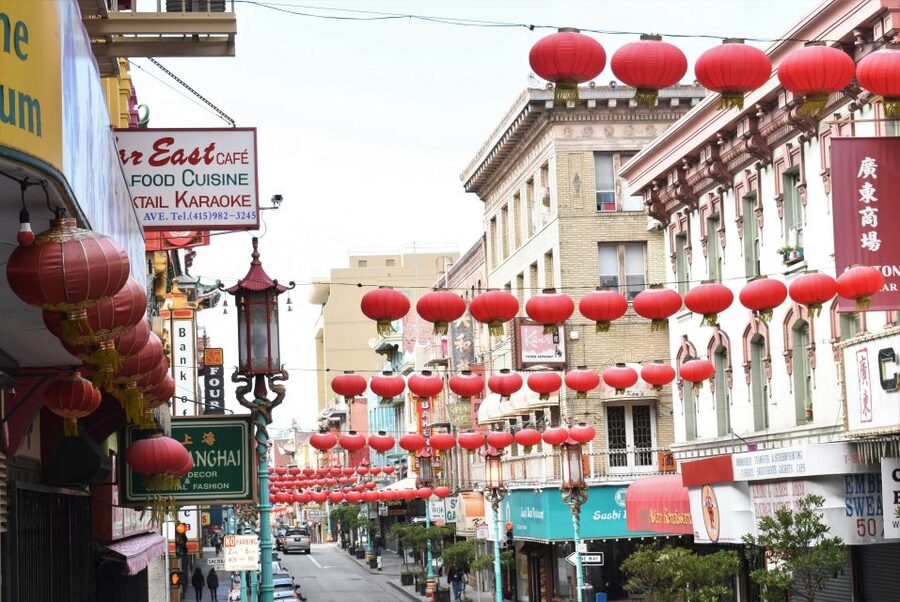
This is where the tour can feel most grounded. Instead of treating Chinatown as a collection of photo stops, the guide explains how the neighborhood functions in the present day. You see food markets, street decorations, and buildings with pagoda-style design while learning about the area’s culture and continuing identity.
The route includes photo stops, but it is not only a sightseeing circuit. I like that balance. You get time to take pictures, yet the guide keeps connecting the details to the larger story of Chinatown. The result should help you recognize why a market, storefront, or public square matters, not just whether it looks good in a photograph.
The streets can be lively and crowded, and that is part of the setting. Keep your group in sight and expect the guide to pause often. If you prefer a quiet, slow stroll with long stops at each site, this may feel brisk. If you want a clear introduction to the neighborhood in one outing, the pace makes sense.
Eastern Bakery, cookies, tea, and a personal touch
Eastern Bakery is one of the tour’s more distinctive stops. You can taste traditional Chinese cookies and choose tea, or you may receive traditional pork buns if those are available that day.
The important detail here is the chance to learn about the food from the bakery owners, including cooking tips. That gives the stop more purpose than simply buying a sweet and moving on. You get a small window into how familiar bakery items are made and why they belong in Chinatown’s food culture.
The exact treat is not guaranteed. The activity information specifically says cookies or pork buns are subject to availability, so do not book this expecting one particular item. The tea selection is also described as a choice, but no list of teas is provided.
This is a modest tasting, not a bakery lunch. I would think of it as one part of a series of samples. It works especially well for anyone who enjoys learning what they are eating, and it gives you a useful place to return to if you want more after the tour.
Old Saint Mary’s Cathedral and Chinatown’s religious story
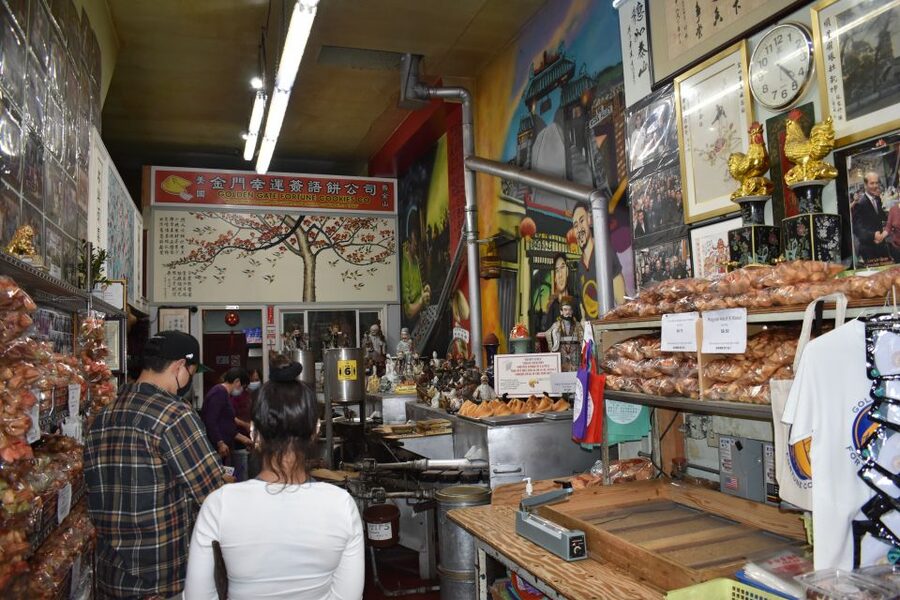
The stop at Old Saint Mary’s Cathedral adds a different side of the neighborhood. The tour uses the cathedral to discuss religious culture and history, broadening the experience beyond restaurants and markets.
That change of subject is welcome. Food tours can sometimes reduce a neighborhood to a menu, but this route also looks at institutions, belief, and the way Chinatown developed within San Francisco. The cathedral stop helps place Chinese American history within the wider story of the city.
The information provided does not promise an extended interior visit or a private religious tour. You should expect a guided stop and commentary rather than a long service-style visit. Still, it gives the walk a useful pause between food tastings and historic public spaces.
For first-time visitors, this kind of context is valuable. You may remember the cookies and dim sum most clearly, but the explanation around Old Saint Mary’s Cathedral helps you see Chinatown as a community with many layers.
More Food and History Tours in the USA:
- New Orleans Food and History Walking Tour
★ 5.0 · 1,544 reviews - Boston Pizza Lovers Food and History Walking Food Tour
★ 4.5 · 1,082 reviews - Savannah: Historic District Foodie Walking Tour
★ 4.8 · 613 reviews - Boston’s North End Food and History Walking Tour
★ 5.0 · 459 reviews
Portsmouth Square and the beginnings of San Francisco
Portsmouth Square is the tour’s major history stop. Here, the guide explains the area’s role in the Gold Rush, California’s early development, and the origins of Chinatown.
This is where the walk moves from neighborhood detail to citywide history. San Francisco’s story is often told through famous hills, cable cars, and the bay, but Portsmouth Square connects the city’s early growth to the streets you are standing on. The guide’s job is to join those pieces together.
Several people who took the tour singled out Joseph, also called Joe, for his strong grasp of San Francisco and Chinatown history. If he leads your group, you can expect detailed explanations and a friendly, professional approach. A different guide may lead on your date, so treat Joseph’s involvement as a possibility, not a guarantee.
I especially like having this stop in the middle of the route. By this point, you have seen how Chinatown looks and eats today. Portsmouth Square gives you a framework for understanding how the district began and how its past fits into California’s story.
Delicious Dim Sum makes the tour feel like lunch
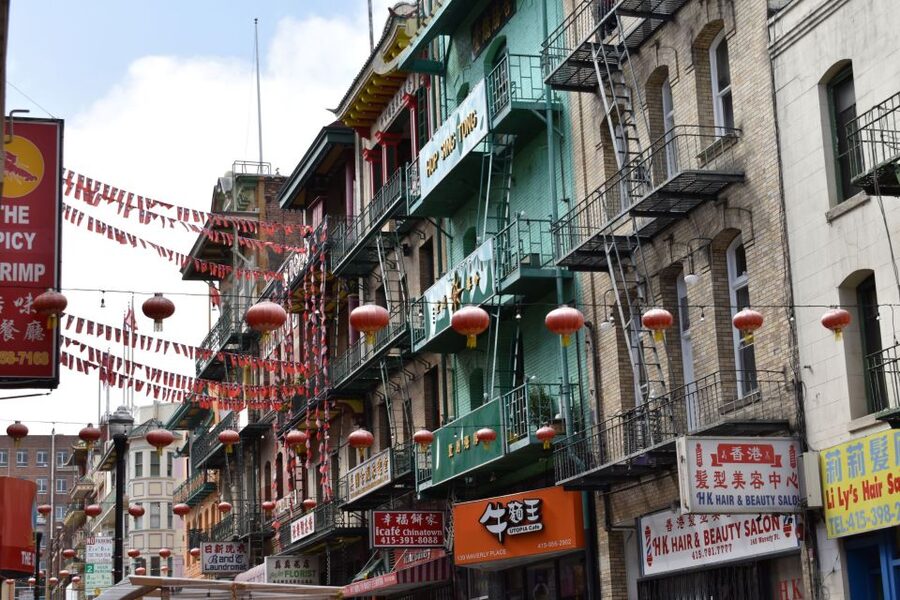
The stop at Delicious Dim Sum is the main savory tasting. You receive homemade dim sum, described as some of the best in the city, though the tour does not specify the exact dishes or number of pieces.
That uncertainty is worth noting. You should expect a tasting rather than a complete dim sum meal with a long menu. If you have a large appetite, plan another meal later. If you want a sample that helps you decide what to order on your own, this stop does the job.
The food also gives the guide something practical to explain. Dim sum is best understood by seeing and tasting it, not just hearing a definition. You can ask questions as you eat, and the small-group format should make that easier.
Several people who took the tour enjoyed the food enough to return to one of the small restaurants afterward. That is a useful sign for planning: pay attention to the places you pass, and keep some room in your schedule if you want to eat more after the walk.
Food allergies and dietary restrictions are not addressed in the supplied details. If this matters to you, ask the operator before booking rather than assuming every tasting can be changed. The same advice applies if you need a specific dish.
A fortune cookie factory for the final stop
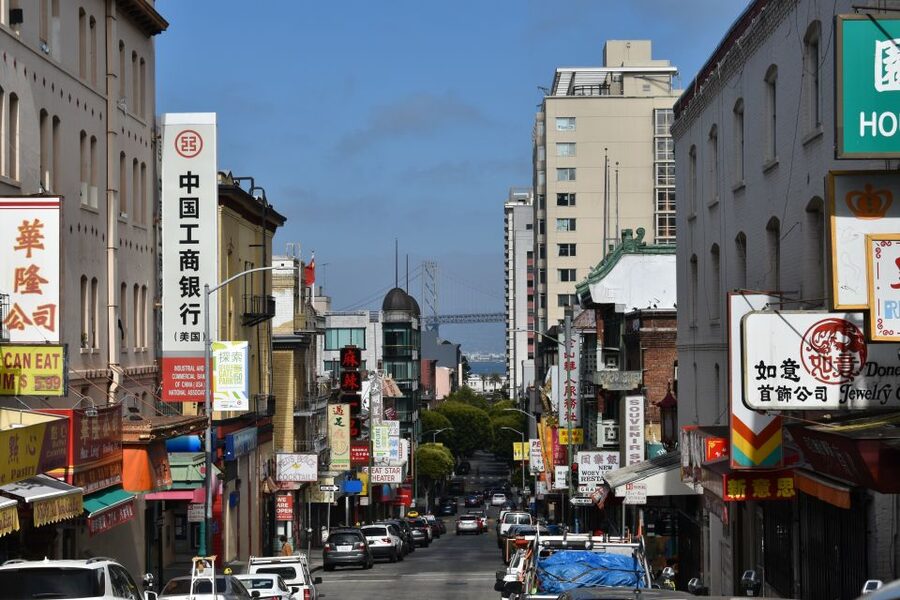
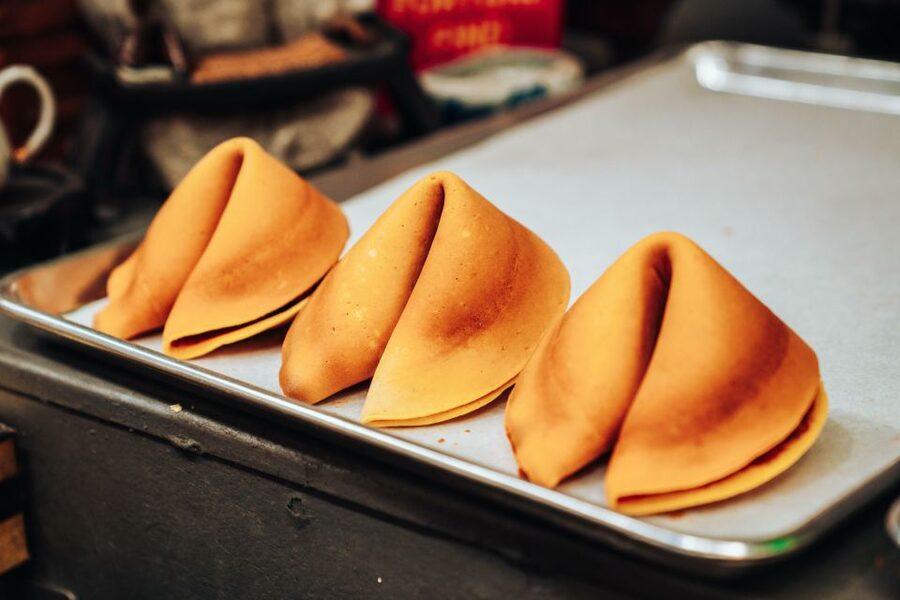
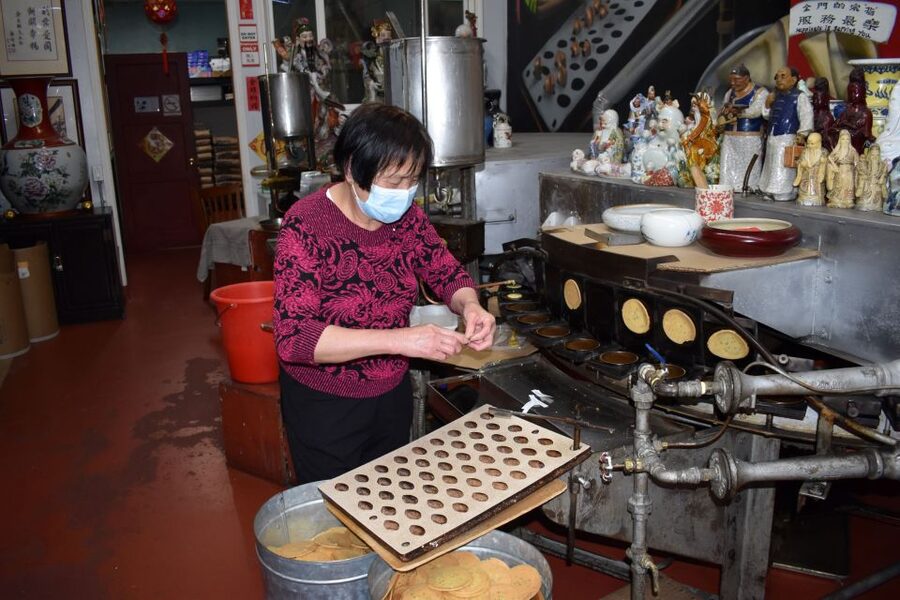
The tour ends at a fortune cookie factory. You taste a fortune cookie, see how it is cooked, and learn about the history and meaning of fortune.
This is a fitting finish because it combines food, craft, and a familiar symbol of Chinatown. The factory visit also gives you something different from the earlier bakery and dim sum stops. Instead of tasting a finished restaurant dish, you learn about the technique behind a small item many people associate with Chinese American dining.
The stop is brief enough to fit the overall schedule, but it gives the tour a clear ending. You leave with a final food sample and a better idea of how a simple cookie became part of the neighborhood’s public image.
I would not book the experience expecting a large-scale factory visit. The information promises a visit, tasting, and explanation of cooking techniques, not a long production tour. Think of it as a compact working-food stop that rounds out the afternoon.
What $85 buys you
At $85 per person, this is not the cheapest way to walk around Chinatown. You can enter the neighborhood on your own for free, visit public streets and squares without a ticket, and buy individual snacks as you go.
The value comes from the combination. Your fee covers a professional local guide, a small group, photo stops, bakery tasting, dim sum, and a fortune cookie factory visit. You are also paying for the route and the explanations that connect the stops. For someone new to San Francisco, that can save time and remove the guesswork from choosing where to eat.
I see the price as reasonable for a visitor who wants a guided introduction and several food samples. It is less compelling for someone who already knows Chinatown, prefers to eat full portions, or is happy to explore without background information.
The food is part of the value, but do not treat the tour as a substitute for lunch. The exact bakery item depends on availability, and the amount of dim sum is not stated. Set aside money for anything else you want to order, especially if you find a restaurant worth revisiting.
Who will get the most from this walk
This tour suits first-time visitors who want Chinatown explained in one organized outing. It also works well for people who like to learn through small tastings rather than sit through a long lecture.
Families may appreciate the mix of movement, food, pictures, and short stops. The activity information describes the tour as family-friendly through the guide experience, but it does not provide a minimum age or detailed accessibility information. Ask Gray Line San Francisco directly if either point is important for your group.
History-minded visitors should find plenty to enjoy at Portsmouth Square and Old Saint Mary’s Cathedral. Food-focused visitors get a useful introduction to cookies, tea, dim sum, and fortune cookies. The best match is someone who wants both subjects, since neither food nor history receives the whole two and a half hours.
You may want another plan if you dislike group walks, need a full meal, or want a tour in a language other than English. The live guide speaks English, and English is the only language listed.
For the smoothest experience, eat lightly beforehand, arrive early, wear comfortable shoes, and keep your schedule flexible enough for the full 150 minutes. You do not need to rush between separate appointments, but the tour does include several stops and a fair amount of street walking.
Booking details worth keeping in mind
The experience lasts 150 minutes, with starting times varying by date. Check availability when you choose your day.
You can cancel up to 24 hours in advance for a full refund. A reserve-now, pay-later option is also available, which helps if your San Francisco plans are still shifting.
The meeting point is not a hotel. You need to reach the Starbucks in front of Dragon’s Gate yourself and look for the Gray Line San Francisco uniform. Arriving 15 minutes early is sensible, especially if you are unfamiliar with Chinatown’s entrances.
The group size is capped at 12, but the tour is still a public walking experience. Expect to share the guide’s attention with other people rather than receive a private tour.
Should you book this Chinatown tour?
I would book it if you want a well-organized first look at Chinatown with real food stops and clear historical context. The strongest features are the small group, the route through Stockton Street and Portsmouth Square, the bakery cooking tips, and the mix of dim sum with a fortune cookie factory.
I would skip it if you already know the neighborhood well or want a large, leisurely meal. At $85, the tour earns its price through the guide and the range of tastings, not through the quantity of food.
For most first-time visitors, it is a smart introduction. You get enough history to understand the streets, enough food to guide your next meal, and enough local detail to return to Chinatown with a better plan.
FAQ
Where does the Chinatown food tour meet?
Meet in front of the Starbucks cafe located in front of Dragon’s Gate, the main entrance to San Francisco Chinatown.
How early should I arrive?
Arrive 15 minutes before the activity starts.
How long does the tour last?
The tour lasts 150 minutes, or two and a half hours.
What language is the tour conducted in?
The live tour guide speaks English, and English is the listed tour language.
How large is the group?
The experience is limited to a small group of up to 12 people.
What food is included?
The tour includes traditional Chinese cookies or traditional pork buns, depending on availability, dim sum at Delicious Dim Sum, and a fortune cookie at the fortune cookie factory.
Is tea included?
Yes. At Eastern Bakery, you can taste traditional Chinese cookies and tea of your choice.
Does the tour include a full meal?
No. It includes several tastings, including dim sum, but the information does not describe a full meal.
Is hotel pickup included?
No. Hotel pickup and drop-off are not included. You must make your own way to the meeting point.
Can I cancel for a refund?
Yes. You can cancel up to 24 hours in advance for a full refund.
Newest history tours we have reviewed in the USA
- Self Guided Detroit’s Spirit and History Solo Walking Tour★ 4.5 · 41 reviews
- Detroit’s Hidden History Guided Walking Tour★ 5.0 · 48 reviews
- Best Downtown Detroit Historical Walking Tour★ 5.0 · 56 reviews
- Private Nightlife Tour in Denver: Culture, History, and Cocktails★ 5.0 · 48 reviews
- Historical Walking Tour Of Denver With A Haunting Twist★ 5.0 · 19 reviews
- Tip Based: Capitol Hill History & Ghost Tour★ 5.0 · 34 reviews
- Denver – Capitol Hill Guided Walking Ghost / History Tour★ 4.5 · 75 reviews
- JFK Historical Tour★ 5.0 · 22 reviews
Food & History Tours, compared.
Sevilla Food Tour: Tapas, Wine, History & Traditions
Read our review →
Dublin Historical Centre Food Tour with 8 Food Tastings & Drinks
Read our review →
Boston Pizza Lovers Food and History Walking Food Tour
Read our review →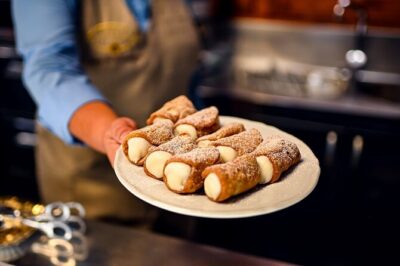
Rome Food Tour in the Historic Centre with 8+ Food Tastings
Read our review →Browse the lists this tour appears in