

Review · ATHENS HISTORY TOURS
PARADISIAL PELOPONNESE | Semi-Private 8-Day Guided Tour
The most appealing part of this eight-day Peloponnese tour is its small scale. With no more than six people, you can hear your archaeologist guide clearly, stop without herding through the ruins, and get to know the towns rather than simply checking off monuments. The route joins Athens highlights with Mycenae, Epidaurus, Olympia, Monemvasia, and several quieter archaeological sites.
I like the mix of ancient places and local life, especially the seafood cooking lesson in Nafplio and the Agiorgitiko wine tasting in Nemea. I also like the range of guides associated with the tour, including George, Babis, and Aristotle Koskinas, who are praised for bringing Greek history to life. The main drawback is the pace: eight days cover a lot of ground, and some road days are long.
Key points at a glance
- Six-person maximum: You travel in a private minivan with a small, adults-only group.
- Archaeology with context: A certified English-speaking archaeologist guides you through major sites and lesser-known ruins.
- Seven different bases: Nights in Nafplio, Monemvasia, Pylos, Kalavryta, and other stops give you more than a quick bus tour.
- Food is part of the trip: A seafood cooking lesson, wine tasting, and meals add a welcome human touch to the monuments.
- Four- and five-star hotels: Lodging is included, which helps justify the high price.
- Moderate physical fitness required: Expect uneven ruins, steps, walking, and full sightseeing days.
Why the six-person format matters
Large coach tours can make ancient Greece feel like a parade. You follow a flag, wait at the gate, and hear only fragments of the explanation. This experience keeps the group to six people, so you get a private minivan, private touring, and far more room for questions.
That matters most at sites such as Mycenae and Ancient Messene, where the remains are spread across open ground. A guide can adjust the pace, explain what you are seeing, and give you time for photographs without holding up a busload of people.
The age limit is 16, so this is designed for adults and older teenagers. It suits couples, friends, and families with older children who want serious archaeology without a formal academic atmosphere. You still need a moderate level of fitness. Ancient sites have rough paths, exposed areas, stairs, and very little shade.
The tour begins at the Royal Olympic Hotel in Athens at 8:00 pm. That evening schedule appears to pair with the welcome dinner overlooking the Acropolis, so confirm the exact first-night meeting details before booking.
More Private History Tours in Athens
- Private Biblical Tour Ancient Corinth & Isthmus Canal from Athens
★ 5.0 · 762 reviews - Private Tour of Apostle Paul’s Footsteps in Ancient Corinth
★ 5.0 · 275 reviews - Ancient Corinth, Epidaurus, Nafplio full day private tour from Athens
★ 5.0 · 206 reviews
Athens begins with the Acropolis
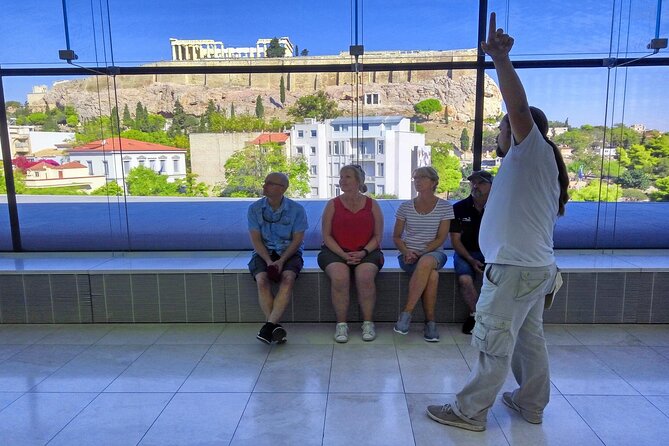
Your first full sightseeing day starts where it should: the Acropolis. The guided visit lasts about two hours and includes admission, giving you time to see the central monuments while your guide explains the architecture and the city below.
The Acropolis Museum follows, also with about two hours inside. Its modern galleries help you understand the pieces that cannot be seen on the hill itself. The museum also places the Acropolis in a longer timeline, reaching back to the sixth century BC.
The day continues with short views of the Herod Atticus Odeon, the Temple of Olympian Zeus, and the Panathenaic Stadium. These stops are brief, around 15 minutes each, so think of them as focused introductions rather than full visits. The stadium is especially memorable because it preserves the setting of ancient athletic contests and later became a major symbol of the modern Olympic Games.
Then you cross the Corinth Canal, a dramatic 6.3-kilometer waterway cut through the isthmus. It separates the Peloponnese from mainland Greece and connects the Aegean and Ionian seas. The stop is only about 15 minutes, but it breaks up the drive and gives you a useful geographic marker: from here on, you are touring the Peloponnese.
Nafplio adds food and atmosphere
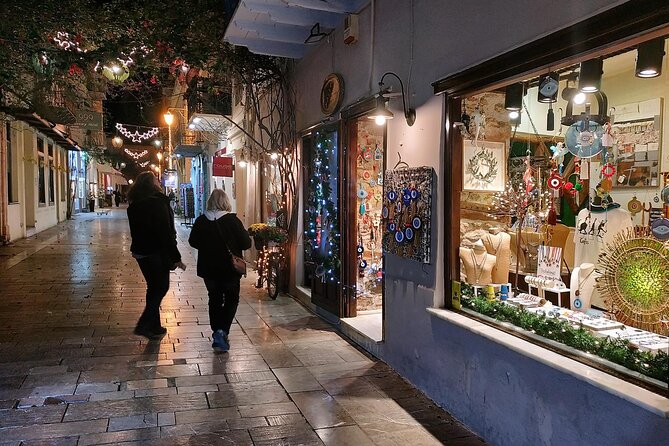
Nafplio is one of the strongest overnight stops. It was Greece’s first capital and still has elegant Venetian buildings, narrow lanes, and a harbor-facing setting. After a full sightseeing day, you get time to walk around rather than simply sleep near a highway.
The evening seafood cooking presentation is a welcome change from ruins. A local chef leads the lesson, then you eat what you have prepared with views toward the harbor. This is the kind of experience that helps you connect ancient Greece with the country you are visiting today.
The tour includes a cooking lesson and wine tasting, but the supplied details describe some meals as optional, including up to five lunches, three dinners, and seven breakfasts. Ask exactly which meals are included in your booking and which are optional. Alcoholic drinks are not included.
Epidaurus, Nemea, and the taste of Agiorgitiko
The Ancient Theatre of Epidaurus is one of the trip’s essential visits. Its acoustic design is famous, but the setting and proportions are just as impressive. Your two-hour visit gives the guide enough time to explain the theater and the religious center around it without reducing the stop to a quick photograph.
Nemea shifts the focus from theater to wine. Here you taste Agiorgitiko, a red wine linked in local tradition with Hercules and the Nemean Lion. The tasting gives you a break from stone and mythology while introducing one of the Peloponnese’s best-known local varieties.
Ancient Nemea is nearby and rewards a slower visit. You see the Doric Temple of Zeus and the Nemean Stadium, dating to the sixth century BC. You can even run on the original track. It is a simple, playful moment, and one of the few ancient sites where you can physically connect with the athletic setting rather than only look at it.
The two-hour blocks at Nemea and Ancient Nemea make this day feel less rushed than the Athens sightseeing day. Still, you should expect heat and open ground, especially in summer. Bring water, a hat, and shoes that handle uneven surfaces.
More Private History Tours in Greece
- The History of Athens: Greek Mythology Private Tour
★ 5.0 · 138 reviews - Ancient Corinth, Mycenae, Epidaurus, Nafplio full day private tour from Athens
★ 5.0 · 130 reviews - Ancient Corinth and Canal half day private tour from Athens
★ 5.0 · 96 reviews - Ancient Olympia full day private tour from Athens
★ 5.0 · 83 reviews
Mycenae and the road to Monemvasia
Mycenae is the day’s major archaeological stop. The Lion Gate is one of the most recognizable entrances in Greece, and the Treasury of Atreus gives you a powerful sense of the engineering and ceremony of the Mycenaean world. The site covers exposed ground, so your guide’s explanation is especially useful for making sense of foundations and walls that can otherwise seem scattered.
The stop is tied to the world of Agamemnon, though the archaeological evidence and later Greek legends are not the same thing. A good guide should help you separate Bronze Age remains from the stories added centuries later. The archaeologist-led format is valuable here because it gives you that distinction without flattening the site into a mythological postcard.
Sparta receives only about 30 minutes, focused on the Monument of Leonidas. This is not a full exploration of ancient Sparta, and you should not book the tour expecting one. Instead, treat it as a short historical pause on the way to Monemvasia.
Monemvasia is the overnight setting, and it provides one of the trip’s sharpest changes of mood. The medieval castle town is separated dramatically from the mainland, with stone lanes and preserved buildings inside the fortified settlement. The long stop allows you to see it as a place, not just a monument. Wear firm shoes, since old streets can be uneven and walking is part of the experience.
Ancient Messene and seaside Pylos
Ancient Messene is one of the most rewarding stops for anyone who wants more than the famous names. Its theater, stadium, fortification walls, and broad archaeological remains sit in a peaceful valley surrounded by hills. The site gives you a clearer sense of how a Greek city functioned, with public spaces and defensive works spread across a substantial area.
Unlike a quick temple stop, Messene asks you to walk and picture the city as a whole. That is a strength, but it also means sun exposure and uneven ground. Plan on taking the guide’s explanations in stages rather than trying to absorb everything at once.
Pylos brings you back to the sea. The town is used as an overnight base, so you have time to enjoy its calmer pace after the archaeology-heavy days. The itinerary does not specify a separate guided walking tour of the town, so your free time will likely be your chance to explore at your own speed.
Niokastro and the Palace of Nestor
The New Castle of Pylos, or Niokastro, guards the bay and shows a different side of Greek history. Its fortifications reflect the strategic value of the harbor long after the Bronze Age. The two-hour visit gives you time to look beyond the walls and understand why this location mattered.
The Palace of Nestor returns you to the Mycenaean period. The megaron, storage rooms, and references to Linear B offer a rare look at administration and early Greek writing. This is an important stop for anyone who has already seen Mycenae and wants to understand how Bronze Age power worked beyond royal tombs and monumental gates.
The setting also helps. The surrounding countryside makes the palace easier to picture as a working center, rather than an isolated pile of foundations. Because both Niokastro and the Palace of Nestor include admission, you spend a full day with two distinct periods of Greek history.
Olympia, trout, and mountain roads
Ancient Olympia receives about three hours, the longest single site visit listed on the final sightseeing stretch. You walk through the sacred area and the historic stadium, where athletic contests took place for more than two thousand years. The Statue of Zeus is gone, but its former presence gives the site extra weight, since it was once counted among the Seven Wonders of the Ancient World.
Olympia can feel busy on standard group routes. The six-person format should make it easier to move at your own pace and hear the guide. Even so, this is another open-air site where sun protection and comfortable shoes matter.
Later, Planitero changes the rhythm again. You can fish for trout in calm rivers and walk beside the water. The itinerary presents this as a relaxed outdoor activity, not a demanding fishing excursion, but you should still confirm what equipment or arrangements are supplied if fishing is important to you.
Kalavryta is the overnight mountain town. It offers a cooler, more rural setting than the coastal stops, with scenery that changes sharply by season. The route is deliberately varied: you move from classical ruins to a river setting and then into the mountains in one day.
Kalavryta’s difficult history and the rack railway
The Municipal Museum of the Kalavryta Holocaust is a serious stop. It presents the area’s World War II story and honors the strength of the local community. The one-hour visit adds modern Greek history to a tour otherwise focused heavily on antiquity.
The Odontotos Rack Railway then carries you through the Vouraikos Gorge. This historic railway is a 19th-century engineering work, and the one-hour ride provides a scenic change after the museum. It is a good example of how the tour uses transport itself as part of the experience rather than treating every journey as dead time.
The final major archaeological stop is Ancient Corinth. You see the Temple of Apollo, the Agora, and other remains set among fertile plains and natural springs. Corinth also connects well with the canal seen earlier, allowing you to understand the area’s importance as a crossroads between mainland Greece and the Peloponnese.
What the $4,624.74 price buys you
At $4,624.74 per person, this is an expensive tour. The price makes more sense if you value convenience, a very small group, and higher-end lodging rather than simply counting admission tickets.
You receive seven nights in four- and five-star hotels, a private minivan, private tours, a certified English-speaking archaeologist, travel insurance, wine tasting, and cooking lessons. Some meals are included, though the meal breakdown should be confirmed because the supplied information labels several breakfasts, lunches, and dinners as optional.
The value is strongest for people who would otherwise hire a private driver, arrange several hotels, reserve site entries, and coordinate a complicated loop through the Peloponnese. You are paying for the planning, driving, interpretation, and time saved. If you prefer cheap rooms, public buses, and long independent stays in each town, the price will feel high.
The tour also avoids the usual compromises of a large group. Past guide experiences associated with this program include George, Babis, and Aristotle Koskinas. The strongest praise centers on careful organization, well-chosen hotels and restaurants, flexible pacing, and guides who explain Greek history with energy. One practical point is worth noting: the published review count and text include repeated entries, so treat the 4.7 rating and 94 percent recommendation as useful signals, not a guarantee that every departure will feel identical.
Who should book it
Book this tour if you want Greece explained as you move through it. It suits someone who values archaeology but also wants wine, cooking, local food, mountain scenery, and medieval towns. The small group is especially useful if you dislike coach tours and want to ask questions without waiting for a crowd to move.
It is less suitable if you want long free periods, beach time, nightlife, or a relaxed base in one location. The schedule covers a wide part of the Peloponnese, and the route includes substantial driving. The minimum age of 16 also rules out families with younger children.
Before paying, confirm the exact hotel names, meal inclusions, guide assignment, pickup arrangement, and any dietary needs. Vegetarian meals are available if requested in advance. The booking is non-refundable and cannot be changed, so this is a trip to reserve only when your dates and group are firm.
FAQ
How long is the Paradisial Peloponnese tour?
The tour lasts approximately eight days and includes seven nights in four- or five-star hotels.
How many people can join the tour?
The maximum group size is six people. A minimum of two people is required per booking.
What is the minimum age?
The minimum age is 16 years.
Where does the tour start?
The listed starting point is the Royal Olympic Hotel at Athanasiou Diakou 28 in Athens. The stated start time is 8:00 pm.
Where does the tour finish?
The activity ends back at the meeting point.
Is transportation included?
Yes. A private minivan is included, along with private tours.
Is an archaeologist guide included?
Yes. The tour includes a certified English-speaking archaeologist guide. Guides associated with this experience include George, Babis, and Aristotle Koskinas.
Are meals included?
The experience includes meals, a cooking lesson, and a wine tasting, but the listed meal details identify breakfast, lunch, and dinner quantities as optional. Confirm the exact meal plan before booking. Alcoholic beverages are not included.
Can I request vegetarian food?
Yes. A vegetarian option is available, and you should give dietary requirements when booking.
Should you book this tour?
I would book it if you want a guided, high-comfort trip through the Peloponnese and prefer six people over sixty. The combination of archaeology, local food, Monemvasia, Pylos, Olympia, and Kalavryta gives you a fuller picture of Greece than an Athens-and-islands itinerary.
I would skip it if the price is uncomfortable, if you dislike full sightseeing days, or if you want to travel at your own pace. For the right person, the cost buys something practical: a carefully planned route, expert interpretation, good hotels, and a small enough group to make the ancient sites feel personal.
Newest history tours we have reviewed in Athens
- The original Christian tour on Paul’s footsteps in Athens and ancient Corinth★ 4.5 · 25 reviews
- Athens: Combo Ticket for Acropolis & 6 ancient sites★ 3.0 · 21 reviews
- Small-Group Women History in Ancient Greece Walking Tour★ 5.0 · 38 reviews
- Ancient Sparta & Mystras Private Day Tour from Athens★ 5.0 · 52 reviews
- Ancient Corinth, Sanctuary of Hera, Blue Lake & Canal from Athens★ 5.0 · 26 reviews
- Half Day Historical Athens City Private Taxi Service Tour★ 5.0 · 79 reviews
- Private Luxury Tour: Marathon – Battle & Run That Changed History★ 5.0 · 30 reviews
- Ancient Olympia & Ancient Corinth Private LuxuryTour from Athens★ 5.0 · 25 reviews
Private History Tours, compared.
Private Guided Historic Electric Cart Tour of St. Augustine
Read our review →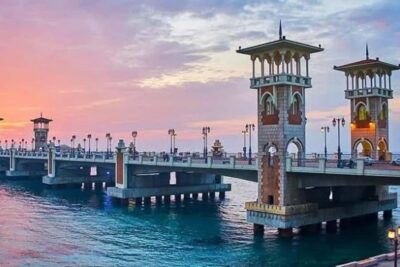
Private Full-Day Tour of Historical Alexandria
Read our review →
Private Tour of the Historic City in a Ford T Car
Read our review →
Madrid Historical Tour with Local Guide in Eco Tuk Tuk Private
Read our review →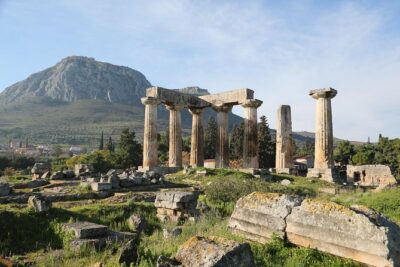
Private Biblical Tour Ancient Corinth & Isthmus Canal from Athens
Read our review →
Private Kathmandu Sightseeing Tour | UNESCO World Heritage sites
Read our review →
Historic Porto by Private Electric Tuk Tuk to Top Landmarks
Read our review →Browse the lists this tour appears in