
Review · ITALY HISTORY TOURS
Historical walking tour of Turin (Private tour)
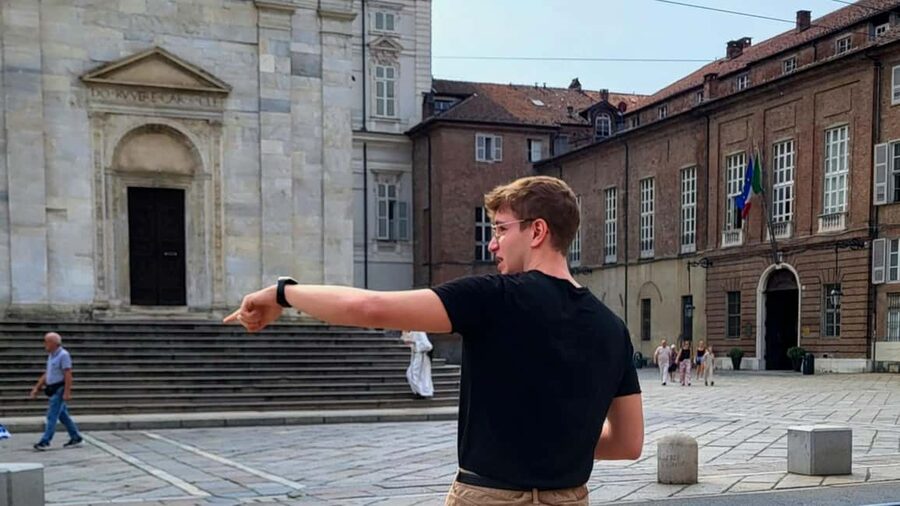
Turin reveals itself best on foot, and this tour follows the city’s long story from the Roman Palatine Gates to the Church of the Gran Madre. Francesco Berto, a Turin native and second-year student of historical sciences, connects Roman walls, Savoy power, Italian unification, architecture, legends, and daily life without turning the walk into a classroom lecture.
I like the private format, which gives you room to ask questions and shape the conversation. I also like the guide’s mix of major sights and less familiar corners, plus the practical advice on museums, restaurants, things to do, and where to try a bicerin.
The main consideration is distance. You will walk across much of central Turin for about two and a half hours, with no food, drink, museum admissions, or public transport included. One restaurant suggestion also received criticism for feeling aimed at tourists, so use the dining advice as a starting point rather than a final verdict.
Key points at a glance
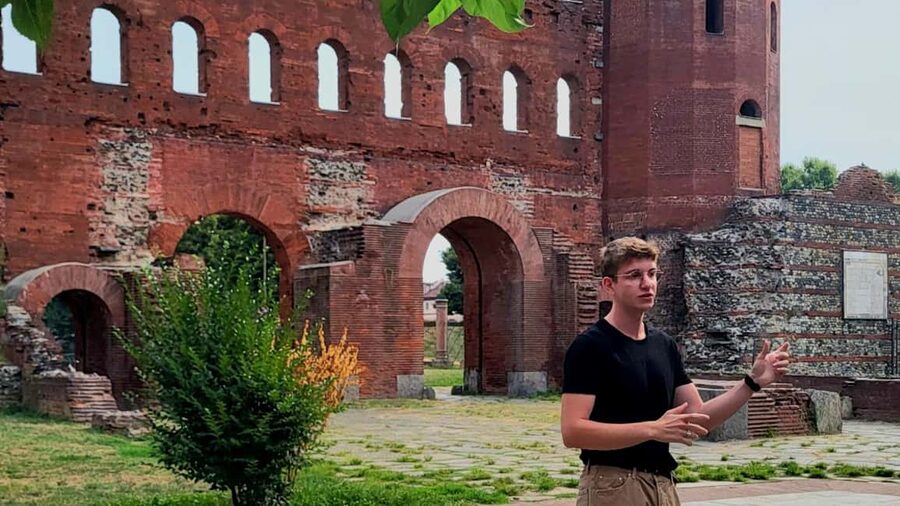
- Roman-to-Italian route: Begin at the Palatine Gates and finish across the river at the Gran Madre.
- Francesco Berto leads the walk: He is a Turin native and a second-year historical sciences student.
- Private, conversational format: You can ask questions and request more detail on subjects that interest you.
- Major sights plus quieter details: Expect Turin’s best-known squares and buildings, along with anecdotes, legends, and less familiar places.
- Strong value at $41 per person: The price covers a private guided walk of roughly 150 minutes, depending on the selected time and arrangement.
- Useful first-day orientation: Museum, restaurant, bicerin, and activity suggestions can help shape the rest of your stay.
Turin’s whole story in one long walk
Turin has changed roles many times. It began as a Roman settlement, later served Lombard and medieval powers, became a key center of the House of Savoy, helped drive Italian unification, served briefly as Italy’s first capital, and grew into a major industrial city in the twentieth century.
That range gives this walk a clear purpose. You are not simply moving from one attractive square to another. You are following the changes in power, culture, architecture, and national identity that shaped Piedmont’s capital.
The route is especially useful if Turin is new to you. It gives you a mental map of the historic center, introduces the main monuments, and points you toward places worth returning to. I would take it early in a stay, since the guide’s museum and restaurant suggestions can help you plan later days.
Francesco’s background also suits the subject. He is still studying historical sciences, rather than presenting himself as a distant academic expert. The intended tone is light, lively, and clear. That matters in Turin, where a short explanation of a palace or square can lead into Roman government, Savoy politics, the Risorgimento, or an Italian legend.
More History Walking Tours in Italy
- Venice: City Center Historical Guided Walking Tour
★ 4.2 · 1,873 reviews - Palermo: Street Food and History Walking Tour
★ 4.9 · 1,486 reviews - Verona: History and Hidden Gems Guided Walking Tour
★ 5.0 · 1,379 reviews
Starting beside the Palatine Gates
The meeting point is beside the statue of Julius Caesar, directly in front of the Palatine Gates. Look for this location carefully, since the starting point is not a vague address in the center. You meet beside one of Turin’s clearest Roman remains.
The Porta Palatina marks the beginning of the city’s Roman story. The stop itself is listed as a short introduction, but its importance is much larger than the few minutes suggest. This is where the tour establishes Turin as a Roman citadel before moving through later periods.
Starting here also gives the route a strong sense of direction. You begin at the city’s ancient edge and gradually move through its religious, royal, civic, and cultural center. Bring comfortable shoes, since the walk continues through several squares and finishes across the Po River area.
The first few short walking sections lead to additional guided stops. Some of these locations are not named in the schedule, which means the exact order and emphasis may vary. That flexibility is useful on a private tour, though anyone wanting a fixed list of every stop should ask Francesco about the day’s route before starting.
Cathedral of Saint John the Baptist and Turin’s royal center
After a series of brief stops and walks, the route reaches the Cathedral of Saint John the Baptist. The cathedral receives one of the longer explanations on the walk, and it is an important point for understanding Turin’s religious and dynastic role.
The cathedral is closely tied to the Savoy court and to Turin’s identity as a capital. Even without entering a museum, the building helps connect the city’s spiritual life with its political history. Francesco’s role here is to explain the setting and its place in Turin’s wider story, not to provide admission to the interior or a formal museum visit.
That distinction matters. This is a walking tour with exterior interpretation, not a ticketed cathedral or museum tour. If you want extended time inside the cathedral or a detailed look at specific collections, you will need to arrange that separately.
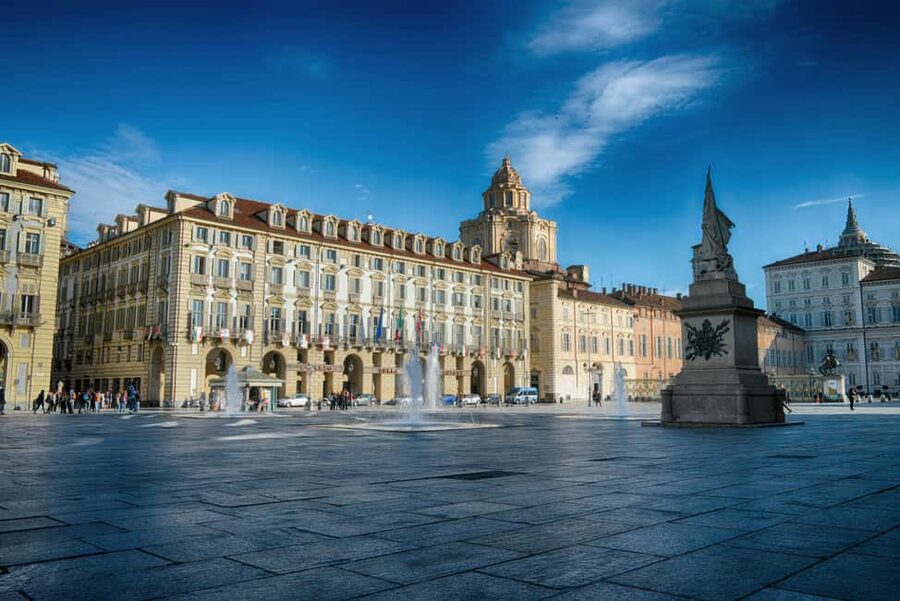
From the cathedral, the tour moves to Piazza Castello. This is one of Turin’s key public spaces and a natural place to discuss the Savoy era. The square gathers several layers of the city’s power in one setting, so a short explanation can help you read the surrounding buildings instead of seeing them as attractive but unrelated façades.
Piazza Castello, Piazza San Carlo, and the city of ceremony
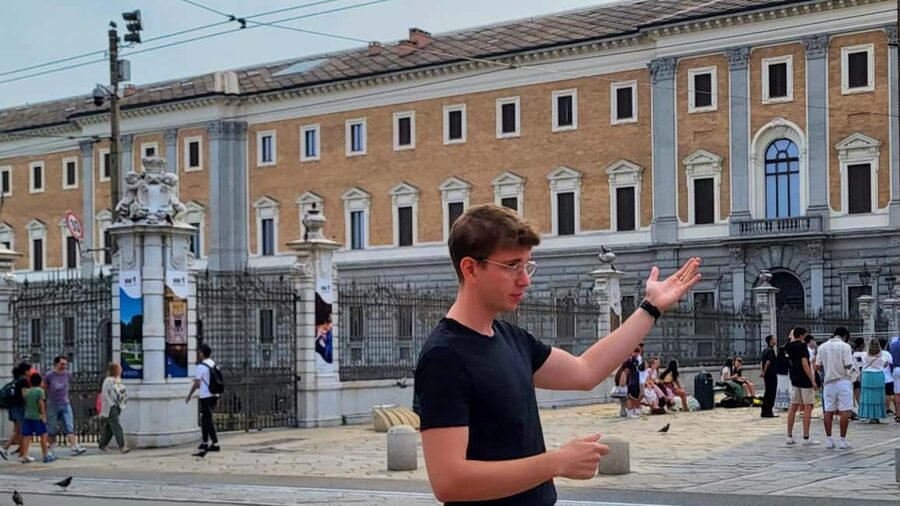
Piazza Castello is followed by Piazza San Carlo, with a walking segment between them. These squares show Turin at its most formal. Their broad spaces, ordered architecture, and grand proportions reflect a city built to serve courts, government, ceremony, and public life.
Piazza San Carlo receives a short guided stop and a photo pause. That balance is sensible. The square is visually important, but you also want time to look around, take pictures, and notice the details without listening continuously.
I find this part of the route valuable because it explains Turin’s sense of order. The city center is not a random collection of old buildings. Its layout reflects deliberate planning and the influence of the Savoy rulers. A good explanation makes the urban design easier to appreciate.
The guide also adds anecdotes and legends along the way. These details give the walk some lift after the political and architectural material. The aim is not to replace history with folklore, but to show how Turin’s past has been remembered and retold.
More Private History Tours in Italy
- Ancient Ostia Antica Semi-Private Day Trip from Rome by Train with Guide
★ 4.5 · 579 reviews - Colosseum & Ancient Rome Semi-Private Tour
★ 5.0 · 208 reviews - Ancient Pompeii Private Tour: Skip the Line & Kid-Friendly Option
★ 5.0 · 167 reviews - Skip-the-Line Half-Day Private Tour Ancient Pompeii Highlights with Native Guide
★ 5.0 · 146 reviews
Piazza Carignano and the road to modern Italy
The route then continues to Piazza Carignano, followed by the Galleria Subalpina. Piazza Carignano is one of the clearest places to connect Turin’s architecture with the making of modern Italy.
This area belongs to the city’s political and cultural heart. The tour uses it to discuss the places and people tied to the Risorgimento, the movement that led to Italian unification. Turin’s role in that process is central, and the square gives Francesco a strong setting for explaining how local history became national history.
The Galleria Subalpina provides a change of mood. Its covered arcade is a useful reminder that Turin is a city of elegant indoor passages as well as open squares. The schedule includes a photo stop and a short guided explanation, so expect an atmospheric pause rather than a long architectural study.
The route includes several additional short guided sections before heading toward the Mole Antonelliana. Because many stops last only four to six minutes, the pace stays active. You will hear a focused point at each place, then move on. That works well for a private overview, but it may feel quick if you like to stand for a long time at every building.
The Mole Antonelliana and Turin’s changing identity
The Mole Antonelliana gets an eight-minute photo stop, followed by further explanation. It is one of Turin’s most recognizable landmarks and a natural point for discussing the city beyond its royal and unification-era past.
The Mole also helps introduce Turin’s cultural identity. The building is strongly associated with the city and is now home to the National Cinema Museum, though museum entry is not included in this experience. If cinema interests you, ask Francesco for advice about visiting it later.
This is one of the places where the guide’s recommendations can add value beyond the walk itself. You receive suggestions for museums, activities, and places to eat during the rest of your time in Turin. Those tips are useful because the tour gives you context first, then lets you choose which subjects deserve a longer visit.
The Mole stop also provides a clear visual break in the route. After Roman remains, churches, royal squares, and Risorgimento sites, you reach a symbol of Turin’s later cultural life. The city’s story does not end with the Savoy court or Italian unification.
Finishing at the Gran Madre
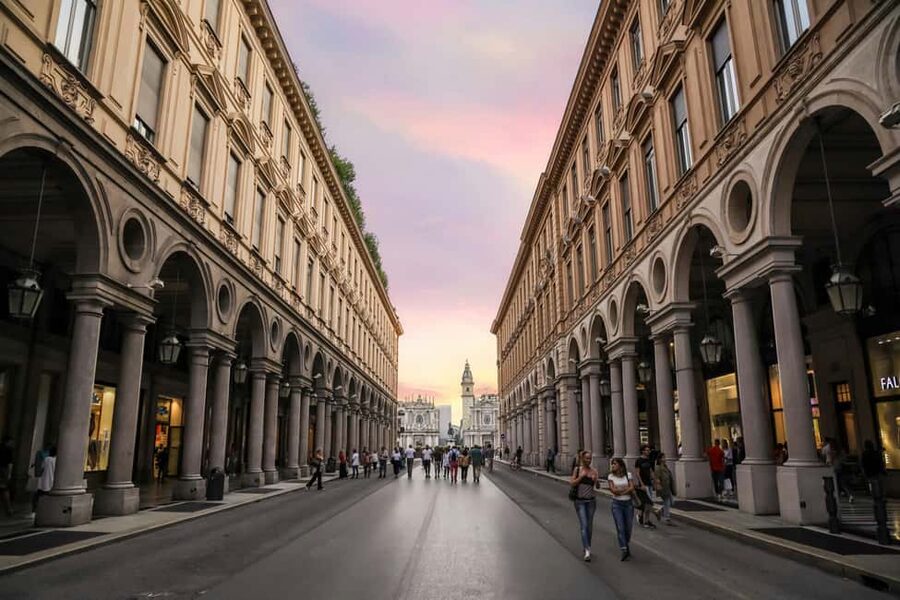
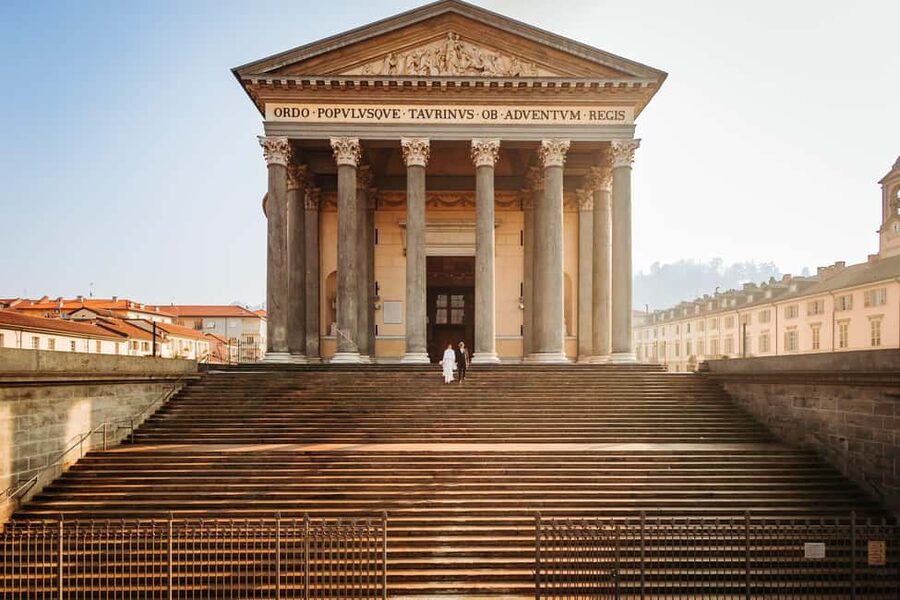
The final section leads toward the Church of the Gran Madre di Dio. The route ends at Piazza Gran Madre di Dio, with a second possible drop-off point near the Church of Santa Maria del Monte dei Cappuccini.
The Gran Madre is a fitting finish. It gives the walk a different atmosphere from the formal center and opens the story toward the river and the hills. The short photo stop lets you take in the church before the tour ends.
Finishing here is practical if you plan to continue exploring the eastern side of Turin. It is less convenient if your next activity is back near the Palatine Gates, so check your plans before booking a start time. The route is not a loop, and public transport to the starting point is your responsibility.
The end point also reinforces the tour’s main idea: Turin is not one single city frozen in one period. Roman, medieval, Savoy, Italian, industrial, religious, and cultural Turin all occupy the same walk.
What the private format adds
A private group changes the feel of a historical tour. You can ask Francesco to explain a confusing point, spend a little longer on a subject you care about, or keep moving when a short stop has done its job.
This format is particularly helpful for families, couples, and small groups with different interests. One person may want political history, another may care about architecture, and someone else may be hunting for food advice. A private guide can keep the conversation useful for everyone.
The walk is offered in Italian and English. Some material is presented in its original language, so you may want to confirm the preferred language when booking if your group includes people with different language needs.
The tour is wheelchair accessible, according to the activity details. Still, it covers a long urban route with several walking sections, so you should discuss any specific mobility concerns with the provider before setting out.
Price, timing, and what the $41 covers
At $41 per person, the price is reasonable for a private guided walk, especially if you are sharing it with a small group. You are paying for about two and a half hours of local interpretation, not just a list of monuments. The value comes from the connections between places and from the chance to ask questions.
The published duration is described as approximately 150 minutes, while availability can show time slots ranging from 150 minutes to four hours. Treat two and a half hours as the normal base length and confirm the exact time offered for your booking.
The fee includes the guided city walk, the meeting point arrangement, and the route from the Palatine Gates to the Gran Madre. It does not include public transport, food, drinks, or museum admissions.
That makes the tour easy to budget. You can add a museum or café stop later rather than paying for attractions you may not want. Just remember that any bicerin, restaurant meal, or museum visit comes at extra cost.
Cancellation is free up to 24 hours in advance, and you can reserve now and pay later. Those terms help if your Turin schedule is still changing.
A few cautions before you book
The strongest praise for Francesco centers on his preparation, enthusiasm, clarity, and ability to make difficult history easy to follow. That is exactly what you want from a city-history walk. The tone is intended to stay enjoyable rather than academic, even though the subject matter is serious.
The route is also praised for showing a broad stretch of Turin that you might not cover alone. That is a real advantage, but it means you should expect steady walking rather than a compact square-by-square visit.
Dining recommendations can be useful, but do not treat every suggestion as a guarantee of an authentic meal. One person found a suggested Piedmontese restaurant too focused on tourists. Ask for several options and use your own judgment, especially in areas where menus and prices are aimed at short-term visitors.
Finally, this is not the right choice if you want long interior visits, extensive free time at each monument, or a specialized tour devoted only to the Shroud, cinema, Savoy palaces, or food. It is a broad city introduction with historical depth and a personal guide.
Should you book Francesco Berto’s Turin walk?
Book it if you want to understand Turin as a sequence of turning points rather than a set of attractive buildings. The route covers the Palatine Gates, the cathedral, Piazza Castello, Piazza San Carlo, Piazza Carignano, the Galleria Subalpina, the Mole Antonelliana, and the Gran Madre, with stories and lesser-known details between them.
I would choose it early in a Turin visit, especially if you like history, architecture, legends, and practical local suggestions. The private setting and Francesco’s clear, energetic approach make the $41 price a fair buy for a small group.
Skip it if you dislike long walks or prefer to spend most of your time inside museums. For everyone else, this is a useful way to get Turin oriented, understand why its center looks the way it does, and leave with a better plan for the rest of your stay.
FAQ
Where does the Turin walking tour begin?
The meeting point is next to the statue of Julius Caesar, in front of the Palatine Gates.
Where does the tour end?
The walk ends at the Church of the Gran Madre di Dio. Drop-off points include Piazza Gran Madre di Dio and the Church of Santa Maria del Monte dei Cappuccini.
How long does the tour last?
The guided walk lasts approximately two and a half hours, or 150 minutes. Available booking times may range from 150 minutes to four hours, so check the selected option.
Who is the guide?
The guide is Francesco Berto, a Turin native who is in the second year of a master’s degree in historical sciences.
What languages are available?
The tour is available in Italian and English. Some content may be presented in its original language.
Is this a private tour?
Yes. The activity is arranged for a private group.
Are museum tickets included?
No. Museum visits and admission fees are not included in the tour price.
Is food or public transportation included?
No. Food, drinks, and public transportation to the Palatine Gates are not included.
Newest history tours we have reviewed in Italy
- Guided Cultural Tour of the Godfather Film in Messina★ 5.0 · 31 reviews
- SU NURAXI BARUMINI Unesco World Heritage Site★ 5.0 · 129 reviews
- Picnic aperitif in the vineyard of an ancient trullo in Martina Franca★ 5.0 · 21 reviews
- Brescia the Unexpected: History, Local Stories & a drink★ 5.0 · 31 reviews
- Bologna historical art walking tour with hidden gems and tastings★ 5.0 · 108 reviews
- Bolognese Cooking Class with Margherita in the Historic Center★ 5.0 · 26 reviews
- Best of Bologna in one day : Food, architecture, art and history★ 5.0 · 27 reviews
- Private or semi-private tour of the historic center of Bologna★ 5.0 · 34 reviews
Private History Tours, compared.
Private Guided Historic Electric Cart Tour of St. Augustine
Read our review →
Private Full-Day Tour of Historical Alexandria
Read our review →
Private Tour of the Historic City in a Ford T Car
Read our review →
Madrid Historical Tour with Local Guide in Eco Tuk Tuk Private
Read our review →
Private Biblical Tour Ancient Corinth & Isthmus Canal from Athens
Read our review →
Private Kathmandu Sightseeing Tour | UNESCO World Heritage sites
Read our review →
Historic Porto by Private Electric Tuk Tuk to Top Landmarks
Read our review →Browse the lists this tour appears in