
Review · CHICAGO HISTORY TOURS
Field Museum of Natural History Admission Tickets
The Field Museum’s star attraction is SUE, the most complete T. Rex fossil ever found. But SUE is only the opening act. Inside, you can move from dinosaur bones to Egyptian mummies, Chinese jade, Ice Age hunters, and the temples of the Incas and Aztecs without leaving the building.
I like the freedom to set your own pace and the free daily docent-led tours, which add useful context when you want it. I also like the museum’s location on Chicago’s Museum Campus, where Lake Michigan and the downtown skyline give you something memorable to see before or after your visit.
The main drawback is simple: four hours may not be enough. The museum is enormous, and walking through two floors can leave you tired before you reach everything. Wear comfortable shoes, choose your priorities, and do not expect to see every hall in one visit.
Key points to know before you go

- SUE is the headline attraction: See the world’s largest and most complete T. Rex skeleton in the Dinosaur Hall.
- More than dinosaurs: Egyptian mummies, ancient American cultures, gems, Chinese jade, mammals, reptiles, and interactive exhibits fill the museum.
- Plan for a half-day or longer: The suggested visit lasts about four hours, but you can stay during museum hours and still leave sections unseen.
- Free docent tours add value: Daily tours can help you understand major exhibits without paying for a private guide.
- Extras may cost more: The 3D theaters and some special exhibits require additional admission or depend on availability.
- Good for bad weather: The large indoor museum works well on cold, hot, humid, or rainy Chicago days.
SUE and the dinosaurs deserve your first look
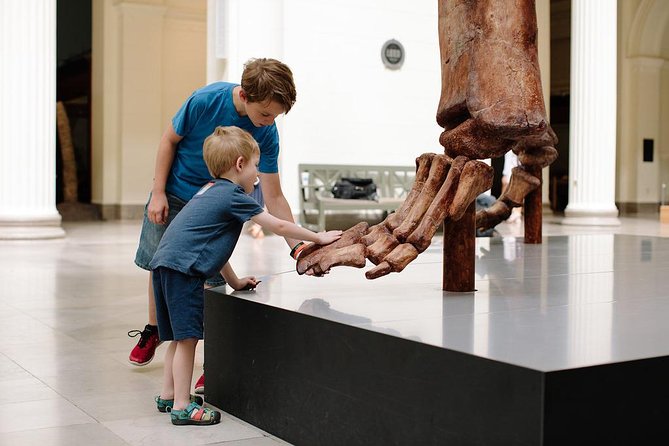
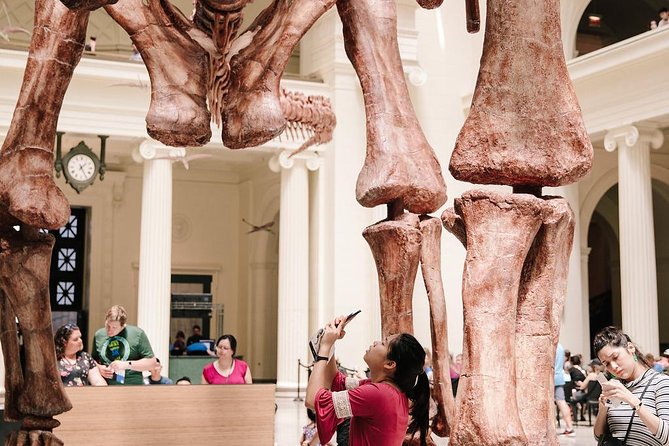
If you have come to the Field Museum for dinosaurs, start with SUE. This enormous T. Rex skeleton is the museum’s most famous resident, and its size is hard to grasp until you are standing beneath it. The fact that SUE is the most complete T. Rex ever found makes the display more than a dramatic photo stop. You can see how much scientists can learn from a nearly complete skeleton.
The renovated Dinosaur Hall, Evolving Planet, gives you more than a parade of giant bones. Dinosaurs appear alongside woolly mammoths and giant sloths, helping you connect prehistoric life across different periods. The hall works well for families because there is plenty to look at, but adults who enjoy fossils and natural history will find enough detail to hold their attention too.
I would not rush through this section. Take a few minutes to look at the skeletons from different angles. The scale changes as you move around them, and the displays help turn an abstract subject into something physical and memorable.
The dinosaur halls are also the area most likely to become crowded during busy school breaks and weekends. If SUE is your top priority, go there early or make it your first major stop.
More Museum and Gallery History Tours in the USA
- New York City: American Museum of Natural History Ticket
★ 4.5 · 15,447 reviews - American Museum of Natural History Admission Ticket
★ 4.0 · 1,931 reviews - Guided African American History Tour with Reserved Museum Entry
★ 4.5 · 1,180 reviews
Ancient Egypt brings mummies and hieroglyphics into focus
Inside Ancient Egypt offers a very different experience from the dinosaur halls. Here, you will see 23 Egyptian mummies, along with 5,000-year-old hieroglyphics and objects connected to daily life, belief, and burial practices.
The value of this section is its human scale. Dinosaurs can feel remote, but the Egyptian displays connect you with people who lived thousands of years ago. You can think about how they represented death, family, work, and the afterlife while examining objects made for real use.
This is a strong stop for students and anyone interested in ancient cultures. It is less about spectacle than careful observation. Give yourself time to read the labels and notice smaller details rather than treating the room as a quick corridor between larger halls.
If your group has children, the mummies may be the first part they remember. You may want to balance that interest with the museum’s more hands-on or visual sections, since not every young visitor will want to read long explanations.
Ancient Americas covers 13,000 years
The Ancient Americas exhibits trace 13,000 years of history, beginning with Ice Age mammoth hunters and continuing through the temple builders of the Incas and Aztecs. This long time span is one of the museum’s strongest teaching tools. Instead of viewing a single civilization in isolation, you can see how communities changed across centuries.
The displays help place well-known cultures into a broader story. The Incas and Aztecs receive attention, but the exhibits also point toward the many communities and traditions that shaped the Americas before and after them.
This section rewards a slower pace. If you only have an hour, you may be tempted to skip it in favor of SUE, but that would leave out some of the museum’s most substantial cultural material. I would give it priority if you have an interest in archaeology, early societies, or the history of the Americas.
It is also a good area for students because the timeline gives context. You are not simply looking at isolated objects. You are following a long record of human adaptation, craft, ceremony, and settlement.
Gems and Chinese jade add color and close detail

The Hall of Gems offers a change of pace after the larger fossil and cultural displays. Instead of looking up at massive animals or studying full-room reconstructions, you will focus on small objects and their color, form, and craftsmanship.
The Hall of Jades includes one of the largest collections of Chinese jade in North America. Jade has cultural and artistic value far beyond its appearance, and the collection gives you a chance to consider how a material can carry meaning across generations.
These halls are useful when your group has different interests. One person can enjoy geology and minerals, another can focus on design and craftsmanship, and children may respond to the bright colors and unusual shapes. The gem exhibits also provide a quieter break from the busier dinosaur areas.
Do not assume these are quick filler exhibits. They are smaller than the dinosaur halls, but they reward close looking. If you enjoy objects made with patience and precision, allow more time than a quick walk-through.
Same streets, a different century:
- History and Hauntings of Salem Guided Walking Tour
★ 5.0 · 14,564 reviews - Charleston’s Old South Carriage Historic Horse & Carriage Tour
★ 5.0 · 10,023 reviews - Beneath The Streets Underground History Tour
★ 4.5 · 8,006 reviews - Big Island in a Day: Volcanoes Waterfalls Sightseeing and History
★ 5.0 · 6,569 reviews
Underground Adventure makes the museum more interactive
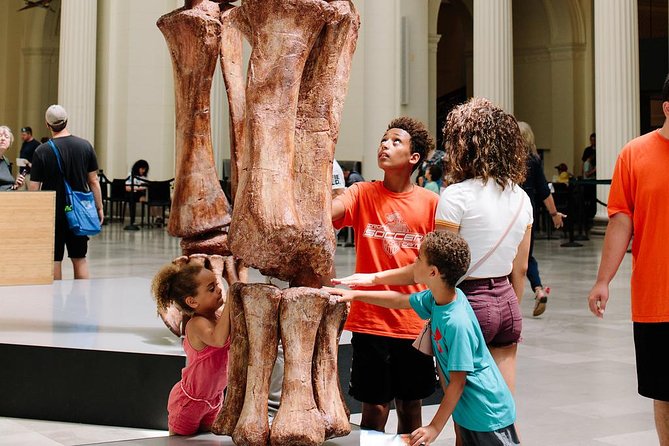
Underground Adventure uses a playful idea: visitors are treated as if they have shrunk to one hundredth of their normal size. The result is a look at life beneath the surface, where small creatures and hidden systems become the main event.
This exhibit is especially useful for families because it changes the scale of the museum. You are no longer looking at a mounted animal or an ancient artifact. You are being encouraged to imagine an environment from a much smaller point of view.
It also breaks up the reading-heavy sections. If your children begin to lose interest in labels and timelines, Underground Adventure may restore their attention. The attraction is not only for young children, though. It gives you a different way to think about ecosystems and the living world.
The Field Museum also has a live reptile exhibit, which adds another contrast to the fossils and taxidermy displays. Check the current layout as you enter, since the museum contains many halls and you will want to avoid crossing the building repeatedly.
The museum’s animal displays go beyond prehistoric life
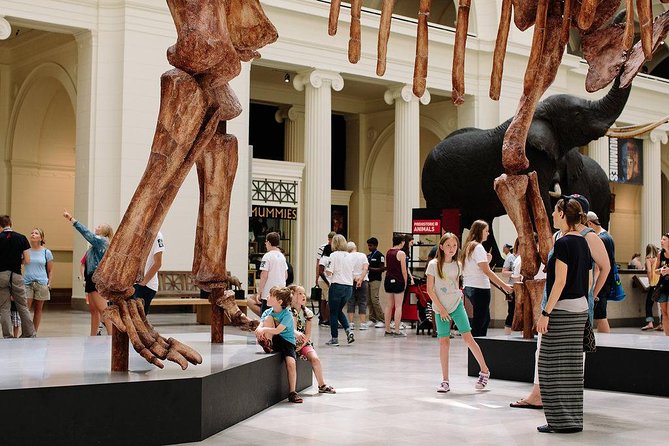
The Field Museum is not only about extinct animals. You will also find animal skeletons and displays that show the structure of species in a way a zoo cannot. Seeing bones arranged together can change how you understand an animal’s size, movement, and physical design.
The Tsavo lions are a memorable stop for many visitors, and the animal halls include examples from around the world. These exhibits may appeal to you if you like wildlife but cannot spend a full day at a zoo. They also provide a useful comparison with the dinosaur displays, since both sections ask you to think about anatomy and adaptation.
One point to consider is that the Field Museum uses mounted specimens and objects behind glass. If you prefer interactive science centers or live-animal settings, parts of this museum may feel formal. The Science and Industry Museum may suit you better if hands-on technology is your main interest.
Still, the range here is a strength. A single visit can include fossils, mammals, reptiles, cultural objects, gems, and ancient writing. You can follow one subject closely or sample several.
Four hours is a realistic starting point, not a finish line

The advertised visit lasts about four hours, but you can remain in the museum during its opening hours. The museum is open from 9 a.m. to 5 p.m. General admission ends at 4 p.m., and the last admission for special exhibitions is at 3:30 p.m.
I would plan your day around two or three priorities. A first-time visit might focus on SUE and Evolving Planet, Ancient Egypt, and one of the Ancient Americas or gem halls. After that, use your remaining time for Underground Adventure, the animal displays, or a special exhibit.
Many people can spend three hours here and still see only part of the building. That is not a problem if you treat the visit as a sampler rather than a checklist. The museum is too large for a rushed attempt at everything.
Comfortable walking shoes matter. You will cover a lot of ground, and the size of the building can wear you down. Restrooms are well located, and dining facilities are available, but food and drinks are not included with admission. Plan a break rather than trying to push through every hall without stopping.
Free docent tours can improve a self-guided visit

Your ticket includes free daily docent-led tours. These are a smart choice if you want more explanation but do not want to book a separate guided tour.
A docent can point out details you might miss on your own and help connect separate displays. Since the museum covers such a broad range of subjects, a short guided talk can also help you decide where to spend the rest of your time.
The museum’s maps are available in English, Spanish, French, German, Italian, Mandarin Chinese, Japanese, Korean, Polish, and Portuguese. Pick one up when you arrive so you can mark the halls you most want to see.
The experience is otherwise self-directed. You can move at your own speed, pause at a display, or skip an area that does not interest you. That flexibility is a major advantage for families and groups with different energy levels.
Special exhibits and 3D films change the total cost
The $29 admission price is reasonable if you expect to spend several hours inside and will use the main collections. You are paying for a large museum with many subjects, not a short single-theme attraction.
Some special exhibits may require an upgrade, and the 3D theaters charge separately. The 3D films are also subject to availability. If you want one, arrive early, ideally between 9 a.m. and noon, so you have a better chance of reserving a suitable time.
The extras can be worthwhile when the subject matches your interests. A carefully produced special exhibit may add more depth than another quick pass through the permanent halls. But you do not need to buy every add-on for a satisfying visit. SUE, Ancient Egypt, Ancient Americas, gems, animals, and Underground Adventure already provide plenty to fill a half-day.
Check your priorities before paying for upgrades. Families may find a special dinosaur exhibit worth the added cost, while another group may prefer to spend the extra time in the permanent galleries.
Museum Campus gives you a strong Chicago setting
The Field Museum sits on Chicago’s Museum Campus, with views toward Lake Michigan and the downtown skyline. That setting matters because the visit does not end at the front doors. You can pair the indoor exhibits with a walk outside and see the city from the lakefront.
The location is near public transportation, and most people can participate. Service animals are allowed. Those details make the museum a practical choice for a wide range of visitors, though the amount of walking remains the main physical consideration.
It is also a reliable cold-weather, rainy-day, or hot-weather plan. On a humid summer day, you can spend much of your time indoors. On a gray winter afternoon, the museum gives you several hours of shelter without feeling like a small attraction you can finish in one quick loop.
Who should book the Field Museum?
You should book this admission if you like natural history, dinosaurs, ancient cultures, animals, or carefully displayed objects. It is particularly good for families, students, couples with different interests, and anyone looking for an indoor Chicago activity that can fill half a day.
I would be cautious if you dislike taxidermy, long exhibit labels, or museums built around collections rather than rides and hands-on experiments. The Field Museum has interactive areas, but much of the experience involves looking closely and reading.
For the best value, arrive early, see SUE before the busiest period, choose two or three priority sections, and use a free docent tour if the timing works. Book it if you are happy to explore at your own pace and accept that you will probably leave with more halls unseen. Skip it only if your group strongly prefers a technology museum, live animals, or a shorter attraction.
You can cancel for a full refund up to 24 hours before the experience start time. Cancellations within 24 hours are not refunded, and changes inside that window are not accepted.
FAQ
How much does admission to the Field Museum cost?
The listed admission price is $29 per person.
How long should I plan for the visit?
The experience is described as approximately four hours, but you can stay during museum hours. Because the museum is large, four hours may not cover every floor and exhibit.
What is included with admission?
Admission to the Field Museum is included, along with free daily docent-led tours and ticketed exhibits.
Are 3D films included?
No. The 3D movies cost extra and depend on availability. If you want to reserve a time, arriving between 9 a.m. and noon is recommended.
What time does the museum open and close?
The museum is open from 9 a.m. to 5 p.m. Last general admission is at 4 p.m., and the last admission for special exhibitions is at 3:30 p.m.
Are maps available in languages besides English?
Yes. Maps are available in English, Spanish, French, German, Italian, Mandarin Chinese, Japanese, Korean, Polish, and Portuguese.
Can I cancel my booking for a refund?
Yes. You can receive a full refund if you cancel at least 24 hours before the experience start time. Cancellations made less than 24 hours before the start time are not refunded.
Newest history tours we have reviewed in the USA
- Nashville: Belle Meade Historic Mansion Tour★ 4.8 · 63 reviews
- Beaufort: Local History and Film Sites Tour by golf cart★ 4.9 · 102 reviews
- Boston: Guided Seafood Tasting and History Tour★ 4.9 · 90 reviews
- Beaufort: Gullah Heritage Tour★ 4.8 · 26 reviews
- Beaufort: Historic City Tour by Bus★ 4.9 · 228 reviews
- Austin: Downtown Austin Haunted History Tour★ 4.4 · 31 reviews
- Austin: Morning History Walking Tour of Downtown Austin★ 4.9 · 71 reviews
- Atlanta: Beltline Food, Street Art, and History Walking Tour★ 5.0 · 47 reviews
Museum & Gallery History Tours, compared.
Louvre Museum Entry with History of Mona Lisa
Read our review →
Venice’s Best: Basilica, Doge’s Palace, Gondola & History Gallery
Read our review →
American Museum of Natural History Admission Ticket
Read our review →
Guided African American History Tour with Reserved Museum Entry
Read our review →
POLIN Museum of the History of Polish Jews Ticket
Read our review →
Bell Tower & St Mark’s Square History Gallery Ticket
Read our review →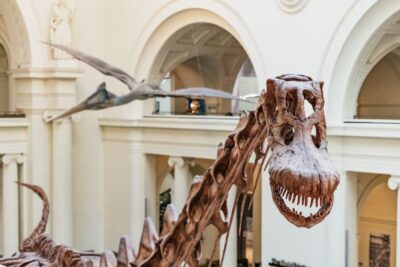
Field Museum of Natural History Ticket or VIP Tour
Read our review →Browse the lists this tour appears in