Review · USA HISTORY TOURS
F.D. Reese Historical Tour
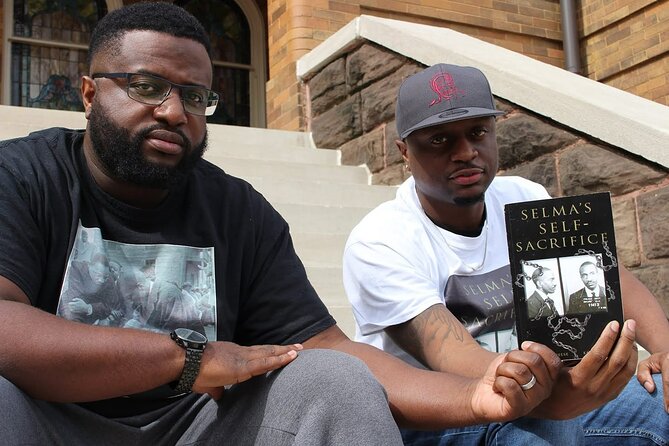
The most meaningful part of this Selma tour is its personal connection. Alan and Marvin Reese, grandsons of Rev. F.D. Reese, guide you through the places where their grandfather taught, preached, organized, and helped lead the Civil Rights movement. You are not just looking at landmarks. You are following one family’s story through the town.
I like the access to Reese’s former home and original artifacts, and I like the chance to walk across Edmund Pettus Bridge with a guide who can explain Bloody Sunday in the setting where it happened. The main consideration is the short length: at 1 to 2 hours, this is a focused introduction rather than a full-day exploration of Selma.
Key points
- Family-led storytelling: Alan and Marvin Reese share the story of their grandfather, Rev. F.D. Reese, from a close personal view.
- A teacher-led movement: Learn how Reese organized the first Teachers March in Selma and helped bring educators into the Civil Rights movement.
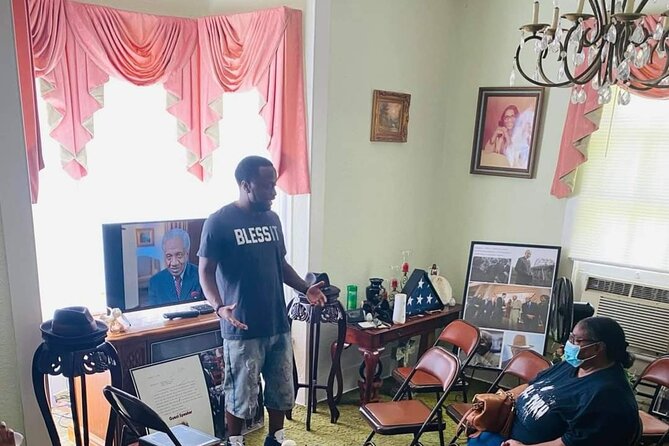
- Historic home access: Enter Reese’s former home and see original photographs, memorabilia, and other artifacts.
- Four central Selma sites: Visit Clark Elementary School, the Dallas County Courthouse, Brown Chapel AME Church, and Edmund Pettus Bridge.
- A pastor’s legacy: Stop at Ebenezer Baptist Church, where F.D. Reese served as pastor for 50 years.
- Short and focused: The tour lasts about 1 to 2 hours, making it easy to fit into a day in Selma.
Why F.D. Reese’s story matters in Selma
Selma is often reduced to a single image: marchers crossing Edmund Pettus Bridge on Bloody Sunday. That moment matters, but it was only one part of a longer campaign. The F.D. Reese Historical Tour helps you see the work that came before the famous bridge crossing.
Rev. F.D. Reese was a teacher, pastor, and Civil Rights leader. He organized the first Teachers March in Selma, bringing educators into public action at a time when doing so required courage and careful planning. His work connected the classroom, the church, and the courthouse.
That combination gives this tour its shape. You move from Clark Elementary School to the Dallas County Courthouse, then to Brown Chapel AME Church and the bridge. Each stop adds another piece to Reese’s role in the movement.
I appreciate that the tour does not treat Civil Rights history as a distant school lesson. The story is tied to one man’s work and to the family members who still care for his legacy. That personal link gives the visit a human scale.
More History Tours in the USA:
- New York City: American Museum of Natural History Ticket
★ 4.5 · 15,447 reviews - History and Hauntings of Salem Guided Walking Tour
★ 5.0 · 14,564 reviews - Charleston’s Old South Carriage Historic Horse & Carriage Tour
★ 5.0 · 10,023 reviews
Beginning at F.D. Reese’s former home
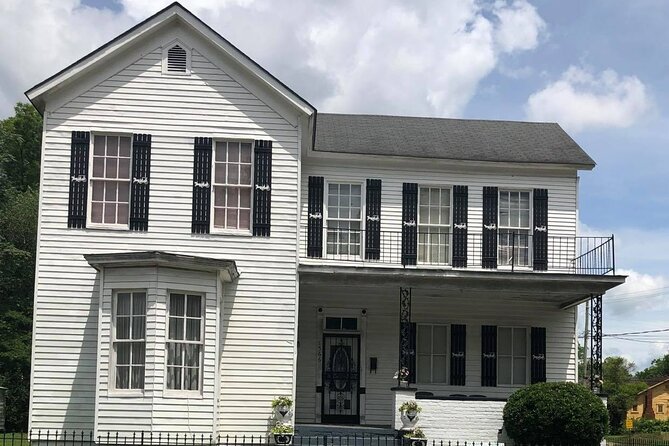
The experience begins at 1566 Marie Foster Street, the location of Reese’s former home. This is more than a meeting point. You receive entry to the home and see original photographs, memorabilia, and other artifacts connected to Reese’s life.
That opening is important because it puts a face and a family around the larger events. Instead of beginning with a broad explanation of Selma, Alan or Marvin Reese can start with their grandfather’s daily roles as teacher, pastor, and organizer.
One account describes a very small group receiving a full presentation at the home before heading around town. That tells you something useful about the format: the experience can feel personal rather than like a large, scripted bus tour. Group size may reach 100 people, but the supplied information does not promise a small group for every departure.
The home is also where you can ask questions about the family photographs and memorabilia. If you care about personal objects and family records, this may be the strongest part of the tour. The material gives context to the stops that follow.
Clark Elementary School and the first Teachers March
The first public stop is Clark Elementary School, where the guides discuss the beginning of the first Teachers March. The visit is scheduled for about 15 minutes, so expect a compact talk rather than a long school tour.
The importance of this stop lies in the people Reese helped organize. Teachers were not simply observers of the movement. Their participation showed that the struggle for voting rights and equal treatment reached into the schools and involved respected community leaders.
At Clark Elementary, you begin to understand how local action built pressure over time. The tour places Reese’s organizing work before the better-known scenes at the bridge, which helps create a more accurate timeline.
You should also keep your expectations practical. The stop is brief, and the information provided does not indicate that you enter the school or receive a full architectural tour. The value is the story connected to the site.
The Dallas County Courthouse and public resistance
The next stop is the Dallas County Courthouse, also planned for about 15 minutes. Here, the guide continues the story of the Teachers March and the barriers that local Black citizens faced when seeking equal rights.
A courthouse visit adds a useful contrast to the school. Clark Elementary represents organizing and community leadership. The courthouse represents public authority and the place where rights were supposed to be recognized, yet were often denied in practice.
The stop helps you connect personal courage with the systems that activists challenged. Reese’s work was not only about speeches or church meetings. It involved taking action in public spaces where the consequences could be serious.
You will not spend hours inside the courthouse on this tour. The supplied details describe a discussion at the site, with admission included, rather than a broad courthouse tour. Still, the short visit fits the overall design: several important places, each tied to a specific part of Reese’s story.
Same streets, a different century:
- Beneath The Streets Underground History Tour
★ 4.5 · 8,006 reviews - Big Island in a Day: Volcanoes Waterfalls Sightseeing and History
★ 5.0 · 6,569 reviews - Boston: Freedom Trail History Small Group Walking Tour
★ 5.0 · 6,450 reviews - Historic Charleston Guided Sightseeing Walking Tour
★ 5.0 · 6,216 reviews
Brown Chapel AME Church and the organizing center
Brown Chapel AME Church is one of the most important stops. The guide explains how F.D. Reese helped organize the church as a place for mass meetings and worked to overcome obstacles before Dr. Martin Luther King Jr. came to Selma.
The church was not merely a backdrop. It served as a gathering place where people could meet, plan, hear from leaders, and build common purpose. That makes this stop especially useful for understanding how movements operate on the ground.
I like the focus on the practical work behind major events. Public memory often centers on famous speeches and photographs, but those moments depend on local people who arrange meeting places, bring communities together, and keep efforts moving.
The visit is scheduled for about 15 minutes. The information does not say that a full interior tour or worship service is included, so you should expect a historical explanation connected to the church and Reese’s role there. Admission is included as part of the experience.
Walking across Edmund Pettus Bridge
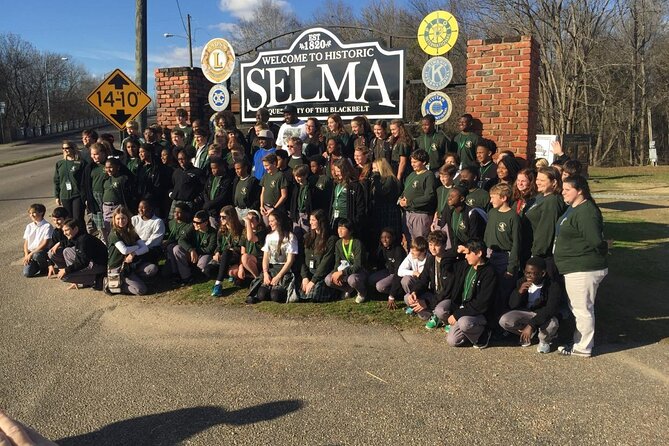
The tour then takes you to Edmund Pettus Bridge, with about 20 minutes devoted to the stop. The guides accompany you across the bridge while explaining Bloody Sunday and related events.
This is the longest listed stop, and for good reason. Walking across the bridge gives physical scale to a place many people know only from photographs. You can see the route as a real path rather than a flat image in a book or documentary.
The bridge can also be an emotional stop. The tour connects the location to the people who faced violence and intimidation while demanding voting rights. The guide’s role is especially useful here because the setting alone cannot explain the organizing, fear, courage, and consequences behind the event.
Plan for a focused crossing and talk, not an extended walk around Selma. The bridge stop is only about 20 minutes, so the experience moves at a steady pace. You will want comfortable shoes, although the available information does not give a required dress code or special equipment list.
Ebenezer Baptist Church and fifty years of service
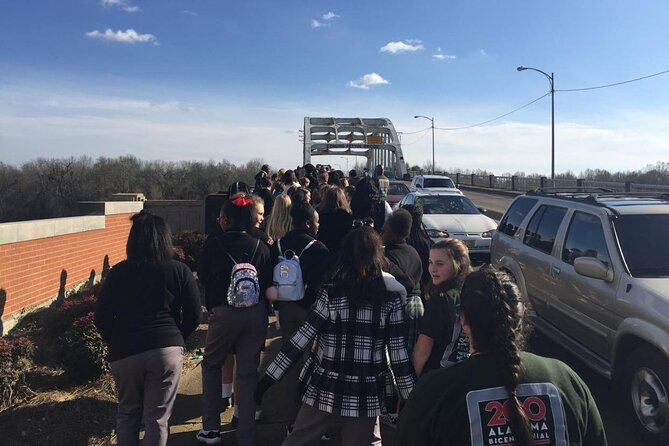
The final listed stop is Ebenezer Baptist Church, where F.D. Reese served as pastor for 50 years. The visit is planned for about 10 minutes and has no separate admission charge.
This stop brings the story back to Reese’s long-term community role. His Civil Rights work was important, but it was only part of his life. His decades as a pastor show that leadership in Selma involved sustained service, not just participation during nationally known events.
The church also rounds out the picture created at Brown Chapel. Brown Chapel is linked here to mass meetings and movement organizing. Ebenezer Baptist Church is linked to Reese’s own pastoral commitment over half a century.
Because the stop is short, expect a concise explanation rather than a lengthy church visit. Its value comes from showing the span of Reese’s influence, from teaching and organizing to pastoral care.
What the family guides add
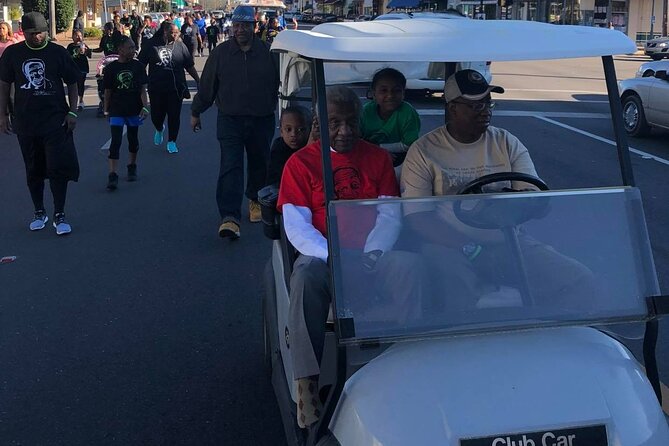
Alan and Marvin Reese guide the experience, and the family connection is central to its appeal. Their grandfather is not presented as an abstract name from a timeline. He is the person whose home you enter and whose photographs and belongings you see.
The strongest praise for this experience centers on the guides’ passion, honesty, and care for their grandfather’s legacy. Those qualities matter here because the tour depends on storytelling. The places are significant, but the explanations connect them.
Alan Reese is specifically identified as a guide, and the experience may also be led by both Alan and Marvin Reese Jr. You should expect the exact guide lineup to depend on the date you book.
Family-led tours can offer details that a general city tour might not include. At the same time, the style may feel more personal and less standardized. If you prefer a tightly scripted presentation with extensive printed material, this may not be your ideal format. If you want a direct connection to the person at the center of the story, it is a strong match.
Is the $104.99 price good value?
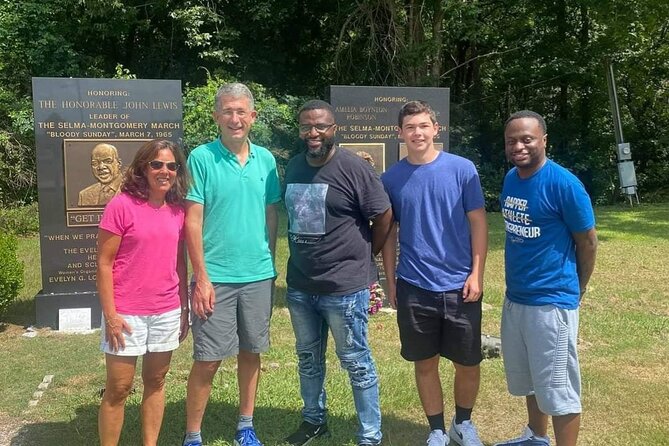
At $104.99 per person, this is not the cheapest way to see Selma’s major sites. The tour lasts about 1 to 2 hours, so you are paying for more than time spent moving between stops.
The price includes access to Reese’s former home and original artifacts, along with a family-led explanation of the Teachers March, Brown Chapel, the courthouse, the bridge, and Ebenezer Baptist Church. That combination gives the experience a different value from a basic drive past the landmarks.
I would see it as a focused specialty tour. The price makes more sense if you want to understand F.D. Reese’s particular role and value personal interpretation. It may feel high if your only goal is to photograph the bridge or visit the sites without a guide.
The published score is 4.8 from 21 reviews, with 95 percent recommending the experience. That does not guarantee that every visitor will prefer its pace or style, but it does support the idea that the family connection and educational focus are the main strengths.
Timing, accessibility, and practical planning
The tour begins and ends at 1566 Marie Foster Street in Selma. Since it returns to the meeting point, you do not need to arrange a separate ending location.
The experience is commonly booked 68 days ahead, so advance planning is sensible if your Alabama route has fixed dates. Confirmation is provided at booking, and a mobile ticket is available.
Most people can participate, and service animals are allowed. The tour requires good weather, and poor conditions can lead to a new date or a full refund. It also requires a minimum number of participants, so a departure could be canceled if that minimum is not reached.
Free cancellation is available up to 24 hours before the start time. Cancellations or changes made less than 24 hours ahead are not refunded or accepted under the stated policy.
Because the tour includes movement around several sites and a bridge crossing, I would allow a little flexibility in your schedule. The listed duration is approximate, and the five stops need to be visited in sequence.
Who should book this Selma tour?
I would recommend it most strongly to you if you want Civil Rights history told through one local leader’s life. It is also a good choice for families, students, history-minded visitors, and anyone who wants to connect Selma’s landmarks with the people who organized there.
The tour suits visitors who value personal stories, original artifacts, and time at meaningful sites. It may be especially moving if you have already read about Selma and want to understand how the movement functioned locally.
You may want something else if you need a long, full-day tour, extensive time inside each building, or a broad survey of every important Selma figure. This experience stays closely tied to F.D. Reese and his family’s account.
Should you book the F.D. Reese Historical Tour?
Book it if the story of a teacher, pastor, and local organizer interests you as much as the famous events at Edmund Pettus Bridge. The access to Reese’s former home, the original artifacts, and the chance to walk with his grandsons give the tour a personal focus that a standard sightseeing route may not provide.
Skip it if you are looking only for a quick bridge visit or if $104.99 feels too high for a short tour. For the right audience, though, the value is in the family connection and the careful link between Reese’s work, Selma’s churches, the courthouse, the Teachers March, and Bloody Sunday.
FAQ
How long does the F.D. Reese Historical Tour last?
The tour lasts approximately 1 to 2 hours.
Where does the tour begin and end?
It begins at 1566 Marie Foster Street in Selma, Alabama, and ends back at the same meeting point.
Who leads the tour?
The experience is provided by Alan and Marvin Reese, descendants of Rev. F.D. Reese. Alan Reese and Marvin Reese Jr. may lead the tour, depending on the departure.
What places are included?
Stops include Clark Elementary School, the Dallas County Courthouse, Brown Chapel AME Church, Edmund Pettus Bridge, and Ebenezer Baptist Church. The experience also includes entry to F.D. Reese’s former home.
What can I see at F.D. Reese’s former home?
You can see original photographs, memorabilia, and other artifacts connected to F.D. Reese and his life.
Is the tour accessible to most people?
Most people can participate, and service animals are allowed.
Can I cancel for a refund?
You can cancel up to 24 hours before the start time for a full refund. If poor weather or an insufficient number of participants causes the provider to cancel, you will be offered another date or experience, or a full refund.
Newest history tours we have reviewed in the USA
- 700 Year Tour – Half Day Mesa Verde Cultural Tour★ 4.5 · 109 reviews
- Self Guided Detroit’s Spirit and History Solo Walking Tour★ 4.5 · 41 reviews
- Detroit’s Hidden History Guided Walking Tour★ 5.0 · 48 reviews
- Best Downtown Detroit Historical Walking Tour★ 5.0 · 56 reviews
- Private Nightlife Tour in Denver: Culture, History, and Cocktails★ 5.0 · 48 reviews
- Historical Walking Tour Of Denver With A Haunting Twist★ 5.0 · 19 reviews
- Tip Based: Capitol Hill History & Ghost Tour★ 5.0 · 34 reviews
- Denver – Capitol Hill Guided Walking Ghost / History Tour★ 4.5 · 75 reviews
USA History Tours, compared.


History and Hauntings of Salem Guided Walking Tour
Read our review →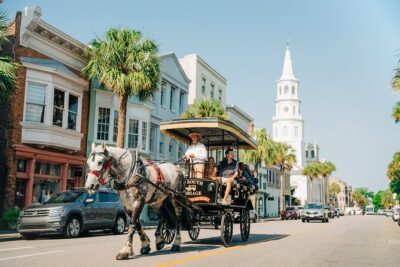
Charleston’s Old South Carriage Historic Horse & Carriage Tour
Read our review →
Big Island in a Day: Volcanoes Waterfalls Sightseeing and History
Read our review →
Freedom Trail History Small Group Walking Tour
Read our review →
Historic Charleston Guided Sightseeing Walking Tour
Read our review →