
Review · CHICAGO HISTORY TOURS
Chicago: Food, History and Architecture Tour
Chicago’s story is easiest to grasp on foot, with a hot dog in one hand and your eyes pointed at the skyline. This 4.5-hour food, history, and architecture tour connects the downtown landmarks with the tastes that define the city, from deep-dish pizza to Italian beef.
I like the way the tour gets you inside buildings instead of leaving you to admire them from the sidewalk. I also like the small groups, capped at 12 people, which lets guides such as Chicago Dave, Dash, Rich, and Daniel adjust the pace and answer questions without a microphone or headset.
The main drawback is the walking. You cover about 3 to 4 miles, and the tour runs in rain, snow, or cold. Food timing can also matter: an afternoon start may mean you wait several hours before the main food stops.
Key things to know before you book
- The Pedway adds an unexpected side of Chicago: You use parts of the underground tunnel network that locals rely on to move through downtown.
- Three classic foods make up a full meal: Expect samples such as a Chicago hot dog, deep-dish pizza, and an Italian beef sandwich, with portions and stops changing by season.
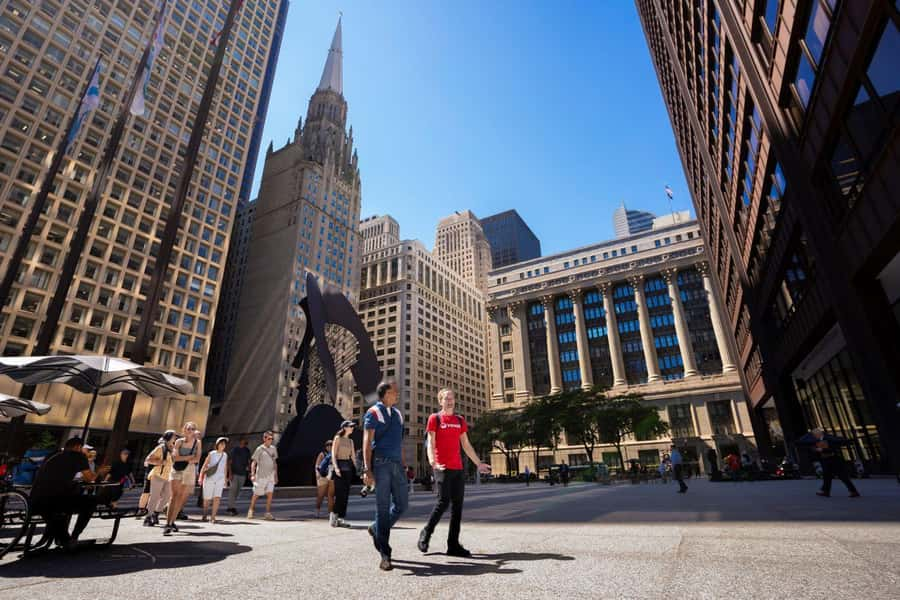
- The buildings are part of the story: Chicago Theatre, Willis Tower, the Wrigley Building, London House, the Cultural Center, and the Riverwalk all fit into the route.
- Local guides shape the experience: Chicago-born guide Dave is especially known for personal city stories, while guides including Dash, Rich, Daniel, and Kevin have also led the walk.
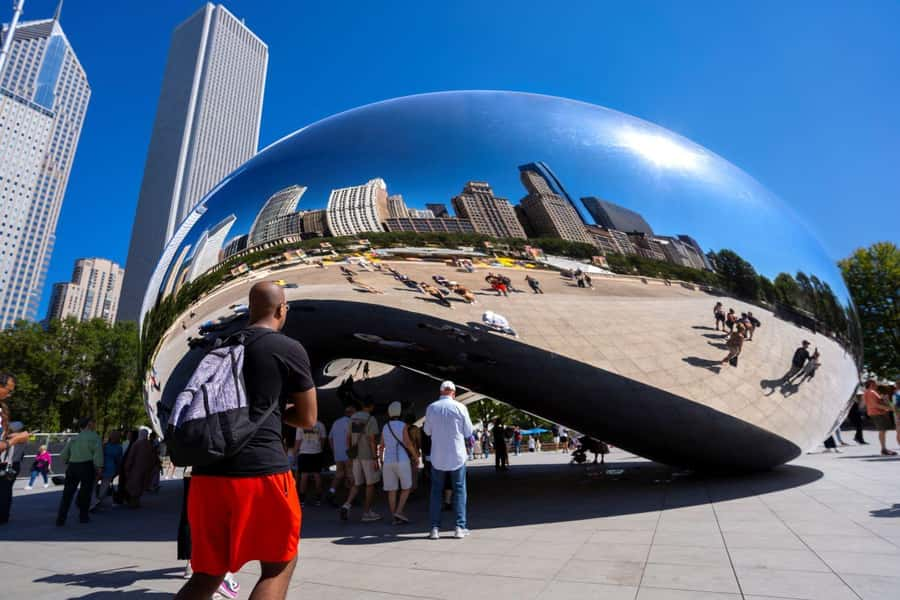
- Millennium Park provides the finale: The tour ends at the Bean, giving you an easy place to continue exploring.
- It is best for walkers: The pace is manageable, but the distance and weather exposure deserve real attention.
Why this tour works as a first look at Chicago
Chicago can feel like several cities at once. You have grand Loop buildings, elevated trains, underground passages, riverfront towers, public art, and a food culture that is far more than pizza.
This tour gives those pieces a useful order. You begin with architecture and city history, move through the downtown core, then finish with familiar local foods. That sequence matters because the food does not feel tacked on. You learn what makes Chicago distinctive, then taste a few of the answers.
I would use this tour early in a Chicago stay, especially if you have only a day or two. It gives you a working map of the center and leaves you with practical ideas for what to do next. Guides regularly offer suggestions at the end, including places to eat and sights to visit.
The small-group limit is a real advantage. With no more than 12 people, you can usually hear the guide without the audio equipment used on large city walks. Several guides have also adjusted the route when a group showed particular interest in a building, neighborhood detail, or piece of Chicago history.
More Architecture and Landmark Tours in Chicago:
- Chicago in a Day: Food, History & Architecture Walking Tour
★ 5.0 · 1,153 reviews - Chicago Architecture and True Crime Tour
★ 5.0 · 326 reviews - Historical and Architectural Chicago Fireboat River & Lake Cruise
★ 5.0 · 246 reviews
Starting underground in the Chicago Pedway
The Pedway is one of the tour’s more unusual elements. This network of underground passages links parts of central Chicago, and locals use it as a practical way to get around downtown.
You should not expect a grand museum or a single dramatic attraction below street level. The appeal is seeing a working part of the city that many visitors miss. It also gives you a break from traffic, wind, and weather while your guide explains how Chicago functions beneath its famous streets.
The Pedway helps set up the tour’s larger theme: Chicago is a city best understood by looking at several layers at once. Above ground, you see famous façades and skyscrapers. Below ground, you see the routes people use to move through the Loop.
The exact meeting point may vary by booking option, so check your confirmation closely. Once the walk begins, comfortable shoes matter more than fashionable ones. You may be moving between indoor and outdoor spaces, and you will cover several miles before the last stop.
Chicago’s architecture, from the Theatre to Willis Tower
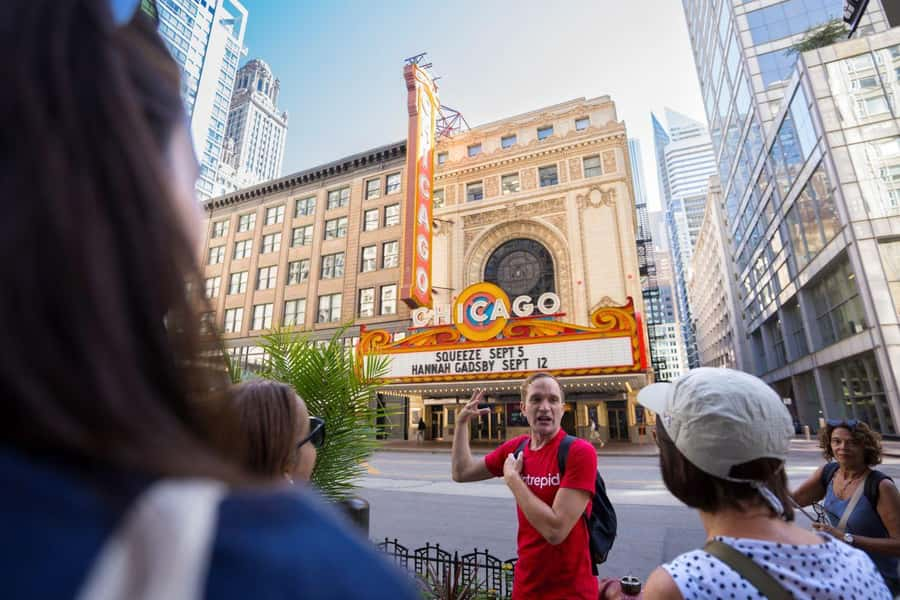
Architecture takes up much of the first part of the experience. The route includes landmarks such as the Chicago Theatre, Willis Tower, the Art Deco London House, and the Wrigley Building.
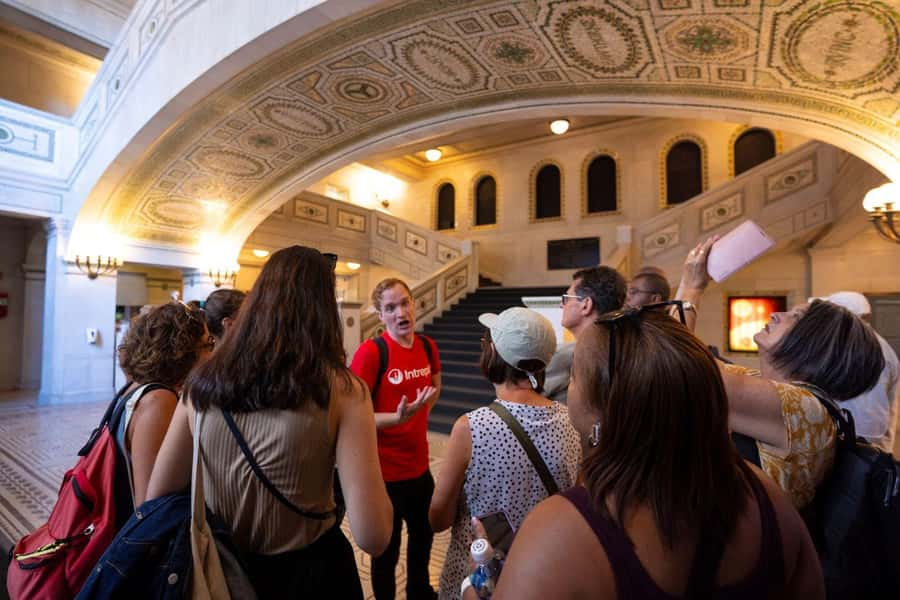
I particularly like the promise of entering selected buildings. From the street, Chicago architecture can become a parade of façades and famous names. Going inside lets you notice ceilings, lobbies, decorative details, and the way older buildings still function in daily city life.
The Chicago Theatre brings show-business glamour to the route. Willis Tower gives you a sense of Chicago’s drive to build upward. The Wrigley Building helps explain how major structures can become symbols of a city, while London House adds a different architectural mood.
The guide’s storytelling is important here. A list of building names is easy to forget. A story about how a structure was used, how its design reflected its era, or how it fits into Chicago’s growth gives you something to remember.
You should also allow time for photographs. One past afternoon tour included enough pauses for pictures, and the guide kept the group moving without making it feel rushed. That balance is useful in a city where every block can offer another view.
The Cultural Center, Macy’s, and details above your head
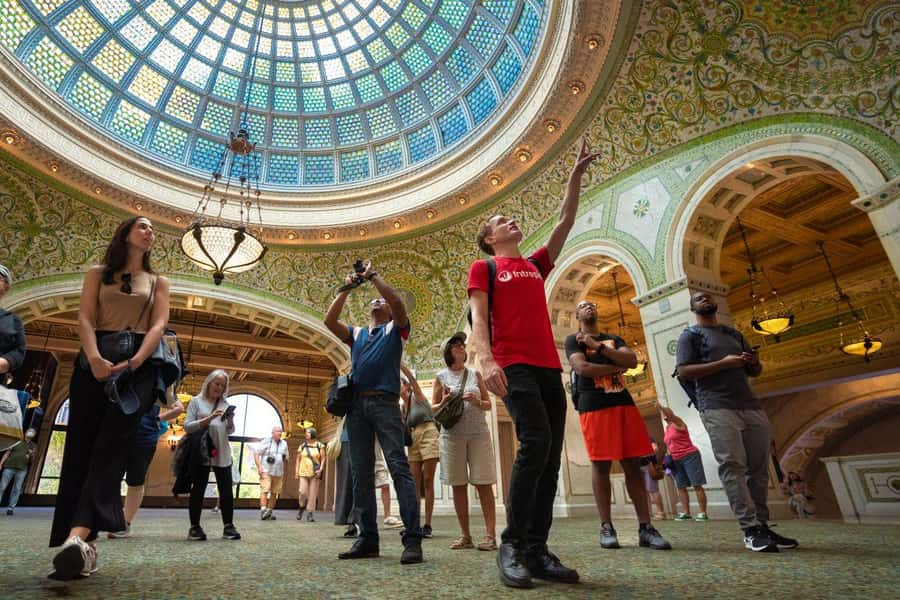
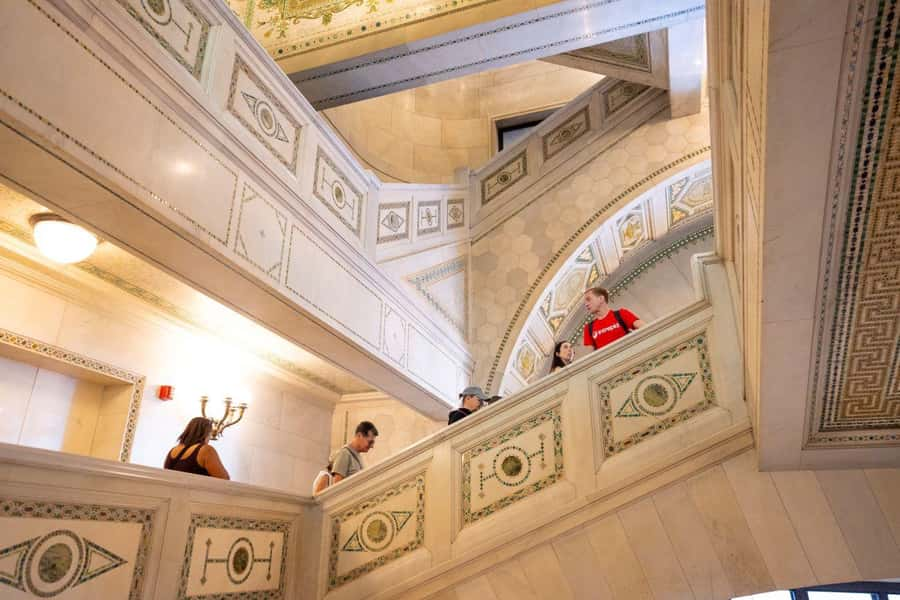
The Chicago Cultural Center is another strong stop. Its interiors give the walk a change of pace and show why stepping indoors improves an architecture tour.
You may also pass through or near historic retail interiors such as Macy’s. One guide pointed out the store’s ceiling details, and that became memorable enough for the visitor to return later and look again. That is a good sign of what this tour can do at its best: it trains you to notice parts of the city you might otherwise walk past.
The experience is not only about famous towers. It also covers the decorative work inside older public and commercial buildings. If you enjoy design, pay attention to ceilings, entrances, stonework, and the small transitions between old and new Chicago.
The tour may include the elevated train as part of the city experience. The details supplied for this walk do not promise a long train ride, so think of it as a short transport connection or a chance to understand how the El fits into downtown life, not as a separate rail attraction.
More History Tours in Chicago:
- Chicago: Field Museum of Natural History Ticket or VIP Tour
★ 4.7 · 717 reviews - Field Museum of Natural History Admission Tickets
★ 4.5 · 489 reviews - Chicago Walking Tour: Historic Treasures of Chicago
★ 5.0 · 362 reviews - Walkin’ with Colin: Chicago History-Mystery-Comedy-Tragedy Tour
★ 5.0 · 218 reviews
Chicago’s Prohibition-era side
Chicago’s Prohibition legacy gives the history portion some edge. The tour connects the city’s architecture and streets with the era when alcohol was banned nationally but far from absent in Chicago.
This is not presented as a specialized gangster tour. Instead, Prohibition is one strand in a larger account of the city. You hear how the period shaped Chicago’s reputation and how the buildings around you fit into that past.
That broader approach suits you if you want context without spending the entire afternoon on crime stories. If your main goal is gangsters, ghosts, or a detailed study of organized crime, a dedicated two-hour tour would be a better match. Here, Prohibition supports the architecture and food themes rather than taking over.
Walking beside the Chicago River
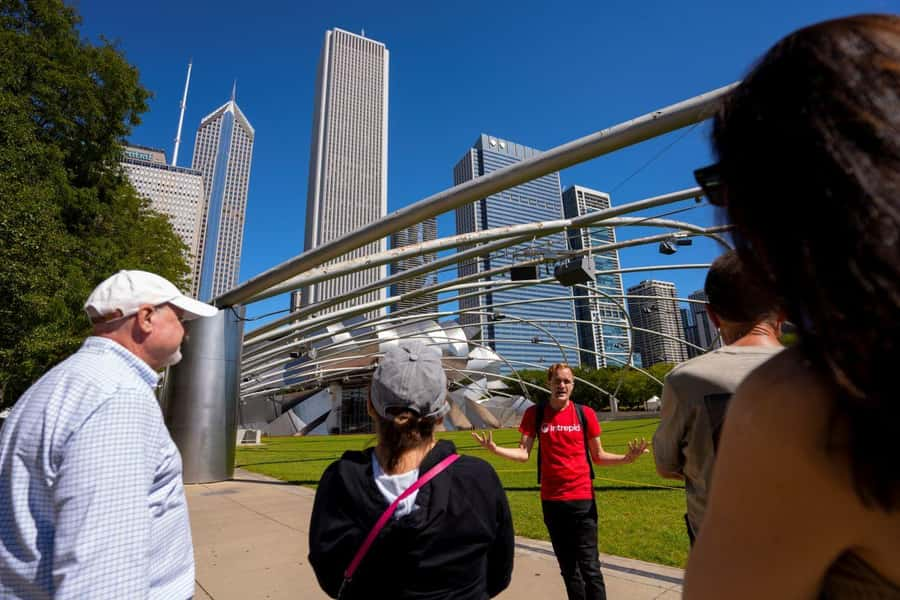
The Chicago Riverwalk adds one of the prettiest stretches of the route. You walk beside the river and see major structures such as Marina Towers and the Wrigley Building from a different angle.
The river is especially useful for understanding Chicago’s visual drama. From street level, skyscrapers can feel close and hard to frame. Along the water, you get more room to look up, compare buildings, and photograph the relationship between the river and the downtown towers.
This portion is scenic, but it remains a walking tour, not a cruise. If you want a long, structured explanation of Chicago’s buildings from the water, choose a dedicated architecture boat trip instead. The benefit here is the combination of river views, street-level details, food, and history in one outing.
Weather will shape this section. The tour operates in rain, snow, and cold, so dress for the forecast rather than for the season alone. A waterproof layer and comfortable shoes are sensible choices.
Popcorn, hot dogs, pizza, and Italian beef

The food is not a token sample at the end. It is a central part of the experience, with three food stops and a popcorn tasting.
The exact restaurants and portion sizes may change with the season and the day’s route. The total amount of food is intended to equal a full meal, but you should not assume every stop will look identical to the examples below.
The tasting usually includes:
- Chicago-style hot dog
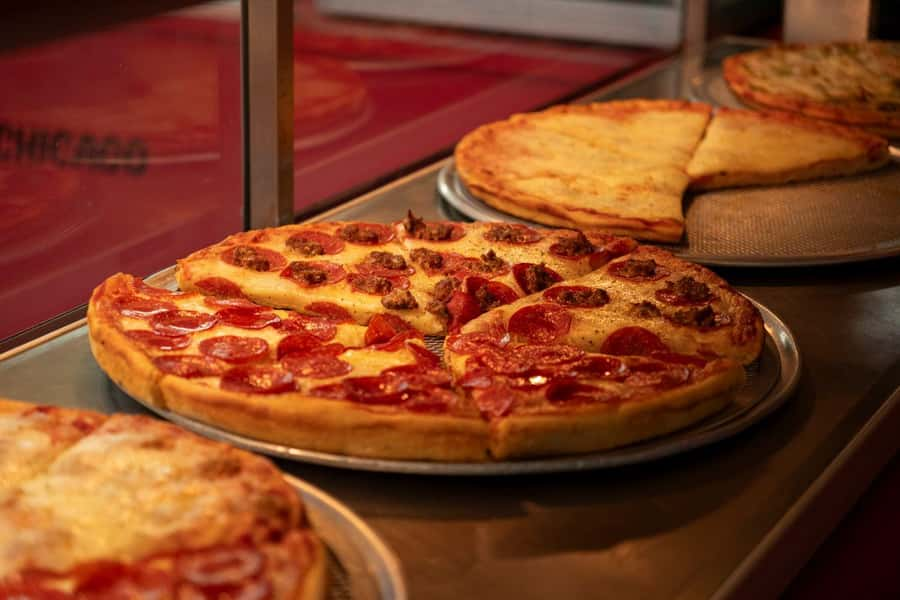
- Chicago deep-dish pizza
- Italian beef sandwich
- Chicago-style popcorn
The hot dog gives you a quick introduction to one of the city’s best-known local staples. Deep-dish pizza slows things down and shows why Chicago’s version is a meal rather than a casual slice. Italian beef brings a wetter, heartier sandwich into the mix, with a taste that is quite different from the hot dog and pizza.
The popcorn tasting adds a lighter stop. It fits nicely into the walking route and helps break up the heavier food.
I like this selection because it covers different parts of Chicago’s food identity. You are not eating three versions of the same thing. You get a snack, a sandwich, a pizza course, and a city classic.
Still, do not book this expecting a restaurant crawl with full plates at every stop. The experience is a guided tasting, and the food is folded into a busy walking itinerary. The included amount should equal a full meal, but anyone with a large appetite may want extra food later.
Vegetarian options can be arranged if you notify the provider in advance. Other allergies and dietary preferences cannot be accommodated, so this tour is not a good choice if you need strict control over ingredients.
Finishing at the Bean in Millennium Park
The walk ends at Millennium Park, beside the famous Bean. This is a sensible finish because the park is easy to recognize and gives you a clear next step after the tour.
You can take photographs, remain in the park, or use the guide’s suggestions to plan the rest of your afternoon. The guide may also provide directions to restaurants and other sights.
Ending here gives the tour a clean visual finale. You have seen Chicago below street level, at the river, inside historic buildings, and from the base of major skyscrapers. The Bean is familiar, but after several hours of context it feels less like a single photo stop and more like the final marker on a downtown walk.
The guides make the difference
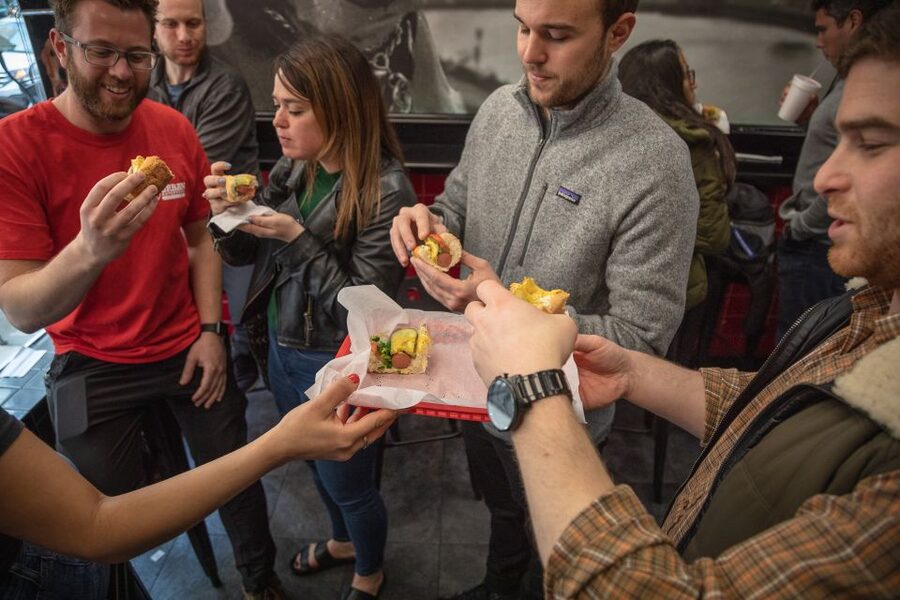
The strongest part of this experience is the guide. Several guides have led it, and the tone may vary from one departure to another.
Chicago Dave is a Chicago native whose enthusiasm for the city comes through in local stories and personal observations. He has been praised for making the walk interactive, recommending what to do next, and keeping the group engaged without making the history feel like a lecture.
Dash has also led the tour with an energetic approach, mixing city facts with a clear concern for the group’s enjoyment. Rich has handled very small departures, including one winter day when he walked with just a single participant. Daniel has been noted for bringing people inside buildings and adjusting his pace so nobody has to run to keep up.
That last detail matters. Four and a half hours is long enough for a poor guide to become tiring. A good one keeps the route varied, gives you time to sit or get a drink when possible, and adjusts the pace to the group.
The guide names and availability can change, so you should not book solely on the hope of getting one particular person. The consistent pattern is local enthusiasm, strong knowledge of Chicago, and a willingness to answer questions.
Price, pace, and who gets the most value
At $99 per person, the tour is not the cheapest way to see downtown Chicago. You are paying for 4.5 hours of guiding, three food samples, popcorn, and a route that combines several types of sightseeing.
I consider the price fair if you would otherwise pay separately for a food tour and a history or architecture walk. The value is strongest for first-time visitors who want one organized introduction rather than several shorter bookings.
It is also useful for repeat visitors. One person who had been to Chicago many times still found new details in the buildings and interiors. That is the mark of a route with more than just the standard photo stops.
The tour is suitable for children, and children under six can join free. It is also available as a private group, which could help families or friends who want a more flexible pace.
I would hesitate if you have limited mobility, dislike walking, or need to avoid all outdoor exposure. The route covers 4.8 to 6.4 kilometers, with possible stairs, street crossings, and changes between indoor and outdoor spaces. The description calls it suitable for all fitness levels, but the distance remains real.
Should you book the Chicago Food, History and Architecture Tour?
Book it if you want a well-rounded introduction to downtown Chicago and like the idea of learning through food, buildings, and local stories in one afternoon. It is particularly useful on a first visit, for a short stay, or for repeat visitors who want more detail than a standard sightseeing loop provides.
Skip it if your priority is a single subject. Choose a river architecture cruise for extended water views, an observation deck for skyline height, or a dedicated Prohibition tour for a stronger focus on Chicago’s criminal past.
For most walkers, the deciding question is simple: can you handle 3 to 4 miles in changing weather? If yes, the combination of the Pedway, historic interiors, Riverwalk, local food, and Millennium Park gives you a lot for one $99 booking.
FAQ
How long does the tour last?
The tour lasts 4.5 hours and is usually offered in the morning and afternoon.
How far do you walk?
You walk approximately 4.8 to 6.4 kilometers, or 3 to 4 miles.
What foods are included?
The tour includes three food samples, which may include a Chicago-style hot dog, deep-dish pizza, and an Italian beef sandwich. It also includes a popcorn tasting.
Are food portions large?
Food options and portion sizes vary by season and by the places used that day. The total included food is intended to equal a full meal.
Can vegetarians join?
Yes. Vegetarian options can be accommodated if you notify the provider in advance.
Can the tour accommodate food allergies?
The provider can accommodate vegetarian options but cannot accommodate other food allergies or dietary preferences.
Is the tour suitable for children?
Yes. It is described as a child-friendly walking tour. Children under six may join free of charge.
How many people are in the group?
The tour has a maximum of 12 participants. A private group option is also available.
What language is the tour offered in?
The live tour is conducted in English.
What happens if it rains or snows?
The tour operates in rain, snow, and other weather conditions. You should bring comfortable shoes and clothing suited to the forecast.
Newest history tours we have reviewed in Chicago
- Chicago River Architecture Tour Aboard a Historic Yacht★ 5.0 · 45 reviews
- Historical and Architectural Chicago Fireboat River & Lake Cruise★ 5.0 · 246 reviews
- Walkin’ with Colin: Chicago History-Mystery-Comedy-Tragedy Tour★ 5.0 · 218 reviews
- Field Museum of Natural History All-Access Pass★ 4.5 · 135 reviews
- Chicago Walking Tour: Historic Skyscrapers★ 5.0 · 67 reviews
- Historic Homes and Cottages of Wicker Park Walking Tour★ 5.0 · 44 reviews
- Chicago Architecture and True Crime Tour★ 5.0 · 326 reviews
- Field Museum of Natural History Early Access Ticket★ 4.5 · 52 reviews
Architecture & Landmark Tours, compared.
St. Mark’s Basilica Guided Tour & VR History Intro
Read our review →
Venice’s Best: Basilica, Doge’s Palace, Gondola & History Gallery
Read our review →
Córdoba: Skip-the-Line Great Mosque-Cathedral History Tour
Read our review →
Pantheon Elite Guided Tour – Rome’s Iconic Ancient Temple
Read our review →
Abu Dhabi Grand Mosque, Palace, and Heritage Village
Read our review →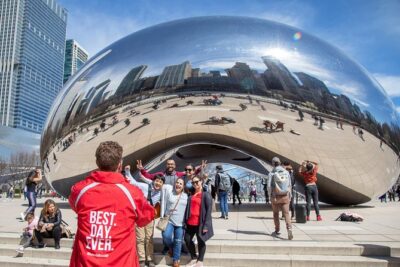
Chicago in a Day: Food, History & Architecture Walking Tour
Read our review →

Colosseum Special Access Tour, with Ancient Temples & Tombs
Read our review →Browse the lists this tour appears in