
Review · CHARLESTON HISTORY TOURS
Charleston’s Historic Downtown Food Tour
Charleston’s food tells its story one bite at a time. This walking tour connects she-crab soup, Carolina Gold rice, barbecue, and dessert with the city’s French, African, Gullah Geechee, and pirate-era past. You walk through the French Quarter and waterfront, stopping at four restaurants for enough food to make a real lunch.
I like the mix of seated tastings and city sights, especially the chance to hear about slavery and the slave trade as part of Charleston’s food story rather than getting a sugar-coated version. I also like the small group limit of 15 and the guides, including Paige, Jeff, and Emerson, who bring plenty of local history to the walk.
The main drawback is that the tour can feel rushed, and its timing needs clarification. It is advertised at about two and a half hours, but some departures have finished closer to two hours. The food lineup can also change, and shrimp and grits may not be served despite appearing in promotional material.
Key points to know before booking
- She-crab soup is often the early favorite: This Charleston specialty anchors the food story and has been praised repeatedly.
- Four restaurant stops provide a full lunch: You receive food tastings at each stop, not just a few token samples.
- The history goes beyond pretty streets: Expect discussion of French cooking, African ingredients, Gullah Geechee culture, slavery, the slave trade, and piracy.
- The route covers major downtown sights: Rainbow Row, the Pineapple Fountain, the Old Exchange and Provost Dungeon, and Charleston City Market all fit into the walk.
- The pace is brisk: You have time for explanations and questions, but not much time to linger over drinks or meals.
- Allow for a schedule cushion: The stated duration is approximately two and a half hours, though some tours have lasted about two.
A food tour that treats Charleston as the main ingredient
At $110, this is not a cheap snack crawl. You are paying for a guided walk, four restaurant tastings, city history, and enough food to replace lunch. The value is strongest if you want an organized introduction to Charleston and prefer tasting several dishes rather than committing to one restaurant.
The tour works best as an early trip activity. You get your bearings in the historic center, learn which local dishes matter, and leave with a better idea of what to order during the rest of your visit. It also saves you from piecing together several restaurant reservations on your own.
The experience has a reported rating of 4.6 from 349 ratings, with 90 percent recommending it. That is a strong record, but it is not a guarantee of a perfect meal or a perfectly timed walk. Food quality can vary by stop, and one assessment found the food only average, while most of the strongest praise centers on the guide, the history, and dishes such as she-crab soup.
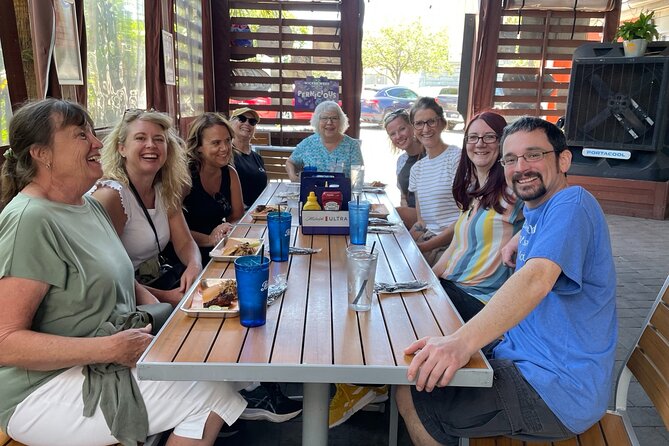
The group can reach 15 people. That is small enough for questions and conversation, but it is not a private tour. Your guide needs to keep the group moving between restaurants, so do not expect a long, leisurely restaurant meal at every stop.
More Old Town and Historic Centre Walks in the USA
- Charleston: Historic Downtown Food Tour
★ 4.7 · 67 reviews - Philadelphia Old City Historic Walking Tour with 10+ Top Sites
★ 5.0 · 2,020 reviews - Asheville Historic Downtown Guided Electric Bike Tour with Scenic Views
★ 5.0 · 1,234 reviews
Starting near the French Quarter and Rainbow Row
The tour starts at 195 East Bay Street and returns there at the end. The first part passes Rainbow Row on the way to food stops in the French Quarter. Rainbow Row is mainly a visual orientation point here, rather than a long sightseeing stop, with about 15 minutes devoted to the area.
The useful part is the food context. You learn how French influences entered Charleston cooking and which dishes and techniques were associated with that tradition. This makes the surrounding streets more meaningful than a quick photo stop. You are not simply looking at colorful facades, you are beginning to connect Charleston’s built environment with the people and cultures that shaped its table.
Do not expect a detailed architectural tour of Rainbow Row. The focus remains food and history, and the walk moves on to the first restaurant. If you want extensive time for photos, plan to return to the area later.
Pineapple Fountain and the meaning of Southern hospitality
The walk continues toward the Pineapple Fountain, with about 20 minutes for the stop. The pineapple is used as a symbol of Southern hospitality in South Carolina, and the guide connects that idea with Charleston’s cooking.
This is a good example of the tour’s method. A familiar landmark becomes a doorway into local customs and food traditions. You get a short historical talk, then return to eating and walking rather than spending the entire afternoon at one monument.
The fountain is outdoors, so weather matters. The tour requires good weather, and poor conditions can lead to a rescheduled date or a full refund. Even in decent weather, wear shoes suited to walking and bring protection from rain or sun. The route is urban, but the day is still spent on foot.
The Old Exchange, Provost Dungeon, and pirate-era food
The Old Exchange and Provost Dungeon receives about 15 minutes. The guide explains how privateering and piracy in the early 1700s affected Charleston and its diet.
This is one of the more unusual food connections on the route. Instead of treating pirate stories as a separate bit of entertainment, the tour considers how maritime trade and piracy influenced what people could obtain and eat. It gives you a wider view of Charleston’s food culture, which was shaped by trade, conflict, migration, and wealth.
The stop is brief. You should think of it as a concise historical talk from outside or nearby, not a full visit through every room of the building. Admission to the listed sights is free as part of the walking route, and the tour’s real focus remains the restaurant stops.
More Old Town and Historic Centre Walks in Charleston:
- Madrid Essential: Historic Center, Plaza Mayor & Royal Palace
★ 5.0 · 6,416 reviews - Lisbon: Live Fado Show with Port Wine in Historic Center
★ 4.7 · 4,166 reviews - Valencia Old Town Tour with Wine & Tapas in 11th Century Historic Monument
★ 5.0 · 3,234 reviews - Prague Old Town, Medieval Underground and Dungeon Historical Tour
★ 4.5 · 3,227 reviews
Charleston City Market and African food traditions
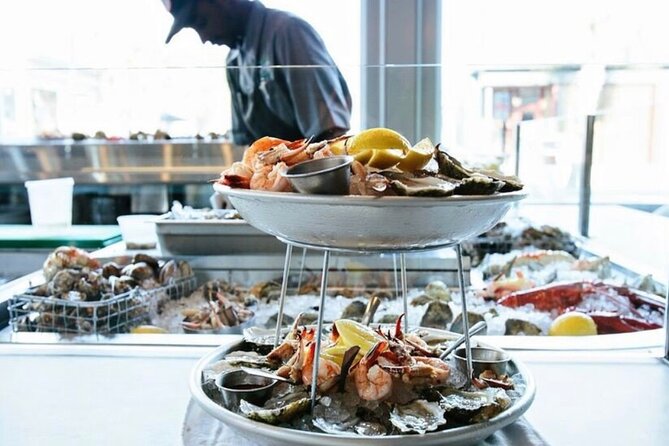
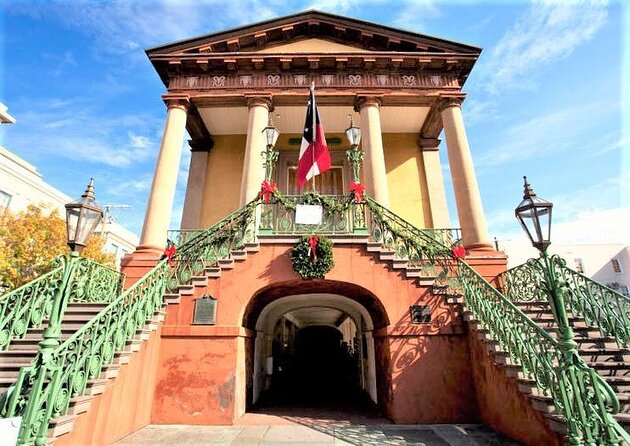
About 20 minutes are spent around Charleston City Market, where the guide discusses African influences on local cuisine and the ingredients that became part of Charleston cooking.
This is an essential part of the tour. Charleston’s food cannot be explained honestly through French and European influences alone. African cooks, enslaved people, and the wider Gullah Geechee culture helped shape the Lowcountry’s rice dishes, seasoning habits, and use of local ingredients. The guide’s willingness to discuss slavery and the slave trade gives the food a needed human context.
You may find this portion more serious than the earlier stories about hospitality or pirates. That is a strength, not a flaw, if you want a clear account of how Charleston developed. The tour does not treat history as decoration. It asks you to understand who did the cooking, who controlled the trade, and how those forces shaped the dishes on your plate.
What you may eat at the four restaurant stops
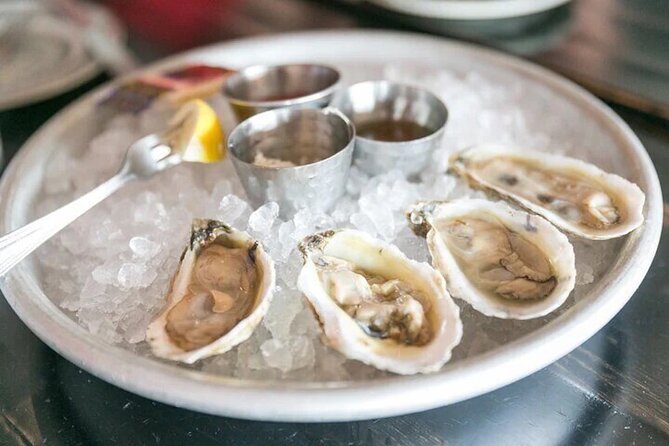
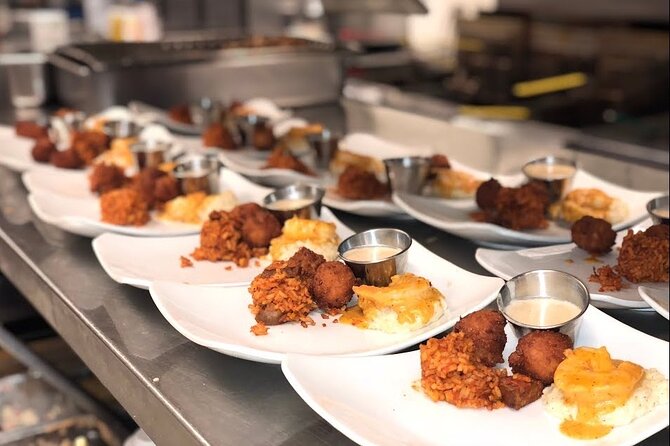
The meal is divided among four restaurants, with sit-down stops and VIP access. The precise restaurant lineup and dishes can change, so you should not book this expecting one fixed menu. The food described by recent departures includes several recognizable Lowcountry and Southern favorites.
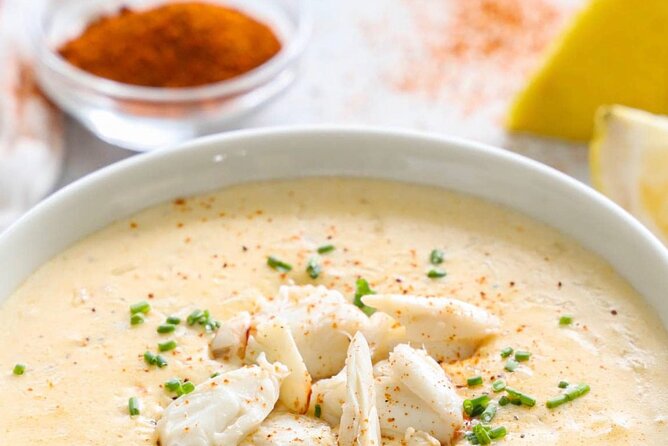
She-crab soup is the dish most worth anticipating. It is repeatedly singled out as a favorite, and the guide uses it to explain the dish’s Charleston origins. The soup also sets the tone for the tour, pairing a local specialty with a short lesson about how cuisine develops.
Other tastings have included Carolina Gold rice, rice jollof, a chicken and rice dish, and a pulled pork slider. These selections help show both local ingredients and wider cultural connections. Rice is especially important to the story because it links Charleston cooking to African food traditions rather than presenting it as an isolated Southern style.
Dessert is included as well. The sweet course has received strong praise, and it gives the meal a proper finish instead of leaving you with only savory samples. By the end, the portions together should amount to a full lunch.
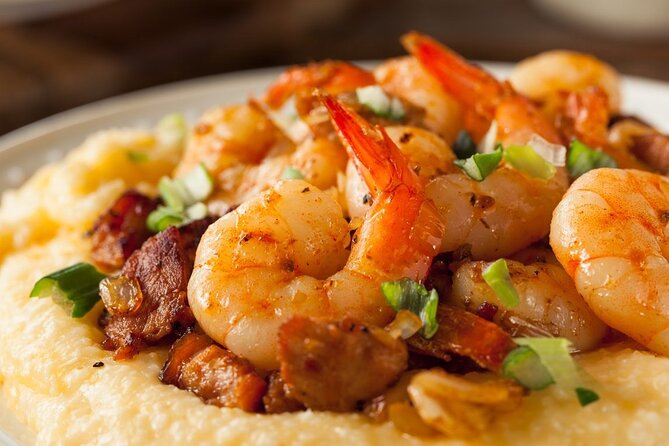
A practical warning: do not count on shrimp and grits. That dish appears in the promotional imagery, but it has not been served on some recent tours. If shrimp and grits are your main reason for booking, contact Charleston Tours before paying or treat the menu as subject to change.
Alcohol is not included. You may buy a cocktail or other drink at the venues, but the brisk schedule means this is not the right tour for leisurely sipping. One tasting follows another, with history and short walks in between.
How the guides shape the experience
The guide makes a major difference here. Paige has led departures that mixed Lowcountry food, Gullah Geechee culture, and Charleston history in a clear, friendly way. Jeff has been praised for adding a strong historical touch, and Emerson has brought broad knowledge of Charleston and American history.
You may not receive the same guide every time, but these names give you a sense of the tone to expect: personable instruction rather than a silent escort from restaurant to restaurant. The better departures leave room for questions, and the guide ties each dish to a place, tradition, or period in Charleston’s past.
That human element is important because the route itself is compact. The landmarks are close together, and the meal is split into samples. Without a good guide, the tour could feel like several unrelated tastings. With a strong guide, the soup, rice, barbecue, and dessert become parts of one larger story.
Still, guide quality is not the only factor. The food can be uneven from one stop to another, and the pace may limit conversation. Go in expecting an informative moving meal, not a slow restaurant afternoon.
Pace, timing, and practical planning
The official duration is approximately two hours and 30 minutes. Some departures have ended in about two hours, creating problems for people who booked another activity immediately afterward. I would leave at least an extra hour before your next fixed reservation, especially if the second event requires transportation.
The walk returns to the starting point at 195 East Bay Street. That makes planning easier than a one-way food tour, and the start is near public transportation. You receive a mobile ticket, and confirmation arrives when you book.
The route includes regular opportunities for a restroom break, which is useful when the tour combines several restaurant visits. Most people can participate, and service animals are allowed. The information provided does not describe the exact walking distance, stairs, or restroom access at each venue, so contact the operator if you need those details before booking.
Wear comfortable shoes. You are covering several downtown stops, and the tour moves quickly enough that awkward footwear will become annoying. Bring a rain layer when the forecast looks uncertain, since poor weather can cancel the activity.
Cancellation is flexible if you act early. You receive a full refund when you cancel at least 24 hours before the start time. Cancellations or changes within 24 hours are not accepted for a refund. If Charleston Tours cancels because of poor weather, you are offered another date or a full refund.
Who will get the most from this tour
I would recommend this tour to first-time Charleston visitors who want a food-and-history introduction rather than a restaurant-only crawl. It suits people who enjoy learning why a dish exists, not just deciding whether it tastes good.
It is also a good fit for families with older children, couples, and solo visitors who like meeting people during a small-group activity. Most travelers can participate, but children ages zero to six do not receive included food, so the $110 price needs careful thought for families with very young children.
You will probably enjoy it if you like variety. Four stops let you sample several styles without ordering four full meals. The tour is also useful if you are unsure about Lowcountry cooking and want to test local specialties before choosing restaurants for later meals.
I would be more cautious if you want a relaxed dining experience, lots of free time for photography, or a guaranteed menu. The tour moves from stop to stop, and the food can change. It is also not the best choice if you need to finish at an exact time.
Should you book Charleston’s Historic Downtown Food Tour?
Book it if you want a filling introduction to Charleston’s cooking tied to the city’s complicated past. The combination of she-crab soup, rice dishes, pulled pork, dessert, and stops at the French Quarter, Pineapple Fountain, Old Exchange, and City Market gives you a useful first look at the city.
The tour is especially worthwhile when Paige, Jeff, or Emerson brings the history to life and makes room for real questions. At $110, the price is fair when you count four tastings and a full lunch, but less appealing if you mainly want a leisurely meal or one specific dish.
My advice is simple: schedule it early in your stay, leave a generous buffer afterward, and confirm the current food lineup if shrimp and grits matter to you. If you can accept a brisk pace and a changing menu, this is a practical, tasty way to understand Charleston beyond its postcard streets.
FAQ
How long does Charleston’s Historic Downtown Food Tour last?
The tour is listed as approximately two hours and 30 minutes. Some departures have finished in about two hours, so leave extra time before your next scheduled activity.
How much does the tour cost?
The listed price is $110.
Where does the tour start?
The meeting point is 195 East Bay Street, Charleston, South Carolina 29401.
Where does the tour end?
The activity ends back at the meeting point.
How many restaurant stops are included?
Food tastings are included at four different restaurant stops.
Is enough food included for lunch?
Yes. The included tastings are intended to provide enough food for a full lunch.
Is alcohol included?
No. Alcoholic beverages are not included, but you may purchase your own drinks at the venues.
Are children ages zero to six given food?
Children ages zero to six do not have food included with their ticket.
What happens if the weather is poor?
The experience requires good weather. If it is canceled because of poor weather, you are offered another date or a full refund.
How far in advance can I cancel for a full refund?
You must cancel at least 24 hours before the experience start time for a full refund. Cancellations and changes made within 24 hours are not refunded.
More Food and History Tours in Charleston
- Sevilla Food Tour: Tapas, Wine, History & Traditions
★ 5.0 · 3,468 reviews - Victoria Guided Food and History Tour
★ 5.0 · 2,015 reviews - Gastown Historic Walking Food Tour
★ 5.0 · 1,863 reviews - Dublin Historical Centre Food Tour with 8 Food Tastings & Drinks
★ 5.0 · 1,718 reviews
Newest history tours we have reviewed in Charleston
- Charleston’s Strong Women of the South History Tour★ 4.5 · 27 reviews
- Charleston’s Historic Pubs, Taverns, and Taprooms Tour★ 4.5 · 33 reviews
- Sip History in The Sun Cabana Covered Cocktail Class★ 5.0 · 332 reviews
- Small-Group Tour: Charleston Old Walled City Historical Walking Tour★ 4.5 · 283 reviews
- Sip History In a Secret Speakeasy Cocktail Class★ 5.0 · 40 reviews
- Private Sunset Sail BYOB Dolphin/History Tours on 43ft Mystique★ 5.0 · 42 reviews
- Private Afternoon Sailing/Dolphin & History Tour on 43ft Mystique★ 5.0 · 32 reviews
- Private Walking Tour of Historic Charleston★ 5.0 · 38 reviews
Old Town & Historic Centre Walks, compared.
Madrid Essential: Historic Center, Plaza Mayor & Royal Palace
Read our review →
Live Fado Show with Port Wine in Historic Center
Read our review →
Valencia Old Town Tour with Wine & Tapas in 11th Century Historic Monument
Read our review →
Prague Old Town, Medieval Underground and Dungeon Historical Tour
Read our review →
Cartagena: Historic Center and Getsemaní Shared Walking Tour
Read our review →
Old Town Walking Tour History and Tales in Edinburgh
Read our review →
Philadelphia Old City Historic Walking Tour with 10+ Top Sites
Read our review →Browse the lists this tour appears in