
Review · CHARLESTON HISTORY TOURS
Charleston: Historic Downtown Food Tour
Charleston’s best food lesson may be the one that keeps you moving. This 150-minute tour links four downtown restaurants with a walk past the Old Exchange and Waterfront Park’s Pineapple Fountain. You eat small portions, hear the story behind Lowcountry cooking, and get quick access to busy dining rooms.
I like the balance here. She-crab soup, hushpuppies, oysters, and shrimp and grits give you a useful taste of Charleston without committing to four separate restaurant bills. I also like the guides’ personal style. Paige, Jackson, Emerson, Trevor, and Jeff have each been singled out for making the history lively, answering questions, and keeping the pace comfortable.
The main catch is that food quality is not perfectly even, especially at dessert. The final sweet course may depend on the restaurant’s daily menu, and some diners have found it disappointing after excellent savory dishes. You also need comfortable shoes, since the route covers about a mile and runs rain or shine.
Key points to know before booking
- Four restaurants in about 150 minutes: Each food stop takes roughly 20 minutes, with walking and storytelling between them.
- Classic Charleston tastes: Expect dishes such as she-crab soup, shrimp and grits, hushpuppies, oysters, carrot cake, or other Lowcountry selections.
- A meal made from samples: Portions are not full restaurant meals at each stop, but together they should add up to roughly a full serving.
- History on the way: The route passes the Old Exchange building, Waterfront Park, and its Pineapple Fountain.
- A mile of walking: Cobblestones, heat, and rain are possible, so this is not a good choice for people with mobility impairments.
- Good guide chemistry matters: Paige, Jackson, Emerson, Trevor, and Jeff have all been praised for humor, food knowledge, and Charleston stories, though your assigned guide will depend on the date.
Why this tour works as a first taste of Charleston
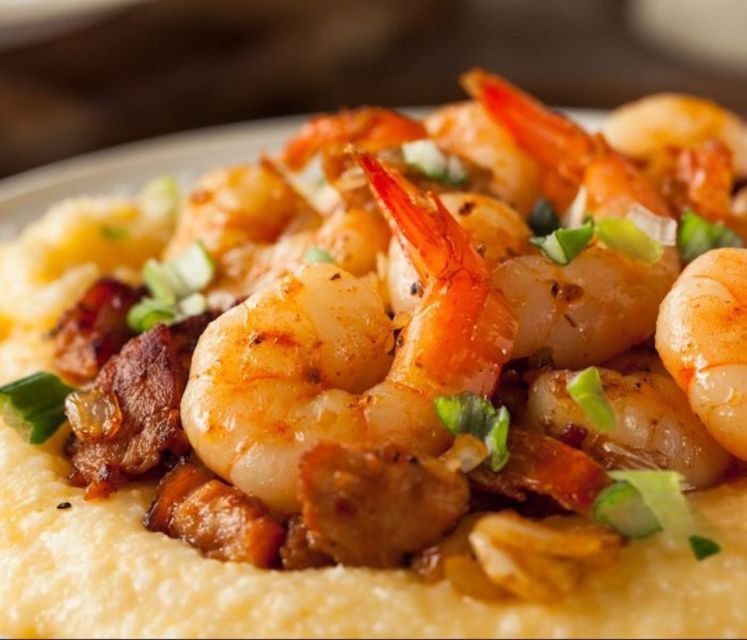
Food gives you a quick way into Charleston. A plate of shrimp and grits tells you something about the coast, farming, migration, and Southern cooking in a way that a list of dates cannot. This tour uses that idea well by placing food stops inside a walking route through the Historic District.
You are not parked at one table for two hours. Instead, you move between restaurants, eat a sample, and then step back onto the street. That rhythm helps you get your bearings downtown while leaving room for a guide to point out landmarks and explain how local dishes became part of Charleston’s identity.
The tour is especially useful early in your stay. You can ask about dishes, neighborhoods, and restaurants as you go, then use what you learn when choosing later meals. The food samples also let you test local specialties before ordering a full plate elsewhere.
The experience has a 4.7 rating from 67 reviews, with repeated praise for the guides, food portions, and mix of history and dining. That pattern matters more than a single glowing comment. The strongest part of the tour appears to be the human connection: Paige is often described as warm and polished, Jackson as friendly and entertaining, and Emerson as especially strong on the origins of the food.
More Old Town and Historic Centre Walks in the USA
- Charleston’s Historic Downtown Food Tour
★ 4.5 · 349 reviews - Philadelphia Old City Historic Walking Tour with 10+ Top Sites
★ 5.0 · 2,020 reviews - Asheville Historic Downtown Guided Electric Bike Tour with Scenic Views
★ 5.0 · 1,234 reviews
Starting under the awning on Charleston’s King Street area
Your guide meets you beneath the awning in front of the Charleston Tours & Activities windows. Guides usually arrive about 15 minutes early, but you should arrive around 10 minutes before the start time to check in without a scramble.
This is a walking tour, not a bus tour. The drop-off is back at the same meeting point, so you do not need to arrange a ride from another part of the city. Wear shoes that can handle about a mile of walking and clothes that remain comfortable in changing weather.
The tour operates rain or shine. Charleston’s heat can make even a short walk feel longer, and wet streets can slow the group, so bring a practical attitude about the forecast. The route is not suitable for people with mobility impairments.
Group size can vary, and a private group is available. A small group should make it easier to ask questions and hear the guide in busy streets. It also gives the guide more room to adjust the conversation around food preferences and general Charleston questions, though the supplied information does not promise dietary substitutions.
The first bites: hushpuppies, oysters, and Southern staples
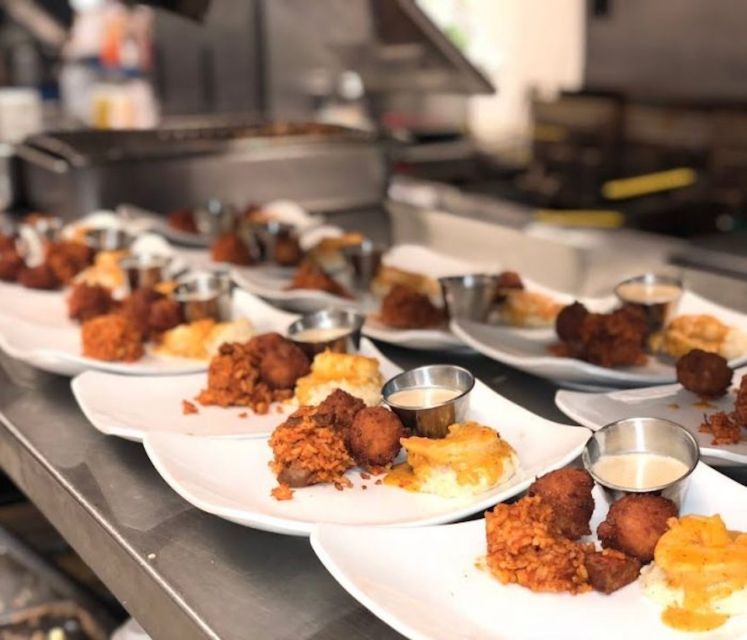
The food list includes hushpuppies, oysters, she-crab soup, shrimp and grits, carrot cake, and other Southern dishes. Exact restaurant assignments and menu order are not specified, so you should treat the menu as a sample of likely Charleston favorites rather than a fixed tasting card.
Hushpuppies are a fine opening bite because they show the plainspoken side of Southern cooking: cornmeal, frying, and a crisp outside with a soft center. They are not complicated, but they help set up the broader story of Lowcountry food, where simple ingredients often carry plenty of local meaning.
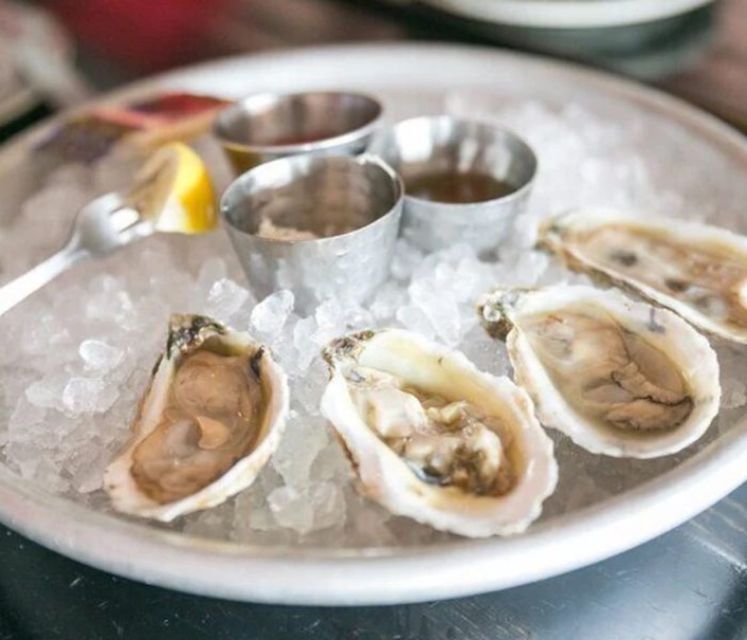
Oysters connect the meal to the coast. Charleston’s food culture is not just fried comfort food and barbecue. Seafood is central, and an oyster sample gives the tour a more complete range of flavors. If you do not eat oysters, check the current food arrangements before booking, since the information provided does not list substitutions.
She-crab soup is one of the tour’s most praised items. One diner called it the best she-crab soup they had ever had, and several comments point to it as a favorite. The soup is also a useful local introduction because it feels specific to Charleston rather than like a generic Southern dish.
She-crab soup and the story behind Lowcountry cooking
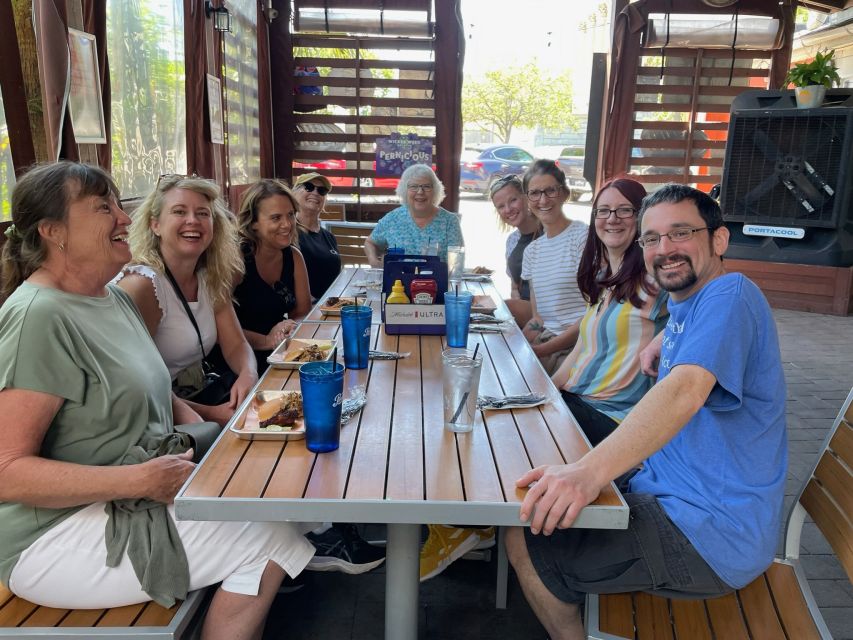
The guide’s job is not only to put food in front of you. The better part of the experience is learning why the dish belongs here. The guides have been praised for tying the food to Charleston’s past, explaining origins, and sharing their own experiences living in the city.
You may hear more about the history of the food than about every street you pass. One person wanted more explanation of the surrounding area, while another felt the balance between food and history was just right. That tells you what to expect: this is mainly a food tour with a meaningful history layer, not a full architectural walking tour.
The strongest guides seem to make the connection naturally. Paige has been praised for mixing historical facts with the food, while Emerson received special credit for explaining food origins and handling questions about Charleston more broadly. Jackson has been described as funny, personable, and good at keeping a group moving.
That variety is worth keeping in mind. The route and food are the foundation, but the tone can change with the guide. You may get a more food-focused explanation, more personal stories, or more general city history depending on who leads your group.
More Old Town and Historic Centre Walks in Charleston:
- Madrid Essential: Historic Center, Plaza Mayor & Royal Palace
★ 5.0 · 6,416 reviews - Lisbon: Live Fado Show with Port Wine in Historic Center
★ 4.7 · 4,166 reviews - Valencia Old Town Tour with Wine & Tapas in 11th Century Historic Monument
★ 5.0 · 3,234 reviews - Prague Old Town, Medieval Underground and Dungeon Historical Tour
★ 4.5 · 3,227 reviews
Walking past the Old Exchange and Pineapple Fountain
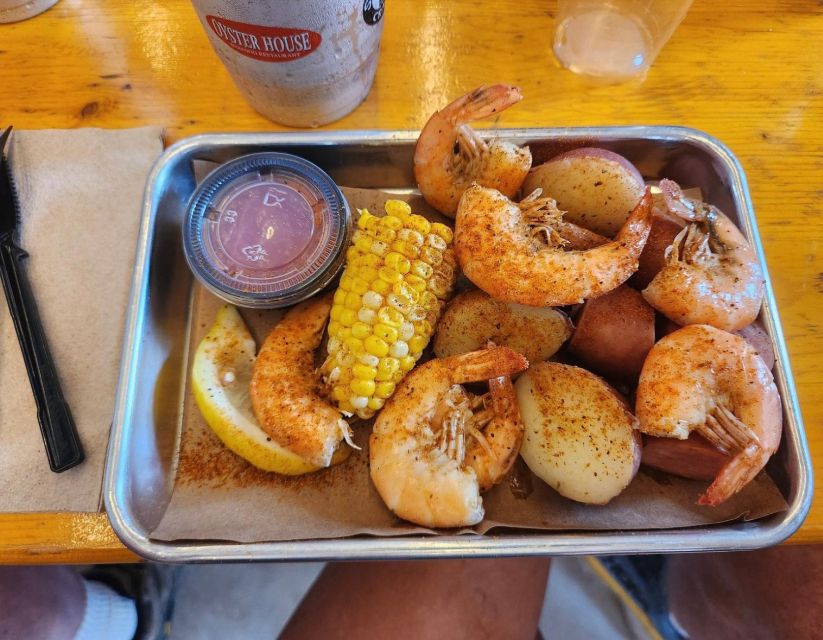
Between tastings, you walk through Charleston’s Historic District. The route includes the Old Exchange building and Waterfront Park’s Pineapple Fountain, two landmarks that give the meal a clear sense of place.
These walks serve a practical purpose. They let you digest between courses, keep the tour from feeling like a restaurant crawl, and show you parts of downtown that you might otherwise pass without context. The cobblestone streets also reinforce the need for sensible shoes. This is an easy distance for many people, but the surface and weather can make it more demanding.
Waterfront Park adds a change of pace from the restaurant interiors. The Pineapple Fountain is one of Charleston’s familiar public symbols, and seeing it during the tour gives you a natural photo stop. One guide, Jackson, was praised as a good photographer, which may be useful if you want a few group or city pictures, though photography help is not a formal inclusion.
Do not expect a long stop at every landmark. The stated focus is food, and the tour needs to reach four restaurants within about two and a half hours. You will get context as you walk, but you will not receive a full museum-style lecture at each building.
Shrimp and grits, Lowcountry boil, and generous portions
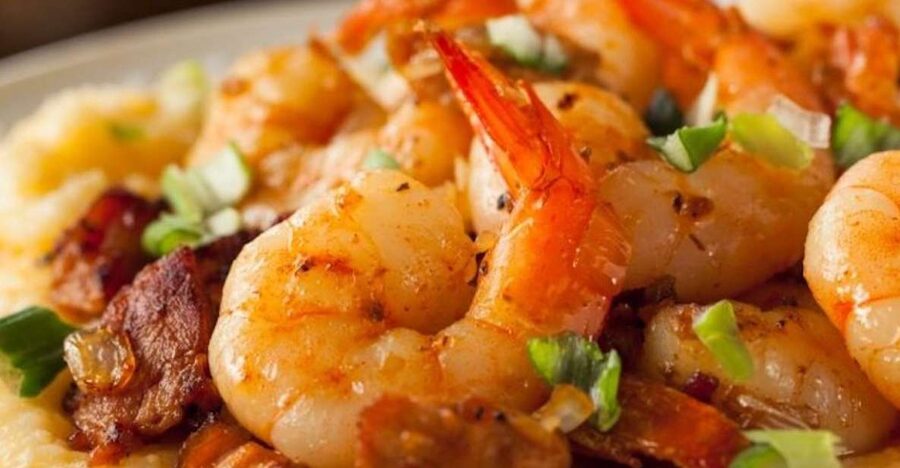
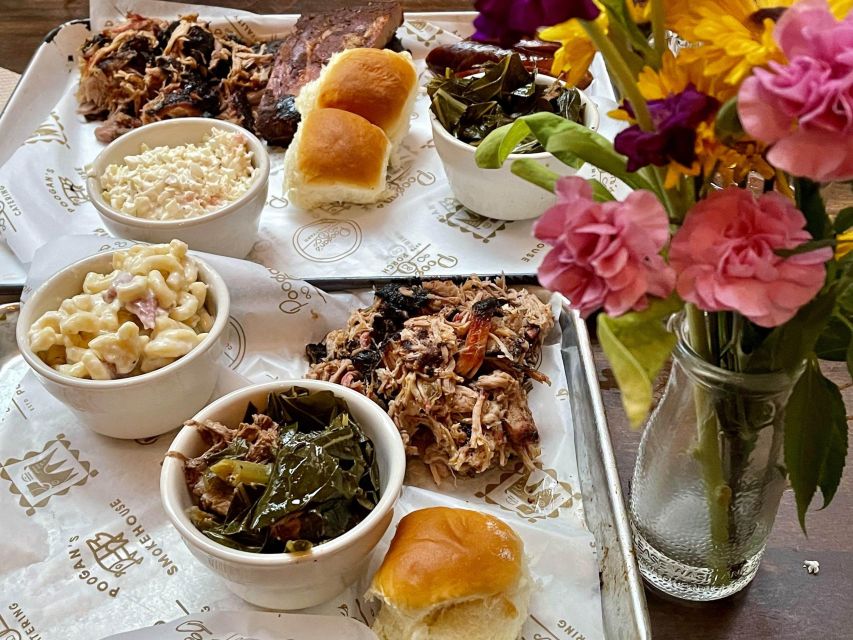
Shrimp and grits are among the dishes highlighted for the tour, while past menus have also included Lowcountry boil, barbecue, collard greens, and cornbread. That mix gives you more than one definition of Southern food. You get seafood, grain-based comfort food, smoked or grilled flavors, and vegetable sides.
The format is important. Each stop lasts about 20 minutes, and no stop is meant to be a full meal. Still, several diners found the portions generous, with the combined food adding up to a full meal by the end. One person felt the Lowcountry boil was large enough to be a meal on its own and would have preferred a smaller taste with room for shrimp and grits.
That is useful advice if you want variety more than volume. Pace yourself at the first two stops. The food can arrive quickly, and it is easy to treat every sample as a must-finish plate. You will enjoy the final stop more if you leave some room.
The four establishments are described as some of Charleston’s finest, and quick access is part of the value. You are not promised a private dining room, but you do receive food samples at all four restaurants and quick entry that helps avoid waiting in line at busy places. During a short trip, that saved time can matter.
Dessert is the one uncertain course
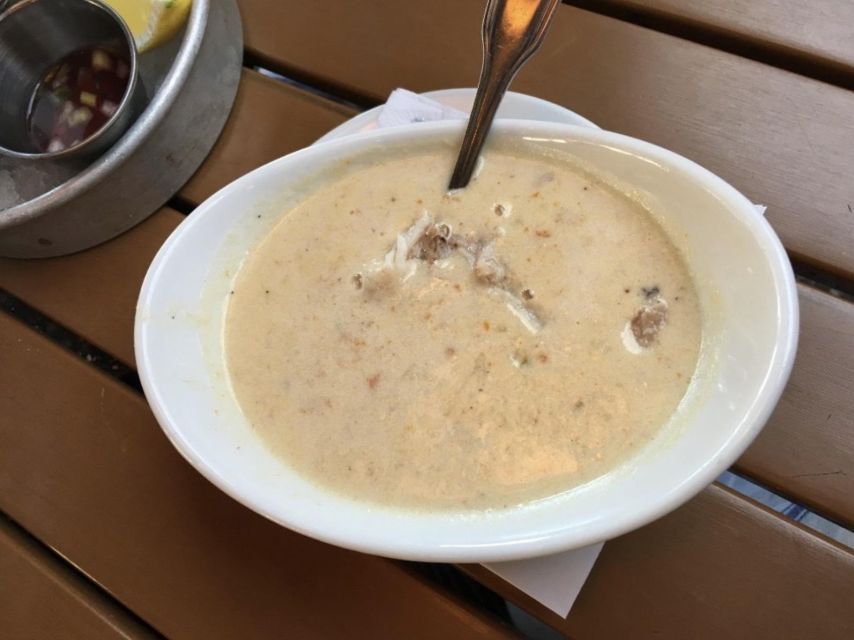
Dessert is the least predictable part of the experience. Carrot cake is listed among the possible tastes, but the dessert can be chosen by the local restaurant according to its daily menu. That means the final dish may not be known in advance.
Some people have enjoyed the sweet course, including a report of an excellent dessert. Others found chocolate cake with peanut butter icing dry or bland and felt it ended the tour on a weak note. Another diner questioned whether the dessert represented a typical South Carolina specialty.
I see this as a modest but real drawback. A changing dessert lets the restaurant serve what is fresh or available, but it also means you cannot book this tour expecting a particular final dish. If dessert is a major reason you take food tours, ask about the current menu before booking.
The savory courses appear to be the safer reason to choose this outing. She-crab soup, seafood, shrimp and grits, barbecue, and Southern sides form the core of the experience. Dessert is a bonus, not the main event.
Is $111 a fair price?
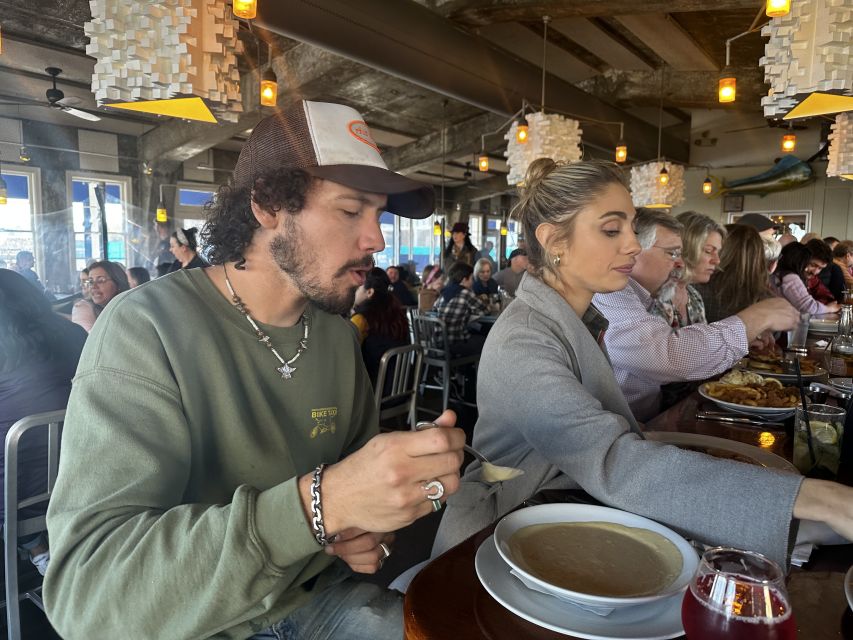
At $111 per person, this is not a cheap way to grab lunch. You are paying for four food samples, a guide, quick access to four restaurants, and a walking tour through the Historic District. The question is not simply how much food you receive. It is how much planning and waiting the tour removes.
If you tried to recreate the route alone, you would need to select four restaurants, find seats, order suitable portions, manage timing, and research the food and landmarks. You might spend less, especially if you skipped the guide and ordered only one meal. But you would lose the structured comparison between dishes and the history woven through the walk.
The price makes the most sense for a first visit, a short stay, or anyone who wants a guided introduction before making later restaurant choices. It is less appealing if you already know Charleston’s dining scene, dislike fixed group timing, or want one large meal at a single restaurant.
Private groups are available for people who value a more personal pace. The standard experience may offer better value for solo visitors and couples who want to meet others, while a private option makes more sense for a family or group with a specific schedule.
Who will enjoy this Charleston food walk?
I would recommend this tour to you if you want a broad first taste of Charleston rather than one long restaurant meal. It suits people who enjoy learning while eating and who are happy to walk between courses.
It is also a good match for solo visitors. A guide such as Jackson can add conversation and local context, and the structure gives you an easy way to meet other people without needing to arrange a full evening together.
Families can consider it, but check the ticket details carefully. Children ages 0 to 6 can join without food included, so you should not assume that every child ticket covers tastings. Older children who enjoy trying new foods may do well, but the mile of walking and the 150-minute length could be tiring for very young children.
People with mobility limitations should choose another activity. The walking distance, cobblestones, and rain-or-shine policy are clear concerns. You should also think twice if you need a strict dietary plan, since no specific accommodations are listed.
Booking advice for a smoother afternoon
Arrive 10 minutes early and wait beneath the awning at the stated meeting point. Since guides typically arrive 15 minutes before the start, an earlier arrival may mean a short wait, but it gives you time to check in calmly.
Wear comfortable shoes and light, comfortable clothes. The tour covers about a mile, and Charleston weather can be hot or wet. Because the route operates in all conditions, check the forecast and bring whatever basic rain protection you normally use.
Plan this as a substantial eating experience. The samples should add up to about a full portion, and past menus have included filling dishes such as Lowcountry boil. A light breakfast or lunch beforehand is sensible, especially if you want to taste everything without rushing.
The tour is conducted in English. Cancellation is free up to 24 hours before the start, and you can reserve now and pay later, which helps if your Charleston schedule is still changing.
Should you book the Historic Downtown Food Tour?
Book it if you want Charleston’s food and landmarks in one compact outing. The best reasons are the strong guide presence, four restaurant stops, quick access at busy dining rooms, and a menu that can include some of the city’s signature dishes. The she-crab soup and shrimp and grits are especially good reasons to come hungry.
Skip it if you want a guaranteed dessert, a full serving at each restaurant, or a detailed architectural tour. The final sweet course can vary, and the history is there to support the food rather than replace a dedicated city tour.
For most first-time visitors, I see this as a useful early-trip choice. It gives you a local food vocabulary, a mile of downtown orientation, and enough meal-sized tasting to make the $111 price easier to justify.
FAQ
How long does the Charleston Historic Downtown Food Tour last?
The activity lasts 150 minutes, or about two and a half hours. Each food stop takes around 20 minutes, with walking and history between the four restaurants.
How much walking is involved?
You will walk about one mile through Charleston’s Historic District, including cobblestone streets. Comfortable shoes are recommended.
What food is included?
Possible samples include hushpuppies, carrot cake, she-crab soup, oysters, shrimp and grits, Lowcountry boil, barbecue, collard greens, and cornbread. The exact menu may vary, especially dessert.
Is this a full meal?
Each stop provides a sample rather than a full restaurant meal. By the end, the combined portions should equal roughly a full serving of food.
Are children’s tickets food-inclusive?
Children ages 0 to 6 can join, but their tickets do not include food.
Where does the tour meet and finish?
Your guide meets you beneath the awning in front of the Charleston Tours & Activities windows. You are dropped off at the same location after the tour.
More Food and History Tours in Charleston
- Sevilla Food Tour: Tapas, Wine, History & Traditions
★ 5.0 · 3,468 reviews - Victoria Guided Food and History Tour
★ 5.0 · 2,015 reviews - Gastown Historic Walking Food Tour
★ 5.0 · 1,863 reviews - Dublin Historical Centre Food Tour with 8 Food Tastings & Drinks
★ 5.0 · 1,718 reviews
Newest history tours we have reviewed in Charleston
- Charleston’s Strong Women of the South History Tour★ 4.5 · 27 reviews
- Charleston’s Historic Pubs, Taverns, and Taprooms Tour★ 4.5 · 33 reviews
- Sip History in The Sun Cabana Covered Cocktail Class★ 5.0 · 332 reviews
- Small-Group Tour: Charleston Old Walled City Historical Walking Tour★ 4.5 · 283 reviews
- Sip History In a Secret Speakeasy Cocktail Class★ 5.0 · 40 reviews
- Private Sunset Sail BYOB Dolphin/History Tours on 43ft Mystique★ 5.0 · 42 reviews
- Private Afternoon Sailing/Dolphin & History Tour on 43ft Mystique★ 5.0 · 32 reviews
- Private Walking Tour of Historic Charleston★ 5.0 · 38 reviews
Old Town & Historic Centre Walks, compared.
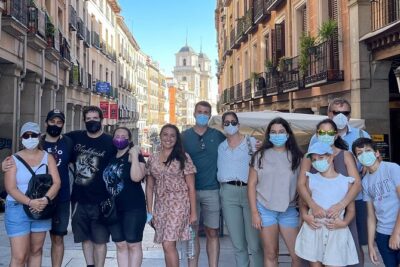
Madrid Essential: Historic Center, Plaza Mayor & Royal Palace
Read our review →
Live Fado Show with Port Wine in Historic Center
Read our review →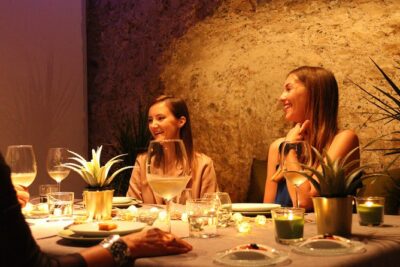
Valencia Old Town Tour with Wine & Tapas in 11th Century Historic Monument
Read our review →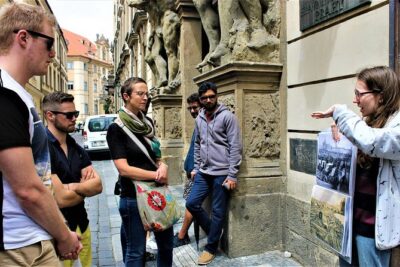
Prague Old Town, Medieval Underground and Dungeon Historical Tour
Read our review →
Cartagena: Historic Center and Getsemaní Shared Walking Tour
Read our review →

Old Town Walking Tour History and Tales in Edinburgh
Read our review →
Philadelphia Old City Historic Walking Tour with 10+ Top Sites
Read our review →Browse the lists this tour appears in