
Review · ROME HISTORY TOURS
Ancient Rome Discovery: Colosseum, Forum, Palatine Guided Tour
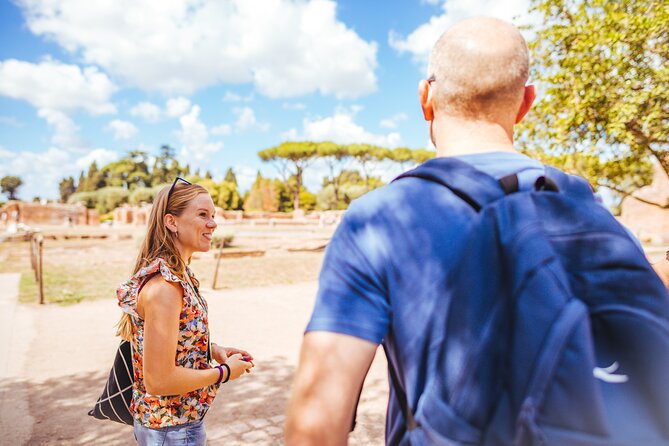
The best part of this three-hour tour is the way it links Rome’s famous arena with the streets, temples, and imperial homes around it. You begin at the Colosseum, then walk through the Roman Forum and climb Palatine Hill, seeing the ancient city as a connected place rather than three separate ruins.
I like the small maximum group of 15, and I like having a guide to explain details you would likely miss on your own. Guides including Maria Helena, Fabrizio, and Valeria have been praised for lively storytelling, clear explanations, and a knack for separating movie legend from what historians can reasonably support.
The main drawback is the price: $156 per person is a serious outlay when the listed Colosseum ticket and reservation fees total €20. You are paying for the guide, planning, and access to three major sites, but this is not the right pick if you prefer a cheap, self-guided visit or want to walk onto the arena floor.
Key points to know before booking
- Three major ancient sites in about three hours: The Colosseum takes roughly 90 minutes, followed by 45 minutes each at the Forum and Palatine Hill.
- A small-group format: The maximum is 15 people, though some departures may be much smaller. One group had only five participants.
- Strong guide-led interpretation: Maria Helena, Fabrizio, and Valeria are specifically praised for detailed explanations, enthusiasm, humor, and comparisons between films and historical evidence.
- No arena-floor access: The standard visit covers the Colosseum but does not include the arena floor.
- Bring photo identification: Every participant needs a passport or other required photo ID for Colosseum entry.
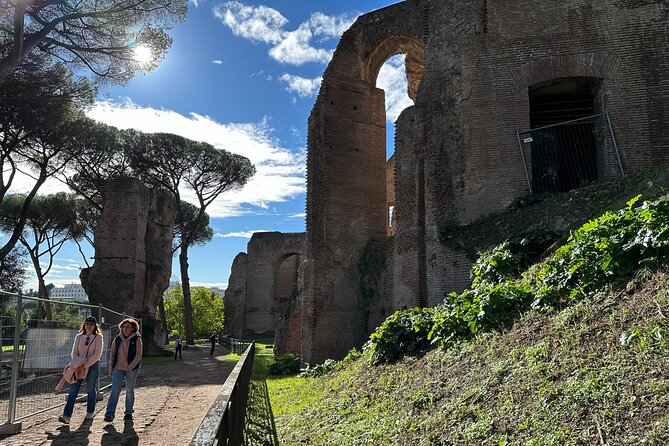
- A walking tour over uneven ancient ground: You will move between major archaeological areas, including an uphill walk to Palatine Hill.
Why this Rome tour works as one connected story
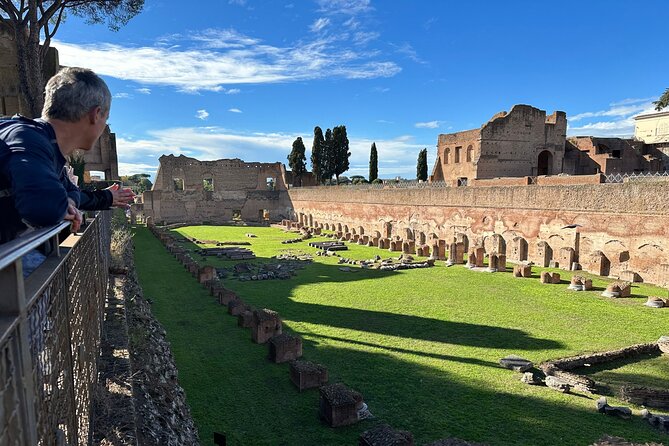
Rome’s ancient center can feel like a giant pile of broken columns if you arrive without context. The Colosseum, Forum, and Palatine Hill are close together, but each tells a different part of the Roman story.
The Colosseum shows public spectacle and imperial power. The Forum reveals the civic center where politics, religion, commerce, and public life met. Palatine Hill turns your attention toward wealth and authority, with the remains of imperial residences above the city.
I like this sequence because it gives you a useful rhythm. You start with the most recognizable monument, move into a more scattered archaeological site, and finish with broad views and palace ruins. The guide’s explanations help you connect the surviving fragments to the people who used them.
The tour lasts approximately three hours. That is long enough to cover the essential sites without turning the day into an all-day excavation lesson. You should still expect plenty of walking and standing. Ancient Rome is not a polished museum route, and the ground can feel demanding after the first hour.
The group limit matters here. A group of 15 is small enough for a guide to speak without shouting every sentence, though the experience can vary by departure. A five-person group would feel almost private. A full group of 15 remains manageable, but you will need to stay close and pay attention in crowded areas.
More Ancient History Tours in Italy
- Colosseum: Underground and Ancient Rome Tour
★ 4.7 · 12,691 reviews - Colosseum & Ancient Rome with Arena Floor Option I Max 6 People
★ 5.0 · 3,306 reviews - Rome: Colosseum, Ancient Rome Tour or AudioGuided Tour
★ 4.4 · 2,879 reviews
Entering the Colosseum for a 90-minute visit
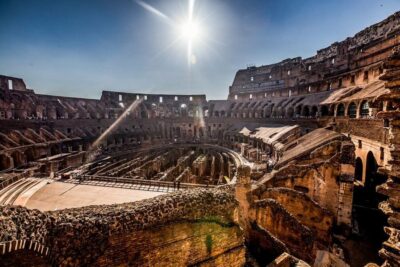
The tour begins near Largo Gaetana Agnesi, then heads into the Colosseum. You pass through its curved archways and reach the first tier, where the structure opens into a striking view of the arena and its surrounding ruins.
This first look is one of the tour’s strongest moments. The Colosseum is enormous even in its damaged state, but its scale becomes easier to understand when a guide explains how the building handled emperors, gladiators, animals, and huge public crowds.
Your guide will place the arena within Roman public life. This was not simply a venue for fights. It was also a political tool, a place where rulers displayed generosity, power, and control over the masses. The stories of emperors and spectacles help explain why the building mattered beyond its stone walls.
The guide-led format is especially useful inside the Colosseum because the surviving structure can be confusing. You see tiers, corridors, arches, and open gaps, but without explanation it is easy to miss how people moved through the building or how the spectacle was presented.
Guides such as Fabrizio have been praised for energy and for making ancient events feel easier to picture. Valeria is noted for mixing facts with humor and a friendly manner. Maria Helena has been singled out for careful explanations of how leaders and ordinary people used the buildings. Those details suggest the best version of this tour is conversational rather than a dry recitation of dates.
The tour does not include access to the arena floor. This point deserves attention because some Colosseum products advertise special floor access at a higher price. Here, you should expect the standard guided Colosseum visit described above, with no walk onto the central arena surface.
You may also find the Colosseum crowded, even with a reserved entry. The reservation saves time compared with arranging a basic ticket on your own, but it cannot make the monument quiet. A guide who knows how to move through the building is useful, especially when the interior is busy.
Walking the Roman Forum for 45 minutes
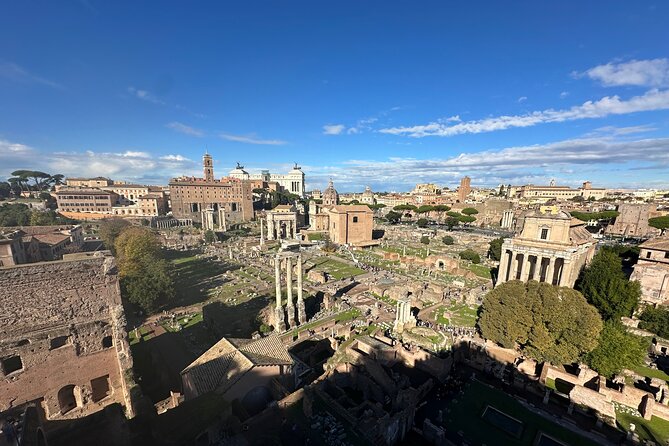
After the Colosseum, the tour continues into the Roman Forum. This was the center of ancient Rome’s political and commercial life, and it is where the city’s story becomes less immediately obvious.
The Forum does not offer one single grand building to admire. Instead, you walk among remains of temples, government structures, streets, and gathering places. The appeal comes from learning what each fragment once did and how the pieces fitted together.
Your guide will point out places such as the Temple of Julius Caesar and the Arch of Titus. The Arch of Titus is a particularly useful stop because it connects Roman architecture with imperial victory and public memory. The Temple of Julius Caesar helps show how political power and religious honor could overlap in Roman society.
The 45-minute visit is focused rather than exhaustive. That is a good thing for most people. The Forum covers a broad area, and trying to explain every ruin would turn the tour into a blur of names. A guide can choose the structures that best explain how Rome operated.
I especially value the Forum portion if you are visiting Rome for the first time. Without a guide, it is easy to see only scattered stones. With clear interpretation, the streets begin to feel like routes used by officials, worshippers, merchants, and ordinary Romans.
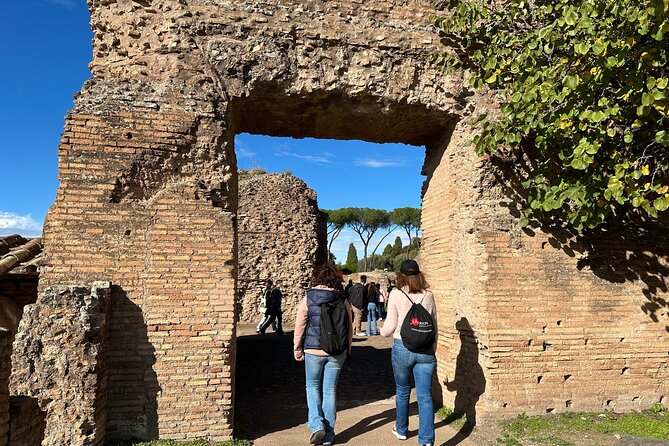
The terrain also changes the pace. You are walking outdoors through an archaeological area rather than moving between climate-controlled galleries. Wear practical shoes and keep water close. The tour details confirm that most people can participate, but the amount of standing and walking still deserves consideration if you have mobility concerns.
Climbing Palatine Hill for imperial views
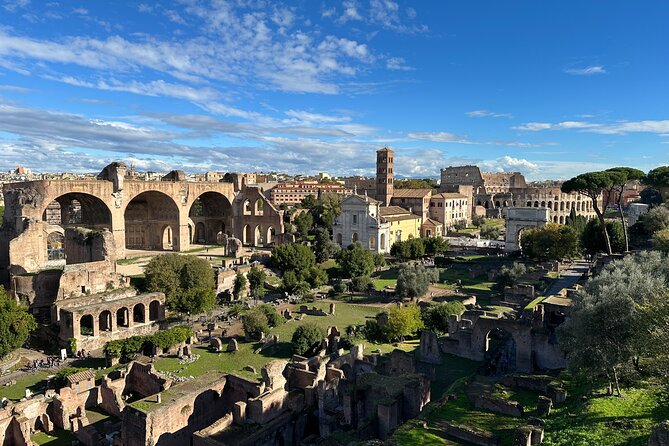
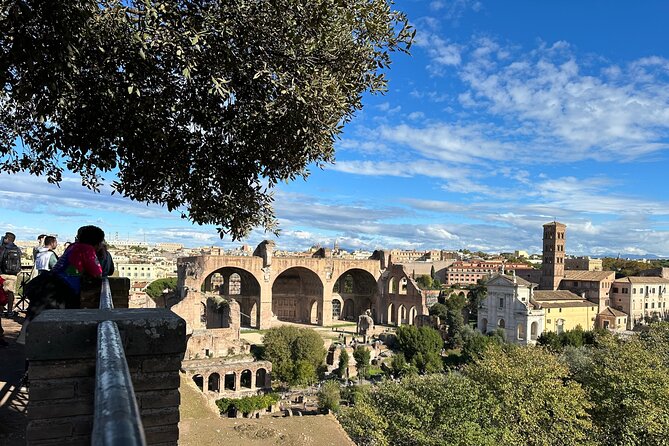
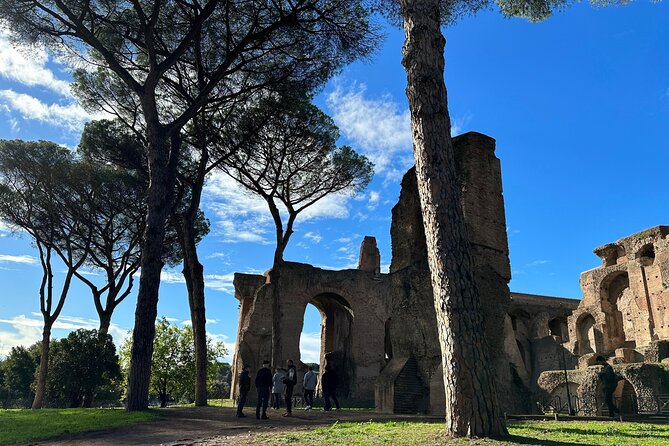
The final 45-minute stop is Palatine Hill. This hill was associated with Rome’s wealthy and powerful families, and later with imperial palaces. The remains are less intact than the Colosseum, but the setting gives the ancient city a broader frame.
Here, the guide shifts from public entertainment and civic business to private wealth. You learn about rulers who lived in large imperial residences and about the lavish lifestyle linked with the hill.
The walk uphill gives this section a different feel from the Forum. You are not simply looking at the center of public life. You are moving toward the elevated world of Rome’s elite, with views across the city and the archaeological area below.
Those views are part of the value. After spending time among enclosed arches and broken foundations, it helps to look outward and understand the relationship between the hill, Forum, and Colosseum. The three sites stop feeling like isolated attractions.
Palatine Hill is also where a strong guide can make the most difference. Palace ruins rarely explain themselves. You need someone to describe how these residences functioned and why the hill became associated with Rome’s ruling class. The guides praised for bringing ancient life into focus are likely to be most useful here.
The climb is not a major mountain hike, but it is still an uphill section after two earlier stops. If you are traveling with young children, older relatives, or anyone who tires easily, plan for a steady pace rather than a quick photo stop.
More Ancient History Tours in Rome
- Colosseum Underground & Ancient Rome Guided Tour
★ 4.5 · 2,590 reviews - Pantheon Elite Guided Tour – Rome’s Iconic Ancient Temple
★ 5.0 · 1,447 reviews - Ancient Rome: Colosseum Underground Group Tour
★ 4.5 · 1,059 reviews - Colosseum Express Guided Tour and Ancient Rome Admission Included
★ 4.0 · 1,008 reviews
What the $156 price includes
At $156 per person, this is a premium guided visit. The listed Colosseum entrance ticket is valued at €18, with a €2 reservation fee. The remaining cost covers the guide and other tour services, including the planned route through the Forum and Palatine Hill.
The value depends on what you want from Rome. If you only need entry to the Colosseum, this price is too high. If you want to understand what you are seeing and avoid piecing together three separate visits, the cost becomes easier to defend.
You are paying for time saved as well as admission. The tour handles the three-site plan in one booking and gives you an English-speaking guide throughout the experience. That can be worthwhile in Rome, where a short visit to the ancient center can otherwise require advance planning, separate tickets, and a lot of reading on your phone.
The small group adds value, but keep the limit in mind. Fifteen people is not a private tour. The price would make more sense for someone who values personal questions and guide interaction, particularly if the group is closer to five than 15.
The absence of arena-floor access also affects the calculation. If that feature is important to you, compare this tour with another option before paying. The included sites are substantial, but the package does not cover every special-access area at the Colosseum.
Guides who make the ruins easier to read
The human guide is the main reason to choose this experience over a basic ticket. Several guides have received especially strong praise for different qualities.
Maria Helena is noted for detailed explanations of Roman leaders, public life, and the purpose of the buildings. She also compared what films show with what may actually have happened, a useful habit in Rome where popular stories often mix fact and drama.
Fabrizio is praised for energy and for making ancient times feel immediate. That style can help during the Forum and Palatine Hill sections, where the ruins need a strong narrative thread.
Valeria is described as friendly, relatable, and able to combine education with humor. That matters during a three-hour tour. A guide who can keep the group engaged makes the walking feel less like a lesson and more like a conversation.
Guide quality can never be guaranteed by a name on a schedule, and the assigned guide may differ on your date. Still, the repeated emphasis on passion, clarity, and crowd navigation gives you a good idea of what this tour is designed to provide.
Timing, meeting point, and practical planning
The meeting point is Largo Gaetana Agnesi in Rome, and the tour ends at the Roman Forum. Because the start and end are not identical, plan your next activity from the Forum rather than assuming you will return to the original meeting point.
The start time can change based on Colosseum ticket availability. Check the final confirmation carefully and build some flexibility into your day. Do not schedule a tight restaurant reservation or train departure immediately afterward.
Bring your passport. All people entering the Colosseum on a tour need photo identification, and failing to show it can mean being refused entry. This is the sort of small detail that can ruin an expensive morning, so place your passport somewhere secure but easy to reach.
The activity is offered in English and uses a mobile ticket. Confirmation is provided when you book. It is near public transportation, which makes the starting area practical for reaching from elsewhere in Rome.
One unusual but useful warning concerns city events. A public race or large gathering can make Largo Gaetana Agnesi difficult to reach and can obscure the meeting point. I would check local event schedules on the day, allow extra time, and make sure you have the tour provider’s contact details saved before leaving your hotel.
Free cancellation is available up to 24 hours before the start time. Cancel later than that, or request a change inside the final 24 hours, and you should not expect a refund.
Who should choose this experience
This tour suits you if you want the ancient center explained by a live guide and prefer to cover the three main sites in one organized visit. It is also a good fit if you enjoy historical detail but do not want to spend hours preparing your own route.
Families with older children may appreciate the stories about gladiators, emperors, animals, and Roman public life. The guide can also help younger visitors understand why a broken temple or empty street matters.
First-time visitors to Rome will get a useful foundation here. The route shows how the Colosseum, Forum, and Palatine Hill relate to one another, which makes a later independent walk through the area easier.
You may want another option if you need arena-floor access, dislike group tours, or want to explore at your own pace. The three-hour schedule is focused, so it does not leave much room for lingering at every ruin.
Should you book this Colosseum and Forum tour?
Book it if you want clear storytelling, a small group, and one efficient visit to the Colosseum, Forum, and Palatine Hill. The strongest value comes from the guides, not from the admission ticket alone. Maria Helena, Fabrizio, and Valeria represent the kind of lively, human explanation that can turn ancient rubble into a readable city.
Skip it if $156 feels hard to justify, if you want only basic entry, or if walking through the Forum and up Palatine Hill sounds tiring. Also skip it if arena-floor access is essential.
For most first-time Rome visitors who want context without committing to a full-day history program, this is a well-focused choice. Bring your passport, wear sensible shoes, check the meeting point carefully, and remember that the tour gives you the Colosseum, Forum, and Palatine Hill, but not the arena floor.
FAQ
How long does the Ancient Rome Discovery tour last?
The tour lasts approximately three hours. The planned timing is about 90 minutes at the Colosseum, 45 minutes at the Roman Forum, and 45 minutes at Palatine Hill.
What sites are included?
The experience includes the Colosseum, Roman Forum, Palatine Hill, the Arch of Titus, and the Temple of Julius Caesar.
Is arena-floor access included?
No. The tour does not include access to the Colosseum arena floor.
How many people can join the group?
The group has a maximum of 15 participants. The actual group may be smaller.
What language is the tour offered in?
The tour is offered in English with an English-speaking guide.
Do I need to bring identification?
Yes. All participants must bring photo identification for Colosseum entry. The tour information specifically advises bringing your passport.
Where does the tour start and finish?
The tour starts at Largo Gaetana Agnesi in Rome and ends at the Roman Forum. The start time may change according to Colosseum ticket availability.
Can I cancel for a full refund?
Yes, if you cancel at least 24 hours before the experience begins. Cancellations or changes made less than 24 hours before the start time are not accepted for a refund.
More Ancient Rome and Colosseum Tours in Rome
- Rome: Colosseum with Arena, Roman Forum and Palatine Guided Tour
★ 4.0 · 5,598 reviews - Colosseum with Arena, Roman Forum and Palatine Hill Guided Tour
★ 4.5 · 3,526 reviews - Rome: Colosseum Arena, Roman Forum & Palatine Hill Tour
★ 4.5 · 1,874 reviews - Colosseum, Roman Forum & Palatine Hill Guided Tour
★ 4.5 · 1,568 reviews
Newest history tours we have reviewed in Rome
- Ancient Rome: Archeological area Largo Argentina★ 3.9 · 49 reviews
- Ancient Rome Half-Day Segway Tour★ 4.8 · 25 reviews
- Colosseum Forum Ancient Rome Small Group Tour for Kids Families★ 5.0 · 198 reviews
- VIP Colosseum Underground and Ancient Rome Small Group Tour★ 4.5 · 332 reviews
- Colosseum & Ancient Rome Semi-Private Tour★ 5.0 · 208 reviews
- Small-Group Rome to Pompeii & Amalfi: Day of History & Sea★ 5.0 · 239 reviews
- Colosseum & Ancient Rome Guided Walking Tour★ 5.0 · 332 reviews
- Ancient Rome at Twilight Walking Tour★ 5.0 · 276 reviews
Ancient Rome & Colosseum Tours, compared.
Colosseum: Underground and Ancient Rome Tour
Read our review →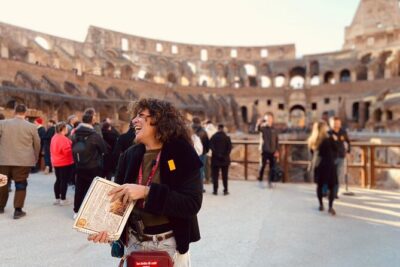
Colosseum with Arena, Roman Forum and Palatine Guided Tour
Read our review →
Colosseum with Arena, Roman Forum and Palatine Hill Guided Tour
Read our review →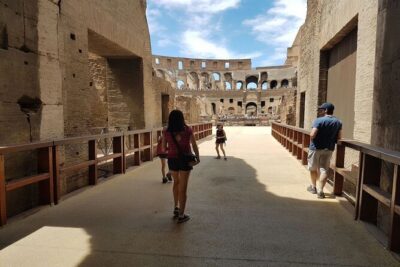
Colosseum & Ancient Rome with Arena Floor Option I Max 6 People
Read our review →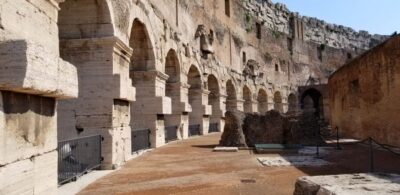
Colosseum, Ancient Rome Tour or AudioGuided Tour
Read our review →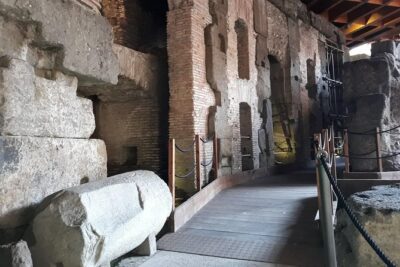
Colosseum Underground & Ancient Rome Guided Tour
Read our review →
Colosseum Arena, Roman Forum & Palatine Hill Tour
Read our review →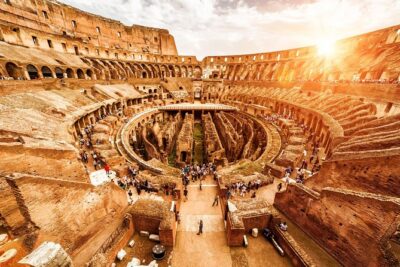
Colosseum, Roman Forum & Palatine Hill Guided Tour
Read our review →Browse the lists this tour appears in