
Review · WASHINGTON DC HISTORY TOURS
Smithsonian Museum of Natural History – Exclusive Guided Tour
The best reason to book this tour is simple: the Smithsonian National Museum of Natural History is enormous, covering an area equal to 18 football fields. A good guide turns that size from a problem into a plan, leading you from the Hope Diamond and ancient mummies to dinosaurs, elephants, and the 45-ton whale replica named Phoenix.
I like the focused two-hour route, especially if this is your first visit and you want the major displays without wandering in circles. I also like the personal feel. Guides including Leigh, Meghan, Christopher, Rebecca, Amanda, Donna, and Tim are praised for clear stories, humor, and keeping children involved. The main drawback is price: at $89.67 per person, it costs far more than the museum admission itself, which is free.
Key points before you book
- The Hope Diamond starts the story: You’ll see the famous blue stone, listed here at 46 carats, along with the huge Dom Pedro Aquamarine.
- A guide saves time: In two hours, you’ll move through minerals, Egypt, dinosaurs, mammals, and Ocean Hall instead of trying to map out the museum alone.
- The storytelling is the real product: Leigh, Meghan, Christopher, Rebecca, and other guides are praised for linking science, history, and memorable human stories.
- Families get useful help: Guides adjust their approach to children and teenagers, and the two-hour length can suit shorter attention spans.
- You choose the pace at booking: Morning and afternoon start times are available, with a private option for your group and a lower-priced semi-private option.
- Plan for museum security: Large bags and suitcases are not allowed. Bring only a handbag or small, thin backpack.
Why a guide matters in an 18-football-field museum
The Smithsonian National Museum of Natural History is free to enter, but free admission does not make it easy to see. The building holds 126.5 million artifacts, and even a full day would leave plenty untouched. On your own, you can easily spend too long at the first display and then rush the rooms that interested you most.
This tour gives you a route and a human voice. The guide selects collection highlights and explains why they matter, rather than simply pointing at labels. That difference is important in a museum where many displays are visually impressive but not always easy to connect.
The two-hour schedule is best understood as an introduction, not a complete museum visit. You should expect to see the main sections and gain a clear sense of the collection. If you want to read every panel or spend serious time in one specialty room, plan to return after the tour.
The experience is private if you choose the private option, so only your group takes part. There is also a save-money semi-private choice. The private version is the better pick if you want to ask lots of questions, request extra time in a particular section, or keep the guide focused on your children.
More Museum and Gallery History Tours in the USA
- New York City: American Museum of Natural History Ticket
★ 4.5 · 15,447 reviews - American Museum of Natural History Admission Ticket
★ 4.0 · 1,931 reviews - Guided African American History Tour with Reserved Museum Entry
★ 4.5 · 1,180 reviews
Meeting the Hope Diamond and Dom Pedro Aquamarine
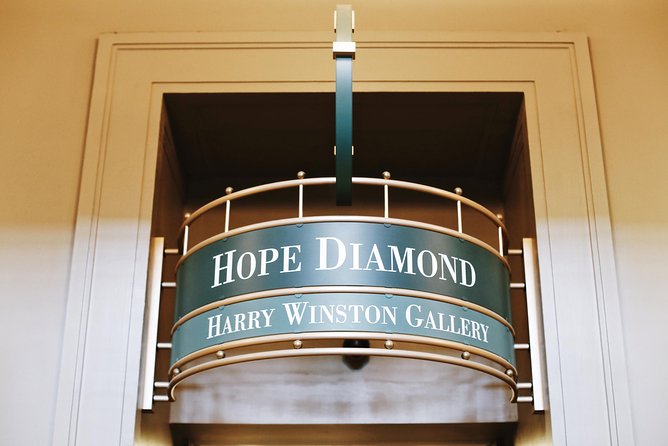
The tour begins at the museum’s geology and mineral displays, where the stones provide an easy way into the larger story of the earth. The Hope Diamond is the obvious star. Its blue color, size, and connection with former owner Marie Antoinette give the guide plenty to work with beyond a basic description of its cut and sparkle.
You’ll also see the Dom Pedro Aquamarine, identified as the largest gem of its type. Its internal glow makes it a strong visual stop, especially for children who may not yet care about mineral names or geological processes.
This opening section is one of the reasons a guide helps. A display case can tell you what a stone is, but a guide can connect its color, size, ownership, and place in the museum. One particularly memorable explanation reported from this tour concerned a $500 million Indian blue diamond, showing how the mineral displays can lead into stories of wealth, power, and human fascination.
Give yourself permission to return here later. A family with a seven-year-old found the mineral section worth another look after the guided route, and that makes sense. You see the important pieces quickly at first, then know which cases deserve more of your independent time.
Ancient Egypt, mummies, and the meaning of preservation
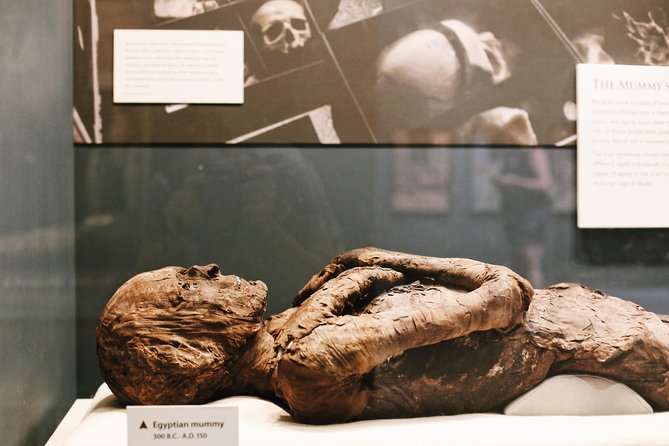
From stones, the tour moves into ancient Egypt and real mummies. This can be one of the more powerful stops because the displays are not only about age. They show how people thought about death, the body, and the journey after life.
Your guide explains the Egyptian belief that the soul’s future depended on preserving the physical vessel. That idea gives the burial practices a clear purpose. Instead of seeing mummification as a strange technical process, you begin to understand it as part of a complete religious system that lasted for more than 3,000 years.
This section can be especially useful for children and first-time museum visitors. The guide can supply context without forcing you to read every label. At the same time, the subject may be intense for very young children, so you should consider your family’s comfort level.
The route does not promise a long, quiet study of every Egyptian object. It gives you the central ideas and the most important displays within the larger two-hour plan. If Egypt is your main interest, tell your private guide at the start. The private format gives you more room to shape the visit.
Dinosaurs, birds, and the surprising story of extinction
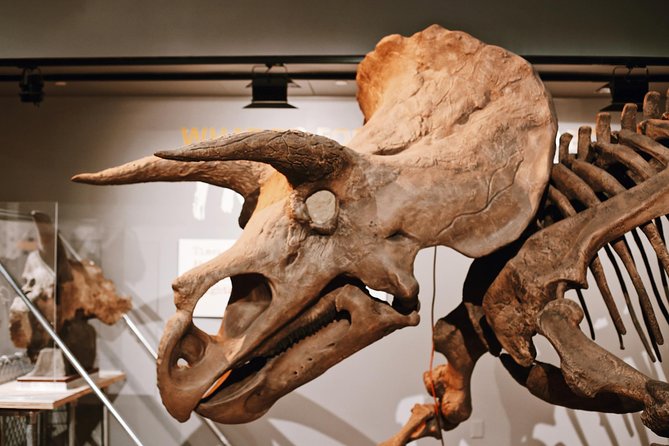
The dinosaur section brings a change of mood. Here, the guide can correct familiar misunderstandings and add a sense of time that is hard to get from a display label alone.
One memorable point is that Tyrannosaurus rex lived during the late Cretaceous period, making it closer in time to us than to the Jurassic dinosaurs many people group together in their minds. You’ll also hear that dinosaurs did not simply vanish as a separate line of reptiles. Modern birds are their descendants.
The asteroid impact 66 million years ago adds a darker note. The tour explains that the event caused a mass extinction that removed 75 percent of life on Earth within three weeks. Facts like this give the museum’s skeletons and fossils a much larger meaning. You are not just looking at old bones. You are looking at evidence of a world that changed suddenly and permanently.
The dinosaur section is a strong fit for families, but the guide does not limit the science to children. Adults who already know the broad outline may still enjoy the links between extinction, adaptation, and modern birds. The tour’s strength here is the way it uses a few carefully chosen ideas rather than trying to recite every species in the collection.
Same streets, a different century:
- History and Hauntings of Salem Guided Walking Tour
★ 5.0 · 14,564 reviews - Charleston’s Old South Carriage Historic Horse & Carriage Tour
★ 5.0 · 10,023 reviews - Beneath The Streets Underground History Tour
★ 4.5 · 8,006 reviews - Big Island in a Day: Volcanoes Waterfalls Sightseeing and History
★ 5.0 · 6,569 reviews
Mammals on land, from elephants to polar bears

After the ancient world, the route moves into animals you can recognize at once. Polar bears, elephants, and giraffes make the museum feel less like a collection of distant objects and more like a record of life across the planet.
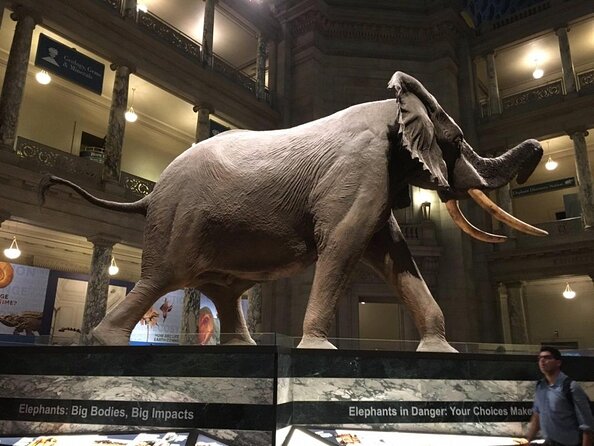
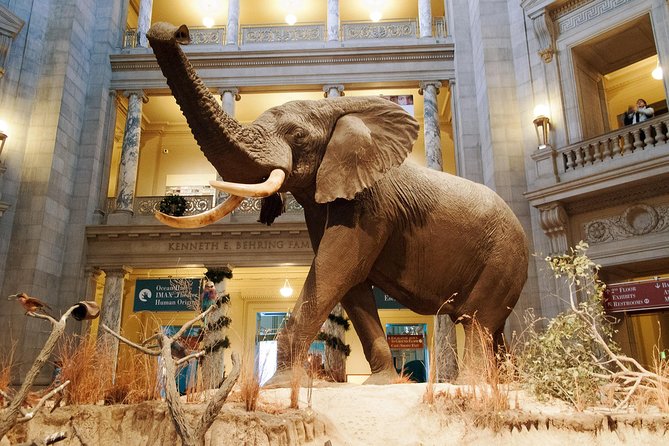
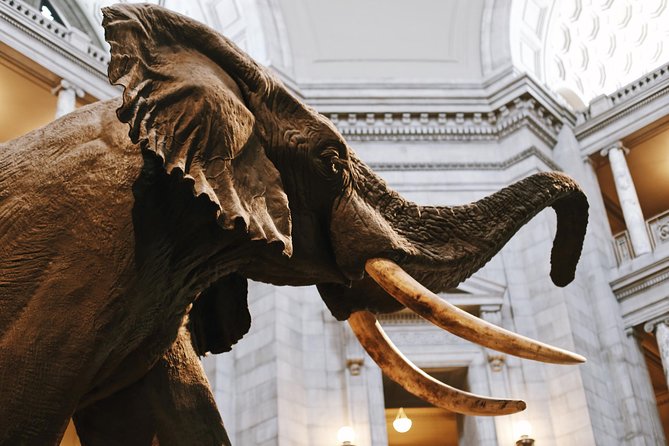
Henry the elephant is a favorite stop. The large mammal displays give the guide a chance to discuss size, survival, and the variety of environments animals occupy. You may find this section more immediate than the minerals or mummies, since the animals are presented in familiar forms.
For children, this is often where attention recovers after the denser historical sections. A guide can ask questions, point out details you might walk past, and keep the group moving. Parents have particularly valued guides who notice what their children care about and adjust the route or explanation.
The crowds can make a difference here. The museum is popular, and large displays attract plenty of people. A guide who knows the rooms can help you move through the main sights without losing your place. Still, do not expect an empty gallery or a private room. Your group is private, but the museum remains open to other visitors.
Ocean Hall, coral, and Phoenix the whale
The final major shift takes you from land to sea. Ocean Hall includes a live coral reef exhibit and Phoenix, a 45-ton whale replica based on a real whale tracked by the museum.
Phoenix provides the kind of scale that is hard to understand from a photograph. A guide can use the whale to connect the size of marine animals with the wider ocean system. The live coral reef adds movement and color after the still displays of fossils, stones, and taxidermied animals.
The route may also include the megalodon, a stop singled out by several people who found the prehistoric shark memorable. Depending on the current collection arrangement, some rooms or displays can vary during the year. That is worth keeping in mind if one particular exhibit is the main reason you want to book.
The ocean section is a good closing point because it leaves you with a sense of the museum’s range. You have moved from minerals formed deep in the earth to ancient civilizations, extinct animals, living mammals, and the modern sea. Two hours passes quickly, but the sequence gives the visit a clear shape.
The guides and the style of storytelling
The strongest part of this experience is the guide. Leigh is praised for building a connected story that begins with gemstones and ends with the megalodon. Her explanations included the life cycle of a caterpillar becoming a moth, ancient Egyptian beliefs, dinosaur evolution, and the asteroid extinction.
Meghan is described as funny, creative, and attentive to questions, even when they move beyond the planned route. Christopher is praised for keeping a family engaged on a very busy holiday weekend. Rebecca is noted for covering the major rooms while making the museum easier to navigate.
Other guides named in the feedback include Amanda, Donna, Tim, Brenda, Lynn, Ryan, and Meaghan. The consistent themes are clear explanations, warmth, humor, and strong crowd navigation. That consistency matters, since you cannot normally choose the exact guide in advance.
The tour works best if you participate. Ask questions, explain what interests you, and tell the guide if you need a slower pace. With a private group, you have more freedom to do that than on a large scheduled walk.
Is $89.67 per person good value?
The museum itself has free admission, so this is not a bargain in the usual sense. You are paying for the guide’s time, planning, route, interpretation, and attention to your group. For a couple or family that wants a fast and organized introduction, the price can make sense.
The value is strongest when you have only a short time in Washington, are visiting during a busy period, or feel overwhelmed by large museums. A guide can help you see the major sections in two hours and leave you with a plan for returning to the displays that caught your attention.
The value is weaker if you enjoy slow independent visits, already know the museum well, or mainly want to focus on one room. In those cases, free entry and a self-guided route may suit you better.
Group discounts are available, and the semi-private option costs less than the private choice. Check the exact price for your party before booking. Since the tour is often reserved about 36 days ahead, it is sensible to plan early if your Washington dates are fixed.
Timing, access, and practical planning
You can choose a morning or afternoon start. Morning may suit families who want to use their energy in the museum, while an afternoon tour can fit around other Washington plans. The meeting point is 1010 Madison Drive NW, Washington, DC 20004, and the activity ends back there.
The museum is near public transportation. Hotel pickup and drop-off are not included, so you need to make your own way to the start point. Bring the mobile ticket and provide a mobile phone number with country code when booking so the operator can contact you.
You should have a moderate level of physical fitness. The tour is listed as wheelchair friendly in the private version, but that does not apply to the save-money semi-private option. Ask about your exact booking choice if accessibility is important.
Security rules matter. Large bags and suitcases cannot enter, and only handbags or small, thin backpacks are allowed through screening. Dress appropriately for museum entry, and allow extra time for security because lines can form even when a tour is described as having streamlined access.
Occasional museum closures or delayed openings can occur without warning. If the opening is delayed by more than an hour, an alternative may be offered, but a refund or discount is not provided in that situation. The operator also notes that some rooms require quiet or limit speaking, so your guide may explain those rules before you enter.
Who should book this Smithsonian tour?
I would choose it for a first visit, a short Washington stay, or a family that wants structure. It is also a good fit if you like science but do not want to spend your whole day reading labels and planning a route.
Children can benefit from the quick changes in subject: shiny stones, mummies, dinosaurs, giant mammals, coral, and a whale. The two-hour format has worked well for families with younger children and teenagers, though you should still plan for thirst, hunger, and the possibility that a toddler will not follow the perfect museum schedule.
Couples and solo visitors can get plenty from it too, especially if they enjoy stories more than silent browsing. If you are an avid Egypt, dinosaur, or mineral fan, tell the guide early and ask how much time can be devoted to your priority.
Should you book it?
Book this tour if you want to understand the museum quickly, prefer a lively explanation to reading every display, and can accept paying for guidance at a museum with free admission. The combination of Hope Diamond, Egyptian mummies, dinosaurs, Henry the elephant, Ocean Hall, coral, and Phoenix gives you a strong first look.
Skip it if you have a full day, enjoy making your own route, or want to study only one collection in detail. For everyone else, the private format, family-friendly pacing, and well-regarded storytelling make the $89.67 cost easier to justify. You can cancel for a full refund up to 24 hours before the start time, which also gives you some useful flexibility.
FAQ
How long is the Smithsonian Museum of Natural History tour?
The tour lasts about two hours.
What does the tour include?
It includes a guided museum tour, a tour guide exclusively for your group when you choose the private option, and wheelchair-friendly access for the private option.
Is museum admission included?
The museum portion is listed as an admission ticket free experience, and the guided tour is included in the booking price.
What will I see during the tour?
The route covers collection highlights including the Hope Diamond, Dom Pedro Aquamarine, Egyptian mummies, polar bears, elephants, giraffes, dinosaurs, Ocean Hall, live coral, and Phoenix the whale replica.
Is the tour private?
The private option is for your group only. A save-money semi-private option is also available, but the exclusive guide and wheelchair-friendly conditions do not apply to that choice.
Where does the tour start and end?
It starts at 1010 Madison Drive NW, Washington, DC 20004, and ends back at the meeting point.
Can I cancel the booking?
Yes. You can cancel up to 24 hours before the experience start time for a full refund. Changes or cancellations made less than 24 hours before the start time are not accepted for a refund.
Newest history tours we have reviewed in the USA
- Nashville: Belle Meade Historic Mansion Tour★ 4.8 · 63 reviews
- Beaufort: Local History and Film Sites Tour by golf cart★ 4.9 · 102 reviews
- Boston: Guided Seafood Tasting and History Tour★ 4.9 · 90 reviews
- Beaufort: Gullah Heritage Tour★ 4.8 · 26 reviews
- Beaufort: Historic City Tour by Bus★ 4.9 · 228 reviews
- Austin: Downtown Austin Haunted History Tour★ 4.4 · 31 reviews
- Austin: Morning History Walking Tour of Downtown Austin★ 4.9 · 71 reviews
- Atlanta: Beltline Food, Street Art, and History Walking Tour★ 5.0 · 47 reviews
Museum & Gallery History Tours, compared.
Louvre Museum Entry with History of Mona Lisa
Read our review →
Venice’s Best: Basilica, Doge’s Palace, Gondola & History Gallery
Read our review →
American Museum of Natural History Admission Ticket
Read our review →
Guided African American History Tour with Reserved Museum Entry
Read our review →
POLIN Museum of the History of Polish Jews Ticket
Read our review →
Bell Tower & St Mark’s Square History Gallery Ticket
Read our review →
Field Museum of Natural History Ticket or VIP Tour
Read our review →Browse the lists this tour appears in