
Review · USA HISTORY TOURS
St. Petersburg Jungle Prada Site History Tour
The remarkable thing here is not just the jungle setting or the peacocks. It is the enormous Tocobaga shell mound, made from countless conch and whelk shells and extending more than 900 feet through a St. Petersburg neighborhood. You can walk over part of a place shaped by people who lived here long before Florida became a holiday destination.
I like the low $14 price and the chance to hear local history from David, whose family has owned and protected the site for three generations. I also like the mix of archaeology, Spanish exploration, plants, and family stories. The main caution is practical: the ground is uneven, the Florida heat can be strong, and the talks may run long for young children.
Key points to know before you go
- A 900-foot Tocobaga shell mound: See the remains of an ancient midden made largely from conch and whelk shells.
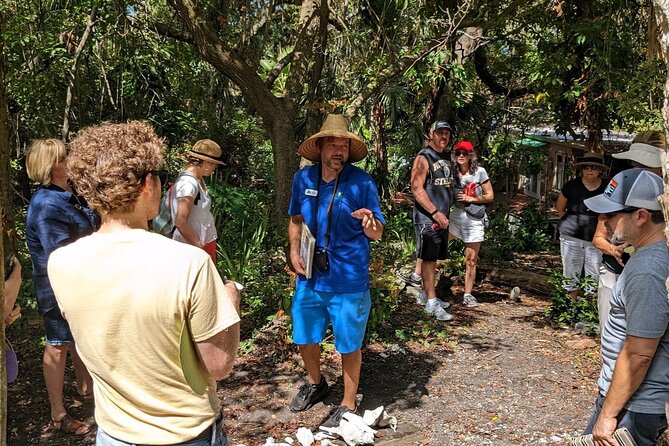
- David leads the history walk: His family connection gives the tour a personal link to the property.
- The 1528 Narvaez expedition comes alive: Learn about Cabeza de Vaca and his long journey across North America.
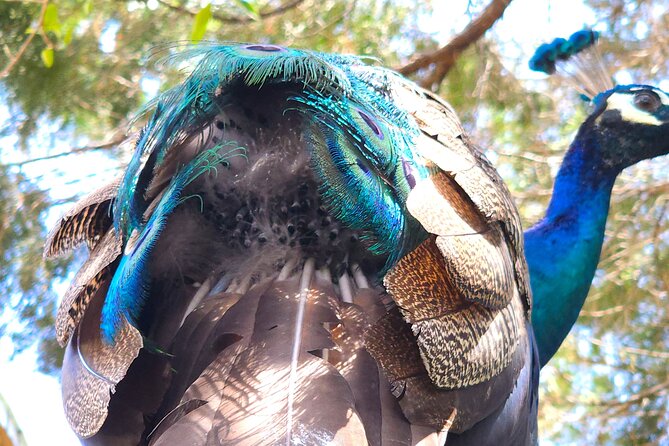
- Free-roaming peacocks add an unusual touch: They wander through the subtropical grounds and may appear during the walk.
- The core tour lasts about 75 minutes: Plan on roughly two hours for the full experience, including time around the site.
- Good value at $14 per person: You get a guided archaeological and local history experience with on-site parking.
Why this small St. Petersburg site matters
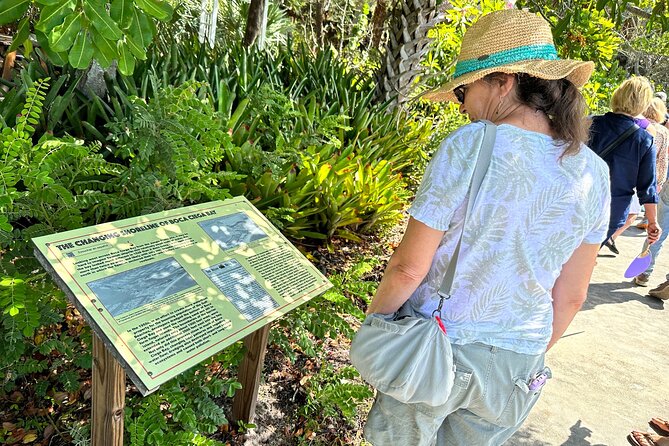
Jungle Prada does not look like a grand ruin at first glance. It sits in a historic St. Petersburg neighborhood, surrounded by subtropical growth and a family-preserved property. Yet the ground holds evidence of a much older Florida, one shaped by Native American communities thousands of years before modern roads and resorts.
The site is associated with the Tocobaga, a Native American people who lived around Tampa Bay. The tour helps you see the area as an inhabited cultural center, not simply as a patch of woods with old shells underfoot.
That change in viewpoint is one of the best reasons to book. I like tours that connect a place to the people who used it, and this one gives you a physical feature to study. The mound is not an abstract idea from a museum display. You walk beside it, see shells in the soil, and reach the top of a well-preserved Native American mound.
The property also carries a more recent story. The Anderson family purchased the land decades ago to protect it from development, and the site has remained in family hands across three generations. David, the guide, is part of that family story. His connection does not replace archaeology, but it gives the visit a strong sense of place and purpose.
More History Tours in the USA:
- New York City: American Museum of Natural History Ticket
★ 4.5 · 15,447 reviews - History and Hauntings of Salem Guided Walking Tour
★ 5.0 · 14,564 reviews - Charleston’s Old South Carriage Historic Horse & Carriage Tour
★ 5.0 · 10,023 reviews
Walking the 75-minute guided route
The central experience is a historian-led walk lasting about 75 minutes. The full visit is described as roughly two hours, so you should not schedule another activity immediately afterward. The extra time allows for gathering at the meeting point, viewing the property, and spending time around the site beyond the main talk.
David’s approach is detailed and conversational. He covers the Tocobaga, the Spanish arrival, local plants, pirates, and the growth of St. Petersburg. His delivery includes humor, dates, names, and stories, which helps keep the subject from feeling like a dry lecture.
You can ask questions during the walk, and the group size is capped at 25 people. That is small enough for a more personal experience than a large bus tour. If you are curious about archaeology, local history, or the meaning of the shells underfoot, this format gives you a fair chance to ask.
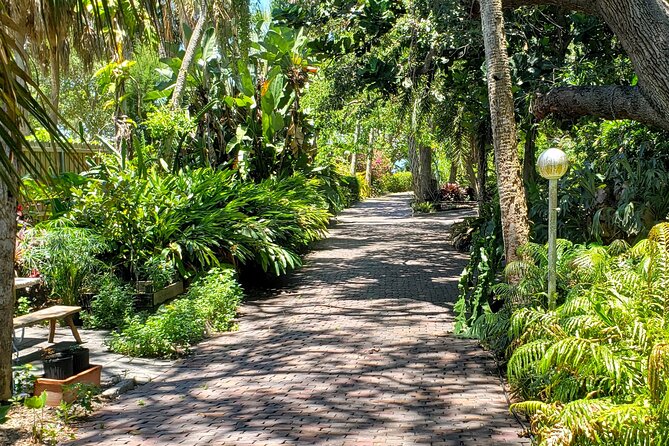
The property is wooded and shady, but it is not a paved garden path. You should watch your footing around uneven surfaces and natural obstacles. Sturdy shoes are a smart choice, especially if you want to walk comfortably to the mound and through the wooded sections.
The Tocobaga midden and Native American mound
The shell midden is the main reason to come. A midden is a deposit left by people over time, often containing food remains, tools, pottery fragments, and other traces of daily life. Here, the mound includes tens of thousands of conch and whelk shells and stretches more than 900 feet.
That scale makes the site easier to understand. You are not looking at one isolated object. You are seeing the accumulated remains of a community that used the nearby waters and returned to this place over many years.
The tour takes you to the top of a well-preserved Native American mound. From there, you can better understand the size and form of the site, while David explains how the mound and adjoining village plaza fit together.
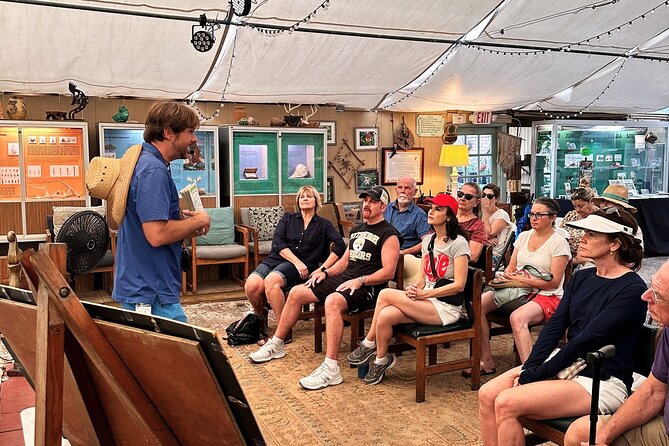
Ancient artifacts are also displayed in the on-site museum. Some pieces may still be visible on the open ground, and you might notice bits of pottery or clay while walking. Do not treat the property as a place to collect souvenirs. The value comes from seeing these traces in context and learning what they can tell you.
I find this type of archaeology more engaging than a display case alone because the setting remains part of the lesson. The shells are connected to the soil, the plants, the water around Tampa Bay, and the way the Tocobaga used the site.
The 1528 Narvaez expedition story
The second major thread is the arrival of Spanish conquistadors in 1528. The Narvaez expedition landed in the area, bringing together two very different worlds: the Native American communities already living around Tampa Bay and the Spanish explorers moving through Florida.
David explains the story of Alvar Nunez Cabeza de Vaca, one of the expedition members. After the expedition failed, Cabeza de Vaca and three others survived an extraordinary journey that took them from Florida to the Pacific Ocean between 1528 and 1536.
This portion gives the tour a wider reach. You are still standing on a local mound in St. Petersburg, but the story reaches across the continent and across eight years of hardship. It also gives you a clearer sense of how dangerous and uncertain the Spanish expeditions were.
I appreciate that the tour places the Spanish story alongside the Tocobaga story instead of treating the conquistadors as the only historical actors. The Native American site is the main focus, while the 1528 landing adds another layer to the setting.
If your interest is limited to modern St. Petersburg, the long expedition story may feel like a detour. For me, it is useful context. It shows how this small site became part of a much larger chapter in Florida and North American history.
Same streets, a different century:
- Beneath The Streets Underground History Tour
★ 4.5 · 8,006 reviews - Big Island in a Day: Volcanoes Waterfalls Sightseeing and History
★ 5.0 · 6,569 reviews - Boston: Freedom Trail History Small Group Walking Tour
★ 5.0 · 6,450 reviews - Historic Charleston Guided Sightseeing Walking Tour
★ 5.0 · 6,216 reviews
Peacocks, plants, and a jungle setting
The subtropical property gives the tour a strong visual character. Dozens of peacocks roam freely through the grounds, and they can appear near the walking route. They are not the reason to book, but they make the visit memorable, especially for families and anyone who enjoys unusual local sights.
The peacocks can also be noisy. If you prefer a quiet museum, their calls may interrupt the guide from time to time. I see that as part of the charm, but it is worth knowing that this is not a polished, silent exhibit.
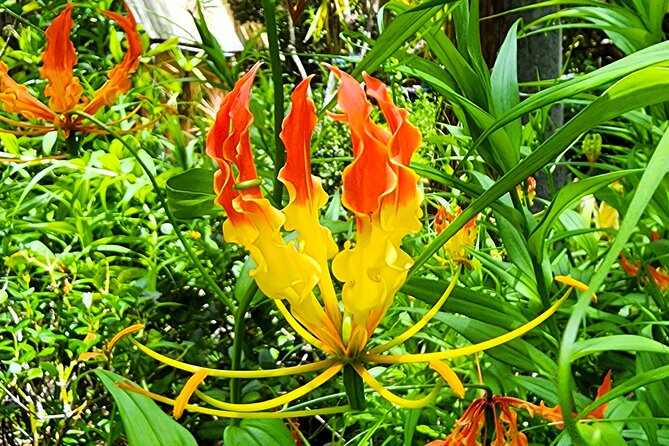
David also discusses plants and the natural setting. The woods provide shade, which helps during a Florida summer, but shade does not remove the need for water. Bring your own bottled water because it is not included.
The grounds have a rustic feel. That is a plus if you want a more direct connection to the site, but it also means you should dress for outdoor walking. Wear comfortable, secure shoes and be ready for heat, humidity, and uneven ground.
A family-run experience with local roots
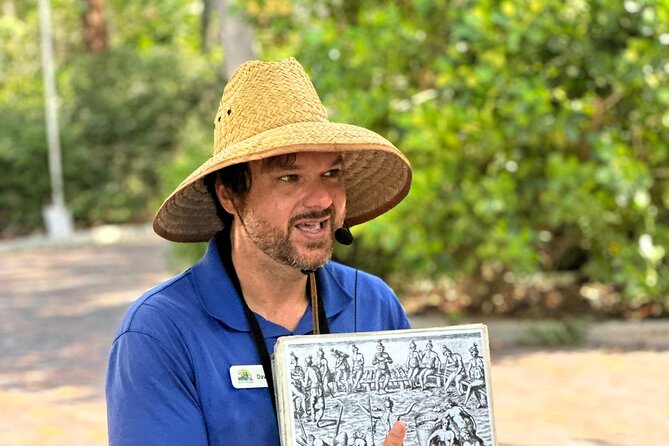
Many historic places feel separated from the people who care for them. Jungle Prada is different because the property remains tied to the family that worked to preserve it. David is the grandson of the family member who purchased the land, and he leads the tour with a personal connection to its protection.
That family background is especially meaningful here because the site could have been lost to development. Your admission helps support a small local operation that has kept the property available for public visits.
The family connection does not mean the tour is only personal storytelling. David covers archaeology, Native American history, Spanish exploration, plants, pirates, and St. Petersburg’s development. The strongest moments come when those subjects connect to something you can see on the property.
I also like that the guide is willing to explain the limits of what archaeology can prove. The site has a great deal to teach, but it is not a reconstructed village with every detail known. A careful explanation is more useful than an exaggerated claim.
What the $14 price gets you
At $14 per person, this is one of the more affordable guided history activities in St. Petersburg. You receive a 75-minute guided walk led by a historian, access to the site, and on-site parking. For a visitor who wants something beyond beaches and restaurants, the price is easy to justify.
The value is strongest if you enjoy asking questions and paying attention to details. You are not paying for a large attraction with elaborate facilities. You are paying for access to a significant archaeological site and for David’s explanations of what you are seeing.
The price also makes this a practical choice for repeat visits with friends or visiting family. You can bring people who might not normally choose an archaeology tour, since the peacocks, local stories, and Spanish expedition add variety.
The tradeoff is that the experience is outdoors and somewhat rustic. If you expect air-conditioning, smooth walkways, or a large museum collection, this will feel modest. If you want an inexpensive guided look at old Florida, it offers a lot for the money.
Who will enjoy the tour most
I would recommend Jungle Prada to adults interested in Native American history, archaeology, Florida development, or Spanish exploration. It also works well for families with older children who can stay engaged during a 75-minute talk.
The tour may be less suitable for very young children. The historical explanations can be lengthy for children under 10, and the uneven ground requires attention. Families should also bring water and plan for heat.
This is a good choice for Florida residents who want to understand the area beyond its modern image. It is also useful for first-time visitors who have already spent time on the waterfront and want a local experience with more substance.
You should choose a morning or afternoon departure based on the time of day you handle heat best. The grounds are shaded, but Florida weather still matters. The tour requires good weather, and poor conditions may lead to a new date or a full refund.
Service animals are allowed, but pets are not allowed on the site. Most people can participate, though anyone concerned about walking on uneven surfaces should take that into account before booking.
Meeting point and practical planning
The tour begins and ends at 1700 Park St N, St. Petersburg, Florida 33710. Parking is available on site, and Jungle Prada de Navarez Park is nearby with free parking and a short walk to the tour area.
Transportation to and from the property is not included, so you will need to make your own way there. The activity ends back at the meeting point, which makes it simple to continue with your own plans afterward.
Book about a week ahead if you want a specific time, especially during a busy season. The group limit is 25, so the tour remains smaller than a typical large attraction outing.
You can cancel for a full refund up to 24 hours before the start time. Changes or cancellations inside that window are not refunded, and weather-related cancellations offer a different date or a full refund.
Should you book Jungle Prada?
I would book this tour if you want to see an important piece of Tampa Bay’s Native American past in its original setting. The 900-foot shell midden, the mound, and the on-site artifacts give you something real to examine, while David’s stories connect the site to the Tocobaga, the 1528 Spanish expedition, and modern St. Petersburg.
I would skip it only if you want a polished indoor museum, dislike uneven outdoor paths, or have young children who are unlikely to sit through a history talk. For most history-minded visitors, the $14 cost is modest, the family connection is meaningful, and the peacocks make the visit unusually memorable.
Bring water, wear sturdy shoes, arrive ready for heat, and give yourself about two hours. If you do, Jungle Prada offers an affordable and thoughtful way to see a side of St. Petersburg that is easy to miss.
FAQ
How long does the Jungle Prada Site History Tour last?
The guided portion lasts about 75 minutes. You should allow roughly two hours for the overall experience.
How much does the tour cost?
The price is $14 per person.
Who guides the tour?
David leads the tour. His family has owned and protected the property for three generations, and he discusses the site’s archaeology, local history, plants, and Spanish exploration.
What will I see at the site?
You will see an ancient Tocobaga shell midden, an adjoining village plaza, a well-preserved Native American mound, and artifacts in the on-site museum. Free-roaming peacocks also live on the property.
Is parking available?
Yes. Parking is available on site. Jungle Prada de Navarez Park is nearby and also has free parking with a short walk to the tour site.
Is the property easy to walk?
Some surfaces are uneven, and the property includes wooded areas. Watch your step, use caution, and wear sturdy shoes.
Can I cancel for a refund?
You can cancel at least 24 hours before the start time for a full refund. Cancellations or changes made less than 24 hours in advance are not refunded. If poor weather cancels the tour, you will be offered another date or a full refund.
Newest history tours we have reviewed in the USA
- Nashville: Belle Meade Historic Mansion Tour★ 4.8 · 63 reviews
- Beaufort: Local History and Film Sites Tour by golf cart★ 4.9 · 102 reviews
- Boston: Guided Seafood Tasting and History Tour★ 4.9 · 90 reviews
- Beaufort: Gullah Heritage Tour★ 4.8 · 26 reviews
- Beaufort: Historic City Tour by Bus★ 4.9 · 228 reviews
- Austin: Downtown Austin Haunted History Tour★ 4.4 · 31 reviews
- Austin: Morning History Walking Tour of Downtown Austin★ 4.9 · 71 reviews
- Atlanta: Beltline Food, Street Art, and History Walking Tour★ 5.0 · 47 reviews
USA History Tours, compared.

History and Hauntings of Salem Guided Walking Tour
Read our review →
Charleston’s Old South Carriage Historic Horse & Carriage Tour
Read our review →
Big Island in a Day: Volcanoes Waterfalls Sightseeing and History
Read our review →
Freedom Trail History Small Group Walking Tour
Read our review →
Historic Charleston Guided Sightseeing Walking Tour
Read our review →
Charleston Horse-Drawn Carriage Tour: Explore Historic Charleston
Read our review →Browse the lists this tour appears in