
Review · AUSTRALIA HISTORY TOURS
Darwin: Small Group 2-Hour Heritage Walk
Darwin’s story is best understood on foot, where rebuilt landmarks, tropical streets, and public art sit close together. This two-hour walk traces the city’s path from pioneer outpost to wartime target, cyclone survivor, and modern multicultural capital. Guide John brings a personal local perspective, with plenty of detail and room for questions.
I like the small group of 10 or fewer, which makes it easier to hear the commentary and ask about places that catch your eye. I also like the leisurely pace and central route, especially if you have only a short time in Darwin and want context before exploring on your own.
The main drawback is physical rather than cultural: there are few places to sit and rest, so this is not a good pick if you struggle with two hours of walking in the tropical heat. The English-only commentary and minimum of two paying guests are also worth noting.
Key points to know before you book
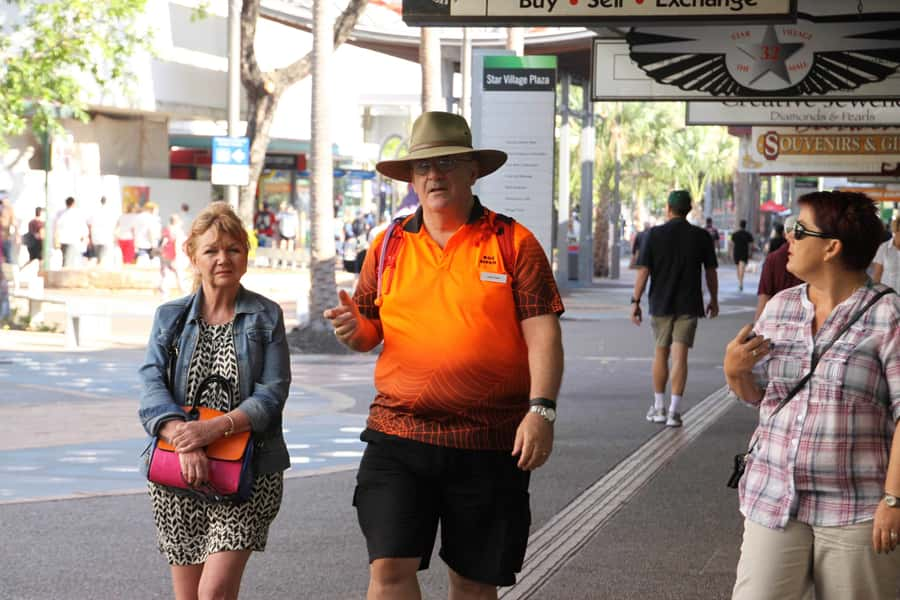
- John McDouall Stuart statue meeting point: Look for the guide in a bright orange shirt under the statue in Raintree Park.
- A compact lesson in Darwin: The walk connects WWII bombing stories, Cyclone Tracy, colonial buildings, and modern multicultural life.
- Historic buildings on foot: See the old courthouse and police station, Brown’s Mart theater, Palmerston Town Hall ruins, Government House, Parliament House, and the Supreme Court.
- Small group format: The maximum group size is 10, with a minimum of two paying guests needed for the tour to operate.
- Bring protection from the sun: A hat, sunscreen, water, camera, and hand sanitizer or tissues are specifically recommended.
- Good value at $41: You get two hours with a local guide and spoken commentary, without paying for transport or a full-day sightseeing package.
Start under the John McDouall Stuart statue
The tour begins in Raintree Park, under the statue of John McDouall Stuart. This is a simple central meeting point, but give yourself enough time to find the statue and identify the guide by the bright orange shirt.
There is no hotel pickup, so you need to make your own way to the start. That is normal for a city walking tour and helps keep the cost at $41 per person. It also means you begin in the heart of Darwin rather than spending part of the two hours collecting people from hotels.
The group is limited to 10 participants. That matters here because this is a story-led walk, not just a route between photo stops. A smaller group lets you stay close to the guide and makes it practical to ask about a building, monument, or public artwork as you pass.
Guide John is named repeatedly in the available tour feedback, and his style comes through clearly: friendly, detailed, and happy to answer questions. One especially useful touch is attention to hydration and sun protection. Still, you should arrive prepared rather than relying on the guide to solve every comfort problem.
More History Walking Tours in Australia
- Ultimate Melbourne Walking Tour: History, Laneways & Culture
★ 5.0 · 1,451 reviews - Sydney: The Rocks 90-Minute History Walking Tour
★ 4.7 · 1,092 reviews - Discover Perth Walking Tour: History, Art, Local Insights + More!
★ 5.0 · 458 reviews
Follow the paths of Darwin’s pioneers
The opening part of the walk introduces Darwin through its early development. The exact order of the sightseeing points can vary, but the route is built around central streets and historic locations that are easy to miss from a vehicle.
A bus tour can show you a building, then roll on before you have time to understand it. On foot, you can stop to look at details, compare old and new architecture, and hear how Darwin’s identity has changed. That is the real strength of this experience. It turns a short stroll into a useful orientation to the city.
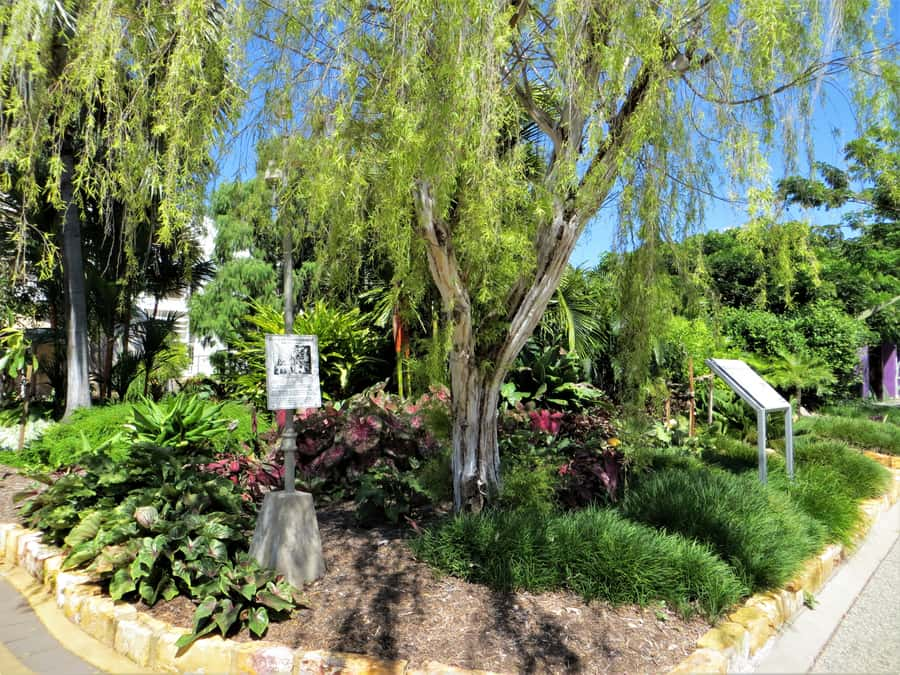
The walk also gives you a chance to notice tropical plants, wildlife, architecture, public artworks, and small details between the main sights. These are not separate attractions with long visits. They are part of the moving story of central Darwin, so keep your camera ready without expecting a formal photography stop at every corner.
The pace is described as leisurely, and that is important. You are not being pushed through a long list of sights. At the same time, leisure does not mean effortless. There are limited places to stop, sit, and rest, and you need a reasonable level of fitness.
Understand the WWII bombing of Darwin
World War II is one of the major chapters in Darwin’s story, and the guide explains how the bombings affected the town. This adds useful context to the streets you are walking through. Darwin was not simply a remote tropical settlement; it became a wartime target, and that experience shaped its buildings, people, and place in Australia.
The value of hearing this on location is that the history stays connected to the modern city around you. You are not receiving a detached museum lecture. You are looking at the rebuilt center while learning why so much of Darwin’s past is tied to destruction, repair, and change.
The commentary is in English only, so you need enough English to follow spoken historical explanations. If you enjoy asking questions, the small group makes this part more rewarding than a recorded tour. If you prefer a silent sightseeing walk or a guide who speaks another language, this will not be the right match.
See Darwin’s rebuilt civic buildings
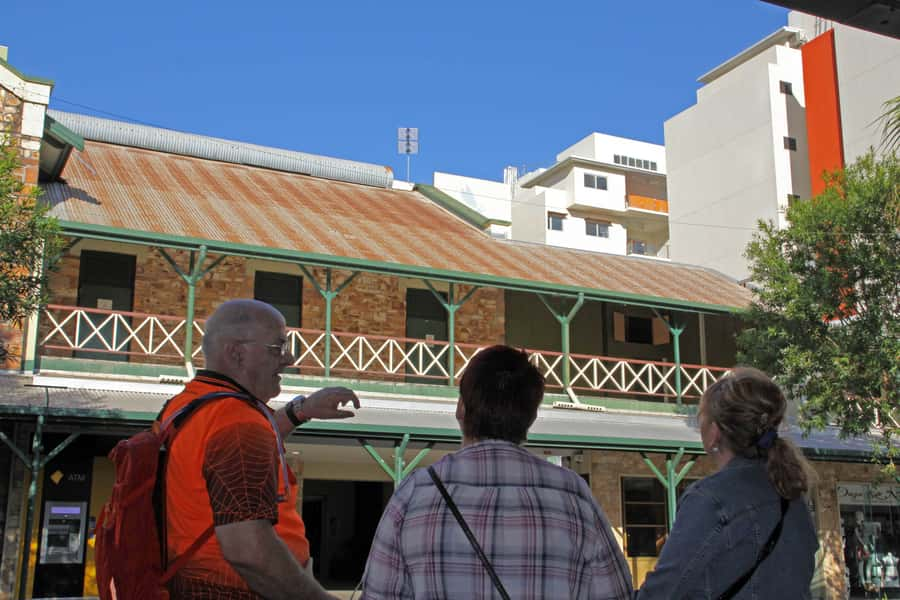
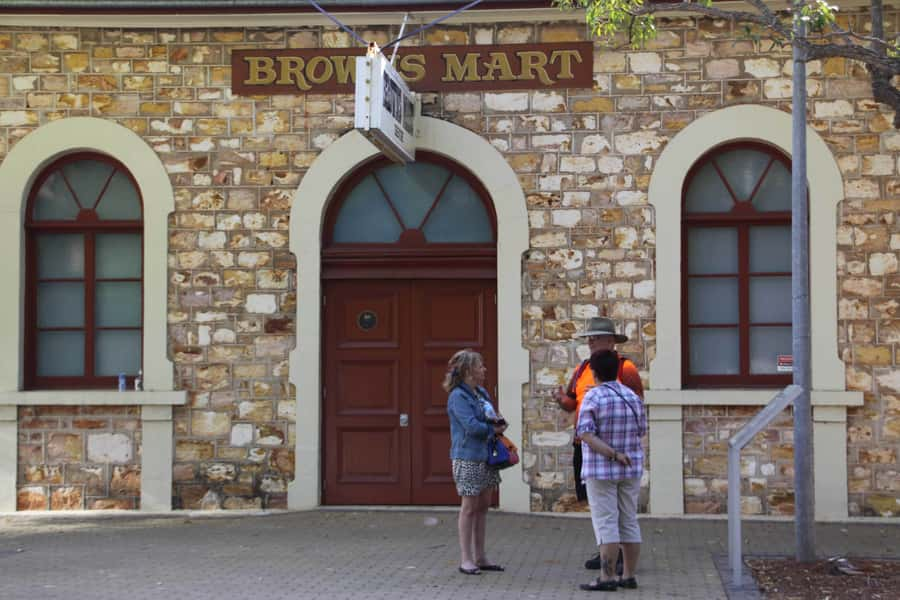
Several of the most useful stops are buildings that help explain how Darwin has preserved pieces of its past. The old courthouse and police station, Brown’s Mart theater, and the ruins of Palmerston Town Hall are all included in the route.
These sites are especially worthwhile because the city’s history is not presented as a collection of untouched old buildings. Many structures have been painstakingly reconstructed. That gives you a more honest picture of Darwin: a place where heritage has survived through repair and rebuilding rather than remaining frozen in its original form.
Brown’s Mart theater adds a cultural angle to the walk. It shows that the tour is not limited to government buildings or war stories. Palmerston Town Hall, meanwhile, links Darwin to its earlier name and civic development. The old courthouse and police station give you a look at the systems that supported the growing settlement.
I like this mix because it prevents the walk from becoming a single-theme history lesson. You get civic life, law, performance, government, and disaster woven into a compact route.
Same streets, a different century:
- Puffing Billy Railway: Heritage Steam Train Journey
★ 4.6 · 1,195 reviews - Morning World Heritage Cruise on the Gordon River from Strahan
★ 5.0 · 1,193 reviews - Strahan: World Heritage Cruise on Gordon River with Lunch
★ 4.8 · 1,143 reviews - Experience History onboard The Mary Valley Rattler
★ 5.0 · 963 reviews
Compare Government House, Parliament House, and the Supreme Court
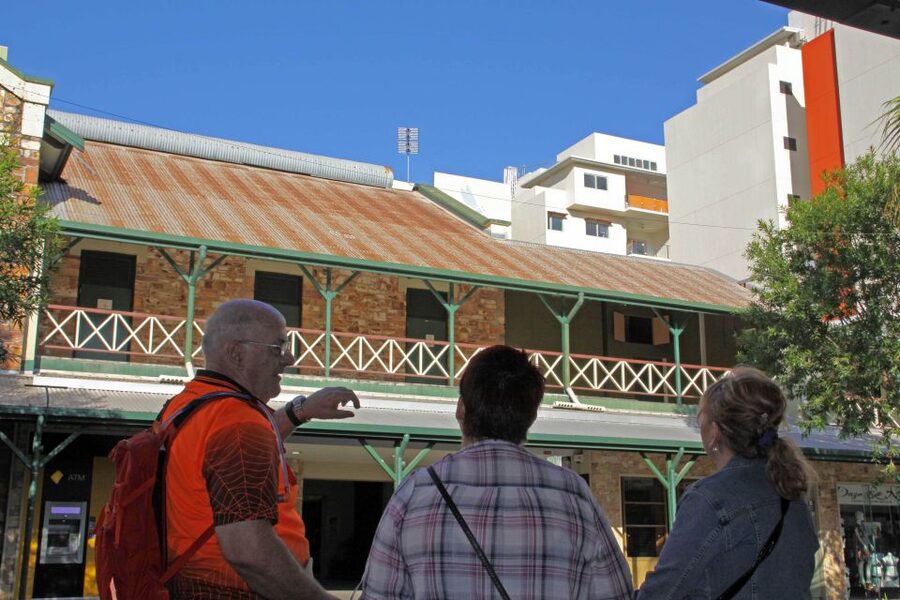
The walk also passes Government House, Parliament House, and the Supreme Court of the Northern Territory. Together, these buildings show Darwin as the working capital of the Northern Territory, not simply a place of historic ruins.
Government House connects the city to its colonial and administrative past. Parliament House reflects the territory’s modern political life, while the Supreme Court represents the legal institutions that serve it. Seeing them within the same walk helps you read Darwin as a city still developing its identity.
Do not expect long interior visits or a museum-style tour of each building. The experience is a guided walk through the streets, with spoken commentary and opportunities to look, photograph, and ask questions. The appeal comes from the connections between the sites rather than from extended time inside them.
This is also one reason I would take the tour early in a Darwin visit. Once you understand where the main civic buildings sit and how they relate to the older sites, later independent walks become easier. You have a mental map instead of a string of disconnected photographs.
Hear how Cyclone Tracy changed the city
Cyclone Tracy is another central theme. The guide explains the cyclone’s impact and how it changed Darwin. This is a key part of understanding why the city looks and feels different from many older Australian capitals.
The subject adds a natural-disaster chapter to the wartime story. In both cases, Darwin had to respond to severe damage and rebuild. That repeated process of destruction and recovery is central to the character of the city, and the guide’s local perspective helps make the subject more personal and grounded.
This portion may appeal most to you if you like history linked to everyday places. Instead of treating Cyclone Tracy as an isolated event, the walk shows how it fits into Darwin’s wider development. You may also gain a better sense of why reconstruction and modern buildings are such a visible part of the city center.
Again, the route is outdoors, so heat can affect your concentration. A hat, sunscreen, and water are not optional extras here. Wear comfortable shoes and avoid scheduling the walk when you know you will be rushing straight to another activity.
Notice Darwin’s multicultural present
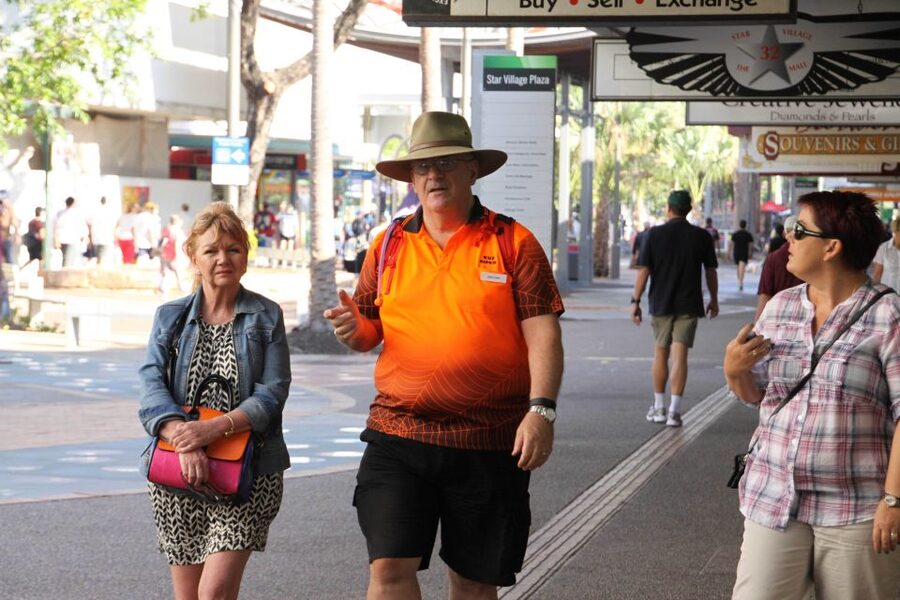
The tour does not stop with pioneer stories, war, and disaster. It also addresses Darwin’s current multicultural atmosphere. That shift matters because it keeps the city from being presented only as a colonial or wartime relic.
You will hear how Darwin has developed into a modern tropical city shaped by different cultures and communities. The walk gives that present-day identity a place alongside the older buildings and historic events.
This is one of the more useful features for first-time visitors. A city can be easy to photograph and hard to understand. By linking its past to its current character, the guide helps you see Darwin as a place that has been repeatedly remade.
The experience does not appear to focus on food tastings, market visits, or restaurant stops, so do not book it expecting a culinary tour. Food and drinks are not included. Its strength is interpretation through streets, buildings, stories, and observation.
Finish near Knuckey Street and the Esplanade
The walk ends at Knuckey Street and the Esplanade in Darwin City. That location gives you a practical place to continue exploring after the two hours are over, although the tour does not include onward transport or hotel drop-off.
The finish also keeps the experience compact. You are not committing a whole morning or day to sightseeing. At $41, the price is reasonable for a two-hour guided introduction, particularly when you consider the small group and the amount of local explanation involved.
Value depends on what you want. If you only want to see buildings quickly, you can walk through central Darwin on your own for free. You would not, however, get the same connected explanation of the WWII bombings, Cyclone Tracy, civic buildings, and local development.
For a first visit, or for a short stay, that context is the main purchase. It can save you from wandering past important places without knowing why they matter.
How demanding is the two-hour walk?
You need a moderate level of walking fitness. The pace is not described as strenuous, and the route is intended to be leisurely, but there are not many opportunities to sit or rest.
Darwin’s tropical conditions make preparation important. Bring:
- Water
- Sunscreen
- A sun hat
- Comfortable walking shoes
- A camera
- Hand sanitizer or tissues
Smoking, pets, and bare feet are not allowed. Assistance dogs are allowed. Children under 10 are not suitable for this tour, and the operator specifically advises against it for people with a low level of fitness.
I would schedule this activity when you have enough time to walk without rushing. A hurried participant will enjoy it less, and a group that needs frequent long breaks may struggle to keep the tour moving.
Who will get the most from this experience?
This is a strong choice if you are visiting Darwin for the first time and want a quick sense of how the city fits together. It also suits people who routinely take walking tours in new cities, since the route combines orientation with local history rather than simply pointing out landmarks.
The tour should work well for:
- First-time Darwin visitors
- Short-stay visitors with limited sightseeing time
- History fans interested in WWII and Cyclone Tracy
- People who prefer small groups
- Photographers looking for architecture and public art
- Visitors who want a local guide rather than a bus commentary
It is less suitable for anyone who needs regular seating, dislikes outdoor heat, or wants a tour in a language other than English. Families with children under 10 should choose another activity.
The minimum group size is two paying guests, while the maximum is 10. That means the tour may feel quite intimate, but it cannot operate with only one paying participant.
Is the $41 price fair?
At $41 per person, I consider this good value for a focused two-hour introduction. You are paying for a live local guide, spoken commentary, a small group, and access to street-level details that a bus cannot reach.
The price does not include food, drinks, hotel pickup, or drop-off. That keeps the offer simple, but you should budget for your own water and transport to the meeting point. Since the tour is only two hours, you are also not paying for a full-day package filled with stops you may not care about.
The strongest value comes from the guide. John is repeatedly singled out for his clear explanations, local insight, friendly manner, and ability to answer questions. If another guide leads your departure, the precise style may differ, but the experience is designed around live commentary rather than a fixed audio track.
You can cancel up to 24 hours ahead for a full refund, and the reserve-now, pay-later option gives you some flexibility when planning a Darwin stay.
Should you book the Darwin Heritage Walk?
Book it if you want a well-paced introduction to Darwin’s story, especially the links between the WWII bombings, Cyclone Tracy, reconstructed heritage buildings, and the city’s modern multicultural life.
I would book this early in a Darwin visit. It gives you a useful map of the center and helps you decide which places deserve a longer look later. The small group, personable local guide, and $41 price make it a sensible choice for first-time visitors.
Skip it if you need frequent rest stops, are traveling with a child under 10, or want food, transport, or indoor sightseeing included. For everyone else who can manage two hours outside, this is a practical way to meet Darwin on foot and understand why its modern streets carry so many layers of history.
FAQ
Where does the Darwin heritage walk begin?
It begins under the John McDouall Stuart statue in Raintree Park. The guide will be wearing a bright orange shirt.
Where does the tour finish?
The tour finishes at Knuckey Street and the Esplanade in Darwin City, Northern Territory.
How long does the walking tour last?
The walking tour lasts two hours.
How much does the tour cost?
The listed price is $41 per person.
How many people can join the tour?
The group is limited to 10 participants. At least two paying guests are required for the tour to operate.
Is the tour offered in languages other than English?
No. The live commentary is in English only.
What should I bring?
Bring water, sunscreen, a sun hat, a camera, and hand sanitizer or tissues.
Is the tour suitable for children and people with limited fitness?
Children under 10 are not suitable for the tour. It is also not suitable for people with a low level of fitness because there are few places to sit and rest.
More Two-Hour Tours in Australia
- 2-Hour Gettysburg Battlefield Guided History Bus Tour with a National Park Guide
★ 4.5 · 2,201 reviews - Kyoto Gion: 2-Hour Geisha Culture & History Walking Tour
★ 5.0 · 1,186 reviews - 2 Hour LoDo Historic Walking Tour in Denver
★ 5.0 · 1,106 reviews - 2-Hour Historical Walking Tour from Dublin
★ 5.0 · 875 reviews
More Small-Group History Tours in Australia
- London Small Group Tour of Historical Pubs
★ 5.0 · 10,422 reviews - Boston: Freedom Trail History Small Group Walking Tour
★ 5.0 · 6,450 reviews - Madrid Tapas & Taverns Small Group Food & History Tour
★ 5.0 · 2,664 reviews - Hidden Alleyways and Historic Sites Small-Group Walking Tour
★ 5.0 · 2,335 reviews
Newest history tours we have reviewed in Australia
- Darwin History and Wartime Experience Tour★ 5.0 · 144 reviews
- Bombing of Darwin WWII Heritage Tours★ 5.0 · 261 reviews
- Darwin Heritage Walk★ 4.5 · 101 reviews
- Private Half Day Tour: World Heritage Rainforest & Waterfall★ 5.0 · 19 reviews
- Cairns History Walking Tour★ 5.0 · 52 reviews
- Entry Ticket at Historic Village Herberton★ 5.0 · 114 reviews
- Authentic Indigenous Cultural Tour Including Scenic River Cruise★ 5.0 · 88 reviews
- Historic Village Herberton Family Pass (2A+2C)★ 4.5 · 18 reviews
Small-Group History Tours, compared.


Freedom Trail History Small Group Walking Tour
Read our review →
Madrid Tapas & Taverns Small Group Food & History Tour
Read our review →
Hidden Alleyways and Historic Sites Small-Group Walking Tour
Read our review →
New Orleans Small-Group Haunted History Carriage Tour
Read our review →
Half Day Dominican Republic Cultural Tour : Small Group
Read our review →
Ultimate Seville Tapas, Wine & History Small Group Tour
Read our review →
Vienna Historic Center Small Group Walking Tour
Read our review →Browse the lists this tour appears in