
Review · SAN ANTONIO HISTORY TOURS
San Antonio Missions UNESCO World Heritage Sites Tour
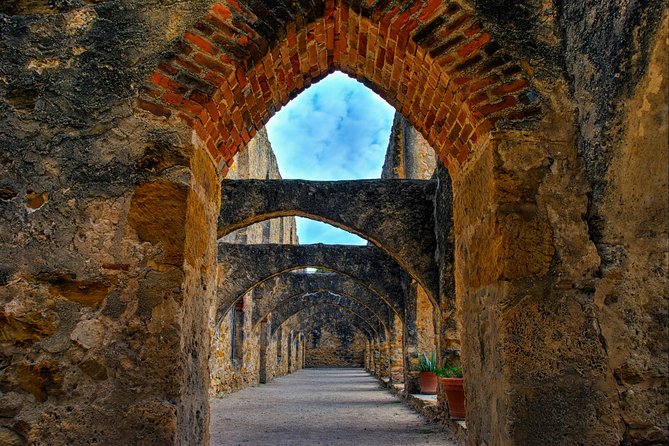
San Antonio’s missions are more than a string of old churches. They are working pieces of a much larger story about Indigenous communities, Spanish colonization, farming, irrigation, religion, and the eventual founding of the city. This three-and-a-half-hour small-group tour links four missions with the Espada Aqueduct, giving you a useful overview without asking you to arrange several separate visits.
I like the hotel pickup from select downtown properties and the relaxed group size, which is capped at 12 people. I also like the guides’ local touch: Alex and Domingo are praised for explaining both mission history and modern San Antonio, with extra details about the river, trees, food, and good photo spots. The main drawback is that time at some stops is brief, and the Alamo tour is not included.
Key points to know
- Four missions in one morning: Visit Concepción, San José, San Juan, and Espada, the four southern missions included in this outing.
- Mission San José gets the most time: One hour allows room for the church, grounds, visitor center, and film.
- Small group, personal service: The vehicle holds no more than 12 people, and guides may help with photos or hotel drop-off arrangements.
- The Espada Aqueduct adds practical context: You see how water was carried to mission farmland, not just church buildings.
- The Alamo is separate: You may be dropped at the Alamo or returned to your downtown hotel, but an Alamo tour is not part of the price.
- Prepare for sun and walking: Bring water and sunscreen, and expect a moderate amount of walking outdoors.
Why San Antonio’s missions deserve your morning
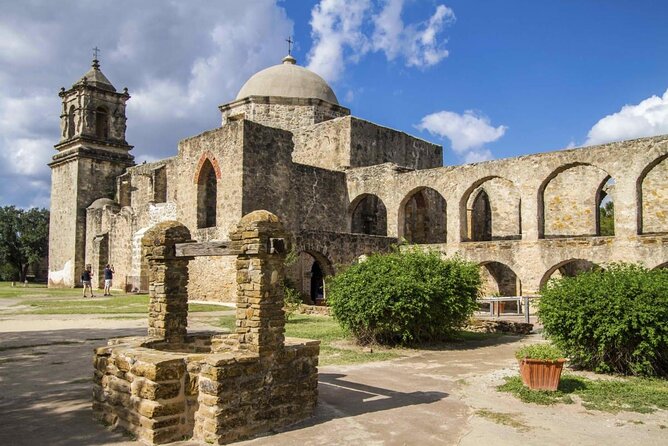
San Antonio’s five missions form a UNESCO World Heritage Site, but the five are not simply interchangeable church stops. Each had its own setting and role, and the surrounding grounds help explain how the communities worked.
This tour visits four of the five missions in one continuous route. That matters because the missions are spread along the San Antonio River, and reaching them independently takes more planning than many first-time visitors expect. You get transportation, historical explanation, and a basic sense of how the sites connect.
The trip also gives you an introduction to mission life beyond religion. The story includes nomadic hunters and gatherers, agriculture, irrigation, architecture, Spanish settlement, and the creation of San Antonio de Valero, better known as the Alamo. The religious buildings are important, but they are only one part of the picture.
The experience is guided by live and recorded narration. Guides such as Alex, Domingo, and Mike have been singled out for their local knowledge and friendly manner, though you should not assume a particular guide will lead your departure. Alex is noted for using an iPad with older images to explain reconstruction and original building details, while Domingo is praised for combining mission history with wider San Antonio information.
More UNESCO World Heritage Tours in the USA:
- Small-Group World Heritage San Antonio Missions Guided Tour
★ 5.0 · 237 reviews - World Heritage Shirakawa-go and Experience Tours from Kanazawa
★ 5.0 · 4,049 reviews - From Tirana: Berat UNESCO Heritage & Belshi Lake Tour
★ 4.9 · 3,863 reviews
Mission Concepción and its original frescoes
Your first major stop is Mission Concepción, with about 25 minutes to explore. This is a short visit, but it gives you an immediate look at one of the site’s most appealing features: the original frescoes.
The stop is best for getting oriented. You can listen to the background of the mission, look around the grounds, and study the surviving decorative work. The limited time means you will need to stay aware of the meeting point rather than wander at your own pace.
I like starting here because the details are close and visual. Mission history can feel abstract when it is presented only as dates and names. Painted surfaces, church walls, and the layout of the grounds make the past easier to picture.
If you prefer long, quiet visits inside historic buildings, this stop may feel rushed. The tour is designed to show you the main character of each mission, not to give every site an hour.
Mission San José, the main stop
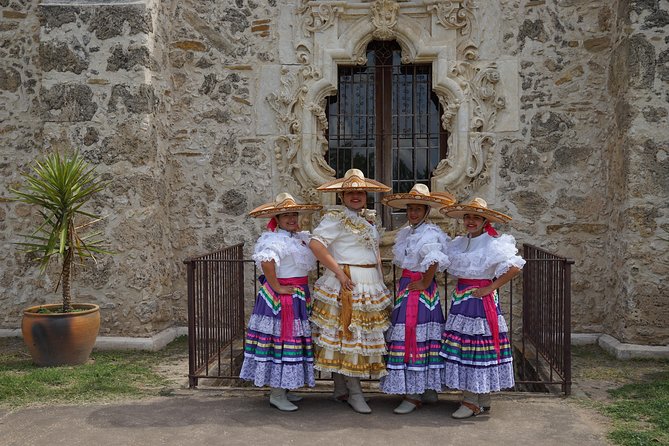
Mission San José receives approximately one hour, making it the central visit of the outing. You have time to explore the church and grounds, learn about mission life, and see one of the finest examples of baroque architecture in the group.
This is where the tour’s wider social story comes into focus. You hear about the nomadic hunters and gatherers who became part of the mission system, then see how the site was organized around worship, work, and agriculture. The church is the visual centerpiece, but the grounds help explain how a mission functioned as a community.
An award-winning film is also part of the visit. That can be useful if you want a structured explanation rather than relying only on a guide’s talk. The free admission at the mission keeps the $75 price focused on transport, guiding, and organization rather than entrance fees.
Mission San José is also the best place to leave room for your own questions. If you want to ask how the buildings were made, which sections are original, or how reconstruction changed the site, this is the stop where the extra time helps.
Mission San Juan and the working side of the missions
Mission San Juan receives about 10 minutes. That is enough for a focused introduction, but not enough for a slow, detailed visit.
The main subject here is irrigation and agriculture. This shift is useful because it moves the tour away from church architecture and toward the systems that supported daily life. A mission needed food, water, land, and labor. San Juan helps make those practical needs visible.
Ten minutes requires discipline. You will likely hear the key explanation, take a few photos, and return to the vehicle. If you hope to study every building or spend time in quiet reflection, you would need a separate visit on another day.
Still, the stop earns its place in the route. Without agriculture, the missions can look like isolated religious monuments. San Juan helps you see them as organized communities tied to the river and surrounding farmland.
More History Tours in the USA:
- New York City: American Museum of Natural History Ticket
★ 4.5 · 15,447 reviews - History and Hauntings of Salem Guided Walking Tour
★ 5.0 · 14,564 reviews - Charleston’s Old South Carriage Historic Horse & Carriage Tour
★ 5.0 · 10,023 reviews - Beneath The Streets Underground History Tour
★ 4.5 · 8,006 reviews
The Espada Aqueduct and the problem of water
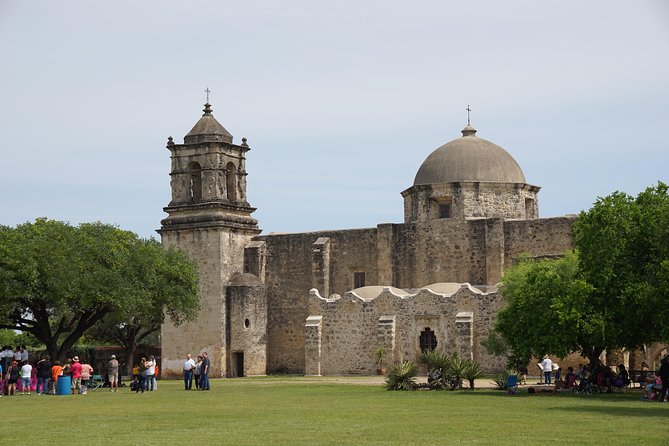
The Espada Aqueduct is a very short stop, about five minutes, but it is one of the most useful for understanding how the mission communities survived.
Here you see part of the irrigation system used to water mission lands. The aqueduct connects the grander subjects of religion and colonization to a basic question: how did people grow food in this setting?
Do not expect a long walk or a major site visit. This is a quick look and explanation, not a full standalone tour of the water system. Bring your camera, listen closely, and treat it as a connecting piece between San Juan and Mission Espada.
I appreciate this stop because it adds working infrastructure to the story. It also gives the tour a practical rhythm. You are not simply moving from one church to the next. You are seeing the water system that helped make the mission settlements possible.
Mission Espada, the final mission visit
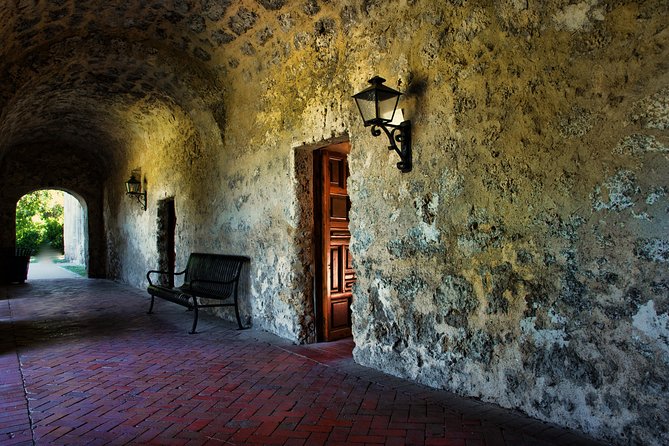
Mission Espada is the last of the four mission stops, with about 10 minutes to explore the church and grounds. Like San Juan, it is a concise visit.
The short timing works best if you understand the day as an overview. You will get a sense of the site, hear its place in the mission story, and have a little time for photos. You will not have the same freedom to linger that you get at San José.
For many people, the value here is comparison. After seeing Concepción, San José, and San Juan, you can notice how the setting and scale of each mission differ. The route gives you a quick visual survey of the four sites rather than making one building carry the whole story.
If one mission catches your interest, note its name and plan a longer return visit. The tour gives you the map in your head, which can make an independent second visit much more rewarding.
The Alamo connection, with an important limit
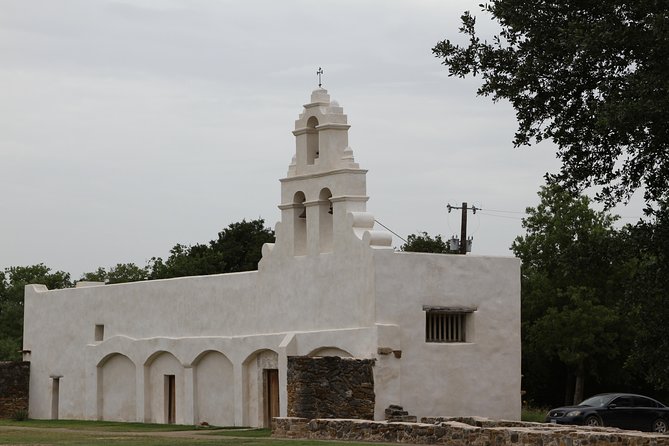
The tour also covers the founding of Mission San Antonio de Valero and the Battle of the Alamo. This gives the famous downtown site a place within the broader mission story instead of treating it as an isolated attraction.
The final stop is either the Alamo or your downtown hotel, at your choice. That is convenient if you want to continue sightseeing in the center after the mission route. It can also save you a return ride if your hotel is nearby.
Be clear about what is and is not included. The Alamo itself uses its own guides, or you can take a self-guided visit. This tour does not include an Alamo tour, so you should set aside extra time and arrange any Alamo admission or guided experience separately.
La Villita Historic Arts Village and Alamo Plaza are also part of the broader San Antonio sightseeing context associated with the outing. Do not count on a long, independent exploration of these places during the mission visits. The main purpose is the four missions and their connected story.
What the $75 price gets you
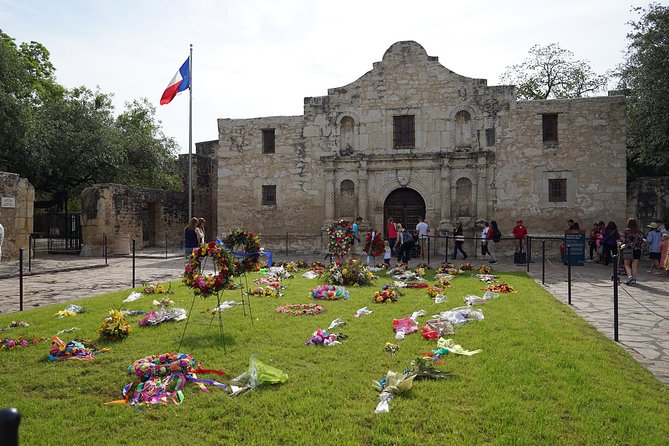
The cost is $75 per person. Since admission to the four missions is free, the value comes from transportation, planning, narration, and the ability to cover the route in one organized outing.
I think the price makes sense if you are staying downtown, do not have a car, or want a guide to connect the sites. A taxi or rideshare plan for four missions can become inconvenient, especially when you add waiting time and the need to understand where each site fits in the story.
The value is less obvious if you already have a car and prefer to spend several hours at one or two missions. Independent visitors can move at their own pace, return to favorite details, and avoid the fixed schedule. You are paying here for efficiency and explanation.
The small group improves the value. With a maximum of 12 people, the outing is more personal than a large coach trip. Guides have room to answer questions, help with group photos, and make small adjustments when possible. One guide even dropped a group at a lunch location, though you should treat that as a courtesy rather than a guaranteed part of every departure.
Pickup, pace, and physical effort
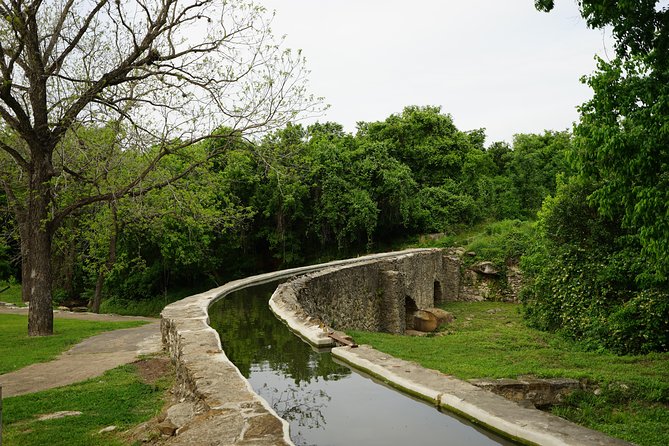
Hotel pickup and drop-off are included at select downtown hotels. Confirm that your hotel is within the pickup area before booking, and pay attention to the pickup message on the day. One guest received a morning confirmation with an estimated arrival time, which is useful when you are trying to plan breakfast or a later activity.
The duration is about three hours and 30 minutes. The pace is steady but not frantic. You move between sites, listen to commentary, walk outdoors, and return to the vehicle several times.
You should have a moderate level of physical fitness. The route includes walking around mission grounds, standing, getting in and out of transportation, and spending time outside. The heat can be tiring, so water, sunscreen, and comfortable shoes are sensible choices.
Service animals are allowed, and the tour is near public transportation. Those details help, but pickup remains limited to select downtown hotels. If you are staying elsewhere, check the meeting arrangement before you count on included transportation.
How the guides shape the experience
The guide can make a real difference on a short historical tour. Alex, Domingo, and Mike are names associated with strong guiding on this experience, but assignments can vary.
Domingo is noted for explaining both the missions and San Antonio as a whole. Alex is praised for his historical preparation, local background, and use of visual material to show how buildings looked before reconstruction. Mike is described as a local guide who adds a personal perspective.
The most useful guide behavior is not simply reciting dates. It is pointing out what to notice, explaining why irrigation mattered, identifying original or reconstructed sections, and connecting the missions to the city’s river system. You may also hear practical local suggestions, including photo locations and places to eat.
One point to watch: a few people found a guide spoke too quickly, and guides do not necessarily accompany you inside every site. If you need more time with a particular topic, ask your question early and clearly. The tour is guided, but it is not a private lecture at each building.
Who should book this tour
I would choose this outing if you have limited time in San Antonio, are staying downtown, and want to see the four southern missions without managing the route yourself.
It suits first-time visitors, solo visitors, small groups of friends, and anyone interested in architecture, religious history, Indigenous communities, agriculture, or the development of San Antonio. The group limit of 12 is especially helpful if you want a calmer experience than a large sightseeing bus.
It is less suitable if you dislike fixed schedules, need extensive time at each site, or want a full guided visit to the Alamo. It is also not ideal for anyone hoping to avoid outdoor walking in hot weather.
The overall rating is 4.7 from 918 ratings, with 92 percent recommending the experience. Those figures fit the tour’s strengths: reliable pickup, friendly guides, a comfortable pace, and a sensible route. The main weaknesses are the short visits at San Juan and Espada, plus the separate Alamo arrangements.
Should you book it?
Book this tour if you want an efficient, well-explained introduction to San Antonio’s missions and prefer someone else to handle the driving. The strongest parts are the one-hour visit at Mission San José, the small group, and the chance to see how churches, farmland, and irrigation belonged to one system.
Skip it if your priority is slow, independent exploration or a complete Alamo experience in the same package. At $75, you are buying convenience and interpretation rather than admission tickets. For a first visit with only one morning available, that is a fair exchange.
Cancellation is free up to 24 hours before the start time. Changes or cancellations inside that window are not refunded, and poor weather may lead to a new date or full refund.
FAQ
How long does the San Antonio Missions tour last?
The tour lasts approximately three hours and 30 minutes.
Which missions are included?
The tour visits Mission Concepción, Mission San José, Mission San Juan, and Mission Espada.
Is admission to the missions included?
Admission to the four listed missions is free, and visits to them are included in the tour.
Is hotel pickup available?
Hotel pickup and drop-off are included at select downtown San Antonio hotels.
How many people can join the tour?
The tour has a maximum group size of 12 people.
Is the Alamo tour included?
No. The tour includes information about the founding of Mission San Antonio de Valero and the Battle of the Alamo, but the Alamo tour itself is not included.
Can I finish at the Alamo instead of my hotel?
Yes. The final drop-off is either your downtown hotel or the Alamo, according to the stated tour arrangement.
How much walking is involved?
You should expect a moderate amount of walking outdoors and should have a moderate physical fitness level.
What happens if bad weather cancels the tour?
If poor weather causes cancellation, you will be offered a different date or a full refund. For personal cancellations, you must cancel at least 24 hours before the start time for a full refund.
Newest history tours we have reviewed in the USA
- Nashville: Belle Meade Historic Mansion Tour★ 4.8 · 63 reviews
- Beaufort: Local History and Film Sites Tour by golf cart★ 4.9 · 102 reviews
- Boston: Guided Seafood Tasting and History Tour★ 4.9 · 90 reviews
- Beaufort: Gullah Heritage Tour★ 4.8 · 26 reviews
- Beaufort: Historic City Tour by Bus★ 4.9 · 228 reviews
- Austin: Downtown Austin Haunted History Tour★ 4.4 · 31 reviews
- Austin: Morning History Walking Tour of Downtown Austin★ 4.9 · 71 reviews
- Atlanta: Beltline Food, Street Art, and History Walking Tour★ 5.0 · 47 reviews
UNESCO World Heritage Tours, compared.
World Heritage Shirakawa-go and Experience Tours from Kanazawa
Read our review →

Bali: Tanah Lot UNESCO World Heritage Sites Full-Day Tour
Read our review →
World Heritage Kyoto & Nara Uji Authentic Matcha Experience
Read our review →
UNESCO’s Ayutthaya Historical Park: Full-Day Tour from Bangkok
Read our review →
Rotterdam: Kinderdijk UNESCO World Heritage Entry Ticket
Read our review →
From Busan: Gyeongju UNESCO World Heritage Guided Day Tour
Read our review →Browse the lists this tour appears in