
Review · THAILAND HISTORY TOURS
Chiang Mai: Historical and Culture Exploration Walking Tour
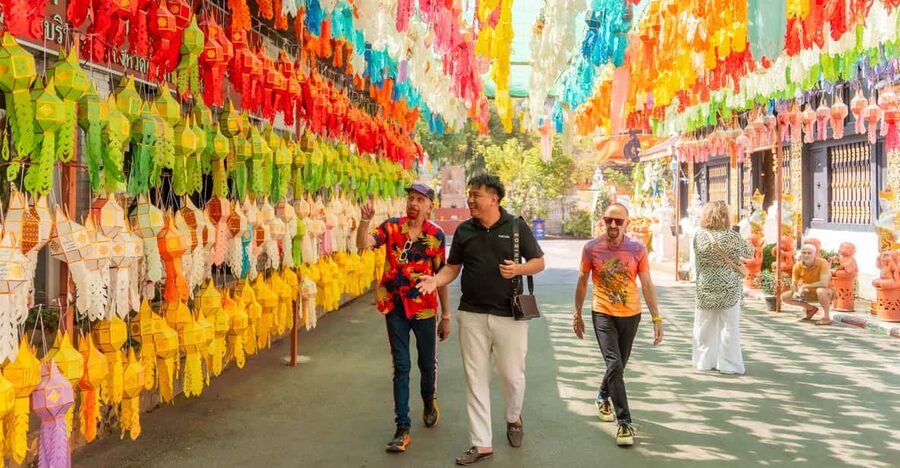
Chiang Mai’s story makes the most sense on foot, among its old temples, carved wood, fading murals, and royal monuments. This small-group walk links the Three Kings Monument, Wat Phra Singh, and Wat Chedi Luang in a compact introduction to the former Lanna capital.
I like the small group of eight or fewer, which gives you room to ask questions. I also like that temple admission, water, and insurance are included in the $15 price. The main drawback is that this is a walking tour with temple rules, warm weather, and no hotel pickup. You must dress modestly, and the route is not suitable for wheelchair users.
Key points at a glance
- Start at the Three Kings Monument: Learn about King Mangrai and the founding of Chiang Mai before walking into the old city.
- Visit Wat Phra Singh: See northern Thai architecture, woodcarving, murals, the Lai Kam Assembly Hall, and a pagoda linked with the Year of the Dragon.
- Stand beside Wat Chedi Luang: Explore the remains of a 600-year-old chedi and view the Buddha inside the temple grounds.
- Hear about living Buddhist practice: The guide explains spiritual customs, temple life, and Lanna traditions rather than only pointing out buildings.
- Keep the group personal: The maximum of eight people makes questions easier, especially when the guide is Bim, Emmy, Farm, or another member of the local team.
- Consider the 5 p.m. departure: One booking found the later start cooler and especially attractive in the soft evening light.
Why this short Chiang Mai walk works
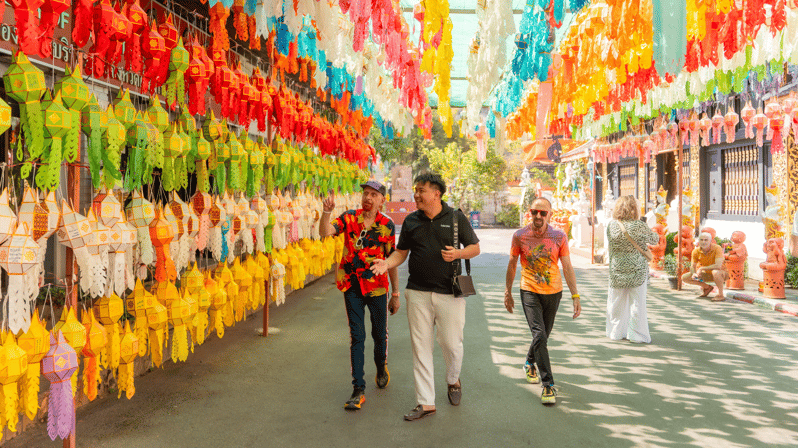
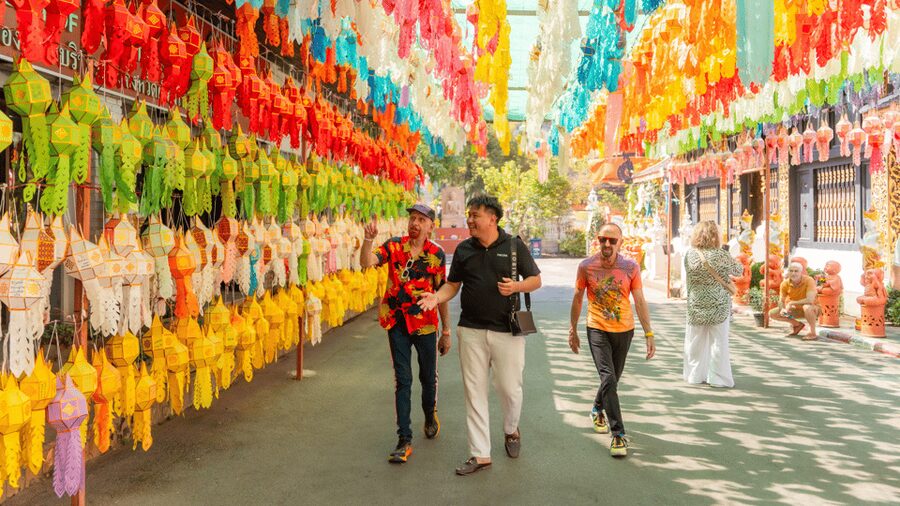
At $15 per person, this is a low-cost way to get your bearings in Chiang Mai’s old city. You are not paying for a long sightseeing circuit or a vehicle ride. You are paying for a local guide, entrance tickets, a focused route, water, and two and a half hours of explanation.
That distinction matters. The old city is easy enough to cross on a map, but its temples can blur together if you do not know what you are looking at. A good guide can explain why one building has a carved wooden facade, why a chedi matters, and how Buddhism shapes everyday life in northern Thailand.
The tour is also a useful first activity in Chiang Mai. Afterward, you will recognize the Three Kings Monument, Wat Phra Singh, and Wat Chedi Luang, and you will have a clearer sense of how the old center is organized. You finish at Wat Chedi Luang, so you can continue exploring nearby on your own.
The pace should suit most reasonably mobile visitors. The route includes two walks between stops, one of about 20 minutes and another of about 15 minutes, along with time inside each temple. It is not a rushed photo stop at every doorway. Still, it is not a private tour where you can change the route at will.
More Local Culture and Traditions Tours in Thailand:
- River Kwai Day Tour from Bangkok: History, Scenic Views & Culture
★ 4.5 · 36 reviews - Amsterdam Food and Cultural Tour with Tastings
★ 5.0 · 4,315 reviews - Sevilla Food Tour: Tapas, Wine, History & Traditions
★ 5.0 · 3,468 reviews
Meeting the Lanna kingdom at Three Kings Monument
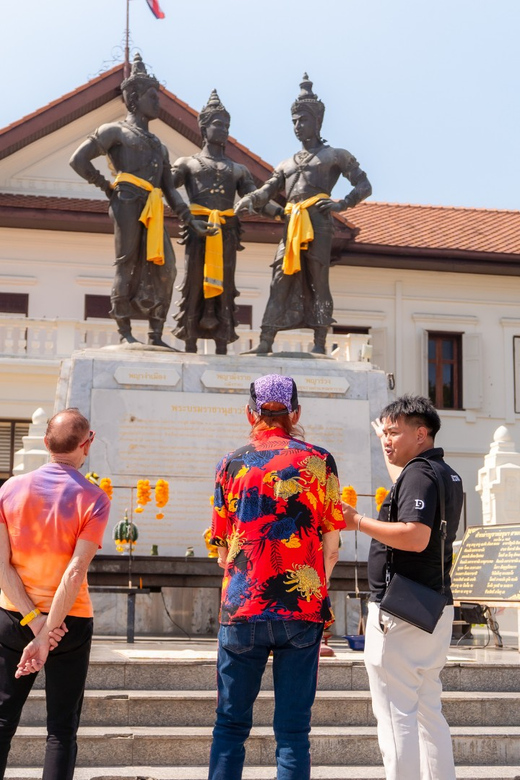
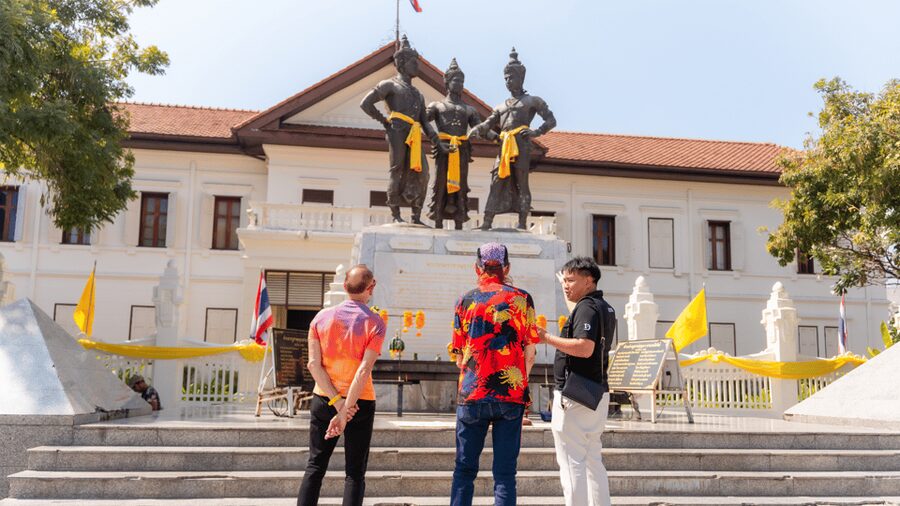
The tour begins at the Three Kings Monument in the center of the old town. This is a useful starting point because the monument gives the guide a natural way to explain Chiang Mai’s origins.
You learn about King Mangrai, the first king of the Lanna Kingdom and the founder of Chiang Mai. The opening talk also places the old city in its wider setting, as a royal and religious center that dates back to the 13th century.
Expect about 30 minutes here, including a safety briefing and a guided explanation. That may sound like a long time for one monument, but it gives the tour a proper foundation. Without it, the temples can feel like a string of beautiful buildings with no connection.
I especially like this part for first-time visitors. You get the basic names and political background before entering the temple grounds. If you already know Chiang Mai’s history well, this section may feel introductory, but that is exactly its value for most people.
The monument is also a practical meeting point. Your guide will be waiting there, and you should arrive on time. There is no hotel pickup, so allow extra time to reach the old town.
Wat Phra Singh and northern Thai design
From the monument, the group walks for about 20 minutes to Wat Phra Singh. This first temple visit lasts around 40 minutes, giving you enough time to look beyond the main entrance and hear why the site matters.
Wat Phra Singh is regarded as the second most revered temple in Chiang Mai. Its appeal is not limited to its religious importance. The architecture shows the northern Thai style through carved wood, decorative details, and murals connected with the Lanna tradition.
A key stop is the Lai Kam Assembly Hall. Pay attention to the woodwork and the shape of the building. This is the kind of place where a guide adds real value, since small architectural features can be easy to miss if you are walking alone.
The temple also has a pagoda associated with people born in the Year of the Dragon. That detail offers a simple way into the relationship between Buddhist practice, local beliefs, and personal identity. Your guide can explain the cultural meaning rather than leaving you with a photograph and a name.
The visit is not only about old objects. The stated focus is the spiritual life of Chiang Mai residents, so expect discussion of Buddhist rituals and temple customs. One guide, Bin, was particularly praised for explaining history, art, culture, tradition, and Buddhist rituals in a clear way. Guides vary by date, but that gives you a good idea of the intended approach.
Dress is important here. Shorts and short skirts are not allowed, and comfortable clothes are listed as a requirement. Choose clothing that covers your shoulders and knees to avoid awkwardness at the temple entrance, even though only shorts and short skirts are specifically stated in the rules.
Walking between the temples
The route is compact, but you should think of it as a real walking tour, not a sightseeing transfer. The first walk takes about 20 minutes, and the second takes about 15 minutes. Comfortable shoes are one of the most useful things to bring.
Water is included, which helps, especially in the warmer parts of the day. You should also bring a camera if you want to record the carvings, murals, and large chedi. Keep in mind that temple visits are places for observation and respect, not just photo stops.
The small group makes these walks easier. With no more than eight people, you are less likely to lose the guide and more likely to hear the explanation. It also makes it simpler to ask a quick question about a symbol, a ceremony, or a building style.
The tour is not suitable for wheelchair users. The supplied information does not describe the exact surface or step-free access, so anyone with limited mobility should treat this as a walking route with possible access challenges rather than assume it can be adapted.
Some bookings have included arranged tuk-tuk rides, but hotel transportation is not included and transport is not listed among the standard inclusions. I would plan to walk the stated route and regard any tuk-tuk arrangement as something to confirm rather than a guaranteed part of every departure.
More History Walking Tours in Thailand:
- Chiang Mai: Historic Temples and City Guided Walking Tour
★ 4.7 · 650 reviews - Bangkok Wat Pho and Flower Market Historical Walking Tour
★ 5.0 · 28 reviews - History and Hauntings of Salem Guided Walking Tour
★ 5.0 · 14,564 reviews - Lisbon: History, Stories and Lifestyle Walking Tour
★ 4.8 · 10,902 reviews
Wat Chedi Luang and the old city’s great ruin
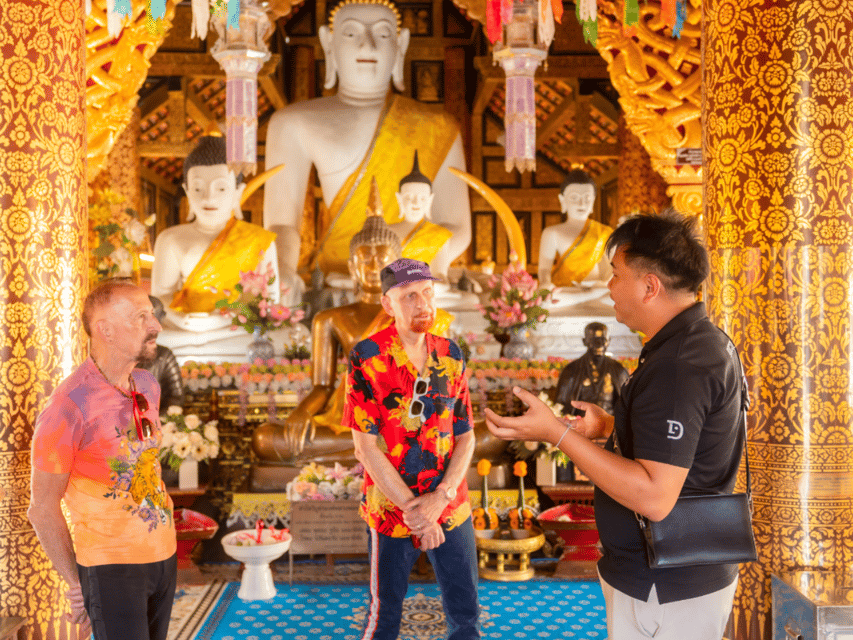
The final major stop is Wat Chedi Luang, reached after about 15 minutes on foot. The guided visit lasts around 45 minutes, making it the longest temple section of the tour.
The site is known for its enormous chedi, a 600-year-old structure with striking ruins. The scale gives you a different experience from Wat Phra Singh. Instead of focusing mainly on polished decoration and detailed woodwork, you are looking at the remains of a major religious monument and thinking about the changes it has seen.
The chedi was originally built by King Mangrai, linking the final stop back to the opening discussion at the Three Kings Monument. That return to the founder and the Lanna kingdom gives the walk a tidy shape. You begin with Chiang Mai’s origins and finish with one of its most powerful physical reminders.
You also have the chance to see the Buddha inside the temple and listen to talks by monks. The exact format can depend on the day and the temple schedule, so I would not treat a long conversation with monks as guaranteed. Still, the possibility adds a direct connection with current Buddhist life, not just historical information.
The 45-minute visit should give you time to take in the grounds without being hurried. If you are particularly interested in temple architecture, ask the guide to compare Wat Chedi Luang with Wat Phra Singh. The contrast between the two is one of the best ways to understand the range of Lanna religious design.
Because the tour ends here, you are free to stay nearby after the guide finishes. The activity does not include a return transfer, so arrange your own onward transport or continue walking through the old city.
The guides are the heart of the experience
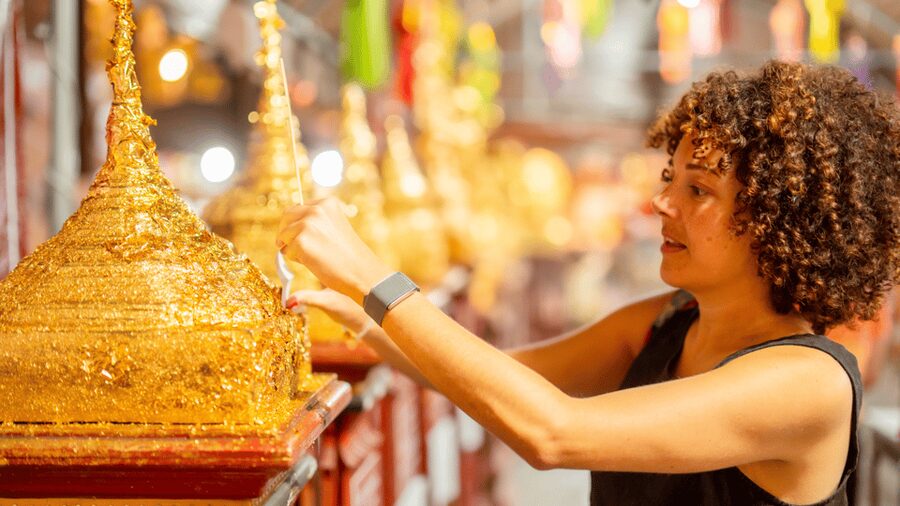
The strongest part of this tour is likely to be the person leading it. The guides named in booking feedback include Bim, Bin, Emmy, Farm, and Amy. Bim received especially warm praise for her friendly manner, local Lanna background, and ability to answer questions. She was also noted as a good photographer, which may be useful if you are traveling alone or want a group photo.
Emmy was praised for explaining the sites with enthusiasm, while Farm was described as kind and helpful during an introduction to the old city. Amy was singled out as a fun guide. These details point to a tour that depends heavily on personality, as small cultural walks often do.
The live guide can speak English or Thai. The stated tour languages are English and Thai, so English-speaking visitors should be able to follow an English departure, but confirm the language when booking if it matters to you.
A small group changes the feel of the tour. One booking had only two people, allowing questions to come up naturally. You may have a larger group of up to eight, but the cap still keeps the walk more personal than a large coach excursion.
The guide’s job here is not simply to recite dates. You should expect stories about King Mangrai, Lanna customs, Buddhist rituals, temple art, and the way religious life continues to shape Chiang Mai. That makes the tour a good fit if you want cultural context rather than a checklist of buildings.
Timing, heat, and the best departure
The walk lasts about 2.5 hours, and the old city can feel hot during the day. If several start times are available, think carefully about when you want to go.
A 5 p.m. departure was particularly well suited to avoiding the worst heat and seeing the temples in golden-hour light. The later start may also make the walk more comfortable, though the exact light and temple activity will depend on the day.
A morning departure can work well if you prefer to have the rest of the day free. It may also suit anyone who wants to use the tour as an orientation before visiting other parts of Chiang Mai. The key point is to bring comfortable clothing, shoes, and water, since the route includes sustained walking.
The tour includes insurance, but that should not replace sensible preparation. Wear footwear you can walk in for several hours, and bring a camera if you care about temple details. Modest clothing is not a minor suggestion here. Shorts and short skirts are not allowed.
What the $15 price really covers
The price is unusually modest for a guided temple walk. At $15, you receive an English or Thai-speaking guide, entrance tickets, water, and tour insurance. You do not pay extra at the two principal temples, which makes the price easier to understand from the start.
The value is strongest if you want a quick cultural introduction. You get three important old-city locations, two major temple visits, and a guide who can connect them to Lanna history and present-day spiritual life.
It is less suitable if you want a slow photographic study of every courtyard, a private guide, or door-to-door transport. The walk follows a fixed route and finishes at Wat Chedi Luang. You also need to make your own way to the Three Kings Monument and back from the final stop.
Free cancellation is available up to 24 hours before the activity for a full refund, and you can reserve now and pay later. Those terms are useful if your Chiang Mai schedule is still shifting, though you should check the available departure time before committing.
Who should book this old-city tour?
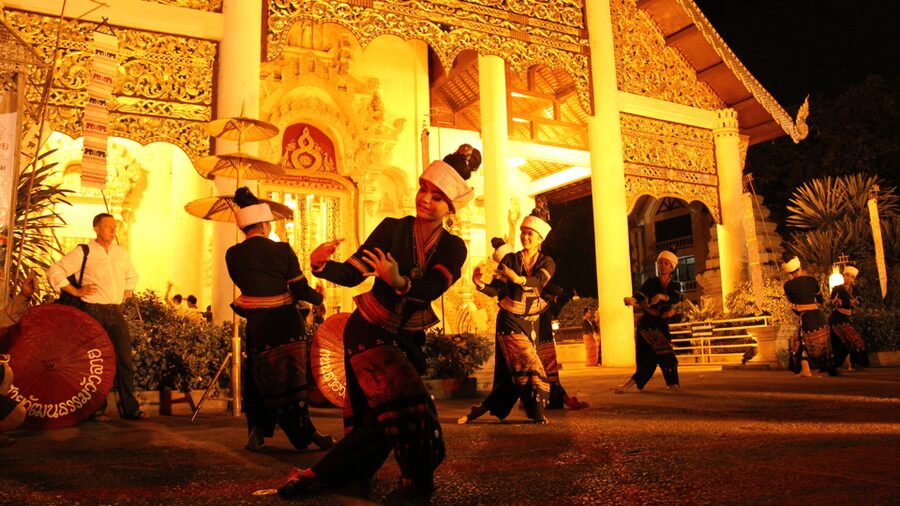
I would choose this tour for a first visit to Chiang Mai, especially if you want a clear introduction before exploring on your own. It also suits solo visitors who would appreciate a small group and someone available to take a photograph.
It is a good match for people interested in:
- Lanna history and architecture
- Buddhist customs and temple life
- Short walking tours with a local guide
- Small groups rather than large sightseeing crowds
- A low-cost introduction to Chiang Mai’s old center
I would think twice if you dislike walking in warm weather, need step-free access, or want hotel pickup. The tour is not suitable for wheelchair users, and the route has no included return transportation.
The experience also works well for repeat visitors who saw the temples before but did not understand what they were seeing. A guide’s explanation of the Year of the Dragon pagoda, the Lai Kam Assembly Hall, and the old chedi can give familiar places more meaning.
Should you book the Chiang Mai Historical and Culture Exploration Walking Tour?
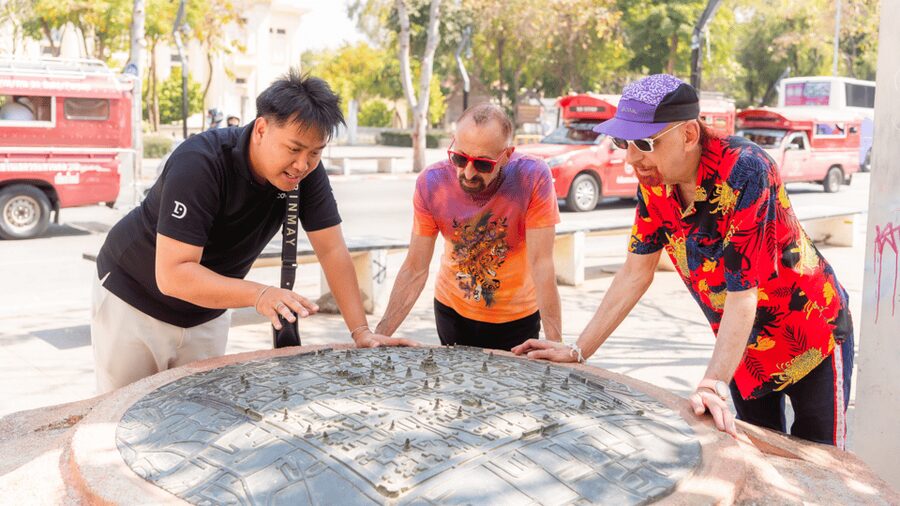
Book it if you want the essential old city explained in a small group for a very reasonable price. The best reasons are the well-chosen route, included temple tickets, and the chance to hear about Lanna culture from guides such as Bim, Emmy, Farm, or Amy.
Choose a later departure if heat worries you, and wear modest, comfortable clothing from the start. If you want a private, fully accessible, transport-based tour, this is not the right fit.
For most first-time visitors, though, this is a practical way to begin Chiang Mai. It gives you the names, stories, and visual details you need to appreciate the old city more fully during the rest of your stay.
FAQ
How long does the Chiang Mai walking tour last?
The guided experience lasts about 2.5 hours, including visits to the Three Kings Monument, Wat Phra Singh, and Wat Chedi Luang, plus the walks between them.
Where does the tour begin?
It begins at the Three Kings Monument in Chiang Mai’s old city. Your guide will be waiting there, and you should arrive on time.
Where does the tour finish?
The tour finishes at Wat Chedi Luang. Hotel drop-off is not included.
Which temples are visited?
The route includes Wat Phra Singh and Wat Chedi Luang. The opening stop is the Three Kings Monument.
What languages are available?
The live tour guide can conduct the experience in English or Thai.
Are temple entrance fees included?
Yes. All ticket entrance fees are included, along with water, tour insurance, and the English-speaking tour guide.
What should I wear?
Wear comfortable clothing and shoes. Shorts and short skirts are not allowed, so choose modest clothing suitable for temple visits.
Newest history tours we have reviewed in Thailand
- 1 Day Sukhothai Historical Park from Chiang Mai Private Tour★ 5.0 · 29 reviews
- Full Day Cycling tour to Sukhothai Historical Park★ 5.0 · 163 reviews
- Full Day Sukhothai Historical Park Tour★ 5.0 · 96 reviews
- Full-Day Historical Park and Countryside Tour in Sukhothai★ 5.0 · 27 reviews
- Private tour to Ayutthaya and Boat Tour Heritage Site★ 5.0 · 28 reviews
- Bangkok Heritage Highlights: Grand Palace & Three Temples Tour★ 4.5 · 52 reviews
- Private Tour to Ayutthaya, World Heritage Site with Boat Tour★ 5.0 · 55 reviews
- River Kwai Day Tour from Bangkok: History, Scenic Views & Culture★ 4.5 · 36 reviews
Local Culture & Traditions Tours, compared.

Amsterdam Food and Cultural Tour with Tastings
Read our review →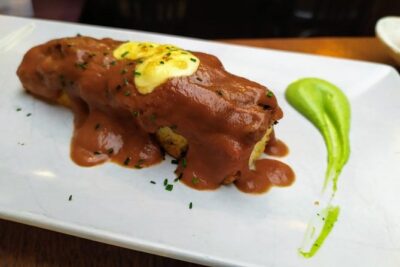
Sevilla Food Tour: Tapas, Wine, History & Traditions
Read our review →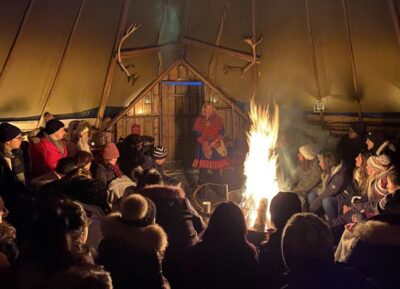
Tromsø: Reindeer Camp and Sami Cultural Tour with Lunch
Read our review →
Half Day Dominican Republic Cultural Tour : Small Group
Read our review →
Ultimate Melbourne Walking Tour: History, Laneways & Culture
Read our review →
Tromsø: Sámi Reindeer Sledding and Sami Cultural Tour
Read our review →
Kyoto Gion: 2-Hour Geisha Culture & History Walking Tour
Read our review →
Marrakech Historical and Cultural Tour – Half Day City Tour
Read our review →Browse the lists this tour appears in