
Review · NEW ORLEANS HISTORY TOURS
New Orleans Small-Group Haunted History Carriage Tour
New Orleans keeps its darkest stories tucked behind pretty iron balconies and candlelit courtyards. On this one-hour mule-drawn carriage ride, you roll through the French Quarter while a licensed guide connects fires, floods, epidemics, murders, and strange sightings to the buildings around you.
I like two things here: the small eight-person limit, which gives you a better chance to hear the guide, and the old-fashioned pace. Guides such as Matt, Lemen, Trish, and Charles have each brought strong personalities to the route. The main drawback is that a carriage ride can be noisy, and a dull or hard-to-hear guide can make the hour feel long.
Key things to know before booking
- The group is capped at eight people, a useful size for an evening history tour.
- You pass major French Quarter landmarks, including Jackson Square, St. Louis Cathedral, Napoleon House, and the LaLaurie Mansion.
- The stories mix documented events with ghost lore, so this is part history lesson and part spooky entertainment.
- The carriage returns to Jackson Square, making it easy to pair with dinner or a walk afterward.
- Arrive 15 minutes early, since late arrivals miss the ride and do not receive a refund.
- Rain may not cancel the tour, but lightning, flooding, or other poor conditions can.
A mule-drawn time machine at Jackson Square
Meet at 700 Decatur Street, opposite Jackson Square, in the heart of the French Quarter. The carriage stand is easy to find, but give yourself extra time to reach it. The tour requires everyone to arrive 15 minutes before departure, and late arrivals are not given a second chance.
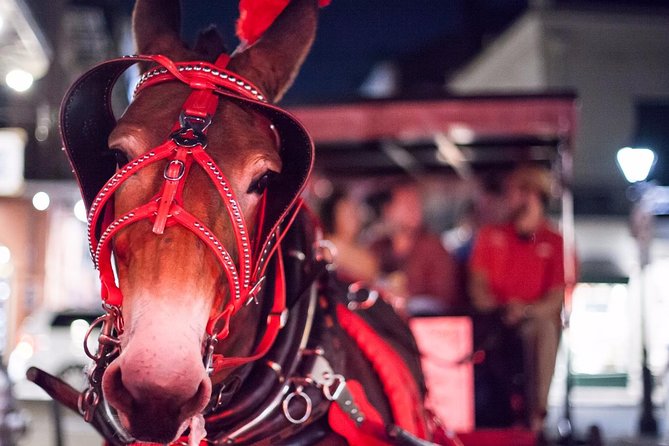
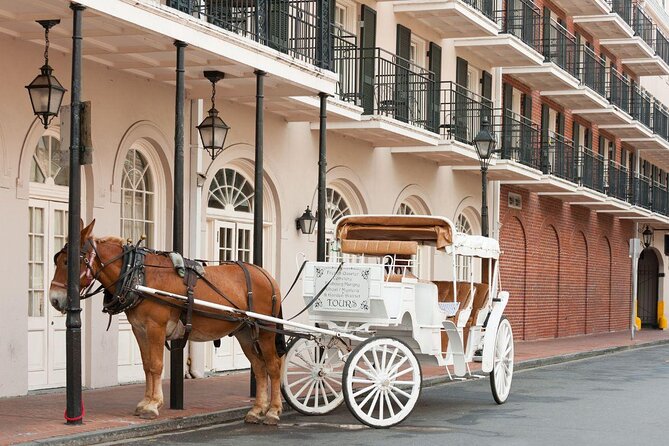
The covered carriage is more than a way to get around. It sets the mood before the first ghost story begins. At a mule’s pace, the French Quarter opens slowly: balconies pass overhead, old facades slip by, and the sounds of nightlife mix with the guide’s narration.
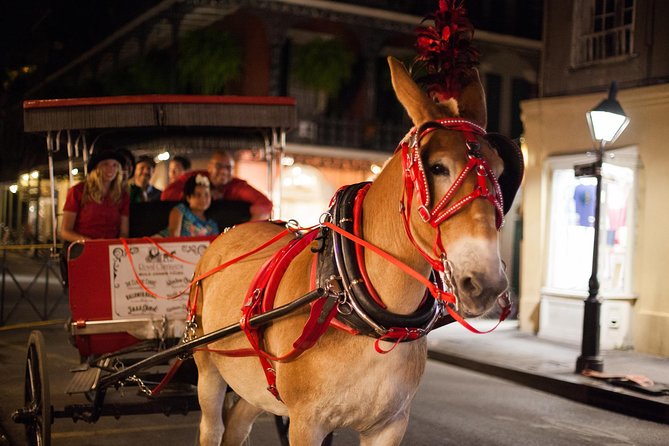
The carriage holds no more than eight people. That matters in a city where street noise, traffic, and nearby carriages can swallow a soft voice. Sitting closer to the guide should help, though you still want to pay attention to where you sit. One unhappy passenger could not hear well from the back, especially with other carriages nearby.
This is not a private ride. You share the carriage with other ticket holders, and the atmosphere depends partly on the group. A quiet group lets the stories land. A loud group can turn the ride into a frustrating hour, so choose a departure time carefully if you have flexibility.
More Dark History and Haunted Tours in New Orleans
- New Orleans Haunted History Ghost Tour
★ 4.5 · 2,084 reviews - New Orleans Historic Cemetery Walking Tour
★ 5.0 · 175 reviews - Haunted Drunken History Tour from New Orleans
★ 5.0 · 135 reviews
The French Quarter’s pleasant streets and grim past
The opening portion covers the founding of New Orleans and the forces that shaped its oldest neighborhood. Your guide uses the streets around you as a backdrop, pointing out the connection between the city’s buildings and its past.
The appeal is the contrast. You are not hearing dark tales in an empty field or a staged theater. You are passing old homes, ironwork, churches, and bars while learning how fires, floods, disease, and violence affected people who lived here.
The tour’s history reaches beyond ghost stories. You hear about devastating fires and floods, contagious epidemics, murders, medical experiments, torture, and lost love. Some stories come from police records and history books, while other parts concern spirits and reported hauntings.
That blend will suit you if you like folklore with a historical base. It may disappoint you if you want a nonstop ghost hunt. One important criticism of the experience is that the tour can feel more like a French Quarter history ride with spooky material than a full ghost tour.
The tone is generally appropriate for a broad audience, but the subject matter is not light. Tales of death, abuse, disease, and human cruelty are part of the route. Families with older children may enjoy it, but parents should decide if those themes fit their group.
St. Louis Cathedral and the view from the street
The carriage passes St. Louis Cathedral, the famous church beside Jackson Square. It is described as the oldest continuously active cathedral in the United States, and it gives the guide a strong way to explain the age and religious history of the Quarter.
You do not tour the cathedral interior. This is a passing view from the carriage, so think of it as a landmark within the larger story rather than a formal church visit.
Jackson Square itself is a useful starting and ending point. It puts you in the middle of the French Quarter, close to streets, restaurants, and evening activity. The ride does not include hotel pickup, parking, food, or drinks, so plan those parts yourself.
At night, the square and surrounding streets provide atmosphere that a daytime carriage ride would miss. Lights catch on balconies and facades, and the city’s social energy forms a lively backdrop. That same activity can create the tour’s biggest practical problem: traffic and street noise.
Napoleon House and the slower route through old streets
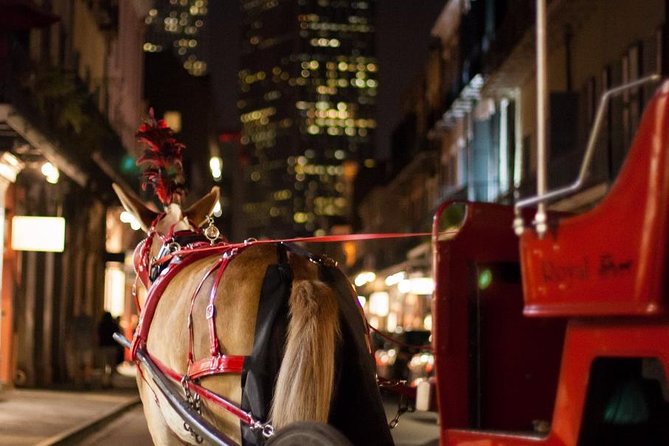
Napoleon House is another landmark along the route. The carriage does not make this a long sightseeing stop. You see it as part of the ride and hear how the surrounding French Quarter fits into the city’s larger story.
The slow pace is the point. You are not trying to cover a large part of New Orleans in an hour. Instead, you get time to look up at buildings and notice details you might miss while walking quickly between restaurants and bars.
I find this format best for your first evening in the French Quarter, when you want an orientation without a formal lecture hall. It also works late in a visit, when you already know the streets and want a different view of them.
Still, keep your expectations in check. You will not stop at every landmark, and you should not expect long periods for photography. The carriage continues along its route, with the guide talking as you pass.
More Dark History and Haunted Tours in the USA
- Savannah History and Haunts Candlelit Ghost Walking Tour
★ 5.0 · 3,235 reviews - Genteel and Bard’s Savannah Dark History and Ghost Encounter Walking Tour
★ 5.0 · 1,546 reviews - The Historic Galveston Ghost Tour
★ 5.0 · 1,524 reviews - Wicked Awesome Tours: Witch Trial History and Salem Haunts!
★ 5.0 · 1,032 reviews
The LaLaurie Mansion and the tour’s darkest chapter
The LaLaurie Mansion is the route’s signature haunted address. Fans of American Horror Story may recognize it, but the guide also explains how the television version differs from the documented story.
This is one of the strongest parts of the experience because it gives you a clear place, a real building, and a difficult history to consider. The house is not simply presented as a spooky backdrop. The narration connects the popular legend with what is known about events inside.
The mansion is viewed from outside. You do not enter it, and the tour does not claim to prove paranormal activity. Instead, your guide explains the story and the reports of spirits associated with the building.
That distinction is useful. New Orleans ghost lore works best when you can separate documented events from later legend. Guides such as Lemen and Matt have been praised for adding facts, photographs, and extra context to their storytelling. A strong guide can make this stop memorable without relying only on theatrical scares.
How the guides shape the experience
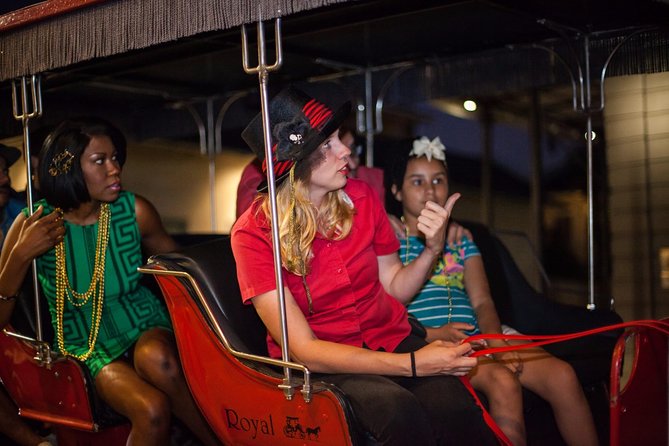
The carriage and route are fixed, but the guide makes the evening. The best guides keep talking, add humor, explain the city’s past clearly, and adjust their delivery so people in the carriage can follow.
Matt has been described as a lively storyteller who can fill the hour with facts and color. Lemen has brought photographs and careful research to the narration. Trish has been praised for an entertaining, personable style, while Michael has provided a friendly introduction to French Quarter history. Other departures may feature Charles, Steph, or another licensed guide.
Names and styles can change from one departure to the next. That is worth remembering before you book. The overall experience is not a recorded program, so your guide’s voice, energy, and pacing matter a great deal.
Most accounts of the ride praise guides who explain the city as well as the ghost stories. At the same time, one low-rated experience found a monotone guide difficult to understand. That is not a reason to dismiss the tour, but it is a fair warning: storytelling quality is less predictable than the route itself.
You can help by arriving early and choosing a seat where you can hear. If people in your carriage talk over the guide, the small group size will not solve the problem. The operator may not be able to control every passenger.
A close look at the mule-drawn format
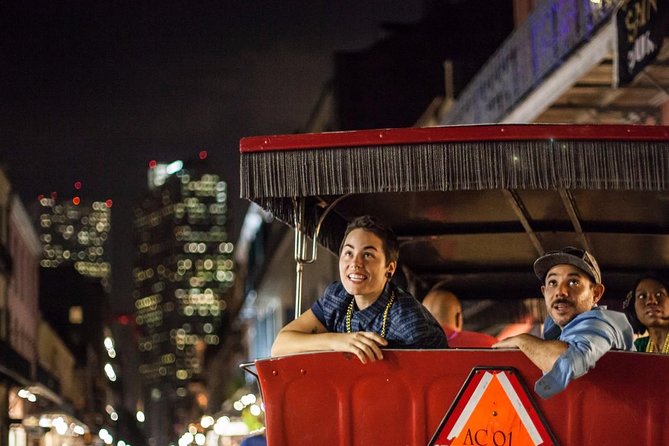
The carriage provides a gentle, old-style way to see the Quarter. You cover the streets at a mule’s pace, which gives the ride a sense of place that a faster vehicle would lose.
It also means the ride is not efficient transportation. You are paying for atmosphere, narration, and the carriage experience, not for the number of blocks covered. If you mainly want to get from one sight to another, walking will give you more freedom and may feel more useful.
The carriage is covered, which helps in changing weather. Tours can operate in rain, so bring suitable clothing rather than assuming poor weather will cancel the ride. Lightning and flooding can force a cancellation, in which case you are offered a different date or a full refund.
Cold weather can affect comfort, too. One departure had blankets available, which was a welcome touch. Conditions vary, so dress for the forecast and remember that sitting still outdoors can feel colder than walking.
Is $65 a fair price for one hour?
At $65 per person, this is not a cheap way to see the French Quarter. The ride lasts about an hour, and food, drinks, parking, and hotel transportation are not included.
The price makes more sense if you value three things: the small group, the licensed guide, and the carriage itself. You are buying a planned evening activity with a clear route and a live storyteller. It can also save you the effort of sorting through the Quarter’s many ghost tours and deciding which buildings to visit.
The value drops if you want a long tour, a private carriage, or constant supernatural thrills. A few people found one hour too short for the price, and another felt walking independently would have offered more freedom.
I would view it as a special evening experience rather than basic sightseeing. The carriage, the nighttime setting, and the guide’s delivery are the main products. When all three work well, the price feels reasonable. If the guide is flat or the street noise is heavy, the value is harder to defend.
Who will enjoy this carriage tour most?
I would recommend it to you if you enjoy local stories, old buildings, and a little theatrical fright without a haunted-house production. It suits couples, families with older children, friends, and solo visitors who want a simple evening plan in the French Quarter.
It is especially useful on a first visit because you get an introduction to the Quarter’s landmarks and major themes. It also suits repeat visitors. Some people who have been coming to New Orleans for years still find new material in the darker stories.
You may want another option if you need a highly active tour, dislike animal-drawn transport, or want a serious historical lecture with long stops. The ride is easygoing and slow. Its success depends on storytelling rather than physical activity.
It may also be a poor match if you are sensitive to disturbing subjects. Fires, epidemics, murder, torture, and death are not side notes here. They form the backbone of the darker history.
Practical advice for a better ride
Book with the weather in mind, especially during periods when lightning or flooding could affect the streets. Since rain does not always stop the tour, bring clothing that works in wet conditions.
Arrive at least 15 minutes early at 700 Decatur Street. Do not treat the meeting time as a suggestion. Missing the carriage means missing the tour, with no second ride and no refund.
If you have a choice, try to sit where the guide is easiest to hear. This matters more than getting the perfect view. Other carriages, street traffic, and talkative passengers can make the narration hard to follow.
Leave room in your evening for a meal or a walk afterward. The tour ends back at the meeting point near Jackson Square, so you can continue exploring without arranging a separate ride.
Cancellation is free up to 24 hours before the start time. Changes or cancellations within 24 hours are not refunded. If poor weather cancels the activity, you receive the choice of another date or a full refund.
Should you book it?
Book this tour if you want a small-group evening ride that combines French Quarter landmarks with fires, floods, epidemics, famous haunted buildings, and local ghost lore. The mule-drawn carriage gives the hour a memorable shape, and a strong guide can make the city’s past feel close.
Skip it if you want a long, intensely frightening ghost tour or a low-cost way to sightsee. The ride is brief, street noise is possible, and the guide’s personality matters.
For most visitors, I would book it early in a New Orleans stay, then use the stories and landmarks as a map for later walks. The best reason to go is not the promise of proof from beyond the grave. It is the chance to see the French Quarter slowly while someone explains why so many of its beautiful buildings carry unsettling stories.
FAQ
Where does the New Orleans haunted carriage tour begin?
The tour begins at the carriage stand at 700 Decatur Street, opposite Jackson Square in the French Quarter.
How long does the carriage tour last?
The experience lasts about one hour and returns to the meeting point at Jackson Square.
How many people can join the carriage ride?
The carriage holds a maximum of eight travelers, creating a small-group experience.
What landmarks will I see?
The route passes Jackson Square, St. Louis Cathedral, Napoleon House, the LaLaurie Mansion, and other French Quarter streets and buildings.
Is the tour suitable for children?
Children may participate but must be accompanied by an adult. The stories include death, disease, murder, torture, and other disturbing historical subjects.
Does the tour operate in the rain?
Tours can operate in favorable rainy weather, so you should dress appropriately. Lightning, flooding, or other poor conditions may cause cancellation.
What happens if I need to cancel?
You can cancel at least 24 hours before the start time for a full refund. Cancellations or changes made within 24 hours are not refunded.
More Small-Group History Tours in the USA
- Boston: Freedom Trail History Small Group Walking Tour
★ 5.0 · 6,450 reviews - Hidden Alleyways and Historic Sites Small-Group Walking Tour
★ 5.0 · 2,335 reviews - Boston: Freedom Trail History Small Group Walking Tour
★ 4.9 · 1,590 reviews - Boston Freedom Trail History Pub Crawl Small-Group Tour
★ 5.0 · 996 reviews
Newest history tours we have reviewed in the USA
- Nashville: Belle Meade Historic Mansion Tour★ 4.8 · 63 reviews
- Beaufort: Local History and Film Sites Tour by golf cart★ 4.9 · 102 reviews
- Boston: Guided Seafood Tasting and History Tour★ 4.9 · 90 reviews
- Beaufort: Gullah Heritage Tour★ 4.8 · 26 reviews
- Beaufort: Historic City Tour by Bus★ 4.9 · 228 reviews
- Austin: Downtown Austin Haunted History Tour★ 4.4 · 31 reviews
- Austin: Morning History Walking Tour of Downtown Austin★ 4.9 · 71 reviews
- Atlanta: Beltline Food, Street Art, and History Walking Tour★ 5.0 · 47 reviews
Dark History & Haunted Tours, compared.
Savannah History and Haunts Candlelit Ghost Walking Tour
Read our review →
Genteel and Bard’s Savannah Dark History and Ghost Encounter Walking Tour
Read our review →
Shadows of York: Ghost Walk and Horrible History.
Read our review →
Browse the lists this tour appears in