

Review · NEW DELHI HISTORY TOURS
Old Delhi Food-Spice Market-Temples Tour Soon Featured on NETFLIX
Old Delhi hits you with food first: hot samosas, sweet jalebi, spice dust, frying dough, and the clang of Chandni Chowk traffic. This three-hour tour pairs those tastes with temples, a communal Sikh kitchen, Asia’s largest spice market, and a rooftop view that gives you a needed pause above the maze.
I like the careful food planning, with JD taking you to tried and tested vendors rather than leaving you to guess which stall is a wise choice. I also like the cultural range: you enter a Sikh gurdwara, see a Jain temple, pass the 370-year-old mosque, and learn how several faiths share this tight part of Delhi.
The main consideration is pace. You cover a lot in about three hours, mostly on foot, through crowded lanes and markets. Shoes come off at temples, feet may meet dusty floors, and the food is plentiful. Wear easy shoes, dress modestly, and arrive hungry.
Key points at a glance
- JD’s personal guiding: Jandee Bindra, usually called JD, leads the walk with clear directions, humor, local knowledge, and help with photos.
- A full Old Delhi mix: Food, religion, trade, architecture, street life, and a rickshaw ride all fit into one compact outing.
- Carefully selected tastings: Expect samosa, jalebi, parantha, roti, daal, gulab jamun, chai or lassi, coffee, and mineral water.
- The Sikh langar kitchen: At Gurudwara Sis Ganj Sahib, you see a free communal meal operation that feeds more than 15,000 people each day.
- A rooftop over Khari Baoli: The secret rooftop and spice-market views offer one of the tour’s best photo stops.
- Small-group format: The maximum is 12 people, which matters in narrow lanes and during temple visits.
Why this tour works for a first look at Old Delhi
Old Delhi is easier to enjoy when someone else handles the route. Chandni Chowk’s lanes can feel confusing even after you have walked them once, and the most interesting food shops, religious buildings, and rooftop views are not always obvious from the main road.
This tour gives you a useful map of the area through several senses. You taste the food, smell the spices, watch a communal kitchen at work, hear the market traffic, and see the old city from above. It is not just a snack walk and not just a sightseeing tour. It is a short, tightly packed introduction to how Old Delhi functions.
The group limit of 12 is helpful here. A large coach would be clumsy in these lanes, while a small group allows JD to keep the route moving and answer questions. If you are traveling alone, this setup can also make the area feel less daunting without turning the outing into a private tour.
The guide makes a real difference. JD is praised for being punctual, responsive on WhatsApp, friendly, and willing to help with photos. He also offers practical advice on negotiating, saving money, eating safely, and getting around Delhi after the tour. That extra guidance can be as useful as the formal sightseeing, especially early in your stay.
More Architecture and Landmark Tours in India
- Old Goa: Walking Tour of Heritage Churches
★ 4.9 · 81 reviews - World heritage Somnathpur sculptures and Talakadu temple mystery
★ 5.0 · 79 reviews - The Hipster Chandigarh Architecture History Tour
★ 5.0 · 54 reviews
Starting at the Red Fort and entering Chandni Chowk
The meeting point is at 892, Lajpat Rai Market, near the Red Fort in Chandni Chowk. The Red Fort is viewed from outside rather than explored inside, so you should think of it as an orientation point and photo stop, not a full fort visit.
That choice makes sense for a three-hour food and culture walk. The fort gives you a clear sense of the scale and age of Old Delhi, while the tour spends its time in the streets where daily life continues. If you want a full visit to the Red Fort, plan that separately.
From there, the route heads into the Chandni Chowk area. The market can be loud, crowded, and difficult to read at first. Shops spill into the lanes, rickshaws thread through small gaps, and different streets tend to gather different kinds of goods. JD’s job here is not only to show you sights but to keep you oriented.
Bring a camera if you like street photography, but stay aware of your surroundings. The tour includes time for photos, and JD is known for taking photos and videos for the people in his group. Keep your phone and valuables secure in the crowd.
Gurudwara Sis Ganj Sahib and the giant langar kitchen
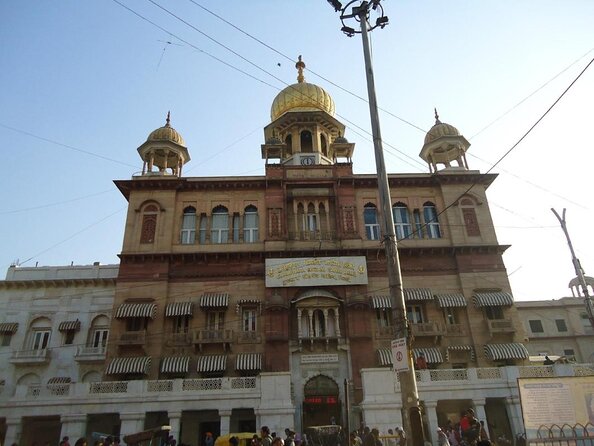
One of the strongest parts of the route is Gurudwara Sis Ganj Sahib, a Sikh place of worship in the Chandni Chowk area. You learn about Sikh traditions and enter the communal kitchen, known as the langar hall.
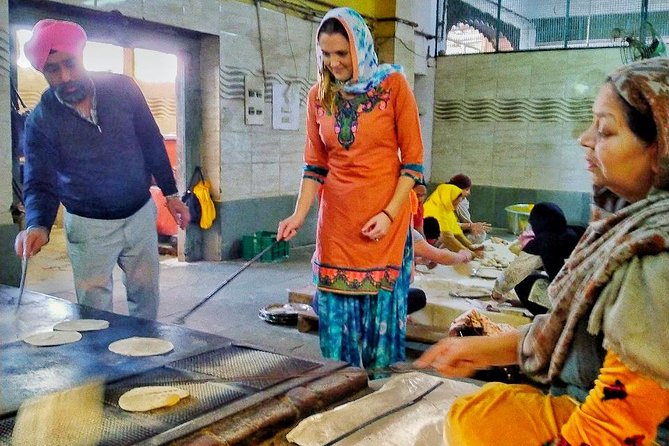
The kitchen is not a staged demonstration. It is part of a working system that provides free food to more than 15,000 people each day. You may see people preparing dough, rolling bread, or helping with the meal service. That practical, generous side of Sikh religious life gives the visit real weight.
You will need to follow temple customs. Shoes and socks come off, and you walk barefoot inside. Women are asked to dress conservatively, and a scarf is a sensible item to carry. Scarves may be available to borrow at temples, but bringing your own is easier.
This stop also gives the tour a needed change of rhythm. After the noise and food stalls, the gurdwara offers a place to slow down and watch people work together. Be respectful with photographs and follow JD’s instructions about where to stand and what to do.
The food stops: what you are likely to taste
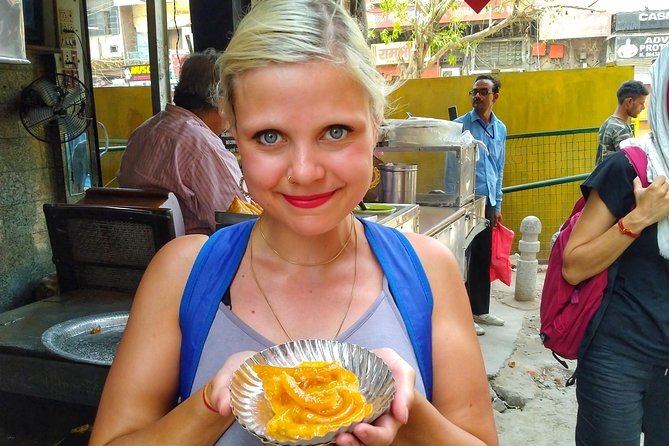
Come with a serious appetite. The included tasting menu may feature samosa, jalebi, parantha, roti, daal, gulab jamun, chai, lassi, coffee, and mineral water. The exact order or selection can vary, but the point is variety rather than one large meal.
Samosa gives you a crisp, savory start. Jalebi brings a sticky, sugary contrast. Parantha and roti show the importance of flatbreads in North Indian food, while daal provides a softer, more filling dish. Gulab jamun finishes things on a sweet note.
You also learn about ingredients and the background of each food. That matters because Old Delhi food is not simply a list of items to consume. The dishes connect to regional cooking, religion, trade, and the busy food culture of the neighborhood.
Food safety is one of the main reasons to book this with a guide rather than wander randomly. JD says he selects and tests the stops, and the route avoids some of the common risks associated with uncertain street food, such as questionable ice. No food tour can promise that every stomach will react perfectly, but the careful vendor selection should give cautious eaters more confidence.
The amount of food may be too much if you have already eaten breakfast or lunch. Some people may also find the repeated use of similar dishes less exciting than a menu with wider range. Tell JD about dietary needs or dislikes before ordering, but do not assume every substitution is possible.
Same streets, a different century:
- Fontainhas Heritage Walk by Make It Happen
★ 5.0 · 2,834 reviews - The Great Indian Food Tour: Old Delhi Food and Heritage Walk
★ 5.0 · 1,698 reviews - Old Goa Heritage Walk by Make It Happen
★ 5.0 · 797 reviews - Old Delhi Food, Heritage&Cultural Walk with Rickshaw ride to Masterji Kee Haveli
★ 5.0 · 742 reviews
Asia’s largest spice market at Khari Baoli
Khari Baoli is one of the tour’s main anchors. It is known as Asia’s largest spice market, and the visit shifts your attention from prepared food to the raw materials behind it.
Here, you can expect sacks, colors, smells, and the constant movement of a major trading area. The experience is more about seeing how spices are sold and transported than browsing a polished food hall. If you have a sensitive nose, the concentrated aromas may be strong.
The market also helps explain why Old Delhi developed as a center of food and trade. Spices are not just decoration on a plate. They are valuable goods moving through a dense commercial district, and the market makes that fact visible.
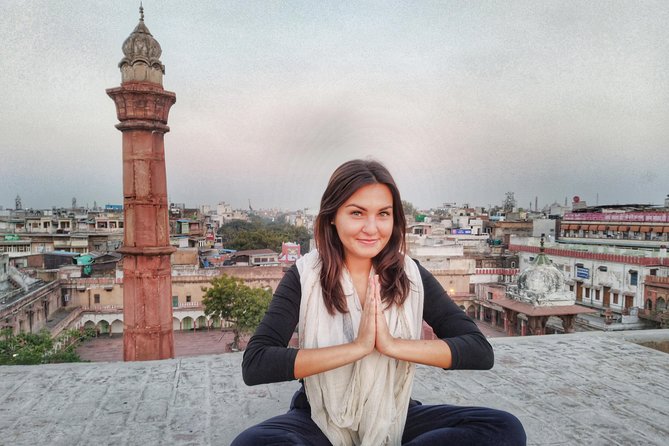
The route includes a secret spice mansion and a rooftop view near the spice market. The rooftop is a highlight because it lets you look across the packed roofs and lanes after seeing them at street level. It is a calmer place for photographs and a chance to understand the area’s layout.
Rooftop access can involve stairs and uneven surfaces. The tour information does not promise a lift, so wear comfortable shoes and take care on the way up. The view is worth treating as a pause, not a quick photo sprint.
Jain temple, mosque, and Old Delhi’s religious mix
The Digambar Jain Temple adds another side of Delhi’s religious life. JD explains the temple and its traditions, giving you a better sense of how different communities have shaped the same district.
The tour also points out a 370-year-old mosque, though this is not described as a full mosque tour. Together with the Sikh gurdwara and Jain temple, these stops show why Old Delhi cannot be reduced to one faith or one period of history.
Temple etiquette matters. Expect to remove your shoes and socks and walk barefoot. Comfortable footwear that slips on and off easily is more useful than fashion shoes, and hand sanitizer or wet wipes will be welcome afterward.
This part of the tour may be especially valuable if you want more than food. You are not simply moving from one snack counter to the next. You are learning how worship, charity, trade, and neighborhood life sit side by side in a very small area.
Chandni Chowk, Gali Paranthe Wali, and the rickshaw ride
Chandni Chowk is the sensory center of the tour. Its lanes are crowded and chaotic, but that is also why a guide helps. You can focus on what is around you instead of worrying about which turn will lead back to the main road.
Gali Paranthe Wali is associated with stuffed flatbreads and gives the food walk a clear local focus. The lane is part of the larger Chandni Chowk experience, where eating, shopping, religious visits, and transport all overlap.
The rickshaw ride adds a short burst of motion at the end. You see the market from a lower, faster viewpoint as the driver works through the crowded streets. It is practical transport and a memorable part of the outing, though you should not expect a long scenic ride.
The lanes can be hard on anyone who dislikes crowds, noise, or close traffic. This is not a quiet heritage walk. It is better for you if you enjoy active city streets and can accept a little disorder as part of the setting.
Price, timing, and who gets the best value
The cost is $49.10 per person, and the tour runs for about three hours. Food, Indian drinks, mineral water, WiFi on board, the rickshaw ride, and the guide are included. Tips are extra.
I consider that fair value if you want a guided introduction rather than a simple restaurant meal. You are paying for route planning, food selection, cultural explanation, temple access, market orientation, and the rooftop stop. Recreating all of that alone would require research and still might leave you unsure where to go.
The value is strongest at the start of a Delhi visit. JD provides tips on bargaining, saving money, places to eat, and getting around. Those suggestions can help you make better choices during the rest of your stay.
The tour is booked, on average, 19 days ahead, so reserve before your Delhi dates are fixed if possible. The experience requires a minimum number of people and good weather. If it is canceled for either reason, you are offered another date or a full refund.
You can cancel for a full refund up to 24 hours before the start time. Cancellations or changes inside that window are not refunded or accepted.
Practical advice before you go
Use this short checklist:
- Eat lightly beforehand, or arrive on an empty stomach.
- Wear comfortable shoes that are easy to remove.
- Bring hand sanitizer, wet wipes, and a napkin.
- Carry a scarf and dress conservatively for religious sites.
- Bring a camera, but keep it secure in crowded lanes.
- Expect to walk, climb to a rooftop, and go barefoot inside temples.
- Tell JD about food concerns before the tastings begin.
- Keep some flexibility in your schedule because Old Delhi traffic and crowds can affect the pace.
The tour ends back at the meeting point. It is near public transportation, and JD has helped people continue to their next stop using the Delhi Metro. Still, keep your onward plans sensible rather than booking a tight connection.
Should you book the Old Delhi food and temples tour?
Book it if you want Old Delhi explained by a local guide, not just photographed from a car. The strongest reasons are JD’s personal approach, the careful food choices, the Sikh communal kitchen, the spice-market rooftop, and the way the tour joins food with religion and trade.
It is a particularly good choice for solo visitors, first-time visitors to Delhi, cautious street-food eaters, and anyone who wants practical local advice. It also suits people who enjoy taking photos and hearing the story behind what they are seeing.
Skip it if you want a slow architectural tour, a quiet market, or complete control over every food stop. Three hours goes quickly, and the route is busy and physically active.
For most people who want a first taste of Old Delhi, the $49.10 price is justified. Book early, leave room for a large meal’s worth of snacks, and bring shoes and clothing suited to temple visits.
FAQ
How long is the Old Delhi food and temples tour?
The experience lasts approximately three hours.
Where does the tour start?
It starts at 892, Lajpat Rai Market, Chandni Chowk, Delhi, 110006, India.
Where does the tour end?
The activity ends back at the meeting point.
Who leads the tour?
The guide is Jandee Bindra, commonly called JD.
How many people can join?
The maximum group size is 12 people.
What food is included?
Included tastings may include jalebi, samosa, parantha, roti, daal, and gulab jamun.
Are drinks included?
Yes. Indian beverages such as lassi or chai, along with coffee, tea, and mineral water, are included.
Does the tour include a rickshaw ride?
Yes. The itinerary includes a rickshaw ride through Old Delhi’s market area.
Do I need to remove my shoes?
Yes. At the temples, you must remove your shoes and socks and walk barefoot inside.
What is the cancellation policy?
You can cancel up to 24 hours before the start time for a full refund. Cancellations or changes made less than 24 hours before the start time are not refunded or accepted.
More Market Tours in India
- Private Heritage Walking Tour in Jaisalmer Fort and Old Bazaar
★ 5.0 · 306 reviews - Bengaluru Pete City Market Half-Day Walking Tour
★ 5.0 · 163 reviews - Experience Bangalore – City Tour, Authentic Food & market (Food/Culture/History)
★ 5.0 · 156 reviews - Private Excursion to Floating Market and Ayutthaya World Heritage
★ 5.0 · 515 reviews
Newest history tours we have reviewed in India
- Agra Fort: Guided UNESCO Heritage Walking Tour★ 4.9 · 21 reviews
- World heritage Ahmedabad city tour in private car with guide and lunch★ 5.0 · 44 reviews
- Private Elephanta Caves UNESCO World Heritage Site Tour★ 5.0 · 34 reviews
- Mumbai: South Mumbai Heritage Walking Guided Tour★ 4.5 · 69 reviews
- Hill-station & Heritage: Lonavala & Karla Caves Tour from Mumbai★ 5.0 · 60 reviews
- Best South Mumbai Heritage Walk★ 5.0 · 122 reviews
- Heritage Walk: Recommended by Gigi Hadid as a must-do in Mumbai★ 5.0 · 122 reviews
- The Cultural And Historical Walking Tour in Margao★ 5.0 · 280 reviews
Architecture & Landmark Tours, compared.

St. Mark’s Basilica Guided Tour & VR History Intro
Read our review →
Venice’s Best: Basilica, Doge’s Palace, Gondola & History Gallery
Read our review →
Córdoba: Skip-the-Line Great Mosque-Cathedral History Tour
Read our review →
Pantheon Elite Guided Tour – Rome’s Iconic Ancient Temple
Read our review →
Abu Dhabi Grand Mosque, Palace, and Heritage Village
Read our review →
Chicago in a Day: Food, History & Architecture Walking Tour
Read our review →

Colosseum Special Access Tour, with Ancient Temples & Tombs
Read our review →Browse the lists this tour appears in