
Review · INDIA HISTORY TOURS
The Hipster Chandigarh Architecture History Tour
Chandigarh makes more sense when you see it with someone who actually grew up inside its plan. Rusty spent 24 years in Pierre Jeanneret-designed public housing, studied in schools by Jeanneret, and worked in buildings designed by Maxwell Fry. His two-day tour connects the famous concrete forms with the daily life built around them.
I like the rare access to working public housing and the chance to enter major buildings across the city, rather than only photographing them from outside. I also like the flexible, personal style: Rusty adjusts the pace, makes room for photographs, and adds inexpensive snack stops. The main drawback is the packed schedule. If you want a slow city break, two full days of architecture and planning may feel like work.
Key points at a glance
- A local guide with a personal connection: Rusty is a third-generation Chandigarh resident, journalist, and architecture guide.
- Major Corbusier sites included: Visit the Capitol Complex, Open Hand Monument, Tower of Shadows, Sukhna Lake, Sector 17, and Lake Club.
- Pierre Jeanneret receives proper attention: See Gandhi Bhawan, Museum Maison Jeanneret, and public housing still used today.
- The tour goes beyond concrete: Museums, food stops, university buildings, city planning, and social history all become part of the story.
- Transport and admission are covered: Pickup, air-conditioned vehicle use, parking, waiting time, entry fees, and photography charges are included.
- Plan for two substantial days: The tour begins at 9:00 am, and the maximum group size is 41 people.
Why Chandigarh Needs More Than a Quick Photo Stop
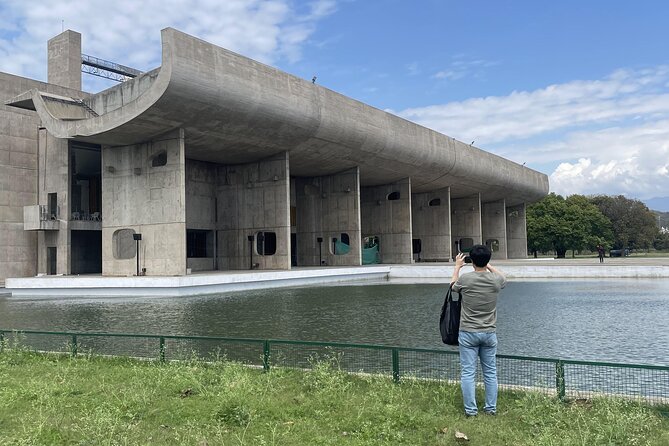
Chandigarh is one of the few cities where urban planning is the main attraction. Le Corbusier’s Capitol Complex gets the headlines, but the city’s real character also appears in shaded walkways, university buildings, markets, housing blocks, lakes, and small design choices that shape ordinary life.
That is the useful idea behind this tour. Rusty does not treat Chandigarh as a row of famous buildings. He explains how the city was planned, who designed different parts of it, and how the grand modernist vision works, or fails to work, in daily use.
His own background gives the tour a clear advantage. He lived in Corbusier-era public social housing, studied in Pierre Jeanneret’s schools, and later worked in offices designed by Maxwell Fry. That personal connection does not replace architectural facts, but it helps you understand these places as functioning parts of a city rather than museum pieces.
You should also expect humor. Rusty keeps the tone light, politically neutral, and suitable for families, couples, students, architecture fans, and visiting officials. He also knows when to slow down for serious photography, which matters at a site where every angle can look different.
More Architecture and Landmark Tours in India
- Old Delhi Food-Spice Market-Temples Tour Soon Featured on NETFLIX
★ 5.0 · 304 reviews - Old Goa: Walking Tour of Heritage Churches
★ 4.9 · 81 reviews - World heritage Somnathpur sculptures and Talakadu temple mystery
★ 5.0 · 79 reviews
Day One: Corbusier’s Capitol and the Buildings Around It
The first day is the most concentrated architectural section of the experience. You begin at 9:00 am and move through major public buildings, university sites, museums, and carefully planned open spaces.
Capitol Complex: Concrete at a Monumental Scale
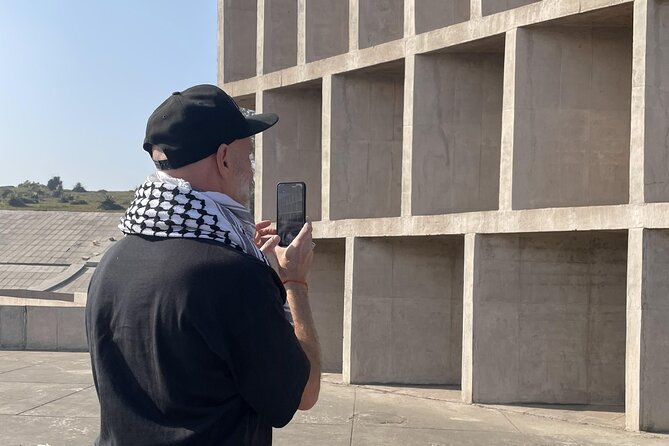
The Capitol Complex is the natural starting point. This UNESCO World Heritage site contains the Secretariat, Assembly Hall, and Open Hand Monument, all built around Corbusier’s bold use of concrete, shadow, geometry, and monumental scale.
With guided access, you get more than an exterior view. Rusty explains how the complex was meant to represent the ideals of a new Indian city and how its buildings relate to government, public life, and power.
Allow yourself time to look up and out. The proportions can feel overwhelming, especially when you compare the vast public spaces with the human figures moving through them. This is one of the places where a guide makes a real difference, since the buildings are visually striking but not always easy to interpret on your own.
The scheduled visit lasts about an hour, and admission is included. Because this is a major government complex, access and timing can be affected by local conditions. The tour has previously adapted when a public holiday closed key sites, so flexibility is useful.
Le Corbusier Centre: The Working Side of the Project
The Le Corbusier Centre occupies the old architects’ building and now serves as a museum and memorial center. The visit lasts about 50 minutes and adds practical detail to the grand scale of the Capitol Complex.
You can expect visual demonstrations about the early effort to create naturally cooled, sustainable buildings. That makes this stop especially useful if you want to understand how Chandigarh’s designers responded to heat, sun, ventilation, and local conditions.
The center gives you a change of pace. Instead of looking at a finished monument, you see more of the planning and design process behind the city. Photography fees are covered as part of the tour.
Same streets, a different century:
- Fontainhas Heritage Walk by Make It Happen
★ 5.0 · 2,834 reviews - The Great Indian Food Tour: Old Delhi Food and Heritage Walk
★ 5.0 · 1,698 reviews - Old Goa Heritage Walk by Make It Happen
★ 5.0 · 797 reviews - Old Delhi Food, Heritage&Cultural Walk with Rickshaw ride to Masterji Kee Haveli
★ 5.0 · 742 reviews
Gandhi Bhawan and Panjab University
Gandhi Bhawan is one of Chandigarh’s most recognizable structures. Pierre Jeanneret designed it around a distinctive spinning lotus-shaped roof, and the building’s setting within Panjab University gives you a chance to see how modernist architecture was used for education and public culture.
The private guided visit lasts around 30 minutes. It is short, but the building has a strong visual identity and makes a useful comparison with Corbusier’s more severe concrete work.
You also spend about 40 minutes touring Panjab University. This broadens the discussion from single buildings to a full institutional setting. A university is not simply a collection of facades. It needs paths, gathering spaces, classrooms, shade, and a sense of order. Chandigarh’s campus shows how those concerns fit into the city plan.
Chandigarh Architecture Museum: The City in Models and Exhibits
The Chandigarh Architecture Museum is housed in a raw concrete building inspired by Corbusier’s 1965 Zurich Pavilion. Its tubular stairway and three levels of exhibits make it one of the best stops for putting the city’s architecture into sequence.
You can expect rare exhibits and visual material that help explain the city’s modernist beginnings. This is where the separate buildings begin to form a larger picture. The museum also helps if you are new to architectural terms, since seeing plans, objects, and models can make the city easier to read on foot.
The visit lasts about an hour. I would not skip it, even if you are mainly interested in outdoor sites. It gives context to the structures you see later.
Open Hand Monument, Geometric Hill, and the Tower of Shadows
The Open Hand Monument is Chandigarh’s best-known symbol. Corbusier designed it to represent peace and unity, and it also became the city’s signature emblem. The tour gives you close access and about 25 minutes to hear the story behind it.
On a windy day, you might see the hand move. That small detail helps turn an abstract symbol into something physical and memorable.
Nearby, Geometric Hill uses earth mounds and concrete forms as part of the Capitol Complex plan. The visit lasts about 20 minutes and shows Corbusier treating the ground itself as part of the design.
The Tower of Shadows is more technical. This open-air concrete structure was designed as a demonstration building for studying the movement of the sun. In around 15 minutes, Rusty explains how its forms control or filter sunlight.
These three stops work well together. The Open Hand is symbolic, Geometric Hill is sculptural, and the Tower of Shadows is experimental. You see three different sides of Corbusier’s work without needing a long transfer between them.
Museum Maison Jeanneret: The Architect’s Home
Museum Maison Jeanneret is the former home of Pierre Jeanneret, who lived there for 11 years. It was the first house constructed in Chandigarh and now presents Jeanneret’s design ideas through the rooms and domestic details.
This is one of the tour’s most intimate stops. Government buildings can feel remote, but a home shows how an architect handled furniture, space, light, and everyday routines. It also gives Jeanneret a stronger role in the story, rather than treating him as a footnote to Corbusier.
The guided visit takes about 30 minutes. If you enjoy design at a human scale, this may be one of the most rewarding stops on the first day.
Day Two: Water, Commerce, Housing, and Memory
The second day shifts away from the government center. You see how Chandigarh works as a city for daily life, including recreation, shopping, housing, museums, and public memory.
Sukhna Lake: A Planned Escape
Sukhna Lake is a manmade lake designed by Corbusier to help refresh groundwater and cool the northern sectors of Chandigarh. The visit includes a gentle 30-minute walk along the water.
This is a good morning stop because it gives your eyes a break from concrete and formal government buildings. Rusty explains how the lake was created and how its role changed over time.
Do not think of it only as a scenic pause. The lake shows how Chandigarh’s planners connected water, climate, recreation, and city growth. That combination is central to understanding the city’s design.
Sector 17 Market: Corbusier’s Commercial City
Sector 17 Market is often overlooked by architecture visitors, but it is essential if you want to see how the plan meets ordinary commerce. You walk through shaded, tree-lined areas where shops, public spaces, and pedestrian movement come together.
The tour spends about an hour here. Expect people watching, conversation about commercial planning, and a chance to notice details that are easy to miss from a vehicle.
This is also one of the few major stops with no admission charge. It is a useful place for a snack or drink, and Rusty keeps food stops inexpensive for students and backpackers.
Chandigarh War Memorial: A Quiet Change of Mood
The Chandigarh War Memorial sits within Bougainvillea Garden in Sector 3. The visit lasts about 30 minutes and offers a quieter, more reflective part of the day.
The memorial was conceived by Lieutenant General J. F. R. Jacob and combines a solemn tribute with a carefully considered setting. It is not a grand Corbusier monument, and that is precisely why it adds balance to the tour.
You move from architecture as civic ambition to architecture as remembrance. The stop asks for a little more silence and attention than the lighthearted market walk.
Pierre Jeanneret’s Public Housing
The visit to Pierre Jeanneret’s public socialist housing is one of the tour’s most unusual features. You receive private walking access when local conditions allow, and the housing remains functional in its original form.
Rusty’s personal connection matters here. He lived in this kind of housing for 24 years, so he can talk about it as lived space rather than simply pointing out design features.
You see how Jeanneret’s ideas were adapted for ordinary residents. The visit also raises a practical question: how well does an idealistic planned housing model age when real families use it for decades?
Access is subject to local variables, so do not treat this stop as guaranteed in exactly the same form each time. Still, it is a strong reason to choose this tour over a standard city sightseeing circuit.
Government Museum and Art Gallery
The Government Museum and Art Gallery occupies a 1960s heritage building designed by Le Corbusier. The guided visit lasts about an hour and adds art and archaeology to the architecture story.
Its collection includes artifacts from the pre-partition era from Pakistan, as well as one of the world’s largest collections of Greco-Buddhist art. This gives you an important regional and historical setting for Chandigarh, a city built after partition as a new capital.
The museum helps correct a common mistake: seeing Chandigarh only as a modernist experiment detached from South Asian history. The building may be associated with Corbusier, but the objects inside connect the city to much older cultural traditions.
Lake Club: Corbusier’s Social Side
The Lake Club is a rarely noticed private yacht club designed by Corbusier a year before his death. The guided visit takes about 30 minutes and focuses on a building intended for boating and social life.
This stop is valuable because it shows Corbusier working outside the usual government, civic, and academic settings. A club has different needs. It must support recreation, gathering, and leisure, not just administration.
Access is described as insider guided access, so the experience can feel more personal than a normal exterior visit. It is also a fitting final stop because it brings the tour back to water, recreation, and the everyday use of planned space.
What the $71.02 Price Includes
At $71.02 per person, the price is strong if you plan to visit several of these places independently. Pickup and drop-off charges are included, along with an air-conditioned vehicle, driving, parking, waiting time, and all taxi costs.
Entry fees are also covered at every listed paid site. Photography tickets and fees are included too, which matters in a city where you may want to take many pictures.
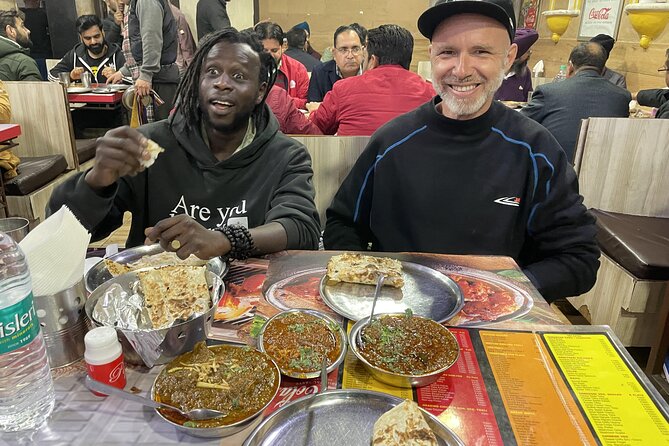
Food is not included. Rusty makes frequent snack stops, but you pay for those yourself, and the stops are intended to stay cheap. Gratuities are optional.
The value depends on how much you use the guide. If you only want a quick look at Chandigarh’s major buildings, the cost may feel unnecessary. If you want access, interpretation, transport, and connections between Corbusier, Jeanneret, Maxwell Fry, public housing, museums, and city planning, the price covers a lot over two days.
Who Will Enjoy This Two-Day Tour Most
I would choose this experience if you are interested in architecture, urban planning, design, modern Indian history, or the way a planned city functions after its original designers are gone.
It also suits families and couples because Rusty keeps the explanations entertaining and makes room for breaks. Students and backpackers benefit from the low-cost snack stops and included transport. Architects and urban planners will appreciate the time allowed for photographs and the access to working buildings.
The tour is less suited to someone who wants a loose, unplanned sightseeing day. The schedule has many stops, and each day involves sustained attention. The stated maximum group size is 41, so the experience may not always feel like a private tour, even though some visits and adjustments can be personal.
Most travelers can participate, service animals are allowed, and the tour is near public transportation. Good weather is required. If poor weather cancels the experience, you are offered another date or a full refund.
Booking Details and Cancellation Rules
The tour starts at 9:00 am, and confirmation is provided when you book. Pickup is offered, but you should confirm the exact meeting details with the provider before the day begins.
Cancellation terms are strict close to departure. Cancel at least six full days before the start for a full refund. Cancel two to six full days ahead for a 50 percent refund. Cancellations less than two full days before the start are not refunded, and changes inside those cutoffs are not accepted.
Should You Book The Hipster Chandigarh Architecture History Tour?
Book it if you want Chandigarh explained by someone who has lived inside its buildings and understands both the design theory and the daily reality. Rusty’s background, humor, flexible pacing, and willingness to adjust food stops or substitute sites make this more than a standard monument circuit.
The strongest reasons to book are the Capitol Complex access, the Jeanneret housing visit, Museum Maison Jeanneret, and the way the tour links architecture with social life. The main caution is time. Two days of planned stops is a serious commitment, and the group can reach 41 people.
If you have only one day in Chandigarh, this may be more than you can fit comfortably. If you have two days and want to understand why the city looks and works as it does, the $71.02 price includes enough transport, admission, and personal guidance to make a convincing case.
FAQ
How long is the Hipster Chandigarh Architecture History Tour?
The experience lasts approximately two days. Day one includes nine stops, and day two includes six stops.
What time does the tour start?
The tour starts at 9:00 am.
Is pickup included?
Yes. Pickup and drop-off charges are included, along with driving, parking, waiting time, and taxi costs.
Is transportation air-conditioned?
Yes. The tour provides an air-conditioned vehicle.
Are entrance fees included?
Yes. Admission fees at the listed sites are included. Photography tickets and fees are also included.
Is food included?
No. The tour includes frequent inexpensive snack stops, but you pay for your own snacks and drinks.
What happens if bad weather cancels the tour?
The experience requires good weather. If poor weather causes cancellation, you are offered a different date or a full refund.
Newest history tours we have reviewed in India
- Agra Fort: Guided UNESCO Heritage Walking Tour★ 4.9 · 21 reviews
- Private Elephanta Caves UNESCO World Heritage Site Tour★ 5.0 · 34 reviews
- World heritage Ahmedabad city tour in private car with guide and lunch★ 5.0 · 44 reviews
- Heritage Walk: Recommended by Gigi Hadid as a must-do in Mumbai★ 5.0 · 122 reviews
- Mumbai: South Mumbai Heritage Walking Guided Tour★ 4.5 · 69 reviews
- Hill-station & Heritage: Lonavala & Karla Caves Tour from Mumbai★ 5.0 · 60 reviews
- Best South Mumbai Heritage Walk★ 5.0 · 122 reviews
- The Cultural And Historical Walking Tour in Margao★ 5.0 · 280 reviews
Architecture & Landmark Tours, compared.
St. Mark’s Basilica Guided Tour & VR History Intro
Read our review →
Venice’s Best: Basilica, Doge’s Palace, Gondola & History Gallery
Read our review →
Córdoba: Skip-the-Line Great Mosque-Cathedral History Tour
Read our review →
Pantheon Elite Guided Tour – Rome’s Iconic Ancient Temple
Read our review →
Abu Dhabi Grand Mosque, Palace, and Heritage Village
Read our review →
Chicago in a Day: Food, History & Architecture Walking Tour
Read our review →

Colosseum Special Access Tour, with Ancient Temples & Tombs
Read our review →Browse the lists this tour appears in