
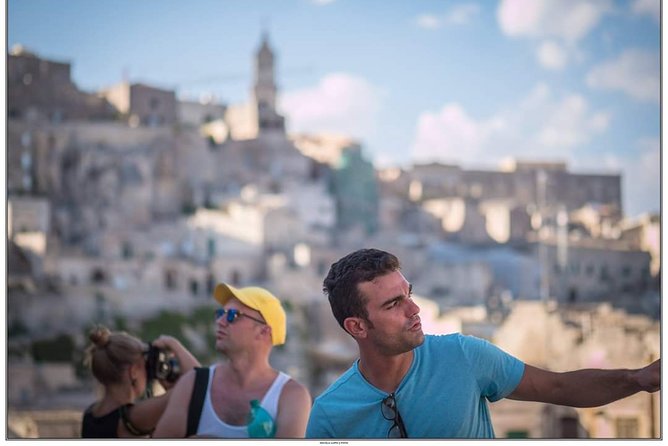
Review · ITALY HISTORY TOURS
Matera’s Sassi Walking Tour – History & Culture
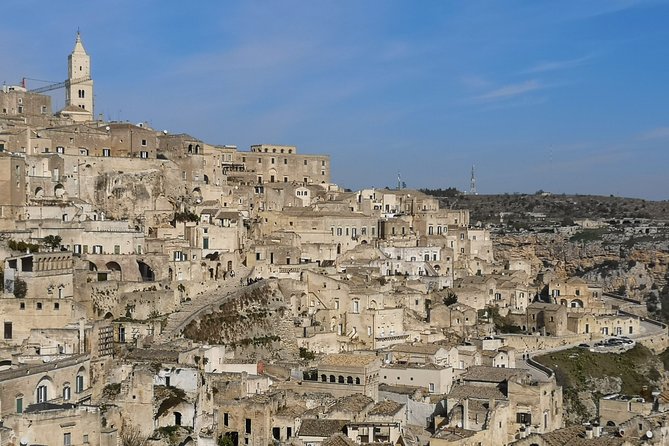
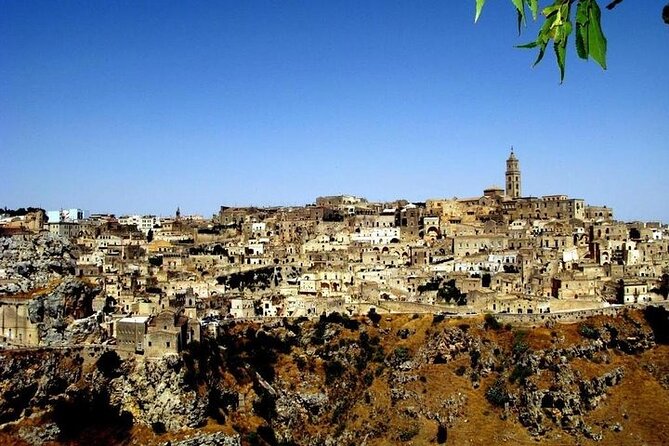
Matera’s old town makes a strong first impression: pale stone houses, stairways, caves, and churches seem to rise straight from the rock. This two-hour walking tour helps you read that unusual setting, showing how the Sassi changed from poor cave districts into one of Italy’s most admired historic centers.
I like the local point of view, especially when guides such as Antonio explain Matera through family memories and everyday life. I also like the small group, which is capped at 16 people, plus the use of headsets in crowded spots. The main drawback is the pace: you cover a lot in two hours, so this is an introduction rather than a slow, detailed study of every church and lane.
- A local view of Matera: Antonio and Giorgia are praised for clear English, humor, and personal knowledge of the city.
- Three key areas in one walk: You see Sasso Barisano, Civita, and Sasso Caveoso.
- Ancient cave church included in the route: A small extra fee may apply for entry, and it is collected before the tour.
- Small group format: The maximum group size is 16, with headsets available when streets are crowded.
- A useful first look: The tour gives you the background you need before exploring Matera on your own.
- Easy city-center route: The walk starts at Seekers Viaggi on Via Lucana and ends near Palazzo Lanfranchi.
Why Matera Makes More Sense With a Guide
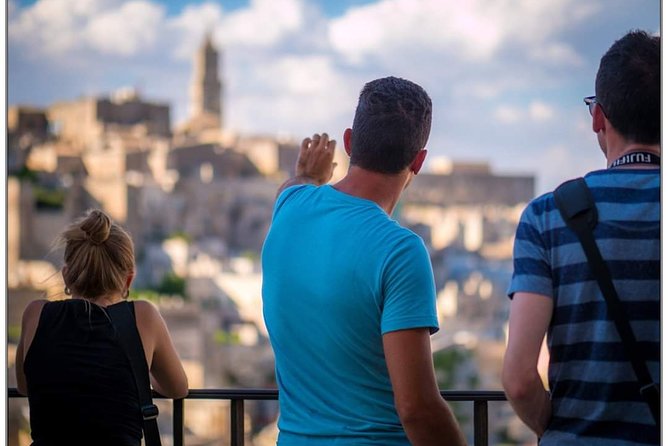
Matera is not difficult to admire. It is difficult to understand.
From a viewpoint, the Sassi can look like a beautiful cluster of stone dwellings. But those caves were once homes, churches, storage rooms, animal shelters, and places of work. The city’s story includes poverty, overcrowding, abandonment, and a later revival that turned the old districts into a major cultural destination.
A guide gives you the missing links. Instead of seeing one cave, one stairway, or one church at a time, you learn how the parts fit together. That matters in Matera because the city’s most important details are often easy to miss. A dark opening may be an old home. A plain rock wall may contain a chapel. A view across the ravine may explain why the settlement developed where it did.
This is a good tour to take early in your stay. It gives you a base for later wandering, and you can return to the places that caught your attention. If you explore first and tour later, the commentary can still fill in many gaps.
Starting on Via Lucana and Reaching the Sassi
The tour begins at Seekers Viaggi, Via Lucana 106. This starting point is close to the Sassi area, which makes the first meeting fairly practical. The listed end point is Palazzo Lanfranchi, in Piazzetta Pascoli, placing you near an important viewing area and several routes for continuing your walk.
The route is on foot, so comfortable shoes matter. Matera’s old districts are made for walking, but the experience includes steps, sloping lanes, and uneven stone surfaces. The supplied information does not give a detailed accessibility rating, so anyone with mobility concerns should confirm the route directly before booking.
The guide leads in English. Antonio and Giorgia receive especially strong praise for their command of English, friendly manner, and ability to explain difficult subjects without making the walk feel like a lecture. That balance is important here. Matera’s past includes geography, social change, religion, and economics, and a flat list of dates would quickly become tiring.
More History Walking Tours in Italy
- Venice: City Center Historical Guided Walking Tour
★ 4.2 · 1,873 reviews - Palermo: Street Food and History Walking Tour
★ 4.9 · 1,486 reviews - Verona: History and Hidden Gems Guided Walking Tour
★ 5.0 · 1,379 reviews
Sasso Barisano and Civita: The Big Picture
The first broad section covers Sasso Barisano and Civita. This is where the tour helps you understand Matera as a city rather than as a collection of scenic corners.
Sasso Barisano is one of the two main Sassi districts. Civita forms the central high area between the old neighborhoods. From these parts of the route, you get a sense of how the city’s stone buildings and caves are arranged, and how the districts relate to one another.
I value this part because it gives you orientation. You learn where you are, what you are looking at, and why the city does not follow the tidy plan of a modern Italian town. The guide can connect the physical setting with the way people lived there, making the views more than attractive backdrops.
The route also gives you a chance to notice the changes in Matera. The Sassi are not frozen ruins. Some spaces have been restored, some have been adapted for modern use, and others still show the rough character of the older settlement. A local guide can explain that shift in a way a quick walk and a few signs cannot.
Sasso Caveoso and the Story Beneath the Stone
The tour gives extra attention to Sasso Caveoso, an area known for its cave dwellings and strong sense of the older Matera. This is likely the section where the city’s past feels most immediate.
You may see entrances cut into rock, homes arranged around narrow lanes, and spaces that blend natural caves with built stone. The important point is not simply that people lived in caves. It is how those homes worked as part of a larger community, and how the physical setting shaped daily life.
Antonio is especially praised for placing Matera’s story in a wider social and economic context. That means you hear more than a picturesque tale about ancient houses. You learn about the conditions that made the Sassi difficult places to live, and about the later change in public attitudes toward the area.
One particularly useful detail comes from the local perspective. Antonio has spoken about playing in the Sassi as a teenager in the 1990s. That kind of recent memory helps bridge the gap between the old city and the Matera you see today. It also gives younger visitors a way into the story, instead of leaving the past sealed in a distant century.
The Cave Church and Its Frescoes
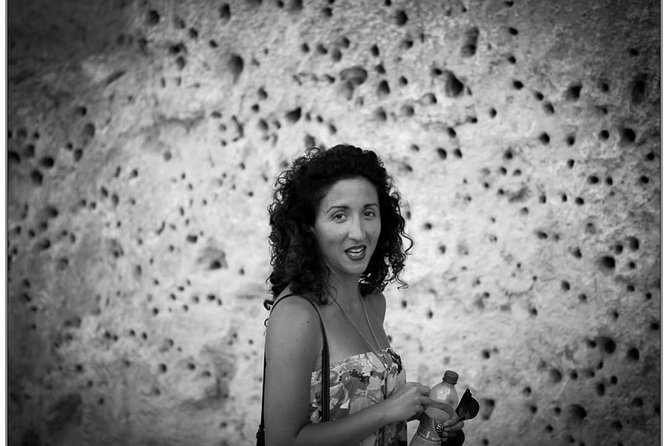
A highlight is the visit to an ancient cave church, with frescoes inside. Entry may cost a few extra euros, collected before the walk begins. That small charge is worth considering when you compare the overall price, because the church adds a physical interior to a tour otherwise focused on streets, views, and exteriors.
Rock churches can be easy to misunderstand without help. Their rough walls, dim interiors, and faded paintings may not explain themselves. A guide can show you how to look at the space and point out details you might pass by.
The visit also changes the rhythm of the walk. After seeing the Sassi from outside, you enter a space carved into the rock and encounter the religious side of Matera’s past. The frescoes help show that these were not only practical homes. They were places of worship, art, and community life.
Do not expect a long museum visit. The tour lasts about two hours and covers a wide area, so the cave church is one part of a larger route. Still, it is an important part, and I would not skip it simply to save a few euros.
More Local Culture and Traditions Tours in Italy:
- Naples Spanish Quarters Walking Tour Street Art, Folklore & Sweet
★ 5.0 · 797 reviews - Amsterdam Food and Cultural Tour with Tastings
★ 5.0 · 4,315 reviews - Sevilla Food Tour: Tapas, Wine, History & Traditions
★ 5.0 · 3,468 reviews - Tromsø: Reindeer Camp and Sami Cultural Tour with Lunch
★ 4.7 · 3,326 reviews
Guides Who Make the History Easy to Follow
The strongest part of this experience is the guiding. Antonio is described as warm, humorous, and deeply familiar with Matera. Giorgia is praised for her clear English, patience, and ability to handle questions while keeping the group moving.
That matters because a walking tour can fail in two opposite ways. It can be so light on detail that you learn little, or it can bury you under dates and names. The best comments about this experience point to a middle path: plenty of information, but delivered with humor and a clear sense of place.
The guides also appear comfortable adjusting to the group. One guide is praised for accommodating different needs, while another is noted for managing time well without making the walk feel rushed. You should still expect a set route and a two-hour limit, but the experience does not appear built around racing from one photo stop to the next.
Headsets are another useful touch. Matera’s lanes can be crowded, and stone walls do not always make conversation easy. Being able to hear the guide means you can focus on the view without constantly moving shoulder to shoulder.
Is Two Hours Enough for Matera?
Two hours is enough for a strong orientation. It is not enough to explore every church, museum, cave, and viewpoint in the Sassi.
That is not a weakness if you use the tour properly. Think of it as your introduction. You get the main districts, the larger story, and at least one cave church. Afterward, you can spend more time in the places that interest you most.
The route also seems to have a good balance of information and movement. You cover substantial ground, but the guide’s role is not simply to keep you walking. The best use of the time is to listen closely during the explanations, then return later for photographs or a slower look.
If you have only one short visit to Matera, this tour becomes more valuable because it reduces the chance of missing the city’s main story. If you have several days, it still works well as a first-day walk.
The $30.23 Price and What You Get
At $30.23 per person, the tour is reasonably priced for a two-hour small-group walk with an English-speaking local guide. The value comes from interpretation rather than transportation or luxury. You are paying to understand what you see.
The maximum group size of 16 is helpful. It is small enough for questions and easier listening, while remaining less costly than a private guide. The headset system adds practical value in crowded parts of the old town.
Remember to allow for the extra cave church entry fee if you want to go inside. The fee is only a few euros according to the information supplied, but it means the advertised tour price is not the total cost of every part of the outing.
For me, the price makes the most sense if you want context. If you prefer to wander silently, take your own photographs, and read at your own pace, you may find the tour less essential. But Matera is a place where expert explanation changes what you notice, and this is a fair way to get that help without paying for a private experience.
Who Should Book This Walk?
I would recommend it to first-time visitors, couples, families, and anyone who wants the main story before exploring alone. It also suits visitors who have watched videos or read about Matera but still want the city explained on the ground.
Families may find the humor and personal stories useful, especially with teenagers who are not naturally drawn to historic walking tours. The route covers enough ground to keep the experience active, while the guide’s stories give the city a human angle.
History fans will appreciate the links between geography, religion, local life, and social change. Photographers will like the views, though the tour is not designed as a dedicated photo walk. You should listen first and save the slow photography for afterward.
The tour is also a good match for independent visitors. It does not replace free time in the Sassi. It makes that free time better informed.
Booking, Weather, and Timing Details
The experience is offered in English and uses a mobile ticket. Confirmation is normally received when you book, though bookings made within one day of departure are confirmed as soon as possible, subject to availability.
It is usually booked about 12 days ahead, so I would not leave it until the final hours if your schedule is fixed. The tour requires suitable weather. If poor conditions cause cancellation, you are offered another date or a full refund.
You can cancel for a full refund up to 24 hours before the start time. Cancellations or changes made inside that 24-hour window are not accepted for a refund. The activity also requires a minimum number of participants, with a new date, another experience, or a refund offered if that minimum is not reached.
Should You Book Matera’s Sassi Walking Tour?
Yes, if you want to understand Matera rather than simply photograph it.
The best reasons to book are the local guides, the clear English commentary, the small group, and the chance to see an ancient cave church with frescoes. Antonio and Giorgia bring different personal strengths, but both are praised for making the city’s complicated past approachable.
Skip it only if you strongly prefer independent wandering or already have a private guide covering the same ground. For most first-time visitors, $30.23 is a sensible price for two hours that can give the rest of your Matera visit a clearer shape.
FAQ
How long does the Matera Sassi walking tour last?
The tour lasts approximately two hours.
Where does the tour begin?
It begins at Seekers Viaggi, Via Lucana 106, 75100 Matera.
Where does the tour end?
The walk ends at Palazzo Lanfranchi, Piazzetta Pascoli 1, 75100 Matera.
Which parts of Matera does the tour cover?
The route covers Sasso Barisano, Civita, and gives extra attention to Sasso Caveoso.
Is the tour offered in English?
Yes. The tour is offered in English.
How large is the group?
The maximum group size is 16 people.
Is entry to the cave church included in the tour price?
An additional fee of a few euros may be charged for entry to the cave church. This is collected before the tour begins.
Can I cancel for a refund?
Yes. You can cancel up to 24 hours before the start time for a full refund. Cancellations made less than 24 hours before the start time are not refunded.
Newest history tours we have reviewed in Italy
- Bologna: Street Food Tour in the Historic Center★ 4.8 · 125 reviews
- Asti Historic Town Walking Tour★ 4.5 · 82 reviews
- Ancient Rome: Archeological area Largo Argentina★ 3.9 · 49 reviews
- Ancient Rome Half-Day Segway Tour★ 4.8 · 25 reviews
- Alghero: walking tours around the ancient city★ 4.6 · 30 reviews
- Amalfi Organic Lemon Tour & Tasting in the Historical Garden★ 4.9 · 46 reviews
- Alghero: Historic Center Walking Tour with A Local Guide★ 4.8 · 120 reviews
- Alba: History Walking Tour and Food Tasting with a Local★ 4.8 · 20 reviews
Local Culture & Traditions Tours, compared.

Amsterdam Food and Cultural Tour with Tastings
Read our review →
Sevilla Food Tour: Tapas, Wine, History & Traditions
Read our review →
Tromsø: Reindeer Camp and Sami Cultural Tour with Lunch
Read our review →
Half Day Dominican Republic Cultural Tour : Small Group
Read our review →
Ultimate Melbourne Walking Tour: History, Laneways & Culture
Read our review →
Tromsø: Sámi Reindeer Sledding and Sami Cultural Tour
Read our review →
Kyoto Gion: 2-Hour Geisha Culture & History Walking Tour
Read our review →
Marrakech Historical and Cultural Tour – Half Day City Tour
Read our review →Browse the lists this tour appears in