

Review · INDIA HISTORY TOURS
Candolim: Heritage Walk of Fort Aguada Port and Jail Complex
Fort Aguada’s lower fort is more than a handsome Portuguese monument. It is a former defense post, prison, chapel, kitchen, and political battleground rolled into one compact site. This one-hour walk takes you into the jail complex, where stories of Goan freedom fighters give the old stonework a human edge.
I like the exclusive access to the spring, kitchens, chapel, and prison cells, and I like the way the tour links military history with Goa’s liberation movement. Guides such as Veron Franco, Niranjan, and Yashashvi are praised for making the story clear and lively. The main drawback is the heat: a midday start can be uncomfortable, and the walk offers little shelter from Goa’s sun.
Key points to know before you go

- The tour enters the lower Fort Aguada jail complex, not just the familiar upper fort viewpoint.
- A local English-speaking storyteller leads the walk, with guides including Veron Franco, Niranjan, and Yashashvi.
- You get access to areas normally closed to the public, including a freshwater spring, former kitchens, and prison cells.
- The one-hour route covers Portuguese defense, colonial rule, and Goan liberation, so the history reaches well beyond architecture.
- Entry is included in the $10 price, including the monument ticket and access to the jail complex.
- Plan around the heat, especially if you choose a noon departure.
Why Fort Aguada’s lower fort matters

Fort Aguada is one of Goa’s best places for understanding how Portuguese power worked. Built about 400 years ago, the fort guarded the coast and helped protect the Portuguese colony from attacks by the Dutch and the Marathas. Its location beside the sea made it useful as a defensive stronghold, but the site also had practical jobs: water storage, food preparation, worship, and imprisonment.
The lower fort tells a different story from the open ramparts and sea views most people associate with Fort Aguada. Here, you see rooms that supported daily life inside the complex. You also enter the prison area, where Goan freedom fighters were held during the struggle for liberation.
That shift in focus is the main reason to book this walk. If you only want photographs from the fort walls, you can visit on your own. If you want to understand how the site functioned and how colonial rule affected local people, the guide adds much more.
The tour also covers the decision by former Portuguese dictator Antonio Salazar to repurpose the lower fort as a prison. That detail gives the monument a modern political chapter. Fort Aguada was not simply an old military site left behind by time. It was reused as a place of confinement during a period when people were challenging Portuguese control of Goa.
More Castle and Palace History Tours in India
- Private Heritage Walking Tour in Jaisalmer Fort and Old Bazaar
★ 5.0 · 306 reviews - Private Jaisalmer Fort & old city tour
★ 5.0 · 168 reviews - Kochi Tour Guide -A Heritage walking tour in Fort kochi and Mattancherry !
★ 5.0 · 143 reviews
Meeting your storyteller at the lower fort
You meet the storyteller at the ticket counter of the Lower Fort Aguada Port and Jail Complex Heritage Walk. This is important because the experience begins at the lower complex, not at a separate hotel or transport pickup point.
There is no pickup or drop-off. You need to make your own way to the meeting point, and the tour does not use vehicles inside the monument. Once the walk begins, you move on foot through the fort rooms and jail areas.
The group is private, which gives the experience a more personal feel than a large public tour. You can focus on the story, ask questions, and keep pace with the guide rather than trying to hear over a crowd.
Guides named in the feedback include Veron Franco, Niranjan, and Yashashvi. Veron is particularly good at connecting the fort to wider subjects such as colonialism, religion, and dictatorship. Niranjan is praised for his storytelling, while Yashashvi is described as clear and well informed. Guide assignments can change, so you should not assume a particular person will lead your walk.
The tour is conducted in English. Since the route lasts only one hour, the guide needs to keep the story moving. That makes the experience focused rather than exhaustive.
Inside the chapel, spring, and former kitchens
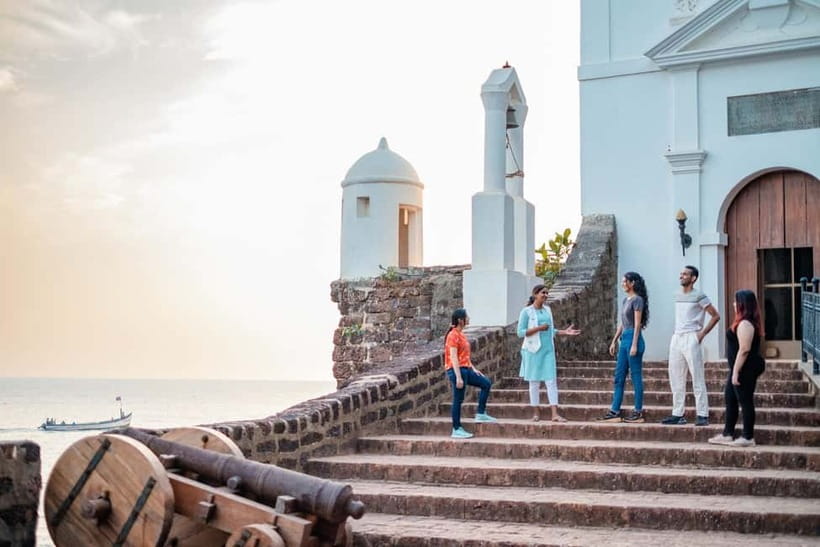
The special access is the strongest practical reason to pay for this tour. You are taken into parts of the lower fort that are not normally available to the public, including a small chapel, a freshwater spring, old kitchens, and prison cells.
The freshwater spring helps explain how the fort could support soldiers and other residents. A defensive site needs more than thick walls and weapons. It needs reliable water, and this feature shows the practical planning behind the complex.
The former kitchens offer another useful glimpse. They connect the fort to ordinary work: preparing food, storing supplies, and keeping the settlement running. These rooms may not have the grand look of the outer walls, but they help you picture the fort as a working place rather than a hollow monument.
The chapel adds a religious layer to the visit. Portuguese colonial sites often joined military authority and Catholic practice in the same setting, and seeing the chapel helps you understand that connection. It is a small detail, but one that gives the site more depth.
You should keep your expectations sensible. This is not a long museum visit with extensive displays in every room. The value comes from entering spaces you might otherwise miss and hearing why each one mattered.
The prison cells and Goa’s liberation struggle

The prison cells are the emotional center of the walk. Their plain, cramped character contrasts with the fort’s grand reputation. Here, the story shifts from defense against foreign armies to the people imprisoned under Portuguese rule.
The guide explains how the lower fort was used to hold convicted Goan freedom fighters. You learn about the people who challenged the colonial system and about the role the prison complex played during Goa’s liberation movement.
This part of the tour is especially useful if you know Goa mainly as a beach destination. The walk places the state’s political past beside its familiar holiday image. It also introduces the unsung figures who fought for independence, rather than focusing only on governors, soldiers, and famous leaders.
The history is presented through specific spaces. You are not simply told that people were imprisoned here. You stand near the cells, see the physical setting, and then hear about the political forces behind their use.
A small modern museum inside the prison is also included in the price. You can look around it after the guided portion, which gives you a chance to spend a little more time with the site. The walk itself remains the main event, but the museum adds useful context if you want to continue exploring.
More History Walking Tours in India
- Fontainhas Heritage Walk by Make It Happen
★ 5.0 · 2,834 reviews - The Great Indian Food Tour: Old Delhi Food and Heritage Walk
★ 5.0 · 1,698 reviews - Old Goa Heritage Walk by Make It Happen
★ 5.0 · 797 reviews - Old Delhi Food, Heritage&Cultural Walk with Rickshaw ride to Masterji Kee Haveli
★ 5.0 · 742 reviews
Portuguese architecture with a practical purpose

The Portuguese-style architecture is easy to admire, but the guide helps you read it as more than decoration. Fort Aguada was designed for defense, control, and daily survival. Its walls, rooms, water source, chapel, kitchens, and prison areas all served different purposes.
The architecture also reflects the fort’s changing role. It began as a strategic defense against rival powers, then later became part of a prison system under Portuguese rule. The same stone spaces carried different meanings across time.
You will hear about battles between Indian kingdoms and the colonial Portuguese empire as control of the fortress shifted or was challenged. That wider setting matters. Goa’s past was not a simple story of one European power arriving and remaining unopposed. Indian kingdoms, the Dutch, the Marathas, and later liberation activists all form part of the story.
The sea views add a welcome visual break. From the fort, you can look out over the coast and understand why the position mattered. The scenery is attractive, but it also explains the site’s military value. The fort could watch the sea, protect shipping, and guard access to Portuguese-held territory.
What the one-hour format does well
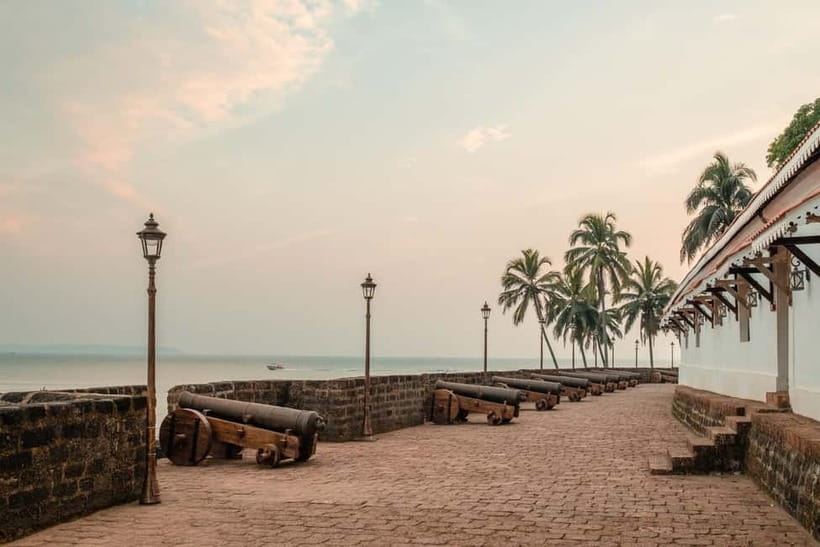
One hour is enough to give you a clear framework without taking over your day. You cover the main lower-fort spaces, hear the key political and military stories, and finish back at the Aguada Port and Jail Complex.
The short format suits you if you are visiting several parts of Goa or want a focused stop before continuing elsewhere. It also works well for people who prefer a guided introduction instead of spending half a day reading signs and trying to piece the story together.
The tradeoff is that the tour cannot cover every corner of Fort Aguada. Sightseeing points outside the selected route are not included, so you should not book this expecting a full survey of every fort structure.
The walk is also more demanding in heat than its length suggests. A one-hour route in Goa’s sun can feel tiring, particularly around midday. One visitor who joined at 12:00 found the conditions very hot. An earlier or later starting time should be more comfortable if availability allows.
Bring your own practical items. Umbrellas, raincoats, hats, caps, face masks, and sanitizers are not provided. Meals and snacks are also not included.
Is the $10 price good value?

At $10 per person, this is a strong value if you want more than a quick look at the fort walls. The price includes the monument entry ticket and access to the spring, kitchens, and prison cells. One visitor specifically noted that the foreigner entry fee of 400 Indian rupees was included, making the cost feel worthwhile.
The value comes from access and interpretation. You could visit the monument and see some of the exterior spaces on your own, but the locked or restricted areas would not offer the same experience. You would also miss the connections between the fort’s military role, prison history, and Goa’s liberation movement.
The price is less compelling if you have very little interest in history or prefer to wander independently. The walk is built around storytelling, so its success depends on your guide and your attention. It is not a scenic ride or a quick photo stop.
The private group format improves the value for couples, families, or small groups who want to ask questions. You are paying for a focused hour with a local storyteller rather than a large group moving through the site.
The guides make the difference

The most praised part of this experience is the guiding. The strongest comments focus on clear storytelling, strong knowledge of Goa, patience, and genuine enthusiasm for the subject.
Veron Franco is described as passionate and detailed. His tour covers subjects such as dictators, religion, and colonialism, which helps place Fort Aguada in a wider political setting. If you enjoy connecting a building to the forces around it, his approach should suit you.
Niranjan is praised for telling the story in an engaging way. Yashashvi is noted for explaining the site clearly and bringing attention to the jail complex’s cultural and historical role.
You should still allow for some variation. A private walking tour depends on the individual guide’s style, and the person assigned to your visit may be different. The overall structure remains the same, with an English-speaking storyteller leading you through the lower fort.
The guides also seem willing to begin early if you arrive ahead of time. One person arrived 15 minutes early and started the tour then without trouble. That is not a guaranteed policy, but arriving a little early is sensible so you can find the ticket counter and avoid a rushed start.
Who will enjoy this Fort Aguada walk?

I would choose this experience if you want to understand Goa beyond beaches, resorts, and churches. It suits history-minded visitors, first-time Goa visitors who want context, and anyone interested in colonial rule and independence movements.
It is also a good fit for people who like compact tours. You get a clear hour of history, exclusive access to several rooms, and a return to the same complex without spending an entire morning or afternoon.
Families with older children may find the prison cells and fort stories more memorable than a standard monument visit. The guide-led format can also help younger visitors connect physical rooms with real events.
You might skip it if you want a completely unstructured visit, have difficulty walking through historic buildings, or dislike hot outdoor conditions. The tour is on foot, no vehicle is used inside the monument, and the supplied information does not promise special accessibility arrangements.
Keep your schedule flexible enough to reach the lower fort on your own. Pickup and drop-off are not part of the experience, and the walk does not include meals, snacks, or attractions outside the chosen route.
Booking and cancellation details
You can reserve the tour and pay later, which helps if your Goa plans may change. Cancellation is free up to 24 hours before the experience for a full refund.
The tour runs for one hour, but you should allow extra time before and after if you want to visit the small museum or take in the sea views. Starting times depend on availability.
The published rating is 4.9 from 25 ratings, with especially strong praise for the guides, the historical detail, and access to parts of the fort normally closed to the public. That pattern matches the design of the experience: its greatest strength is not simply entering Fort Aguada, but having someone explain why each room and period matters.
Should you book the Fort Aguada Heritage Walk?
Book it if you want a short, well-focused history experience with access beyond the usual public route. The combination of prison cells, a chapel, kitchens, a spring, and stories of Goan freedom fighters gives the lower fort much more meaning than a quick self-guided visit.
The $10 price is easy to justify because monument entry is included, along with the restricted areas. I would try to avoid the hottest part of the day and arrive early at the lower fort ticket counter.
Skip it only if you are interested in views alone or want to explore every part of Fort Aguada at your own pace. For everyone else, this is one of the better short cultural stops in Goa, especially when your guide brings the site’s difficult political past into clear focus.
FAQ
Where does the Fort Aguada Heritage Walk begin?
You meet the storyteller at the ticket counter of the Lower Fort Aguada Port and Jail Complex Heritage Walk.
How long does the tour last?
The guided walk lasts one hour.
What language is the tour conducted in?
The tour is conducted in English by a live local storyteller.
Is this a private tour?
Yes. The activity is offered for a private group.
What areas can I visit during the walk?
The route includes parts of Fort Aguada’s lower complex, including a chapel, freshwater spring, former kitchens, and prison cells.
Is monument entry included in the price?
Yes. The Fort Aguada monument entry ticket is included.
Does the tour include transport?
No. Pickup and drop-off are not included, and no vehicles are used inside the monument complex.
Are food and drinks included?
No. Breakfast, lunch, dinner, snacks, and other meals are not included.
Can I cancel for a refund?
Yes. You can cancel up to 24 hours in advance for a full refund.
Newest history tours we have reviewed in India
- Historical Tour including Unesco Kangra fort & Rock cut temple from Dharamshala★ 5.0 · 27 reviews
- Colonial Heritage Walking Tour in Darjeeling★ 5.0 · 55 reviews
- Georgetown heritage walking tour in Chennai about the founding of Chennai★ 5.0 · 144 reviews
- Private Chennai Day Tour – Art History and Contemporary Chennai★ 5.0 · 21 reviews
- Chennai Heritage & Cultural Walk (2 Hours Guided Walking Tour)★ 3.5 · 32 reviews
- Exploring Mylapore: A Cultural & Historical Walking Tour★ 5.0 · 42 reviews
- See Bangalore through my eyes (Cultural / Historical / Walking Tour)★ 5.0 · 60 reviews
- Bangalore: Walk In the Footsteps of Maharajas & Sultans★ 5.0 · 18 reviews
Castle & Palace History Tours, compared.

Edinburgh Castle Guided History Tour with Tickets
Read our review →
Madrid Essential: Historic Center, Plaza Mayor & Royal Palace
Read our review →
Venice’s Best: Basilica, Doge’s Palace, Gondola & History Gallery
Read our review →
Imperial Palace and Shogun Historical Walking Tour
Read our review →
Saadian Tombs & Bahia Palace, Medina Guided Tour
Read our review →
Charleston historical walking tour with a Professor of History at The Citadel
Read our review →
Abu Dhabi Grand Mosque, Palace, and Heritage Village
Read our review →
Buda Castle District Dark History, Legends and Vampire Night Tour
Read our review →Browse the lists this tour appears in