
Review · KEY WEST HISTORY TOURS
Key West Historic Bahama Village & Hemingway Heritage
Key West’s story comes into focus when you leave the main tourist strip and walk through Bahama Village, where Bahamian and Cuban influences shaped streets, homes, food, churches, and local life. This 90-minute tour links those everyday details with Hemingway connections, old landmarks, cigar making, bars, and the political oddity known as the Conch Republic.
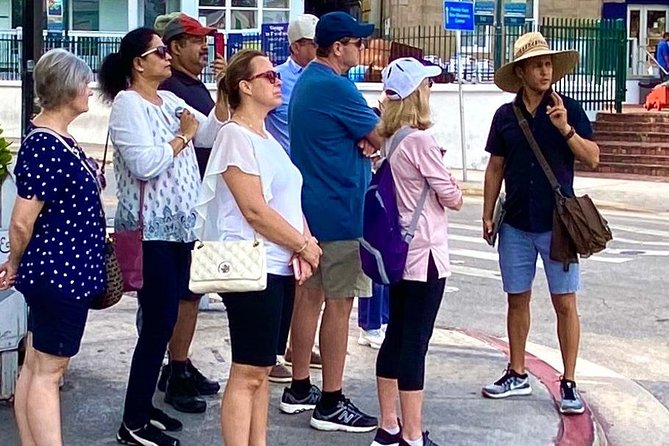
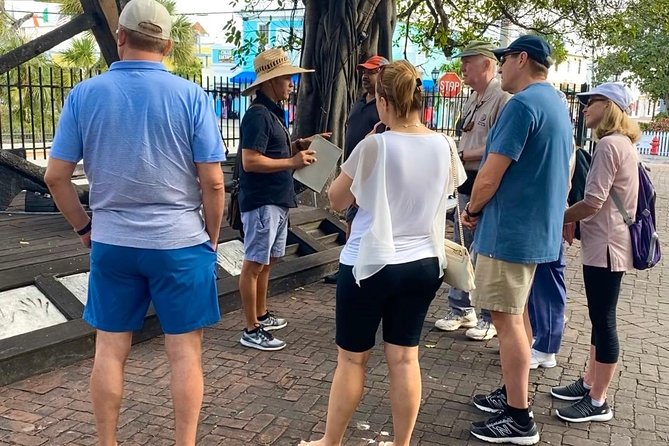
I like the small group limit of 12, which gives you room to ask questions, and I like the way guides such as AJ and Alejandro use photographs, maps, and historic documents on a tablet to make old Key West easier to picture. You also get useful restaurant and drink suggestions at the end.
The main drawback is the walk itself. You cover about 1.4 to 1.8 miles, sometimes closer to three miles depending on the route, at a moderate pace in warm weather. There are no restrooms or refreshments included, so bring water and plan accordingly.
Key points to know before booking
- Bahama Village gives the tour its character: You explore streets shaped by Bahamian and Cuban communities, not just the famous postcard corners.
- AJ and Alejandro are frequent guides: Both are praised for clear storytelling, local context, and practical recommendations for the rest of your stay.
- The Hemingway stop is more than a photo opportunity: You hear why the property has such a large pool and who built it.
- Old Town history comes through architecture: Original homes, street names, economic changes, and cultural traditions all become part of the walk.
- The Green Parrot adds local flavor: This well-known bar began as a grocery store in 1890 and later became a favorite stop for live music and informal Key West character.
- Plan for heat: The tour is outdoors, includes moderate walking, and provides ponchos only if rain interrupts the route.
Why Bahama Village is the right place to begin
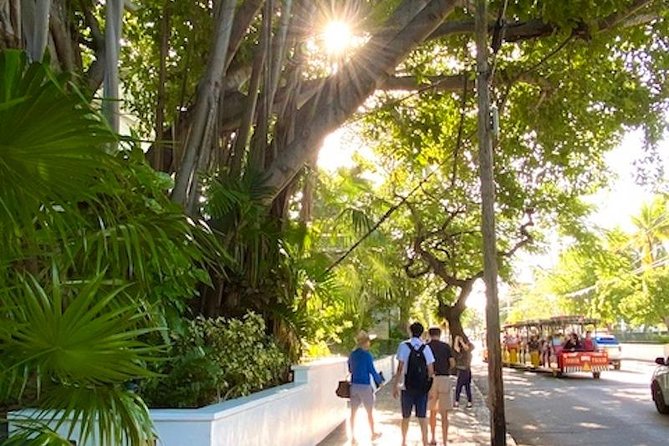
The tour starts at 716 Duval Street at 11:30 a.m., but the main value comes when you turn away from the busiest part of Duval and enter the older residential streets nearby. Bahama Village is not simply a themed district. It reflects the people and trades that helped Key West grow, especially Bahamian and Cuban communities.
Your guide explains how those groups shaped the island’s food, homes, businesses, religion, and social life. That context helps you read details you could easily pass without noticing. A street name, a house design, or a small restaurant can point to a much longer story.
AJ has been described as easy to talk with and generous with explanations. Alejandro is also praised for making the walk fun while covering a wide range of subjects. The best part of this format is the freedom to ask about what catches your eye. If you are curious about chickens in the street, old homes, local bars, or the way Key West developed, this is a better setting than a fixed audio tour.
More History Tours in the USA:
- New York City: American Museum of Natural History Ticket
★ 4.5 · 15,447 reviews - History and Hauntings of Salem Guided Walking Tour
★ 5.0 · 14,564 reviews - Charleston’s Old South Carriage Historic Horse & Carriage Tour
★ 5.0 · 10,023 reviews
Conchs, the Conch Republic, and Key West identity
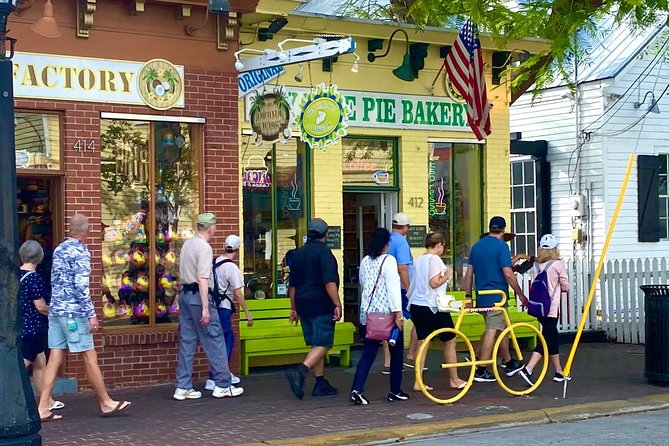
One early topic is the meaning of Conch. In Key West, the word can refer to island identity and local heritage, not just the marine snail associated with the Florida Keys. Your guide also explains why Key West is known as the Conch Republic, a colorful chapter in local politics and one of the island’s favorite nicknames.
This is the kind of subject that gives the rest of the walk some shape. You are not just collecting dates. You are learning how Key West residents see their home and why the island has such a strong personality.
The political story also helps explain why Key West can feel unlike other Florida towns. The tour connects local character with economics, government, and the island’s long history of making its own rules. If you have visited before and mostly stayed around Mallory Square or Duval Street, this portion can give your visit a useful new angle.
Hemingway’s pool and the property story
The Hemingway portion centers on one of the property’s most surprising features: a very large pool. Your guide explains why it was built and identifies the person responsible for it, giving you a more specific connection to the writer’s Key West years than a quick exterior photo would provide.
The pool matters because it shows the difference between a famous person’s public image and the physical details of daily life. A house can become an icon, but a pool, garden, or architectural feature often tells you more about how the property was actually used.
Do not assume this walking tour is a full museum visit. The supplied details describe the guide explaining the property and its pool, not a guaranteed admission package or extended interior tour. If entering the Hemingway Home is your main reason for booking, confirm exactly what is included before paying. If your goal is to place Hemingway within the wider story of Key West, the stop fits the tour well.
Architecture, old homes, and the streets most people skip
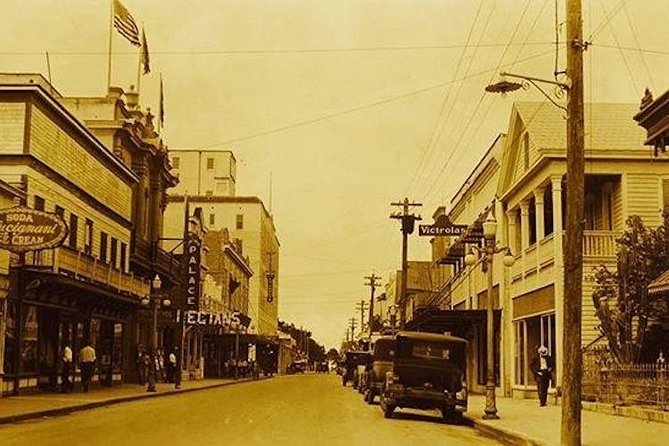
Key West is easy to enjoy at street level, but its buildings reward a slower look. The walk includes original homes and architectural details that help explain how the community grew. AJ has used photographs on a laptop or tablet to show how places looked in earlier periods, which can make weathered facades and altered streets easier to understand.
I find this especially useful for first-time visitors who might otherwise see a charming house without knowing why it matters. The guide places architecture beside migration, trade, religion, and economic change. That turns a pleasant walk into a lesson in how a town takes shape.
The route also uses quieter streets and back lanes rather than staying only on the main tourist corridor. That is a real advantage, though one person found the less-famous streets less interesting than the headline landmarks. Your enjoyment will depend on whether you like ordinary neighborhoods, old houses, and local stories as much as major attractions.
This is not a tour built around constant photo stops. It is a walking conversation, with the scenery serving as evidence for the story.
Same streets, a different century:
- Beneath The Streets Underground History Tour
★ 4.5 · 8,006 reviews - Big Island in a Day: Volcanoes Waterfalls Sightseeing and History
★ 5.0 · 6,569 reviews - Boston: Freedom Trail History Small Group Walking Tour
★ 5.0 · 6,450 reviews - Historic Charleston Guided Sightseeing Walking Tour
★ 5.0 · 6,216 reviews
A maritime landmark dating to 1825
Another stop highlights a striking structure connected with Key West’s maritime past. It has been in place since 1825 and offers a look at the island’s role as a port and seafaring center.
The details supplied for this stop do not identify the landmark by name, so your guide’s explanation will be important. That is also part of the appeal. Instead of seeing an old structure as a backdrop, you learn why it was built, what it meant to the island, and how its architecture fits Key West’s earlier era.
This stop broadens the tour beyond famous residents. Key West was shaped by ships, trade, fishing, military activity, and movement between the Florida Keys, Cuba, and the Bahamas. The maritime thread helps connect those subjects.
The Green Parrot and Key West after dark
The walk passes the Green Parrot Bar, one of Key West’s best-known local drinking spots. It began in 1890 as a grocery store before becoming a dive bar known for live music, informal surroundings, and quirky decoration.
You do not need to be a bar fan to appreciate the stop. The Green Parrot shows how old commercial spaces can take on new lives, and it gives the guide a chance to discuss the island’s modern social scene. It also provides a contrast to the carefully preserved homes and museums nearby.
The tour may include other famous bars and ghost stories, depending on the route and guide. That mix works well because Key West history is not confined to formal monuments. Restaurants, music rooms, cigar shops, and neighborhood businesses are part of the place you are visiting now.
The tour ends at Mary Ellen’s Bar & Restaurant on Appelrouth Lane. That is useful if you want to continue with food or drinks, although those purchases are not included.
Cuban cigars, local culture, and useful side stories
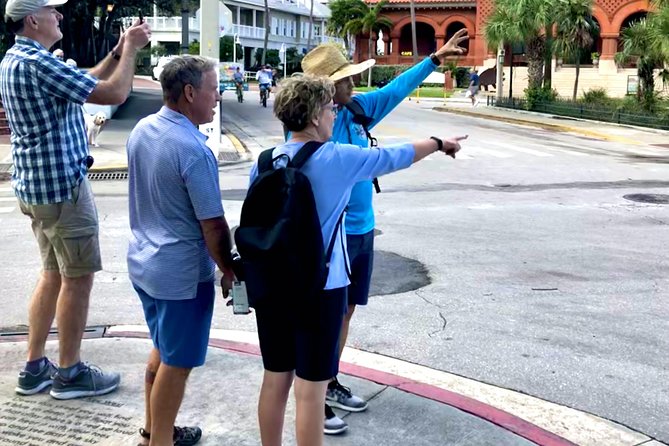
The cultural material is one of the strongest reasons to choose this walk. The tour can cover Cuban influence, Bahamian roots, cigar making, religious traditions, military history, environmental concerns, and the growth of Key West’s economy.
A notable possible stop is Key West’s only surviving cigar factory, where you may see cigars being rolled by hand. The exact access can depend on the day and route, so treat it as part of the guide’s broader local storytelling rather than a separately guaranteed attraction.
The same applies to the Cuban history museum and other businesses or buildings mentioned during the walk. The value is in the connections. You may begin with a cigar shop and end up discussing migration, trade, labor, and the island’s relationship with Cuba.
The guide may also point out less expected local details, such as Judy Blume’s bookstore. These side stories keep the walk from becoming a string of dates and make it easier to remember the places you pass later in your visit.
How good is the $46.99 price?
At $46.99 per person, this is not the cheapest way to spend 90 minutes in Key West. You are paying for a guide’s time, local interpretation, a small group, and access to context you would probably miss while wandering alone.
The value improves if you are new to Key West or want a clear introduction before exploring on your own. A guide can help you understand why Bahama Village matters, which streets deserve a second look, and how the island’s Cuban and Bahamian connections fit together.
It is also useful for repeat visitors. Several guide-led experiences in Key West focus on the same headline attractions, but this route adds back streets, original houses, local bars, cigar culture, and neighborhood history. If you already know the major landmarks, the less obvious material may be the best reason to book.
The price is harder to justify if you want a museum admission, a meal, transportation, or a long stop inside each attraction. None of those are included. You are buying a guided walking experience, not a full-day sightseeing package.
Timing, comfort, and the practical details
The advertised duration is about one hour and 30 minutes, but some outings have lasted closer to two hours and roughly three miles. Plan for the longer possibility if you have another booking afterward.
You should be able to walk at a moderate speed in warm weather. Wear shoes made for walking, bring water, and use sun protection. The guides try to use shade or air-conditioned spots when possible, but this remains an outdoor tour in a hot climate.
There are no restrooms included. Use one before meeting at 716 Duval Street. Food and drinks are also not included, though the walk ends near Mary Ellen’s Bar & Restaurant and guides may offer suggestions for meals and drinks.
The tour accepts mobile tickets, is offered in English, and allows service animals. It is near public transportation. If you drive, paid parking is available at the lot by the fire station at 616 Simonton Street.
The group can include up to 12 people. That is small enough for questions without requiring a private-tour price. Ponchos are provided if rain becomes an issue, but the experience requires good weather and may be moved or refunded if conditions force cancellation.
You can cancel for a full refund up to 24 hours before the 11:30 a.m. start time. Within 24 hours, cancellations and changes are not accepted for a refund.
Who will enjoy this Key West walk most?
I would choose this tour for a first visit, especially if you want history without spending the day inside museums. It suits adults, couples, solo visitors, and families with older children or teenagers who can handle a warm-weather walk.
It is also a good match for people who enjoy architecture and local culture. You will get more from it if you are curious about why houses look the way they do, how neighborhoods formed, and how Bahamian and Cuban communities influenced the island.
Repeat visitors can benefit too. The route offers a reason to leave the familiar Duval Street circuit and may point you toward restaurants, bars, shops, and museums for later.
I would be cautious if you dislike walking, need regular restroom access, or prefer a tightly scripted tour with only major attractions. One person found the back-street history uninteresting, and that is a fair warning. The tour depends on conversation and context, not nonstop spectacle.
Should you book the Bahama Village and Hemingway tour?
Book it if you want Key West explained rather than simply photographed. The strongest guides, especially AJ and Alejandro, appear to bring warmth, local memory, historic images, and plenty of room for questions. The combination of Bahama Village, Cuban and Bahamian influence, Hemingway’s pool, old homes, maritime history, and the Green Parrot gives you a rounded introduction to the island.
Skip it if your priority is a short, cool, attraction-only outing or guaranteed interior access to every landmark mentioned. For most people who can manage the heat and distance, the small group and local perspective make $46.99 a reasonable price for getting your bearings and seeing Key West with more understanding.
FAQ
Where does the tour start?
It starts at 716 Duval Street, Key West, Florida 33040.
What time does the tour begin?
The scheduled start time is 11:30 a.m.
Where does the tour end?
The tour ends at Mary Ellen’s Bar & Restaurant at 420 Appelrouth Lane in Key West.
How long is the walking tour?
The advertised duration is about one hour and 30 minutes. The walking distance is approximately 1.4 to 1.8 miles, though some outings may run closer to two hours and three miles.
How many people can join?
The maximum group size is 12 people.
Is food or drink included?
No. Food and drinks are not included.
Are restrooms available during the tour?
No restrooms are provided as part of the experience.
What happens if it rains?
Ponchos are provided if it rains. Because the tour requires good weather, a cancellation caused by poor conditions results in the option of another date or a full refund.
Newest history tours we have reviewed in the USA
- Nashville: Belle Meade Historic Mansion Tour★ 4.8 · 63 reviews
- Beaufort: Local History and Film Sites Tour by golf cart★ 4.9 · 102 reviews
- Boston: Guided Seafood Tasting and History Tour★ 4.9 · 90 reviews
- Beaufort: Gullah Heritage Tour★ 4.8 · 26 reviews
- Beaufort: Historic City Tour by Bus★ 4.9 · 228 reviews
- Austin: Downtown Austin Haunted History Tour★ 4.4 · 31 reviews
- Austin: Morning History Walking Tour of Downtown Austin★ 4.9 · 71 reviews
- Atlanta: Black History & Civil Rights City Bus Tour★ 4.9 · 151 reviews
USA History Tours, compared.

History and Hauntings of Salem Guided Walking Tour
Read our review →
Charleston’s Old South Carriage Historic Horse & Carriage Tour
Read our review →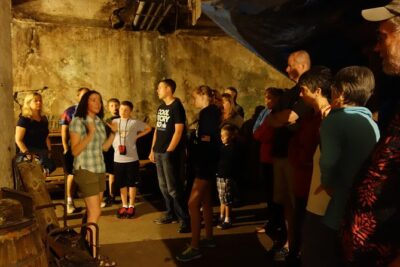
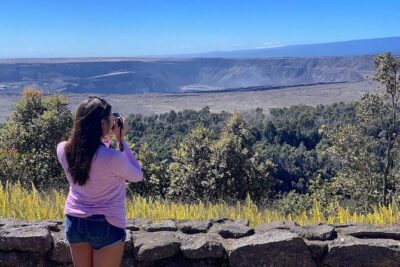
Big Island in a Day: Volcanoes Waterfalls Sightseeing and History
Read our review →
Freedom Trail History Small Group Walking Tour
Read our review →
Historic Charleston Guided Sightseeing Walking Tour
Read our review →
Charleston Horse-Drawn Carriage Tour: Explore Historic Charleston
Read our review →Browse the lists this tour appears in