
Review · MUSEUM & GALLERY HISTORY TOURS
El Calafate History Museum Tour
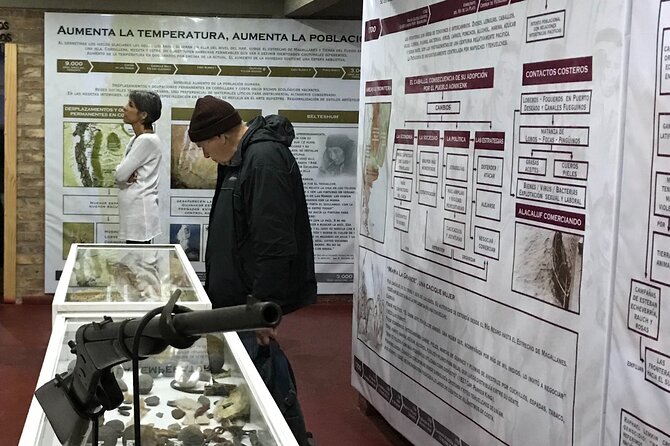
El Calafate’s small Historical Interpretation Center packs 100 million years of Patagonia into a visit that moves from ancient geology to dinosaurs, giant mammals, glaciers, and human culture. The passage of time is the museum’s organizing idea, and the displays use graphics, videos, and mounted bones to make that long story easier to follow.
I like the way the museum gives your wider Patagonia trip a useful frame, especially before or after seeing the region’s glaciers. I also like the flexible opening hours and family-friendly format: you can visit any time from 10:00 am to 8:00 pm, with language options in Spanish, English, French, Italian, and Portuguese.
The main consideration is scale. The center is a relatively small museum, and the visit may take closer to two hours than a full four-hour outing. One practical tip is to read the displays carefully rather than depend only on audio aids, since that approach has been found more useful by at least one visitor.
Key Points
- A 100-million-year timeline: Follow Southern Patagonia from ancient geology through dinosaurs, mega-mammals, glaciers, and human history.
- Bones and fossils: See dinosaur skeletons and remains of extinct mega-mammals connected with the region.
- Useful trip context: The museum explains glacier formation, Pleistocene ecological change, and the setting behind El Calafate’s famous ice fields.
- Flexible timing: Visit during the 10:00 am to 8:00 pm opening period, with an approximate visit length of two hours.
- Several language options: Information is available in Spanish, French, English, Italian, and Portuguese.
- Private group format: Only your group participates, though the experience may use a multilingual guide.
Start With Patagonia Before You See Its Glaciers
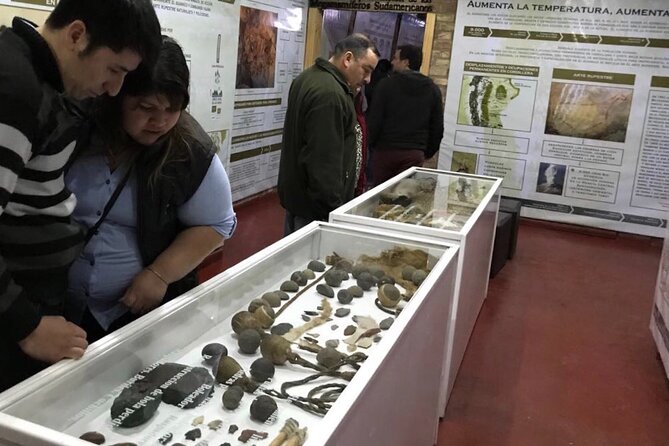
El Calafate is best known as a base for glacier excursions, but the ice is only one chapter in the region’s story. At the Historical Interpretation Center, you first get the long view: rock formation, prehistoric animals, climate shifts, glacial change, and human settlement.
That context can make your other sightseeing more meaningful. Instead of seeing a glacier as a wall of blue ice alone, you begin to understand it as part of a much older cycle of geological and ecological change.
The center focuses on Southern Patagonia, not just the town of El Calafate. Its displays connect local history with the wider region, so you get a sense of how the area changed long before modern tourism arrived.
I would place this visit near the beginning of a stay if you enjoy understanding a place before seeing its major sights. It also works well on a day when weather affects outdoor plans, since the museum gives you a substantial indoor activity without requiring a full-day commitment.
More Museum and Gallery History Tours in the world:
- New York City: American Museum of Natural History Ticket
★ 4.5 · 15,447 reviews - Paris: Louvre Museum Entry with History of Mona Lisa
★ 3.9 · 2,823 reviews - Venice’s Best: Basilica, Doge’s Palace, Gondola & History Gallery
★ 4.5 · 2,478 reviews
A Two-Hour Walk Through 100 Million Years
The visit is built around a chronological story. You move through the past with the help of graphics, videos, and bone montages rather than relying on one large collection of objects.
The museum’s time scale is its strongest feature. You are not simply looking at isolated fossils. The displays help connect the evidence to changes in climate, land, animals, and human life.
The available information describes an approximate museum visit of two hours, while the wider experience can take from one to four hours depending on how closely you read and watch the material. I would allow two hours if you want to take in the main displays without hurrying.
If you read every panel closely, the visit may run longer. If you are traveling with children or mainly want the fossils and skeletons, you may finish sooner.
The center is open every day from 10:00 am to 8:00 pm. That wide window gives you room to fit it around meals, excursions, or an afternoon return from another activity. The stated start time is 10:00 am, but the museum itself can be visited at any point during opening hours, which is useful for a flexible sightseeing day.
Dinosaurs and Mega-Mammals Take Center Stage
The most obvious draw is the fossil material. You can see dinosaur skeletons and remains of extinct mega-mammals that were unique to the area.
For children, these bones and mounted remains provide an immediate hook. For adults, they show that Patagonia’s story did not begin with glaciers or modern ranching. The region supported very different forms of life before the climate and ecology changed.
The phrase mega-mammals refers to the large extinct animals associated with the ancient Patagonian environment. The museum places them within the region’s broader changes, so the visit is not just a dinosaur display with a few extra facts attached.
I would not approach this as a major natural-history institution filled with hundreds of exhibits. The center is described as small, but it uses its limited space to tell a focused story. Its value comes from the connections between the displays, not from the sheer number of objects.
The bone montages are particularly useful for visitors who learn visually. Graphics and videos add another layer, helping explain what the bones mean and how the region changed over time.
Glaciers, the Pleistocene, and Changing Ecology
The center also explains the glacier process and the ecological transformations of the Pleistocene. This part matters because it links the ancient past to what you see around El Calafate today.
The Pleistocene was a period of major climate and environmental change. Here, the topic is presented as part of Patagonia’s continuing story, including shifts in animals, vegetation, and ice.
You will not get a full technical course in glaciology, but you should come away with a better sense of why ice has shaped Southern Patagonia so strongly. That background adds useful depth to a later glacier visit.
I especially like this connection for visitors planning to see Perito Moreno Glacier or other nearby ice features. The museum helps turn a striking view into part of a longer story about geological force and ecological change.
Since the museum uses videos and graphics, this section should work for different ages and levels of interest. Younger children may focus on the animals, while older children and adults can follow the climate and glacier explanations.
More History Tours in the world:
- History and Hauntings of Salem Guided Walking Tour
★ 5.0 · 14,564 reviews - Colosseum: Underground and Ancient Rome Tour
★ 4.7 · 12,691 reviews - Lisbon: History, Stories and Lifestyle Walking Tour
★ 4.8 · 10,902 reviews - London Small Group Tour of Historical Pubs
★ 5.0 · 10,422 reviews
Tehuelche Culture and the Human Story
The museum does not stop with prehistoric animals. It also includes the Tehuelche culture as part of the story of Patagonia.
That matters because a visit focused only on fossils can make the region seem empty until modern settlement. Including Indigenous culture gives the history a human dimension and reminds you that Patagonia’s past includes people as well as geology and wildlife.
The information provided does not specify the full content or number of displays devoted to Tehuelche culture, so I would not book this expecting an extensive ethnographic museum. Still, its inclusion helps create a more balanced account of the region.
The best way to approach this section is to slow down. Read the explanatory material, watch the relevant video content, and connect the human story with the environmental changes described elsewhere in the center.
Graphics, Videos, and Bone Mounts: How the Visit Works
The museum uses three main tools: graphics, videos, and bone montages. That mix makes the visit more active than a room filled only with written panels.
Graphics can give you quick orientation. Videos can explain processes that are hard to show with static objects, such as glacier movement or ecological change. Bone mounts make extinct animals easier to picture as living creatures rather than as disconnected fossil fragments.
One practical point is worth remembering: reading may serve you better than relying entirely on hearing aids or audio-based material. If you have a choice, spend time with the written explanations and visual displays.
Translation options are available in Spanish, French, English, Italian, and Portuguese. The experience may also be operated by a multilingual guide. No individual guide names are provided, so you should not expect a named specialist or a particular guide to be guaranteed.
Because only your group participates, the format is private. That can make the visit more comfortable if your group wants to move slowly, ask questions, or focus on particular sections. At the same time, the information does not indicate how much guided commentary is included, so the actual balance between self-guided viewing and guide support may vary.
Why the $15 Price Can Make Sense
At $15 per person, the museum is priced as a modest educational stop rather than a major full-day excursion. The admission ticket is included, along with taxes, fees, and handling charges.
I see the best value here in the time and context you get for the cost. You can spend roughly two hours learning about the region without paying for transportation, a long excursion, or a full guided day.
The price is easiest to justify if you care about natural history, archaeology, local culture, or family learning. It is also useful when the weather is poor or you have a free block before dinner.
The value is less clear if you want only dramatic scenery or a large, elaborate museum. This is a small historical interpretation center, and the experience depends on your willingness to read, watch, and make connections.
Extra purchases are not covered. Parking fees, if applicable, are paid separately at check-in. Souvenir photos, snacks, coffee, tea, and non-alcoholic drinks are also available for purchase but are not included.
Transportation to and from the center is not provided. You need to make your own way there, and the center is near public transportation. The museum is about seven blocks from Libertador Avenue, according to the available visitor information, so this is not a doorstep stop on the main avenue.
Who Will Get the Most From This Museum
I would recommend the center to several kinds of visitors:
- Families looking for an educational activity that does not require a full day.
- Adults who want more background before seeing glaciers or other Patagonian sights.
- Anyone interested in dinosaurs, fossils, extinct mammals, or climate change.
- Visitors with a free morning or afternoon in El Calafate.
- People who prefer a private group experience instead of joining a large shared tour.
It may be less satisfying if you are looking for an extensive collection, a highly specialized scientific presentation, or a long guided excursion with transportation included.
There is no minimum age, and children must be accompanied by an adult. Most people can participate, and service animals are allowed. These details make it a straightforward choice for families and mixed-age groups.
The center’s opening hours also help if your schedule changes. You are not locked into a short morning appointment, since the museum is open every day from 10:00 am to 8:00 pm.
How to Fit It Into Your El Calafate Plans
I would visit before a glacier outing if you want the background first. The museum can give you a basic framework for understanding ice, geology, and ecological change, then you can see those subjects in the open air later.
You can also visit after a glacier excursion. In that order, the museum helps explain what you have already seen and places the ice in a longer regional story.
A two-hour visit fits well before or after a meal, though snacks and drinks are not included. Since transport is not provided, allow extra time for getting to and from the center, especially if you are coordinating with another booking.
The flexible hours make the museum a good backup for a disrupted day. If weather changes an outdoor plan, you can use the center as an indoor stop rather than losing the entire day.
Cancellation and Practical Booking Notes
You receive confirmation at the time of booking. Free cancellation is available if you cancel at least 24 hours before the experience start time.
If you cancel less than 24 hours ahead, the amount paid is not refunded. Changes made within that same 24-hour period are not accepted, and the cut-off follows local time in El Calafate.
The experience is private, so only your group participates. Children need an accompanying adult, and there is no minimum age.
The price is based on one person. Parking, if needed, is extra, and food, drinks, photos, and transportation are separate expenses.
Should You Book the El Calafate History Museum Tour?
Book it if you want a compact, affordable introduction to Southern Patagonia that covers much more than glaciers. The dinosaur skeletons, mega-mammals, glacier explanations, and Tehuelche history give you a useful foundation for the rest of your time in El Calafate.
I would especially choose it for a family, a rainy-day plan, or a first visit to the region. The flexible 10:00 am to 8:00 pm hours and multilingual options make it easy to fit into your schedule.
Skip it if your priority is a large museum, a highly detailed specialist lecture, or an excursion with transport and a full itinerary. This is a small, focused center, and its success depends on your interest in reading and following a chronological story.
For $15, I think it earns its place on the schedule for most visitors who want to understand the place behind the scenery. Give it about two hours, read the displays carefully, and treat it as preparation for seeing Patagonia with better context.
FAQ
How much does the El Calafate History Museum Tour cost?
The price is $15 per person. Taxes, fees, and handling charges are included.
How long does the museum visit take?
The experience is listed as lasting approximately one to four hours. The museum description suggests that about two hours is a typical amount of time for the visit.
What are the museum’s opening hours?
The El Calafate Historical Interpretation Center is open every day from 10:00 am to 8:00 pm.
Can I visit at any time during opening hours?
Yes. You can visit the center at any time during its opening hours.
What languages are available?
Translation options are available in Spanish, French, English, Italian, and Portuguese. The experience may also be operated by a multilingual guide.
What will I see inside the museum?
You can see dinosaur skeletons, fossils, bone mounts, and remains of extinct mega-mammals. Displays also cover the geological and human history of Southern Patagonia, glacier processes, Pleistocene ecological changes, and Tehuelche culture.
Is the tour suitable for children?
Yes. There is no minimum age, and the experience is described as suitable for the whole family. Children must be accompanied by an adult.
Is transportation included?
No. Transportation to and from the attraction is not included. The center is near public transportation.
Are food and drinks included?
No. Snacks, coffee, tea, and non-alcoholic drinks are available to purchase separately.
What is the cancellation policy?
You can cancel for a full refund up to 24 hours before the experience start time. Cancellations or changes made less than 24 hours before the start are not accepted for a refund.
Newest history tours we have reviewed in the world
- Brewood Village Historical Tour★ 5.0 · 21 reviews
- The History Behind Outlander Tour★ 5.0 · 18 reviews
- Private Royal Mile walking tour – Discover the history of our most famous street★ 5.0 · 48 reviews
- Thirsty for Edinburgh: Scotlands Best Historical Pub Tour★ 5.0 · 24 reviews
- St Andrews, Fife Coast Walk & Historic Abbey Tour from Edinburgh★ 5.0 · 62 reviews
- Old Town Walking Tour★ 5.0 · 17 reviews
- Edinburgh: History Lovers Old Town Walking Tour★ 5.0 · 216 reviews
- Medical and Surgical History of Edinburgh – Private Walking Tour★ 5.0 · 19 reviews
Museum & Gallery History Tours, compared.
Louvre Museum Entry with History of Mona Lisa
Read our review →
Venice’s Best: Basilica, Doge’s Palace, Gondola & History Gallery
Read our review →
American Museum of Natural History Admission Ticket
Read our review →
Guided African American History Tour with Reserved Museum Entry
Read our review →
POLIN Museum of the History of Polish Jews Ticket
Read our review →
Bell Tower & St Mark’s Square History Gallery Ticket
Read our review →
Field Museum of Natural History Ticket or VIP Tour
Read our review →Browse the lists this tour appears in