
Review · DUBROVNIK HISTORY TOURS
Private Walking Tour of Dubrovnik Hidden Gems and History
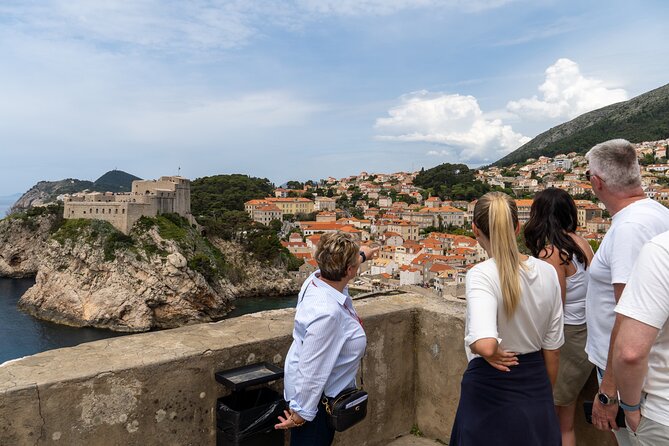
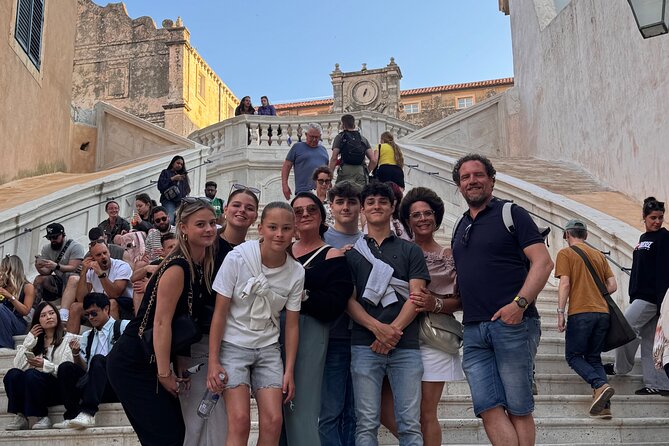
Dubrovnik reveals itself best on foot, one stone lane and old civic building at a time. This private walk brings you from Pile Gate to the Old Port, with guide Antje adding useful context about the Republic of Ragusa, local customs, Saint Blaise, and the city’s wartime experience. I like the personal format, and I like that you can ask for restaurant and day-trip advice while you walk. The main drawback is simple: two hours passes quickly, and the tour only stops outside several major sights.
For $228.05 per group of up to six, this makes the most sense when you are traveling with family or friends and can share the cost. You get an English, Dutch, or French-speaking guide, but optional entries to the Franciscan pharmacy, monastery, cathedral, and museums are extra. Start early at 9 a.m. if you want cooler streets and a calmer introduction to the Old Town.
Key points at a glance
- A private start at Pile Gate: Begin at Dubrovnik’s main medieval entrance with your own guide and group.
- Antje shapes the walk to you: Ask about politics, culture, the 1990s war, food, nearby trips, or the city’s daily life.
- Ten central sights in two hours: The route covers the main street, churches, palaces, fountain, harbor, and Bell Tower.
- The Franciscan pharmacy is optional: You can add an interior visit, but the admission fee is not included.
- The tour ends by the Clock Tower: This puts you near the Old Port and several central attractions for the rest of your day.
- A strong choice for small groups: The price is per group, not per person, for up to six people.
Why a private walk helps in Dubrovnik
Dubrovnik’s Old Town is compact, but it carries a lot of information in a small area. A guide helps you connect the stones to the people who used them. You are not simply looking at a gate, fountain, or church. You are learning how the Republic of Ragusa governed itself, brought water into the city, protected its port, and honored Saint Blaise.
I especially like the private setup here. With only your own group, you can ask questions without waiting for a large crowd to catch up. The feedback about Antje points to a guide who adjusts her explanations to the group, gives practical suggestions for restaurants and nearby trips, and discusses the political situation as well as the older history.
That flexibility matters. You may want more time on the Dubrovnik Republic, while another member of your group may care more about the war, architecture, or local culture. Antje speaks Dutch, English, and French, which makes this a useful option for mixed-language groups.
The walk lasts about two hours. That is enough time to get oriented and understand the Old Town’s main story, but not enough for long interior visits. Think of it as a strong opening lesson, not a full museum tour. Afterward, you can return to the places that caught your attention.
More History Walking Tours in Croatia
- Dubrovnik Old Town History Walking Tour
★ 5.0 · 1,684 reviews - Dubrovnik: Ancient City Walls & Wars Walking Tour
★ 5.0 · 1,270 reviews - Dubrovnik: Old Town History Walking Tour
★ 4.9 · 474 reviews
Pile Gate sets the medieval scene
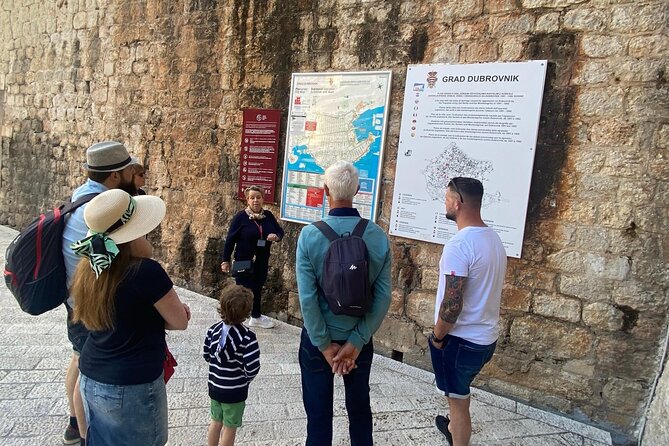
Meet at the Amerling Fountain on Ulica Svetog Đurđa at 9 a.m. From there, the walk begins near Pile Gate, Dubrovnik’s main entrance. The gate dates from the 15th century and forms part of the old defensive system.
You will see the stone bridge, former drawbridge, and the statue of Saint Blaise above the entrance. Saint Blaise is Dubrovnik’s patron saint, and his image gives you an early clue to the city’s identity. Religion, civic pride, and defense are closely linked here.
This is a good place to begin because you immediately understand the relationship between the Old Town and its walls. The gate was not just a pretty entry point. It controlled movement into the city and helped protect the Republic of Ragusa.
Admission is free, and the stop lasts about 15 minutes. The area can feel crowded at other times of day, so the 9 a.m. start is useful. You get your bearings before spending the rest of the morning among Dubrovnik’s polished limestone streets.
Onofrio’s Fountain explains the city’s water supply
The next stop is Onofrio’s Large Fountain, also free to see. Its round stone structure has 16 carved masks, each with a spout. The fountain was part of a major 15th-century water system designed by the Italian architect Onofrio della Cava.
The impressive part is not only the fountain itself. Water was brought from a spring about 12 kilometers away. In a fortified city surrounded by stone, dependable fresh water was essential. Antje explains how water was distributed during the time of the Dubrovnik Republic, giving this familiar landmark a practical meaning.
I like this stop because it turns a decorative object into a lesson in urban planning. You begin to see how Dubrovnik functioned as a working city, not only as a beautiful backdrop.
You will spend about 15 minutes here. That is enough for the key story and a close look at the carved faces, but you will not get an extended architectural lecture. The strength is the clear, human explanation.
The Franciscan Monastery offers the main optional interior
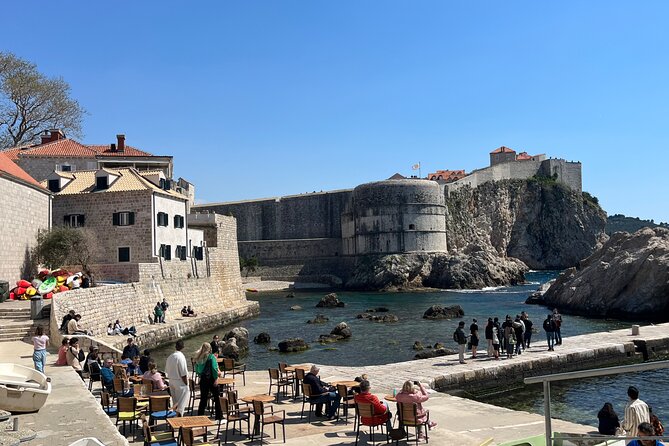
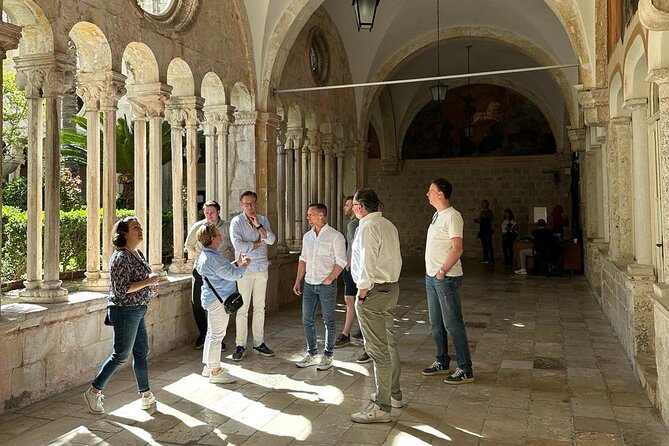
The Franciscan Monastery dates from the 14th century and includes a peaceful cloister and an old pharmacy. The pharmacy was established in 1317 and is described as one of the oldest still-functioning pharmacies in Europe.
This is one of the most tempting optional additions. The walk includes an explanation of the monastery, but the entrance fee is not included. If you want to see the pharmacy and monastery interior, plan to pay separately.
The stop is scheduled for about 15 minutes, so ask Antje how much time is practical if you decide to enter. The basic walk cannot pause for every interior, especially with nine more stops ahead. You may prefer to return later and explore at your own pace.
For me, the pharmacy adds a different side of Dubrovnik. The gate and walls speak of defense. The fountain speaks of engineering. The pharmacy shows how a religious institution also served public needs through medicine and care.
More Private History Tours in Croatia
- Dubrovnik Jewish Heritage Private Walking Tour
★ 5.0 · 121 reviews - Dubrovnik History, Sweets & Liquors in a Private Palace (PRIVATE)
★ 5.0 · 63 reviews - Game of Thrones and History Combo Private Tour
★ 5.0 · 53 reviews - Private History Old Town and City Wall Tour in Dubrovnik
★ 5.0 · 41 reviews
Stradun tells the story of public life
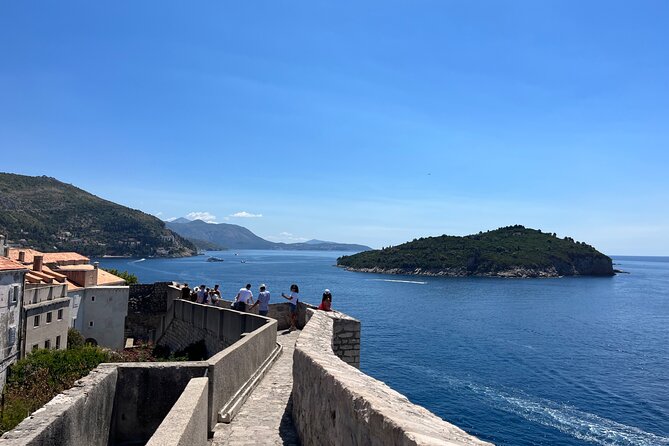
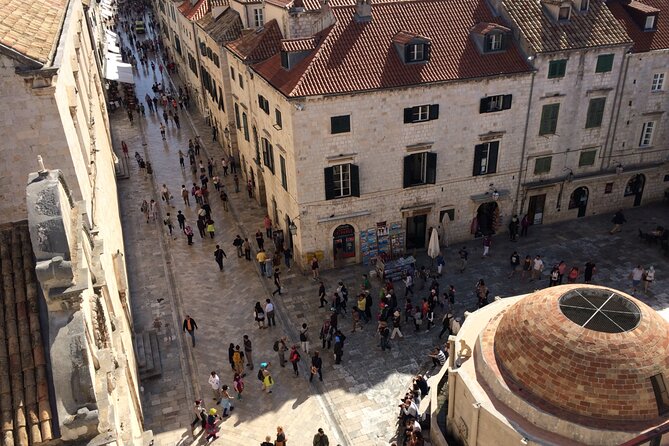
Stradun is Dubrovnik’s main street, a broad limestone-paved route running through the center of the Old Town. Historic buildings, shops, and cafés line the street, making it the city’s main social corridor.
The stop lasts about 10 minutes. That may seem brief, but the value comes from hearing how Stradun fits into the city rather than simply walking across it. Antje can point out how the street connects major sites and why it remains the natural spine of the Old Town.
Look down as you walk. The pale stone surface is one of Dubrovnik’s visual signatures, but it can be hard underfoot. Comfortable shoes matter, especially if you plan to continue exploring after the tour.
Stradun is also where the private format helps. You can ask for advice about where to eat or how to spend the rest of your day. The guide has been praised for offering tips beyond the formal walk, and that kind of local direction can save you from wasting time in a heavily visited center.
Saint Blaise and Sponza Palace reveal civic pride
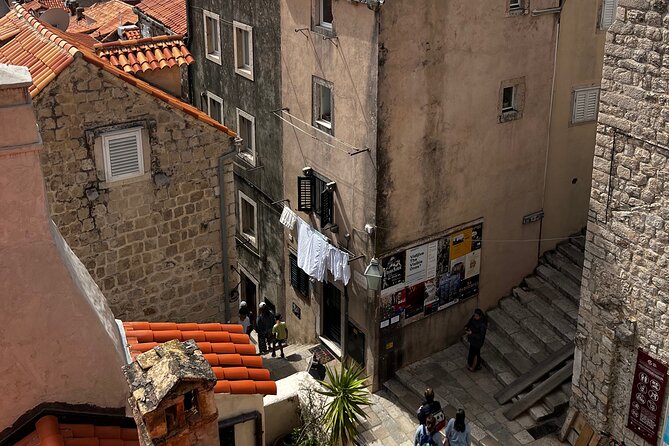
The Church of Saint Blaise is a Baroque building from the early 18th century. It honors Dubrovnik’s patron saint and contains a statue of Saint Blaise holding a model of medieval Dubrovnik.
This is not just a church stop. The statue shows how the city imagined its protector. Saint Blaise is presented as guardian of the buildings, walls, and people of Dubrovnik. Antje explains the saint’s place in local life, helping you understand why his image appears so often around the city.
The church stop lasts about 10 minutes and is free from the outside. If you want to spend more time inside, you will need to fit that into your schedule separately.
Sponza Palace comes next. Built in the 16th century, it combines Gothic and Renaissance forms and once served as a customs house and treasury. Today, it holds Dubrovnik’s historical archives, a memorial room for the city’s defenders, and cultural events.
Sponza shows the Republic of Ragusa as a trading power with serious administration. The building was not made only for display. Customs, money, records, and state business all passed through places like this.
You spend about 10 minutes at Sponza, with no included entrance. That outside view is enough to appreciate the facade, but visitors who want the archives or memorial room will need additional time and a separate ticket.
The Rector’s Palace connects politics and daily rule
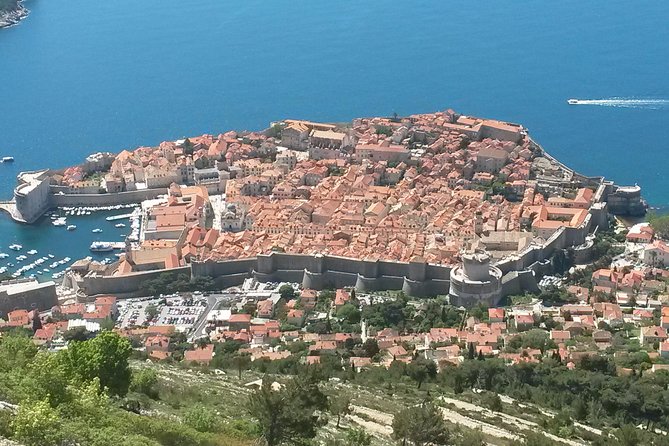
At the Rector’s Palace, you stop outside rather than entering the museum. The palace mixes Gothic, Renaissance, and Baroque styles and once served as the home and office of the Rector, the official who governed the Republic of Ragusa.
This is an important stop even without an interior visit. The palace helps explain how Dubrovnik was ruled. The Rector held authority, but the city’s political system had its own limits and traditions. Antje’s explanations about politics are one reason this tour can feel more substantial than a simple architecture walk.
The palace museum contains period furnishings, portraits, and objects linked to Dubrovnik’s political and cultural life. You will not see those interiors as part of this walk, so put the museum on your return list if that side of the city interests you.
The scheduled stop is about 10 minutes. That works well for orientation, though anyone hoping for a detailed museum visit should not treat this as a substitute for going inside.
The cathedral adds art, relics, and earthquake history
The Cathedral of the Assumption of the Virgin Mary was rebuilt in the 18th century after an earthquake. Its grand Baroque design reflects the city’s ability to rebuild after disaster.
Inside, the cathedral treasury contains relics, including those associated with Saint Blaise. The cathedral also has a painting attributed to Titian. An interior visit is optional, so check the entrance arrangements with your guide and allow extra time if you want to look closely.
The scheduled stop lasts about 10 minutes. From outside, you can take in the scale and Baroque appearance. Inside, the treasury and art give the building a different weight, but you should not expect a full visit during the timed walk.
This stop also pairs well with the earlier discussion of the war and political history. Dubrovnik has repeatedly faced damage and rebuilding. The cathedral is one visible example of how the city’s religious and civic identity survived major shocks.
The Old Port brings the story down to the water
The Old Port lies below the city walls and once served as a center of trade and naval power for the Republic of Ragusa. Today, boats, cafés, and excursion departures give the harbor a more relaxed feel.
You spend about 15 minutes here, making it one of the longer stops. That gives you time to look across the water and understand why the port mattered. Dubrovnik’s strength depended not only on walls and government buildings, but also on ships, trade, and access to the Adriatic.
The port is a useful pause after the denser streets around Stradun and the palaces. It also helps you plan the rest of your visit. If you want a boat trip to nearby islands, this is the area where you will find departures.
The tour does not include a boat ride. It simply ends the main historical route near the water and gives you a convenient place to continue on your own.
The Bell Tower is a clear finish point
The walk ends at Dubrovnik’s Bell Tower, near the Clock Tower at the eastern end of the Old Town. The tower rises 31 meters and was first built in the 15th century. It was reconstructed in the 1920s after earthquake damage.
Look for the two bronze figures known as the Green Men, Maro and Baro. They strike the bell every hour. It is a small detail, but one that brings the city’s public rhythm into view.
The final stop lasts about 10 minutes, and admission is free. Since the end point is near the Old Port and central Old Town, you can easily continue to lunch, return to the cathedral, visit Sponza, or browse the streets without needing transport.
The route covers a lot in two hours, but the timing is brisk. If you stop often for photos or ask long questions, some explanations may need to stay short. That is not a flaw so much as a tradeoff for seeing ten places in one morning.
What the $228.05 group price really buys
The price is $228.05 for up to six people. For one or two people, that is a fairly high cost for a two-hour walk. For a full group of six, it works out to about $38 per person, which is much easier to justify.
The value comes from privacy and flexibility. You are paying for a guide who can respond to your questions rather than deliver one fixed speech to a large crowd. The tour also saves you the effort of sorting out Dubrovnik’s main story on your own during a short visit.
You should budget separately for optional entrances. The Franciscan Monastery and pharmacy, museums, and other interiors are not included. The cathedral visit is also optional, so ask about current entry arrangements before you decide to add it.
I would book this most readily for a family, a group of friends, or cruise passengers with limited time. Solo visitors and couples may prefer a shared walk if keeping costs low is the main concern.
Timing, meeting point, and practical details
The start time is 9 a.m. at Amerling Fountain on Ulica Svetog Đurđa. The end is near the Clock Tower of Dubrovnik, at the eastern side of the Old Town.
You receive confirmation when you book. The experience is offered in English, Dutch, or French, with guide services provided by Perfect Travel Croatia. Service animals are allowed, and most people can take part.
The walk is entirely focused on central Dubrovnik sights. No transport is included or needed for the route described. Wear shoes suited to limestone paving, bring water, and remember that the morning includes many stops but no built-in museum time.
Free cancellation is available up to 24 hours before the start time for a full refund. Cancellations or changes made less than 24 hours before the start are not accepted for a refund.
Who should book this Dubrovnik walk?
Book it if you want a personal introduction to Dubrovnik and like asking questions as you go. It is particularly useful if you want the political story, the local meaning of Saint Blaise, and some context about the war rather than a parade of dates and building names.
It also suits people who want advice for the rest of their stay. Antje has provided tips about restaurants and trips around Dubrovnik, and the private format gives you room to ask for suggestions that fit your plans.
You may want something else if your main goal is seeing museum interiors. The route stops at the Franciscan Monastery, Rector’s Palace, and cathedral, but the main focus is explanation from outside and around the sites. You will need extra time and entrance fees for the interiors.
For a group of up to six, I think the price is fair for the access to a private guide and a focused route. For just one or two people, compare the cost with a shared walking tour before booking. If you value direct conversation and a guide who can adjust to your interests, this is a strong way to begin in Dubrovnik.
FAQ
How long does the private Dubrovnik walking tour last?
The tour lasts approximately two hours.
What time does the tour begin?
The scheduled start time is 9 a.m.
Where does the tour meet?
The meeting point is Amerling Fountain on Ulica Svetog Đurđa in Dubrovnik.
Where does the tour end?
The walk ends near Dubrovnik’s Bell Tower and Clock Tower in the Old Town.
Which languages are available?
Guide services are offered in Dutch, English, or French.
Is this a private tour?
Yes. Only your own group takes part, with a maximum of six people.
Are entrance fees included?
No. Optional entrance fees for museums, the Franciscan Monastery, the old pharmacy, and other interiors are not included.
Can I cancel for a full refund?
Yes. You can cancel at least 24 hours before the local start time for a full refund. Cancellations or changes made less than 24 hours before the start are not accepted for a refund.
More Private History Tours in Dubrovnik
- Dubrovnik’s History with a Local: the Homeland War Stories Private Tour
★ 5.0 · 29 reviews - Private Historical Walking Tour of York
★ 5.0 · 1,324 reviews - Private Guided Historic Electric Cart Tour of St. Augustine
★ 5.0 · 1,194 reviews - Istanbul: Acemoglu Historical Turkish Bath w/Private Options
★ 4.6 · 1,190 reviews
More History Walking Tours in Dubrovnik
- Dubrovnik Old Town: Small-Group Walking Tour With A Local
★ 5.0 · 123 reviews - Dubrovnik: Small-Group Guided Old Town History Walking Tour
★ 4.9 · 37 reviews - Dubrovnik walking history tour
★ 5.0 · 22 reviews - Historic Walk with Game of thrones details in Dubrovnik
★ 5.0 · 20 reviews
Newest history tours we have reviewed in Dubrovnik
- Private History Old Town and City Wall Tour in Dubrovnik★ 5.0 · 41 reviews
- Historic Walk with Game of thrones details in Dubrovnik★ 5.0 · 20 reviews
- Game of Thrones and History Combo Private Tour★ 5.0 · 53 reviews
- Dubrovnik’s History with a Local: the Homeland War Stories Private Tour★ 5.0 · 29 reviews
- Dubrovnik History, Sweets & Liquors in a Private Palace (PRIVATE)★ 5.0 · 63 reviews
- Early Bird Dubrovnik History Tour – 7:30 Start★ 5.0 · 198 reviews
- Dubrovnik History Tour + Local Shop Experience (Small Group)★ 5.0 · 22 reviews
- Outdoor Escape Game Dubrovnik – The Spy And The Traitor (History theme)★ 5.0 · 32 reviews
Private History Tours, compared.
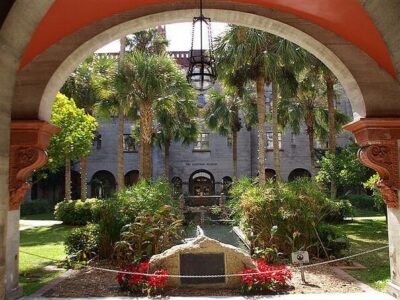
Private Guided Historic Electric Cart Tour of St. Augustine
Read our review →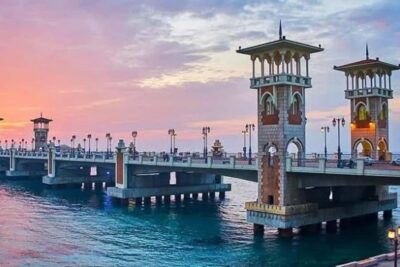
Private Full-Day Tour of Historical Alexandria
Read our review →
Private Tour of the Historic City in a Ford T Car
Read our review →
Madrid Historical Tour with Local Guide in Eco Tuk Tuk Private
Read our review →
Private Biblical Tour Ancient Corinth & Isthmus Canal from Athens
Read our review →
Private Kathmandu Sightseeing Tour | UNESCO World Heritage sites
Read our review →
Historic Porto by Private Electric Tuk Tuk to Top Landmarks
Read our review →Browse the lists this tour appears in