

Review · CHICAGO HISTORY TOURS
Walkin’ with Colin: Chicago History-Mystery-Comedy-Tragedy Tour
Chicago’s Loop becomes a living stage on this two-hour history and architecture walk with Colin. You’ll move from Chagall’s giant mosaic and Calder’s Flamingo to the Rookery, Picasso’s 50-foot sculpture, the Chicago Theatre, and Macy’s famous Tiffany dome. I like the mix of major sights and overlooked interiors, and I like how Colin uses images and footage to make the stories stick.
The main consideration is the pace and setting. This is a two-mile route with stairs, elevators, escalators, indoor stops, outdoor walks, and city crossings. One review noted that Colin sometimes crossed before every person had caught up, so stay close to the group and speak up if you need more time for photographs.
Key points at a glance
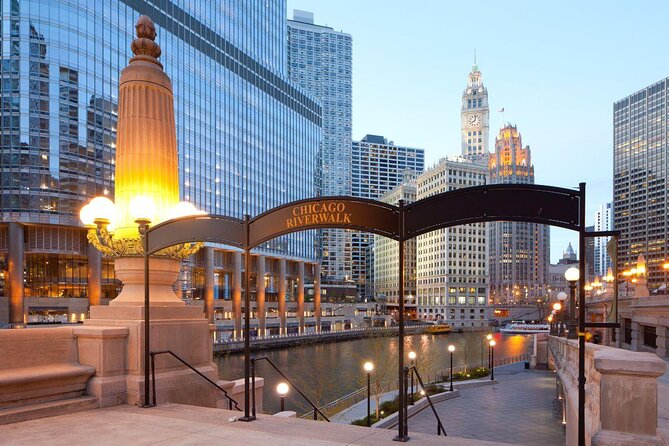
- Chicago’s best mix of art and architecture: See Chagall, Calder, Picasso, Mies van der Rohe, Tiffany glass, and landmark buildings in one compact route.
- Colin’s storytelling style: Expect history, jokes, mystery, tragedy, supporting images, and plenty of room for questions.
- A small group format: The tour is limited to 10 people, which makes it easier to hear the guide and ask for extra context.
- Mostly free sights: Admission is included at the listed stops, though entry to the Chicago Theatre is not included.
- Indoor relief along the way: The route includes historic interiors and underground or enclosed areas, useful in cold, hot, or wet weather.
- A practical downtown finish: The walk ends at the Chicago Cultural Center, near the Loop’s trains and other central sights.
Why this downtown walk feels different
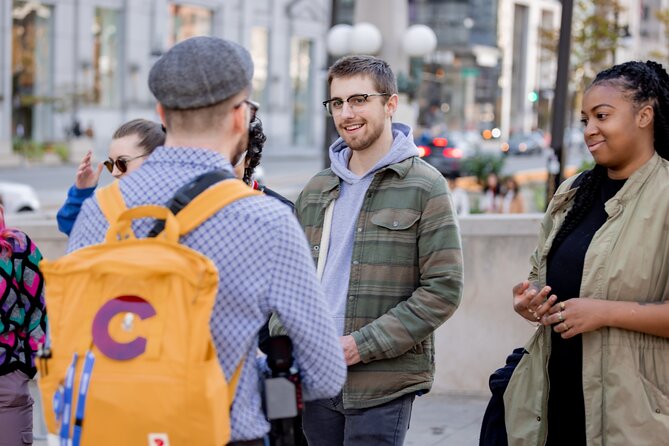
Many Chicago walks lean hard toward skyscrapers or famous movie locations. This one takes a broader view. You get art, retail history, entertainment, architecture, and the odd turn into Chicago’s less obvious spaces.
The route also works because the stops are close enough to keep the walk manageable. You are not marching for long stretches between attractions. Colin breaks the route into short sections, usually with time to look, take photographs, and listen before moving on.
His approach is part lecture, part performance. He uses humor, historical stories, and electronic images to add detail that a building alone cannot provide. That matters in Chicago, where a plain street facade may hide a grand lobby, a stained-glass ceiling, or a story about the people who shaped the city.
The group limit of 10 is another practical advantage. A small group makes it easier to hear on a busy downtown street and easier to ask about a detail that catches your eye. It also keeps the walk more personal than a large bus-style outing.
More History Tours in Chicago:
- Chicago in a Day: Food, History & Architecture Walking Tour
★ 5.0 · 1,153 reviews - Chicago: Field Museum of Natural History Ticket or VIP Tour
★ 4.7 · 717 reviews - Field Museum of Natural History Admission Tickets
★ 4.5 · 489 reviews
Chagall’s Four Seasons starts with a burst of color
The first stop is Chagall’s Four Seasons, a large mosaic mural by Marc Chagall. You get about 15 minutes here, enough time to take in the scale and examine the many small details that are easy to miss from a quick glance.
This is a smart opening stop because it immediately shows that Chicago’s public art is not limited to sculptures in parks. The mural brings color, movement, and a touch of dreamlike oddness to the city center. Colin uses it as a way into Chicago’s larger story, including the city’s ambition and its willingness to place major art in public spaces.
Bring your camera, but do not spend the whole stop looking through it. The scale of the work is part of the experience, and you need a moment to look up and let the composition settle.
The Marquette Building reveals Chicago’s grand interiors
The Marquette Building offers both an exterior view and an interior visit. You get roughly 10 minutes here, and that short time is useful because the building packs a great deal into a relatively small stop.
Chicago’s early skyscrapers can look severe from the street. Inside, the mood often changes. Decorative materials, detailed surfaces, and carefully planned public areas show how much thought went into making a commercial building feel important.
Colin helps connect the design to the city’s growth. That context keeps the visit from becoming a parade of pretty lobbies. You learn why these buildings mattered, how they helped define modern downtown Chicago, and why the city remains such a strong place for architecture walks.
Calder’s Flamingo meets Mies van der Rohe
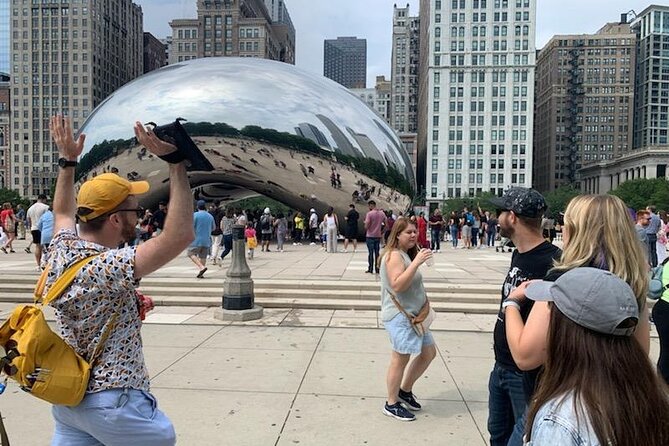
At Calder’s Flamingo, modern art meets modern architecture. The bright red sculpture is one of Chicago’s most recognizable public artworks, and its setting beside the clean lines of Mies van der Rohe creates a useful contrast.
You have about 10 minutes here. That is enough for a close look and a short explanation of how the artwork relates to the surrounding buildings. The stop is especially helpful if you are not used to modern art. Colin gives you a way to think about the sculpture without turning the moment into a stiff art class.
This is also one of the walk’s best photo stops. The sculpture’s shape and color read clearly against the surrounding architecture. Pay attention to the space around it, not just the object itself. Chicago’s public art often works because of its placement as much as its design.
Same streets, a different century:
- Chicago Walking Tour: Historic Treasures of Chicago
★ 5.0 · 362 reviews - Chicago Architecture and True Crime Tour
★ 5.0 · 326 reviews - Historical and Architectural Chicago Fireboat River & Lake Cruise
★ 5.0 · 246 reviews - Field Museum of Natural History All-Access Pass
★ 4.5 · 135 reviews
The Rookery shows an older side of the skyscraper story

The Rookery is one of the major architectural highlights. It is described as Chicago’s oldest skyscraper and is widely admired for its interior. You spend about 15 minutes here, giving you time to appreciate the building rather than simply pass through it.
The value of this stop is the contrast with Calder and Mies. The Rookery reflects an earlier period, when a commercial tower could be both a practical workplace and an elaborate public statement. Its design helps explain how Chicago’s early skyscrapers developed their own visual language.
This is one of the places where Colin’s added images and preparation are useful. Historic buildings can be hard to read on your own. A guide can point out what to notice, explain how the building fits into Chicago’s architectural story, and help you understand why the interior deserves more than a quick photograph.
Picasso’s 50-foot sculpture brings art back outdoors
Next comes Picasso’s monumental Untitled, a 50-foot sculpture and a gift to Chicago. You get around 10 minutes at this stop.
Picasso’s work can divide opinion, which makes it a good choice for a history and comedy tour. You do not need to decide instantly if you like it. Instead, look at how the sculpture changes the public space around it and how Chicago accepted a major abstract work in the middle of downtown.
Colin’s style suits this stop. The tour is not only about dates and names. It gives you a story to connect with the object, along with room for your own reaction. Families and younger adults may especially appreciate that the stop does not treat art as something you need special training to understand.
The Chicago Theatre connects architecture with entertainment
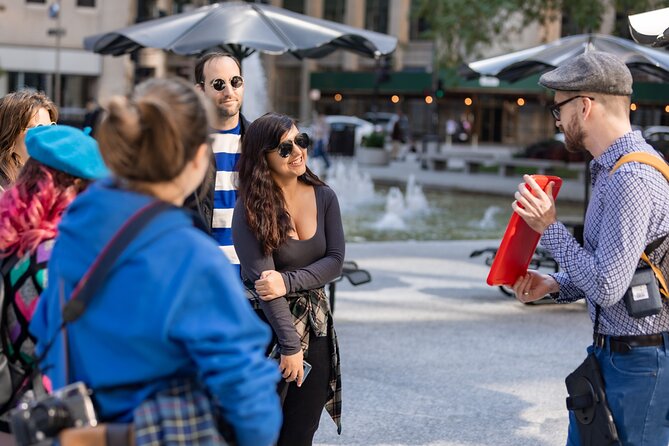
The Chicago Theatre gets about 15 minutes, and the focus is on the building and the entertainers who helped shape the city’s cultural life. You will look at the famous facade and hear about the performers and influences tied to Chicago’s entertainment story.
This stop broadens the tour beyond architecture. Chicago is not only a city of steel, masonry, and offices. Its theaters helped make the Loop a place for public entertainment, and the Chicago Theatre remains one of the city’s most recognizable names.
Admission to the theatre is not included, so expect to view it as part of the walking route rather than as a full performance venue visit. That distinction matters if you are hoping to tour the interior. The stop still works well as an exterior orientation point and as a bridge to the city’s music, stage, and popular culture.
Macy’s on State Street explains the department store revolution
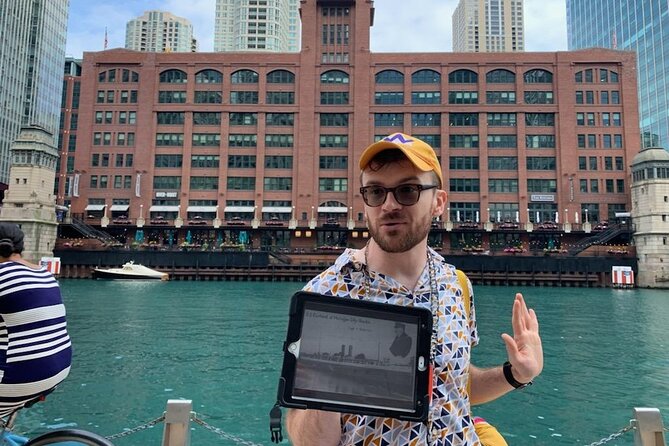
At Macy’s on State Street, Colin turns to the former Marshall Field’s department store. The stop lasts about 10 minutes and focuses on the store’s importance in the development of modern retail.
This is one of the more useful parts of the route because it explains a part of Chicago that is easy to overlook. Department stores changed how people shopped, browsed, met friends, and spent time downtown. Marshall Field’s was not just a place to buy goods. It helped create a new kind of urban experience.
Look up when you enter. One of the building’s most famous features is the Tiffany glass dome, a detail that many people miss if they treat Macy’s as an ordinary shop. This stop also gives you a break from the street, which is welcome in hot, cold, or rainy conditions.
The Chicago Cultural Center provides a grand finish
The final stop is the Chicago Cultural Center, also known as the People’s Palace. You spend about 15 minutes here, and the building’s former library role gives it a different feel from the commercial and office buildings earlier in the walk.
The Cultural Center is a fitting ending because it gathers several themes from the route: art, public life, architecture, and civic ambition. It is not simply a place to end the tour. It gives you another impressive interior and a chance to think about how Chicago has reused important buildings over time.
The endpoint is at 78 E Washington Street, near the start of the Loop and public transportation. That makes it easy to continue exploring after the tour. You can also treat the Cultural Center as a useful base for planning the rest of your day.
Colin’s presentation style and pacing
Colin’s strongest quality is his ability to connect facts into a story. He brings humor into serious subjects, including Chicago’s tragedies and struggles, without making the tour feel careless. The result is a walk that aims to entertain as well as inform.
He also uses supporting photos and video clips. These can help you picture earlier versions of a building, understand a detail that is no longer visible, or follow a story that would otherwise feel abstract. Several stops benefit from this kind of visual support.
The pace is generally easy rather than strenuous. The walk covers about two miles, but the route is broken into short stops. You should still be ready for stairs, elevators, escalators, indoor and outdoor movement, and city streets. A moderate level of fitness is expected.
Stay attentive during street crossings and keep the group in sight. If you stop for photographs, let Colin know or wait until the group has fully gathered. This is a small point, but it can make the experience more relaxed, especially for families or anyone who walks more slowly.
Price, timing, and weather considerations
At $44 per person, the tour is not the cheapest way to walk around downtown, but it offers solid value if you want interpretation rather than a self-guided checklist. Most stops have no separate admission charge, so your payment mainly covers Colin’s time, preparation, route planning, and storytelling.
The two-hour length is useful for a first day in Chicago. It gives you a clear introduction without taking over the entire afternoon. Morning and afternoon departures let you fit it around museums, meals, an architectural cruise, or evening entertainment.
The tour is offered in English and uses mobile tickets. It usually sells about 18 days ahead, so I would not leave booking until the last minute if your Chicago schedule is fixed.
Weather matters because this is an indoor and outdoor experience. Bring an umbrella if rain is possible and dress for changing conditions. The route can shift toward underground walkways or enclosed areas when weather turns poor, but the experience can also be canceled for bad weather, with another date or a full refund offered.
Free cancellation is available until 24 hours before the start time. If you cancel later, the payment is not refunded. The tour also requires a minimum number of participants, so a cancellation for that reason comes with the choice of another date or experience, or a full refund.
Who will get the most from this walk
I would choose this for a first-time Chicago visitor who wants several major sights explained in one compact outing. It also suits longtime residents who have passed these buildings without seeing their interiors or hearing the stories behind them.
Art lovers get Chagall, Calder, Picasso, and Tiffany glass. Architecture fans get the Marquette Building, the Rookery, Mies van der Rohe, and the Cultural Center. Families get short stops, visual material, and humor that can keep a two-hour walk from feeling like a classroom.
It is also a good choice for solo visitors and couples who want an introduction before exploring on their own. The group size leaves room for questions, and the endpoint puts you near many other central Chicago sights.
You may want a different experience if you prefer a narrow architectural lecture, a full interior tour of the Chicago Theatre, or a long outing focused on only one subject. This walk covers a lot, so each stop receives a taste rather than an exhaustive study.
Should you book Walkin’ with Colin?
Book it if you want Chicago explained through a lively mix of art, architecture, retail, theater, and civic history. The best reasons are Colin’s prepared visual material, his humor, the small group size, and the range of stops packed into two hours.
Skip it if you need a fully accessible route with no stairs or if you are looking for admission inside the Chicago Theatre. Otherwise, $44 is a fair price for a well-paced introduction to downtown, especially if you want to notice the interiors and stories that are easy to miss when you explore alone.
FAQ
How long is the Walkin’ with Colin tour?
The tour lasts approximately two hours.
How far do you walk?
The route covers about two miles.
Where does the tour begin?
The meeting point is 1 N Dearborn Street, Chicago, Illinois 60602.
Where does the tour finish?
The tour ends at the Chicago Cultural Center, 78 E Washington Street, Chicago, Illinois 60602.
What language is the tour offered in?
The tour is offered in English.
What landmarks are included?
Stops include Chagall’s Four Seasons, the Marquette Building, Calder’s Flamingo, the Rookery Building, Picasso’s Untitled sculpture, the Chicago Theatre, Macy’s on State Street, and the Chicago Cultural Center.
Is admission included?
Admission is listed as free at the Chagall mural, Marquette Building, Calder’s Flamingo, Rookery Building, Picasso sculpture, Macy’s, and Chicago Cultural Center. Admission to the Chicago Theatre is not included.
How many people can join the tour?
The tour has a maximum of 10 participants.
Can I cancel for a refund?
You can cancel at least 24 hours before the start time for a full refund. Cancellations made less than 24 hours before the start time are not refunded.
Newest history tours we have reviewed in Chicago
- Chicago River Architecture Tour Aboard a Historic Yacht★ 5.0 · 45 reviews
- Historical and Architectural Chicago Fireboat River & Lake Cruise★ 5.0 · 246 reviews
- Field Museum of Natural History All-Access Pass★ 4.5 · 135 reviews
- Chicago Walking Tour: Historic Skyscrapers★ 5.0 · 67 reviews
- Historic Homes and Cottages of Wicker Park Walking Tour★ 5.0 · 44 reviews
- Chicago Architecture and True Crime Tour★ 5.0 · 326 reviews
- Field Museum of Natural History Early Access Ticket★ 4.5 · 52 reviews
- African American Heritage Tour of Chicago★ 4.5 · 127 reviews
Chicago History Tours, compared.
Chicago in a Day: Food, History & Architecture Walking Tour
Read our review →
Field Museum of Natural History Ticket or VIP Tour
Read our review →
Field Museum of Natural History Admission Tickets
Read our review →
Chicago Walking Tour: Historic Treasures of Chicago
Read our review →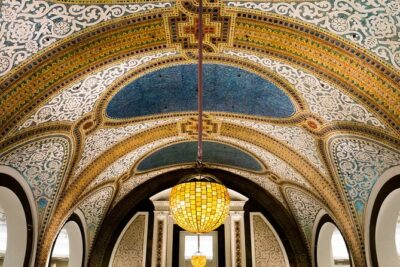
Historical and Architectural Chicago Fireboat River & Lake Cruise
Read our review →
Field Museum of Natural History All-Access Pass
Read our review →
Browse the lists this tour appears in