
Review · CHICAGO HISTORY TOURS
African American Heritage Tour of Chicago
Chicago’s African American story comes alive on the South Side, where gospel, jazz, blues, politics, migration, and civil rights all meet. This tour takes you beyond downtown and into Bronzeville, Hyde Park, and South Shore, with guide Steve Johnson providing a personal, highly animated account of the people and places that shaped the city.
I like the broad reach of the tour, especially the chance to see Pilgrim Baptist Church, Obama’s Chicago home, and the former homes of major public figures in one outing. I also like the soul food finish, which gives the history a taste of present-day Chicago. The main caution is the guide’s style and timing: Steve can be loud, repetitive, and passionate, and the tour may run well past four hours.
- Bronzeville’s gospel and jazz story: Learn why this South Side district became such an important center of Black Chicago.
- A personal guide: Steve Johnson brings local memories, strong opinions, humor, and plenty of historical detail.
- Major political landmarks: See places connected with Barack Obama, Jesse Jackson, Elijah Muhammad, and Louis Farrakhan.
- A wide South Side route: The van links Bronzeville with Hyde Park and South Shore rather than staying in one district.
- Soul food included in the day: The tour ends at a family-owned restaurant, identified in tour feedback as Pearls.
- Plan for extra time: Four hours is the estimate, but the experience may stretch to five or six hours.
Chicago’s Black history begins in Bronzeville
The strongest part of this tour is its focus on Bronzeville, one of Chicago’s most important African American districts. You are not simply looking at famous buildings. You are moving through a neighborhood tied to the Great Migration, Black-owned businesses, churches, musicians, writers, politicians, and community leaders.
Steve explains why the area is called Bronzeville, connecting the name with the complexion of the people who made the neighborhood their home. That may sound like a small detail, but it helps frame the tour. Bronzeville is presented not as a collection of isolated landmarks, but as a place shaped by migration and community life.
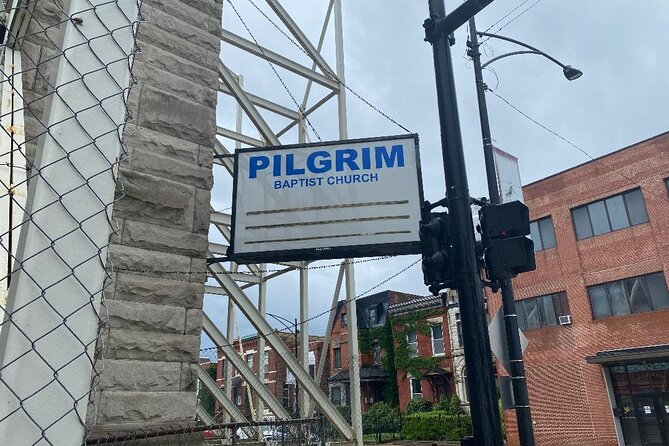
The route includes Pilgrim Baptist Church, known here as the birthplace of gospel music. The church’s importance is tied to Thomas Dorsey and the development of gospel as a modern musical form. You should expect to hear about the church from the vehicle and possibly stop for photographs, but admission to attractions is not included.
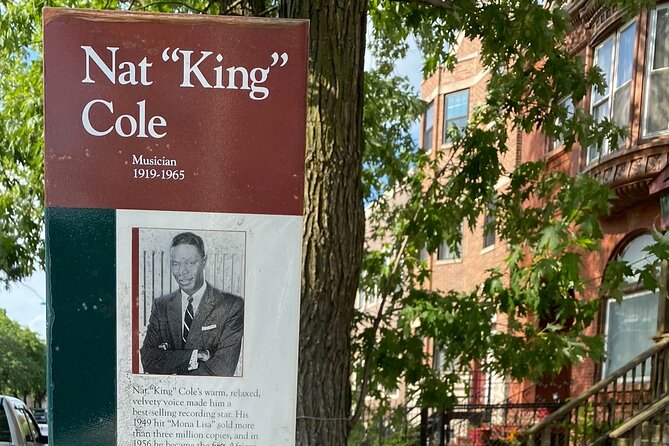
Bronzeville also brings in Chicago’s musical legacy. The tour discusses Black musicians and the city’s role in jazz, blues, gospel, and later popular music. Names connected with this story include Nat King Cole and Louis Armstrong, as well as record labels such as Chess Records. The exact amount of time devoted to each musician can vary, since Steve’s narration is conversational rather than tightly scripted.
That style is part of the appeal. Steve has a strong connection to Chicago and often links city history with personal experience. If you enjoy a guide who tells stories with energy and gives his own interpretation, you may find the ride memorable. If you prefer short, polished commentary with a clear beginning and end, his presentation may feel unfocused.
Hyde Park brings presidents, religion, and public life
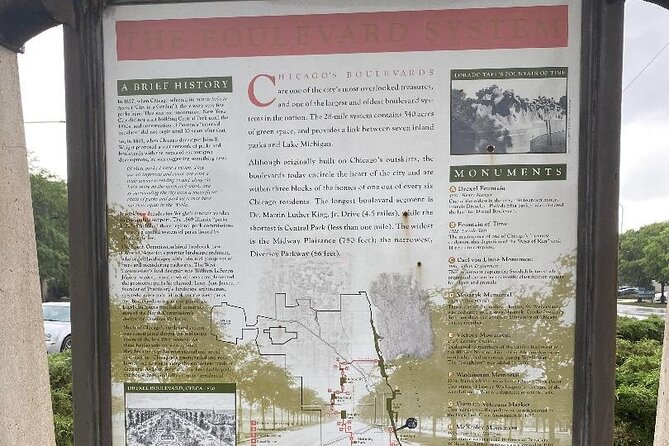
The tour then moves toward Hyde Park, where Chicago’s Black political and religious history takes center stage. One of the most anticipated stops is the home associated with Barack Obama, the 44th president of the United States. The tour also points out homes linked with Kanye West and Jennifer Hudson.
These are exterior viewing stops, not house tours. That matters because the experience is about seeing the neighborhood and understanding its connections, not entering private residences. You will want your camera ready, but you should not expect long visits at every address.
The route also includes the former home of Elijah Muhammad, founder of the Nation of Islam in the United States, and the home associated with Louis Farrakhan. Steve discusses the Nation of Islam and its place in American religious and political life. The subject can be controversial, and his delivery is direct. I would come ready to hear strong commentary rather than a neutral museum-style presentation.
Another stop connects the route with Muhammad Ali’s former residence and Reverend Jesse Jackson’s Operation PUSH national headquarters. Together, these sites broaden the story beyond music. You get a look at religious leadership, Black political organizing, civil rights, celebrity, and national influence.
The tour’s value here comes from the connections. You are not just checking off famous names. You are seeing how Chicago’s South Side became a launchpad for people who shaped national conversations about race, religion, politics, music, and culture.
Still, the sightseeing can be uneven. Some addresses are easy to recognize, while others may be ordinary residential buildings without signs or formal interpretation. A few scheduled places may not be visited on every outing, so book this for the broader story rather than a guaranteed photo at every celebrity home.
More History Tours in Chicago:
- Chicago in a Day: Food, History & Architecture Walking Tour
★ 5.0 · 1,153 reviews - Chicago: Field Museum of Natural History Ticket or VIP Tour
★ 4.7 · 717 reviews - Field Museum of Natural History Admission Tickets
★ 4.5 · 489 reviews
South Shore adds the lakefront and neighborhood context
South Shore gives the trip another change of scenery. You will see parts of Chicago’s lakefront and parks while continuing the discussion of Black life on the South Side. The route also includes a connection to Kanye West’s childhood home.
This portion helps prevent the experience from becoming only a Bronzeville tour. You get a sense of how several neighboring districts fit together and how Chicago’s Black communities extend beyond one historic center.
The vehicle is useful here. A private-style van can cover more ground than a walking tour, and it allows the guide to connect distant neighborhoods in one half-day outing. The tradeoff is that you spend a lot of time seated, with some sights viewed through the windows or during brief roadside stops.
Several people have found the van convenient for reaching places that would be awkward to connect by public transit. The vehicle can also make it easier to carry on a running conversation as the scenery changes. On the other hand, the van has been described as a Dodge Caravan, and the microphone may not always work well. If you sit toward the back, ask Steve to repeat anything you miss.
The museum stop needs realistic expectations
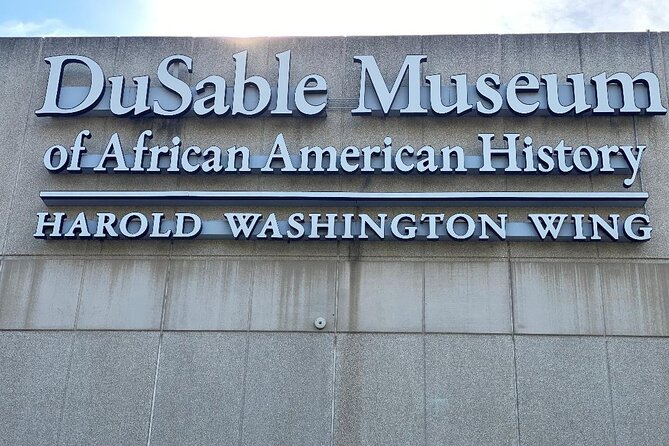
The tour includes a stop at an African American museum, with the DuSable Museum of Black History mentioned in the tour details and visitor accounts. This can be one of the most meaningful parts of the day because it gives you a more formal setting for the history discussed on the road.
The museum portion is not necessarily a long, guided museum visit. The listed itinerary allows roughly an hour in Hyde Park, and the tour may combine the museum with neighborhood driving and exterior stops. If museum time is your top priority, confirm how much time is planned when you book.
That point matters because the promotional description gives the museum a clear place in the experience, while the actual balance may lean more heavily toward driving and narration. Some participants wanted more time inside the museum and less attention given to public housing developments along the route.
I would treat the museum as an added part of the tour, not the main reason to book it. If you want a full museum visit, reserve separate time for one. If you want the museum combined with a guide-led look at the surrounding neighborhoods, the arrangement may suit you well.
Public housing is part of the story, but not everyone wants the emphasis
Steve often discusses public housing and the conditions that shaped Black Chicago. This is an important subject. Housing segregation, urban policy, poverty, migration, and neighborhood change are central to understanding the South Side.
The issue is emphasis. Some participants appreciated the social context, while others felt the guide returned to low-income housing too often and gave it more attention than the advertised landmarks. You should know this before booking: the tour is not a polished celebrity-home circuit. It includes difficult parts of Chicago’s past and present.
Steve’s manner can also affect how the information lands. His style is animated, loud, and sometimes theatrical. Many people find that energy funny and engaging. Others find it aggressive or tiring, especially when the same point is repeated several times.
This is a good match for you if you like an outspoken local guide who talks freely and brings strong feeling to the subject. It is less suitable if you want a quiet ride, measured pacing, or a scripted historical overview.
Same streets, a different century:
- Chicago Walking Tour: Historic Treasures of Chicago
★ 5.0 · 362 reviews - Chicago Architecture and True Crime Tour
★ 5.0 · 326 reviews - Historical and Architectural Chicago Fireboat River & Lake Cruise
★ 5.0 · 246 reviews - Walkin’ with Colin: Chicago History-Mystery-Comedy-Tragedy Tour
★ 5.0 · 218 reviews
The soul food stop gives the tour a welcome finish
The day ends at a soul food restaurant. Pearls is identified in the experience details as a family-owned restaurant, and it has been a favorite part of the outing for many people. The meal gives you a chance to sit down after several hours in the van and connect the tour with Chicago’s living food culture.
The restaurant is not merely a decorative add-on. Soul food is tied to the migration story and to the ways Black families carried Southern traditions into Northern cities. A meal at a local restaurant makes that connection tangible.
The timing is worth noting. The official start is 11 a.m., and the food stop comes near the end, so you may not eat until midafternoon or later. Bring water and consider a small snack, especially if you are traveling with children or have a strict meal schedule.
The restaurant is included as part of the tour experience, but the supplied details do not specify a fixed menu or meal cost. Ask what is covered when booking so you know what to expect.
Four hours may become a full afternoon
The advertised length is about four hours. In practice, you should keep most of the afternoon open. Some outings have lasted four and a half hours, while others have reached five or six hours because Steve spends extra time explaining places or answering questions.
That can be a benefit. Several people valued the amount of information and felt the tour could easily have continued for a full day. It also means you should not schedule a tight museum reservation, theater performance, airport transfer, or dinner immediately afterward.
The tour begins at 11 a.m. near the Chicago Theatre at 175 North State Street and returns to that meeting point. Select pickup locations are available, and airport pickup may be arranged when the schedule permits at a rate described as 10 percent less than an Uber ride. Confirm the pickup details before you count on this option.
The tour is offered in English and uses an air-conditioned vehicle. Most people can participate, but getting in and out of a smaller van may be awkward for some passengers. Stops can also take place near active traffic, so follow the guide’s instructions and take care when exiting.
Group size can reach 100, although the actual vehicle arrangement may vary. Groups of 12 or more require seven days’ notice. For a private-feeling experience, ask about the expected group size before paying.
What you are paying for
If your booking price is close to the $125 per person cited in the tour information, value depends heavily on your expectations. You are paying for transportation across several South Side neighborhoods, a local guide, historical narration, landmark viewing, a museum stop, and the soul food portion.
That can be fair if you want a broad introduction and would otherwise struggle to connect Bronzeville, Hyde Park, and South Shore on your own. The drive covers a lot of territory, and the guide’s local perspective is the main product.
The value is weaker if you mainly want museum admission, a luxury vehicle, or guaranteed visits to every advertised home. Admission tickets are not included, and the vehicle is practical rather than upscale. You are also paying for Steve’s personal presentation, which will be a strength for some people and a drawback for others.
I would compare this with building your own day around the DuSable Museum, public transit, and a restaurant meal. Doing so may cost less, but you will lose the convenience of having someone connect the sites and explain the neighborhoods as you move through them.
Who should book this Chicago tour
I would recommend the tour to travelers who want to understand Chicago through its African American communities rather than only seeing downtown architecture. It is especially suited to visitors who enjoy history told through music, politics, religion, family stories, and local opinion.
It can also work well for repeat Chicago visitors. The route reaches parts of the city many first-time visitors miss, and even someone who has lived in Chicago may learn new details about Bronzeville or the South Side.
Families can take part, and the subject matter offers plenty to discuss with older children and teenagers. The long duration, loud narration, and vehicle stops may be less comfortable for very young children.
I would hesitate if you need a precise schedule or a calm, professional bus-tour format. I would also hesitate if you are mainly interested in spending a long time inside the museum or photographing every celebrity residence named in the description.
Free cancellation is available up to 24 hours before the start time. The tour depends on good weather and a minimum number of participants, so a cancellation by the operator may lead to another date or a full refund.
Should you book the African American Heritage Tour of Chicago?
Book it if you want a wide-ranging, personal look at Black Chicago, and you are comfortable with a guide who speaks with force and sometimes wanders from the script. The best parts are the Bronzeville context, the number of neighborhoods covered, the connections to major figures, and the soul food ending.
Skip it if you want a tightly timed itinerary, a large tour bus, quiet commentary, or a guaranteed museum-focused visit. Before booking, keep your afternoon open, confirm the pickup point, ask how much museum time is planned, and bring water. With those expectations set, this can be a meaningful way to see a side of Chicago that standard downtown tours rarely cover.
FAQ
How long does the African American Heritage Tour of Chicago last?
The tour is scheduled for approximately four hours, beginning at 11 a.m. It may run longer, sometimes reaching four and a half hours or more.
Where does the tour begin and end?
It begins at The Chicago Theatre, 175 North State Street, Chicago, Illinois 60601. The activity ends back at the meeting point.
Which neighborhoods does the tour visit?
The route includes Bronzeville, Hyde Park, and South Shore. It also covers parts of Chicago’s lakefront and nearby South Side areas.
Is pickup available?
Pickup is offered from select locations. Airport pickup may be available if the schedule allows, at a price described as 10 percent less than an Uber ride.
What language is the tour offered in?
The tour is offered in English.
Is food included?
The experience ends at a soul food restaurant. The supplied information does not specify a fixed menu or clarify every meal charge, so confirm the details when booking.
Are museum admission tickets included?
Admission tickets are not included for the Bronzeville stop. A museum visit is part of the route, but the supplied details do not state a separate admission arrangement.
Can groups of 12 or more book the tour?
Yes. Groups of 12 or more must provide at least seven days’ notice.
What is the cancellation policy?
You can cancel at least 24 hours before the start time for a full refund. Changes or cancellations made less than 24 hours before the start time are not accepted for a refund. Poor weather or failure to meet the minimum number of participants may result in another date or a full refund.
Newest history tours we have reviewed in Chicago
- Chicago River Architecture Tour Aboard a Historic Yacht★ 5.0 · 45 reviews
- Historical and Architectural Chicago Fireboat River & Lake Cruise★ 5.0 · 246 reviews
- Walkin’ with Colin: Chicago History-Mystery-Comedy-Tragedy Tour★ 5.0 · 218 reviews
- Chicago Walking Tour: Historic Skyscrapers★ 5.0 · 67 reviews
- Historic Homes and Cottages of Wicker Park Walking Tour★ 5.0 · 44 reviews
- Field Museum of Natural History All-Access Pass★ 4.5 · 135 reviews
- Chicago Architecture and True Crime Tour★ 5.0 · 326 reviews
- Field Museum of Natural History Early Access Ticket★ 4.5 · 52 reviews
Chicago History Tours, compared.
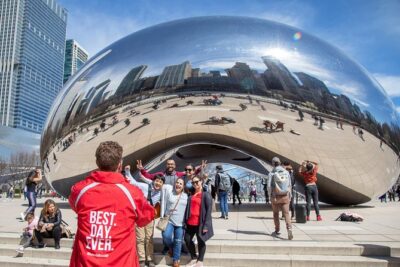
Chicago in a Day: Food, History & Architecture Walking Tour
Read our review →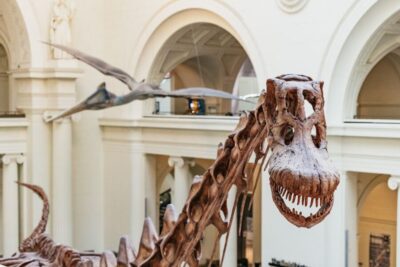
Field Museum of Natural History Ticket or VIP Tour
Read our review →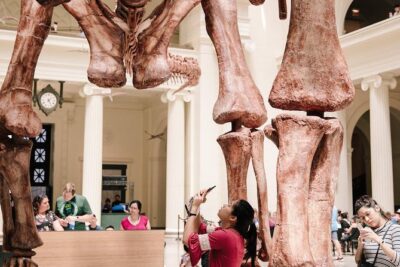
Field Museum of Natural History Admission Tickets
Read our review →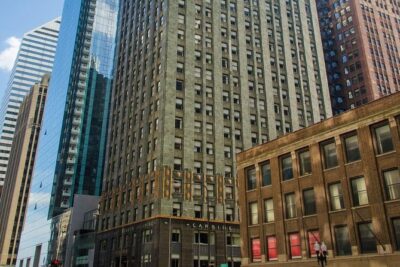
Chicago Walking Tour: Historic Treasures of Chicago
Read our review →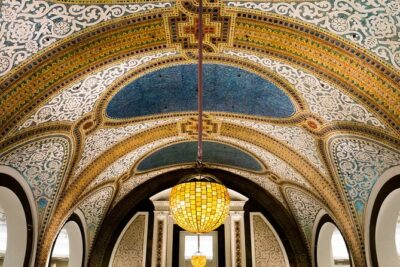
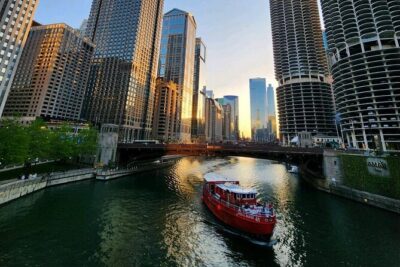
Historical and Architectural Chicago Fireboat River & Lake Cruise
Read our review →
Walkin’ with Colin: Chicago History-Mystery-Comedy-Tragedy Tour
Read our review →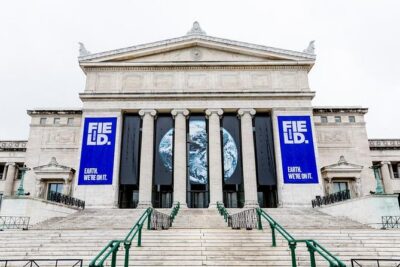
Field Museum of Natural History All-Access Pass
Read our review →Browse the lists this tour appears in