
Review · BOSTON HISTORY TOURS
Boston Freedom Trail History and Food Tour
Boston’s past is easiest to grasp when you can taste it. This two-hour walk links the Boston Public Market and North End with stops for clam chowder, Italian paninis, and fresh cannoli, while your guide fills in the stories that standard guidebooks often skip. Paul, one guide praised in the feedback, is singled out for making the history both clear and fun.
I like the small group, capped at 15, because you can ask questions without shouting across a crowd. I also like the route’s mix of major sights and local food stops, especially Salumeria Italiana and Parziale’s Bakery. The main catch is that food costs extra, and the roughly $30 recommended food budget can nearly match the $39 tour price.
Key points to know before booking
- Food is optional, not included: Plan on about $30 per person if you want to sample the recommended dishes.
- The walk connects downtown and the North End: You’ll see Boston Public Market, Haymarket, the Holocaust Memorial, Quincy Market, Paul Revere’s neighborhood, and the Old North Church.
- Haymarket operates only on Fridays and Saturdays: On other dates, the guide provides an alternative stop.
- The group is limited to 15 people: That makes it easier to hear the guide and ask questions.
- The 11:00 am start suits early sightseeing: You finish across from Polcari’s Coffee in the North End, well placed for more food or independent exploring.
- The tour is strongest for history and conversation: It offers exterior views of several landmarks rather than interior visits.
Why this Boston walking tour works
This is not a formal tour of every room and exhibit along the Freedom Trail. It is a guided walk through the city’s old commercial and revolutionary center, with food used as a way to connect the past to daily life.
You begin at Boston Public Market, then move through old market streets and downtown landmarks before reaching the North End. That route gives you a useful sense of Boston’s layers: colonial foodways, immigrant business, Revolutionary-era politics, modern urban planning, and the city’s present-day dining scene.
The history is not limited to famous names. You’ll hear about lesser-known figures and stories, which can make familiar places feel less predictable. One review specifically praised the combination of well-known American history with stories and historical figures that were new to the group.
The format also suits people who like a social outing. You walk, stop, talk, and eat alongside a small group of fellow history and food fans. If you prefer a quiet private tour or a long museum visit, this may feel too informal and quick. If you want an easy introduction to central Boston, it has a lot going for it.
More Food and History Tours in Boston:
- Boston Pizza Lovers Food and History Walking Food Tour
★ 4.5 · 1,082 reviews - Boston’s North End Food and History Walking Tour
★ 5.0 · 459 reviews - Boston Seafood Lovers Food and History Walking Tour
★ 5.0 · 208 reviews
Starting with Boston Public Market at 11:00 am
Meet your guide at Boston Public Market, 100 Hanover Street, at 11:00 am. This is a practical starting point because the market gives you immediate contact with New England food producers and small food businesses.
The tour allows about 20 minutes here. You’ll learn about the region’s produce and traditional foods, with clam chowder and baked beans offered as examples of dishes connected to the colonial diet. You can buy food if you wish, but admission to the market and the guided portion are included.
I like this opening because it gives the food stops a purpose. You are not simply being led from one snack to the next. You first get a sense of the ingredients and traditions that shaped Boston’s table.
The market may also be your best chance for a quick photo at the start of the walk. Keep in mind that food purchases are your responsibility. If you plan to try several recommendations, the suggested total is about $30 per person.
Haymarket and the character of old commerce
The next stop is Haymarket, where you spend about 10 minutes. This market is described as roughly 300 years old and is known for fresh produce at low prices.
Haymarket is open only on Fridays and Saturdays. That detail matters when you choose your date. If the market is closed, the guide will arrange another stop, so the tour does not simply lose that part of the route.
This short visit is less about a sit-down food experience and more about seeing how Boston’s market culture has worked over time. You get a sense of buying food in a public setting, where price, freshness, and quick trade matter.
The stop may feel brief if you want a long look at the stalls. Still, the limited time helps the tour cover several parts of the city in only two hours.
Blackstone Block and the Holocaust Memorial
The walk continues through the Blackstone Block Historic District, one of Boston’s oldest areas. You’ll spend about 15 minutes walking along an old street and hearing how the area developed.
This is also where the tour pauses at the Holocaust Memorial. Its glass towers create a serious change in tone from the food markets and lively streets. The memorial offers a place to reflect on the lives destroyed during the Holocaust and on the danger of treating history as a collection of dates alone.
This stop adds weight to the route. It shows that Boston’s historic center is not only about the Revolution, old buildings, and famous men. The city’s public spaces also carry the memory of more recent human suffering.
You should expect an outdoor visit rather than a museum presentation. Comfortable shoes help, since the tour keeps moving between stops.
More History Tours in Boston:
- Boston: Freedom Trail History Small Group Walking Tour
★ 5.0 · 6,450 reviews - Tour of Historic Fenway Park, America’s Most Beloved Ballpark
★ 4.5 · 3,013 reviews - Boston Food & History: Pizza, North End & Freedom Trail
★ 5.0 · 1,772 reviews - Boston: Freedom Trail History Small Group Walking Tour
★ 4.9 · 1,590 reviews
Quincy Market and a Georgian landmark
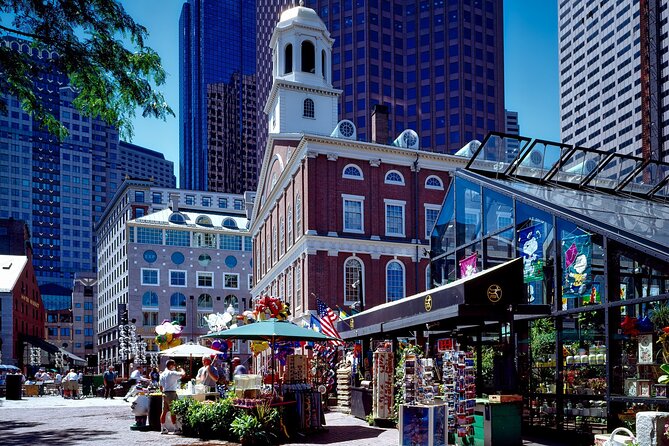
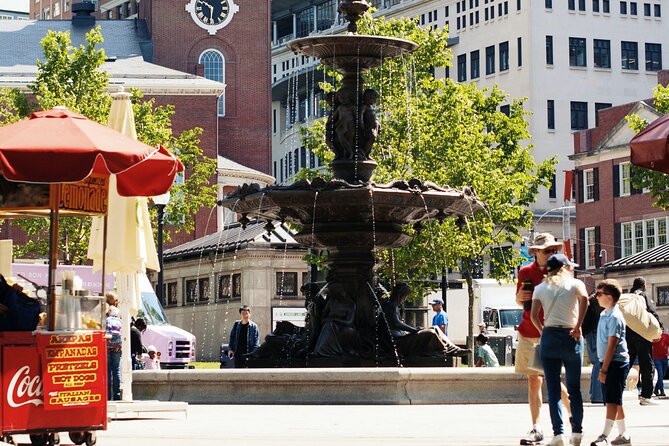
At Quincy Market, you have about 10 minutes to take in one of Boston’s best-known food and shopping areas. The market is tied to the city’s commercial past and its Revolutionary-era identity, and it is often called the Cradle of Liberty.
The stop is short, so think of it as an introduction rather than a full meal break. You’ll see the food hall atmosphere and hear why this location became important to Boston’s public life.
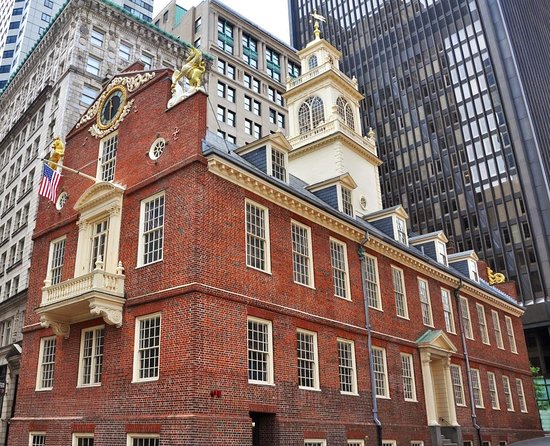
The route also passes a striking Georgian-style building that has changed from an economic center into a modern tourist destination. The visit is from the outside, so do not book this tour expecting interior access to every landmark.
That distinction is important. The value here comes from the guide’s explanation and the way the sites fit together. Travelers who want to enter the buildings should plan separate visits.
The Greenway and Boston’s modern reset
The Rose Fitzgerald Kennedy Greenway receives only about five minutes, but it helps explain modern Boston. The park was created as part of the Big Dig, the major highway project that reshaped the city.
The Greenway reconnects older neighborhoods that had been separated by road infrastructure. In a short walk, you’ll see how Boston has tried to repair the relationship between its historic districts and its public spaces.
This is a useful contrast with the older parts of the tour. Boston is not frozen in colonial times. It continues to alter its streets, parks, and connections between neighborhoods.
Five minutes is not enough for a full park visit, but it is enough to understand why the space is part of the route. If the Greenway interests you, return later on your own rather than expecting a long stop here.
Salumeria Italiana and the North End food break
At Salumeria Italiana, the food side of the tour becomes more focused. The stop lasts about 20 minutes, and the recommendation is an Italian panini made with deli meats cut to order, fresh bread, and cheese.
This is one of the most appealing parts of the experience if you want to connect Boston’s history with its immigrant neighborhoods. The North End is known for Italian-American food, and a small deli offers a more direct taste of that tradition than a generic restaurant stop.
Your guide provides the recommendation, but the sandwich is not included in the ticket. You can choose to buy it, share food, or skip it. That flexibility helps if you have dietary limits or simply want to save room for the cannoli later.
The food stop also creates time for conversation. One of the strongest themes in the feedback is the pleasure of talking with the guide and the group while seeing the North End. Paul was praised for his grasp of North End history and for keeping the conversation enjoyable.
Paul Revere Mall and the midnight ride
The tour then passes through Paul Revere Mall and by the Paul Revere House. This section lasts about 15 minutes.
You’ll hear the familiar story of Revere’s midnight ride, but the guide also places it in the setting of the neighborhood where Revere lived. That context matters. It turns a schoolbook name into a person connected to a real street, a real home, and the working life of colonial Boston.
The tour does not list admission to the Paul Revere House. Expect to view the house and its surroundings from the outside during the walk. If you want to go inside, you’ll need to arrange that separately.
Paul Revere Mall also offers a calmer stretch after the market stops. You can take photos, listen to the story, and notice the shift from commercial streets to the North End’s historic residential setting.
Old North Church from the outside
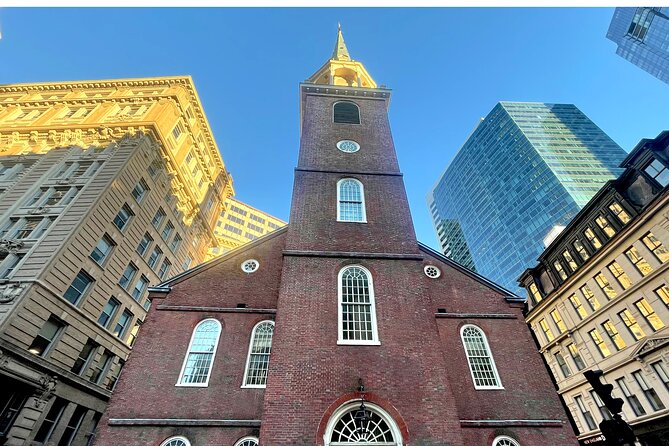
The Old North Church is another short stop, about five minutes. You’ll learn about its role in the American Revolution and see its architecture from the exterior.
The limited time makes this a quick orientation, not a full church visit. That is fine if you want the main story and a photo. It may disappoint you if your priority is detailed architectural study or time inside the building.
Still, its place on the route makes sense. The church connects directly to the Revolutionary story that runs through the tour, while the nearby North End food stops connect that famous past to later Italian-American life.
Fresh cannoli at Parziale’s Bakery
The final food stop is Parziale’s Bakery, where you can buy freshly filled cannoli. The bakery has operated for about a century and represents a long Italian-American tradition in the North End.
The stop lasts around 10 minutes. Cannoli are filled fresh, so this is a small but memorable finish to the food portion of the walk. If you plan to try every recommended item, save room for this stop after the panini.
The tour ends across from Polcari’s Coffee at 105 Salem Street. That is a useful location for continuing your own North End visit, though the tour itself ends there.
What the $39 price really covers
The tour costs $39 per person. That price covers the two-hour guided walk, a professional guide, local stories, and food recommendations. It does not cover the food you choose to purchase.
If you follow the suggested tastings, budget about $30 more. Your practical total becomes roughly $69 per person before any additional purchases. That is fair if you value a guide who connects the stops and gives you an introduction to the North End, but it is not the cheapest way to eat in Boston.
The price makes the most sense for a first visit, especially if you want both historical context and a ready-made food route. It makes less sense if you already know Boston well, prefer to choose every restaurant yourself, or plan to skip most food purchases.
Group discounts may be available. The maximum group size is 15, which is a useful middle ground: more social than a private tour, but smaller than a large coach group.
Timing, walking, and practical details
The tour lasts about two hours and begins at 11:00 am. It ends in the North End, so you do not return to the starting point. Plan your day around that one-way route.
The tour is offered in English and uses a mobile ticket. It is near public transportation, and most people can participate. Service animals are allowed.
Food venues may not be open on every date. When a stop is unavailable, the guide provides an alternative. Haymarket’s Friday and Saturday schedule is the most specific date issue to remember.
Wear comfortable walking shoes and keep your meal plan flexible. Since the route includes several food recommendations rather than one included meal, you can control how much you eat and spend.
Free cancellation is available if you cancel at least 24 hours before the start time. Changes or cancellations made within 24 hours are not accepted for a refund.
Who should book this tour?
I would choose this tour if you want a compact introduction to Boston’s historic center and the North End, especially on a first visit. It suits curious eaters, history fans, couples, solo visitors, and small groups who enjoy talking as they walk.
It is also a good fit if you appreciate lesser-known stories. The strongest feedback centers on the guides’ ability to make the history engaging, with Paul receiving especially warm praise for his friendly style and command of Boston’s past.
I would hesitate if you expect a full Freedom Trail tour with interior access to major buildings. Several stops are exterior views, and some visits last only five or 10 minutes. I would also think twice if you expect a complete lunch included in the ticket.
Should you book the Boston Freedom Trail History and Food Tour?
Book it if you want history with optional tasting stops, a small group, and a route that moves from public markets to Revolutionary landmarks and the North End. The combination of local food, Paul Revere stories, the Holocaust Memorial, and the Greenway gives you more range than a basic landmark walk.
Skip it if you want a slow museum-style tour, a private guide, or food fully covered in the price. At $39, it is a reasonable guided introduction, but remember to add about $30 if you plan to sample everything. For the right kind of visitor, the conversation, local stories, panini, and cannoli make the extra cost worthwhile.
FAQ
How much does the Boston Freedom Trail History and Food Tour cost?
The tour costs $39 per person. Food is not included, and buying the recommended items at the stops costs about $30 more per person.
How long does the tour last?
The walking tour lasts approximately two hours.
What time does the tour begin?
The tour starts at 11:00 am.
Where does the tour begin?
The meeting point is Boston Public Market at 100 Hanover Street, Boston, Massachusetts 02108.
Where does the tour end?
The tour ends across from Polcari’s Coffee at 105 Salem Street in Boston’s North End.
Is food included in the ticket?
No. The ticket includes the guided walking tour, food recommendations, local stories, and history. Purchasing food is optional.
Is Haymarket open every day?
No. Haymarket is open only on Fridays and Saturdays. If it is closed on your tour date, the guide provides an alternative stop.
How many people can join the tour?
The tour has a maximum of 15 participants.
Newest history tours we have reviewed in Boston
- Freedom Trail Guided Walking Tour (SMALL GROUP)★ 4.5 · 98 reviews
- Boston’s Architecture, History + Photo Walking Tour (SMALL Group)★ 5.0 · 91 reviews
- Boston’s North End History + Photo Walking Tour (SMALL Group)★ 5.0 · 27 reviews
- North End Food Tour: Taste Boston’s Italian Heritage★ 5.0 · 20 reviews
- Boston: Underground Railroad History Tour of Beacon Hill★ 5.0 · 141 reviews
- Haunted Boston’s Historic Streets Walking Guided Tour★ 4.5 · 184 reviews
- Beacon Hill + Back Bay History + Photo Walking Tour(SMALL Group)★ 5.0 · 60 reviews
- Boston: Votes for Women History Tour of Back Bay★ 5.0 · 49 reviews
Food & History Tours, compared.
Sevilla Food Tour: Tapas, Wine, History & Traditions
Read our review →
Dublin Historical Centre Food Tour with 8 Food Tastings & Drinks
Read our review →

Boston Pizza Lovers Food and History Walking Food Tour
Read our review →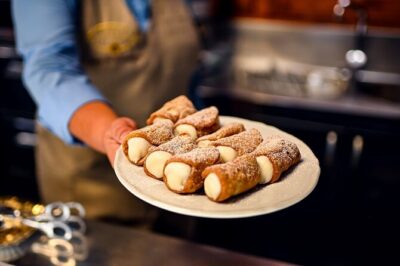
Rome Food Tour in the Historic Centre with 8+ Food Tastings
Read our review →Browse the lists this tour appears in