
Review · BOSTON HISTORY TOURS
Boston: Votes for Women History Tour of Back Bay
Boston’s Back Bay is more than handsome brownstones and wide, tree-lined streets. On this 2.5-hour walking tour, those familiar buildings become part of the fight for women’s voting rights. You’ll see where suffragists organized, where anti-suffragists pushed back, and how Boston women helped shape a national movement.
I like the way the tour uses real addresses instead of treating women’s history as a footnote. I also like the small group limit of 15 people, which gives you a better chance to hear Maura, ask questions, and connect the names to the buildings around you.
The main drawback is the walking itself. You’ll be outside and on your feet for most of the tour, with no museum admissions included. If you need frequent sitting breaks, or if bad weather threatens, this may not be the right Boston outing.
- Pauline Shaw’s former home: See where an important Boston suffrage fundraiser lived and worked.
- Competing sides of the movement: Compare the homes of suffragist Blanche Ames and anti-suffragist Mary Shreve Ames.
- Women’s organizations in Back Bay: Visit the College Club, former suffrage offices, and a building tied to The Women’s Journal.
- Boston Public Library and Copley Square: Connect the voting campaign with the city’s cultural and civic center.
- A thoughtful finish: End at the Boston Women’s Memorial, honoring Abigail Adams, Phillis Wheatley, and Lucy Stone.
- A manageable small group: With no more than 15 people, the guide can respond to questions rather than deliver a speech to a crowd.
Why Back Bay tells Boston’s suffrage story so well
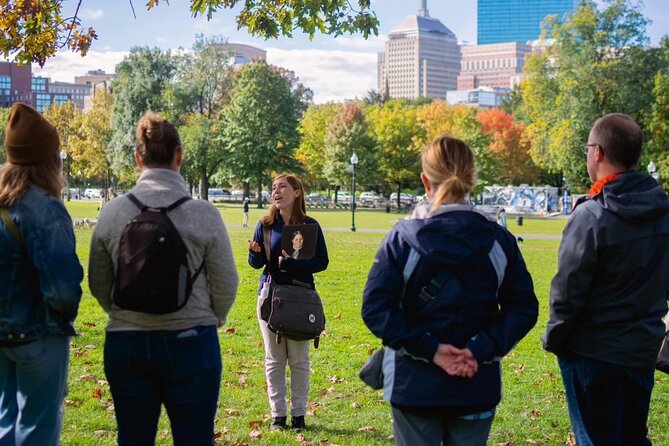
Many Boston sightseeing routes focus on the Revolution, colonial government, or the Freedom Trail. This walk takes a different route through Back Bay, where elegant homes and public institutions reveal the arguments over women’s place in civic life.
That contrast is the point. A grand home may have belonged to someone who funded the suffrage campaign. Another nearby residence may have been occupied by a leading opponent. The same polished neighborhood held people who wanted women at the ballot box and people who believed the existing system should remain unchanged.
You’ll hear about both sides, which makes the experience more useful than a simple parade of heroes. The tour includes suffragists, anti-suffragists, organizers, artists, reformers, and women who created spaces for public leadership. I appreciate that approach because it shows social change as a long argument, not a single victory won by a few famous names.
The subject also connects local events to national history. Susan B. Anthony is often the first name people recall when they think about women’s suffrage, but Boston had its own network of activists, fundraisers, writers, speakers, and artists. This walk puts those Boston figures back into view.
Starting with Make Way for Ducklings and the Public Garden
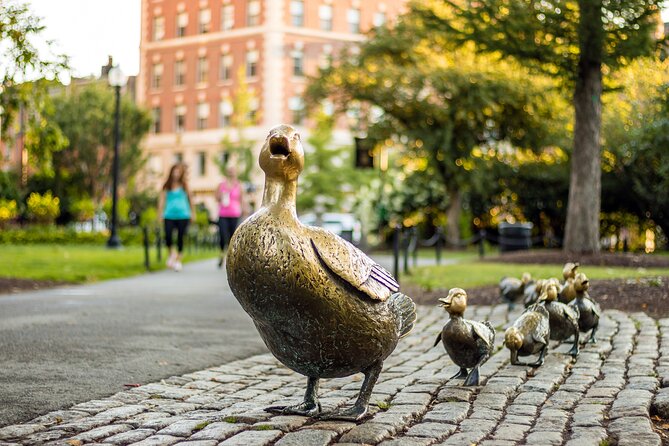
The meeting point is Make Way for Ducklings, the Nancy Schön sculpture based on Robert McCloskey’s beloved picture book. It is at 4 Charles Street, beside Boston Public Garden, and makes a simple landmark for starting the tour.
From there, you enter the Public Garden, established in 1837 as the first public botanical garden in the United States. The stop takes about 10 minutes and requires no admission fee.
The garden offers an easy introduction to the walk. It is open, attractive, and central, but the important value is historical context. You are not simply crossing a park on the way to the next address. You are beginning in a public space that reflects Boston’s interest in civic improvement, horticulture, art, and public life.
You’ll also see Thomas Ball’s equestrian statue of George Washington, commissioned in 1859. Its presence creates a useful visual counterpoint to the women’s memorial at the end. Boston’s older public monuments often emphasize male political power. This tour asks you to notice who was left out and how women later claimed a place in the city’s civic memory.
More History Tours in Boston:
- Boston: Freedom Trail History Small Group Walking Tour
★ 5.0 · 6,450 reviews - Tour of Historic Fenway Park, America’s Most Beloved Ballpark
★ 4.5 · 3,013 reviews - Boston Food & History: Pizza, North End & Freedom Trail
★ 5.0 · 1,772 reviews
Pauline Shaw and the money behind the movement
At 6 Marlborough Street, the tour visits the former home of Pauline A. Shaw. Shaw financed Boston’s women’s suffrage movement and founded the Boston Equal Suffrage Association for Good Government.
This is one of the most important stops because movements need more than speeches. They need offices, printing, travel, meetings, publicity, and people able to keep the work going over time. Shaw’s role helps you see the practical side of reform.
The stop lasts about five minutes, so expect an exterior discussion rather than a long visit inside. That is typical of the tour. You’ll be looking at the street, the architecture, and the address while Maura explains the person connected to it.
Homes that reveal a divided movement
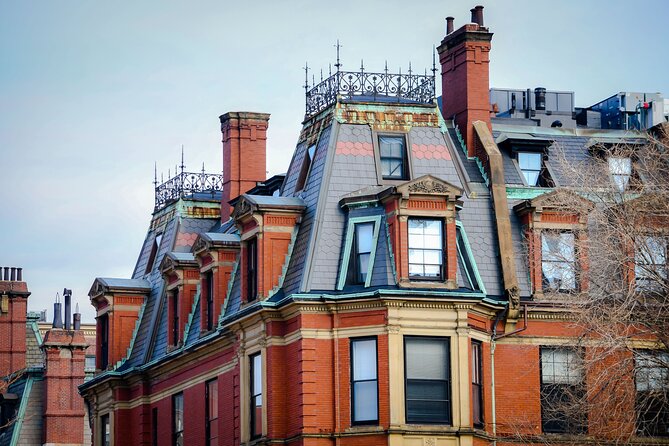
Back Bay’s residential streets provide some of the tour’s best contrasts. You’ll see the home of Elizabeth Putnam, an anti-suffragist who became the first woman to preside over a state electoral college. Her story complicates any easy idea that all politically active women supported the vote.
The route also includes the home of Julia Ward Howe, a major literary and reform figure. You’ll then learn about Blanche Ames, a pro-suffrage cartoonist and early advocate for birth control.
Ames is especially interesting because her work reached people through images as well as speeches and pamphlets. Political cartoons could make an argument quickly, using humor and sharp visual ideas to challenge opponents. Her support for birth control also places suffrage within a wider set of debates about women’s health, independence, and control over family life.
The Ames family story continues at the Ames Mansion, connected to the family’s wealth and political involvement. Here the tour brings Blanche Ames together with Mary Shreve Ames, her anti-suffragist relative. Mary Shreve Ames led the Massachusetts Anti-Suffrage Association, so the family itself reflected the larger public disagreement.
That is a valuable part of the route. You are not hearing about an abstract conflict between two faceless camps. You are seeing how political differences could exist within the same social circles and even within one family.
The route also passes along a historic avenue with trees, grassy areas, benches, and statues. It is one of the more pleasant stretches for walking, but do not count on a scheduled rest period. The tour is built around continuous outdoor movement, so comfortable shoes matter.
The College Club and women creating their own institutions
The College Club of Boston is another 10-minute stop. It was the first women’s college club in the United States.
A club like this mattered because women needed places to meet, exchange ideas, organize, and build professional and social networks. Public life was not equally open to everyone, and women often had to create their own institutions before they could influence larger ones.
This stop adds useful social context to the political story. Suffrage organizations did not work in isolation. They depended on clubs, friendships, education, publishing, fundraising, and shared meeting spaces.
The College Club is also a good example of the tour’s method. You are not only visiting a monument specifically labeled women’s history. You are learning how an ordinary-looking building could support a larger change in public life.
Same streets, a different century:
- Boston: Freedom Trail History Small Group Walking Tour
★ 4.9 · 1,590 reviews - City Cruises Boston Historic Sightseeing Harbor Cruise
★ 4.5 · 1,388 reviews - Boston Pizza Lovers Food and History Walking Food Tour
★ 4.5 · 1,082 reviews - Boston Freedom Trail History Pub Crawl Small-Group Tour
★ 5.0 · 996 reviews
From the old Museum of Natural History to Katherine McCormick
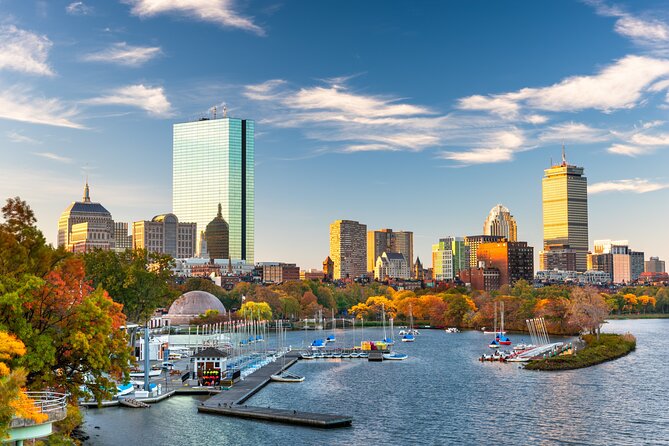
At RH Boston, The Gallery at the Historic Museum of Natural History, you’ll learn about the building’s earlier role as home to the Museum of Natural History from 1864 to 1951. This stop lasts about 10 minutes and is free to visit from the outside.
The route also points out the former location of an MIT laboratory where Katherine McCormick protested popular fashion as part of the suffrage movement. That detail gives the tour an unexpected angle. The campaign was not only about elections and speeches. It could also challenge the way women were expected to dress and behave in public.
Another architectural stop is a building constructed in 1877 and considered by members of the American Association of Architects one of the country’s top ten buildings. The tour uses these sites to keep the walk grounded in the physical character of Back Bay. Architecture is not the main subject, but it gives you a clear sense of the world these women inhabited.
Because some of the buildings now have different uses, you should think of this as an outdoor history tour, not a series of interior museum visits. Admission inside museums is not included, and the experience does not promise access to private homes or offices.
Copley Square and Boston’s civic center
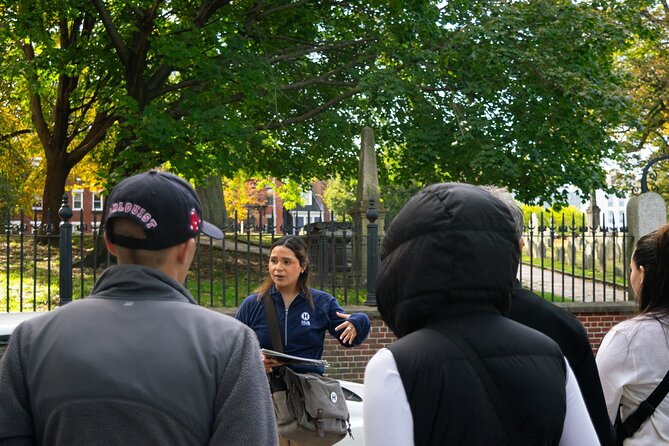
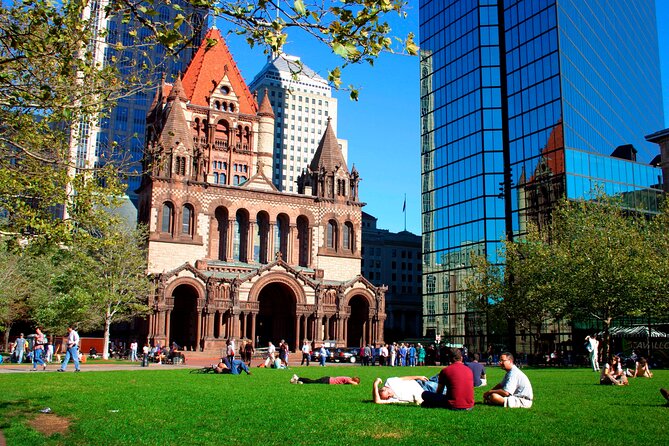
Copley Square takes about 10 minutes. It was designed as a cultural center for Boston and remains one of the city’s best-known public spaces.
Here, the suffrage story fits into the broader development of civic and cultural life. Public squares, libraries, clubs, churches, and cultural buildings gave reformers places to meet audiences and make their ideas visible.
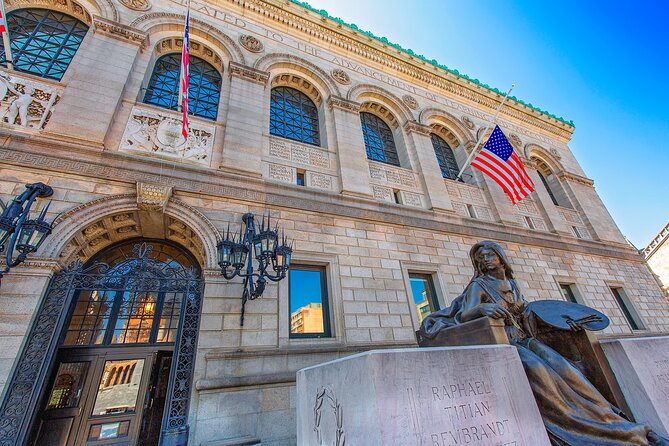
The tour also includes the Boston Public Library, founded in 1848 and now the third-largest public library in the United States. For me, this is one of the strongest stops for understanding how access to information supports political change.
A library is not a voting booth, but it can provide the books, newspapers, arguments, and shared knowledge needed for organized reform. The stop lasts about 10 minutes. You may want to allow separate time to explore inside the library on your own, since interior admission is not included in the tour.
The offices where the campaign took shape
The former Chauncy Hall site once housed offices for several pro-suffrage organizations, including the Massachusetts Woman Suffrage Association and The Women’s Journal.
This is where the movement’s working side comes into focus. Public demonstrations receive attention, but office work is what keeps a campaign moving. Publications must be written and distributed. Meetings need planning. Supporters need to be contacted and persuaded.
The tour also identifies the former Kensington Building, demolished in 1967. It housed the offices of the Massachusetts Association Opposed to Further Extension of Suffrage to Women.
The demolished building is a useful reminder that historic places do not all survive. You’ll sometimes be standing where a political organization once operated, with only the address and the guide’s explanation connecting the present street to the past. That can be less visually dramatic than a preserved house, but it helps you notice how much city history has disappeared.
The Boston Marathon, Newbury Street, and a former Spiritualist Temple
The route passes the finish line of the Boston Marathon and Newbury Street, known for shopping, dining, and luxury brands. These are familiar modern Boston landmarks, but in this tour they help you orient yourself within Back Bay.
You’ll also learn about a former Spiritualist Temple, a place where women were allowed to lead public meetings. That detail matters because public speaking was not always an ordinary opportunity for women. A room that allowed women to preside over meetings could offer a path into leadership and public influence.
This portion of the walk mixes famous modern locations with less obvious historical clues. Newbury Street may be busy with shops and restaurants, while the suffrage connection requires you to look past today’s storefronts. Keep your attention on the guide, since the present-day setting can easily distract from the older story.
Finishing at the Boston Women’s Memorial
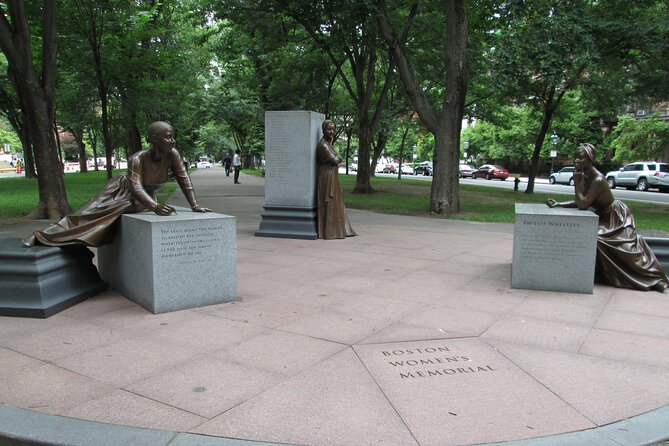
The tour ends at the Boston Women’s Memorial on Commonwealth Avenue Mall, about 0.8 miles from the starting point. The memorial depicts Abigail Adams, Phillis Wheatley, and Lucy Stone.
It is a fitting final stop because the memorial gives the movement a permanent public presence. Adams represents early arguments about women’s rights, Wheatley connects the story to Black literary achievement in colonial America, and Stone was a major nineteenth-century advocate for women’s rights.
The end point is near the center of Back Bay, within walking distance of Downtown Boston and the Fenway area. Since the tour finishes on Commonwealth Avenue Mall, you can continue sightseeing from there instead of returning to the starting point.
What the $35 price gets you
At $35 per person, this is reasonably priced for a 2.5-hour guided walk, particularly if you want more than a quick introduction to Boston. The value comes from the connections between addresses. You could pass many of these buildings alone without knowing why they matter.
The small group size improves that value. A maximum of 15 people is large enough to keep the tour affordable but small enough for questions and a closer exchange with the guide. Maura is praised for explaining the subject clearly and encouraging questions, so this should suit you if you prefer an active discussion to a scripted lecture.
The price does not include museum admission, food, transportation, or gratuity. Guides do not wear period costumes. That keeps the focus on interpretation and the city itself, but anyone expecting actors or theatrical reenactments should choose another type of tour.
Practical details before you book
The tour begins at 10:00 a.m. at Make Way for Ducklings, 4 Charles Street. It ends at 256 Commonwealth Avenue, beside the Boston Women’s Memorial.
You receive a mobile ticket, and the tour is offered in English. It operates near public transportation, and service animals are allowed.
Plan for a moderate level of fitness. You’ll be walking and standing for about two and a half hours, and the tour is not recommended if extended standing is difficult. Wear comfortable shoes and check the forecast. The tour requires good weather, and a cancellation caused by poor conditions results in either another date or a full refund.
You can cancel for a full refund up to 24 hours before the start time. The tour also requires a minimum number of participants, so a cancellation for that reason comes with the option of another date, another experience, or a full refund.
Who will get the most from this walk
I would choose this tour if you have already seen the Freedom Trail and want a less familiar side of Boston. It is also a strong choice for anyone interested in women’s history, civic reform, public speaking, publishing, architecture, or the way social movements are organized.
The tour suits older children and young adults who can manage the walking. One useful feature is that it connects people, buildings, and political ideas rather than presenting a long list of dates. That gives younger visitors something concrete to look at while they listen.
It may not suit you if you want indoor attractions, a short route, or a broad survey of all Boston history. This is a focused tour. Its strength is the subject, and that focus means less time for colonial Boston, the American Revolution, or the city’s general architecture.
Should you book the Votes for Women tour?
Book it if you want to understand Boston through the women who organized, funded, opposed, wrote about, and argued over political rights. The homes of Pauline Shaw, Blanche Ames, and Mary Shreve Ames make the story personal, while the library, clubs, offices, and memorial show how a movement operated in public.
I especially recommend it if you like asking questions and noticing details that a guidebook might skip. With Maura leading a group of no more than 15, you get a thoughtful history walk rather than a quick checklist of sights.
Skip it if you need frequent indoor breaks or prefer grand interiors to exterior interpretation. For most visitors who can comfortably walk and stand, $35 buys a focused, revealing look at a side of Boston that is easy to miss.
FAQ
Where does the Votes for Women tour begin?
It begins at Make Way for Ducklings, the Nancy Schön sculpture at 4 Charles Street in Boston, Massachusetts.
Where does the tour end?
It ends at the Boston Women’s Memorial at 256 Commonwealth Avenue, on the Commonwealth Avenue Mall in Back Bay.
How long does the tour last?
The tour lasts approximately 2 hours and 30 minutes.
What time does the tour start?
The scheduled start time is 10:00 a.m.
How much does the tour cost?
The price is $35 per person.
How many people can join the tour?
The maximum group size is 15 people.
What language is the tour offered in?
The tour is offered in English.
Are museum admissions included?
No. Admission inside museums is not included in the tour price.
Is the tour suitable for people who have trouble standing?
No. The tour is not recommended for people who have difficulty standing for extended periods. A moderate level of physical fitness is required.
Can I cancel for a refund?
Yes. You can cancel at least 24 hours before the start time for a full refund. Changes or cancellations made less than 24 hours before the start time are not accepted for a refund.
Newest history tours we have reviewed in Boston
- Freedom Trail Guided Walking Tour (SMALL GROUP)★ 4.5 · 98 reviews
- Boston’s Architecture, History + Photo Walking Tour (SMALL Group)★ 5.0 · 91 reviews
- Boston’s North End History + Photo Walking Tour (SMALL Group)★ 5.0 · 27 reviews
- North End Food Tour: Taste Boston’s Italian Heritage★ 5.0 · 20 reviews
- Boston: Underground Railroad History Tour of Beacon Hill★ 5.0 · 141 reviews
- Boston Freedom Trail History and Food Tour★ 4.5 · 22 reviews
- Haunted Boston’s Historic Streets Walking Guided Tour★ 4.5 · 184 reviews
- Beacon Hill + Back Bay History + Photo Walking Tour(SMALL Group)★ 5.0 · 60 reviews
Boston History Tours, compared.
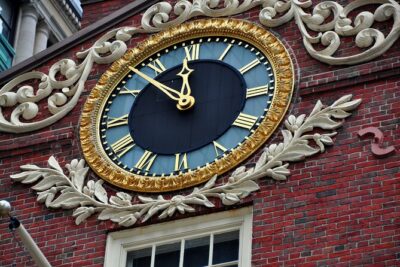
Freedom Trail History Small Group Walking Tour
Read our review →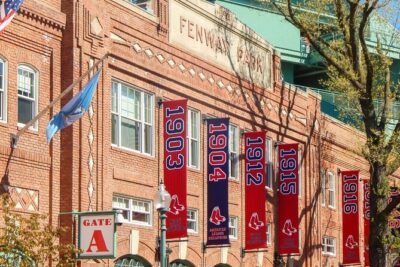
Tour of Historic Fenway Park, America’s Most Beloved Ballpark
Read our review →
Boston Food & History: Pizza, North End & Freedom Trail
Read our review →Freedom Trail History Small Group Walking Tour
Read our review →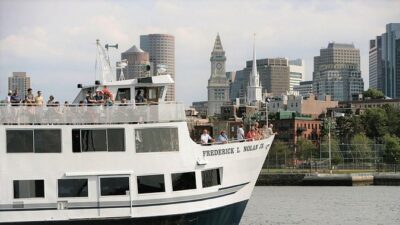
City Cruises Boston Historic Sightseeing Harbor Cruise
Read our review →
Boston Pizza Lovers Food and History Walking Food Tour
Read our review →
Boston Freedom Trail History Pub Crawl Small-Group Tour
Read our review →
Boston City View Bicycle Tour: History and Landmarks
Read our review →Browse the lists this tour appears in